

It’s one of those catch phrases you hear in literary circles. I really like the voice in this piece. You write with a confident voice. This is written in a voice that reminds me of J. K. Rowling. So, what does it mean, really, to have a writer’s voice, and what if you don’t have one or you can’t find yours. Writing for as long as I have, what follows is my personal take on the complicated and mysterious concept of writer’s voice.
At first, you won’t know what your voice is, but you do have a voice. We all do. No one is like you. No one has lived your life experiences. No one aligns exactly with your values, world view, or beliefs. Every reader know what it feels like to read someone who is confident in their own writing. A writer who is genuinely themselves in every paragraph. This is voice. Think Rowling. Think Stephen King. Think Tracy Chevalier. We all begin as readers in life, but then most successful writers go further and begin taking classes and workshops where they study how others have done this thing called writing. At first, when we write, we may be copying what others have done already to some extent, but that is okay. It’s only how this process starts. We learn by those who have come before us, as they did when they started writing.
So how do you find and hone your own voice as a writer, once you have learned some practical elements and lessons about the craft of writing. First of all, this is a lifelong process. A writer’s voice changes some over the years as we age and life adds new experiences, but a writer’s basic voice never changes. The only way to find your voice is to write. To practice. Only by writing a lot can you learn who you are.
The critical part where you will begin to uncover your voice is during the first rough draft, because a writer’s voice is not created, it is unearthed. The trick with fresh writing is to let the voice take over. Don’t overthink while you write. Try not to look back or think ahead. Let each word come one at a time. Trust your gut and your heart, not your head. When it feels right, it is right. Don’t smother your own creativity by evaluating the flow of words during the first draft.
Another element of finding and flying with your own voice is what you choose to write about, and I see this as two separate issues. First, write what you know as a general rule. I don’t mean that you can’t invent things or make up characters or whole worlds, but in all great writing the writer still writes from what they know and understand about life and living. The second element is equally important. Write what you want to write about, even if it seems silly or too out there or too boring or too anything. Don’t ever write what you think you should write about or what you think will get published.
Early on in my writing career I attended a workshop where I submitted a story written in a child’s point of view. The instructor basically said that no one should ever write short stories in a child’s point of view, because no one will want to read them. I was devastated and confused. I liked the story. I believed in it. I kept that story and years later, when I had become more confident as a writer, I went back to it, fixed it up, send it out, and it was published in journal within a few months. While we should take advice and critique seriously, we shouldn’t take it if our heart and gut don’t agree. This sometimes takes courage, but if I can do it, you can too.
Another example of being yourself involves not chasing trends. Some years back it was popular to end short stories with everything up in the air. The idea was for the reader to figure out what they thought the ending was. That never set well with me, but I got caught up in the trend and wrote some stories that way. They didn’t succeed, because I wasn’t being true and honest with voice. I was shoving down my voice, my gut and heart, doing something because I thought I should. I learned my lesson.
When you start writing you should be patient with yourself and give yourself time to find your own unique voice as a writer. I promise it is inside of you waiting to be found. Once you are more confident about your voice it is important to take yourself out of your comfort zone from time to time. I did this by changing what I wrote. First, I settled into nonfiction. As I learned more about myself, I added poetry and then fiction. In recent years, I have expanded to some science fiction and short stories with fantasy elements. So, keep reading always and write and write and write and write and above all, at the end of the day, trust yourself first above all others when it comes to what your voice is as a writer. Happy writing!
Virginia Watts is the author of poetry and stories found in The MacGuffin, Epiphany, CRAFT, The Florida Review, Reed Magazine, Pithead Chapel, Eclectica Magazine among others. She has been nominated four times for a Pushcart Prize. Her debut short story collection Echoes from the Hocker House was short listed for 2024 Eric Hoffer Grand Prize, selected as one of the Best Indie Books of 2023 by Kirkus Book Reviews, and won third place in the 2024 Feathered Quill Book Awards. Please visit her.
Virginia’s new book is now available from Old Scratch Press:

Her prior poetry chapbooks Shot Full of Holes and The Werewolves of Elk Creek
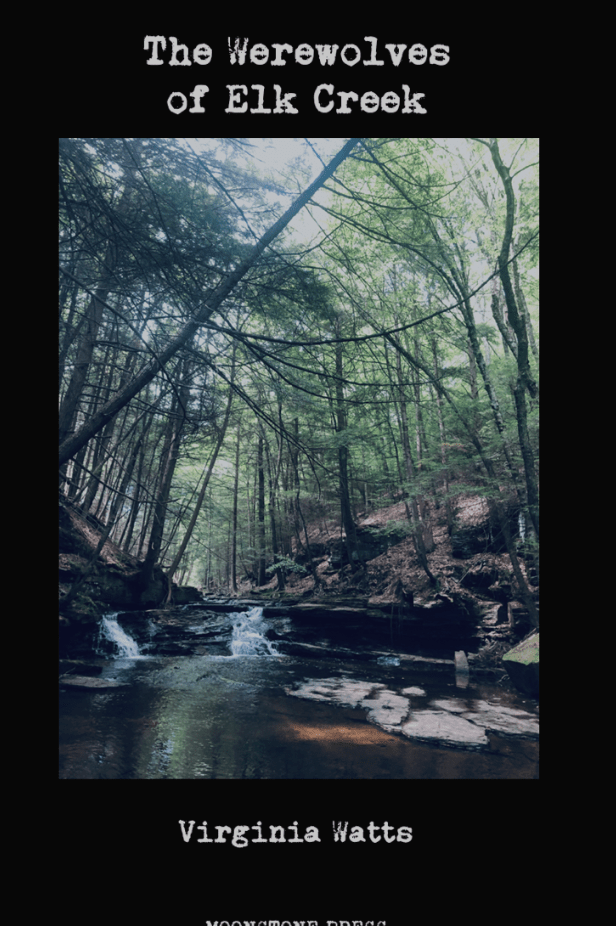
are available from Moonstone Press. And her debut short story collection Echoes from the Hocker House is not to be missed!

In October OSP will present a live reading with Virginia, Anthony Doyle, and Alan Bern. Find more information here.

 OLD SCRATCH PRESS
Ironically, I found my voice by writing my first persona poem! Until that moment, I wrote self-consciously, and it showed. I was never satisfied with the results. When I first attempted to write in someone else’s voice, I felt those fetters of self-consciousness fall from me and I finally felt free to express myself! The magic of the mask, I guess!
LikeLike