It’s Time for Beach Reading!

I’ve been on a lucky kick lately finding great books to read. I have a group of friends and relatives who love to read as much as I do, and we share book ideas almost every week. I’m not content when I don’t have a good book going. Often, when I am busy running errands, ticking off my list of appointments and other life tasks, in the back of my mind I am thinking: When I am done with all of this, I can go home and read my book! It’s my reward. My joy. My salvation. And I am clearly not alone. Many people love to read and there are some good reasons why. 

            Reading is very good for the health of your brain. Reading expands and strengthens neural pathways. It has been shown to improve memory. People who read regularly are better at retaining complex information. They concentrate better. This is because when you read you must focus your mind. 

            Reading also lowers your stress level and cortisol levels significantly. Even when you read for a short time, your heart rate slows and your muscles relax. Reading is likened to meditation. When you read you step away from your own life and your own unique anxieties.  It’s a true calming of you mind even though your mind is busy. It’s believed to be better at lowering your blood pressure than listening to music or watching tv. If you read before bed, your mind gets the message that it is time to slow down. You are likely to fall asleep faster and sleep more deeply. Reading at night helps you push your own worries away. 

            There have been several studies that have shown that reading regularly provides some protection against cognitive decline and may even delay the onset of conditions such as dementia and Alzheimer’s. Long terms studies also show that reading increases your lifespan.

            Another benefit to regular reading is that it makes us better people. When you read you experience all kinds of characters, lives, and places that improve your knowledge of the world and helps you have a better understanding of people who are different from you. People who have different lives and different beliefs. This makes you more empathetic. This translates into better relationships and social skills. Reading is a bridge to understanding others. Apparently, the most empathy comes from reading literary fiction as opposed to nonfiction. 

            It has also been shown that for people experiencing some forms of mild depression, reading self-help books can assist with recovery. Medical experts can provide a list of recommended books. 

            The world’s most successful and wealthy people are often avid readers with a strong desire for knowledge. Bill Gates. Oprah Winfrey. Elon Musk. Reading can also help with loneliness and social isolation because it often leads to book groups, whether face to face or online. Also, with public libraires and low-cost subscriptions for tablets, reading is not expensive. 

            Here is my recent list of books I would recommend. I enjoyed every word and I hope you do too. Cheers and keep those pages turning!  Ginny

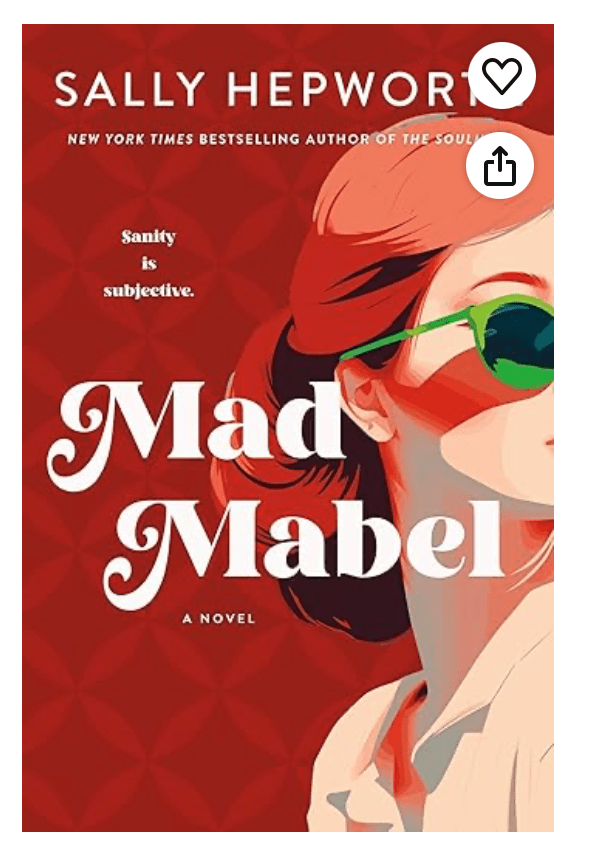
Mad Mable by Sally Hepworth

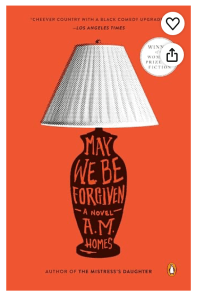
May We Be Forgiven by A.M. Holmes

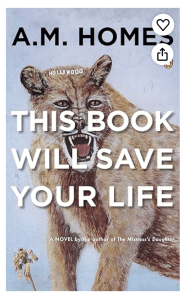
This Book Will Save Your Life by A.M. Holmes

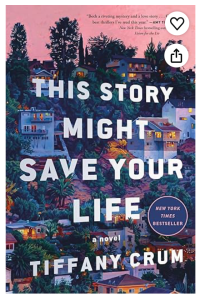
This Story Might Save Your Life by Tiffany Crum

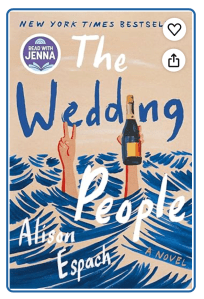
The Wedding People by Alison Espach


Virginia Watts is the author of poetry and stories found in The MacGuffin, Epiphany, CRAFT, The Florida Review, Reed Magazine, Pithead Chapel, Eclectica Magazine among others. She has been nominated four times for a Pushcart Prize. Her debut short story collection Echoes from the Hocker House was short listed for 2024 Eric Hoffer Grand Prize, selected as one of the Best Indie Books of 2023 by Kirkus Book Reviews, and won third place in the 2024 Feathered Quill Book Awards. Please visit her.

Virginia’s new book is now available from Old Scratch Press:

Her prior poetry chapbooks Shot Full of Holes and The Werewolves of Elk Creek 
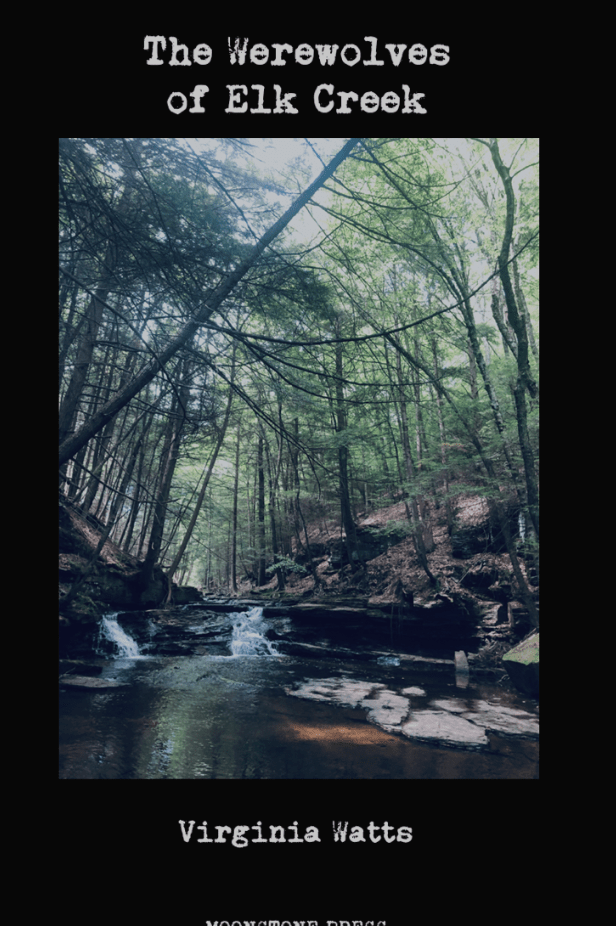
 are available from Moonstone Press. And her debut short story collection Echoes from the Hocker House is not to be missed!

You Might Already Have a Poet Laureate

When most people hear the term “Poet Laureate,” they think of a nationally recognized poet appointed to represent poetry across an entire country. What many writers don’t realize is that poet laureates exist at many levels, including states, cities, counties, tribal nations, universities, and even local arts organizations.

In fact, your community may already have a Poet Laureate.

The word laureate comes from the laurel wreaths awarded to distinguished individuals in ancient Greece and Rome. Over time, the term became associated with artists and writers who were formally recognized for their contributions. Today, a Poet Laureate is generally a poet selected to serve as an ambassador for poetry within a particular community.

While the United States Poet Laureate receives the most attention, local poet laureates often have a more direct impact on everyday readers and writers. Their responsibilities may include giving public readings, visiting schools, organizing workshops, promoting literacy programs, supporting local literary events, and encouraging people to engage with poetry.

The specifics vary from one community to another. A state Poet Laureate may travel widely throughout the state, while a city Poet Laureate might focus on local schools, libraries, and community events. Some positions are largely ceremonial. Others involve active outreach and public programming.

For poets, these positions are worth paying attention to for several reasons.

First, local poet laureates are often deeply connected to the literary life of their communities. They may organize readings, maintain event calendars, promote local writers, or create opportunities for poets to share their work.

Second, poet laureate programs frequently support projects that benefit writers and readers alike. Community anthologies, public poetry installations, workshops, festivals, and educational programs often emerge from laureate initiatives.

Third, some poets may eventually wish to pursue a laureate position themselves.

Many writers assume these positions are reserved for nationally known poets. While experience and publication history certainly help, local laureate programs often seek poets who are engaged with their communities and interested in promoting poetry. The ideal candidate is not always the most famous poet. Often, it is someone willing to serve as an advocate for literature and the arts.

Selection processes vary widely. Some poet laureates are appointed by elected officials, arts councils, libraries, or cultural commissions. Others are chosen by review committees after an open application process. In many communities, poets may nominate themselves, while in others they must be nominated by another individual or organization.

If the idea interests you, start by researching your local area. Search for your state’s Poet Laureate program, check with your city or county arts commission, visit local library websites, and explore arts organizations in your region. Even if your community does not currently have a poet laureate program, learning how neighboring communities operate theirs can be illuminating.

You may also discover opportunities to serve on committees, volunteer at literary events, participate in public readings, or support initiatives created by current laureates. These experiences can help you become more involved in your local literary community while building relationships with other writers and arts advocates.

Perhaps the most important lesson is that poetry exists far beyond books and literary journals. Poet laureates remind us that poetry can be part of civic life, education, public art, and community engagement. They help bring poetry into places where readers might not otherwise encounter it.

So here’s a challenge: spend a few minutes researching your community. Does your state have a Poet Laureate? Does your city? Your county? A nearby university? You may discover that a poetry ambassador is already working in your area, creating opportunities for writers and readers alike.

And if no such program exists, perhaps that’s a conversation worth starting.

We’d also love to hear what you discover. Does your state, city, county, tribal nation, or university have a Poet Laureate? What kinds of programs, readings, workshops, or literary initiatives are they involved in? Share what you find in the comments. One of the joys of the poetry community is discovering the many different ways poetry is supported across the country, and your local laureate may inspire poets in places far beyond your own backyard.


Virginia Watts

Virginia Watts is the author of poetry and stories found in The MacGuffin, Epiphany, CRAFT, The Florida Review, Reed Magazine, Pithead Chapel, Eclectica Magazine among others. She has been nominated four times for a Pushcart Prize. Her debut short story collection Echoes from the Hocker House was short listed for 2024 Eric Hoffer Grand Prize, selected as one of the Best Indie Books of 2023 by Kirkus Book Reviews, and won third place in the 2024 Feathered Quill Book Awards. Please visit her.

Virginia’s new book is now available from Old Scratch Press:

Her prior poetry chapbooks Shot Full of Holes and The Werewolves of Elk Creek 

 are available from Moonstone Press. And her debut short story collection Echoes from the Hocker House is not to be missed!
And the Winner Is…..

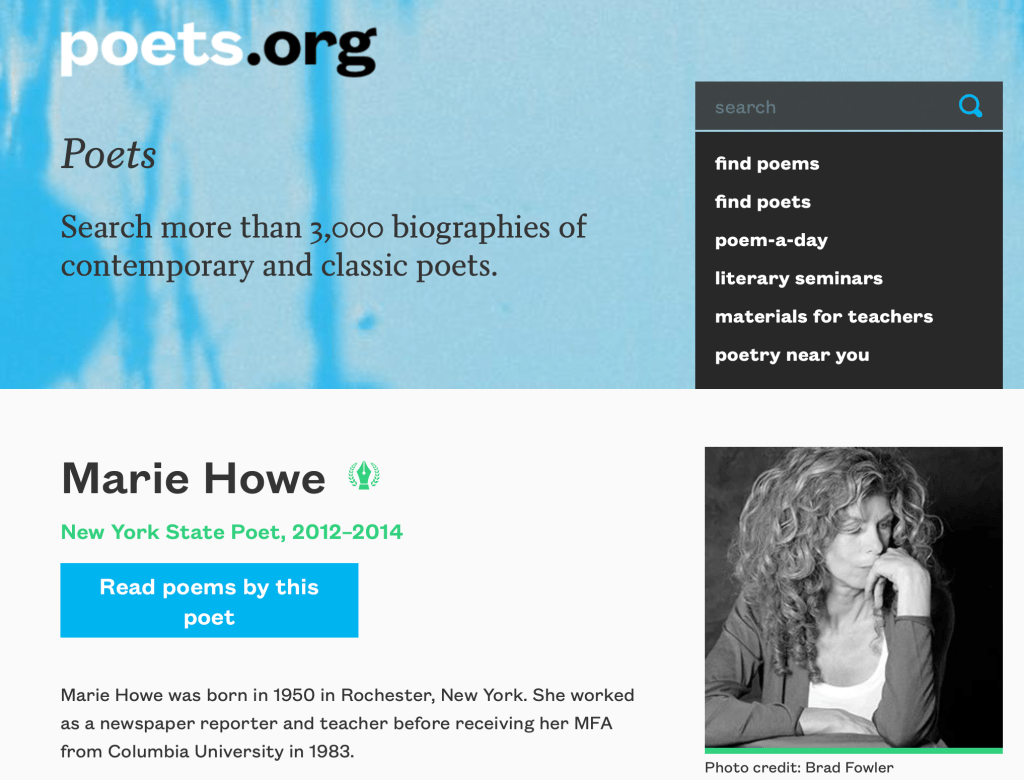
Yes, poetry collections win Pulitzer Prizes too. The 2025 Pulitzer Prize for Poetry has been awarded to Marie Howe’s New and Selected Poems. Howe is known for her observations of everyday life. She explores themes of contemporary womanhood, personal loss, human miracles, sorrow and joy. There are 111 poems in the winning collection. Howe’s direct and honest voice is her trademark. She’s a poet of our time who should not be missed. Some of her most well-known poems involve the loss of her brother in 1989 who died of AIDS-related illnesses. This is what drew me personally to her work many years ago, because I lost a brother about the same time in the same way. Here is one of her poems about this terrible sadness.

What the Living Do

Marie Howe

Johnny, the kitchen sink has been clogged for days, some utensil probably fell down there.
And the Drano won’t work but smells dangerous, and the crusty dishes have piled up

waiting for the plumber I still haven’t called. This is the everyday we spoke of.
It’s winter again: the sky’s a deep, headstrong blue, and the sunlight pours through

the open living-room windows because the heat’s on too high in here and I can’t turn it off.
For weeks now, driving, or dropping a bag of groceries in the street, the bag breaking,

I’ve been thinking: This is what the living do. And yesterday, hurrying along those
wobbly bricks in the Cambridge sidewalk, spilling my coffee down my wrist and sleeve,

I thought it again, and again later, when buying a hairbrush: This is it.
Parking. Slamming the car door shut in the cold. What you called that yearning.

What you finally gave up. We want the spring to come and the winter to pass. We want
whoever to call or not call, a letter, a kiss—we want more and more and then more of it.

But there are moments, walking, when I catch a glimpse of myself in the window glass,
say, the window of the corner video store, and I’m gripped by a cherishing so deep

for my own blowing hair, chapped face, and unbuttoned coat that I’m speechless:
I am living. I remember you.

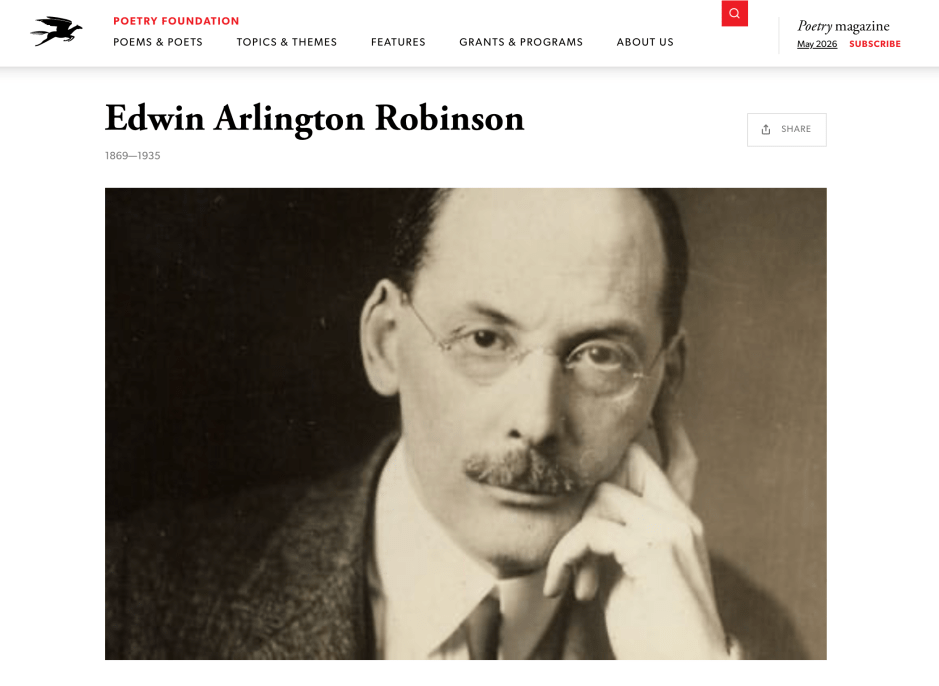
I thought it might be fun to revisit the winner of the first Pulitzer Prize for Poetry. That poet’s name was Edwin Arlington Robinson, and he won the prize two more times after being the first winner. He was known for his narrative skill and psychological depth. Here is what is considered by many to be his most famous poem. It seems a long time ago when he was writing poetry, yet when you read this poem in particular, it seems that he could be writing this poem today. This is because all poetry is about one very complicated subject: humanity.

Richard Cory
Edwin Arlington Robinson

Whenever Richard Cory went down town,

We people on the pavement looked at him:

He was a gentleman from sole to crown,

Clean favored, and imperially slim.

And he was always quietly arrayed,

And he was always human when he talked;

But still he fluttered pulses when he said,

“Good-morning,” and he glittered when he walked.

And he was rich—yes, richer than a king—

And admirably schooled in every grace:

In fine, we thought that he was everything

To make us wish that we were in his place.

So on we worked, and waited for the light,

And went without the meat, and cursed the bread;

And Richard Cory, one calm summer night,

Went home and put a bullet through his head.

Virginia Watts is the author of poetry and stories found in The MacGuffin, Epiphany, CRAFT, The Florida Review, Reed Magazine, Pithead Chapel, Eclectica Magazine among others. She has been nominated four times for a Pushcart Prize. Her debut short story collection Echoes from the Hocker House was short listed for 2024 Eric Hoffer Grand Prize, selected as one of the Best Indie Books of 2023 by Kirkus Book Reviews, and won third place in the 2024 Feathered Quill Book Awards. Please visit her.

Virginia’s new book is now available from Old Scratch Press:

Her prior poetry chapbooks Shot Full of Holes and The Werewolves of Elk Creek 

 are available from Moonstone Press. And her debut short story collection Echoes from the Hocker House is not to be missed!

Poems Come in Many Forms. Let’s Look at Odes


            There are many types of formal poetry and for anyone who likes to write poetry, it’s worth your time getting to know these forms and trying a few as well. This teaches us all about meter and rhyme, how a poem should look on the page, and trying some of these is just plain fun. Here is a short run down of twenty different types of poetry. See how you do with some of these! You might surprise yourself, find a from you really like, and write a collection of them. 

Acrostic: first letter of each line spells something

Ballad: narrative like a folk story

Blank Verse: Unrhymed but has iambic pentameter

Cinquain: five-line poem with 2-4-6-8-2 syllables per line

Concrete: has a shape on the page like a tree

Elegy: a mourning to someone gone

Epic: long, narrative work like Hiawatha

Found: taking and reframing words from other sources like newspapers

Ghazal: couplets that share rhyme and refrain

Haiku: Japanese form of 5-7-5 syllable pattern 

Limerick: a humorous poem of 5 lines

Lyric: short poems of emotion

Narrative: a form of story telling

Ode: message to a subject, event or object

Pastural: Idealized environment, often rural life

Sestina: complex 39-line poem

Slam: Oral, competitive poetry

Sonnet: 14-line poem with specific rhyme scheme about love think Shakespeare

Villanelle: 19-line. 5 tercets followed by a quatrain with 2 repeating rhymes and 2 refrains

The Ode is a great form to try. Odes were developed in Ancient Greece. An ode then was a song or chant performed to celebrate athletic victories. Odes are praise using rich and clever description. Here’s a famous example of an ode poem. 

Ode to the Hotel Near the Children’s Hospital

BY KEVIN YOUNG

Praise the restless beds

Praise the beds that do not adjust

     that won’t lift the head to feed

     or lower for shots

     or blood

     or raise to watch the tinny TV

Praise the hotel TV that won’t quit

      its murmur & holler

Praise the room service

      that doesn’t exist

      just the slow delivery to the front desk

      of cooling pizzas

      & brown bags leaky

      greasy & clear

Praise the vending machines

Praise the change

Praise the hot water

& the heat

       or the loud cool

       that helps the helpless sleep.

Praise the front desk

       who knows to wake

       Rm 120 when the hospital rings

Praise the silent phone

Praise the dark drawn

       by thick daytime curtains

       after long nights of waiting,

       awake.

Praise the waiting & then praise the nothing

       that’s better than bad news

Praise the wakeup call

       at 6 am

Praise the sleeping in

Praise the card hung on the door

       like a whisper

       lips pressed silent

Praise the stranger’s hands

       that change the sweat of sheets

Praise the checking out

Praise the going home

       to beds unmade

       for days

Beds that won’t resurrect

       or rise

that lie there like a child should

        sleeping, tubeless

Praise this mess

         that can be left


Virginia Watts is the author of poetry and stories found in The MacGuffin, Epiphany, CRAFT, The Florida Review, Reed Magazine, Pithead Chapel, Eclectica Magazine among others. She has been nominated four times for a Pushcart Prize. Her debut short story collection Echoes from the Hocker House was short listed for 2024 Eric Hoffer Grand Prize, selected as one of the Best Indie Books of 2023 by Kirkus Book Reviews, and won third place in the 2024 Feathered Quill Book Awards. Please visit her.

Virginia’s new book is now available from Old Scratch Press:

Her prior poetry chapbooks Shot Full of Holes and The Werewolves of Elk Creek 

 are available from Moonstone Press. And her debut short story collection Echoes from the Hocker House is not to be missed!
Pop Star Poets


Bob Dylan famously called himself a poet first, then a musician. It’s often been said that every poem is a song. Many famous musicians also published poetry including Patti Smith, John Lennon, Joni Mitchell, Lou Reed. More recent examples are Taylor Swift, Lana Del Rey, Drake, Halsey, Tupac Shakur, Kelsea Ballerini, Alicia Keys.

Jewel published her first book of poems in 1998 A Night without Armor. She sold over 2 million copies, and her book remains one of American’s best-selling poetry collections of all time. The poems were inspired by the journals Jewel kept throughout her life. She has talked about writing poems since childhood, that it’s not music she needs, but “poetry.” That poetry reflects who she really is and unlike pop music, it allows people to get her. There are poems in the collection about human life, family, her Alaskan childhood, heartbreak, healing, divorce. It’s one of those collections that feels brave as an open heart. Here is Jewel talking about her poetry and her process with Charlie Rose.

I focus on Jewel here because when I first heard her music, I immediately thought of it more as words on a page. The words led for me, and the tune came after. The images were so clear and inspiring. Poets should listen to music, because music can teach us about cadence and rhythm. Music helps with pacing. Sound is important in poems. Music also has structures that help with poetic structures such as refrain and verse. Also, listening to songs can be inspire us. Music evokes emotion. Boosts mood and creativity. Music takes our minds from where we are into another space and that often leads to words on a page. Here is a song by Jewel that demonstrates why songs are poems and poems are songs and why poets need music. We wouldn’t be at our best without it. We were meant for each other. 


Virginia Watts is the author of poetry and stories found in The MacGuffin, Epiphany, CRAFT, The Florida Review, Reed Magazine, Pithead Chapel, Eclectica Magazine among others. She has been nominated four times for a Pushcart Prize. Her debut short story collection Echoes from the Hocker House was short listed for 2024 Eric Hoffer Grand Prize, selected as one of the Best Indie Books of 2023 by Kirkus Book Reviews, and won third place in the 2024 Feathered Quill Book Awards. Please visit her.

Virginia’s new book is now available from Old Scratch Press:

Her prior poetry chapbooks Shot Full of Holes and The Werewolves of Elk Creek 

 are available from Moonstone Press. And her debut short story collection Echoes from the Hocker House is not to be missed!
A Poem Through the Ages

My grandfather was a schoolteacher, a school principal, and a child psychologist. He was an advocate for the idea that children should memorize poems. I believe he thought it would improve language skills, help with understanding rhythm in speech, and show children the joy of becoming emotionally attached to words and stories. There were five grandchildren. I was the youngest. I didn’t really want to memorize a poem. I remember it was summertime, and it felt too much like schoolwork, but I did. I chose the poem “Wynken, Blynken, and Nod” published in 1889 by Eugene Field. The original title of the poem was “Dutch Lullaby.” Field was known for his humorous newspaper columns and light verse for children. When I look back over my lifetime, I think my grandfather was onto something.

 The poem is a charming, soothing rhyme about three children who go on a journey. They sail on a “river of crystal light” and “into a sea of dew.” They fish for stars and the moon sings to them, encouraging them as a friend and companion. Later, it becomes clear that the story is really about one child, his eyes are Wynken and Blynken, and his head is Nod. His mother is singing to him in his trundle bed of the, “…wonderful sights he’ll see.” 

 The poem was written at a time when people were fascinated with dreams. While it describes sleep, and falling asleep, and dreaming, it’s also about what you can do with your own imagination. It’s a lesson in fantasy. I have recited the poem in my head many times in my lifetime. I recited it to my children at bedtime. Like any good lullaby, it has comforted me and reminded me of hope, beauty, magic and that dreams can still come true. It is a piece of work that makes me feel safe. It has been my trusty companion. So perhaps it is true that all children should memorize at least one poem. I am not the only one who fell in love with “Wynken, Blynken and Nod” and stayed that way. Mankind in general has. It was made into a song in 1890 by Ethelbert Woodbridge. It was recorded as a song again in 1930 and later by the Doobie Brothers. The song was also performed on the television shows Barney & Friends and Sesame Street. In 1938, Walt Disney released an adorable cartoon on the poem featuring three pajama-wearing children. (You can watch this below.)  In 1993, Mrs. Wilson recited the poem to Dennis in the movie Dennis the Menace. The poem is in the public domain and available to read from numerous sources, but here is the text:

Wynken, Blynken, and Nod one night
Sailed off in a wooden shoe—
Sailed on a river of crystal light,
Into a sea of dew.
'Where are you going, and what do you wish?'
The old moon asked the three.
'We have come to fish for the herring-fish
That live in this beautiful sea;
Nets of silver and gold have we!'
Said Wynken,
Blynken,
And Nod.

The old moon laughed and sang a song,
As they rocked in the wooden shoe,
And the wind that sped them all night long
Ruffled the waves of dew.
The little stars were the herring fish
That lived in the beautiful sea–
'Now cast your nets wherever you wish—
Never afeard are we';
So cried the stars to the fishermen three:
Wynken,
Blynken,
And Nod.

All night long their nets they threw
To the stars in the twinkling foam—
Then down from the skies came the wooden shoe,
Bringing the fishermen home;
'Twas all so pretty a sail it seemed
As if it could not be,
And some folk thought ’twas a dream they’d dreamed
Of sailing that beautiful sea–
But I shall name you the fishermen three:
Wynken,
Blynken,
And Nod.

Wynken and Blynken are two little eyes,
And Nod is a little head,
And the wooden shoe that sailed the skies
Is the wee one’s trundle-bed.
So shut your eyes while mother sings
Of wonderful sights that be,
And you shall see the beautiful things
As you rock in the misty sea,
Where the old shoe rocked the fishermen three:
Wynken,
Blynken,
And Nod.

May you find it soothes you to sleep too!
Sweet dreams!

Virginia Watts is the author of poetry and stories found in The MacGuffin, Epiphany, CRAFT, The Florida Review, Reed Magazine, Pithead Chapel, Eclectica Magazine among others. She has been nominated four times for a Pushcart Prize. Her debut short story collection Echoes from the Hocker House was short listed for 2024 Eric Hoffer Grand Prize, selected as one of the Best Indie Books of 2023 by Kirkus Book Reviews, and won third place in the 2024 Feathered Quill Book Awards. Please visit her.

Virginia’s new book is now available from Old Scratch Press:

Her prior poetry chapbooks Shot Full of Holes and The Werewolves of Elk Creek 

 are available from Moonstone Press. And her debut short story collection Echoes from the Hocker House is not to be missed!
Hello, Writers Voice, Are You in There?

It’s one of those catch phrases you hear in literary circles. I really like the voice in this piece. You write with a confident voice. This is written in a voice that reminds me of J. K. Rowling. So, what does it mean, really, to have a writer’s voice, and what if you don’t have one or you can’t find yours. Writing for as long as I have, what follows is my personal take on the complicated and mysterious concept of writer’s voice.

At first, you won’t know what your voice is, but you do have a voice. We all do. No one is like you. No one has lived your life experiences. No one aligns exactly with your values, world view, or beliefs. Every reader know what it feels like to read someone who is confident in their own writing. A writer who is genuinely themselves in every paragraph. This is voice. Think Rowling. Think Stephen King. Think Tracy Chevalier. We all begin as readers in life, but then most successful writers go further and begin taking classes and workshops where they study how others have done this thing called writing. At first, when we write, we may be copying what others have done already to some extent, but that is okay. It’s only how this process starts. We learn by those who have come before us, as they did when they started writing.

So how do you find and hone your own voice as a writer, once you have learned some practical elements and lessons about the craft of writing. First of all, this is a lifelong process. A writer’s voice changes some over the years as we age and life adds new experiences, but a writer’s basic voice never changes. The only way to find your voice is to write. To practice. Only by writing a lot can you learn who you are. 

The critical part where you will begin to uncover your voice is during the first rough draft, because a writer’s voice is not created, it is unearthed. The trick with fresh writing is to let the voice take over. Don’t overthink while you write. Try not to look back or think ahead. Let each word come one at a time. Trust your gut and your heart, not your head. When it feels right, it is right. Don’t smother your own creativity by evaluating the flow of words during the first draft. 

Another element of finding and flying with your own voice is what you choose to write about, and I see this as two separate issues. First, write what you know as a general rule. I don’t mean that you can’t invent things or make up characters or whole worlds, but in all great writing the writer still writes from what they know and understand about life and living. The second element is equally important. Write what you want to write about, even if it seems silly or too out there or too boring or too anything. Don’t ever write what you think you should write about or what you think will get published.

Early on in my writing career I attended a workshop where I submitted a story written in a child’s point of view. The instructor basically said that no one should ever write short stories in a child’s point of view, because no one will want to read them. I was devastated and confused. I liked the story. I believed in it. I kept that story and years later, when I had become more confident as a writer, I went back to it, fixed it up, send it out, and it was published in journal within a few months. While we should take advice and critique seriously, we shouldn’t take it if our heart and gut don’t agree. This sometimes takes courage, but if I can do it, you can too.

Another example of being yourself involves not chasing trends. Some years back it was popular to end short stories with everything up in the air. The idea was for the reader to figure out what they thought the ending was. That never set well with me, but I got caught up in the trend and wrote some stories that way. They didn’t succeed, because I wasn’t being true and honest with voice. I was shoving down my voice, my gut and heart, doing something because I thought I should. I learned my lesson. 

When you start writing you should be patient with yourself and give yourself time to find your own unique voice as a writer. I promise it is inside of you waiting to be found. Once you are more confident about your voice it is important to take yourself out of your comfort zone from time to time. I did this by changing what I wrote. First, I settled into nonfiction. As I learned more about myself, I added poetry and then fiction. In recent years, I have expanded to some science fiction and short stories with fantasy elements. So, keep reading always and write and write and write and write and above all, at the end of the day, trust yourself first above all others when it comes to what your voice is as a writer. Happy writing! 

Virginia Watts is the author of poetry and stories found in The MacGuffin, Epiphany, CRAFT, The Florida Review, Reed Magazine, Pithead Chapel, Eclectica Magazine among others. She has been nominated four times for a Pushcart Prize. Her debut short story collection Echoes from the Hocker House was short listed for 2024 Eric Hoffer Grand Prize, selected as one of the Best Indie Books of 2023 by Kirkus Book Reviews, and won third place in the 2024 Feathered Quill Book Awards. Please visit her.

Virginia’s new book is now available from Old Scratch Press:

Her prior poetry chapbooks Shot Full of Holes and The Werewolves of Elk Creek 

 are available from Moonstone Press. And her debut short story collection Echoes from the Hocker House is not to be missed!
In October OSP will present a live reading with Virginia, Anthony Doyle, and Alan Bern. Find more information here.

Steps Toward Your First Acceptance in a Literary Journal

Steps Toward Your First Acceptance in a Literary Journal

To my fellow writers out there, I began submitting prose and eventually poetry to literary magazines in 2014. Since that time, I have been published over a hundred times. How did I do it? I learned the ropes and never gave up. More importantly, I never wrote for the purpose of being published. It’s an honor, a wonderful feeling, to have a piece accepted, but in the end of the day, the real joy for me as it is for most writers, is the creative process. Publishing is a very small piece of this magical puzzle. Even so, as writers, most of us would like our work to be read so here are some tips I learned along the way.

  1. Present your best work always. If you have written something, set it aside for some time and return to it later for perspective. ALWAYS have feedback through a professional writing group. One or two friends reading your work will not do. You need professional critique and then you must listen and learn to edit accordingly. None of us can judge our own writing. We simply cannot. Don’t let your ego get in the way of your success.
  2. Prepare a third-person biography. Include information like your location, your publications if you have some, your social media handles and website. If you have not been published, simply say nothing about that or mention that this would be a debut publication. Don’t try to be funny or clever. Be professional.
  3. Prepare a cover letter and keep it simple and professional as well. Address the editor by name if you can. Start with something like: I appreciate the opportunity to submit my fiction story titled “Wind Warp” of 4900 words. Follow with your biography. End by thanking the editor for considering your work. That’s it.
  4. Make a list of journals where your work appears to be a fit as you prepare to submit your work. This will mean reading some of the work the journals have accepted in the past. Lucky for us, many journals are online now or have some excerpts online. Consult resources by Erika Krouse or Clifford Garstang for a ranking of literary journals. 
  5. At first, I tried to select mostly smaller, well-respected journals for the bulk of my submissions. Once I got some traction, I aimed higher. If you can find a local journal that limits submissions to local writers, even better.  One example of this is Philadelphia Stories, a journal that only publishes writers who are living in or originally from Pennsylvania, Delaware or New Jersey. A smaller pool helps your odds. There is nothing wrong with submitting to a new journal either. In fact, I recommend it. New journals need our support.
  6. I would send a piece to at least twenty journals to start with and see how it goes. 
  7. Use standard manuscript format 12-point font Times New Roman. Double Space prose. Single Space poetry. And don’t forget page numbers. 
  8. Be encouraged if editors write you a personal note about enjoying your work even though it was not accepted or asking you to submit more work in the future or telling you that you made it to the final cut. All of these are a very big deal so be happy!
  9. You will receive a lot of rejections. I submitted for about a year and a half before I received my first acceptance. Since then, I have had times where I have been “hot” and times of drought. Don’t give up and don’t get discouraged. There are many reasons a piece is not chosen that have nothing to do with the quality of the writing. You get used to the rejections. Promise me. The way I look at it is this writing that I am submitting is what I have to offer. I’ve got nothing else! This is me. I write what comes to me and what I want to write about. Above all, I just hope to tell a good story. I give every poem or story my all. There have been stories that I never placed, and I am okay with that. Some of these did get out in the world in later collections of mine alongside published stories. Be true to yourself and what your heart wants to write about and you will be fine.
  10. Do not follow up with inquiries about your work after it is submitted. If you don’t hear anything for a year, consider the piece unaccepted and move on.
  11. Make sure you keep a list of all the places you submit a piece so when you do have an acceptance, you can quickly withdraw it from other journals considering your piece.  
  12. Remember too that when submitting to always follow the guidelines such as whether the journal wants to read blind or not. 
  13. Set up a Submittable account because most journals use that now for submissions although some still have their own Submission System or they accept submissions via email only.
  14. Another good idea is to go out for dinner and some glasses of wine with fellow writers submitting their work to share your experiences. Laughter is the best medicine, and you can learn from each other. 
  15. I wish all of you the very best in your writing journey!

Virginia Watts is the author of poetry and stories found in The MacGuffin, Epiphany, CRAFT, The Florida Review, Reed Magazine, Pithead Chapel, Eclectica Magazine among others. She has been nominated four times for a Pushcart Prize. Her debut short story collection Echoes from the Hocker House was short listed for 2024 Eric Hoffer Grand Prize, selected as one of the Best Indie Books of 2023 by Kirkus Book Reviews, and won third place in the 2024 Feathered Quill Book Awards. Please visit her.

Virginia’s new book is now available from Old Scratch Press:

Her prior poetry chapbooks Shot Full of Holes and The Werewolves of Elk Creek 

 are available from Moonstone Press. And her debut short story collection Echoes from the Hocker House is not to be missed!
In October OSP will present a live reading with Virginia, Anthony Doyle, and Alan Bern. Find more information here.

And it’s not too late to get into the last Instant Noodles issue for 2025!

Look Over Here!

Sitting on a bench sharing a coffee with old friends in a little northern Pennsylvania village, I saw it for myself. How much poetry in public places matters, even there, in remote mountains, where only about a hundred people reside year-round. Dangling from the willing arms of trees, laminated cards with phrases from poems or short poems that captivated both young and old. Children read them to each other aloud. Adults stopped on their morning walk to pause, read, reflect, nod, sigh or smile. Even some hard to please teenagers stopped their bike tires to read. What I didn’t expect to feel is how much it meant to them and to me. Poetry matters, folks. It matters big time. All writing matters. The Arts make all the difference in the world. 

            This little town is reflecting other larger movements to display poetry in outdoor places from around the world. Many people have heard of the Poetry in Motion initiative launched 1992 by the NYC Metropolitan Transportation Authority and the Poetry Society of America to bring poetry to millions of harried and stressed commuters. Poetry was displayed is subway cars and digital screens in stations. Each poem was accompanied by artwork. By 2002, 150 poems had been shared from all over the world, spanning the centuries. The poems reached out and met people in their own busy lives and enriched them. Readers reported looking forward to a new poem. They would snap pictures and send them to their friends. The world was different, changed and better.

            The Poetry in Motion Initiative was relaunched in 2012 under MTA Arts and Design. You can visit their website to read poems and learn of upcoming programs. Over 30 other US cities launched similar initiatives in the wake of Poetry in Motion including Philadelphia, LA, Nashville, San Francisco and Providence. Public poetry has popped up in many other places such as cafes, libraries, playgrounds and picnic tables in seven national parks thanks to Ada Limon our 24th Poet Laureate who championed the idea of transforming picnic tables into public art by including a historic poem with some connection to the park. 

            There is also a Facebook page “The Poetry in Public Places Project” that encourages everyone, you and me, to display poetry outdoors. You can visit this page to enjoy creative and inspiring ideas. For example, from Hoboken, NJ, a photo of a box of poetry where people are invited to TAKE ONE, yard signs from the Mercer County Library System, a poem painted on a breakwater in Milwaukee. 

             I wondered what poems went first in the NYC Poetry in Motion. There were four of them. “Crossing Brooklyn Ferry” by Walt Whitman, “When You Are Old” by William Butler Yeats, “Let There Be New Flowering” by Lucille Clinton and one of my favorites. Enjoy this poem and cheers to more poetry in the open air and hope!

—Ginny


“Hope” is the thing with feathers

“Hope” is the thing with feathers –
That perches in the soul –
And sings the tune without the words –
And never stops – at all –
And sweetest – in the Gale – is heard –
And sore must be the storm –
That could abash the little Bird
That kept so many warm –
I’ve heard it in the chillest land –
And on the strangest Sea –
Yet – never – in Extremity,
It asked a crumb – of me.

                                                                Emily Dickinson


If the New York Subway System asked you for a poem, what would you write?


Virginia Watts has been fortunate to have published nearly 100 pieces in literary magazines including CRAFT, The Florida Review, Reed Magazine, Pithead Chapel, Permafrost Magazine, Broadkill Review, Two Thirds North, Hawaii Pacific Review, Sky Island Journal, Eastern Iowa Review, Evening Star Review and Streetlight Magazine. Nominated four times for a Pushcart Prize and four times for Best of the Net, in 2019, Watts won The Florida Review Meek Award in nonfiction.

Virginia’s new book is now available from Old Scratch Press:

Her prior poetry chapbooks Shot Full of Holes and The Werewolves of Elk Creek 

 are available from Moonstone Press. And her debut short story collection Echoes from the Hocker House is not to be missed!
Submitters Beware

There has been much in the news within literary circles lately about literary journals with questionable practices, mostly focused upon submission fees and how these fees are used. No one should question the idea that it is expensive to run a literary magazine with such costs as editing and overhead, and most importantly, not everything about submission fees should be seen as negative. It is possible that when writers must pay a nominal fee to submit their work to literary magazines, they may be inspired to submit a more edited and stronger piece. However, it’s one thing to pay $3.00 to one journal to submit but let’s face it, most writers must submit the same piece to many magazines if they want to increase their chance of having it published. This is why submission fees can really add up. There is also the idea that if submission fees are charged, less submissions will come in and this will lead to faster publication decisions by editors. Like it or not, it does seem that submission fees are here to stay. If we accept that fact, then we must understand some realities about submission fees.

I am not going to name names here, but some well know literary journals have been engaging in practices that are shameful. It’s hard enough and expensive enough to be a writer trying to get work published in literary journals without these bad actors but, unfortunately, they do exist. One well known journal accepted submissions and charged for over a year but had already stopped reading and publishing new word. They later folded and changed their name. I have personally submitted to journals several times only to realize they had gone defunct. I was never able to get my submission fees back. Recently, several well-known journals held contests, charged the high submission fees customary in literary contests, and never announced any winners. Suffice it to say that just because something calls itself a literary journal doesn’t mean it should. 

So, what is a writer to do? How can we protect ourselves from unethical practices and scam journals? Here are some practical ideas to consider.

  1. Is the journal listed on reputable databases such as Poets and Writers, Submittable, NewPages.com, Clifford Gastang Literary Magazine Rankings, MLA International Bibliography, JSTOR
  2. Is the journal’s website polished, free of grammatical and spelling errors. Is it easy to navigate? Does is look professional? A poor website design might be a cause for concern.
  3. Do their publication terms comply with normal industry standards. Publication guidelines should always be clear and concise and include all requirements such as formatting parameters. 
  4. Be very concerned if a journal is asking for all rights to your work. They should be asking only for first serial rights. 
  5. RED FLAG: Is their submission fee unreasonably high? Are they charging $15.00 as an example when most journals are at $3.00. This should worry you.
  6. Do they explain why they are charging a submission fee of any amount?
  7. If they do charge submissions fees, do they also have yearly contests where they offer a monetary prize?
  8. It should never be difficult to find contact information on the journal’s website, and there should be some explanation of who the editors are and what their editorial process is. A journal should have a physical address and an email address.
  9. Look at their publication history. Have they been publishing consistently? Can you purchase copies of the journal on their website? Look at the most recent issue. Look at the quality.
  10. If the journal has a blog on their website, is it being maintained? 
  11. Does the journal submit work to contests such as Pushcart Prize or/and O. Henry Awards?
  12. Do they have a social media presence such as Facebook where they regularly promote the work they publish?
  13. Be aware of any unrealistic or boastful claims about readership. 
  14. If you are submitting to a contest, look to see if the list of winners from last year’s contest is listed on the journal’s website. It should be.
  15. Be aware if a journal repeatedly pushes back contest deadlines. 

I have been submitting to literary journals for many years and have been lucky to have some level of success. Be aware of where you are sending your writing, but don’t let a few bad apples dissuade you from submitting to literary journals!!! The overwhelming majority are ethical to a fault and the writing world would be lost without literary journals. They are an invaluable part of our art form. I read literary journals, subscribe to them, admire them immensely and thank them for all the wonderful writing they bring to the world. So, happy submitting to my fellow writers and the best of luck to you all!

~Ginny

Virginia Watts has been fortunate to have published nearly 100 pieces in literary magazines including CRAFT, The Florida Review, Reed Magazine, Pithead Chapel, Permafrost Magazine, Broadkill Review, Two Thirds North, Hawaii Pacific Review, Sky Island Journal, Eastern Iowa Review, Evening Star Review and Streetlight Magazine. Nominated four times for a Pushcart Prize and four times for Best of the Net, in 2019, Watts won The Florida Review Meek Award in nonfiction.

Virginia’s new book is now available from Old Scratch Press:

Her prior poetry chapbooks Shot Full of Holes and The Werewolves of Elk Creek 

 are available from Moonstone Press. And her debut short story collection Echoes from the Hocker House is not to be missed!