And the Winner Is…..

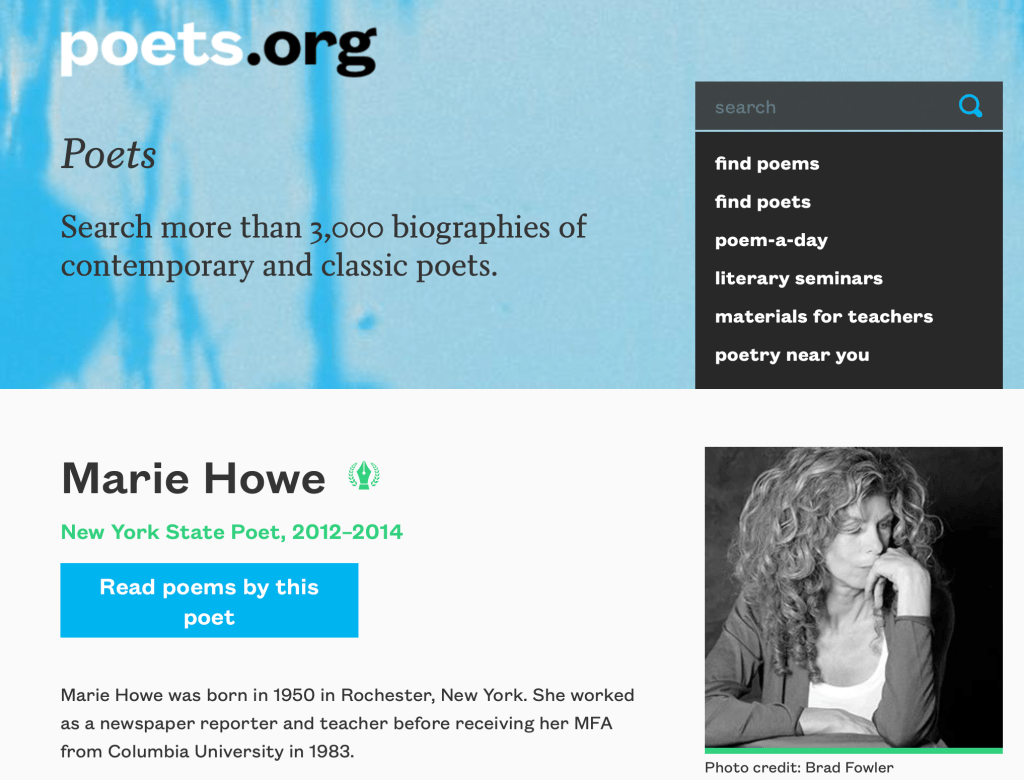
Yes, poetry collections win Pulitzer Prizes too. The 2025 Pulitzer Prize for Poetry has been awarded to Marie Howe’s New and Selected Poems. Howe is known for her observations of everyday life. She explores themes of contemporary womanhood, personal loss, human miracles, sorrow and joy. There are 111 poems in the winning collection. Howe’s direct and honest voice is her trademark. She’s a poet of our time who should not be missed. Some of her most well-known poems involve the loss of her brother in 1989 who died of AIDS-related illnesses. This is what drew me personally to her work many years ago, because I lost a brother about the same time in the same way. Here is one of her poems about this terrible sadness.

What the Living Do

Marie Howe

Johnny, the kitchen sink has been clogged for days, some utensil probably fell down there.
And the Drano won’t work but smells dangerous, and the crusty dishes have piled up

waiting for the plumber I still haven’t called. This is the everyday we spoke of.
It’s winter again: the sky’s a deep, headstrong blue, and the sunlight pours through

the open living-room windows because the heat’s on too high in here and I can’t turn it off.
For weeks now, driving, or dropping a bag of groceries in the street, the bag breaking,

I’ve been thinking: This is what the living do. And yesterday, hurrying along those
wobbly bricks in the Cambridge sidewalk, spilling my coffee down my wrist and sleeve,

I thought it again, and again later, when buying a hairbrush: This is it.
Parking. Slamming the car door shut in the cold. What you called that yearning.

What you finally gave up. We want the spring to come and the winter to pass. We want
whoever to call or not call, a letter, a kiss—we want more and more and then more of it.

But there are moments, walking, when I catch a glimpse of myself in the window glass,
say, the window of the corner video store, and I’m gripped by a cherishing so deep

for my own blowing hair, chapped face, and unbuttoned coat that I’m speechless:
I am living. I remember you.

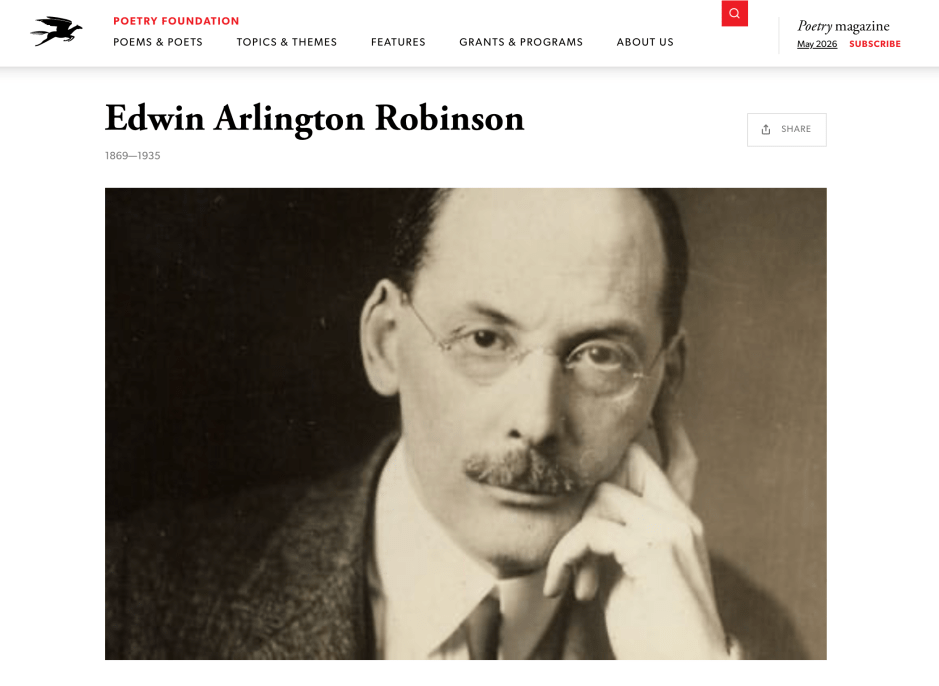
I thought it might be fun to revisit the winner of the first Pulitzer Prize for Poetry. That poet’s name was Edwin Arlington Robinson, and he won the prize two more times after being the first winner. He was known for his narrative skill and psychological depth. Here is what is considered by many to be his most famous poem. It seems a long time ago when he was writing poetry, yet when you read this poem in particular, it seems that he could be writing this poem today. This is because all poetry is about one very complicated subject: humanity.

Richard Cory
Edwin Arlington Robinson

Whenever Richard Cory went down town,

We people on the pavement looked at him:

He was a gentleman from sole to crown,

Clean favored, and imperially slim.

And he was always quietly arrayed,

And he was always human when he talked;

But still he fluttered pulses when he said,

“Good-morning,” and he glittered when he walked.

And he was rich—yes, richer than a king—

And admirably schooled in every grace:

In fine, we thought that he was everything

To make us wish that we were in his place.

So on we worked, and waited for the light,

And went without the meat, and cursed the bread;

And Richard Cory, one calm summer night,

Went home and put a bullet through his head.

Virginia Watts is the author of poetry and stories found in The MacGuffin, Epiphany, CRAFT, The Florida Review, Reed Magazine, Pithead Chapel, Eclectica Magazine among others. She has been nominated four times for a Pushcart Prize. Her debut short story collection Echoes from the Hocker House was short listed for 2024 Eric Hoffer Grand Prize, selected as one of the Best Indie Books of 2023 by Kirkus Book Reviews, and won third place in the 2024 Feathered Quill Book Awards. Please visit her.

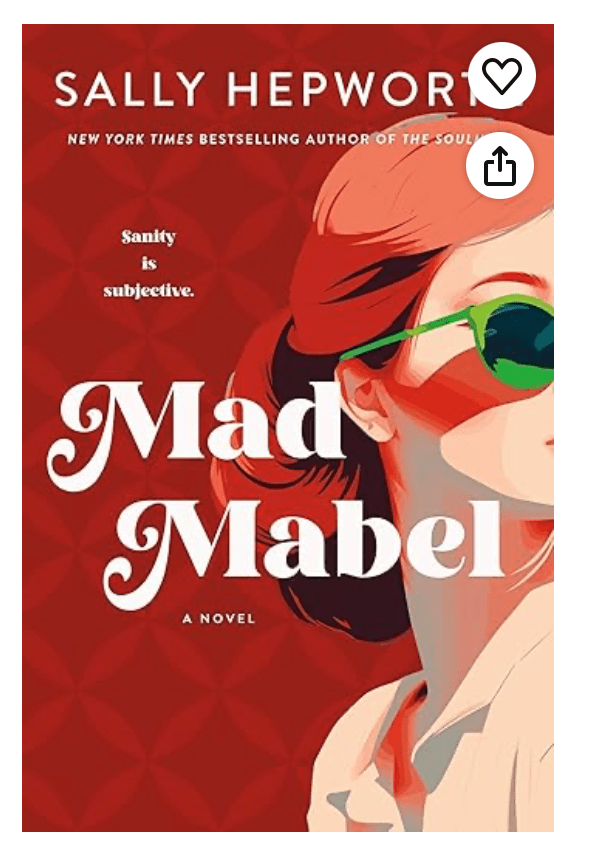
Virginia’s new book is now available from Old Scratch Press:

Her prior poetry chapbooks Shot Full of Holes and The Werewolves of Elk Creek 
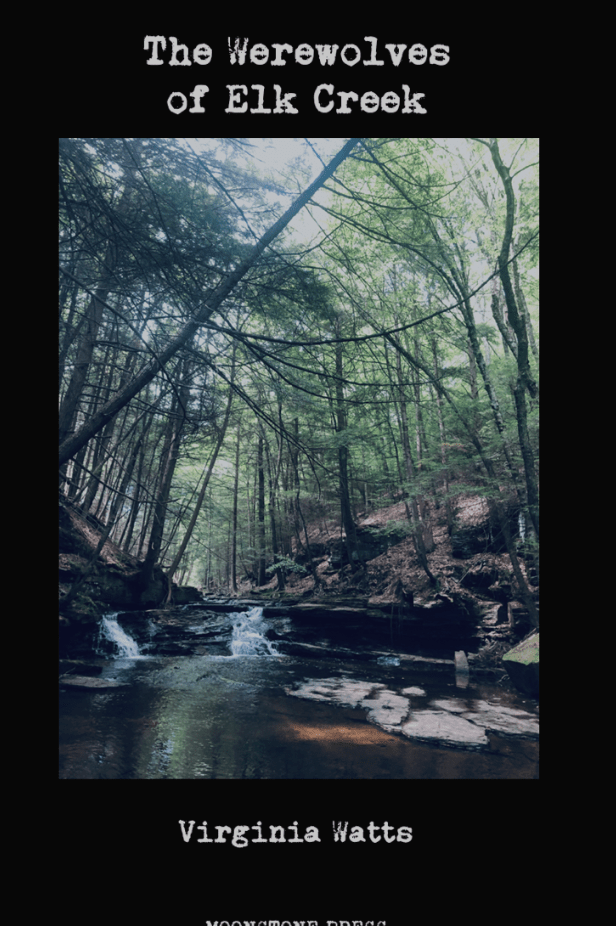
 are available from Moonstone Press. And her debut short story collection Echoes from the Hocker House is not to be missed!

Thank God I’ll Never Be Famous Enough for a Biography.

This week in the New York Times there is an article about Mark Oppenheimer writing Judy Blume’s biography. When he began the project, so he says, she liked him and gave him access to her life and her circle, etc. When he sent her the draft, she no longer liked him or the book he was writing about her. Apparently she sent him quite a big pile of notes, and contact ceased soon after that. He published the book anyway. He, and book’s narrator, Molly Ringwald, feel like Judy has to put up with his book, and that Mark did a fine job. According to the NYT article, Molly said, “There might be moments that Judy doesn’t like or agree with, but overall I think it’s a respectful treatment of her and her literary significance.” And, “If Mark didn’t show Judy’s flaws or humanity, it would be hard to feel invested.”

At what point does your life stop being your own? I might argue it’s when you become a parent. But, eventually they grow up, and you get to pivot back to yourself somewhat. Mark could have written the book with, or without, Judy’s help, and that’s the danger of being that level of author, but the fact that she gave him permission at first, and then was unhappy with what he made of her life, gives me pause. How much do we own our own life story?

The NYT made the main photo of the piece one of Mark sitting in a bunk bed. I don’t like this. He’s not at the age, or in life circumstances where he would actually be the person who sleeps in that bed. To me it is a ploy to make him look more innocent. I don’t think he is. I’m disappointed in Molly. For full disclosure, I read a bit of Judy Blume as a kid, from Margaret to some of the adult books, most of them for the sexy bits, honestly. Hey, I was in middle school. But, with apologies to Judy, I have seldom thought of her since. I tried reading Margaret to my daughter when she was in middle school, and we both found it didn’t age well. Plus, my daughter was not raised with the same religiosity I was. So there’s that for the longevity of the book in my life. And anybody can write a biography of anybody. The trick, like it is with our own books, is to get people to read it.

Still, do Mark, Molly, and his publishing company have the right to own Judy’s story, to make the truth of Judy’s life Mark’s version of the truth?

I say no. I say this is another woman losing agency over her own body, life, and body of work, to a man and a corporation. And it seems her only recourse might be for Judy to write her autobiography, to set the record straight. I cannot imagine anything as boring as writing out my own life story. And believe you me, I’ve had a fascinating life. Ha! Whether I have or I haven’t, I’m not ready to relive it all like I’ve had a near death experience. No, no no.

So, whose life is it anyway?

I would love to hear your thoughts.


Dianne Pearce is the chief editor and bottle washer at Current Words Publishing, and the half-cocked imaginer behind Old Scratch Press and Instant Noodles. Pearce loves helping writers realize the dream of having their work published. I mean she is really crazy about doing that for some reason. To that end, to join in the fray, to look at the thing from the other side, to stand in another’s shoes, and all of those things, she is fully expecting and promising to publish her first collection of poetry, In the Cancer Cafeteria, spring of 2026. Please don’t hold your breath. For very long. Happy 2026!

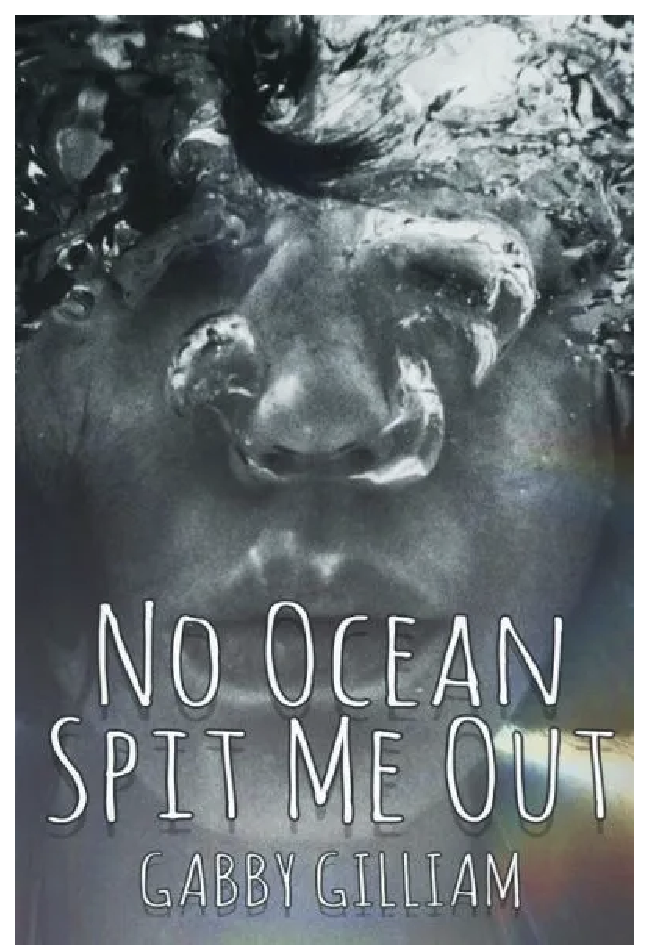
Congrats to Gabby and Morgan!

Gabby and Morgan are part of the featured selections from the Community of Literary Magazines and Presses for Women’s History Month!

Check it out here:

And pick up a copy of these great books!

NO OCEAN SPIT ME OUT is a captivating debut collection of poetry by Gabby Gilliam that delves deep into the intricate tapestry of family dynamics and personal evolution. Within its 30 poems, the collection embarks on a profound journey through the stages of coming of age, navigating the complexities of familial bonds, grappling with organized religion, and ultimately, embracing the essence of self-acceptance.

Each poem in NO OCEAN SPIT ME OUT serves as a poignant reflection of the human experience, capturing moments of vulnerability, resilience, and growth with eloquence. Through lyrical prose and emotive imagery, Gilliam paints a vivid portrait of the joys and struggles inherent in the process of self-discovery.

Whether you’re seeking solace in the shared experiences of family relationships or searching for introspective insights into the nuances of identity and faith, Gilliam’s collection offers a profound and thought-provoking exploration of the human condition.

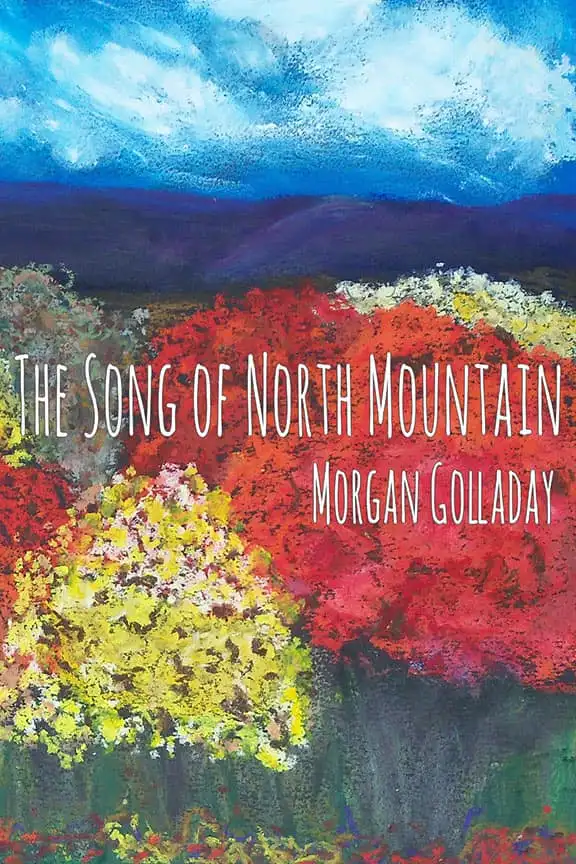
From the mighty pen of artist and author Morgan Golladay comes The Song of North Mountain, a transformative collection of poetry and art celebrating the famous and mystical North Mountain of Appalachia.

North Mountain, a wildland in the George Washington and Jefferson National Forests of western Virginia, has been recognized by the Wilderness Society as a special place worthy of protection from logging and road construction. The Wilderness Society has designated the area as a “Mountain Treasure.”

Morgan Golladay brings her readers to dwell in the reverence of this wonderful wilderness.

Golladay is an award-winning author who was raised on North Mountain and lives in coastal Delaware as part of a thriving artist and author community. All words and art in this book are by Golladay.

The Song of North Mountain is National Book Award nominee!