Launch Your Imagination: Speculative Poetry in the Artemis Age

(Image Credit: NASA/Keegan Barber)

This year’s National poetry month began with the successful liftoff of NASA’s Orion spacecraft as part of the Artemis mission, a forward step in manned spaceflight to the Moon—so it’s a perfect month to open a discussion about the future of Speculative poetry!

Speculative poetry is having a moment…

Speculative poetry, or SpecPo as it is also known, is coming into its own, especially in the last few years.  Long overshadowed by science fiction literature, speculative poetry has finally been accepted by the Science Fiction and Fantasy Writers Association (SFWA) as valid publications to become a member and even has its own Nebula Award category as of 2025, with perhaps a permanent Hugo award category in the works as well.

These are the 2025 Nebula Award finalists for best poem. (You can read most of them online by clicking on the title.)

Of course, the SFPA-the Science Fiction & Fantasy Poetry Association—established in 1978–has long awarded speculative poetry in all its many incarnations: the Dwarf Stars award, the Rhysling, the Elgin, and Grand Master and Lifetime Service awards. It also bears noting that the Canadian Science Fiction and Fantasy Association has been awarding an Aurora Award for “best poem/song” since 2011.

But with the addition of the Nebula and possibly Hugo awards, the momentum for speculative poetry is increasing.

What is Speculative poetry?

Speculative poetry generally refers to a poem with hard science-fiction or high fantasy elements, the latter which can include horror, mythology, fairy tales, folklore, so you can argue that it has been around forever.  But it has evolved over time to be more futuristic and diverse in nature, a situation which I think will continue to gather speed as we race for the Moon and Mars via future space missions.

The SFPA’s founder addresses some of the difficulties in defining Speculative poetry in this essay:

About Science Fiction Poetry, by Suzette Haden Elgin

Like many writers interested in science fiction, I started out writing poetry and then attempted to write science fiction short stories, never pausing to consider speculative poetry as a natural next step instead.  When my sallies into short science fiction failed to match my vision, I began to explore poetry more deeply, especially narrative poetry, but again, never considered speculative poetry specifically.  The truth is, I was not encountering much speculative poetry in my reading.  In the science fiction magazines I read, poems seemed to appear as filler while the stories and novellas were the main attractions.  The pieces tended to be very short and from a limited number of authors. This was my perception at the time, though I’m sure it was not unique. There were and have been many magazines publishing speculative poetry all along, but they did not come across my radar as a fledgling writer.

After many years of writing and publishing poetry, I began to explore short fiction again.  I wrote an opening scene for what I first envisioned as a story, but it just didn’t materialize further.  I was excited about the scene, though, and the vision would not leave me.  Finally, the light bulb came on and I realized that this scene would work just as well, maybe better, as a poem!  That reworked scene became a poem that was later accepted by Star*Line.

Speculative Poetry from Past to Present

To read some poems from speculative poetry’s past, peruse Poems of the Fantastic and Macabre a list curated by Theodora Goss, a professional fantasy writer, poet, and Victorian literature scholar who teaches Fantasy literature.

There’s a lot of excitement surrounding Speculative Poetry and in my research I ran across several articles that express that:

Locus Magazine has a feature on Speculative poetry this month: The Great Shapeshifter: Speculative Poetry

Reactor Magazine‘s article Weird as Hell: Falling in Love with Speculative Poetry by Diane Callahan. She explains how speculative poetry can serve as a gateway into poetry for people who don’t normally read it or embrace the label.

What you can do to support Speculative poetry right now

Join the Speculative poetry initiative to make the Hugo Award for Poetry a permanent category. It is a process that takes two years and must be ratified by the World Science Fiction Society (WSFS) (TheHugoAwards.org) who administer the award.

Submit your work and read magazines that publish speculative poetry:

The SFPA publishes a market list of paying and non-paying speculative poetry magazines.

Attend or participate in one of Speculative Poetry’s Speculative Sunday reading series

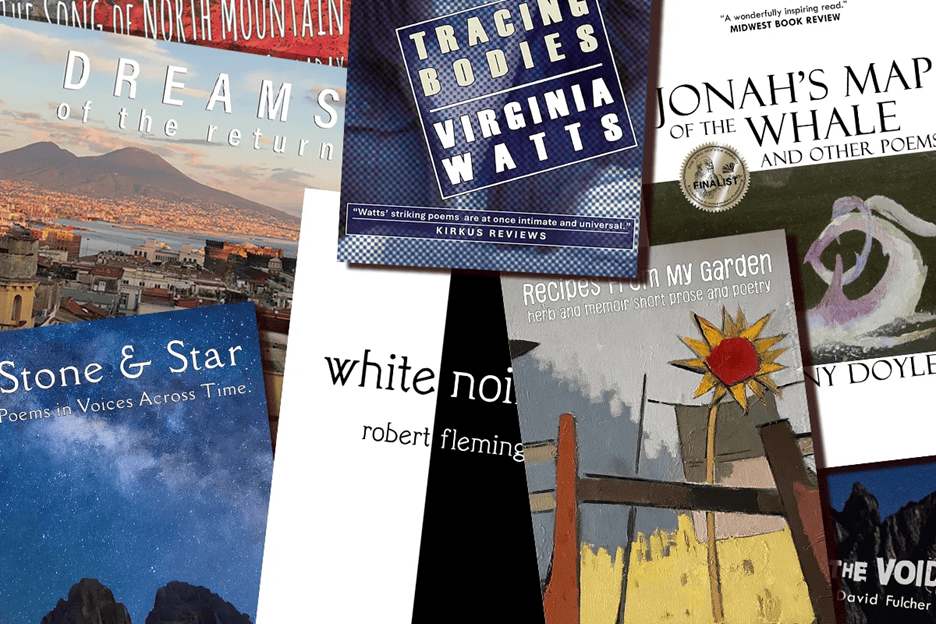
Read a book from Speculative Poetry’s Speculative Poetry Book Collections.

The Future and Speculative Poetry

The future of Speculative poetry looks bright–it is a form exceptionally adaptable to our changing world and open to the increasingly diverse visions of reality and the future of humankind. It’s accessible and welcoming to the exploration of social, political and multicultural issues.

And as the SFWA states in their Introduction to Speculative Poetry,

“Speculative poetry is not only for science fiction and fantasy fans. It is for any human with a heart and a desire to declare that their dreams should be heard.”

Thank you for reading!

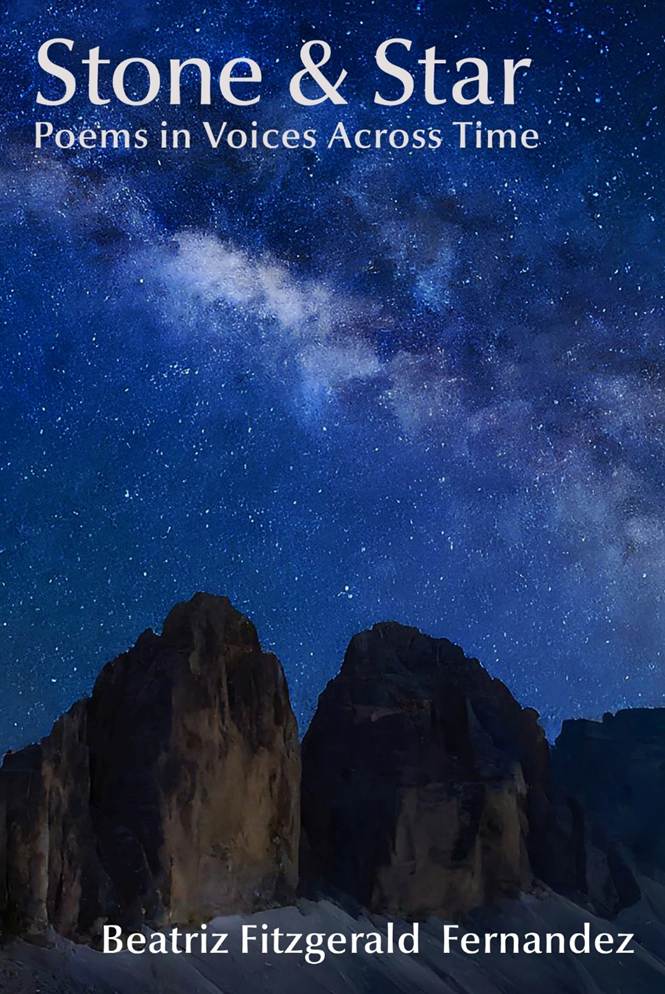
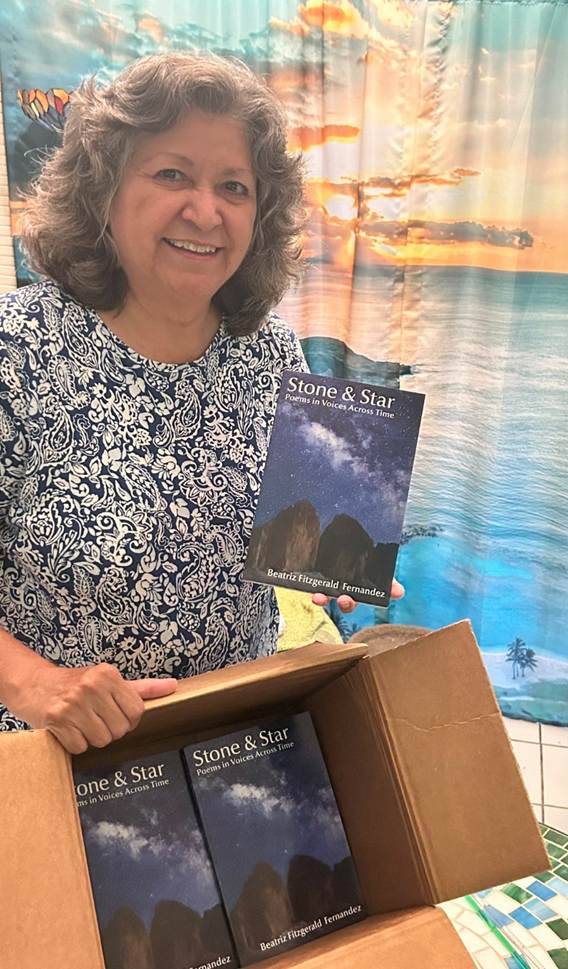
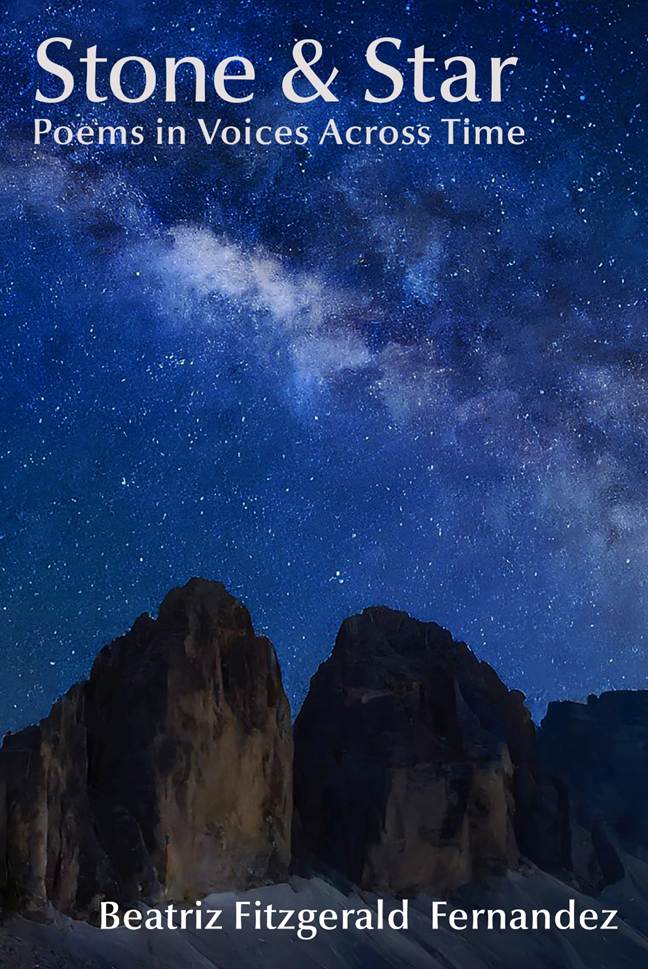
Beatriz F. Fernandez is a Miami area poet and University Reference librarian. She is the author of three poetry chapbooks, the most recent of which is Simultaneous States  (2025) by Bainbridge Island Press.  In 2025, she became a member of the Old Scratch Press writing collective.

Please follow us here and on Facebook. https://www.facebook.com/OLDSCRATCHPRESS/

Our current theme for submissions is Al Dente. For more information click here.

AL DENTE In cooking, pasta or risotto al dente (/ælˈdɛnteɪ/, Italian: [al ˈdɛnte]; lit. ’to the tooth’) is cooked to be firm to the bite, requiring a brief cooking time. The term also extends to firmly-cooked vegetables. In contemporary Italian cooking, it is considered to be the ideal consistency for pasta.

What does al dente mean to you? To your neighborhood vampire it probably means something different. How about to the prospector mining gold?

Send us something that you haven’t overcooked!

Submissions close on July 5, 2026; the issue publishes SEPTEMBER 1, 2026.

OSP members are featured in an issue of MiniMAG!–curated and compiled by OSP founding member Anthony Doyle.

Embracing Nature’s Beauty: A Morning Reflection

by Nadja Maril, a founding member of Old Scratch Press Collective

What a sight on a damp misty morning, a robin perched on a street sign preening its feathers. The orange red of its breast feathers contrasting sharply with the bright green and white lettered sign.

My cell phone was in my back pocket, but I didn’t snap a photo. I watched the bird fly away and listened to the other birds around me. The neighborhood was just beginning to awake. Down the road I spied a few dog-walkers taking advantage of the early hour temperatures.

A plump brown bunny nibbled on clover. I decided to take his photograph, but he didn’t pose for long and took refuge in a flower bed. My gaze shifted to the colors of all those flowers: purple, pink, yellow, blue and red.

 The current “tropical rain forest” weather hovering over our region has been a boon to gardeners. Blossoms are lush. It’s been a boon to weeds too, but it’s too early in the morning for me to think about that.

It’s the first day of April and the start of National Poetry Month. I get inspired by nature: birds, new buds, bunny sightings. Other writers are inspired by the hum of machines or the echo of human voices. Whatever gets your mind engaged in the world around you, write it down.

Focusing on the Moment

I’m focusing on the present moment, a difficult task. My mind tends to jump forwards and backwards. I worry about what I need to do and replay what I might have done wrong. I recall happy memories and then remind myself the past is over and if I stay there too long, I’ll miss what is happening in the present.

Photo by George Filatov on Pexels.com

This balance between present, past, and future is an interesting dilemma. Particularly because all is open to interpretation. What we remember as the past, is most likely different from our neighbor’s recollection. What we prioritize for the future is usually different too.

Politically, socially, environmentally our planet is at a crossroads. Some of us are just struggling to survive. Others of us want to change things for the better, but it can be a challenge to figure out how.

I read and listen to media reports, and hear different versions of the same event. I’ve heard the term “fake news” repeatedly bandied about. I hear leaders speaking outright lies. I hear people being described in ways designed to incite violence and hatred.

Photo by lalesh aldarwish on Pexels.com

Overwhelmed by all the negativity I tune out.

Change happens slowly, in small incremental ways, I remind myself. Small acts of courage. Small acts of kindness. The arts, the federal funding of which is currently under attack, is a way to share beauty and foster connection. Arts in education provides paths for children to develop alternative learning styles that can deepen comprehension. Whether you volunteer your time, donate money, or support the arts by buying a ticket to a museum or a play; you’re doing something positive.

Writers are witnesses. Documenting the good and the beauty you observe is an important job alongside the documentation of injustice and cruelty. Writing a short fable can be one way to start. Remember Aesop’s Fables?   

Aesop is thought to have been a storyteller, and possibly a slave, who lived in Greece between 620 and 564 B.C.  Translated from Greek and Latin, and available in versions for adults and children online and in print, I share below one of my favorites.


The Bundle of Sticks

A certain Father had a family of Sons, who were forever quarreling among themselves. No words he could say did the least good, so he cast about in his mind for some very striking example that should make them see that discord would lead them to misfortune.

One day when the quarreling had been much more violent than usual and each of the Sons was moping in a surly manner, he asked one of them to bring him a bundle of sticks. Then handing the bundle to each of his Sons in turn he told them to try to break it. But although each one tried his best, none was able to do so.

The Father then untied the bundle and gave the sticks to his Sons to break one by one. This they did very easily.

“My Sons,” said the Father, “do you not see how certain it is that if you agree with each other and help each other, it will be impossible for your enemies to injure you? But if you are divided among yourselves, you will be no stronger than a single stick in that bundle.”

In unity is strength.

WRITING PROMPT: Can you write your own modern-day fable? Whether you use animals, plants, or people, think of something simple you observed that taught you a lesson. Brief and to the point, maybe your fable is a piece of flash fiction. Set it aside and read it again out loud two days from now. If you think it is good, share it. Maybe sharing means posting it online yourself, printing it out and sending it to friends by “snail mail,” or perhaps sending it to a literary magazine. Check out Instant Noodles Literary Review. Our current theme for submissions is Al Dente. For more information click here.

Thank you for reading. 

Writers and Readers, don’t forget to forget to follow us on Facebook to get the latest news and learn about submission opportunities.

Nadja Maril is an award winning writer and poet who has been published in dozens of online and print literary journals and anthologies including: Lunch Ticket, Spry Literary Journal, Invisible City Literary Review, Instant Noodles and The Journal of Compressed Creative Arts. She is the author of Recipes From My Garden, published by Old Scratch Press (September 2024), a Midwest Review California Book Watch Reviewer’s Choice. An Anne Arundel County Arts Council Literary Arts Award winner, her work has been nominated for the Pushcart Prize and The Best of the Net. She has an MFA in creative writing from Stonecoast at USM.

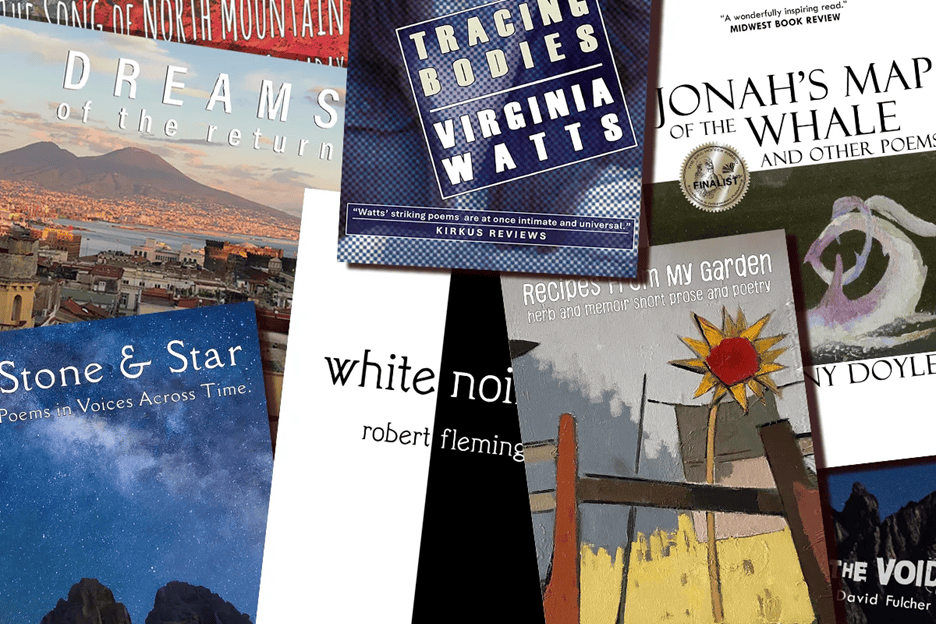
Check out Nadja’s chapbook below and here.

A Poet’s Mind, A Novelist’s World

At Old Scratch Press, we know Anthony Doyle first and foremost as a poet.

A writer of precision. Of restraint. Of lines that do more than they seem to at first glance.

That sensibility does not disappear when he moves into prose. It deepens.

In Hibernaculum, Doyle brings that same attention to language and silence into a speculative world shaped by human hibernation. The result is a novel that feels, at times, like an extended meditation. A work that unfolds deliberately, asking the reader not just to follow a story, but to sit inside it.

This is not a departure from his poetry. It is an expansion of it.

The same questions are here. Identity. Time. What it means to leave and return. What it means to remain.

For those who have read Anthony’s poetry with us, Hibernaculum offers a chance to experience that voice working at a different scale. For those who have not yet encountered his work, this is a striking place to begin.

For a limited time, the Kindle and Nook editions of Hibernaculum are available for 99¢.

You can learn more here.

Poems Come in Many Forms. Let’s Look at Odes


            There are many types of formal poetry and for anyone who likes to write poetry, it’s worth your time getting to know these forms and trying a few as well. This teaches us all about meter and rhyme, how a poem should look on the page, and trying some of these is just plain fun. Here is a short run down of twenty different types of poetry. See how you do with some of these! You might surprise yourself, find a from you really like, and write a collection of them. 

Acrostic: first letter of each line spells something

Ballad: narrative like a folk story

Blank Verse: Unrhymed but has iambic pentameter

Cinquain: five-line poem with 2-4-6-8-2 syllables per line

Concrete: has a shape on the page like a tree

Elegy: a mourning to someone gone

Epic: long, narrative work like Hiawatha

Found: taking and reframing words from other sources like newspapers

Ghazal: couplets that share rhyme and refrain

Haiku: Japanese form of 5-7-5 syllable pattern 

Limerick: a humorous poem of 5 lines

Lyric: short poems of emotion

Narrative: a form of story telling

Ode: message to a subject, event or object

Pastural: Idealized environment, often rural life

Sestina: complex 39-line poem

Slam: Oral, competitive poetry

Sonnet: 14-line poem with specific rhyme scheme about love think Shakespeare

Villanelle: 19-line. 5 tercets followed by a quatrain with 2 repeating rhymes and 2 refrains

The Ode is a great form to try. Odes were developed in Ancient Greece. An ode then was a song or chant performed to celebrate athletic victories. Odes are praise using rich and clever description. Here’s a famous example of an ode poem. 

Ode to the Hotel Near the Children’s Hospital

BY KEVIN YOUNG

Praise the restless beds

Praise the beds that do not adjust

     that won’t lift the head to feed

     or lower for shots

     or blood

     or raise to watch the tinny TV

Praise the hotel TV that won’t quit

      its murmur & holler

Praise the room service

      that doesn’t exist

      just the slow delivery to the front desk

      of cooling pizzas

      & brown bags leaky

      greasy & clear

Praise the vending machines

Praise the change

Praise the hot water

& the heat

       or the loud cool

       that helps the helpless sleep.

Praise the front desk

       who knows to wake

       Rm 120 when the hospital rings

Praise the silent phone

Praise the dark drawn

       by thick daytime curtains

       after long nights of waiting,

       awake.

Praise the waiting & then praise the nothing

       that’s better than bad news

Praise the wakeup call

       at 6 am

Praise the sleeping in

Praise the card hung on the door

       like a whisper

       lips pressed silent

Praise the stranger’s hands

       that change the sweat of sheets

Praise the checking out

Praise the going home

       to beds unmade

       for days

Beds that won’t resurrect

       or rise

that lie there like a child should

        sleeping, tubeless

Praise this mess

         that can be left


Virginia Watts is the author of poetry and stories found in The MacGuffin, Epiphany, CRAFT, The Florida Review, Reed Magazine, Pithead Chapel, Eclectica Magazine among others. She has been nominated four times for a Pushcart Prize. Her debut short story collection Echoes from the Hocker House was short listed for 2024 Eric Hoffer Grand Prize, selected as one of the Best Indie Books of 2023 by Kirkus Book Reviews, and won third place in the 2024 Feathered Quill Book Awards. Please visit her.

Virginia’s new book is now available from Old Scratch Press:

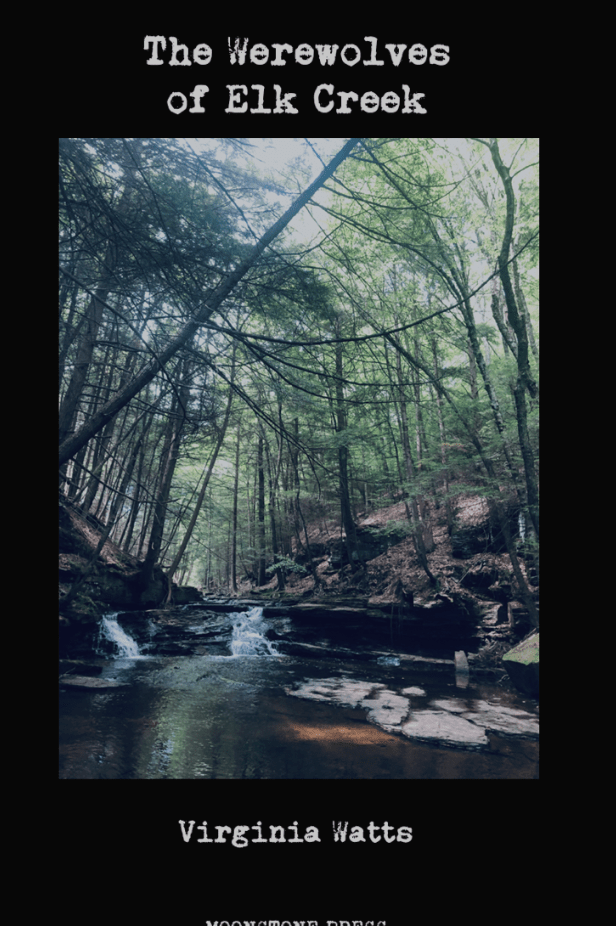
Her prior poetry chapbooks Shot Full of Holes and The Werewolves of Elk Creek 

 are available from Moonstone Press. And her debut short story collection Echoes from the Hocker House is not to be missed!

Thank God I’ll Never Be Famous Enough for a Biography.

This week in the New York Times there is an article about Mark Oppenheimer writing Judy Blume’s biography. When he began the project, so he says, she liked him and gave him access to her life and her circle, etc. When he sent her the draft, she no longer liked him or the book he was writing about her. Apparently she sent him quite a big pile of notes, and contact ceased soon after that. He published the book anyway. He, and book’s narrator, Molly Ringwald, feel like Judy has to put up with his book, and that Mark did a fine job. According to the NYT article, Molly said, “There might be moments that Judy doesn’t like or agree with, but overall I think it’s a respectful treatment of her and her literary significance.” And, “If Mark didn’t show Judy’s flaws or humanity, it would be hard to feel invested.”

At what point does your life stop being your own? I might argue it’s when you become a parent. But, eventually they grow up, and you get to pivot back to yourself somewhat. Mark could have written the book with, or without, Judy’s help, and that’s the danger of being that level of author, but the fact that she gave him permission at first, and then was unhappy with what he made of her life, gives me pause. How much do we own our own life story?

The NYT made the main photo of the piece one of Mark sitting in a bunk bed. I don’t like this. He’s not at the age, or in life circumstances where he would actually be the person who sleeps in that bed. To me it is a ploy to make him look more innocent. I don’t think he is. I’m disappointed in Molly. For full disclosure, I read a bit of Judy Blume as a kid, from Margaret to some of the adult books, most of them for the sexy bits, honestly. Hey, I was in middle school. But, with apologies to Judy, I have seldom thought of her since. I tried reading Margaret to my daughter when she was in middle school, and we both found it didn’t age well. Plus, my daughter was not raised with the same religiosity I was. So there’s that for the longevity of the book in my life. And anybody can write a biography of anybody. The trick, like it is with our own books, is to get people to read it.

Still, do Mark, Molly, and his publishing company have the right to own Judy’s story, to make the truth of Judy’s life Mark’s version of the truth?

I say no. I say this is another woman losing agency over her own body, life, and body of work, to a man and a corporation. And it seems her only recourse might be for Judy to write her autobiography, to set the record straight. I cannot imagine anything as boring as writing out my own life story. And believe you me, I’ve had a fascinating life. Ha! Whether I have or I haven’t, I’m not ready to relive it all like I’ve had a near death experience. No, no no.

So, whose life is it anyway?

I would love to hear your thoughts.


Dianne Pearce is the chief editor and bottle washer at Current Words Publishing, and the half-cocked imaginer behind Old Scratch Press and Instant Noodles. Pearce loves helping writers realize the dream of having their work published. I mean she is really crazy about doing that for some reason. To that end, to join in the fray, to look at the thing from the other side, to stand in another’s shoes, and all of those things, she is fully expecting and promising to publish her first collection of poetry, In the Cancer Cafeteria, spring of 2026. Please don’t hold your breath. For very long. Happy 2026!

Congrats to Gabby and Morgan!

Gabby and Morgan are part of the featured selections from the Community of Literary Magazines and Presses for Women’s History Month!

Check it out here:

And pick up a copy of these great books!

NO OCEAN SPIT ME OUT is a captivating debut collection of poetry by Gabby Gilliam that delves deep into the intricate tapestry of family dynamics and personal evolution. Within its 30 poems, the collection embarks on a profound journey through the stages of coming of age, navigating the complexities of familial bonds, grappling with organized religion, and ultimately, embracing the essence of self-acceptance.

Each poem in NO OCEAN SPIT ME OUT serves as a poignant reflection of the human experience, capturing moments of vulnerability, resilience, and growth with eloquence. Through lyrical prose and emotive imagery, Gilliam paints a vivid portrait of the joys and struggles inherent in the process of self-discovery.

Whether you’re seeking solace in the shared experiences of family relationships or searching for introspective insights into the nuances of identity and faith, Gilliam’s collection offers a profound and thought-provoking exploration of the human condition.

From the mighty pen of artist and author Morgan Golladay comes The Song of North Mountain, a transformative collection of poetry and art celebrating the famous and mystical North Mountain of Appalachia.

North Mountain, a wildland in the George Washington and Jefferson National Forests of western Virginia, has been recognized by the Wilderness Society as a special place worthy of protection from logging and road construction. The Wilderness Society has designated the area as a “Mountain Treasure.”

Morgan Golladay brings her readers to dwell in the reverence of this wonderful wilderness.

Golladay is an award-winning author who was raised on North Mountain and lives in coastal Delaware as part of a thriving artist and author community. All words and art in this book are by Golladay.

The Song of North Mountain is National Book Award nominee!

What Do You Think of That “Poet Voice?” You Know the One.

If you’ve ever been to a poetry reading, you’ve probably heard it. The slow cadence. The dramatic pauses. The slightly mystical tone. The voice that signals: I am now doing Poetry.

In fact, when I think about that sentence read in “poetry voice” it would be read like this:

The voice
that signals
I am now
doing
poetry

And each line would end with an up tone, as if the performer was asking a question.

The recent New York Times article digs into this phenomenon, often called the “poet voice,” and asks why many poets fall into the same stylized way of reading their work aloud.

For some listeners, the article says, that way of reading feels comforting and familiar. For others, awkward, distancing, or makes the poem feel like a performance ritual rather than a piece of language meant to connect.

The article points out something important: this isn’t just about aesthetics. It’s about how poetry exists in two worlds at once. On the page, poetry is quiet, private, intimate. Out loud, it becomes physical, embodied, communal. Voice, breath, pacing, silence, and tone all reshape meaning. The same poem can feel completely different depending on how it’s read.

And yet, many readings sound strangely similar.

Why?

There’s also a bigger tension here. Poetry has deep roots in oral tradition. Long before books, poetry lived in voices, memory, and storytelling. But modern literary culture often treats performance and “serious writing” as separate worlds. Spoken word, slam, and performance poetry are seen as different categories entirely, even though they’re doing what poetry has always done: using voice to create meaning. They also might sound different, as performance, when compared to how people read on the performance evenings in your MFA program.

I remember, from the first time I saw poets read aloud, at a bar in Philadelphia in the 1990s, thinking that it was weird that many of them read their work in the same way, and wondering why they did.  When I was in my MFA program, and we would read our work at student readings, us poets, fellow students, often read that way. I remember it as mainly the other white women, and that the students and teachers/established visiting poets, could be people who did it. Not that all of them did it, you understand, but that it happened at times among student readers, teacher readers, and visiting poet readers, and it was, in the main, done by my fellow white women. I don’t remember the guys reading that way. I also remember that the teachers (minus a few) and the students in the poetry track were incredibly serious about the writing and performing of poetry. I don’t know that I ever got quite that serious, which is probably a character flaw. You know I’ve got me some of those.

On Threads people are losing their minds about the article (slow news day?) so, let’s talk about it:

• When you hear poetry read aloud, does it deepen your connection to the work or pull you out of it?
• Do you think “poet voice” is a real thing, or just a stereotype we’ve internalized?
• When you hear poetry read aloud, does it deepen your connection to the work or pull you out of it?
• Have you heard “poet voice?”
• How do you read your own work aloud? Casually, dramatically, flat, musical, conversational?
• Should poetry readings sound like performance, conversation, or something else entirely?
• Is hearing the poet’s voice an added layer of meaning, or an intrusion on the reader’s imagination?

Could you….
drop your thoughts….
in the comments?

Explore Themed Writing Calls: Get Published!


by Nadja Maril,
 a founding member of Old Scratch Press Collective

Photo by cottonbro studio on Pexels.com

You’re looking for something to read and you go online and start googling. You enter words that describe what you find entertaining.

This is what editors and publishers do when they solicit submissions by selecting a theme. They try to narrow the number and types of submissions to zero in on what they’re seeking, based on what they think their readers will enjoy.

They choose a word, WATER, for example, and they announce their next issue theme will be WATER.  Or maybe they choose a more specific description such as CHILDHOOD MEMORIES ABOUT BASEBALL. They request that writers submit pieces specifically related to the theme. If you send something outside the theme, it will be automatically rejected

                Seize the Opportunity   

The call out can be very specific. For example, this month Screams and Wails Anthology( deadline  2/28/2026) Screams and Wails Anthology is looking for “Horror stories with music or music culture as a predominant theme.”

A part of you may be thinking, I love the music scene but I don’t write horror stories. Or maybe you write horror stories but you have very little inside information on music culture. Are you going to give up that easily? A call out for a specific theme narrows the competition, if you are willing to do the homework. Plus, you may learn something new and have fun.

Here’s another theme call-out. Tokyo Poetry Journal https://www.topojo.com/

is looking for submissions for Volume 18 for their “Gather ‘Round Children—a special issue celebrating oral-tradition poetry and the timeless power of stories carried by the human voice. Specifically they ask for poems that “feel as if they could be shared around a fire: lyrical, narrative, rooted in memory or myth, and crafted to live strongly on the page.”

Maybe you do not consider yourself a poet but you love to sing to your children. Perhaps this call-out might inspire you to try writing a poem that you imagine as a song.

The quarterly online journal Way Words https://www.writersworkout.net/waywords

Is looking for stories, essays and poems that associate with the theme Habits. The Editor’s tip: Habits are things you do the same way every time, usually with the hope of a positive outcome.

We all have habits. Some we do to make us healthier, for example, I take a walk each morning. What is a habit you’d enjoy writing about? As a bonus you could write about someone else’s habit that you admire and your poem or could be a special gift to them, even if it doesn’t get published.

Taking a walk each morning is a habit you might want to write about.

is putting together an anthology of short stories and the theme is
Splash. The word splash provides a good deal of latitude. I can think of stories related to swimming, waterfalls, and jumping into puddles as well as the use of the word as a term for making an impressive and immediate impact. If you enjoy word puzzles, the challenge of all the different ways the word Splash can be used should yield impressive results.

Instant Noodles Literary Magazine https://duotrope.com/duosuma/submit/instant-noodles-O0jFm

has a theme call out: Planes, Boats, Cars, Trains. The request is for poems, short essays, memoir and fiction (under 500 words). The pieces are for publication online in Issue One of Volume 6 (Deadline 3/15/2026). The ideas one could conceive of  that one could submit are fairly wide ranging. So if you are a writer, how are you going to make you piece of writing stand out from the crowd?

 As one of the editors on the project, I thought I’d share what attracted me to this particular theme.

Most humans live a fairly frenetic life, often on the move. In the famous ancient Greek stories surrounding Oedipus, he is asked a riddle by the sphinx in exchange for safe passage and his life, “Who walks on four legs in the morning, ​ two legs at noon and  three feet in the evening? The answer “Man” has humans crawling as babies in the morning, walking on two legs as adults and needing a cane ( the 3rd leg) in the evening. Mankind is always on the go. If not walking, we’re in the car, on a train, plane, or boat. (Feel free to include buses, helicopters, and subways).

Many of the best stories and poems involve getting from point A to point B via a car, train, boat, or plane. Are you up to the challenge? LET’S START WRITING….

WRITING PROMPT

        Planes, Boats, Cars, Trains

Looking out the window, inside at the passengers or thinking about something? What happens when you’re on the move?

Interesting things can happen when you’re on the move and in a confined space. Plenty of murder mysteries take place on a boat or a train. The number of passengers are limited and there are places to hide.

The passenger looks out a window and see images that may bring joy or dread. They may be stuck sitting next to a stranger they find fascinating or an acquaintance they’d prefer to avoid. Create a scene, write down a memory, convey your feelings about a brief journey.

Then think: What if? What happens if the protagonist has lost their ticket or the car breaks down? Maybe it happened, Maybe you’re imagining it happening.

Here’s the hard part. Make it short. Every word should count. Read what you’ve written out loud. Each phrase/ and/or sentence should provide something essential. Whatever you can eliminate, start crossing stuff out.

Read it again. Let it sit for a week. Do another revision and make certain whatever and whenever you submit to Instant Noodles  Literary Magazine or any other publication, you have carefully reviewed your work and it is ready for publication. Check over carefully for grammar, spelling, and punctuation errors.

Thank you for reading and please follow us here and on Facebook.https://www.facebook.com/OLDSCRATCHPRESS/

Nadja Maril is an award winning writer and poet who has been published in dozens of online and print literary journals and anthologies including: Lunch Ticket, Spry Literary Journal, Invisible City Literary Review, Instant Noodles and The Journal of Compressed Creative Arts. She is the author of Recipes From My Garden, published by Old Scratch Press (September 2024), a Midwest Review California Book Watch Reviewer’s Choice. An Anne Arundel County Arts Council Literary Arts Award winner, her work has been nominated for the Pushcart Prize and The Best of the Net. She has an MFA in creative writing from Stonecoast at USM. 

https://www.barnesandnoble.com/w/recipes-from-my-garden-nadja-maril/1145598579

Collaboration with Who?

by ROBERT FLEMING, Founding member of OLD SCRATCH PRESS – a poetry/short-form collective | estd. 2023

In January, 2024 I wrote a blog on Hybrid Poetry which is an integration of two or more art forms, where one form is text.

If you create a hybrid work, who should you collaborate with? If you choose another person you will have to coordinate with them and all their peculiarities. Such a Drag! Why not collaborate with yourself? Only have to deal with when you are in a good or bad mood.

My hybrid blog showed my first visual poem, at age 11, I integrated poetry and visual drawing with crayons.

Figure 1.

Do you have two or more skills that can be integrated? Pick them from this list.

  • writing poetry
  • writing prose
  • creating visual art
  • music: playing an instrument
  • singing

When you join two skills, it might have been given a name:

  • prose poetry = writing prose and writing poetry
  • visual poetry = writing poetry and creating visual art
  • performance poetry = (playing an instrument or singing) and writing poetry

If you have integrated two skills before:

  • How did it go?
  • Would you do it again?
  • Consider not just the quality of your work but did you enjoy it?

In deciding whether to collaborate with yourself:

  • Comparatively at what skill level (beginner, intermediate, advanced) are your two skills? Are they at the same skill level or different? My two skills of writing poetry and creating visual art are at the same level.
    • If your skills levels are not at the same level (e.g. intermediate in writing poetry, beginner in playing an instrument), can you accept that your work produced is likely to be at the lower skill level?
    • What will you do with your work: celebrate it and share it with others, share it with yourself, or trash it?
Mem So CA / Hole in Head Cover – seesaw 2
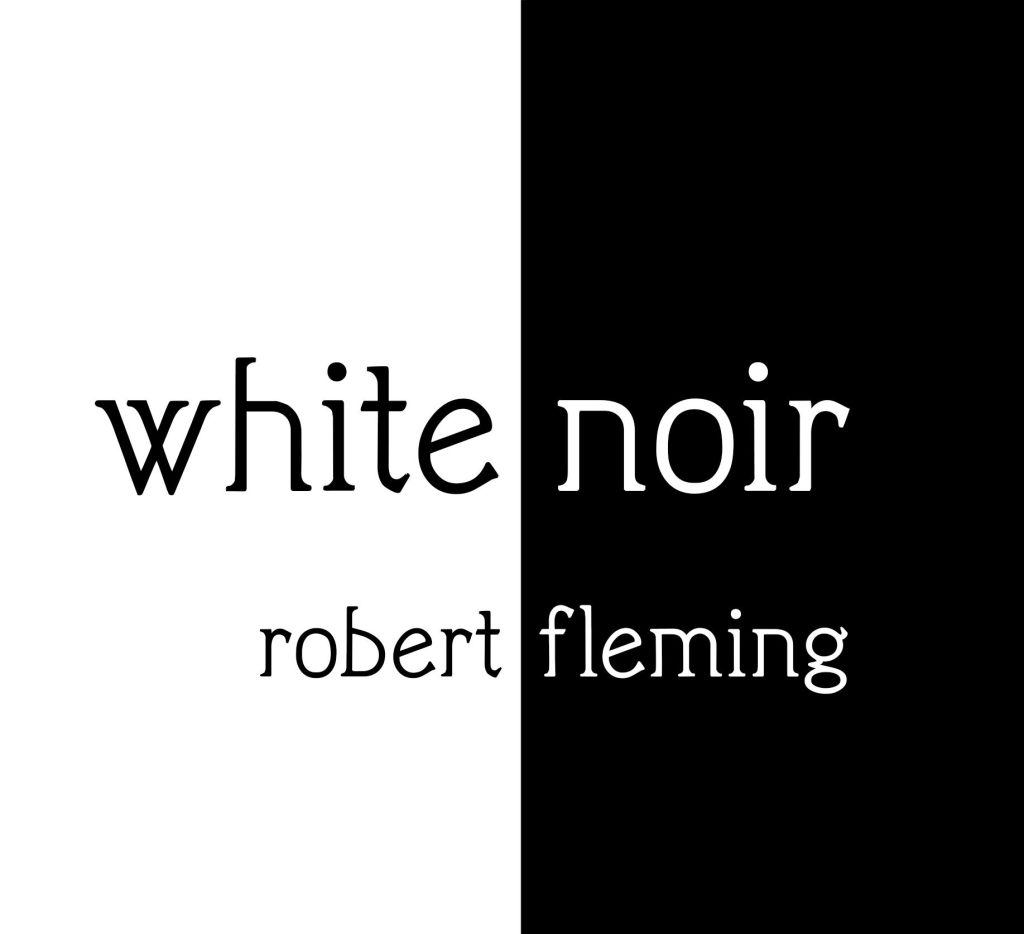
  • Cycling between genres: At the current time, what is your inspiration for creating different types of work? I cycle through different time periods where I am motivated to spend a different percent of time on each genre (25% poetry, 50% visual art, 25% visual poetry). In 2022, when I was producing my visual poetry book, White Noir, 75% of my time was in visual poetry.

What’s it going to be?

Collaborate with yourself?

  • No: stick to one genre
  • Yes: try it as an experiment

Collaborate with others? Read Robert’s upcoming blog.

Robert Fleming, a contributing editor of Old Scratch Press

OLD SCRATCH PRESS – a poetry/short-form collective | estd. 2023

who published an Amazon best seller visual poetry book: White Noir

an editor of the digital magazine Instant Noodles

About – INSTANT NOODLES

Recent Robert Fleming publications and art

visual poetry

visual art

text poetry

Follow Robert on Facebook

Thank you for reading. Please sign up to follow us on Facebook and to follow us here on WordPress to expand your knowledge about poetry and short form writing as well as to receive the latest news about publication opportunities.