You know that story you’ve been meaning to write? The poem sitting in your notebook? The idea you’ve been carrying around for three weeks while telling yourself you’ll get to it “soon”?
Well, this is your official notice. “Soon” is today.
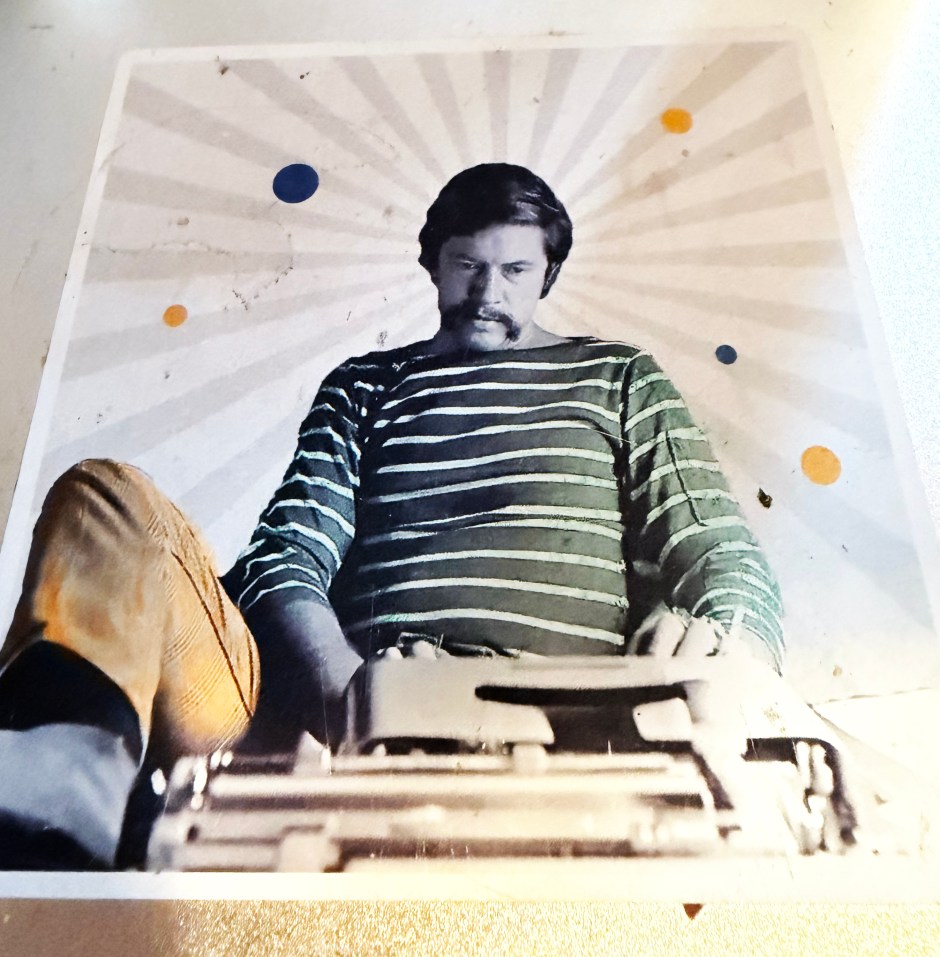
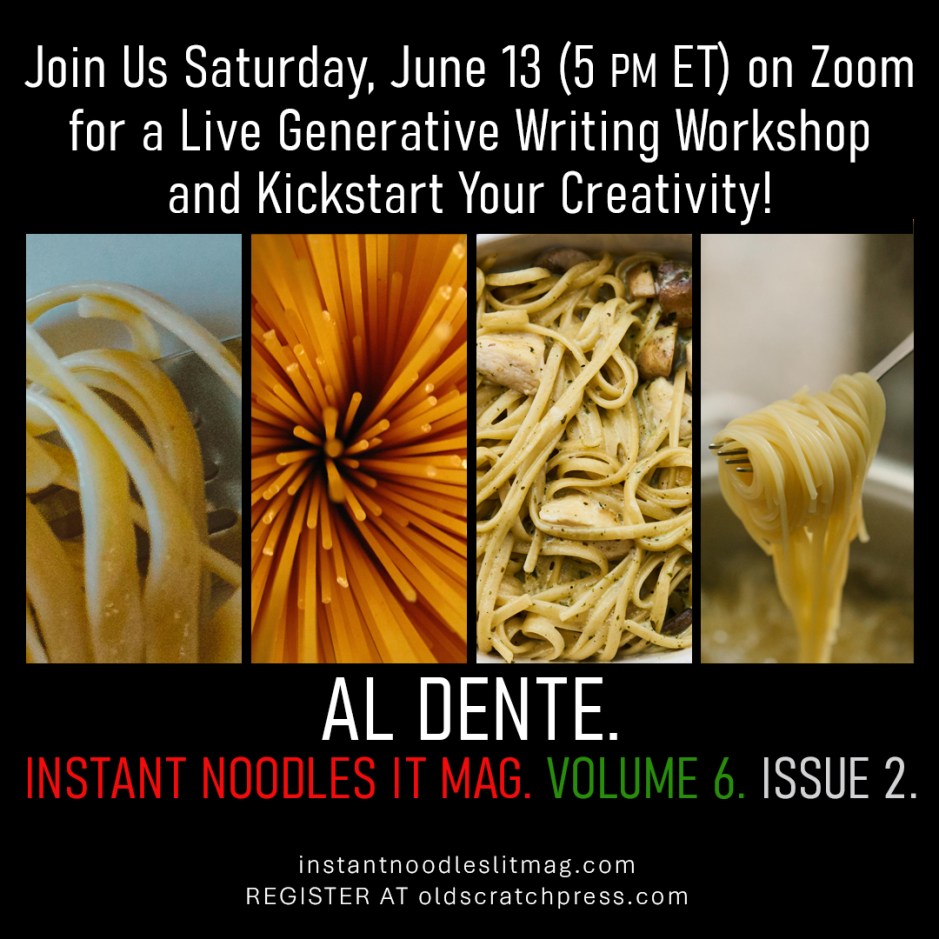
The Instant Noodles Lit Mag Al Dente Writing Workshop with Robert Fleming takes place today at 5 PM Eastern (2 PM Pacific), and we’d love to see you there.
Whether you’re a writer, poet, artist, or creative dabbler who occasionally stares out a window pretending to work, this free online workshop is designed to help spark ideas, answer questions about submissions, and get you thinking about our upcoming Al Dente issue.
No fancy credentials required. No publication history required. No secret literary handshake required.
Just bring yourself, your curiosity, and whatever creative project has been lurking in the back of your mind.
Seats are limited, and once the workshop starts, you’ll have to live with the knowledge that everyone else is talking about writing while you’re reorganizing a drawer or scrolling social media.
Thinking about submitting to the upcoming Instant Noodles Lit Mag issue, Al Dente?
Before you hit “send,” join Editor Robert Fleming for a free online workshop on Saturday, June 13, at 5 PM Eastern (2 PM Pacific).
This informal session is designed for writers, poets, and artists who want to learn more about the theme, explore ideas, and discover what kinds of work might be a good fit for the issue.
Literary magazines can sometimes feel intimidating from the outside. This workshop is an opportunity to ask questions, generate new material, and connect with fellow creatives in a welcoming environment.
Whether you already have a submission in progress or are still waiting for inspiration to strike, you’ll leave with fresh ideas and a better understanding of where your work might fit.
Attendance is free, but seating is limited.
Reserve your spot today and help us make the next issue of Instant Noodles Lit Mag something special.
Every issue of Instant Noodles Lit Mag starts somewhere.
A line scribbled in a notebook. A strange image that won’t leave you alone. A poem that refuses to behave. A story that exists everywhere except on the page.
If you’ve been looking for a reason to finally sit down and create something, consider this your invitation.
On Saturday, June 13, at 5 PM Eastern (2 PM Pacific), Instant Noodles Lit Mag Editor Robert Fleming will host a free online Al Dente Writing Workshop designed to help writers, poets, and artists generate ideas, get inspired, and learn more about submitting to our upcoming issue, Al Dente.
Whether you’re a seasoned contributor or someone who’s never submitted a piece before, you’re welcome to join us.
The workshop is free, but space is limited.
Bring your imagination. We’ll provide the noodles.
Register today and join us for an evening of creativity and community.
June, the start of summer and the month of graduations and weddings has begun. It’s a month of beginnings and endings.
I’m someone who likes to plan ahead, particularly if gift giving is involved. The holidays this month are Flag Day, Juneteenth, Father’s Day, and Summer Solstice.
This year Father’s Day falls on Sunday June 21st. I’ve been hearing advertisements for barbecue grills, power tools, personalized mugs.
But Father’s Day isn’t a day that has to be just about your father or the father of your children. And it doesn’t have to involve giving expensive items. It can be a good time to recognize the men in your life who have inspired you, as well as male friends and neighbors who have been helpful and caring.
As for gifts, the best gift is often a phone call, a card, the gift of time. From a writer, the best gift can be a story or poem.
Do not wait until the day before Father’s Day. I always find that my best work needs to sit for a while and undergo revisions before it is ready to be shared.
How to start. Everyone has their own technique. If I am writing a poem specifically to laud someone, I usually begin by listing everything about them I admire. We all notice different things. Details are important.
Or you can share an important memory and write it in prose or in verse. It can be serious or funny. Make someone laugh and you are halfway to penning something they’ll treasure.
You are writing your piece for one person. It does not have to be a masterpiece. One poet, who was popular in his time, was widely published in newspapers. His name was Edgar Guest and he was an English poet who lived a long life, 1881-1959. His poems definitely make me laugh. Here are two.
Father
By Edgar Guest
My father knows the proper way The nation should be run; He tells us children every day Just what should now be done. He knows the way to fix the trusts, He has a simple plan; But if the furnace needs repairs, We have to hire a man.
My father, in a day or two Could land big thieves in jail; There's nothing that he cannot do, He knows no word like "fail." "Our confidence" he would restore, Of that there is no doubt; But if there is a chair to mend, We have to send it out.
All public questions that arise, He settles on the spot; He waits not till the tumult dies, But grabs it while it's hot. In matters of finance he can Tell Congress what to do; But, O, he finds it hard to meet His bills as they fall due.
It almost makes him sick to read The things law-makers say; Why, father's just the man they need, He never goes astray. All wars he'd very quickly end, As fast as I can write it; But when a neighbor starts a fuss, 'Tis mother has to fight it.
In conversation father can Do many wondrous things; He's built upon a wiser plan Than presidents or kings. He knows the ins and outs of each And every deep transaction; We look to him for theories, But look to ma for action.
Only a Dad
By Edgar Guest
Only a dad with a tired face, Coming home from the daily race, Bringing little of gold or fame To show how well he has played the game; But glad in his heart that his own rejoice To see him come and to hear his voice.
Only a dad with a brood of four, One of ten million men or more Plodding along in the daily strife, Bearing the whips and the scorns of life, With never a whimper of pain or hate, For the sake of those who at home await.
Only a dad, neither rich nor proud, Merely one of the surging crowd Toiling, striving from day to day, Facing whatever may come his way, Silent whenever the harsh condemn, And bearing it all for the love of them.
Only a dad but he gives his all To smooth the way for his children small, Doing with courage stern and grim, The deeds that his father did for him. This is the line that for him I pen: Only a dad, but the best of men.
The famous English poet Elizabeth Barrett Browning, 1806-1861, was encouraged by her father to write poetry, and thus it is no surprise that she wrote poems especially for him. Here is one penned for his birthday.
To My Father on His Birthday
By Elizabeth Barrett Browning
Amidst the days of pleasant mirth, That throw their halo round our earth; Amidst the tender thoughts that rise To call bright tears to happy eyes; Amidst the silken words that move To syllable the names we love; There glides no day of gentle bliss More soothing to the heart than this! No thoughts of fondness e’er appear More fond, than those I write of here! No name can e’er on tablet shine, My father! more beloved than thine! ‘Tis sweet, adown the shady past, A lingering look of love to cast— Back th’ enchanted world to call, That beamed around us first of all; And walk with Memory fondly o’er The paths where Hope had been before— Sweet to receive the sylphic sound That breathes in tenderness around, Repeating to the listening ear The names that made our childhood dear— For parted Joy, like Echo, kind, Will leave her dulcet voice behind, To tell, amidst the magic air, How oft she smiled and lingered there.
Now it is time to write a poem or story of your own, in your style.
Elizabeth Barrett Browning may not be your style. The birthday poem to her dad was written when she was 20 years old. It captures her feelings at the time and was published in her 1826 poetry collection. Eventually she and her father had a falling out. He disowned her when she married the poet, Robert Browning.
Sometimes the memory or experience of something special, can help to inspire you. Remember you are writing for just one person, or maybe in this case two people, yourself and the recipient. Let your ideas flow and don’t start editing until you’ve written down all your thoughts.
If you’d like to create a card and a poem at the same time, here is a prompt on how to create Collage Poems. Whatever you come up with, if you consider it successful in capturing the essence of your dad, check out this opportunity to be published in the upcoming issue of Instant Noodles Literary Magazine,
If you’ve never had a writing mentor, you may not realize you need one. If you’ve had a mentor, you probably know what an impact they’ve had on your writing.
A mentor’s role can be complex, encompassing the roles of teacher, editor, advisor, parent, friend, coach, cheerleader, critic, judge, proofreader, and sounding board.
As such, they are an invaluable resource at any stage of your career, but especially so at the beginning, whatever your age.
Many poets go it alone at first, but almost no one significantly improves alone. A good mentor shortens the time and distance between where you are and where you want your writing to be. They help you see the habits you repeat without noticing, the strengths you underestimate, and the opportunities you’d never spot on your own.
In a field where progress can feel slow and uneven, the guiding hand of a mentor gives you structure, accountability, and a clearer path forward. If you want your work to grow better with intention—not just luck—mentorship is one of the most effective tools you can invest in.
If you are lucky enough to find a mentor at the right stage in your writing life, then you will be ahead of the game in more ways than one.
Reasons You Need a Mentor
This article by Shane Manier makes a great case, among many other excellent points, for hiring a mentor as a time and money-saving move.
Many writers naturally gravitate toward MFA programs hoping to find that kind of mentorship; sometimes the magic happens and an inspirational teacher becomes a long-time mentor:
Dr. Cody Smith found one in her MFA professor Jonathan Johnson.
“I remember thinking, This is what it means to be a teacher. Jonathan was a teacher who, instead of teaching you the material, taught you how to love the material.”
But realistically, given the elusive and indefinable chemistry that is involved in the mentor/mentee relationship, and the time constraints, there aren’t enough Creative Writing professors to go around and they have so many students throughout the years, that it can’t always work out.
For those of you outside creative writing programs, there are other places you can search for mentors. In my case, I went searching for mine online. I began looking for the websites of poets whose work I had read and admired. Some of them offered workshops or classes. I found that one poet whose poetry I had never forgotten over the years, Andrea Hollander, offered one-on-one tutorials, so I contacted her.
That fortunate decision led to a years-long series of phone tutorials (no Zoom back then!) with Andrea, who became a friend and mentor as well. We have kept in touch over the years; we share our writing news and she continues to support my work and alert me to publishing opportunities. Even after all these years, every time I write, I hear her voice in my head, guiding me, much as you would remember what a parent would say or advise in certain situations.
You might prefer to meet with your mentor in person, in which case you should attend local poetry events to search for one, as this author did successfully:
“At a poetry open-mic event, I connected and found one of my mentors, having witnessed his performance and interaction with fellow poets and event organisers.”
”The AWP Writer to Writer Mentorship Program is open to all AWP members who identify as emerging writers, but they particularly encourage applications from those writers who have never been associated with an MFA program, and those writing from regions, backgrounds, and cultures that are too often underrepresented in the literary world.”
”The Latinx in Publishing Writers Mentorship Program offers the opportunity for unpublished and unagented writers who identify as Latinx (mentees) to strengthen their craft, gain knowledge about the traditional publishing industry, and expand their professional connections through work with experienced Latinx authors (mentors).”
“A five-session workshop on the vocabulary of poetics · Taught by Tamarah Rockwood
The heart of the workshop is the mentorship. Starting in Session 2, every participant submits one poem per session for individual written feedback from me, returned by email before the next class. Across the series, that produces forty-eight feedback letters, one for every poem from every poet in the room. This is not a lecture you are buying. It is a writing relationship.”
Some of you may fear to be too heavily influenced by a more experienced poet’s style in a mentor/mentee relationship and this discussion from New Writing North addresses that issue:
“I’ve heard people speak of mentors with concern. The usual fear is usually one of influence – that the mentor’s style and interests will rub off too heavily on their work. Personally, I see it as a dialogue. The chance to speak directly to a writer you admire about poetry in general, and about your poems specifically.”
Pay It Forward
In the end, we all can hope that the advantages outweigh these concerns and the difficulties we have to overcome to find a poetry mentor. In my case, I know I would not be where I am without my mentor’s timely guidance. She gave me confidence to find my own voice and style and helped me learn to distinguish between a promising poem and one that needed more work. She pushed me to challenge my abilities and try poetic forms I had not attempted before. She inspired me to submit my work more widely and to dare to aspire to more discerning markets. But most of all, she taught me how to be a good mentor in my turn. I have tried, in my small way, to emulate her and to encourage budding poets that I have met and give them confidence to send their work out into the world.
Everyone needs encouragement and poets especially operate in a very obscure and underrated field that is not always well received or understood by the general public.
As poet Chloe Yelena Miller says in a Savvy Verse & Witinterview by Serena Agosto-Cox, “May we all find the mentors we need at the right time”!
AL DENTE In cooking, pasta or risotto al dente (/ælˈdɛnteɪ/, Italian: [al ˈdɛnte]; lit. ’to the tooth’) is cooked to be firm to the bite, requiring a brief cooking time. The term also extends to firmly-cooked vegetables. In contemporary Italian cooking, it is considered to be the ideal consistency for pasta.
What does al dente mean to you? To your neighborhood vampire it probably means something different. How about to the prospector mining gold?
Send us something that you haven’t overcooked!
Submissions close on July 5, 2026; the issue publishes SEPTEMBER 1, 2026.
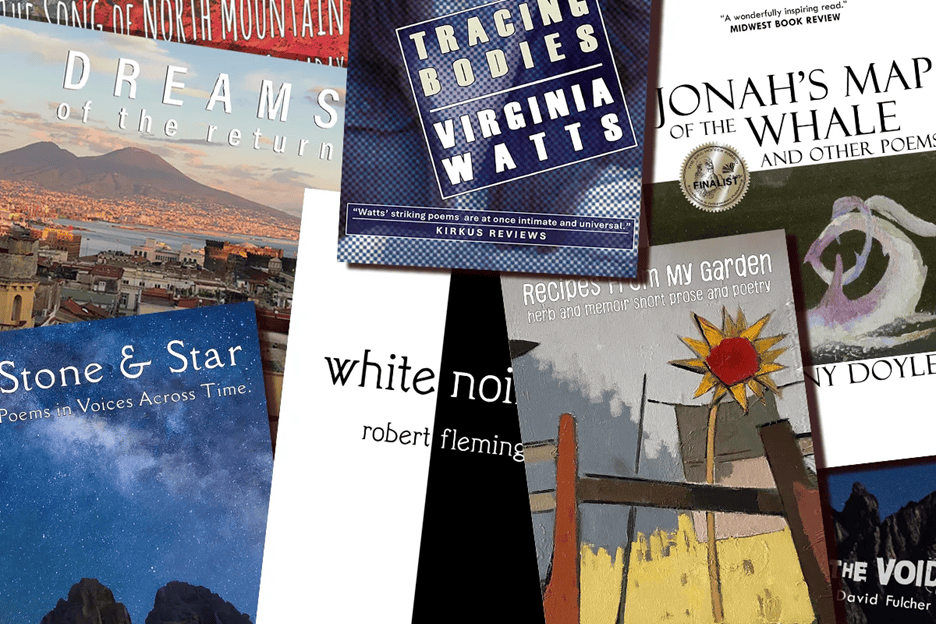
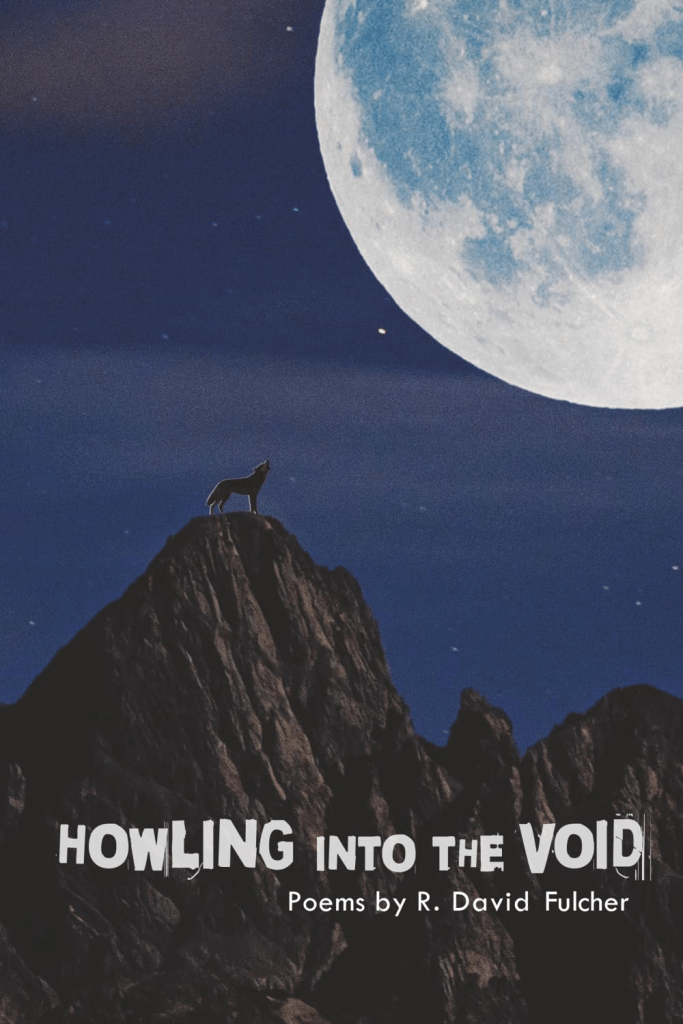
READ ONE OF OUR MEMBERS’ LATEST POETRY COLLECTION:
by Nadja Maril,a founding member of Old Scratch Press Collective
Many decades ago, I choreographed a dance to accompany a poem. I selected a poem by E.E. Cummings, “In Just—” Which in my mind I titled, “In Just Spring.”
I picked that particular poem for its exuberance. I could imagine myself interpreting the verse with movements that were both fast and slow, languorous and springy. The challenge was to select movements that I could execute while reciting the words.
in Just- spring when the world is mud- luscious the little lame balloonman
whistles far and wee
and eddieandbill come running from marbles and piracies and it's spring
when the world is puddle-wonderful
the queer old balloonman whistles far and wee and bettyandisbel come dancing
from hop-scotch and jump-rope and
it's spring and
the
goat-footed
balloonMan whistles far and wee
This poem was written in 1923, over one hundred years ago.
Cummings was an experimenter who developed his own personal style. Although classically trained, with multiple degrees from Harvard University, he used punctuation as it suited him. Spaces on the page were seen as opportunities to spread out the pacing or to combine several words into one breath. Conjunctions were sometimes nouns and selected words might take on additional assigned meanings.
Hailed as one of the most influential and important poets of the 20th century, Cummings embraced the concept of Visual Poetry. Words were placed on the page to create shapes and images that serve to reinforce the mood of the verse.
It was easy for me to dance the role of the goat-footed balloon man, after seeing the words establishing his presence “skip” across the page.
The line “whistles far and wee” is spread out, which enabled me to say the individual words with enough time to run from one side of the stage to the other side.
In writing poetry, thought is often devoted to line breaks and capitalization. Traditional or avant garde, the last word in a line typically takes on greater importance. By choosing not to capitalize the first word of a line, emphasis is softened.
Try changing the line breaks on a poem you are working on. How do your changes impact the poem? Try adding extra spaces between words or merging them together. Once again, how do these changes reshape a poem’s texture and meaning?
In contrast, when you write a prose poem using sentences, it is the order and sound of the words that must create the poetry. No one approach is better than another. It all depends on what you are trying to achieve.
In a few more weeks it will officially be Spring, here in the Northeast USA where I live. I look for birds returning from the winter vacation in the south and I hear “in-Just” recited inside my head. Crocuses begin pushing up through the muddy soil. Bicycles are pulled out of storage and pastel chalk pictures are drawn on the sidewalk. No balloon man, but it is the start of outdoor birthday parties.
The idea of adding movement to your recitation of a poem, may inspire you to choose different words when writing verse.
WRITING PROMPT: Try writing a poem about a season, place, or time. Maybe your piece is about a mood such as anger or maybe it is about a feeling such as being satiated. Often a poem focuses on the visual, but instead think about movement. Use active verbs. In Cummings short poem the wind and the balloon man whistle. The children run and dance.
What did you create? Maybe you’re on to something you like. Keep playing with the concepts and see where they lead you. Part of the enjoyment of writing, is discovering what works and what doesn’t work.
Read the work of other poets, and as March is Women’s History month, I am going to suggest three women poets:
Writers and Readers, don’t forget to forget to follow us on Facebook to get the latest news and learn about submission opportunities.
Nadja Maril is an award winning writer and poet who has been published in dozens of online and print literary journals and anthologies including: Lunch Ticket, Spry Literary Journal, Invisible City Literary Review, Instant Noodles and The Journal of Compressed Creative Arts. She is the author of Recipes From My Garden, published by Old Scratch Press (September 2024), a Midwest Review California Book Watch Reviewer’s Choice. An Anne Arundel County Arts Council Literary Arts Award winner, her work has been nominated for the Pushcart Prize and The Best of the Net. She has an MFA in creative writing from Stonecoast at USM.
The ZipOde, aka Zip Ode, is a fun, five-line poetry form invented by the O,Miami Poetry Festival in collaboration with WLRN Public Radio and Television.
The ZipOde celebrates the local life, the daily struggle, the beauty and ugliness, the minor and major frustrations and joys of living in a specific place.
Here is how you can write an ode to your own zip code!
Write the numbers of your zip code on five separate lines.
Each number will determine how many words that line will have.
(Similar to haikus but substitute words for syllables.)
If you have a zero in your zip code, then you can either leave it blank, insert an emoji or image or consider it a wildcard line of 1-9 words!
WLRN celebrated the 10th anniversary of the invention of the ZipOde in 2025 and as it turns out, I was the very first person to submit a ZipOde in O, Miami’s first call for submissions back in 2015. Always on the lookout for inspiration in unexpected places, I liked the idea of writing a place-centered short poem that celebrated my neighborhood.
You can read some stories about the 10th anniversary celebration and read some ZipOdes here.
Although the ZipOde form originated in South Florida, it has been celebrated in several other cities; O, Miami and WLRN offer it as a resource to anyone who wants to try it, as long as they attribute its creation to the O, Miami Poetry Festival and WLRN.
Tips for writing a ZipOde:
Use impactful words
Work those contractions!
Limit your scope but remain expansive
Anchor it geographically
If you have a 1 in your Zip Code (as I do), use it to maximum effect by making it a memorable, impactful word. Don’t waste the limited real estate in a ZipOde by using it for a connecting word like “and,” not that there haven’t been some excellent ZipOdes that do just that!
When you’re dealing with a limited word count—make contractions your friend! Why say “we have” when “we’ve” will work?
My favorite ZipOdes by other writers are the funny, pithy ones, but for my own, my preference is to look around me and celebrate the beauty and mystery of the nature that surrounds us—the trees, the birds, the animals, the wide-open skies.
ZipOde Examples
33185
Panthers’ eyes gleam deep in the Everglades blinking under that kite of stars, the Pleiades. What they’ve seen, we’ve forgotten.
33185
Hidden between hurricanes, this city’s soul quivers like the flight of the Miami blue butterfly killed by the slightest frost
It’s best to focus on one image, given the brevity of the poem, but the form lends itself to much experimentation and infinite variety.
I like to try to add a word that anchors the ZipOde to a place, since that is the whole point of the form! Images work, but also consider evocative scents, tastes, colors.
If you read some examples online, you will see that other poets celebrate their families, homes, neighborhoods in every way possible. The unique qualities of South Florida life are highlighted in trenchant, wryly fond-toned odes.
ZipOdes as Memoir
You can have fun commemorating all the different places you have lived and worked by writing ZipOdes! My workplace has two 9s in its zip code—riches! But even if yours has 1s and 0s, consider it a challenge—similar to when composing a haiku—to express yourself so succinctly.
33199
Driving to campus, coffee in cupholder steaming, the morning sun Stonehenged between skyscrapers in the east– in my rearview mirror, a flock of ibises rises..
ZipOdes can be dedicated love notes to your birthplace (or your child’s) or your favorite vacation spot or the place you met your significant other. As a collection, they can tell the story of your life—in code!
You’re looking for something to read and you go online and start googling. You enter words that describe what you find entertaining.
This is what editors and publishers do when they solicit submissions by selecting a theme. They try to narrow the number and types of submissions to zero in on what they’re seeking, based on what they think their readers will enjoy.
They choose a word, WATER, for example, and they announce their next issue theme will be WATER. Or maybe they choose a more specific description such as CHILDHOOD MEMORIES ABOUT BASEBALL. They request that writers submit pieces specifically related to the theme. If you send something outside the theme, it will be automatically rejected
Seize the Opportunity
The call out can be very specific. For example, this month Screams and Wails Anthology( deadline 2/28/2026) Screams and Wails Anthology is looking for “Horror stories with music or music culture as a predominant theme.”
A part of you may be thinking, I love the music scene but I don’t write horror stories. Or maybe you write horror stories but you have very little inside information on music culture. Are you going to give up that easily? A call out for a specific theme narrows the competition, if you are willing to do the homework. Plus, you may learn something new and have fun.
is looking for submissions for Volume 18 for their “Gather ‘Round Children—a special issue celebrating oral-tradition poetry and the timeless power of stories carried by the human voice. Specifically they ask for poems that “feel as if they could be shared around a fire: lyrical, narrative, rooted in memory or myth, and crafted to live strongly on the page.”
Maybe you do not consider yourself a poet but you love to sing to your children. Perhaps this call-out might inspire you to try writing a poem that you imagine as a song.
Is looking for stories, essays and poems that associate with the theme Habits. The Editor’s tip: Habits are things you do the same way every time, usually with the hope of a positive outcome.
We all have habits. Some we do to make us healthier, for example, I take a walk each morning. What is a habit you’d enjoy writing about? As a bonus you could write about someone else’s habit that you admire and your poem or could be a special gift to them, even if it doesn’t get published.
Taking a walk each morning is a habit you might want to write about.
is putting together an anthology of short stories and the theme is Splash. The word splash provides a good deal of latitude. I can think of stories related to swimming, waterfalls, and jumping into puddles as well as the use of the word as a term for making an impressive and immediate impact. If you enjoy word puzzles, the challenge of all the different ways the word Splash can be used should yield impressive results.
has a theme call out: Planes, Boats, Cars, Trains. The request is for poems, short essays, memoir and fiction (under 500 words). The pieces are for publication online in Issue One of Volume 6 (Deadline 3/15/2026). The ideas one could conceive of that one could submit are fairly wide ranging. So if you are a writer, how are you going to make you piece of writing stand out from the crowd?
As one of the editors on the project, I thought I’d share what attracted me to this particular theme.
Most humans live a fairly frenetic life, often on the move. In the famous ancient Greek stories surrounding Oedipus, he is asked a riddle by the sphinx in exchange for safe passage and his life, “Who walks on four legs in the morning, two legs at noon and three feet in the evening? The answer “Man” has humans crawling as babies in the morning, walking on two legs as adults and needing a cane ( the 3rd leg) in the evening. Mankind is always on the go. If not walking, we’re in the car, on a train, plane, or boat. (Feel free to include buses, helicopters, and subways).
Many of the best stories and poems involve getting from point A to point B via a car, train, boat, or plane. Are you up to the challenge? LET’S START WRITING….
WRITING PROMPT
Planes, Boats, Cars, Trains
Looking out the window, inside at the passengers or thinking about something? What happens when you’re on the move?
Interesting things can happen when you’re on the move and in a confined space. Plenty of murder mysteries take place on a boat or a train. The number of passengers are limited and there are places to hide.
The passenger looks out a window and see images that may bring joy or dread. They may be stuck sitting next to a stranger they find fascinating or an acquaintance they’d prefer to avoid. Create a scene, write down a memory, convey your feelings about a brief journey.
Then think: What if? What happens if the protagonist has lost their ticket or the car breaks down? Maybe it happened, Maybe you’re imagining it happening.
Here’s the hard part. Make it short. Every word should count. Read what you’ve written out loud. Each phrase/ and/or sentence should provide something essential. Whatever you can eliminate, start crossing stuff out.
Read it again. Let it sit for a week. Do another revision and make certain whatever and whenever you submit to Instant Noodles Literary Magazine or any other publication, you have carefully reviewed your work and it is ready for publication. Check over carefully for grammar, spelling, and punctuation errors.
Nadja Maril is an award winning writer and poet who has been published in dozens of online and print literary journals and anthologies including: Lunch Ticket, Spry Literary Journal, Invisible City Literary Review, Instant Noodles and The Journal of Compressed Creative Arts. She is the author of Recipes From My Garden, published by Old Scratch Press (September 2024), a Midwest Review California Book Watch Reviewer’s Choice. An Anne Arundel County Arts Council Literary Arts Award winner, her work has been nominated for the Pushcart Prize and The Best of the Net. She has an MFA in creative writing from Stonecoast at USM.
In January, 2024 I wrote a blog on Hybrid Poetry which is an integration of two or more art forms, where one form is text.
If you create a hybrid work, who should you collaborate with? If you choose another person you will have to coordinate with them and all their peculiarities. Such a Drag! Why not collaborate with yourself? Only have to deal with when you are in a good or bad mood.
My hybrid blog showed my first visual poem, at age 11, I integrated poetry and visual drawing with crayons.
Figure 1.
Do you have two or more skills that can be integrated? Pick them from this list.
writing poetry
writing prose
creating visual art
music: playing an instrument
singing
When you join two skills, it might have been given a name:
prose poetry = writing prose and writing poetry
visual poetry = writing poetry and creating visual art
performance poetry = (playing an instrument or singing) and writing poetry
If you have integrated two skills before:
How did it go?
Would you do it again?
Consider not just the quality of your work but did you enjoy it?
In deciding whether to collaborate with yourself:
Comparatively at what skill level (beginner, intermediate, advanced) are your two skills? Are they at the same skill level or different? My two skills of writing poetry and creating visual art are at the same level.
If your skills levels are not at the same level (e.g. intermediate in writing poetry, beginner in playing an instrument), can you accept that your work produced is likely to be at the lower skill level?
What will you do with your work: celebrate it and share it with others, share it with yourself, or trash it?
Mem So CA / Hole in Head Cover – seesaw 2
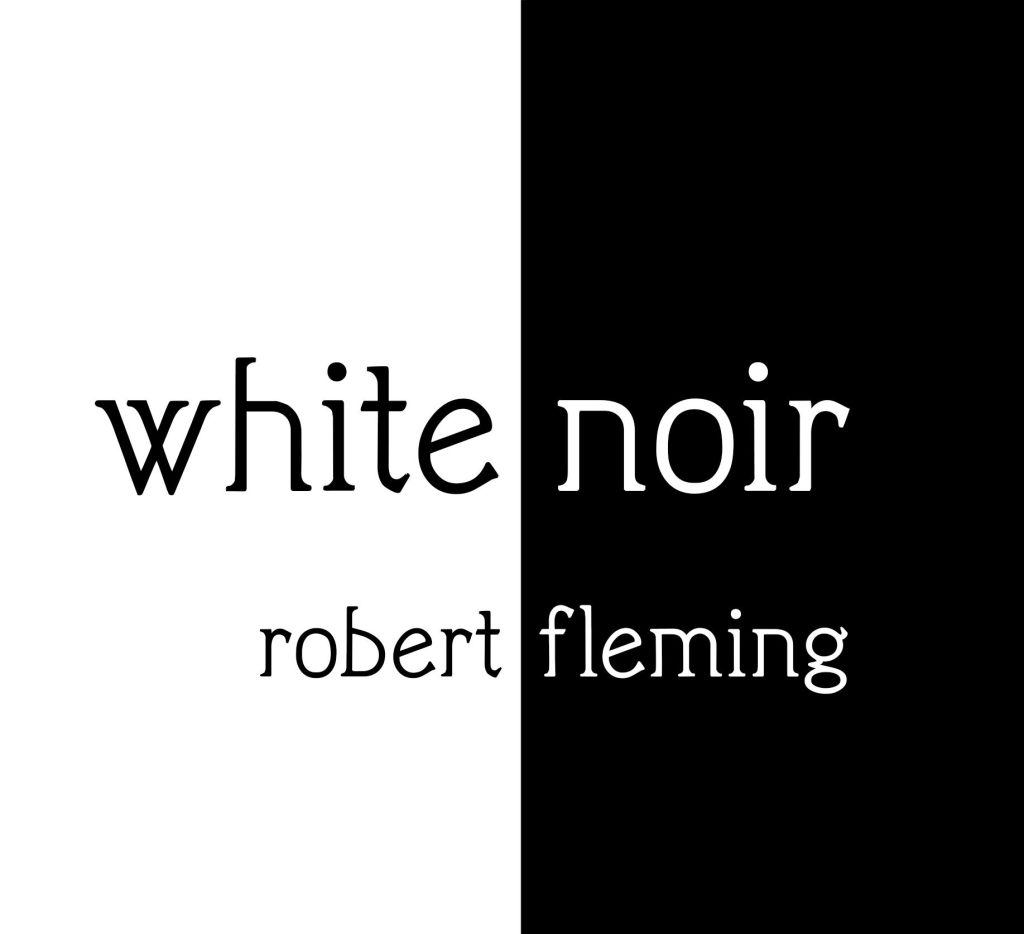
Cycling between genres: At the current time, what is your inspiration for creating different types of work? I cycle through different time periods where I am motivated to spend a different percent of time on each genre (25% poetry, 50% visual art, 25% visual poetry). In 2022, when I was producing my visual poetry book, White Noir, 75% of my time was in visual poetry.
What’s it going to be?
Collaborate with yourself?
No: stick to one genre
Yes: try it as an experiment
Collaborate with others? Read Robert’s upcoming blog.
Robert Fleming, a contributing editor of Old Scratch Press
Thank you for reading. Please sign up to follow us on Facebook and to follow us here on WordPress to expand your knowledge about poetry and short form writing as well as to receive the latest news about publication opportunities.
Langston Hughes, Maya Angelou, Gwendolyn Brooks, Joy Harjo, Claudia Rankine, Ocean Vuong, Elizabeth Acevedo, Terrance Hayes, Frank O’Hara, Audre Lorde, Allen Ginsburg, all poets who have enhanced the canon of American writing with their writing and their diversity. Have you read any of them? Which ones have you tried? Which diverse poet is your favorite? What poem do you like that you can share with us?
Did you know that Dr. Martin Luther King Jr. believed deeply in the power of voices, especially voices that had been ignored, dismissed, or pushed aside? That belief matters just as much in literature as it does anywhere else.
The literary canon is not a fixed monument. It is a living body of work that grows stronger, more truthful, and more beautiful when it includes diverse authors and perspectives. American literature is incomplete without the poets and writers who reflect the full range of American experience. Reading these voices does not diminish the canon. It expands it, strengthens it, and makes it more honest.
It may seem as if diverse authors exist on the margins of literature, but they don’t. They are central to it. They shape language, challenge assumptions, and help us see both history and the present more clearly. I have enjoyed so many authors who are so different from me, especially when we count the wealth of male writers we read in school. They are all wonderful writers, and I am also glad school now includes more writers who look like me, as well as writers who look like my daughter and my friends.
So today, as we celebrate Dr. King, let’s also celebrate the voices that widen our understanding of who we are. Pick up a book. Read a poem. Listen closely to someone, anyone, different from you, or simply listen to someone in need. How can you share your light?
On a slightly off-topic note, I was visiting my sister this weekend, and we each chose a stand up special to watch that is a pretty new special. I chose Mohaned Elshieky’s special No Need to Address Me, and my sister chose Marcello Hernandez’s special American Boy. Both were incredibly funny. Comedy benefits from diversity too.
I am happy for this day. Hurray for Dr. King and his marvelous legacy. Hurray for all poets. And hurray for a literary world that makes room for all of us.
~Dianne
Dianne Pearce is the chief editor and bottle washer at Current Words Publishing, and the half-cocked imaginer behind Old Scratch Press and Instant Noodles. Pearce loves helping writers realize the dream of having their work published. I mean she is really crazy about doing that for some reason. To that end, to join in the fray, to look at the thing from the other side, to stand in another’s shoes, and all of those things, she is fully expecting and promising to publish her first collection of poetry, In the Cancer Cafeteria, spring of 2026. Please don’t hold your breath. For very long. Happy 2026!