
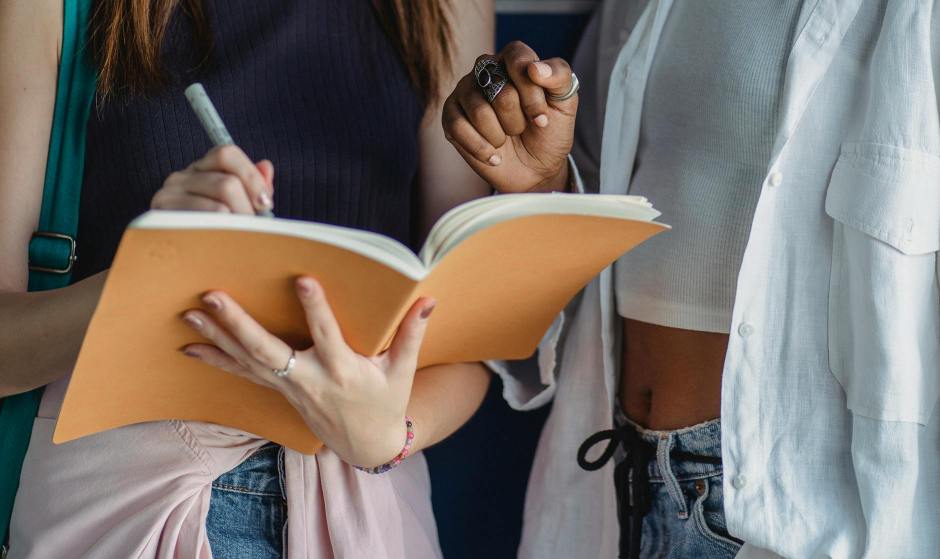
If you’ve never had a writing mentor, you may not realize you need one. If you’ve had a mentor, you probably know what an impact they’ve had on your writing.
A mentor’s role can be complex, encompassing the roles of teacher, editor, advisor, parent, friend, coach, cheerleader, critic, judge, proofreader, and sounding board.
As such, they are an invaluable resource at any stage of your career, but especially so at the beginning, whatever your age.
Many poets go it alone at first, but almost no one significantly improves alone. A good mentor shortens the time and distance between where you are and where you want your writing to be. They help you see the habits you repeat without noticing, the strengths you underestimate, and the opportunities you’d never spot on your own.
In a field where progress can feel slow and uneven, the guiding hand of a mentor gives you structure, accountability, and a clearer path forward. If you want your work to grow better with intention—not just luck—mentorship is one of the most effective tools you can invest in.
If you are lucky enough to find a mentor at the right stage in your writing life, then you will be ahead of the game in more ways than one.
Reasons You Need a Mentor
This article by Shane Manier makes a great case, among many other excellent points, for hiring a mentor as a time and money-saving move.
5 Reasons Why You Need A Poetry Mentor — Shane Manier
Many writers naturally gravitate toward MFA programs hoping to find that kind of mentorship; sometimes the magic happens and an inspirational teacher becomes a long-time mentor:
Dr. Cody Smith found one in her MFA professor Jonathan Johnson.
What Makes Us Human: On Poetry, Mentorship, and Professional Growth | News Detail
“I remember thinking, This is what it means to be a teacher. Jonathan was a teacher who, instead of teaching you the material, taught you how to love the material.”
But realistically, given the elusive and indefinable chemistry that is involved in the mentor/mentee relationship, and the time constraints, there aren’t enough Creative Writing professors to go around and they have so many students throughout the years, that it can’t always work out.
For those of you outside creative writing programs, there are other places you can search for mentors. In my case, I went searching for mine online. I began looking for the websites of poets whose work I had read and admired. Some of them offered workshops or classes. I found that one poet whose poetry I had never forgotten over the years, Andrea Hollander, offered one-on-one tutorials, so I contacted her.
That fortunate decision led to a years-long series of phone tutorials (no Zoom back then!) with Andrea, who became a friend and mentor as well. We have kept in touch over the years; we share our writing news and she continues to support my work and alert me to publishing opportunities. Even after all these years, every time I write, I hear her voice in my head, guiding me, much as you would remember what a parent would say or advise in certain situations.
You might prefer to meet with your mentor in person, in which case you should attend local poetry events to search for one, as this author did successfully:
“At a poetry open-mic event, I connected and found one of my mentors, having witnessed his performance and interaction with fellow poets and event organisers.”
Poetry Mentoring – Where Do You Start and How Do You Find Your Trusted Advisor
Poetry Mentorship Programs
You may prefer a more formal mentorship relationship, in which case there are various places to find mentorship programs:
Literary Journals:
Some individual journals have mentorship programs:
The Adroit journal:
Summer Mentorship Program — Details & Guidelines – The Adroit Journal
Writing Associations:
The AWP has a mentorship program for members:
”The AWP Writer to Writer Mentorship Program is open to all AWP members who identify as emerging writers, but they particularly encourage applications from those writers who have never been associated with an MFA program, and those writing from regions, backgrounds, and cultures that are too often underrepresented in the literary world.”
The Haiku Society of America Mentorship Program
“For more information about joining a mentoring group, please contact the HSA President: Crystal Simone Smith”
Publishing Associations:
Writers Mentorship Program — Latinx in Publishing (all genres including poetry)
”The Latinx in Publishing Writers Mentorship Program offers the opportunity for unpublished and unagented writers who identify as Latinx (mentees) to strengthen their craft, gain knowledge about the traditional publishing industry, and expand their professional connections through work with experienced Latinx authors (mentors).”
Writing Workshops:
Writing workshops can foster mentorship:
POETICS Summer Workshop 2026
POETICS Summer Workshop 2026 – Bainbridge Island Press
“A five-session workshop on the vocabulary of poetics · Taught by Tamarah Rockwood
The heart of the workshop is the mentorship. Starting in Session 2, every participant submits one poem per session for individual written feedback from me, returned by email before the next class. Across the series, that produces forty-eight feedback letters, one for every poem from every poet in the room. This is not a lecture you are buying. It is a writing relationship.”
Writing Conferences:
The Writer’s Digest Annual Conference claims on its website: “you won’t find better mentors and allies for your writing journey.”
Some of you may fear to be too heavily influenced by a more experienced poet’s style in a mentor/mentee relationship and this discussion from New Writing North addresses that issue:
Paul Farley and John Challis on mentoring – New Writing North
“I’ve heard people speak of mentors with concern. The usual fear is usually one of influence – that the mentor’s style and interests will rub off too heavily on their work. Personally, I see it as a dialogue. The chance to speak directly to a writer you admire about poetry in general, and about your poems specifically.”
Pay It Forward
In the end, we all can hope that the advantages outweigh these concerns and the difficulties we have to overcome to find a poetry mentor. In my case, I know I would not be where I am without my mentor’s timely guidance. She gave me confidence to find my own voice and style and helped me learn to distinguish between a promising poem and one that needed more work. She pushed me to challenge my abilities and try poetic forms I had not attempted before. She inspired me to submit my work more widely and to dare to aspire to more discerning markets. But most of all, she taught me how to be a good mentor in my turn. I have tried, in my small way, to emulate her and to encourage budding poets that I have met and give them confidence to send their work out into the world.
Everyone needs encouragement and poets especially operate in a very obscure and underrated field that is not always well received or understood by the general public.
As poet Chloe Yelena Miller says in a Savvy Verse & Wit interview by Serena Agosto-Cox, “May we all find the mentors we need at the right time”!
Thank you for reading and please follow us here and on Facebook: https://www.facebook.com/OLDSCRATCHPRESS/
Beatriz F. Fernandez is a Miami area poet and University Reference librarian. She is the author of three poetry chapbooks, the most recent of which is Simultaneous States (2025) by Bainbridge Island Press. In 2025, she became a member of the Old Scratch Press short form and poetry writing collective.
SUBMISSIONS STILL OPEN FOR OUR NEXT ISSUE: Instant Noodles Lit Mag— THEME: “Al Dente”
AL DENTE In cooking, pasta or risotto al dente (/ælˈdɛnteɪ/, Italian: [al ˈdɛnte]; lit. ’to the tooth’) is cooked to be firm to the bite, requiring a brief cooking time. The term also extends to firmly-cooked vegetables. In contemporary Italian cooking, it is considered to be the ideal consistency for pasta.
What does al dente mean to you? To your neighborhood vampire it probably means something different. How about to the prospector mining gold?
Send us something that you haven’t overcooked!
Submissions close on July 5, 2026; the issue publishes SEPTEMBER 1, 2026.
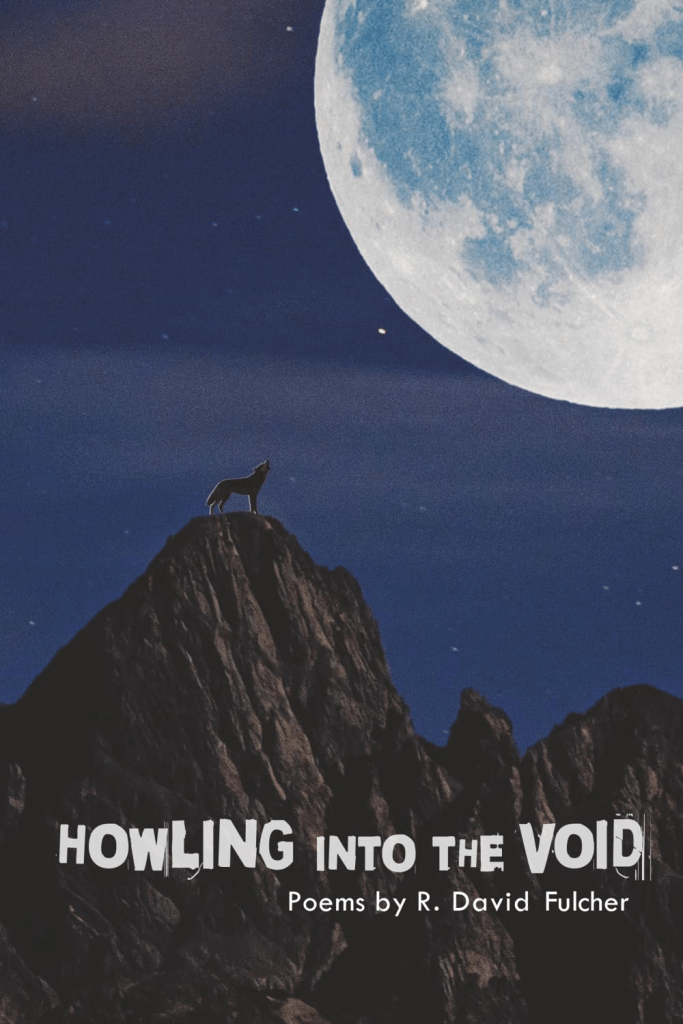
READ ONE OF OUR MEMBERS’ LATEST POETRY COLLECTION:
BY R. DAVID FULCHER


 OLD SCRATCH PRESS