
noun: an inclination downward
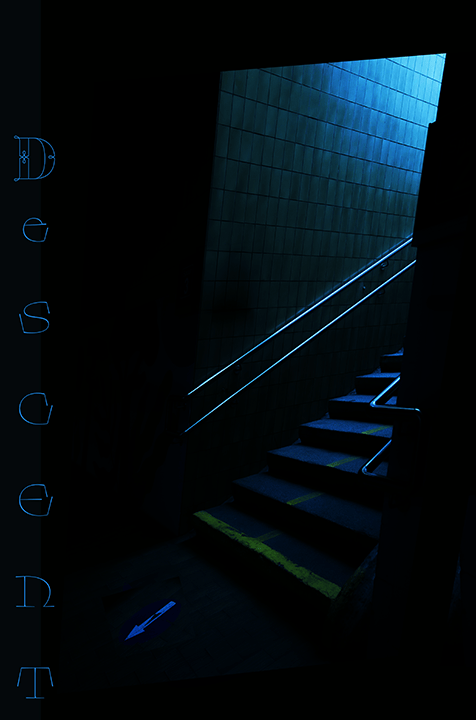
Go down; go down~
All Hallows’ Eve
the basement is calling….
noun: an inclination downward
Go down; go down~
All Hallows’ Eve
the basement is calling….
You’ve written a poem. You’ve revised it, probably more times than you’d care to admit. You’ve submitted it, waited for a response, and, if all went well, received the wonderful news that someone wants to publish it. You announce the publication on social media. Your friends congratulate you. Your mother shares the link. Someone you haven’t spoken to since high school gives it a thumbs-up. And then? Well, you write another poem, of course. And the first one disappears into the enormous pile of things people posted on the internet yesterday.
It doesn’t have to. In the first installment of this series, I talked about finding ways to extend the life of a published poem. In Part 2, I suggested recording yourself reading it aloud, an activity I personally rank somewhere between public speaking and wrestling an octopus. This time, let’s talk about something considerably less frightening: getting several social media posts out of one poem.
Several posts? About the same poem? Won’t people get sick of me? Possibly. If you post the same announcement six times in a row, you may test the patience of even your most devoted friends. But that’s not what I’m suggesting. A poem is more than a link to a literary magazine. It has a history, a subject, a voice, and, if you’re lucky, a line or two that might make someone stop scrolling for a moment. Each of those offers a different way to introduce readers to your work.
This is the obvious one, and it’s worth doing properly. Name the magazine or journal, thank the editors, and give people a link to the poem. If the publication has a social media account, tag it. You don’t need to be excessively modest about this. Getting a poem published is an accomplishment, and you’re allowed to be pleased.
A few days or a week later, choose a line or two from the poem and make that the focus of a new post. Maybe it’s the line that started the whole thing. Maybe it’s the one you fought with for three weeks before finally getting it right. Or maybe it’s simply a line you’re especially fond of. You could put the words over a photograph, use a simple background, or just type them into a post. Add a sentence about why you chose them, and link to the complete poem. One caution: Check your publication agreement before reproducing excerpts, particularly if the journal has exclusive rights for a period. Linking to the published poem is generally the safest approach.
I love hearing what inspires other writers, partly because the answers can be so wonderfully peculiar. A poem about grief might have started with a broken teacup. A poem about childhood might have begun with the smell of somebody’s basement. A poem about a bird might have absolutely nothing to do with birds. You don’t have to explain what the poem means. Readers should have room to bring their own experiences to your work. But you can tell us what prompted you to write it. Something like, “I wrote this after finding a grocery list in my grandmother’s handwriting. I hadn’t seen her handwriting in twenty years.” That’s a story. It gives readers another reason to be curious about the poem.
If you followed the advice in Part 2 and recorded yourself reading the poem, you’ve already got another post waiting. You can share the video or audio recording with a short introduction. You might even mention something about how the poem sounds different when spoken aloud. And if you haven’t recorded it yet, there’s still time. The octopus can wait.
Not every post needs to announce something. Suppose your poem concerns a childhood home. You might ask readers whether there’s a place from their childhood they still dream about. If it’s about an object you’ve kept for years, you could ask what ordinary thing they would never throw away. The question should grow naturally out of the poem, rather than feeling like a desperate attempt to generate engagement. You might get a conversation going. You might get three responses, one of which is from your cousin. Either way, you’ve given readers a way to connect with the subject of your work.
This is important. I’m not suggesting that you turn every poem into a five-day publicity campaign. Space these posts out. Use the ideas that suit the poem and skip the ones that don’t. One poem might lend itself beautifully to a story about its inspiration. Another might have a striking line that’s perfect for sharing. A third might be best experienced aloud. You don’t have to use every suggestion, and you certainly don’t have to post on every platform. If you enjoy Instagram, use Instagram. If you prefer Facebook, use Facebook. If you have a newsletter, that’s another place to share the work.
The point is to give a poem more than one opportunity to find its readers. And remember that not everyone who follows you will see every post. Social media moves quickly, and even people who genuinely want to read your work may miss the original announcement. Sharing something again, in a new and interesting way, isn’t necessarily repeating yourself. It’s giving someone another chance to discover a poem they might love.
Next time: We’ll look at how a poem that’s already been published can find a second life through reprints, anthologies, contests, and other opportunities. Because publication doesn’t have to be the end of a poem’s journey.
And speaking of opportunities: There’s still time to submit to Instant Noodles! Our final issue of 2026 has an open theme, Author’s/Artist’s Choice, and we’re accepting poetry, flash fiction, flash nonfiction, visual art, and multimedia through November 7, 2026. Submissions are free, and the issue will be published December 1.
Read the submission guidelines and send us your work!
It’s #LitMagWeek, a celebration of the independent literary magazines that give writers a place to take chances, find readers, and get their work out into the world.
Start with our own Instant Noodles Literary Magazine, sponsored by Current Words Publishing and curated by the Old Scratch Press Collective.
Then go exploring! Check out some of our fellow literary magazines celebrating this week:
F(r)iction
Mom Egg Review
The Dolomite Review
Midnight Mind Magazine
Read a lit mag. Discover a writer. Find something wonderful and weird.
Happy #LitMagWeek!
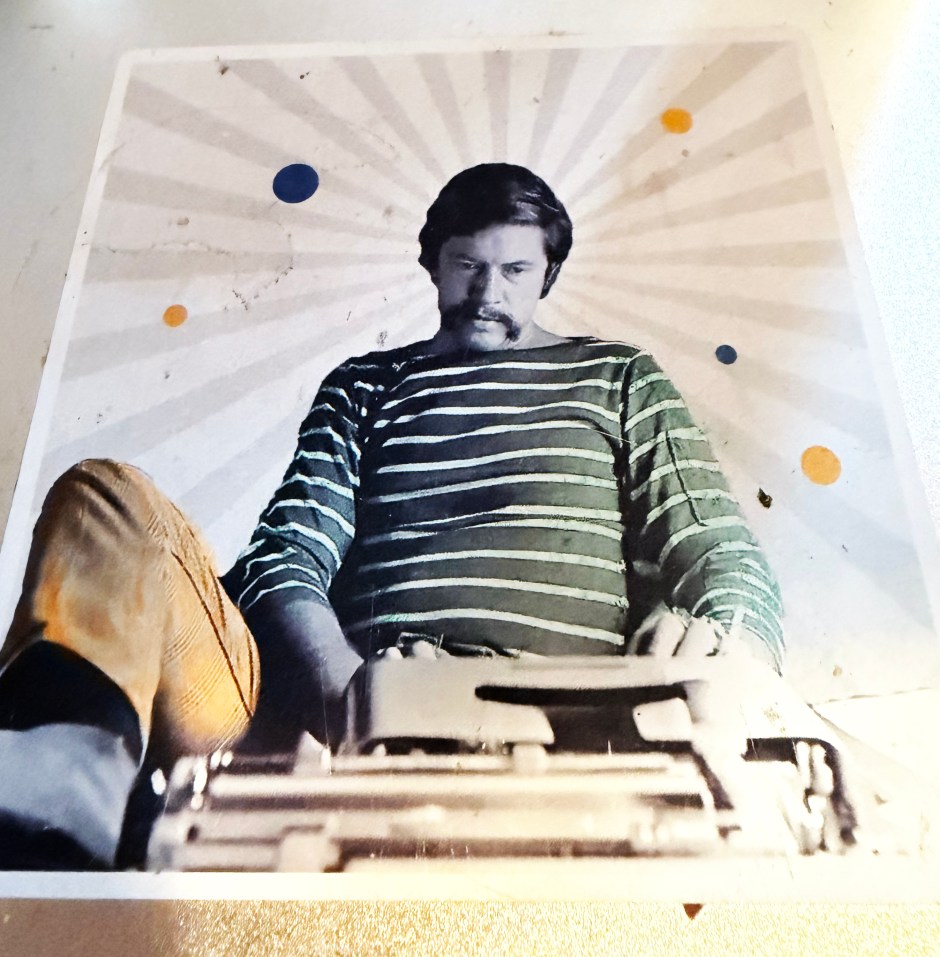
Our own Dianne Pearce (me) has a new post up at Authors Electric, and it begins with an important literary question:
Which author, living or dead, would you most want to get with? (A topic that deserves serious, serious daydreaming.)
The weirdo answer from Dianne (again, me) is Tom Robbins. Not because of what he looked like, but because of what his writing revealed about the strange, funny mind behind it. From there, Dianne (still me) wanders into attraction, humor, imagination, and the peculiar intimacy of reading someone else’s words.
I (Dianne, obviously) encourage you to go read it.
But while we’re (actually me, or rather, I, I am) sending you over there, there’s another reason writers should have Authors Electric on their radar.
Get off your duff, friends. Authors Electric accepts guest posts, and opportunities like that are worth looking for.
If you’re an author, it’s easy to spend all your blogging energy writing for your own website. That’s useful, but the people visiting your website are generally people who have already found you. A guest post puts your name and your writing somewhere else, in front of someone else’s readers.
And you don’t necessarily need to write about your book. In fact, please don’t turn every guest post into an advertisement for your book. And, on your own blog, don’t do that either. And certainly don’t blog on one blog solely about going to read something on another blog. That’s something we, here at OSP (well, rather I, me, actually; the rest of OSP has no idea what I’m writing here and will probably refuse to be held accountable for it), would never do. (Go read my post!)
Write something funny. Write about the books you love. Write about research that sent you down an unexpected rabbit hole. Write about some peculiar part of the writing life. Write something that makes a reader think, I like this person. What else have they written? People think that about me all the time (I am assured by my caretakers, who wish to keep me relatively compliant and still).
That’s the point.
Guest posting can give you another byline to share, another place for readers to encounter you, another link leading back to your work, and, perhaps most importantly, a chance to introduce yourself without standing on a chair yelling BUY MY BOOK (but seriously, people, buy our books. Well, mine’s not out yet, but buy the other books from OSP. Go ahead. Make a poet smile, and put down the bread knife. God, poets eat a lot of bread!).
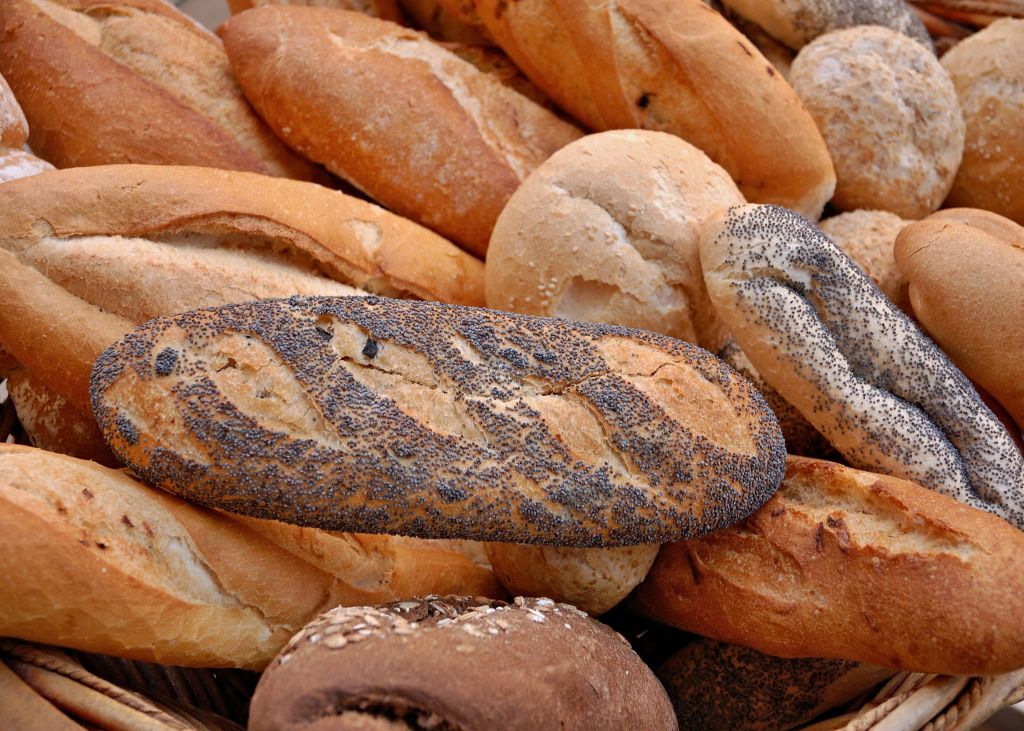
glorious poppy seeds
glorious poppy seeds
delicious and replete
I love your taste
so very much
I happily pick you
from my teeth
Authors Electric is one place to consider. There are others. Look at blogs and publications connected to your genre, your subject matter, your profession, your interests, or the subjects you research for your books. See whether they accept guest contributions. Read what they publish before you pitch them. (Or just pitch wildly, like me in AA softball in 1970-something; you don’t need to know the date. Shut up about the years gone by! I pitched so wildly they [the coach, my own father] stuck me on second base where I could chomp on a huge wad of Bazooka Joe, blowing bubbles so large they hid my face, and not do too much damage to our losing streak. Wait, what are we discussing here?)

EXCLUSIVE!
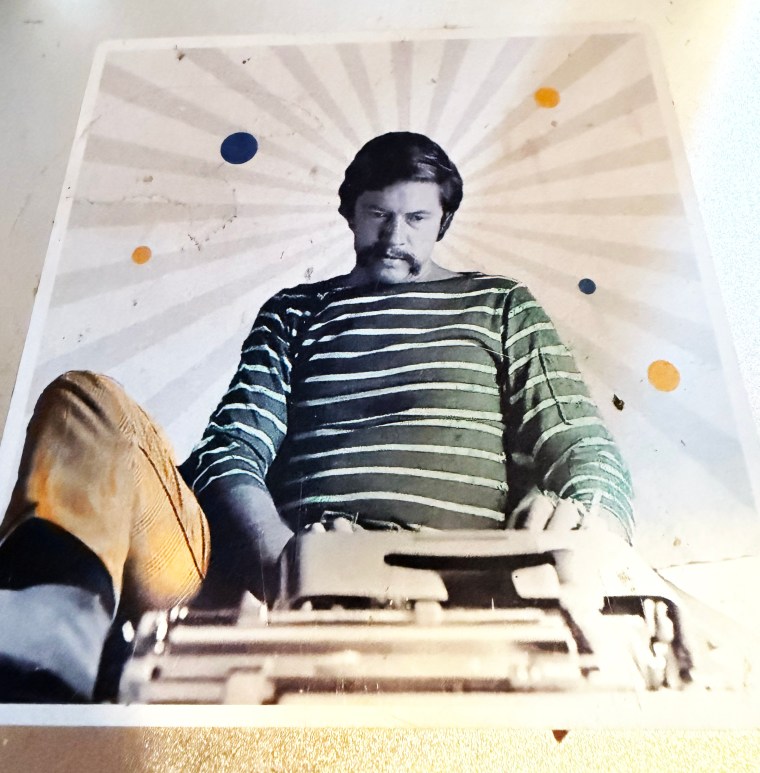
Actual for real 100% photo of me in little league, wearing my official AA shirt and standing on second base with my beloved glove in my hand, age 9. People never could steal second from me because I was standing on it, and I could not see them coming, because of the gum.
Then come up with something their readers (which is to say readers who read their website/blog) might actually enjoy. Why would they let you post for them? Certainly because you are a serious author taking things seriously and not at all running around the yard barefoot and dangerously late for work. (By the way, forget the job. Poetry is lucrative!)
And how do you know what kinds of posts their gossamer readers like to read? I don’t know. Why you asking me? (Oh, um, read their blog and see what they write about? That might help.)
A quick scan of Authors Electric tells you that its readers are people who like books, writing, writers, publishing, and the odd places a writer’s mind wanders when nobody has stopped it in time. Posts range from writing and publishing to books and reading, author events, technology, literary memories, travel, personal stories, and whatever else can be dragged back, however tenuously, to a life lived among words. They’re personal, conversational, sometimes funny, sometimes serious, and not particularly interested in behaving like somebody’s content-marketing strategy. They seem to be genuinely nice people (as opposed to faking being nice), and that tracks because they’re mostly in Australia and the UK. I cast no stereotypes or aspersions on one side of the pond, the bog, the gulf of unreachable miscommunication, or the other. If you suggest that I am or that I do, or that I should, I will deny it with the vigor of a Dickens character.
They are also intentionally very light on salty words, unlike me and my prose, because I like every damn thing with extra freaking salt.
Why would anyone want a guest post from you? Your mother may have the answer. She thinks you’re great. But also because posting on a regular basis is really quite exhausting, and you can give another author access to another set of readers while giving the blog’s regular writers a bit of a break. Many hands make light work and all that. (Man, I’m tired. I wish someone else would write this and I could just go empty the percolator!)
And if you think you might like to guest post here, absolutely not, you shameless opportunist! Wait… No. I mean, hey, we might like that. Post a response to this post if you’re interested and tell us how to reach out and touch you (in a platonic way, of course).
And if you’d like to see one example of exactly that, go find out why that lunatic Dianne Pearce (moi, bien sûr) had such a deep (and purely, very pure) professional affection for author Robbins that she would, apparently, have overlooked quite a lot, including the possibility of belly-button fungus.

I mean, it’s Tom Robbins we’re (me, I’m) obsessed with, not John Cheever.
Read “Which Author Do You Most Want to Get With?” at Authors Electric. Go ahead. You know you want to (well, actually, you may not want to, but I would certainly like you to, so consider yourself cajoled)!
adjective: of or related to the space between what was and what comes next….

What comes next for you?

verb: to be piled up in heaps.

What would it be like to be piled up in heaps?

A lot of poets would rather wrestle an octopus than read one of their poems aloud. I am particularly creeped out by octopi, and I would take the octopus over the live event. When I was a young writer, twenties and thirties, I could not wait to perform my work. I always got good responses, as well, to my live readings, so I was so excited to do them. Now, though, standing in front of a room feels strangely vulnerable. I get so nervous I find myself choked up. As a young writer I had a lot of very kind teachers who were delightfully excited about my writing. When I look back at that “young” writing, I don’t think it was very good, so I wonder at that. But their support was marvelous. These days there’s no teacher to be wowed before I go out and attempt to wow the crowd, so I do feel especially …. clumsy, for lack of a better word.
Here’s the thing, though: audiences don’t expect perfection. They aren’t looking for a Broadway actor or a professional voice-over artist. They just want to hear the person who wrote the poem, read the poem. We have a few people every issue of Instant Noodles who record themselves reading their poems, and those always get more hits than the non-readers. Reading your own work gives people something the printed page can’t. They hear where you pause, which words you linger over, and where you smile without realizing it. Even a quiet, slightly nervous reading can help a listener connect with your poem in a new way.
You don’t have to book a poetry reading to do this. Prop your phone against a coffee mug, press record, and read your poem. Actually, if you want to look your best, prop your phone on something eye-level or higher, pointing down. Practice positioning until you feel confident you look okay. I often record myself on Zoom so I have more control over my look. Just open a Zoom account and hop into the “Personal Room” and hit RECORD. If you stumble over a line, pause and start over, in you’re on Zoom, or, if you’re on your phone, stop that recording and start another. Then read it again. Nobody has to know it took three tries. (I won’t tell if you won’t. Sometimes, when I record things, I need a calculator to count the tries!) If video isn’t your thing, record the audio instead. Share it in your newsletter, post it on social media, or add it to your website. You’d be surprised how many people enjoy hearing a poem in the poet’s own voice. It adds a warmth and familiarity the printed work doesn’t give. And, when I’ve listened to some of my favorite poets, I’ve been surprised by one or two who came across as decidedly… different from what I had expected. That added a new depth to the writing that really intrigued me. I would love to hear more of our Instant Noodles authors reader their work.
Next time, I’ll look at how one poem can become several meaningful posts without feeling like you’re repeating yourself.
beguile, verb, as in to fascinate.
to attract or delight as if by magic…
What have you been beguiled by?

Sometimes a writer submits a poem to Instant Noodles Literary Magazine, it gets published, and we never hear from that writer again. It’s almost as though the poem completed its mission in life and quietly retired to a folder on a laptop.
I’ve always found that a little surprising.

We work for weeks, sometimes months, on a poem. We submit it. We wait forever. We get the acceptance email, do a little happy dance in the kitchen (or maybe that’s just me), share the publication with a few friends, and then we’re off chasing the next shiny poem. But publication isn’t the end of a poem’s life. It’s the beginning of its conversation with readers.
Most people who would enjoy your work probably haven’t seen it. They don’t subscribe to the journal that published it. They weren’t refreshing the editor’s website waiting for the new issue to drop. They’re just people who like good poetry and would be delighted if your work happened to cross their path. So don’t be afraid to let a published poem keep doing its job. Read it at an open mic. Share a favorite line on social media. Tell the story behind it in your newsletter. Mention it on your website. Include it in a future reading. You spent a long time writing that poem. It has probably earned the right to stick around a little longer than the three days it spent on your Facebook page before disappearing beneath photos of someone’s lunch and a cousin’s vacation.
Next week, we’ll talk about one of the simplest ways to give a poem a longer life: reading it aloud. Don’t worry. Nobody says you have to sound like Lauren Bacall. Though if you do, I’m a little jealous.
noun: the place or point of entering or beginning.
Have you ever written about a threshold?

