You know that story you’ve been meaning to write? The poem sitting in your notebook? The idea you’ve been carrying around for three weeks while telling yourself you’ll get to it “soon”?
Well, this is your official notice. “Soon” is today.
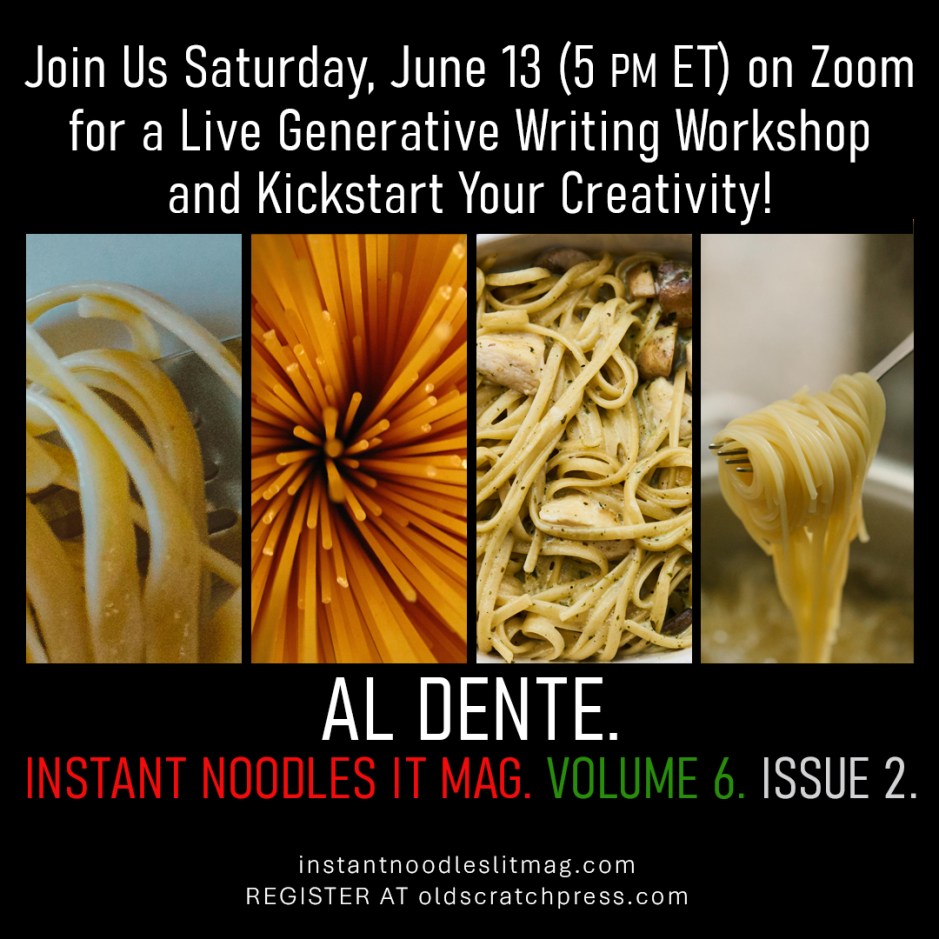
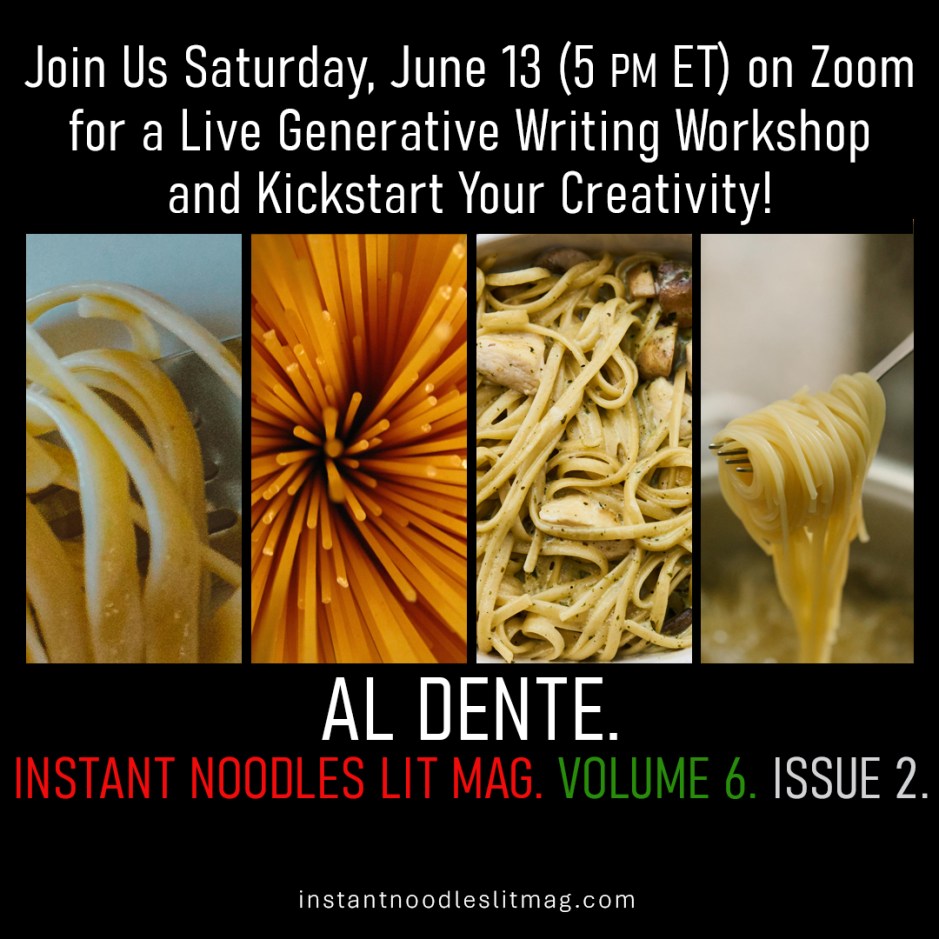
The Instant Noodles Lit Mag Al Dente Writing Workshop with Robert Fleming takes place today at 5 PM Eastern (2 PM Pacific), and we’d love to see you there.
Whether you’re a writer, poet, artist, or creative dabbler who occasionally stares out a window pretending to work, this free online workshop is designed to help spark ideas, answer questions about submissions, and get you thinking about our upcoming Al Dente issue.
No fancy credentials required. No publication history required. No secret literary handshake required.
Just bring yourself, your curiosity, and whatever creative project has been lurking in the back of your mind.
Seats are limited, and once the workshop starts, you’ll have to live with the knowledge that everyone else is talking about writing while you’re reorganizing a drawer or scrolling social media.
Thinking about submitting to the upcoming Instant Noodles Lit Mag issue, Al Dente?
Before you hit “send,” join Editor Robert Fleming for a free online workshop on Saturday, June 13, at 5 PM Eastern (2 PM Pacific).
This informal session is designed for writers, poets, and artists who want to learn more about the theme, explore ideas, and discover what kinds of work might be a good fit for the issue.
Literary magazines can sometimes feel intimidating from the outside. This workshop is an opportunity to ask questions, generate new material, and connect with fellow creatives in a welcoming environment.
Whether you already have a submission in progress or are still waiting for inspiration to strike, you’ll leave with fresh ideas and a better understanding of where your work might fit.
Attendance is free, but seating is limited.
Reserve your spot today and help us make the next issue of Instant Noodles Lit Mag something special.
Every issue of Instant Noodles Lit Mag starts somewhere.
A line scribbled in a notebook. A strange image that won’t leave you alone. A poem that refuses to behave. A story that exists everywhere except on the page.
If you’ve been looking for a reason to finally sit down and create something, consider this your invitation.
On Saturday, June 13, at 5 PM Eastern (2 PM Pacific), Instant Noodles Lit Mag Editor Robert Fleming will host a free online Al Dente Writing Workshop designed to help writers, poets, and artists generate ideas, get inspired, and learn more about submitting to our upcoming issue, Al Dente.
Whether you’re a seasoned contributor or someone who’s never submitted a piece before, you’re welcome to join us.
The workshop is free, but space is limited.
Bring your imagination. We’ll provide the noodles.
Register today and join us for an evening of creativity and community.
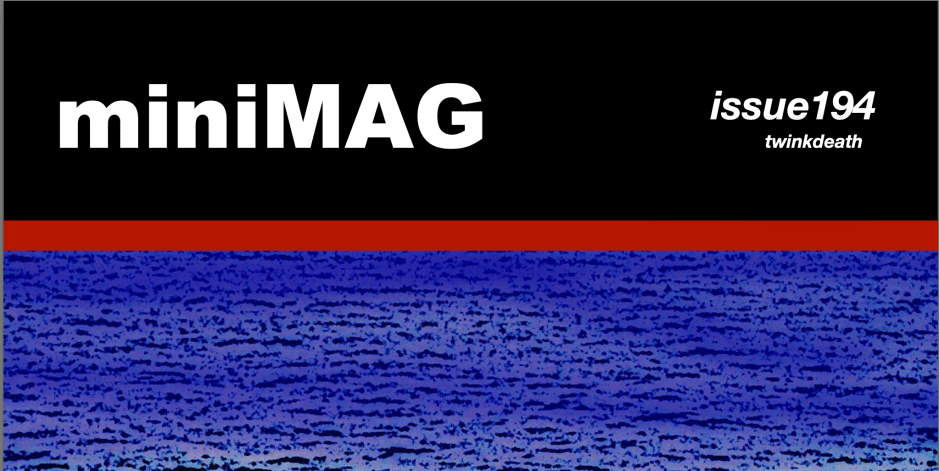
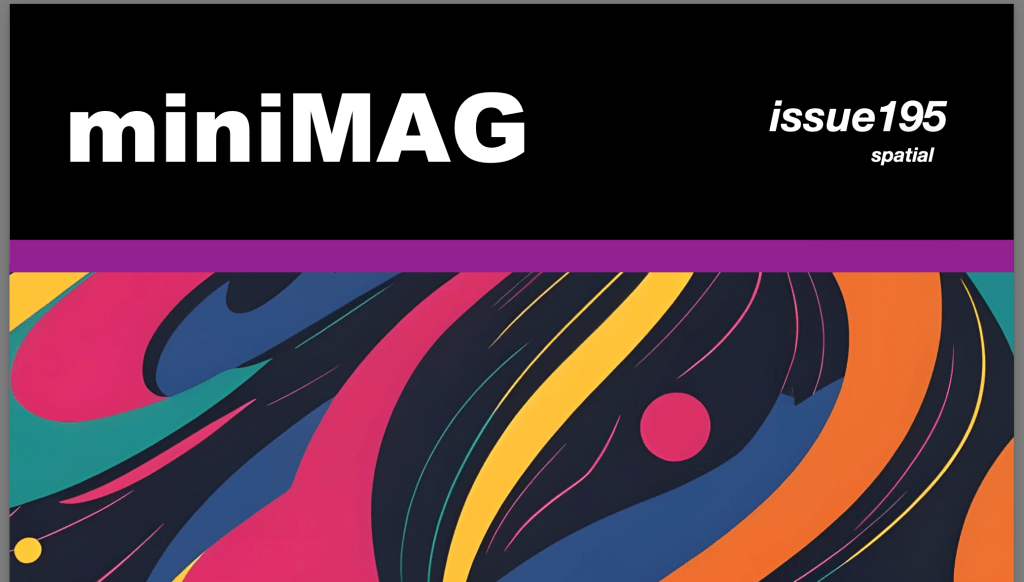
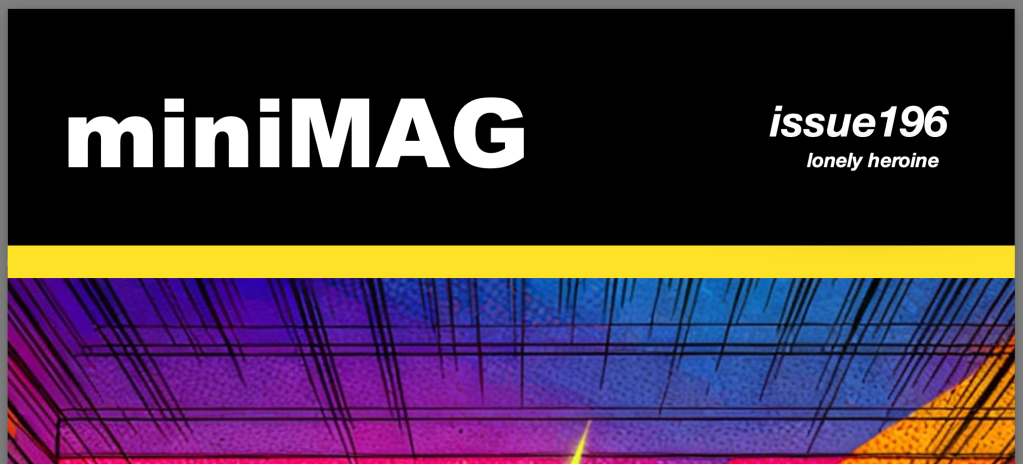
If you’ve never encountered miniMAG before, it’s a literary space built around immediacy, intensity, and voice.
Known for publishing short, powerful work, miniMAG has created a home for writing that lands quickly and lingers. It’s a platform that embraces experimentation, emerging voices, and pieces that don’t always fit neatly into traditional categories. The emphasis has often been on brevity, but more importantly, on impact.
Which is exactly why it’s such an exciting space for Old Scratch Press to step into.
For this upcoming issue, we’re not curating the work. We are the work.
Old Scratch Press is taking over the issue as contributing writers and artists, bringing a collection that reflects the range of what we do. That includes longer pieces alongside shorter ones, visual work alongside written, and voices that move between forms rather than staying confined to one.
This isn’t about fitting into a format. It’s about expanding it.
You’ll find work that holds tension, work that experiments, work that stretches. You’ll find pieces that are immediate and pieces that take their time. And yes, you’ll find writing that pushes beyond the expectation of what “mini” might suggest, and art as well. Many of us make with words and with other mediums too.
At Old Scratch Press, we care deeply about voice, about risk, and about creating space for work that feels alive on the page. This issue of miniMAG gives us the opportunity to bring that energy into a platform already known for bold, concentrated storytelling, and to widen the lens just a bit while we’re there.
Have you ever considered a writing retreat? Most of them are (I think) outrageously expensive. How about a free one instead? Consider applying to Yaddo.
Yaddo is one of the most respected artist residencies in the world, offering writers something increasingly rare: uninterrupted time and space to focus deeply on creative work. Founded in 1900, Yaddo was created with a singular purpose, to support artists by removing everyday distractions so they can fully engage with their craft. Located on a wooded estate in Saratoga Springs, New York, Yaddo has quietly supported generations of writers whose work has gone on to shape contemporary literature.
What makes Yaddo especially appealing to authors is its emphasis on creative freedom. There are no required workshops, classes, or public obligations. Writers are given room, board, and a private workspace, allowing them to set their own rhythm and priorities. Residencies typically range from two weeks to two months, offering enough time to make real progress on a project or to rediscover momentum that may have been lost to teaching, work, or daily responsibilities.
Selection is based on the strength of the work itself. There is no expectation that writers arrive with a polished or market ready manuscript, and no requirement to produce a finished piece by the end of the residency. This makes Yaddo an ideal space for experimentation, risk taking, and deep revision. Many writers find that the absence of pressure allows them to work more honestly and adventurously than they can elsewhere.
While solitude is central to the Yaddo experience, a quiet sense of community is also part of daily life. Communal meals and shared spaces offer opportunities for informal conversation with artists working across disciplines, including music, visual art, film, and theater. These interactions are optional but often enriching, providing fresh perspectives without overwhelming the creative focus.
For authors navigating a literary world that increasingly demands constant productivity and self promotion, Yaddo offers a rare and valuable gift. Time to write. Time to think. Time to reconnect with the work itself. For writers serious about their craft, applying to Yaddo is not just an opportunity. It is an investment in the long life of their creative practice.
DEADLINE:
Dianne Pearce is the chief editor and bottle washer at Current Words Publishing, and the half-cocked imaginer behind Old Scratch Press and Instant Noodles. Pearce loves helping writers realize the dream of having their work published. I mean she is really crazy about doing that for some reason. To that end, to join in the fray, to look at the thing from the other side, to stand in another’s shoes, and all of those things, she is fully expecting and promising to publish her first collection of poetry, In the Cancer Cafeteria, spring of 2026. Please don’t hold your breath. For very long. Happy Holidays!
There’s a certain stereotype about writers: distracted, dreamy, maybe a little moody, often lost in their own heads. Then there are those of us whose third-grade teacher writes on her report card, “Ellis is very sensitive. She says she doesn’t feel good when she doesn’t want to participate and sometimes puts her hands over her ears.”
What we don’t always name is that many of us identify with something more specific—ADHD, anxiety, depression, OCD, autism, bipolar disorder. In other words, neurodivergence.
Far from being a barrier, these brain patterns often come hand-in-hand with creativity. Our ability to notice connections others overlook, to hyper-focus on a project for hours, or to sense language at a heightened level can all be part of what makes us writers. (Doesn’t everyone have a list of words they hate simply because the way the word feels in their mouth?)
The Double-Edged Sword
Of course, the same brain that gifts us with creative leaps can also work against us. ADHD can make finishing projects feel like climbing Everest. Anxiety can whisper that nothing we write is ever good enough. Depression can steal the life-force necessary to even begin. The very sensitivity that makes us attuned to metaphor and meaning can leave us overwhelmed by the noise of the world.
Reframing the Narrative
Instead of treating neurodivergence as something to battle, what if we reframed it as part of the writer’s toolkit?
Hyperfocus can become a superpower for deep revision. Or help you finish the book!
Restless energy can fuel bursts of freewriting that break past creative blocks. That, and dance breaks.
Heightened sensitivity can deepen character work, dialogue, and description. As long as you remember to take breaks.
The key is learning how to manage the edges—finding rest, support, and strategies so that the gift doesn’t become a burden.
Practical Ways to Support Your Creative Brain
Chunk your writing time. Short, timed sessions (15–25 minutes) can harness focus without overwhelming you.
Write rituals, not rules. A small ritual (lighting a candle, stretching, a playlist) helps train your brain to enter writing mode.
Name the inner critic. Literally give it a name or persona so it loses power over you.
Seek community. Writing groups, workshops, or even online spaces help balance the solitary nature of the work.
Honor rest. Brains that run hot need recovery time. Pushing the pause-button isn’t failing—it’s part of the process.
Why It Matters
When we share openly about the link between writing and neurodivergence, we create permission for others. Permission to stop beating themselves up for struggling with deadlines. Permission to see their “quirks” as part of their artistry. Permission to make choices others might not understand. Permission to write anyway.
Do you identify as a neurodivergent writer? How does it show up in your creative process—both the gifts and the challenges?
Ellis Elliott
Founding member Old Scratch Press Poetry Collective
Author of Break in the Field poetry collection and A Witch Awakens: A Fire Circle Mystery.
The holiday/end of year issue of INSTANT NOODLES, the issue where we always ask people to try for humor. Do you have what it takes to make us smile?
Submissions for 2025 are open through November 2, 2025.
The Old Scratch Press team asks that all fiction/non-fiction pieces adhere to a word count of 1,000 words or less.
2025 Themes and Topics
GRAVY is our 2025 winter holiday theme. Give us your best holiday gravy fails, mishaps, ridiculous gravy encounters (any December holiday, from Hannukah, to Solstice, to NYE, etc.) or your best wry work about gravy, in general. The point of the end-of-year issue is always to be light-hearted to downright silly. Submissions for GRAVY are open through NOVEMBER 2, 2025; the issue will publish on DECEMBER 1, 2025.Please CLICK HERE to submit. We’re looking for short fiction, non-fiction, poetry, drama, art, and multi-media.
INSTANT NOODLES is always free to submit to, and free to read. We’re about to announce the pieces that were published that we’re submitting to BEST OF THE NET and PUSHCART, so stay tuned to this station!
Thanks for being an INSTANT NOODLES participant and/or fan! We appreciate you giving indie authors a place to get read!
Alan Bern is more than just the author of DREAMS OF THE RETURN—he’s also one of the founding voices of Old Scratch Press, a collective born from a group of terrific writers with a deep love of traditional and hybrid poetry, prose, and art. As a retired children’s librarian and cofounder (with Robert Woods) of the fine-press publisher Lines & Faces, Alan has long pursued the merging of word, image, and place.
In DREAMS OF THE RETURN, he turns his lens to Italy—in particular the South—bringing to life landscapes both storied and luminous through his own photographs and through classic Italian poetry, delivered both in its original form and in his own translations. The journey is lyrical, immersive: it’s not merely a travel guide, but a portrait of longing, place, memory, and beauty.
And that’s something Alan does beautifully—his artistry weaves together what he’s done throughout his life: poetry, prose, photography, memoir, all fueled by a love for Italy. Within the OSP community, he is known for “photo-poems,” a daily practice in which images and language overlap, inviting the reader to travel with him across geographies and inward, into self.
In addition to poems and photographs, DREAMS OF THE RETURN also includes intimate personal essays that layer history, memory, and lived experience. In “The Good One,” for example, Alan recounts a walk through Naples’ Quartieri Spagnoli with his friend Marco. What begins as a conversation about Jewish philosopher Don Isaac Abravanel and the sacred geography of southern Italy turns into a heartbreaking encounter with a community altar for “o’ Bono”—a young man accidentally killed during a New Year’s Eve celebration. Through this story, Alan reveals how place, tragedy, resilience, and human connection are intertwined in ways both profound and ordinary.
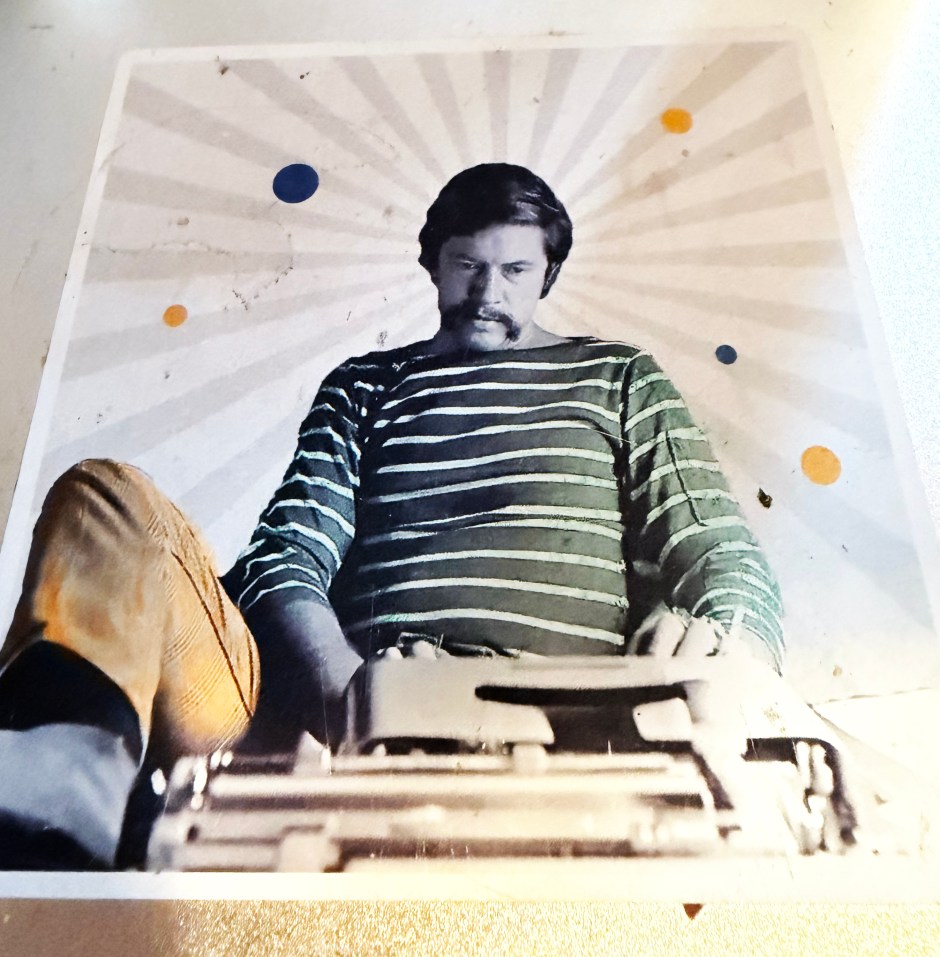
A true perfectionist, Alan (pictured left) worked closely with his good friend, Peter Truskier, to ensure that the photos selected would sparkle in the book just like the locations did in real life.
DREAMS OF THE RETURN is, in effect, another way Alan invites us to travel: through light and verse, through time and place. It’s a book to savor—start with a wind-soft sun, ruins, olive trees and history; consume it slowly with pizza margherita and red wine; linger into the evening with the sweetness of roccoco napoletani and an espresso kissed with Sambuca. You can order a copy of your own here: