Building a Readership: Five Paths for Poets, Path 5.

PATH 5: Take That First Step

One Collection Leads to Another

Many poets spend years submitting individual poems to journals, attending readings, participating in workshops, and building relationships within the literary community. These activities are valuable and often necessary. Yet at some point, many poets begin asking a different question:

“When is it time to put a collection together?”

For some writers, the answer arrives naturally. A group of poems begins to speak to one another. Certain themes emerge. Images recur. The manuscript starts to feel less like a collection of individual works and more like a conversation taking place across dozens of pages.

For others, the decision is more difficult. Many poets delay publishing a collection because they worry they are not ready, that they have not accumulated enough publication credits, or that they have not yet found a traditional publisher. While those concerns are understandable, they sometimes prevent writers from sharing work that is already prepared to meet readers.

One of the great misconceptions about poetry publishing is that publication itself is the finish line. In reality, publication is often the beginning of a new stage in a poet’s development.

A collection gives readers a place to go.

Someone may enjoy a poem in a journal, hear you at a reading, or discover your work through social media. A collection allows those readers to spend more time with your voice and ideas. It transforms a series of individual encounters into a deeper relationship between writer and reader.

Collections also create opportunities that individual poems sometimes cannot. A published book can lead to readings, interviews, festival appearances, workshop invitations, review opportunities, podcast conversations, and future publishing projects. It becomes a calling card for your work and a record of your growth as a writer.

This is one reason many poets discover that one collection often leads to another.

The process of assembling, revising, publishing, and promoting a manuscript teaches skills that carry into future projects. You learn how poems work together. You learn how readers respond to your work. You learn what aspects of publishing you enjoy and which ones you would rather delegate to others. Most importantly, you gain confidence from completing a substantial creative project.

Fortunately, poets today have more publishing options than ever before.

Some writers pursue traditional publication through independent presses, university presses, and literary publishers. This route can provide editorial support, distribution, and professional recognition, but it often requires patience. Many presses receive far more manuscripts than they can publish, and response times can stretch for months.

Others choose to self-publish. This approach offers complete creative control and allows poets to move forward on their own timeline. Modern print-on-demand services have made self-publishing more accessible than ever. However, self-publishing also requires authors to manage editing, design, formatting, distribution, and promotion themselves or hire professionals to assist with those tasks.

A third option involves working with a partner publisher, cooperative press, or author-services organization. These arrangements often combine professional support with greater author involvement and control. Depending on the organization, responsibilities and costs may be shared in different ways. For many poets, this middle path provides a balance between independence and guidance.

The best choice depends on your goals. Some poets value the prestige associated with a traditional press. Others prioritize speed, flexibility, or creative control. Still others appreciate a collaborative approach that allows them to remain closely involved in the process while receiving professional assistance.

Whatever path you choose, remember that a collection does not need to be perfect before it can be published. Every published poet can point to lines they would revise differently years later. Growth does not stop when a book is released. In many ways, publication simply marks the next stage of the journey.

This is particularly important for poets who find themselves waiting endlessly for permission to move forward. A manuscript sitting unread on a hard drive reaches no one. A collection in the hands of readers has the opportunity to create conversations, build connections, and leave a lasting impression.

That does not mean every manuscript should be rushed into print. Thoughtful revision remains essential. Feedback matters. Professional editing can strengthen a collection dramatically. The goal is not speed for its own sake. The goal is to avoid allowing fear, perfectionism, or uncertainty to keep a finished project hidden forever.

Many poets spend years hoping someone will discover them. There is nothing wrong with pursuing traditional publication, and many excellent collections find homes that way. At the same time, poets today have more choices than previous generations. If your work is ready, there may be more than one path to publication.

After all, the purpose of a collection is not simply to exist. It is to be read.

The poems you’ve spent years writing deserve the opportunity to find readers. And sometimes the first collection does more than reach an audience. Sometimes it gives you the confidence, experience, and momentum to begin the next one.


This concludes our five-part series on building a readership for poetry. We hope you’ve found a few ideas worth trying, whether you’re just beginning to share your work or preparing your next collection. We’d love to hear from you. Which strategies have helped you find readers? What challenges are you facing? And what topics would you like to see us explore next? Leave a comment below, connect with us on social media, or reach out through the Old Scratch Press website. Old Scratch Press exists because poets learn from one another, and we’d love your ideas for future articles and series you’d like to see us tackle.


NEW OPPORTUNITY

We’re also launching a new occasional contributor feature called “What’s One Thing You Wish Someone Had Told You?” Poetry is full of lessons we often learn the hard way, and we’d love to share some of that wisdom with the community. If there’s one thing you wish you’d known earlier about writing, submitting, publishing, readings, workshops, marketing, or the poetry life in general, consider writing a short guest article of 500-800 words.

Authors whose articles are selected will be featured on the Old Scratch Press website and along with a short biography, links to their website and social media, and one poem of their choice, whether previously published or not. Our goal is to help poets share both their experience and their work with a wider audience.

If you’re interested, send your article or proposal to guestpost@oldscratchpress.com. We look forward to learning from your experiences.

Building a Readership: Five Paths for Poets, Path 4.

PATH 4: The Long Game

Workshops, Community, and the Long Game of Poetry

Many poets begin writing in solitude. A notebook, a keyboard, a quiet room, and a handful of ideas are often all that’s required to start. Yet while poetry is frequently written alone, few poets build a lasting writing life entirely by themselves.

One of the most valuable resources available to poets is community.

For some writers, that community takes the form of a workshop. For others, it may be a reading group, an online gathering, a local poetry organization, or an informal circle of trusted readers. Whatever form it takes, a strong community can help poets grow, remain motivated, and continue writing through the inevitable ups and downs of the creative process.

Workshops, in particular, offer several benefits. They provide opportunities to receive feedback, hear how readers interpret your work, and identify strengths and weaknesses that may be difficult to see on your own. A thoughtful workshop can help a poet sharpen individual poems while also developing skills that carry into future projects.

At the same time, workshops are not simply about critique. Some of the most valuable lessons come from reading and discussing the work of others. Evaluating another poet’s choices often teaches us as much about writing as receiving feedback on our own poems.

For poets who have never participated in a workshop, finding one is often easier than expected. Local libraries, community colleges, arts organizations, independent bookstores, and writing centers frequently host workshops. Online options have expanded dramatically in recent years, making it possible to connect with poets from around the world without leaving home.

For poets wondering where to begin, there are more options than ever before. Local libraries, community colleges, independent bookstores, arts organizations, and state poetry societies frequently host workshops and discussion groups. Many literary journals, writing centers, and nonprofit arts organizations also offer virtual workshops that allow writers to participate from anywhere.

If you’re looking online, start by following organizations such as Poets & Writers, The Writers Center, local arts councils, and poetry organizations in your region. Facebook groups, Bluesky communities, and writer-focused newsletters can also help uncover opportunities. Don’t overlook literary events themselves. Many workshops are discovered through readings, conferences, and conversations with other writers.

As you explore, remember that workshops serve different purposes. Some focus on craft and detailed critique. Others emphasize accountability, encouragement, or community. Before committing to a long-term group, ask yourself what you hope to gain. Are you trying to improve individual poems? Complete a manuscript? Meet other poets? Build confidence sharing your work? The answers can help you find a community that fits your goals.

One final suggestion: don’t wait for the perfect workshop. Attend a reading. Join an online discussion. Participate in a one-day class. Introduce yourself to another poet. Literary communities are rarely built through a single dramatic step. More often, they grow through a series of small, consistent acts of participation.

When choosing a workshop, it is worth remembering that not every group will be the right fit. Some focus heavily on craft. Others emphasize encouragement and accountability. Some are highly structured, while others are more conversational. If one group does not feel productive or welcoming, that does not mean workshops are not for you. It may simply mean you have not yet found the right community.

people collaborating around a table

Community also plays an important role beyond the workshop itself. The poetry world is built on relationships. The poets you meet today may become future collaborators, readers, editors, event organizers, or simply trusted friends who understand the unique challenges of the writing life.

Many opportunities arise through these relationships. Invitations to readings, recommendations for journals, introductions to editors, and collaborative projects often emerge through conversations within the literary community. While talent and hard work remain essential, few poets navigate the literary landscape entirely alone.

Perhaps most importantly, community helps sustain writers over the long term.

The reality is that poetry rarely offers immediate rewards. Publication may take months or years. Collections can require years to complete. Rejections are common. Audience growth is usually gradual. Writers who expect quick results often become discouraged.

This is where community becomes invaluable. Fellow poets understand the excitement of an acceptance, the disappointment of a rejection, the frustration of a stalled manuscript, and the satisfaction of finally solving a difficult line. They remind us that we are not working in isolation and that the challenges we face are shared by many others.

The most successful poets are not always the most talented. Often, they are the ones who remain engaged long enough for their work to mature. They continue reading, writing, revising, submitting, and participating in the literary world year after year.

This is the long game of poetry.

A workshop will not instantly transform your writing. Joining a community will not guarantee publication. Neither will produce thousands of readers overnight. What they can provide is something far more valuable: growth, support, accountability, and connection.

Over time, those small advantages accumulate. One workshop leads to stronger poems. Stronger poems lead to publications. Publications lead to readings. Readings lead to new readers and new opportunities. A writing life is rarely built through a single breakthrough. More often, it is built through years of showing up, learning, and participating.

If you’re looking to build a readership, don’t focus only on promotion. Invest in community as well. The relationships you build along the way may ultimately become one of the most rewarding parts of your poetry journey.

Building a Readership: Five Paths for Poets, Path 3.

PATH 3: Social Media

Using Social Media Without Losing Your Mind

Mention social media to a group of poets and you’ll likely get a wide range of reactions. Some embrace it enthusiastically. Others tolerate it reluctantly. A few would happily throw their phones into the nearest lake if they thought it would help them write more poems.

If you’re trying to build a readership, social media can be a useful tool. The challenge is remembering that it is a tool, not a destination.

Many writers approach social media with unrealistic expectations. They assume they need thousands of followers, viral posts, or a constant stream of content in order to be successful. In reality, most poets build readership the same way they build literary communities: slowly, one connection at a time. Poets with fifty engaged readers who genuinely care about their work are often in a stronger position than someone with thousands of followers who rarely interact with what they post. Readers matter more than numbers.

One of the most common mistakes poets make is treating every post as a sales pitch. Constantly asking people to buy a book, attend an event, or subscribe to a newsletter can quickly exhaust an audience. Social media works best when it feels like a conversation rather than an advertisement. Consider sharing parts of your writing life instead. Talk about a poem you’re working on. Share a favorite line from a poet you admire. Discuss a recent reading you attended. Recommend a literary journal. Celebrate another writer’s success. Give people a reason to follow you beyond the occasional book announcement.

It is also important to remember that not every platform serves the same purpose. Some poets enjoy Instagram’s visual focus. Others prefer Facebook groups, Bluesky, Substack, Threads, or TikTok. Rather than trying to maintain a presence everywhere, choose one or two platforms that feel comfortable and sustainable.

One of the most effective ways to use social media is to join existing communities rather than trying to build an audience from scratch. Look for groups dedicated to poetry, books, literary journals, reading challenges, independent publishing, or genres that align with your work. Readers are already gathering in these spaces. Your goal is not to convince everyone to read your poetry. Your goal is to find the people who already enjoy poetry and become part of the conversation.

The key is to participate as a community member first and a writer second. Read what others post. Offer encouragement. Share recommendations. Celebrate successes. Ask thoughtful questions. People are far more likely to become interested in your work when they know you as a person rather than someone who appears only to promote a book or drop a link. In other words, don’t treat social media groups as billboards. Treat them as communities. The strongest literary relationships often develop through genuine conversations that have little to do with selling anything at all.

Consistency generally matters more than volume. Posting once or twice a week for a year will often accomplish more than posting twenty times a day for two weeks and then disappearing for six months. Readers appreciate reliability far more than intensity. Social media can also be a valuable way to discover opportunities. Many literary journals, bookstores, festivals, workshops, and reading series announce events through their social media accounts. Following organizations you admire can help you stay informed about submission calls, readings, contests, and publishing opportunities.

At the same time, poets should be careful not to confuse visibility with productivity. It is possible to spend hours discussing writing online without actually writing. Most readers ultimately care about the poems themselves, not the number of posts that appeared along the way.

One helpful question to ask is this: “Would I still do this if nobody clicked ‘like’?” If the answer is yes, you’re probably using social media in a healthy way. If the answer is no, it may be worth reconsidering how much time and emotional energy you’re investing in the platform.

It is also important to remember that social media tends to reward attention-grabbing content, while poetry often rewards reflection, patience, and subtlety. A post that receives little engagement is not necessarily unimportant. Likewise, a viral post is not necessarily meaningful. The value of your work cannot be measured by an algorithm.

For many poets, the healthiest approach is to view social media as a bridge rather than a home. Use it to connect with readers, discover opportunities, support fellow writers, and share your work. Then log off and return to the page.

The poets who seem most comfortable online are often those who understand this balance. They participate in conversations, support their communities, and remain visible, but they do not allow social media to become the center of their creative lives.

In the end, readers are built through relationships, not algorithms. Social media can help create those relationships, but it cannot replace the work of writing good poems, supporting other writers, and participating in the literary community.

Use social media if it serves your goals. Ignore the pressure to be everywhere at once. Share your work, encourage others, and remember that the most important part of being a poet still happens away from the screen.

Building a Readership: Five Paths for Poets, Path 2.

PATH 2: Literary Journals

Why Literary Journals Still Matter

When poets talk about building a readership, literary journals are often one of the first recommendations they receive. Yet many writers, especially those outside academic circles, wonder whether journals still matter in an age of websites, social media, and self-publishing.

The short answer is yes.

Literary journals remain one of the most accessible ways for poets to introduce their work to new readers, establish publishing credentials, and become part of the broader literary conversation. While publication in a journal rarely leads to instant fame or large sales numbers, it can help create the foundation upon which a readership is built.

For many poets, journals provide something equally important: discovery. Readers who may never have encountered your work otherwise can stumble across a poem in a magazine, become interested in your writing, and begin following your career. Editors, event organizers, workshop leaders, and fellow poets often discover new voices through journals as well.

If you’re new to submissions, finding journals is easier than ever. Resources such as Chill Subs, Duotrope, Poets & Writers, New Pages, and the Community of Literary Magazines and Presses (CLMP) maintain extensive databases of literary magazines and submission opportunities. Many journals also maintain active social media accounts where they announce open reading periods, special themes, and contests.

One of the most common mistakes beginning poets make is submitting without first reading the publication. Whenever possible, spend some time with a journal before sending your work. Read several poems. Pay attention to the styles, themes, and voices the editors seem to favor. Not because you should imitate them, but because you’ll gain a better sense of whether your work is likely to be a good fit.

Many journals now accept submissions through online platforms such as Submittable and Moksha. These systems make it easy to track submissions, but they have also increased competition by making it easier for writers to submit widely. Rejection remains a normal part of the process. Even accomplished poets accumulate large numbers of rejections throughout their careers.

At some point, every poet encounters the question of reading fees. Some journals charge a small fee, often between two and five dollars, to help cover administrative costs, software subscriptions, and staff expenses. Others operate entirely without fees. Opinions vary widely on the practice. Some writers avoid reading fees altogether, while others are comfortable paying modest amounts to support journals they respect.

There is no single correct approach. However, poets should be thoughtful about where they spend their money. A small fee for a well-established publication may be reasonable. Paying large amounts to submit work to unknown organizations is generally less advisable. As with any publishing opportunity, it pays to do a little research before opening your wallet.

Another decision involves print versus digital publications. Some poets strongly prefer print journals because they enjoy seeing their work in a physical publication and because print journals often carry a certain prestige. Others appreciate the accessibility of online journals, where poems can be discovered by readers around the world with a simple click.

The truth is that both formats offer advantages. Print journals provide permanence and a tangible reading experience. Online journals often offer broader reach, searchable archives, and the possibility of sharing links directly with readers. Many respected literary publications now operate in both formats, making the distinction less important than it once was.

It is also worth remembering that publication credits are not merely lines on a résumé. Every journal publication expands your visibility. A handful of well-placed poems can lead to invitations to readings, relationships with editors, opportunities for future publication, and readers who may eventually purchase your collection.

For poets considering a future book project, journal publication can be especially valuable. Individual poems published over time help establish a track record of activity and engagement within the literary community. They can also provide useful feedback about which poems resonate most strongly with readers and editors.

At the same time, don’t fall into the trap of believing that journal publication is the only path to legitimacy. Many excellent poets publish widely in journals. Many others build readership through readings, workshops, social media, teaching, community engagement, or independent publishing. Literary journals are one tool among many.

Ultimately, journals matter because they help connect poems with readers. They provide opportunities for discovery, conversation, and community. For poets seeking to build a readership, submitting to journals remains one of the most practical and effective ways to begin sharing work beyond their immediate circle.

If you’ve been considering submitting your poetry, start small. Find a few journals you genuinely enjoy reading, study their guidelines, and send your work into the world. Every publication began with a first submission, and every poet who appears in a journal today was once a writer nervously pressing “submit” for the very first time.

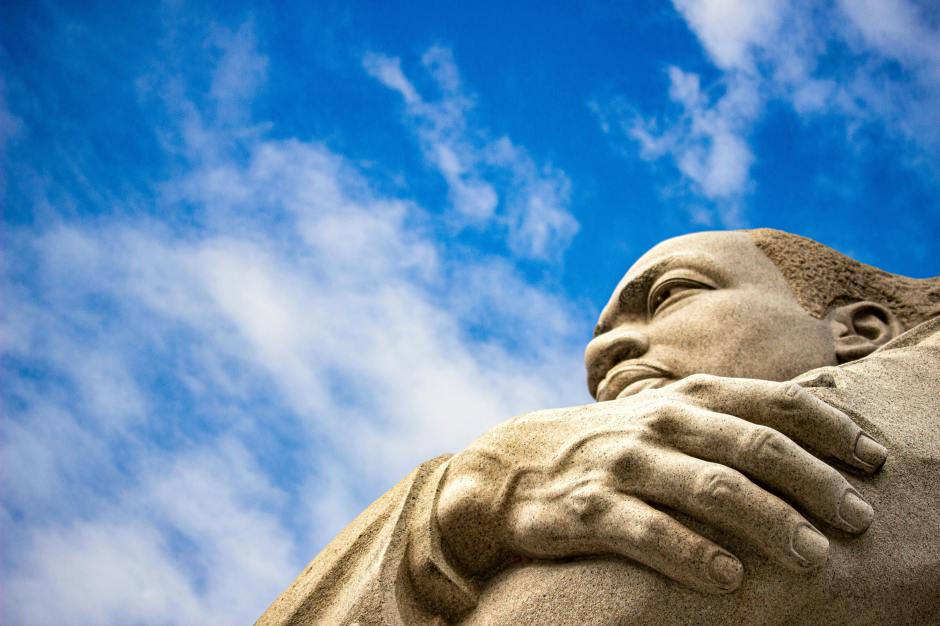
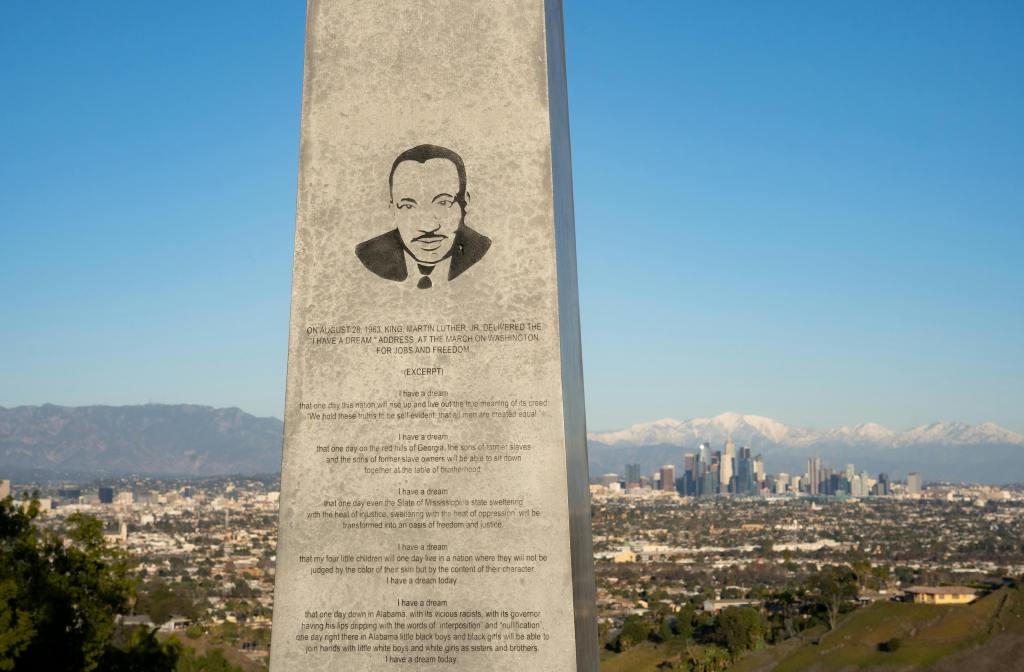
Hurray for Dr. King~

Langston Hughes, Maya Angelou, Gwendolyn Brooks, Joy Harjo, Claudia Rankine, Ocean Vuong, Elizabeth Acevedo, Terrance Hayes, Frank O’Hara, Audre Lorde, Allen Ginsburg, all poets who have enhanced the canon of American writing with their writing and their diversity. Have you read any of them? Which ones have you tried? Which diverse poet is your favorite? What poem do you like that you can share with us?

Did you know that Dr. Martin Luther King Jr. believed deeply in the power of voices, especially voices that had been ignored, dismissed, or pushed aside? That belief matters just as much in literature as it does anywhere else.

The literary canon is not a fixed monument. It is a living body of work that grows stronger, more truthful, and more beautiful when it includes diverse authors and perspectives. American literature is incomplete without the poets and writers who reflect the full range of American experience. Reading these voices does not diminish the canon. It expands it, strengthens it, and makes it more honest.

It may seem as if diverse authors exist on the margins of literature, but they don’t. They are central to it. They shape language, challenge assumptions, and help us see both history and the present more clearly. I have enjoyed so many authors who are so different from me, especially when we count the wealth of male writers we read in school. They are all wonderful writers, and I am also glad school now includes more writers who look like me, as well as writers who look like my daughter and my friends.

So today, as we celebrate Dr. King, let’s also celebrate the voices that widen our understanding of who we are. Pick up a book. Read a poem. Listen closely to someone, anyone, different from you, or simply listen to someone in need. How can you share your light?

On a slightly off-topic note, I was visiting my sister this weekend, and we each chose a stand up special to watch that is a pretty new special. I chose Mohaned Elshieky’s special No Need to Address Me, and my sister chose Marcello Hernandez’s special American Boy. Both were incredibly funny. Comedy benefits from diversity too.

I am happy for this day. Hurray for Dr. King and his marvelous legacy. Hurray for all poets. And hurray for a literary world that makes room for all of us.

~Dianne


Dianne Pearce is the chief editor and bottle washer at Current Words Publishing, and the half-cocked imaginer behind Old Scratch Press and Instant Noodles. Pearce loves helping writers realize the dream of having their work published. I mean she is really crazy about doing that for some reason. To that end, to join in the fray, to look at the thing from the other side, to stand in another’s shoes, and all of those things, she is fully expecting and promising to publish her first collection of poetry, In the Cancer Cafeteria, spring of 2026. Please don’t hold your breath. For very long. Happy 2026!

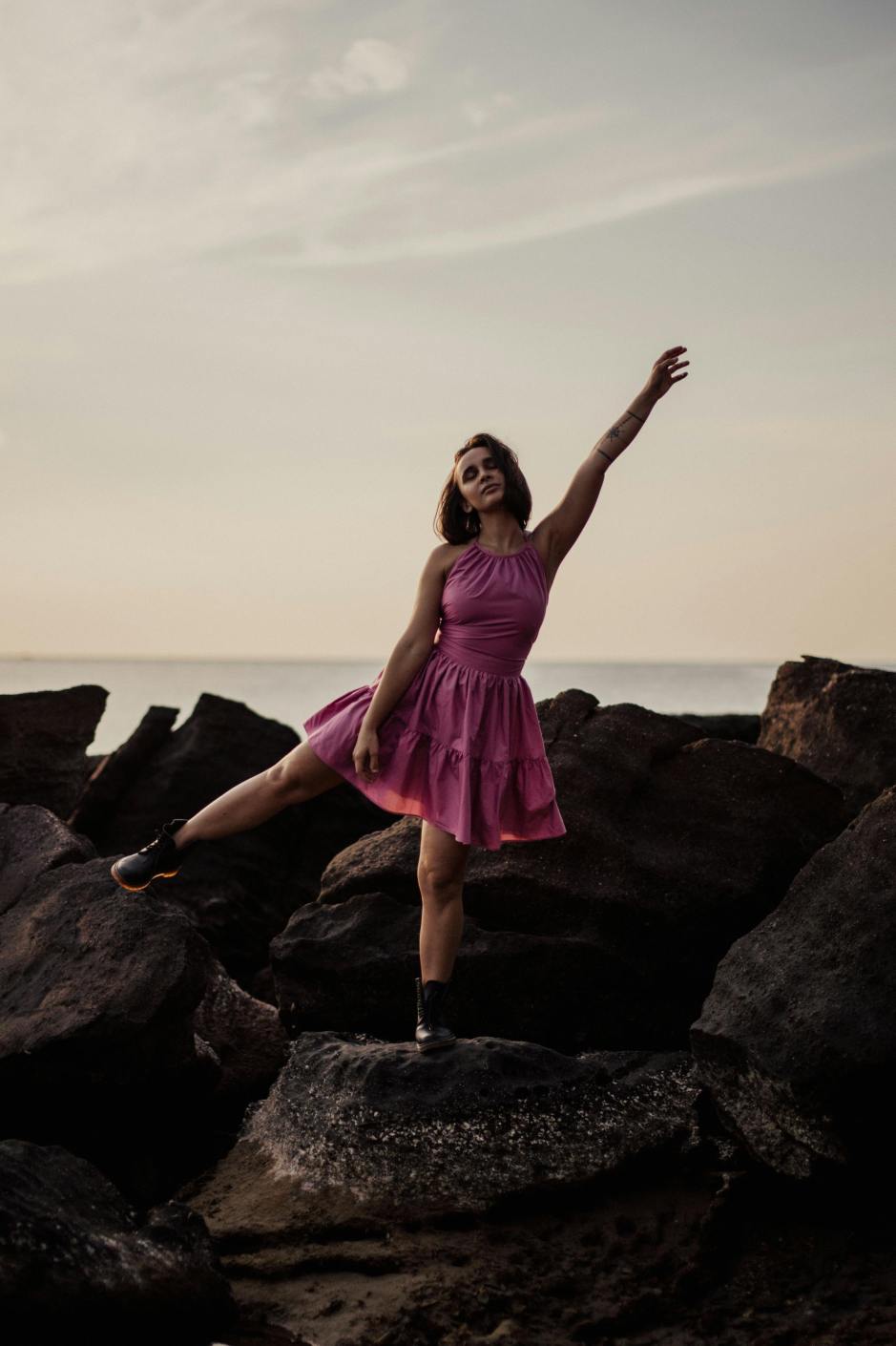
“Pink Dress” from the Forthcoming ~ In the Cancer Cafeteria~


Happy Saturday everyone.

I’m working on bringing out my poetry collection this year, and I thought I’d share one of my poems with you.
For the past year I’ve been traveling with my little sister to her cancer appointments. Luckily I do not have cancer, but I am cancer-adjacent, and that has its own challenges. When I want to say worrying things, when I read case studies, which I do, when I am by myself as she naps through a treatment and I wait, when I drive in and out of West Hollywood alone, sometimes in the threes and fours in the morning depending on treatment time, and I ruminate, I try to put it on paper, rather than on my sister. I’m also a clothes lover and a people watcher from back in junior high with my then boyfriend and bestie Joe Perna. We called ourselves the fashion police in 7th grade, like we were such good dressers. Joe and I observed details, and made guesses based on what we saw. In general the thing I am most curious about is the lives of other people. I think I am (possibly) overly empathetic, and I imagine stories for strangers all day long. I also tend to notice the small things happening around me. As I sit and wait for my sister, or drive alone, or struggle to make small talk (as I do without cancer! I have never been good at it), my brain is humming away wondering about people, and making stories to go with them, and wondering if their cancer is curable and how it will all play out. Most people I see only once, even though we go the same time and day quite often. It is my curse to want to know everything, and to never be able to know, purely because I am a nosy so-and-so. When cancer comes to town your ability to be quiet in the never-knowing is mightily tested.

I also don’t want this to be a totally maudlin book about being upset about my sister. I don’t want it to be a book about my sister. Though I love her dearly, her story is hers, and I don’t want to steal it, which would add, in my view, insult to injury. It’s important when you write about real-live people who are not famous people that you be considerate and kind. I am not able to do that when talking if a joke comes to mind. If I think of something funny about something you’ve said or how you look, etc., it’s coming out unfiltered, that second, and I’m going to laugh. Yeah. Kind of a shitty trait, but what do they say, “At least all the trauma made me hysterical.” Yup. But when I write about anyone who I will see again, it is important to me to serve my needs while not disregarding theirs. There are compromises. My sister may not want me announcing she has cancer, for example, but she has told the people in her life, and I need to be able to discuss it too, so she loses that bit of control, just another thing cancer steals, privacy. For that she has to allow me the book as a coping mechanism. Sorry sis.

Another thing to note, as I assume most people who read this blog are authors: you have to be careful where you put your work before you publish your book. I am publishing my book through OSP, so I can put this poem here, and OSP will not disallow it from the book. If another publisher was publishing my book, they might not be happy for me to stick a poem out in public on a blog. They may or may not be happy for me to publish a poem somewhere in advance, because that anthology or lit mag where the poem is published may hold rights that conflict with the publishing company then using the poem when publishing my book. So there’s that. You have to be careful. You can always post a question here, and one of us will try to answer it. In fact, I’ll run a monthly post that offers a chance for you to ask questions, and reminds you that you can do it.

This book has a theme that runs through the whole book. Some collections do have a theme, but often the theme is that all the poems are written by the same person. The theme in my book is cancer, but, more drilled down, my reactions to cancer, my observations on the cancer experience, which I am holding together in the idea of the cafeteria at the clinic. People who are going through cancer as patients or support are often in the cafeteria as a place to stop being wrapped up in the cancer events and procedures. It’s the downtime place, and, because of that, people drop their masks a bit there. I am not telling anyone’s secrets as much as I am interpreting what I see, which changes the observation from what it is, to what I see. There is much intrusion from observers, so don’t worry that I am revealing anyone’s truths besides my own.

I have trouble tapping a poem with my scepter and declaring it complete. I expect many poets are the same. Sometimes a poem comes out almost fully-formed, but most still have growing and shrinking to do.

I write longer poems. I write narrative poems. I tend to write personal poems. Sometimes my poems are true, and sometimes they are true in the sense that they are true, for me. That doesn’t mean they would qualify as legally true. If the person was a brunette, and brunette doesn’t work, guess what, red hair is what I am going to write.

This poem, “Pink Dress,” is pretty much done. I will say it is an uncorrected proof here, as I may change it a bit before it hits the book galley. But it feels good to me as it is, and I was able to read it aloud to myself without having major anxiety, so I feel like it is okay.

The OSP group has become my friends as well as my colleagues, and, based on schedules and etc., we often ask each other to look at each other’s work. That’s part of the deal with this collective. So far I have shared some of my writing for this book with Robert, Anthony, Gabby, and Ginny. I cannot express how much I have appreciated them and their taking the time to give me really helpful, kind, and actionable feedback.

Here, without further ado, is one of the poems destined to be released later this year in the collection, In the Cancer Cafeteria.

Pink Dress

Her pink dress is too tight too short
the old sneakers don’t go
hair twisted up and split
two rolls of mussed-up teddy ears.

He is all belly 
under his big and tall polo 
up top tangled hair needs 
a brush run through
but beard is spun silk. 
He is the one who gets up
moves around
paces because he’s in the cancer cafeteria and who doesn’t pace?

She doesn’t.
She smiles at the screen in her hands.

Whenever he gets up 
he runs his finger down her bicep. 
Her chubby thighs
twitch back at him against the tight pink hem.
The dress is a mini
I can see her cotton crotch and I don’t tell her
because each time he slides his finger down her arm 
her smile goes wicked at the corners 
for a second
as her thighs twitch
call and response
and it’s not my song to sing.

I shut up I pretend I don’t see.

When he manages to sit 
his chair is up against instead of across from
his long tangled curls try to nestle under her neck
wheedle around her earlobes. 
I can’t tell for certain who is victim
who is victim support.
Some secrets are not for me to know.

He needs to move again 
gets up abrupt 
clumsy all the other chairs 
tables reach for his legs
stepping around best he can into the hall
gazing in confusion at the baby grand 
sitting there
playing “Wichita Lineman” by itself
from 1968 
a year him and his girl know only as a number, and not real.

He stares at the piano
rocks on his heels in his shoes as he has rocked since he was five years old 
knees bend out to the sides 
a boy just learning how legs work
walking through a day’s same endless agenda
treatment, wait, consultation, wait, scan, wait. 

Head nodding at Jimmy Webb’s F major D major
he tries to find his way to the tune
gives up, moves back to her
comes in for a landing 
finger trails down and up
bare meaty skin. 
She ripples in response. 
Appearing now on all her bare places
languishing goose pimples 
long only to be released 
to go home 
so two may unzip the tight pink dress together. 


Dianne Pearce is the chief editor and bottle washer at Current Words Publishing, and the half-cocked imaginer behind Old Scratch Press and Instant Noodles. Pearce loves helping writers realize the dream of having their work published. I mean she is really crazy about doing that for some reason. To that end, to join in the fray, to look at the thing from the other side, to stand in another’s shoes, and all of those things, she is fully expecting and promising to publish her first collection of poetry, In the Cancer Cafeteria, spring of 2026. Please don’t hold your breath. For very long. Happy 2026!

The Writer’s Brain: Creativity and Neurodivergence

From my collage notebook

There’s a certain stereotype about writers: distracted, dreamy, maybe a little moody, often lost in their own heads. Then there are those of us whose third-grade teacher writes on her report card, “Ellis is very sensitive. She says she doesn’t feel good when she doesn’t want to participate and sometimes puts her hands over her ears.”

What we don’t always name is that many of us identify with something more specific—ADHD, anxiety, depression, OCD, autism, bipolar disorder. In other words, neurodivergence.

Far from being a barrier, these brain patterns often come hand-in-hand with creativity. Our ability to notice connections others overlook, to hyper-focus on a project for hours, or to sense language at a heightened level can all be part of what makes us writers. (Doesn’t everyone have a list of words they hate simply because the way the word feels in their mouth?)

The Double-Edged Sword

Of course, the same brain that gifts us with creative leaps can also work against us. ADHD can make finishing projects feel like climbing Everest. Anxiety can whisper that nothing we write is ever good enough. Depression can steal the life-force necessary to even begin. The very sensitivity that makes us attuned to metaphor and meaning can leave us overwhelmed by the noise of the world.

Reframing the Narrative

Instead of treating neurodivergence as something to battle, what if we reframed it as part of the writer’s toolkit?

  • Hyperfocus can become a superpower for deep revision. Or help you finish the book!
  • Restless energy can fuel bursts of freewriting that break past creative blocks. That, and dance breaks.
  • Heightened sensitivity can deepen character work, dialogue, and description. As long as you remember to take breaks.

The key is learning how to manage the edges—finding rest, support, and strategies so that the gift doesn’t become a burden.

Practical Ways to Support Your Creative Brain

  1. Chunk your writing time. Short, timed sessions (15–25 minutes) can harness focus without overwhelming you.
  2. Write rituals, not rules. A small ritual (lighting a candle, stretching, a playlist) helps train your brain to enter writing mode.
  3. Name the inner critic. Literally give it a name or persona so it loses power over you.
  4. Seek community. Writing groups, workshops, or even online spaces help balance the solitary nature of the work.
  5. Honor rest. Brains that run hot need recovery time. Pushing the pause-button isn’t failing—it’s part of the process.

Why It Matters

When we share openly about the link between writing and neurodivergence, we create permission for others. Permission to stop beating themselves up for struggling with deadlines. Permission to see their “quirks” as part of their artistry. Permission to make choices others might not understand. Permission to write anyway.


Do you identify as a neurodivergent writer? How does it show up in your creative process—both the gifts and the challenges?

Ellis Elliott

Founding member Old Scratch Press Poetry Collective

Author of Break in the Field poetry collection and A Witch Awakens: A Fire Circle Mystery.

https://a.co/d/eMSe9up

https://a.co/d/7J1ra9x

http://bewildernesswriting.com

Steps Toward Your First Acceptance in a Literary Journal

Steps Toward Your First Acceptance in a Literary Journal

To my fellow writers out there, I began submitting prose and eventually poetry to literary magazines in 2014. Since that time, I have been published over a hundred times. How did I do it? I learned the ropes and never gave up. More importantly, I never wrote for the purpose of being published. It’s an honor, a wonderful feeling, to have a piece accepted, but in the end of the day, the real joy for me as it is for most writers, is the creative process. Publishing is a very small piece of this magical puzzle. Even so, as writers, most of us would like our work to be read so here are some tips I learned along the way.

  1. Present your best work always. If you have written something, set it aside for some time and return to it later for perspective. ALWAYS have feedback through a professional writing group. One or two friends reading your work will not do. You need professional critique and then you must listen and learn to edit accordingly. None of us can judge our own writing. We simply cannot. Don’t let your ego get in the way of your success.
  2. Prepare a third-person biography. Include information like your location, your publications if you have some, your social media handles and website. If you have not been published, simply say nothing about that or mention that this would be a debut publication. Don’t try to be funny or clever. Be professional.
  3. Prepare a cover letter and keep it simple and professional as well. Address the editor by name if you can. Start with something like: I appreciate the opportunity to submit my fiction story titled “Wind Warp” of 4900 words. Follow with your biography. End by thanking the editor for considering your work. That’s it.
  4. Make a list of journals where your work appears to be a fit as you prepare to submit your work. This will mean reading some of the work the journals have accepted in the past. Lucky for us, many journals are online now or have some excerpts online. Consult resources by Erika Krouse or Clifford Garstang for a ranking of literary journals. 
  5. At first, I tried to select mostly smaller, well-respected journals for the bulk of my submissions. Once I got some traction, I aimed higher. If you can find a local journal that limits submissions to local writers, even better.  One example of this is Philadelphia Stories, a journal that only publishes writers who are living in or originally from Pennsylvania, Delaware or New Jersey. A smaller pool helps your odds. There is nothing wrong with submitting to a new journal either. In fact, I recommend it. New journals need our support.
  6. I would send a piece to at least twenty journals to start with and see how it goes. 
  7. Use standard manuscript format 12-point font Times New Roman. Double Space prose. Single Space poetry. And don’t forget page numbers. 
  8. Be encouraged if editors write you a personal note about enjoying your work even though it was not accepted or asking you to submit more work in the future or telling you that you made it to the final cut. All of these are a very big deal so be happy!
  9. You will receive a lot of rejections. I submitted for about a year and a half before I received my first acceptance. Since then, I have had times where I have been “hot” and times of drought. Don’t give up and don’t get discouraged. There are many reasons a piece is not chosen that have nothing to do with the quality of the writing. You get used to the rejections. Promise me. The way I look at it is this writing that I am submitting is what I have to offer. I’ve got nothing else! This is me. I write what comes to me and what I want to write about. Above all, I just hope to tell a good story. I give every poem or story my all. There have been stories that I never placed, and I am okay with that. Some of these did get out in the world in later collections of mine alongside published stories. Be true to yourself and what your heart wants to write about and you will be fine.
  10. Do not follow up with inquiries about your work after it is submitted. If you don’t hear anything for a year, consider the piece unaccepted and move on.
  11. Make sure you keep a list of all the places you submit a piece so when you do have an acceptance, you can quickly withdraw it from other journals considering your piece.  
  12. Remember too that when submitting to always follow the guidelines such as whether the journal wants to read blind or not. 
  13. Set up a Submittable account because most journals use that now for submissions although some still have their own Submission System or they accept submissions via email only.
  14. Another good idea is to go out for dinner and some glasses of wine with fellow writers submitting their work to share your experiences. Laughter is the best medicine, and you can learn from each other. 
  15. I wish all of you the very best in your writing journey!

Virginia Watts is the author of poetry and stories found in The MacGuffin, Epiphany, CRAFT, The Florida Review, Reed Magazine, Pithead Chapel, Eclectica Magazine among others. She has been nominated four times for a Pushcart Prize. Her debut short story collection Echoes from the Hocker House was short listed for 2024 Eric Hoffer Grand Prize, selected as one of the Best Indie Books of 2023 by Kirkus Book Reviews, and won third place in the 2024 Feathered Quill Book Awards. Please visit her.

Virginia’s new book is now available from Old Scratch Press:

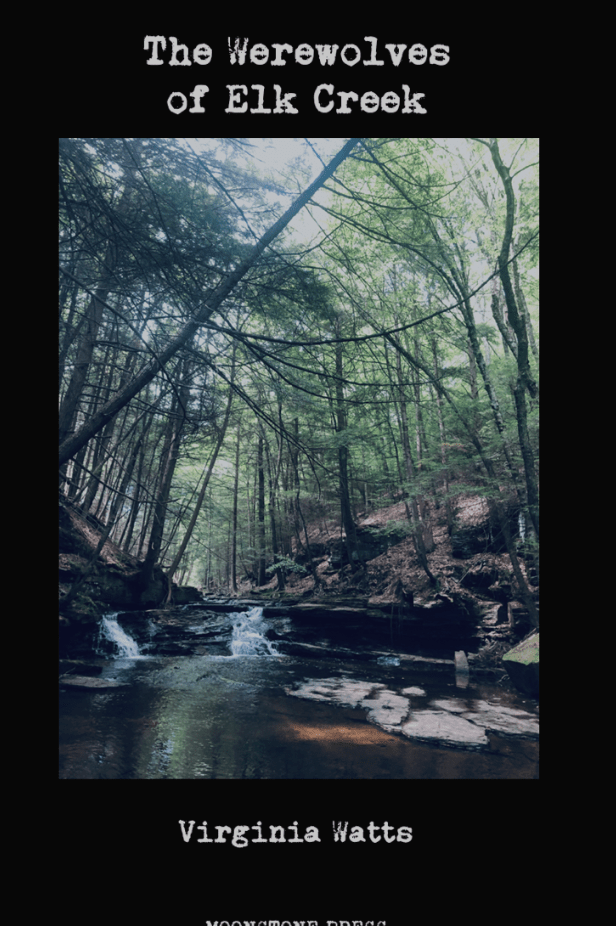
Her prior poetry chapbooks Shot Full of Holes and The Werewolves of Elk Creek 

 are available from Moonstone Press. And her debut short story collection Echoes from the Hocker House is not to be missed!

In October OSP will present a live reading with Virginia, Anthony Doyle, and Alan Bern. Find more information here.

And it’s not too late to get into the last Instant Noodles issue for 2025!

Dreams of the Return

dreams of the return

Alan Bern is more than just the author of DREAMS OF THE RETURN—he’s also one of the founding voices of Old Scratch Press, a collective born from a group of terrific writers with a deep love of traditional and hybrid poetry, prose, and art. As a retired children’s librarian and cofounder (with Robert Woods) of the fine-press publisher Lines & Faces, Alan has long pursued the merging of word, image, and place.

In DREAMS OF THE RETURN, he turns his lens to Italy—in particular the South—bringing to life landscapes both storied and luminous through his own photographs and through classic Italian poetry, delivered both in its original form and in his own translations. The journey is lyrical, immersive: it’s not merely a travel guide, but a portrait of longing, place, memory, and beauty.

And that’s something Alan does beautifully—his artistry weaves together what he’s done throughout his life: poetry, prose, photography, memoir, all fueled by a love for Italy. Within the OSP community, he is known for “photo-poems,” a daily practice in which images and language overlap, inviting the reader to travel with him across geographies and inward, into self.

In addition to poems and photographs, DREAMS OF THE RETURN also includes intimate personal essays that layer history, memory, and lived experience. In “The Good One,” for example, Alan recounts a walk through Naples’ Quartieri Spagnoli with his friend Marco. What begins as a conversation about Jewish philosopher Don Isaac Abravanel and the sacred geography of southern Italy turns into a heartbreaking encounter with a community altar for “o’ Bono”—a young man accidentally killed during a New Year’s Eve celebration. Through this story, Alan reveals how place, tragedy, resilience, and human connection are intertwined in ways both profound and ordinary.

A true perfectionist, Alan (pictured left) worked closely with his good friend, Peter Truskier, to ensure that the photos selected would sparkle in the book just like the locations did in real life.

DREAMS OF THE RETURN is, in effect, another way Alan invites us to travel: through light and verse, through time and place. It’s a book to savor—start with a wind-soft sun, ruins, olive trees and history; consume it slowly with pizza margherita and red wine; linger into the evening with the sweetness of roccoco napoletani and an espresso kissed with Sambuca. You can order a copy of your own here:

Unlocking Your Writing Through Movement

In high school I watched the clock in last period, because I knew as soon as the bell rang I was heading straight to dance class, and all the teen angst and hormonal folderal of the day would be disappear once I got there.

I’ve taught dance for over forty years now, and that was the beginning of a lifetime of learning how the mind/body connection affects my creativity and well-being.

We’re taught early on that writing is supposed to come from the neck up—brain first, fingers second. We believe the words live in our head. But I’ve come to understand this: the stories I care about—the ones that ache and sing—live in my body. And if I want to write them honestly, I have to move.

Movement Makes Space for Story

When I’m stuck on a line in a poem or in a scene, walking often is my default means to address it. It might just be a walk around the block that allows my shoulders to drop and my breath to even out.

There’s something about the gentle rhythm of walking—or swaying, or stretching—that stirs the sediment at the bottom of the creative well. It shakes loose a phrase, a memory, an emotion I hadn’t thought to name.

We say “I’m working it out,” and often we mean emotionally—but there’s a physical truth there, too.

“ But I do believe very strongly that the best poetry is rooted in bodily experience. We experience reality through our bodies and senses, and truth, to the extent that it is apprehensible.”      -Poet Rebecca Foust

The Dance Between Emotion and Motion

As someone who grew up dancing, I know I carry emotion in my body, and in order to gain access I have to move. In order for the reader to feel what I am writing about, I must first feel it myself, and that is not going to happen if I stay entirely in my head.

Movement helps me feel it. And when it’s a big feeling—grief, rage, shame, heartbreak—moving my body helps metabolize it. When we experience trauma or hold strong emotions, our bodies remember. They contract around those memories. Notice how we hold our breath or the body tenses up. If we don’t move them, we risk writing around the truth instead of into it. And I don’t have to run a marathon or take up kickboxing. I can simply take a deep breath, raise and lower my arms a few times, twist gently side to side–all in my deskchair.

Moving lets the emotion pass through me so it can move onto the page.
Otherwise, it stays stuck in the pipes.

Stillness Is Its Own Kind of Movement

Sometimes, the writing calls for the opposite.
Stillness. Not scrolling or skimming or daydreaming—but deliberate, open stillness.
The kind that invites something deeper in. The kind that looks like staring out the window.

This is the space where I can hear the quieter parts of my story—the voice of a child I’d forgotten to listen to, or the image I saw in a dream but brushed off. Lying still and staring at the ceiling can be just as powerful as dancing. For me, it is my meditation practice. It’s all part of the same body-based practice.

Final Thought: You Are the Instrument
Your body is not a machine that carries your brain to your desk.
I tell my students of both writing and dance that the body is an instrument that vibrates with memory, story, longing, and truth.
When you write from your whole body, your work carries a different kind of resonance.
So move.
Let the story or poem move with you.
And then write like your body remembers something your mind forgot.

Click this link for a quick 5-minute seated stretch to get the body moving and the words flowing: https://youtu.be/n0VlNd3nLFw


Ellis Elliott
Bewilderness Writing
https://bewildernesswriting.com/
Old Scratch Press Founding Member
https://oldscratchpress.com/
Author: Break in the Field poetry collection
and A Fire Circle Mystery: A Witch Awakens coming this May