Building a Readership: Five Paths for Poets, Path 2.

PATH 2: Literary Journals

Why Literary Journals Still Matter

When poets talk about building a readership, literary journals are often one of the first recommendations they receive. Yet many writers, especially those outside academic circles, wonder whether journals still matter in an age of websites, social media, and self-publishing.

The short answer is yes.

Literary journals remain one of the most accessible ways for poets to introduce their work to new readers, establish publishing credentials, and become part of the broader literary conversation. While publication in a journal rarely leads to instant fame or large sales numbers, it can help create the foundation upon which a readership is built.

For many poets, journals provide something equally important: discovery. Readers who may never have encountered your work otherwise can stumble across a poem in a magazine, become interested in your writing, and begin following your career. Editors, event organizers, workshop leaders, and fellow poets often discover new voices through journals as well.

If you’re new to submissions, finding journals is easier than ever. Resources such as Chill Subs, Duotrope, Poets & Writers, New Pages, and the Community of Literary Magazines and Presses (CLMP) maintain extensive databases of literary magazines and submission opportunities. Many journals also maintain active social media accounts where they announce open reading periods, special themes, and contests.

One of the most common mistakes beginning poets make is submitting without first reading the publication. Whenever possible, spend some time with a journal before sending your work. Read several poems. Pay attention to the styles, themes, and voices the editors seem to favor. Not because you should imitate them, but because you’ll gain a better sense of whether your work is likely to be a good fit.

Many journals now accept submissions through online platforms such as Submittable and Moksha. These systems make it easy to track submissions, but they have also increased competition by making it easier for writers to submit widely. Rejection remains a normal part of the process. Even accomplished poets accumulate large numbers of rejections throughout their careers.

At some point, every poet encounters the question of reading fees. Some journals charge a small fee, often between two and five dollars, to help cover administrative costs, software subscriptions, and staff expenses. Others operate entirely without fees. Opinions vary widely on the practice. Some writers avoid reading fees altogether, while others are comfortable paying modest amounts to support journals they respect.

There is no single correct approach. However, poets should be thoughtful about where they spend their money. A small fee for a well-established publication may be reasonable. Paying large amounts to submit work to unknown organizations is generally less advisable. As with any publishing opportunity, it pays to do a little research before opening your wallet.

Another decision involves print versus digital publications. Some poets strongly prefer print journals because they enjoy seeing their work in a physical publication and because print journals often carry a certain prestige. Others appreciate the accessibility of online journals, where poems can be discovered by readers around the world with a simple click.

The truth is that both formats offer advantages. Print journals provide permanence and a tangible reading experience. Online journals often offer broader reach, searchable archives, and the possibility of sharing links directly with readers. Many respected literary publications now operate in both formats, making the distinction less important than it once was.

It is also worth remembering that publication credits are not merely lines on a résumé. Every journal publication expands your visibility. A handful of well-placed poems can lead to invitations to readings, relationships with editors, opportunities for future publication, and readers who may eventually purchase your collection.

For poets considering a future book project, journal publication can be especially valuable. Individual poems published over time help establish a track record of activity and engagement within the literary community. They can also provide useful feedback about which poems resonate most strongly with readers and editors.

At the same time, don’t fall into the trap of believing that journal publication is the only path to legitimacy. Many excellent poets publish widely in journals. Many others build readership through readings, workshops, social media, teaching, community engagement, or independent publishing. Literary journals are one tool among many.

Ultimately, journals matter because they help connect poems with readers. They provide opportunities for discovery, conversation, and community. For poets seeking to build a readership, submitting to journals remains one of the most practical and effective ways to begin sharing work beyond their immediate circle.

If you’ve been considering submitting your poetry, start small. Find a few journals you genuinely enjoy reading, study their guidelines, and send your work into the world. Every publication began with a first submission, and every poet who appears in a journal today was once a writer nervously pressing “submit” for the very first time.

Building a Readership: Five Paths for Poets, Path 1.

PATH 1: Building a Readership Through Poetry Readings

When poets talk about building an audience, the conversation often turns immediately to social media, websites, and marketing strategies. While those tools can certainly help, many poets overlook one of the oldest and most effective ways to find readers: reading their work aloud.

Poetry began as an oral art form. Long before poems appeared in books, journals, and websites, they were shared through voice and performance. Even today, a strong reading can create a connection that no social media post can match.

Many poets hesitate to participate in readings because they assume they need a published collection, a large following, or years of experience before they are ready. In reality, most reading communities welcome poets at a wide range of experience levels. Open mics, community events, library programs, and local literary gatherings can all provide opportunities to share your work.

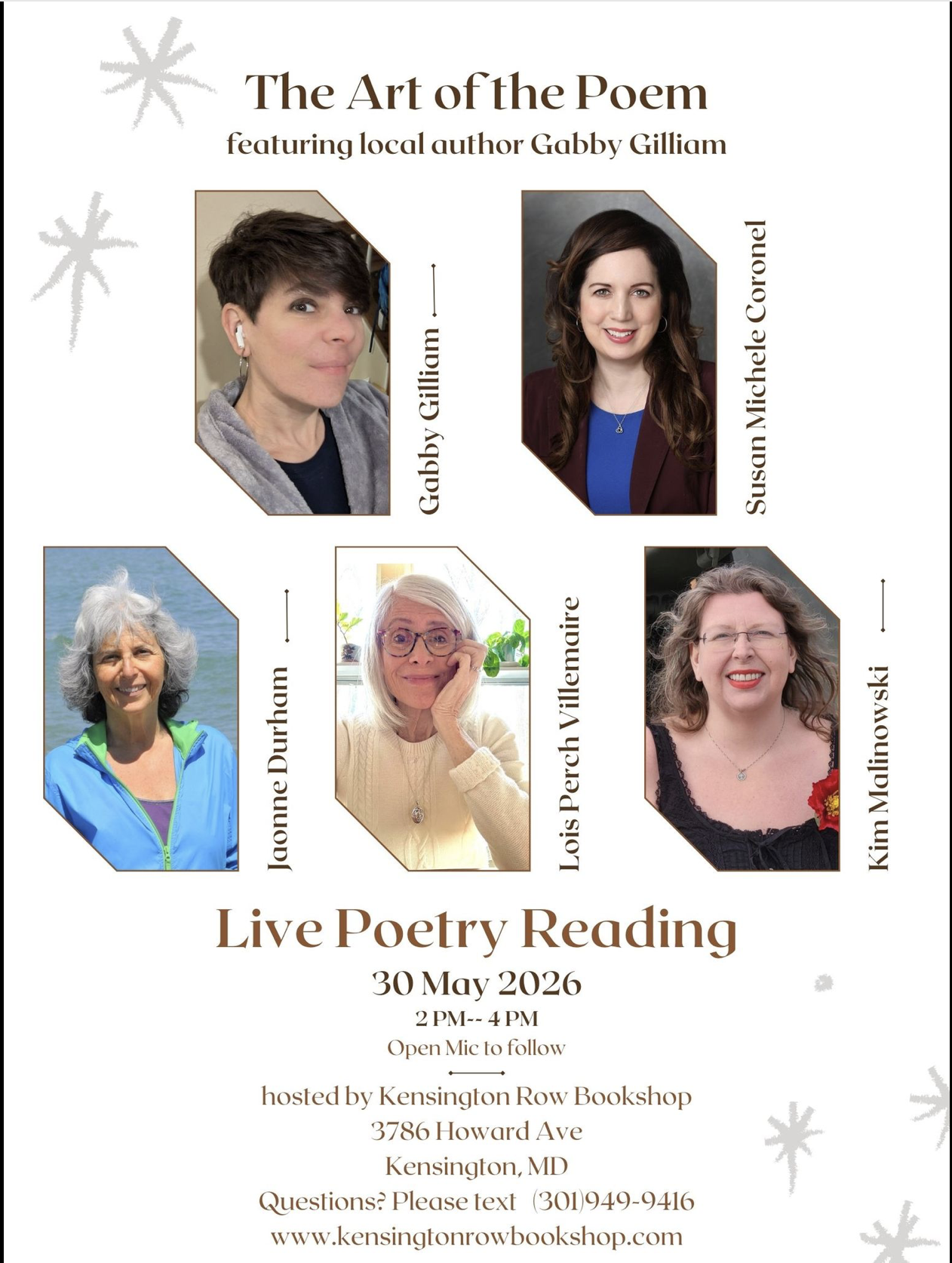
If you’re wondering where to begin, start by looking close to home. Libraries, independent bookstores, arts organizations, community colleges, literary festivals, and local writing groups often host readings and open mics. Social media can also help uncover opportunities. Follow poets, literary journals, bookstores, and writing organizations in your region and pay attention to the events they promote. You may discover that there are more opportunities to share your work than you realized.

Don’t overlook virtual events. Organizations such as Poetry Super Highway, The Writers Center, Poets & Writers, and many regional poetry groups regularly host online readings and open mics. Event calendars on Poets & Writers and Eventbrite can also help uncover opportunities throughout the year. Many poets have built meaningful friendships, readerships, and professional connections through virtual events they attended from their own living rooms.

screenshot of poets and writers event calendar

The benefits extend far beyond the reading itself. Every event introduces you to people who care about poetry. You meet other writers, potential readers, organizers, editors, and booksellers. Over time, these connections begin to form a literary community around your work.

Readings can also help you become a stronger poet. A poem that works beautifully on the page may reveal weaknesses when read aloud. Awkward phrasing, confusing transitions, and unnecessary words often become more obvious when spoken. The audience’s reaction can also teach you a great deal about how your work is being received.

One common misconception is that poetry readings only matter if they lead directly to book sales. While selling books is certainly welcome, the larger goal is visibility. Readers are far more likely to remember a poet whose work they have heard than a name they happened to scroll past online. Every reading plants seeds that may grow into future opportunities, whether that means invitations to other events, journal recommendations, workshop connections, or eventual book purchases.

For poets who are shy or nervous, it can help to start small. Attend a reading before signing up to participate. Read a single poem at an open mic. Volunteer to share work at a workshop or community event. Confidence grows with practice, and most poetry audiences are remarkably supportive.

If you have a collection available, bring copies. If you maintain a website, newsletter, or social media account, mention it briefly. Have a simple way for interested readers to stay connected. The goal is not to deliver a sales pitch, but to make it easy for people who enjoyed your work to find you again.

Perhaps most importantly, remember that building a readership happens one reader at a time. Very few poets wake up to discover thousands of devoted followers. Most audiences are built through repeated acts of showing up, sharing work, and participating in the literary community.

A successful poetry reading is not measured solely by the number of books sold or the size of the audience. Sometimes success looks like a conversation after the event, an invitation to read elsewhere, or a single person who tells you that your poem stayed with them long after the evening ended.

Poetry is meant to be read, but it is also meant to be heard. If you’re looking for ways to build a readership, consider stepping up to the microphone. You may discover that your next reader is already sitting in the audience.

Poetry is meant to be read, but it is also meant to be heard. If you’re looking for ways to build a readership, consider stepping up to the microphone. You may discover that your next reader is already sitting in the audience.

Just as importantly, be willing to sit in the audience yourself. Attend readings even when you’re not on the program. Support fellow poets. Listen carefully to their work. Literary communities thrive when writers show up for one another, and some of the most meaningful friendships, opportunities, and collaborations begin simply by being present. The poets who consistently support others often find that support returned when it is their turn to step up to the microphone.

Do you know of a virtual event that readers can apply to? Leave it in the comments, and we’ll share it!

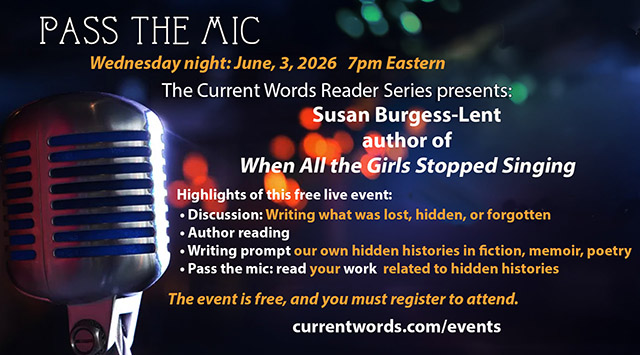
Family Secrets, Lost Histories, and the Stories We Carry… Free Live Zoom Today!

Some families have stories they tell over and over.

Others have stories they never tell at all.

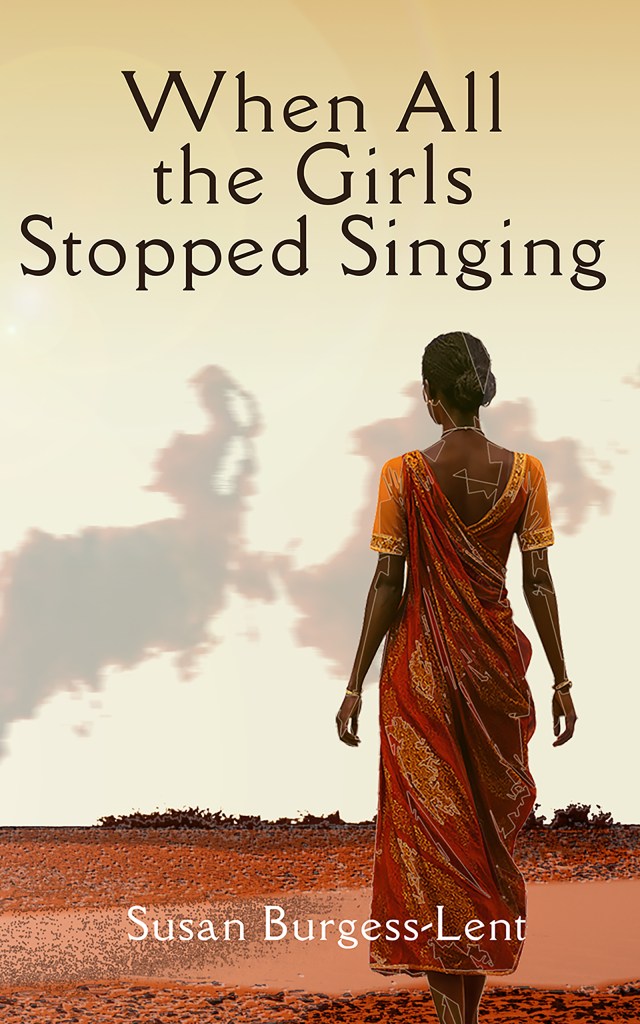
Tonight, Current Words Publishing welcomes Susan Burgess-Lent, author of When All the Girls Stopped Singing, for a special Reader Series event exploring hidden histories, family secrets, and the stories that shape our lives.

Join us live on Zoom at 7 PM Eastern (4P Pacific) for conversation, reading, writing, and community.

Susan will discuss writing about lost, forgotten, and hidden histories, read from her novel, and answer audience questions. We’ll also offer a short writing prompt, an optional Pass the Mic session for readers and writers, and some attendees will win an autographed copy of When All the Girls Stopped Singing.

Whether you’re a writer, a reader, a family historian, or simply someone fascinated by the secrets hidden in ordinary lives, this is an event you won’t want to miss.

The event is free, but you’ll need to reserve your spot.

We hope you’ll join us.

Join Us Today for Voices, Visions, and Poetry: A Live Reading & Book Launch

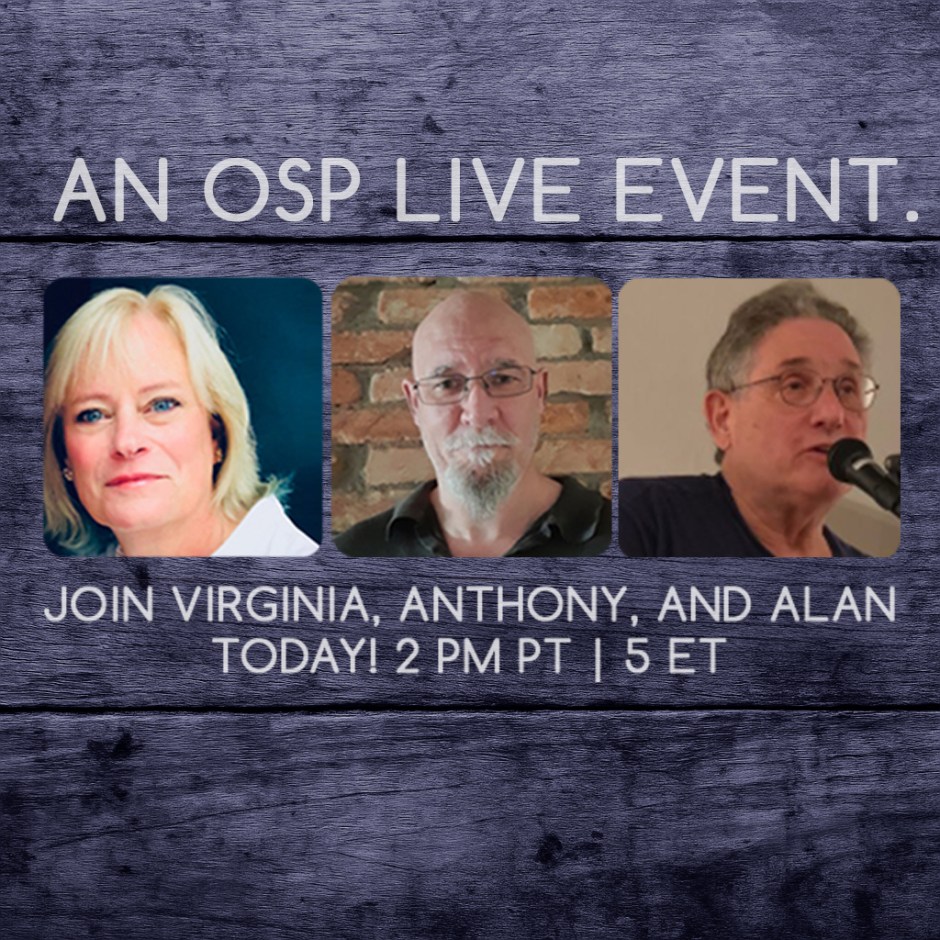
Join us today for a triple poetry book launch and live reading event taking place over Zoom.

This special online event will spotlight:

  • Alan Bern, Dreams of the Return
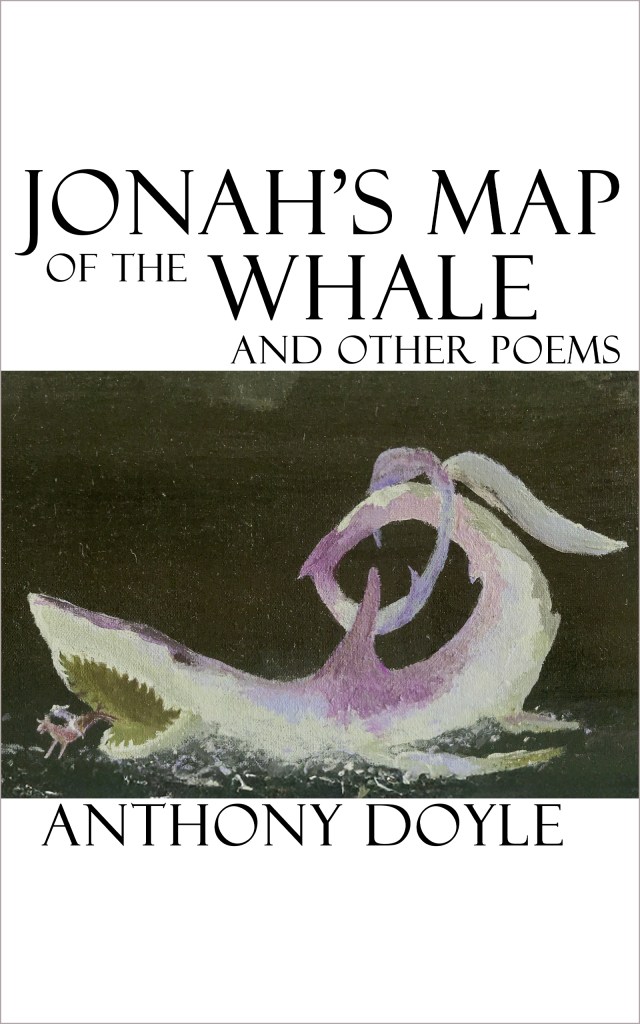
  • Anthony Doyle, Jonah’s Map of the Whale
  • Virginia Watts, Tracing Bodies

Each author will take the mic to share selections from their work, offering an intimate glimpse into the themes, rhythms, and stories behind their collections.

📅 Date: Saturday, October 25
Time: 2:00 PM PT | 5:00 PM ET
💻 Format: Virtual meeting (Zoom)

Preregistration has ended, but you can still attend by following the link below. Meeting will start promptly at 2 PM PT.

We can’t wait to see you there!


Meet the Authors

Alan Bern

Alan Bern is a poet, photographer, and retired children’s librarian whose creative work often explores themes of memory, migration, and belonging. His poetry pairs evocative imagery with emotional depth, reflecting on journeys both personal and collective. Alongside his writing, Bern’s photography provides a visual dialogue with the poetic world he creates, underscoring the interplay between text and image.

In Dreams of the Return, Bern reflects upon being a teenager in the mid-sixties, living in Napoli for a year with his family, and falling in love with it as if it were his true second home. His travels through Napoli and Southern Italy are expressed in poetry, prose, and photos, offering readers verse that moves fluidly between the outer landscapes of travel and the inner landscapes of longing.

“Bern captures nuances of disparate facets of Italian life with a flair for both drama and revelation.”
MIDWEST BOOK REVIEW


Anthony Doyle

Anthony Doyle is an Irish writer and translator whose work bridges cultures and languages. He has published fiction, nonfiction, and poetry, and his projects often weave together myth, history, and human experience in unexpected ways. As a translator, Doyle has brought the works of Brazilian writers to English-speaking audiences, deepening cultural exchange.

Hibernaculum, Doyle’s gripping speculative fiction tale of human hibernation, is a 2024 Next Generation Indie Book Awards Finalist in the SF category. His new poetry collection, Jonah’s Map of the Whale, charts vast emotional and imaginative territory, drawing on his keen ear for rhythm and layered meaning. Doyle’s poetry speaks with both intimacy and universality, inviting readers to journey through mythic depths and modern consciousness alike.

“A wonderfully inspiring read.”
MIDWEST BOOK REVIEW


Virginia Watts

Virginia Watts is a fiction writer and poet whose work has appeared in numerous literary journals and anthologies. Her writing frequently examines the intricacies of human connection, place, and memory, offering poignant and sharply observed narratives. With a background in both short fiction and poetry, Watts brings an attentive eye to detail and a lyrical sensibility to her storytelling.

Watts’ debut prose collection, Echoes From the Hocker House, IS a 2023 KIRKUS Best Indy Books selection and a 2024 Eric Hoffer Book Awards finalist.

Her latest collection, Tracing Bodies, reveals Watts’ skill at mapping emotional terrain—tracing the fragile lines between presence and absence, past and present. Her voice resonates with honesty and tenderness, leaving lasting impressions on her readers.

“A vulnerable, cleareyed portrait of humanity.”
KIRKUS

Voices, Visions, and Poetry: A Live Reading & Book Launch

Old Scratch Press invites you to an unforgettable evening of words, imagery, and discovery. On Saturday, October 25 at 2:00 PM PT (5:00 PM ET), we’ll gather virtually to celebrate the launch of three extraordinary new poetry collections—each bringing a unique voice and vision to the page.

This special online event will spotlight:

  • Alan Bern, Dreams of the Return
  • Anthony Doyle, Jonah’s Map of the Whale
  • Virginia Watts, Tracing Bodies

Each author will take the mic to share selections from their work, offering an intimate glimpse into the themes, rhythms, and stories behind their collections.

📅 Date: Saturday, October 25
Time: 2:00 PM PT | 5:00 PM ET
💻 Format: Virtual meeting (Zoom)

👉 Click here to register for free

This event is free and open to the public, but preregistration is recommended. Come celebrate the power of poetry with Old Scratch Press and three remarkable voices—we can’t wait to see you there!


Meet the Authors

Alan Bern

Alan Bern is a poet, photographer, and retired children’s librarian whose creative work often explores themes of memory, migration, and belonging. His poetry pairs evocative imagery with emotional depth, reflecting on journeys both personal and collective. Alongside his writing, Bern’s photography provides a visual dialogue with the poetic world he creates, underscoring the interplay between text and image.

In Dreams of the Return, Bern reflects upon being a teenager in the mid-sixties, living in Napoli for a year with his family, and falling in love with it as if it were his true second home. His travels through Napoli and Southern Italy are expressed in poetry, prose, and photos, offering readers verse that moves fluidly between the outer landscapes of travel and the inner landscapes of longing.

“Bern captures nuances of disparate facets of Italian life with a flair for both drama and revelation.”
MIDWEST BOOK REVIEW


Anthony Doyle

Anthony Doyle is an Irish writer and translator whose work bridges cultures and languages. He has published fiction, nonfiction, and poetry, and his projects often weave together myth, history, and human experience in unexpected ways. As a translator, Doyle has brought the works of Brazilian writers to English-speaking audiences, deepening cultural exchange.

Hibernaculum, Doyle’s gripping speculative fiction tale of human hibernation, is a 2024 Next Generation Indie Book Awards Finalist in the SF category. His new poetry collection, Jonah’s Map of the Whale, charts vast emotional and imaginative territory, drawing on his keen ear for rhythm and layered meaning. Doyle’s poetry speaks with both intimacy and universality, inviting readers to journey through mythic depths and modern consciousness alike.

“A wonderfully inspiring read.”
MIDWEST BOOK REVIEW


Virginia Watts

Virginia Watts is a fiction writer and poet whose work has appeared in numerous literary journals and anthologies. Her writing frequently examines the intricacies of human connection, place, and memory, offering poignant and sharply observed narratives. With a background in both short fiction and poetry, Watts brings an attentive eye to detail and a lyrical sensibility to her storytelling.

Watts’ debut prose collection, Echoes From the Hocker House, IS a 2023 KIRKUS Best Indy Books selection and a 2024 Eric Hoffer Book Awards finalist.

Her latest collection, Tracing Bodies, reveals Watts’ skill at mapping emotional terrain—tracing the fragile lines between presence and absence, past and present. Her voice resonates with honesty and tenderness, leaving lasting impressions on her readers.

“A vulnerable, cleareyed portrait of humanity.”
KIRKUS