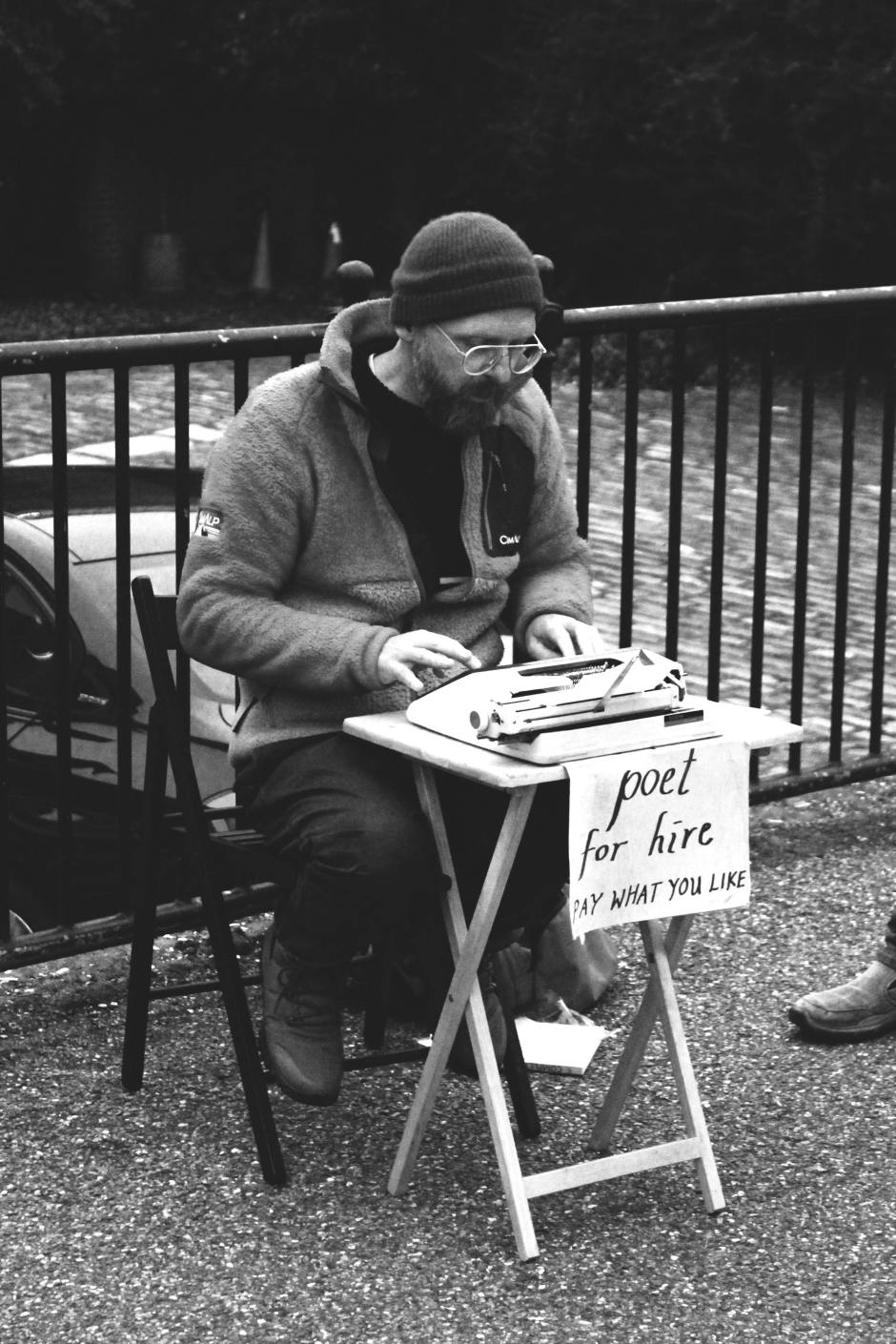
Building a Readership: Five Paths for Poets, Path 1.

PATH 1: Building a Readership Through Poetry Readings

When poets talk about building an audience, the conversation often turns immediately to social media, websites, and marketing strategies. While those tools can certainly help, many poets overlook one of the oldest and most effective ways to find readers: reading their work aloud.

Poetry began as an oral art form. Long before poems appeared in books, journals, and websites, they were shared through voice and performance. Even today, a strong reading can create a connection that no social media post can match.

Many poets hesitate to participate in readings because they assume they need a published collection, a large following, or years of experience before they are ready. In reality, most reading communities welcome poets at a wide range of experience levels. Open mics, community events, library programs, and local literary gatherings can all provide opportunities to share your work.

If you’re wondering where to begin, start by looking close to home. Libraries, independent bookstores, arts organizations, community colleges, literary festivals, and local writing groups often host readings and open mics. Social media can also help uncover opportunities. Follow poets, literary journals, bookstores, and writing organizations in your region and pay attention to the events they promote. You may discover that there are more opportunities to share your work than you realized.

Don’t overlook virtual events. Organizations such as Poetry Super Highway, The Writers Center, Poets & Writers, and many regional poetry groups regularly host online readings and open mics. Event calendars on Poets & Writers and Eventbrite can also help uncover opportunities throughout the year. Many poets have built meaningful friendships, readerships, and professional connections through virtual events they attended from their own living rooms.

screenshot of poets and writers event calendar

The benefits extend far beyond the reading itself. Every event introduces you to people who care about poetry. You meet other writers, potential readers, organizers, editors, and booksellers. Over time, these connections begin to form a literary community around your work.

Readings can also help you become a stronger poet. A poem that works beautifully on the page may reveal weaknesses when read aloud. Awkward phrasing, confusing transitions, and unnecessary words often become more obvious when spoken. The audience’s reaction can also teach you a great deal about how your work is being received.

One common misconception is that poetry readings only matter if they lead directly to book sales. While selling books is certainly welcome, the larger goal is visibility. Readers are far more likely to remember a poet whose work they have heard than a name they happened to scroll past online. Every reading plants seeds that may grow into future opportunities, whether that means invitations to other events, journal recommendations, workshop connections, or eventual book purchases.

For poets who are shy or nervous, it can help to start small. Attend a reading before signing up to participate. Read a single poem at an open mic. Volunteer to share work at a workshop or community event. Confidence grows with practice, and most poetry audiences are remarkably supportive.

If you have a collection available, bring copies. If you maintain a website, newsletter, or social media account, mention it briefly. Have a simple way for interested readers to stay connected. The goal is not to deliver a sales pitch, but to make it easy for people who enjoyed your work to find you again.

Perhaps most importantly, remember that building a readership happens one reader at a time. Very few poets wake up to discover thousands of devoted followers. Most audiences are built through repeated acts of showing up, sharing work, and participating in the literary community.

A successful poetry reading is not measured solely by the number of books sold or the size of the audience. Sometimes success looks like a conversation after the event, an invitation to read elsewhere, or a single person who tells you that your poem stayed with them long after the evening ended.

Poetry is meant to be read, but it is also meant to be heard. If you’re looking for ways to build a readership, consider stepping up to the microphone. You may discover that your next reader is already sitting in the audience.

Poetry is meant to be read, but it is also meant to be heard. If you’re looking for ways to build a readership, consider stepping up to the microphone. You may discover that your next reader is already sitting in the audience.

Just as importantly, be willing to sit in the audience yourself. Attend readings even when you’re not on the program. Support fellow poets. Listen carefully to their work. Literary communities thrive when writers show up for one another, and some of the most meaningful friendships, opportunities, and collaborations begin simply by being present. The poets who consistently support others often find that support returned when it is their turn to step up to the microphone.

Do you know of a virtual event that readers can apply to? Leave it in the comments, and we’ll share it!
What Do You Think of That “Poet Voice?” You Know the One.

If you’ve ever been to a poetry reading, you’ve probably heard it. The slow cadence. The dramatic pauses. The slightly mystical tone. The voice that signals: I am now doing Poetry.

In fact, when I think about that sentence read in “poetry voice” it would be read like this:

The voice
that signals
I am now
doing
poetry

And each line would end with an up tone, as if the performer was asking a question.

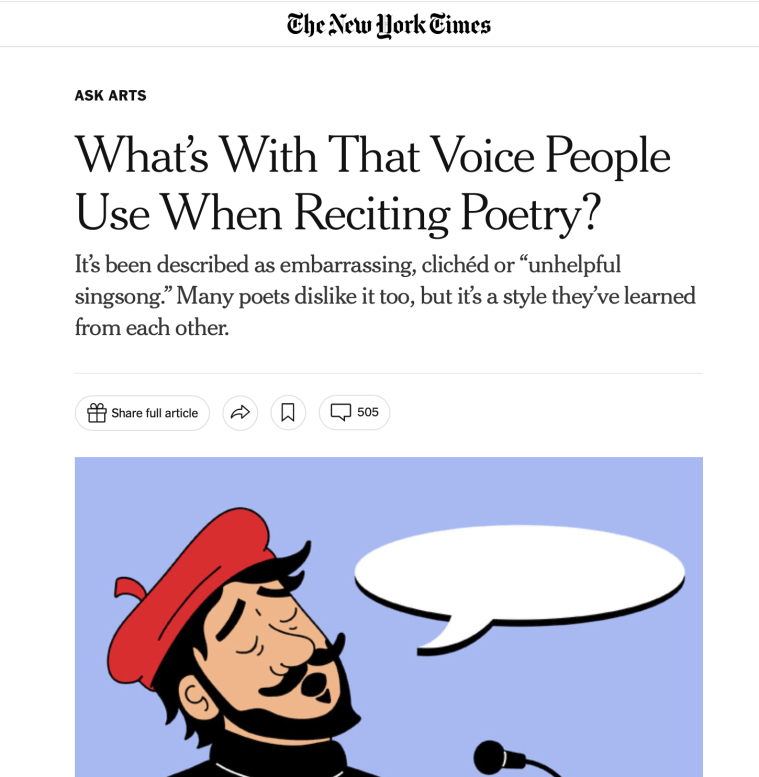
The recent New York Times article digs into this phenomenon, often called the “poet voice,” and asks why many poets fall into the same stylized way of reading their work aloud.

For some listeners, the article says, that way of reading feels comforting and familiar. For others, awkward, distancing, or makes the poem feel like a performance ritual rather than a piece of language meant to connect.

The article points out something important: this isn’t just about aesthetics. It’s about how poetry exists in two worlds at once. On the page, poetry is quiet, private, intimate. Out loud, it becomes physical, embodied, communal. Voice, breath, pacing, silence, and tone all reshape meaning. The same poem can feel completely different depending on how it’s read.

And yet, many readings sound strangely similar.

Why?

There’s also a bigger tension here. Poetry has deep roots in oral tradition. Long before books, poetry lived in voices, memory, and storytelling. But modern literary culture often treats performance and “serious writing” as separate worlds. Spoken word, slam, and performance poetry are seen as different categories entirely, even though they’re doing what poetry has always done: using voice to create meaning. They also might sound different, as performance, when compared to how people read on the performance evenings in your MFA program.

I remember, from the first time I saw poets read aloud, at a bar in Philadelphia in the 1990s, thinking that it was weird that many of them read their work in the same way, and wondering why they did.  When I was in my MFA program, and we would read our work at student readings, us poets, fellow students, often read that way. I remember it as mainly the other white women, and that the students and teachers/established visiting poets, could be people who did it. Not that all of them did it, you understand, but that it happened at times among student readers, teacher readers, and visiting poet readers, and it was, in the main, done by my fellow white women. I don’t remember the guys reading that way. I also remember that the teachers (minus a few) and the students in the poetry track were incredibly serious about the writing and performing of poetry. I don’t know that I ever got quite that serious, which is probably a character flaw. You know I’ve got me some of those.

On Threads people are losing their minds about the article (slow news day?) so, let’s talk about it:

• When you hear poetry read aloud, does it deepen your connection to the work or pull you out of it?
• Do you think “poet voice” is a real thing, or just a stereotype we’ve internalized?
• When you hear poetry read aloud, does it deepen your connection to the work or pull you out of it?
• Have you heard “poet voice?”
• How do you read your own work aloud? Casually, dramatically, flat, musical, conversational?
• Should poetry readings sound like performance, conversation, or something else entirely?
• Is hearing the poet’s voice an added layer of meaning, or an intrusion on the reader’s imagination?

Could you….
drop your thoughts….
in the comments?

Pop Star Poets


Bob Dylan famously called himself a poet first, then a musician. It’s often been said that every poem is a song. Many famous musicians also published poetry including Patti Smith, John Lennon, Joni Mitchell, Lou Reed. More recent examples are Taylor Swift, Lana Del Rey, Drake, Halsey, Tupac Shakur, Kelsea Ballerini, Alicia Keys.

Jewel published her first book of poems in 1998 A Night without Armor. She sold over 2 million copies, and her book remains one of American’s best-selling poetry collections of all time. The poems were inspired by the journals Jewel kept throughout her life. She has talked about writing poems since childhood, that it’s not music she needs, but “poetry.” That poetry reflects who she really is and unlike pop music, it allows people to get her. There are poems in the collection about human life, family, her Alaskan childhood, heartbreak, healing, divorce. It’s one of those collections that feels brave as an open heart. Here is Jewel talking about her poetry and her process with Charlie Rose.

I focus on Jewel here because when I first heard her music, I immediately thought of it more as words on a page. The words led for me, and the tune came after. The images were so clear and inspiring. Poets should listen to music, because music can teach us about cadence and rhythm. Music helps with pacing. Sound is important in poems. Music also has structures that help with poetic structures such as refrain and verse. Also, listening to songs can be inspire us. Music evokes emotion. Boosts mood and creativity. Music takes our minds from where we are into another space and that often leads to words on a page. Here is a song by Jewel that demonstrates why songs are poems and poems are songs and why poets need music. We wouldn’t be at our best without it. We were meant for each other. 


Virginia Watts is the author of poetry and stories found in The MacGuffin, Epiphany, CRAFT, The Florida Review, Reed Magazine, Pithead Chapel, Eclectica Magazine among others. She has been nominated four times for a Pushcart Prize. Her debut short story collection Echoes from the Hocker House was short listed for 2024 Eric Hoffer Grand Prize, selected as one of the Best Indie Books of 2023 by Kirkus Book Reviews, and won third place in the 2024 Feathered Quill Book Awards. Please visit her.

Virginia’s new book is now available from Old Scratch Press:

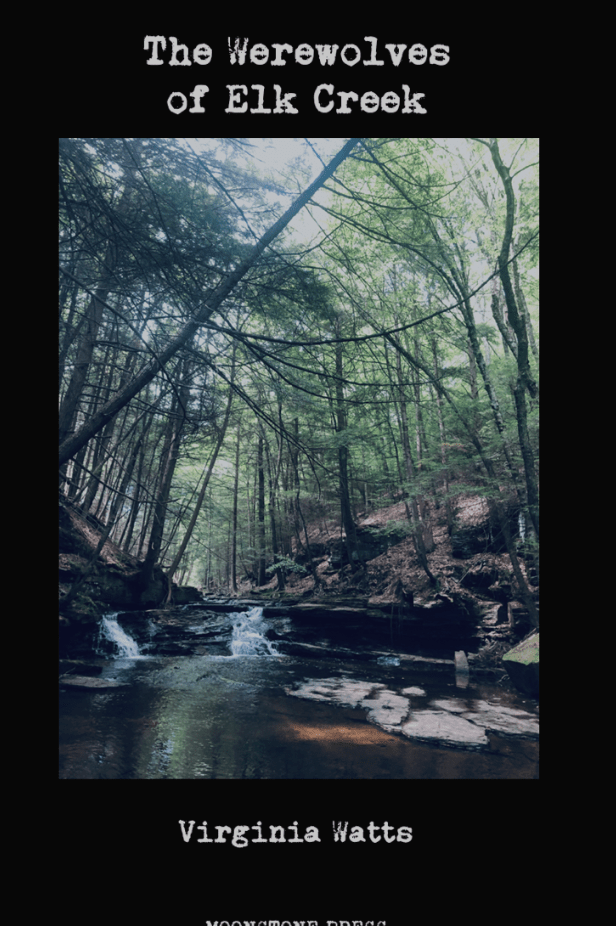
Her prior poetry chapbooks Shot Full of Holes and The Werewolves of Elk Creek 

 are available from Moonstone Press. And her debut short story collection Echoes from the Hocker House is not to be missed!