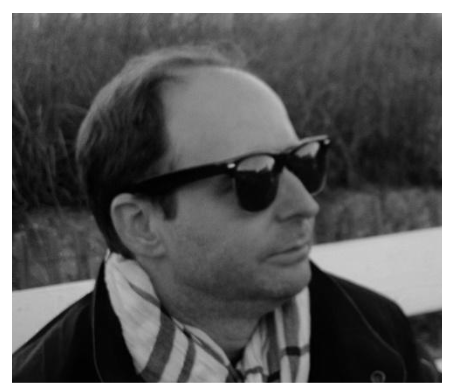
David Fulcher, a founding member and contributing editor of Old Scratch Press poetry/short form collective will be featured at Stone Soup Poetry October 28th, 7 pm ET, for a special horror-themed reading! David will be reading his poems and a short story.
To join this fun Halloween-themed event, go to Stone Soup’s Blog or follow the instructions below:
Stone Soup Poetry meets every Wednesday online from 7:00-9:00 PM via Zoom. Stay tuned for updates on any future live gatherings. On October 28, Stone Soup ends October with a proper horror themed reading from David Fulcher.
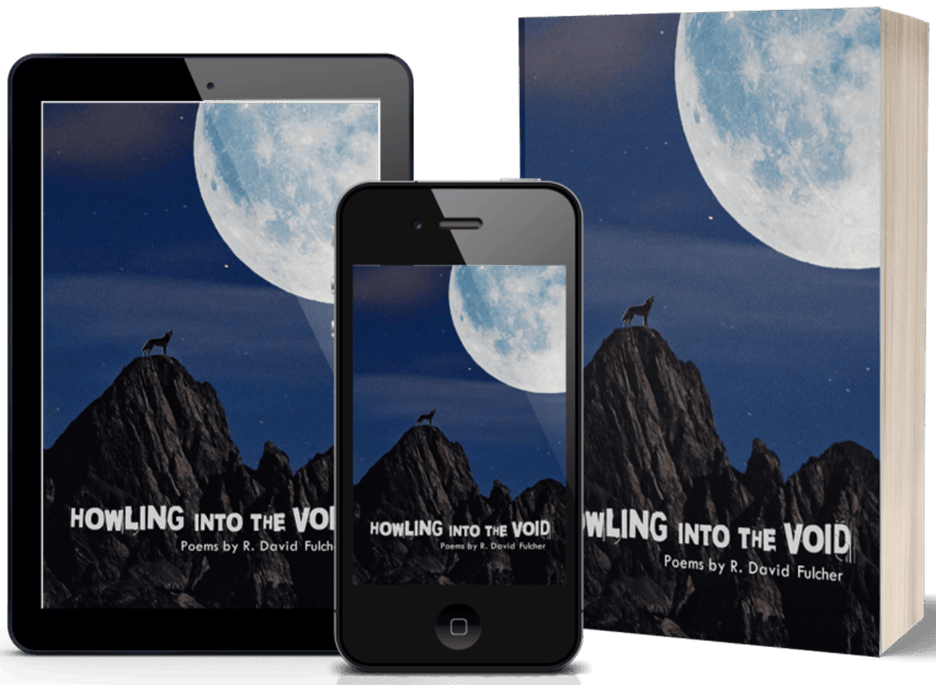
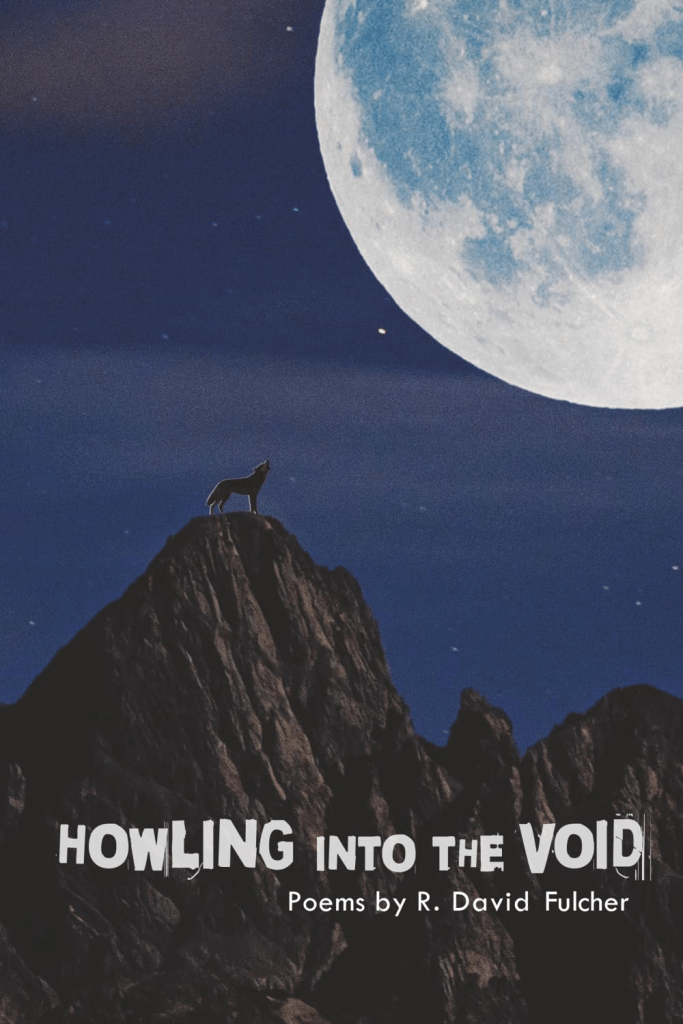
R. David Fulcher is a publisher, editor, and writer of fiction and poetry who lives in Ashburn, Virginia with his wife Lisa, and their rambunctious cats. He is a founding member/contributing editor of Old Scratch Press, including a curator for the digital magazine Instant Noodles. He also is a publisher/editor of the magazine Samsara. His books are The Pumpkin King and Other Tales of Terror, Asteroid 6: And Other Tales of Cosmic Horror, and Howling Into the Void. His shorter works are in Lovecraft’s Mystery Magazine, Black Satellite, The Martian Wave, Burning Sky, Shadowlands, Twilight Showcase, Heliocentric Net, Gateways, Weird Times, Freaky Frights and the anthologies Dimensions and Silken Ropes.
Join us on Wednesday, October 28, from 7:00 to 9:00 PM ET by clicking this link.
So… you’ve written several chapbooks and now your fellow poets are urging you to publish a full-length poetry book. The first question that may come to mind is what’s the difference between a chapbook and a full-length collection? Chapbooks are generally anywhere from 15-40 pages and are more focused–often devoted to a single theme, idea, or form. Full length books tend to be longer, about 60-100 pages and cover a broader range of themes, representing a more expansive view of the poet’s work.
Gathering enough poems for a full-length collection and then organizing them can be a daunting experience. After all, these are most likely poems you have published over the course of many years, perhaps decades. Keep in mind that some of the poems can or most likely will be previously published, but a subsection of the content can also introduce new material.
In my case, I had previously published three poetry chapbooks—each one very different from the previous one. My first chapbook consisted mainly of persona poems written in the voice of historical, legendary and fictional female characters. Over time, I had written more persona poems, including some of my personal favorites, as my writing expertise grew, and I shaped these into another chapbook which I submitted to contests. This chapbook garnered much positive feedback and praise from editors and came close to winning several contests, named a finalist, honorable mention, runner-up, but never quite reaching the top spot.
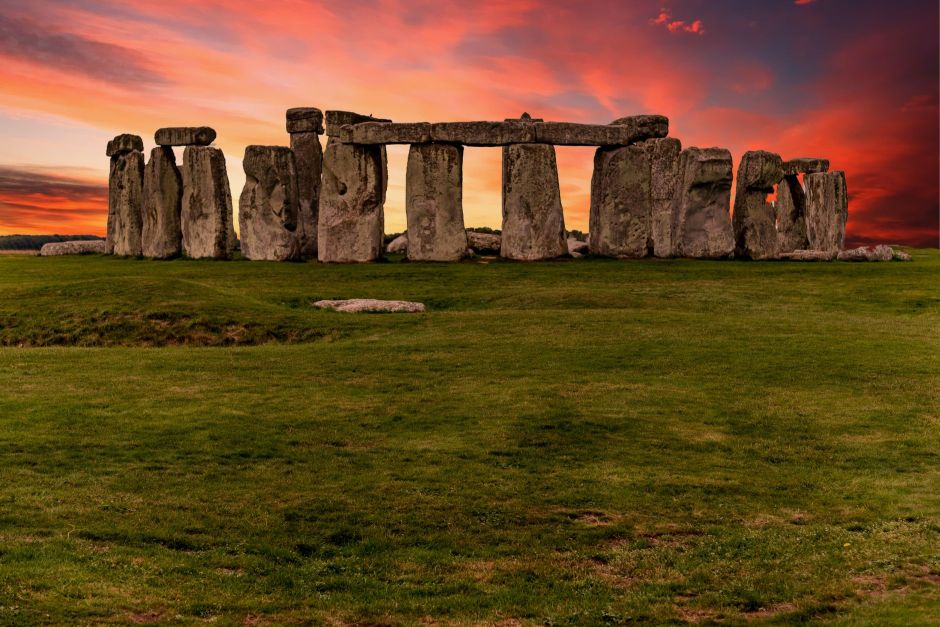
When I first conceived of creating a full-length collection, I naturally wanted to use many of the poems from this never-published chapbook, but I also wanted my new collection to include persona poems written in male voices, some written in response to the female-voiced persona poems, as well as many other types of poems. I began to build the new book on the spine of the chapbook, which was divided into three sections united by a long narrative poem that served as the overarching thematic touchstone: The Story of the Stones.”
ORGANIZING YOUR POEMS
You can choose many ways to organize your poems: theme, form or length, date written or covered, place, imagery, biographical significance or association.
I organized the sections roughly by the time period covered in the poem, be it fictional or historical, and gathered poems that addressed more modern times into the third section. That way the tone and vocabulary of the poems wouldn’t create too stark a contrast with each other. I also placed the pairs of response poems next to each other: Heloise/Abelard, Guinevere/Launcelot, Maid Marian/Robin, Sherlock Holmes/Irene Adler–some of which were published together for the first time.
The contents fell almost naturally into three roughly equal sections of 14-18 poems, each covering about 20 pages due to the varying length of the poems. The order within each section was not strictly in chronological order. In some cases, imagery from one poem links it to the next in a fluid fashion, but I did not agonize over the order of the poems too much.
The reason for this is that I personally do not read poems in a collection in sequential order. My natural instinct when I pick up a poetry book (or any book, really) is to open it a random page and begin reading. If I am intrigued by what I read, then I continue, or backtrack, or jump ahead a few pages/chapters, sometimes to the ending. I very rarely read a book from beginning to end without skipping around. The less I know exactly what is going on in the story, the more fun I find the reading process.
I know this approach may be anathema to some readers, but I think poetry books lend themselves to this random sampling method much better than novels, for example, and that may be why I’m a poet and not a novelist!
TITLING YOUR FULL-LENGTH COLLECTION
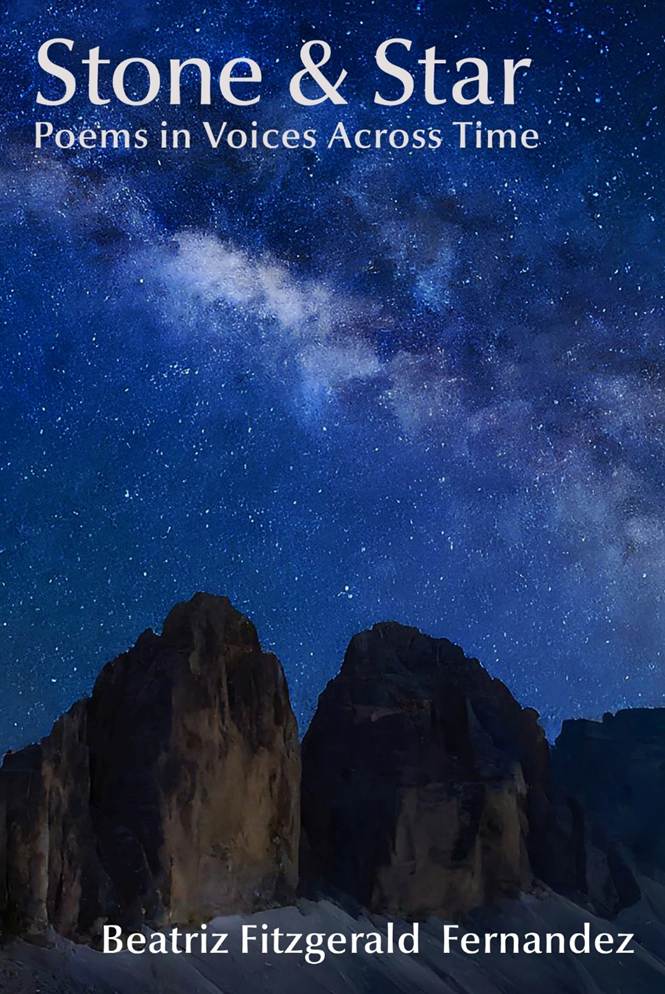
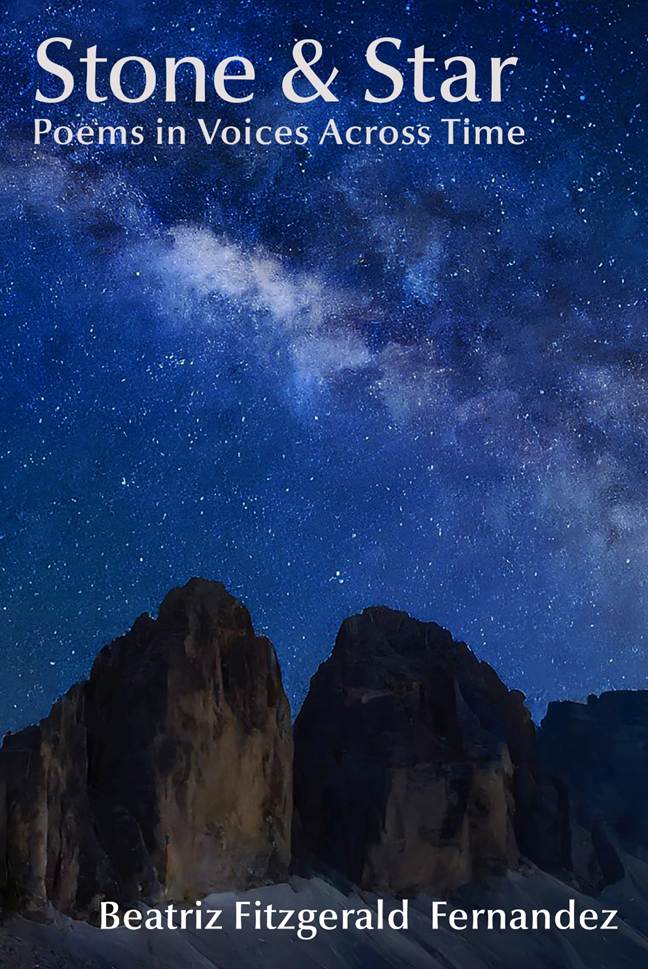
Many poets use the title of one of the individual poems in the collection as the title of the whole because that poem is an important one for them personally or they use a line from one of the key poems in the collection. In my case, I gathered the poems first and examined them as a group. I knew I wanted to use” The Story of the Stones” (based on a visit to Stonehenge) as the central poem, but not as the title. When I chanced upon the version of “Evening” by Rainer Maria Rilke (one of my favorite poets) translated by Stephen Mitchell, which ends “now bounded, now immeasurable/ it is alternately stone in you and star” I knew I had identified two key images that my poems returned to again and again and which for me defined the dichotomy of the human condition the poems celebrated.
The subtitle “Poems in Voices Across Time” was inevitable as I wanted to emphasize that most of these poems were in voices not my own and not necessarily from my time period. I’ve always loved time travel as a fictional device and through my poems I travel from antiquity to the modern era.
PLEASE YOUR FIRST READER: YOURSELF
While there should be some rhyme and reason to the ordering of your book, it doesn’t necessarily have to please the masses. You are a poet and a poetry reader—consult yourself first. (Unless you are a perfectionist, in which case you may delay publication forever!) Do you like poetry collections organized a certain way? Do you feel confused if the poems seem randomly grouped? Do you feel there must be a central theme running throughout? Do you enjoy reading poems arranged by alternating lengths?
Above all, you should please yourself first when putting together your book. There is no one “right” way and there are no poetry gods to be appeased. Stretch that poetic license as far as you feel is desirable and necessary!
The best result is not if your book wins prizes or garners praise from others (although that is nice when it happens!), the most important thing is that you are proud of the resulting work and feel that it truly reflects your personal creative style.
One of my favorite poems from this new collection is somewhat appropriate to the month of October, as it combines gothic elements and hints of Frankenstein and applies them to Wuthering Heights.
Emily Brontë Addresses Her Creation
“But Fancy still will sometimes deem Her fond creation true.” ~ A Day Dream
I named you after the things I loved– the heath I walked on every good day of my life, the stone cliffs I climbed as a girl,
for yours was the companion spirit I found there, your face the vision that hounded me, when clouds churned across those wind-worn heights.
All that one soul calls forth in another, I poured into you, my willing vessel —and you in return guided my hand
more surely than any god could, you who dared navigate the seas of Gondal in my childhood, led armies across continents—
my melancholy gypsy boy, man of mystery, you were both commander and commandment. At times you wore my brother Branwell’s face—
not the playmate I lost to London Town, but he who returned home in his place. When I stood at the chasm of his grave
my mind full of fears I’d soon share the dark refuge he found there, I thought back to the first time
I penned your name—Heathcliff— and wondered whether I did right to birth what some would later claim
was a monster in the heather, weave a cradle of bracken fronds and release you on the fragile river of men—
where your lips declared desires I dare not speak of, and your black heart would out-beat mine.
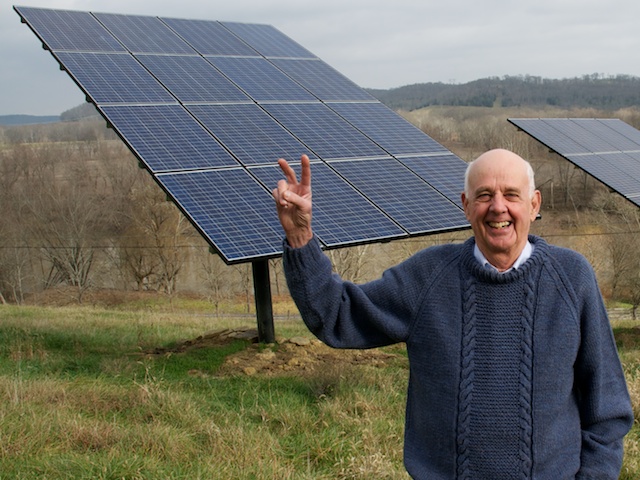
Wendell Berry was a beloved farmer and conversationalist, English professor, forest lover, and writer from the hills of Kentucky. He wrote about land and how mankind must strive to use it ethically. Berry came from a long line of tobacco farmers. His father was famous for cofounding a farming co-op that matched supply and demand. The co-op served the people it was meant to serve: small, hardworking farmers.
During his lifetime, Berry got behind causes he believed in. He protested the Vietnam War and nuclear power. He marched on Washington in 2009 as part of a protest to bring about cleaner emissions. He opposed mountaintop removal mining in Kentucky. He worried about what is lost in modernization. He fought to preserve land, regional economies, and human health in local communities.
His relationship with the University of Kentucky, where he taught, became strained when he withdrew papers he had loaned to the school after the university accepted $7 million from a coal producer.
Berry published over 50 books of poetry, fiction, and essays and received many prestigious honors for his writing, such as the T.S. Eliot Award and the National Humanities Medal. The message in all his work remained clear, essentially that man must live in harmony with the earth. He was against large-scale farming controlled by large corporations that relied on chemical pesticides and fertilizers, promoted soil erosion, depleted aquifers, and drove small farms out of business, destroying local communities in the process. He himself used horses to work his own land and used organic fertilizers and pesticides.
His poetry themes include the countryside, the routines of farm and family, and spirituality found in the natural world. It has been said of Berry that he ennobled the commonplace. Here are two of his most famous poems.
What We Need Is Here by Wendell Berry
Geese appear high over us, pass, and the sky closes. Abandon, as in love or sleep, holds them to their way, clear in the ancient faith: what we need is here. And we pray, not for new earth or heaven, but to be quiet in heart, and in eye, clear. What we need is here.
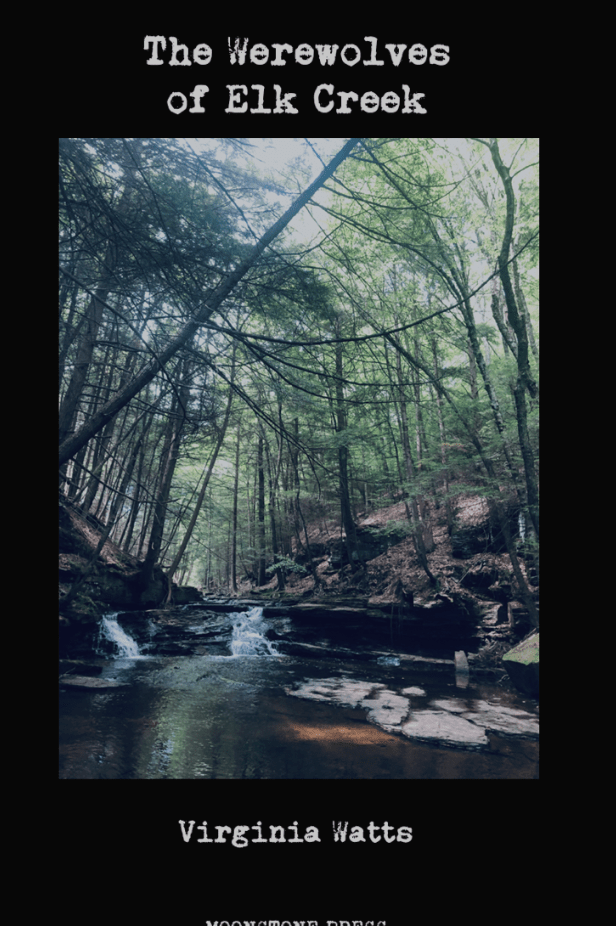
Virginia Watts is the author of poetry and stories found in The MacGuffin, Epiphany,CRAFT, The Florida Review, Reed Magazine, Pithead Chapel, Eclectica Magazine among others. She has been nominated four times for a Pushcart Prize. Her debut short story collection Echoes from the Hocker House was short listed for 2024 Eric Hoffer Grand Prize, selected as one of the Best Indie Books of 2023 by Kirkus Book Reviews, and won third place in the 2024 Feathered Quill Book Awards. Please visit her.
If you’ve never written a poem in any voice but your own, you might want to try writing a persona poem—it may lead you down unexplored paths of creativity!
“A persona poem is a poem in which the poet speaks through an assumed voice….Also known as a dramatic monologue, this poetic form shares many characteristics with a theatrical monologue: an audience is implied; there is no dialogue; and the poet takes on the voice of a character, a fictional identity, or a persona.”
The voice you adopt when you write a persona poem can be a fictional, imaginary or historical character, an animal, an inanimate object, a collective such as a country, or even an omniscient god-like voice. This is when the fun begins!
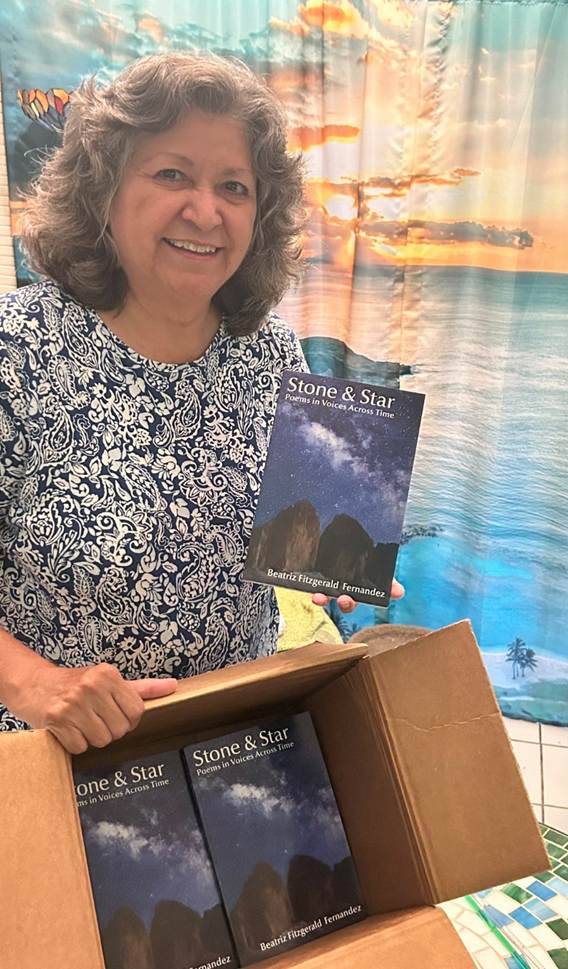
In “Richard the Lionheart’s Mummified Heart Examined,” a poem inspired by a true story and reprinted in my latest collection, Stone & Star: Poems in Voices Across Time, I alternately adopt the voice of the King’s Minstrel, the Royal surgeon, Richard I, his wife Berengaria of Navarre, the heart itself, and the forensic scientists who examined the heart in modern times. Needless to say, this was a fun poem to write and the voices seemed to meld seamlessly to tell the story.
In psychological terms, Jung described persona as a social mask that conceals “the true nature of the individual.” The term originates from the theater in ancient Greece where actual masks were worn by actors on stage to represent different points of view.
However, I find that writing persona poetry rather than concealing, frees the writer to reveal their subjective truths to the reader without the constraints of their own personality.
Writing persona poetry is the closest I will ever come to acting, and I find it incredibly liberating. I first found my own voice via persona poetry and it is still my favorite poetical form to use.
When writing as a historical character, I do some research and try to read letters written by that person if they are available, to pick up some of their personal vocabulary. The way they address and sign their letters, their general tone, their “voice” is usually apparent and I use that to guide my own writing of the poem.
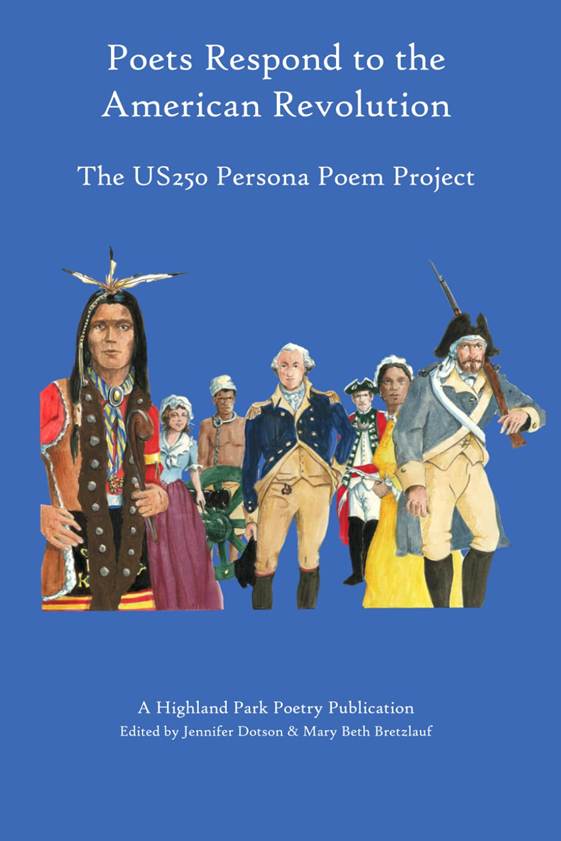
We were asked to write from the point of view of fictional or historical persons, animals or objects: one poet wrote from the perspective of Brown Beauty, the horse Paul Revere rode, some wrote from the perspective of symbols such as the Tree of Liberty or the Liberty Bell.
When writing as a fictional character, I try to stay within the confines of the work they appeared in, and use vocabulary suited to the time period of the novel. I have fun imagining what some fictional characters would say, given a chance, especially when in the original work they were not given much dialogue. In this spirit, I’ve given voice to Weena, the Time Traveler’s mostly mute companion in H.G. Well’s The Time Machine, and Nova, the beautiful mute heroine in the original 1968 Planet of the Apes film.
I find most of the persona poems I write are emotional in nature, speaking from the heart in a more direct and universal way than I could write from my own limited experience. Some writers may feel uncomfortable putting words into another’s mouth, so to speak. Unlike novelists or playwrights, who regularly write dialogue for fictional and in some cases historical characters, poets are used to thinking of their writing as highly personal and not open to other’s voices. But isn’t most poetry persona poetry, in a way? Because whenever we write, we almost unconsciously adopt a persona, a writing voice, that is not our everyday voice, but which nonetheless reflects our authentic and true nature.
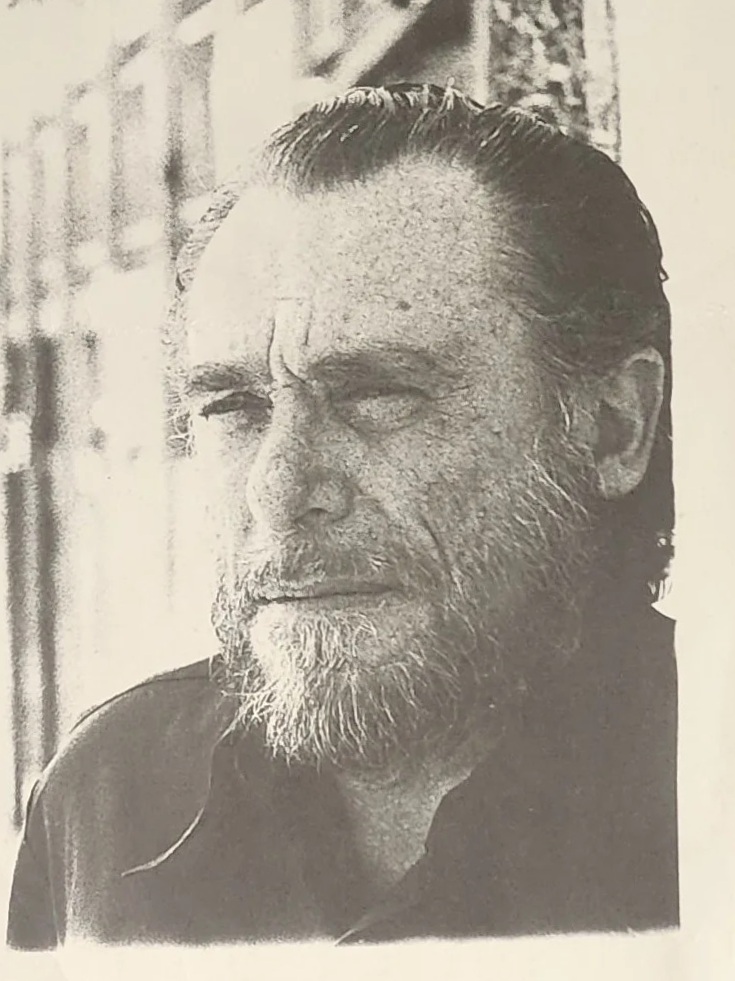
Charles Bukowski wrote about the gamblers, the rejects, factory workers, his job at the post office, those who had lost their way, his cats, his typewriter, a radio he threw on the roof repeatedly. He drank too much, gambled too much, treated women poorly, treated his wife poorly. He threw away tradition in poetry and aimed straight for the gut with unflinching honesty. His poetry focused on pain and boredom, uselessness and hopelessness, old age, heavy drinking, the underbelly of trying to survive a working-class life or worse. He’s a cult hero. He inspired a counterculture in poetry that lives on and continues around the world. He is one of the unforgettables.
Yes, he was unapologetic and rough and crude sometimes. He wasn’t always a good person, but his fan base runs deep. An icon, worshipped by many for how he took the foundations of traditional poetry and stood them on their head. His is one of the most polarizing writers of our time and one of the most inspirational to artists, singers and of course writers. It’s true that his work explores uncomfortable and upsetting things like sexism, racism, homophobia, inebriation. He wanted to write about what life can be and often is whether we like it or not and not try to act otherwise. Like him or not, he will always be seen as leading the way for poetry for the common man. Poetry for people and not for poets. Poetry for the social outcasts. Honesty in poetry. I say YES to all of that.
He wrote more than 5000 thousand poems during his lifetime. I am a fan and an admirer of Charles Bukowski. When I read him as a younger writer, I was able to believe that it was okay if I wanted to write about everyday life and nothing else. That even someone like me could have some worth as a writer. He was not a fan of poets who are overly slick, the conformists, the poets who try to tell us what to do. In other words, there is no right or wrong way to be a poet. There are no subjects that aren’t worthy of a poem. If you are a human being, you can be a poet. Click the photo below to see a favorite of mine by Bukowski:
There were reasons in his life that led to Bukowski’s style. He suffered as the son of a harsh, abusive father and he also had a disfiguring acne condition. The only way to really appreciated Charles Bukowski is to read a book of his work or several. Read a lot of poems. In this way, you will see beyond the language, the bravado, the street fighter, the drinker. You will come to know the heart of a complicated man who cared very deeply about his fellow man. He wrote so much about human suffering because he worried about human suffering and not just his own.
He was the master of direct language. The hero of not holding back. In any case, you don’t have to like him or how he lived to fall in love with his poetry or at the least learn from it or be inspired by it. Even if you hate it, you’ll feel emotion and I think Hank would say that’s good enough for him. It’s fun to try and write a poem in the Bukowski style too as a poet. As poets we are always learning. Below is a poem I wrote with him in mind. Give it a try! And read you some Hank as soon as possible!!!
FAIRY DUST Virginia Watts
I never have anything to say to children I’ll do anything to avoid those little shoes hit the crapper, blow my nose bones make lovely dust the white and the wispy clouds the silver of angel wings peeking even though I don’t believe in angels this little tiger lily really cornered me stuck with a minimum wage dad like it wasn’t his fault scoring a six pack and some Beam before noon on Sunday she got herself up on that stool I don’t know how without breaking her neck How old. Four? set patent toes on the side of my bar stool and pushed off Spun that thing around and around like a pro when I joined in she giggled the corner of 9th and Fitzwater Street down a waterfall and out to sea he yanked her off that chair so hard I would have beaten the bejesus out of him if she hadn’t been there
Virginia Watts is the author of poetry and stories found in The MacGuffin, Epiphany,CRAFT, The Florida Review, Reed Magazine, Pithead Chapel, Eclectica Magazine among others. She has been nominated four times for a Pushcart Prize. Her debut short story collection Echoes from the Hocker House was short listed for 2024 Eric Hoffer Grand Prize, selected as one of the Best Indie Books of 2023 by Kirkus Book Reviews, and won third place in the 2024 Feathered Quill Book Awards. Please visit her.
Some flowers spread their fragrance in spring, some tease us until late summer: just when we think they’re dried up, spent, they surprise us with an explosion of blooms!
I’ve always had a soft spot for the late bloomers of literature. (Maybe because I myself identify as a late bloomer!) As thrilling as it is to read about young prodigies like S.E. Hinton of The Outsiders fame, (she wrote that book as a high school senior!), the late bloomers are just as amazing to me.
What is considered a late bloomer in literature? The general consensus seems to be a writer whose first major work is produced after age 40.
Debra Eve, publisher of the website Later Bloomer (now an archival site) has collected many fascinating essays and information about late bloomers in all fields of life, including literature and poetry.
Bloom (via Substack now) is another site devoted to the late bloomers in life.
This Write and Journal article states that late-blooming authors are more common than we think and why this may be a forward trend.
Eva Q. Tennant’s article on late bloomers shows how “the creative spark doesn’t dim with age — it deepens.”
One of my personal favorite literary late bloomers is Mary Wesley, who turned to writing adult fiction in her 70s and went on to write ten bestsellers in the last twenty years of her life! I learned of her work via the 1992 mini-series adaptation of one of her most well-known novels, The Camomile Lawn.
In poetry, there are many later bloomers, but one that may not come to mind is Thomas Hardy, whose early fame was built on his 14 novels, but who considered himself a poet and wrote poetry for 30 years before publishing his first collection when he was 58. After that, during the rest of his life, he published only poetry.
When I think of late bloomers, writer Winifred Watson also comes to mind, not because she was a late bloomer herself, but she wrote about an older woman experiencing a Cinderella-like transformation in Miss Pettigrew Lives for a Day, an experience that mirrored her own rise to fame in late life when her novel was rediscovered and republished by Persephone Books and made into a delightful film of the same name in 2008 starring the incomparable Frances McDomand. This article on Anne Sebba’s site discusses how Watson’s unlikely second act came about.
So tell me, who are some of your favorite late bloomers? Please share in the comments!
“What’s in a name? That which we call a rose By any other name would smell as sweet.”
~ Shakespeare’s Romeo and Juliet, spoken by Juliet, Act 2, Scene 2
Today I am writing about a subject dear to my heart—choosing titles for poems.
The opportunity to name something you created should not be wasted. You’d think people would give this more attention than they actually do.
Back in the 80s, there was a best-selling book called The Name Game and its main premise was that your name was your destiny. If you wanted your child to be popular, excel in school and marry well, you had to be very careful what you named that little baby in the bassinet.
It would seem to follow that naming your poem merits some consideration as well!
To be clear, I’m no expert and I’m not denigrating any method you may be in the habit of using to choose your titles (or name your children!). But I have a keen interest in this subject and it seems to be a somewhat neglected area of discussion in poetry.
Just to see if maybe something on this subject was buried in books about writing poetry, I checked out a few classic poetry craft books: Ted Kooser’s The Poetry Home Repair Manual and Robert Pinsky’s Singing School. Kooser devotes a few pages to the subject. Pinsky mentions nothing about titles but does provide lots of examples of classic poem titles to peruse.
I then checked in the library catalog of a library of 2 million+ volumes, and only ONE book comes up under the LC classification subject heading: Titles of poems, it is a book called The Title to the Poem by Anne Ferry. She explores the subject in depth, asking questions like “Who gives the title? Who has the title? Who “says” the poem? Who “hears” the poem? What genre does the poem belong to? What is the poem “about”?” and considers the deeper aspects of titling poems: “There are complex relationships between what titles purport to tell and what they actually tell, and this is true not only of titles so worded that they demand interpretation, but also of those that appear straightforward.”
A title can anchor a poem in space and time, giving the reader some necessary context with which to begin reading and enjoying it. For example, a recent poem I wrote I entitled:
“Native, Antilles High School, Ft. Buchanan, Puerto Rico”
I could have just named it “Native” but the place and the time were very relevant to understanding the background of this poem, so the title’s subtitle in this case was very important.
Similarly, a poem entitled “An Evening Encounter at the Arecibo Observatory” gives the reader a lot of information, the time, the place, and the sense that this encounter is not going to be an ordinary one, given the nature of the place!
A title can lend specificity and a sense of fun at the same time: For example, “At the Mayan Monkey Mijas Chocolate Factory” (and yes, this place really exists!)
First of all, how can you visit a place called the Mayan Monkey Mijas Chocolate Factory and NOT write a poem about it and use that name in the title?? However, I later thought I really should have called it “Touring the Mayan Monkey Mijas Chocolate Factory” and that would have conveyed even more relevant information because I was a tourist, not someone who worked there or a local who regularly visited, for example. This title conveys a specific place (Mijas, Spain), history and culture (Mayan), fun (monkeys!) and sensory detail (the aroma of chocolate) and opens all sorts of questions in the reader’s mind, such as: What does a chocolate factory in Mijas have to do with Mayan monkeys?
“…titles are hard to get just right and do really important work–namely, a great title shows the reader how to read a poem.
A poem’s title is where the reader is introduced to a poet, an invitation from the poet into the depths of a poem’s magic. This is, essentially, the main job description of a title: to welcome its readers at the doorway of the poem and to draw them inside. However, the specific function titles perform can vary.”
“As a poet, I haven’t always put as much emphasis on titles, but working as a reader and then an editor for a literary journal really changed that for me. When I was in that role I had to read about a thousand poems over the period of two months. This is not an uncommon experience for editors or readers. I had to pick around ten poems out of all these poems to share with others. But after reading so many they all started to merge together in my mind. It didn’t help that a number of them had the same title. Sometimes I’d try and remember a poem I liked, but then ended up not finding it because while I remembered part of the poem I didn’t remember the title.”
This problem would be exacerbated during the judging of a poetry contest, for example, and could keep your poem from winning an award! Imagine a judge reading dozens of poems called “A Dream” for example and trying to remember which one they liked best!
I think the approach of giving memorable titles to poems helped me when, after winning the 2nd annual Writer’s Digest poetry award with “Respiratory Tech at the Vietnam Memorial, 1989,” (which conveyed the speaker, place and time) I followed it up several years later with “The Menopausal Mermaid Takes Medical Advice” which came in at #36, I think. If you keep in mind that the first contest had ~4200 entries, and was only in its 2nd year, so the entries probably ballooned afterwards to even higher numbers, the importance of a memorable title becomes all the more obvious.
I think the saddest thing I see is “Untitled” as a title. I’m sure there are many brilliant poems by that title (though I can’t think of any off hand), and of course many poets just use the first line of their poem as a title, as per Emily Dickinson (but then again, most of her poems were not meant for publication.) But I feel like not giving your poem a title is a lost opportunity to engage with your reader on a different level.
He does warn that any technique used too often can quickly become monotonous, though.
His final advice should resonate with any poet: “A title doesn’t have to be clever, poetic, or punchy — but it should be deliberate. It’s the invitation, the signpost, the spell. It’s the first poem the reader reads, even before the first line. So give your poems the names they deserve.”
When poets talk about building a readership, literary journals are often one of the first recommendations they receive. Yet many writers, especially those outside academic circles, wonder whether journals still matter in an age of websites, social media, and self-publishing.
The short answer is yes.
Literary journals remain one of the most accessible ways for poets to introduce their work to new readers, establish publishing credentials, and become part of the broader literary conversation. While publication in a journal rarely leads to instant fame or large sales numbers, it can help create the foundation upon which a readership is built.
For many poets, journals provide something equally important: discovery. Readers who may never have encountered your work otherwise can stumble across a poem in a magazine, become interested in your writing, and begin following your career. Editors, event organizers, workshop leaders, and fellow poets often discover new voices through journals as well.
If you’re new to submissions, finding journals is easier than ever. Resources such as Chill Subs, Duotrope, Poets & Writers, New Pages, and the Community of Literary Magazines and Presses (CLMP) maintain extensive databases of literary magazines and submission opportunities. Many journals also maintain active social media accounts where they announce open reading periods, special themes, and contests.
One of the most common mistakes beginning poets make is submitting without first reading the publication. Whenever possible, spend some time with a journal before sending your work. Read several poems. Pay attention to the styles, themes, and voices the editors seem to favor. Not because you should imitate them, but because you’ll gain a better sense of whether your work is likely to be a good fit.
Many journals now accept submissions through online platforms such as Submittable and Moksha. These systems make it easy to track submissions, but they have also increased competition by making it easier for writers to submit widely. Rejection remains a normal part of the process. Even accomplished poets accumulate large numbers of rejections throughout their careers.
At some point, every poet encounters the question of reading fees. Some journals charge a small fee, often between two and five dollars, to help cover administrative costs, software subscriptions, and staff expenses. Others operate entirely without fees. Opinions vary widely on the practice. Some writers avoid reading fees altogether, while others are comfortable paying modest amounts to support journals they respect.
There is no single correct approach. However, poets should be thoughtful about where they spend their money. A small fee for a well-established publication may be reasonable. Paying large amounts to submit work to unknown organizations is generally less advisable. As with any publishing opportunity, it pays to do a little research before opening your wallet.
Another decision involves print versus digital publications. Some poets strongly prefer print journals because they enjoy seeing their work in a physical publication and because print journals often carry a certain prestige. Others appreciate the accessibility of online journals, where poems can be discovered by readers around the world with a simple click.
The truth is that both formats offer advantages. Print journals provide permanence and a tangible reading experience. Online journals often offer broader reach, searchable archives, and the possibility of sharing links directly with readers. Many respected literary publications now operate in both formats, making the distinction less important than it once was.
It is also worth remembering that publication credits are not merely lines on a résumé. Every journal publication expands your visibility. A handful of well-placed poems can lead to invitations to readings, relationships with editors, opportunities for future publication, and readers who may eventually purchase your collection.
For poets considering a future book project, journal publication can be especially valuable. Individual poems published over time help establish a track record of activity and engagement within the literary community. They can also provide useful feedback about which poems resonate most strongly with readers and editors.
At the same time, don’t fall into the trap of believing that journal publication is the only path to legitimacy. Many excellent poets publish widely in journals. Many others build readership through readings, workshops, social media, teaching, community engagement, or independent publishing. Literary journals are one tool among many.
Ultimately, journals matter because they help connect poems with readers. They provide opportunities for discovery, conversation, and community. For poets seeking to build a readership, submitting to journals remains one of the most practical and effective ways to begin sharing work beyond their immediate circle.
If you’ve been considering submitting your poetry, start small. Find a few journals you genuinely enjoy reading, study their guidelines, and send your work into the world. Every publication began with a first submission, and every poet who appears in a journal today was once a writer nervously pressing “submit” for the very first time.
PATH 1: Building a Readership Through Poetry Readings
When poets talk about building an audience, the conversation often turns immediately to social media, websites, and marketing strategies. While those tools can certainly help, many poets overlook one of the oldest and most effective ways to find readers: reading their work aloud.
Poetry began as an oral art form. Long before poems appeared in books, journals, and websites, they were shared through voice and performance. Even today, a strong reading can create a connection that no social media post can match.
Many poets hesitate to participate in readings because they assume they need a published collection, a large following, or years of experience before they are ready. In reality, most reading communities welcome poets at a wide range of experience levels. Open mics, community events, library programs, and local literary gatherings can all provide opportunities to share your work.
If you’re wondering where to begin, start by looking close to home. Libraries, independent bookstores, arts organizations, community colleges, literary festivals, and local writing groups often host readings and open mics. Social media can also help uncover opportunities. Follow poets, literary journals, bookstores, and writing organizations in your region and pay attention to the events they promote. You may discover that there are more opportunities to share your work than you realized.
Don’t overlook virtual events. Organizations such as Poetry Super Highway, The Writers Center, Poets & Writers, and many regional poetry groups regularly host online readings and open mics. Event calendars on Poets & Writers and Eventbrite can also help uncover opportunities throughout the year. Many poets have built meaningful friendships, readerships, and professional connections through virtual events they attended from their own living rooms.
The benefits extend far beyond the reading itself. Every event introduces you to people who care about poetry. You meet other writers, potential readers, organizers, editors, and booksellers. Over time, these connections begin to form a literary community around your work.
Readings can also help you become a stronger poet. A poem that works beautifully on the page may reveal weaknesses when read aloud. Awkward phrasing, confusing transitions, and unnecessary words often become more obvious when spoken. The audience’s reaction can also teach you a great deal about how your work is being received.
One common misconception is that poetry readings only matter if they lead directly to book sales. While selling books is certainly welcome, the larger goal is visibility. Readers are far more likely to remember a poet whose work they have heard than a name they happened to scroll past online. Every reading plants seeds that may grow into future opportunities, whether that means invitations to other events, journal recommendations, workshop connections, or eventual book purchases.
For poets who are shy or nervous, it can help to start small. Attend a reading before signing up to participate. Read a single poem at an open mic. Volunteer to share work at a workshop or community event. Confidence grows with practice, and most poetry audiences are remarkably supportive.
If you have a collection available, bring copies. If you maintain a website, newsletter, or social media account, mention it briefly. Have a simple way for interested readers to stay connected. The goal is not to deliver a sales pitch, but to make it easy for people who enjoyed your work to find you again.
Perhaps most importantly, remember that building a readership happens one reader at a time. Very few poets wake up to discover thousands of devoted followers. Most audiences are built through repeated acts of showing up, sharing work, and participating in the literary community.
A successful poetry reading is not measured solely by the number of books sold or the size of the audience. Sometimes success looks like a conversation after the event, an invitation to read elsewhere, or a single person who tells you that your poem stayed with them long after the evening ended.
Poetry is meant to be read, but it is also meant to be heard. If you’re looking for ways to build a readership, consider stepping up to the microphone. You may discover that your next reader is already sitting in the audience.
Poetry is meant to be read, but it is also meant to be heard. If you’re looking for ways to build a readership, consider stepping up to the microphone. You may discover that your next reader is already sitting in the audience.
Just as importantly, be willing to sit in the audience yourself. Attend readings even when you’re not on the program. Support fellow poets. Listen carefully to their work. Literary communities thrive when writers show up for one another, and some of the most meaningful friendships, opportunities, and collaborations begin simply by being present. The poets who consistently support others often find that support returned when it is their turn to step up to the microphone.
Do you know of a virtual event that readers can apply to? Leave it in the comments, and we’ll share it!
Banned books week isn’t until October, but for LBGTQ authors, every week is banned books week because their works are banned disproportionately more than any others. Books that touch upon LBGTQ themes are challenged more often and these attacks are increasingly coming from “pressure groups and government entities that include elected officials, board members and administrators” according to the American Library Association.
“ In 2025, ALA tracked 4,235 unique title challenges—the second highest ever documented by ALA. Of these titles, nearly 40% represent the lived experiences of LGBTQIA+ people and people of color. Of the 11 most targeted books last year, four were challenged on the basis of their LGBTQ+ content.”
Public libraries try to circumvent the bans by shifting books with LBGTQ themes to the adult collections, if possible, but that is just a bandaid compromise.
LBGTQ authors are concerned about children like themselves growing up and encountering no role models they can relate to in their reading. Children who encounter characters like themselves as the heroes and heroines in books can derive inspiration, pride, courage and solace from them.
This article is a comprehensive overview of the past and current state of book banning in our country.
It has a map showing banning activity in each state.
“The book bans that have accumulated in the past four years are unprecedented and undeniable. This report looks back at the 2024-2025 school year – the fourth school year in the contemporary campaign to ban books – and illustrates the continued attacks on books, stories, identities, and histories. “
And don’t forget to
READ
Throughout history and spanning cultures, the rainbow has symbolized hope, unity, connection, peace and equality–so this Pride month, try reading through rainbow-colored lenses!
Maybe it was the billboards promising paradise, maybe those fifty-nine miles with your hand in mine, maybe my sexy roadster, the top down, maybe the wind fingering your hair, sun on your thighs and bare chest, maybe it was just the ride over the sea split in two by the highway to Key Largo, or the idea of Key Largo. Maybe I was finally in the right place at the right time with the right person. Maybe there’d finally be a house, a dog named Chu, a lawn to mow, neighbors, dinner parties, and you forever obsessed with crossword puzzles and Carl Young, reading in the dark by the moonlight, at my bedside every night. Maybe. Maybe it was the clouds paused at the horizon, the blinding fields of golden sawgrass, the mangrove islands tangled, inseparable as we might be. Maybe I should’ve said something, promised you something, asked you to stay a while, maybe.
AL DENTE In cooking, pasta or risotto al dente (/ælˈdɛnteɪ/, Italian: [al ˈdɛnte]; lit. ’to the tooth’) is cooked to be firm to the bite, requiring a brief cooking time. The term also extends to firmly-cooked vegetables. In contemporary Italian cooking, it is considered to be the ideal consistency for pasta.
What does al dente mean to you? To your neighborhood vampire it probably means something different. How about to the prospector mining gold?
Send us something that you haven’t overcooked!
Submissions close on July 5, 2026; the issue publishes SEPTEMBER 1, 2026.
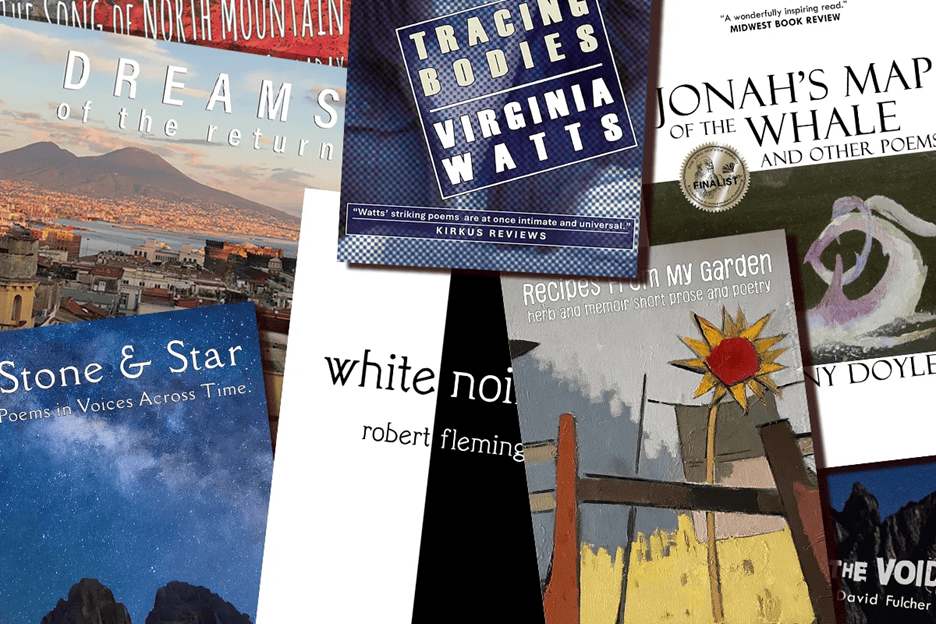
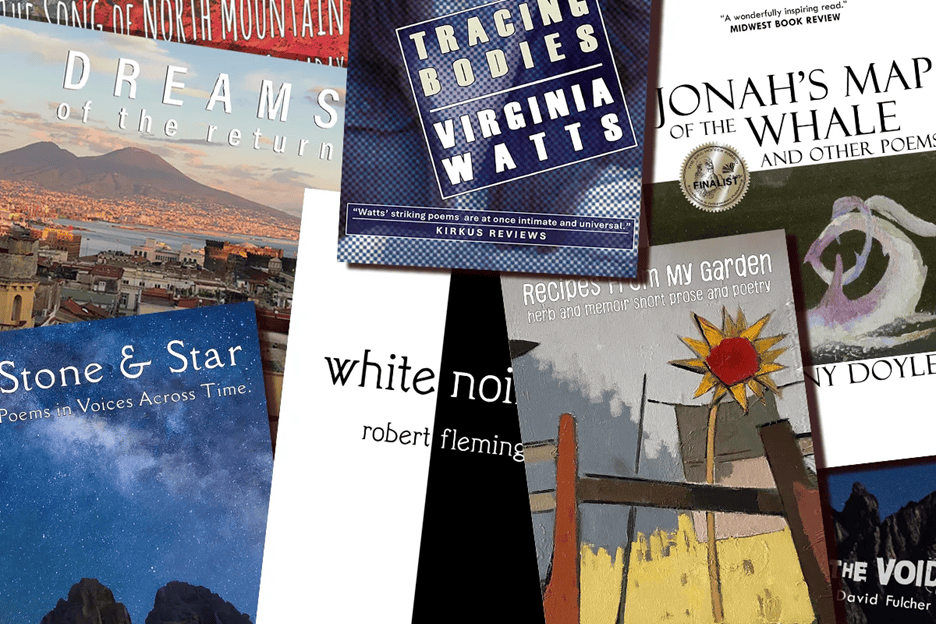
READ ONE OF OUR MEMBERS’ LATEST POETRY COLLECTION: