Some flowers spread their fragrance in spring, some tease us until late summer: just when we think they’re dried up, spent, they surprise us with an explosion of blooms!
I’ve always had a soft spot for the late bloomers of literature. (Maybe because I myself identify as a late bloomer!) As thrilling as it is to read about young prodigies like S.E. Hinton of The Outsiders fame, (she wrote that book as a high school senior!), the late bloomers are just as amazing to me.
What is considered a late bloomer in literature? The general consensus seems to be a writer whose first major work is produced after age 40.
Debra Eve, publisher of the website Later Bloomer (now an archival site) has collected many fascinating essays and information about late bloomers in all fields of life, including literature and poetry.
Bloom (via Substack now) is another site devoted to the late bloomers in life.
This Write and Journal article states that late-blooming authors are more common than we think and why this may be a forward trend.
Eva Q. Tennant’s article on late bloomers shows how “the creative spark doesn’t dim with age — it deepens.”
One of my personal favorite literary late bloomers is Mary Wesley, who turned to writing adult fiction in her 70s and went on to write ten bestsellers in the last twenty years of her life! I learned of her work via the 1992 mini-series adaptation of one of her most well-known novels, The Camomile Lawn.
In poetry, there are many later bloomers, but one that may not come to mind is Thomas Hardy, whose early fame was built on his 14 novels, but who considered himself a poet and wrote poetry for 30 years before publishing his first collection when he was 58. After that, during the rest of his life, he published only poetry.
When I think of late bloomers, writer Winifred Watson also comes to mind, not because she was a late bloomer herself, but she wrote about an older woman experiencing a Cinderella-like transformation in Miss Pettigrew Lives for a Day, an experience that mirrored her own rise to fame in late life when her novel was rediscovered and republished by Persephone Books and made into a delightful film of the same name in 2008 starring the incomparable Frances McDomand. This article on Anne Sebba’s site discusses how Watson’s unlikely second act came about.
So tell me, who are some of your favorite late bloomers? Please share in the comments!
“What’s in a name? That which we call a rose By any other name would smell as sweet.”
~ Shakespeare’s Romeo and Juliet, spoken by Juliet, Act 2, Scene 2
Today I am writing about a subject dear to my heart—choosing titles for poems.
The opportunity to name something you created should not be wasted. You’d think people would give this more attention than they actually do.
Back in the 80s, there was a best-selling book called The Name Game and its main premise was that your name was your destiny. If you wanted your child to be popular, excel in school and marry well, you had to be very careful what you named that little baby in the bassinet.
It would seem to follow that naming your poem merits some consideration as well!
To be clear, I’m no expert and I’m not denigrating any method you may be in the habit of using to choose your titles (or name your children!). But I have a keen interest in this subject and it seems to be a somewhat neglected area of discussion in poetry.
Just to see if maybe something on this subject was buried in books about writing poetry, I checked out a few classic poetry craft books: Ted Kooser’s The Poetry Home Repair Manual and Robert Pinsky’s Singing School. Kooser devotes a few pages to the subject. Pinsky mentions nothing about titles but does provide lots of examples of classic poem titles to peruse.
I then checked in the library catalog of a library of 2 million+ volumes, and only ONE book comes up under the LC classification subject heading: Titles of poems, it is a book called The Title to the Poem by Anne Ferry. She explores the subject in depth, asking questions like “Who gives the title? Who has the title? Who “says” the poem? Who “hears” the poem? What genre does the poem belong to? What is the poem “about”?” and considers the deeper aspects of titling poems: “There are complex relationships between what titles purport to tell and what they actually tell, and this is true not only of titles so worded that they demand interpretation, but also of those that appear straightforward.”
A title can anchor a poem in space and time, giving the reader some necessary context with which to begin reading and enjoying it. For example, a recent poem I wrote I entitled:
“Native, Antilles High School, Ft. Buchanan, Puerto Rico”
I could have just named it “Native” but the place and the time were very relevant to understanding the background of this poem, so the title’s subtitle in this case was very important.
Similarly, a poem entitled “An Evening Encounter at the Arecibo Observatory” gives the reader a lot of information, the time, the place, and the sense that this encounter is not going to be an ordinary one, given the nature of the place!
A title can lend specificity and a sense of fun at the same time: For example, “At the Mayan Monkey Mijas Chocolate Factory” (and yes, this place really exists!)
First of all, how can you visit a place called the Mayan Monkey Mijas Chocolate Factory and NOT write a poem about it and use that name in the title?? However, I later thought I really should have called it “Touring the Mayan Monkey Mijas Chocolate Factory” and that would have conveyed even more relevant information because I was a tourist, not someone who worked there or a local who regularly visited, for example. This title conveys a specific place (Mijas, Spain), history and culture (Mayan), fun (monkeys!) and sensory detail (the aroma of chocolate) and opens all sorts of questions in the reader’s mind, such as: What does a chocolate factory in Mijas have to do with Mayan monkeys?
“…titles are hard to get just right and do really important work–namely, a great title shows the reader how to read a poem.
A poem’s title is where the reader is introduced to a poet, an invitation from the poet into the depths of a poem’s magic. This is, essentially, the main job description of a title: to welcome its readers at the doorway of the poem and to draw them inside. However, the specific function titles perform can vary.”
“As a poet, I haven’t always put as much emphasis on titles, but working as a reader and then an editor for a literary journal really changed that for me. When I was in that role I had to read about a thousand poems over the period of two months. This is not an uncommon experience for editors or readers. I had to pick around ten poems out of all these poems to share with others. But after reading so many they all started to merge together in my mind. It didn’t help that a number of them had the same title. Sometimes I’d try and remember a poem I liked, but then ended up not finding it because while I remembered part of the poem I didn’t remember the title.”
This problem would be exacerbated during the judging of a poetry contest, for example, and could keep your poem from winning an award! Imagine a judge reading dozens of poems called “A Dream” for example and trying to remember which one they liked best!
I think the approach of giving memorable titles to poems helped me when, after winning the 2nd annual Writer’s Digest poetry award with “Respiratory Tech at the Vietnam Memorial, 1989,” (which conveyed the speaker, place and time) I followed it up several years later with “The Menopausal Mermaid Takes Medical Advice” which came in at #36, I think. If you keep in mind that the first contest had ~4200 entries, and was only in its 2nd year, so the entries probably ballooned afterwards to even higher numbers, the importance of a memorable title becomes all the more obvious.
I think the saddest thing I see is “Untitled” as a title. I’m sure there are many brilliant poems by that title (though I can’t think of any off hand), and of course many poets just use the first line of their poem as a title, as per Emily Dickinson (but then again, most of her poems were not meant for publication.) But I feel like not giving your poem a title is a lost opportunity to engage with your reader on a different level.
He does warn that any technique used too often can quickly become monotonous, though.
His final advice should resonate with any poet: “A title doesn’t have to be clever, poetic, or punchy — but it should be deliberate. It’s the invitation, the signpost, the spell. It’s the first poem the reader reads, even before the first line. So give your poems the names they deserve.”
Banned books week isn’t until October, but for LBGTQ authors, every week is banned books week because their works are banned disproportionately more than any others. Books that touch upon LBGTQ themes are challenged more often and these attacks are increasingly coming from “pressure groups and government entities that include elected officials, board members and administrators” according to the American Library Association.
“ In 2025, ALA tracked 4,235 unique title challenges—the second highest ever documented by ALA. Of these titles, nearly 40% represent the lived experiences of LGBTQIA+ people and people of color. Of the 11 most targeted books last year, four were challenged on the basis of their LGBTQ+ content.”
Public libraries try to circumvent the bans by shifting books with LBGTQ themes to the adult collections, if possible, but that is just a bandaid compromise.
LBGTQ authors are concerned about children like themselves growing up and encountering no role models they can relate to in their reading. Children who encounter characters like themselves as the heroes and heroines in books can derive inspiration, pride, courage and solace from them.
This article is a comprehensive overview of the past and current state of book banning in our country.
It has a map showing banning activity in each state.
“The book bans that have accumulated in the past four years are unprecedented and undeniable. This report looks back at the 2024-2025 school year – the fourth school year in the contemporary campaign to ban books – and illustrates the continued attacks on books, stories, identities, and histories. “
And don’t forget to
READ
Throughout history and spanning cultures, the rainbow has symbolized hope, unity, connection, peace and equality–so this Pride month, try reading through rainbow-colored lenses!
Maybe it was the billboards promising paradise, maybe those fifty-nine miles with your hand in mine, maybe my sexy roadster, the top down, maybe the wind fingering your hair, sun on your thighs and bare chest, maybe it was just the ride over the sea split in two by the highway to Key Largo, or the idea of Key Largo. Maybe I was finally in the right place at the right time with the right person. Maybe there’d finally be a house, a dog named Chu, a lawn to mow, neighbors, dinner parties, and you forever obsessed with crossword puzzles and Carl Young, reading in the dark by the moonlight, at my bedside every night. Maybe. Maybe it was the clouds paused at the horizon, the blinding fields of golden sawgrass, the mangrove islands tangled, inseparable as we might be. Maybe I should’ve said something, promised you something, asked you to stay a while, maybe.
AL DENTE In cooking, pasta or risotto al dente (/ælˈdɛnteɪ/, Italian: [al ˈdɛnte]; lit. ’to the tooth’) is cooked to be firm to the bite, requiring a brief cooking time. The term also extends to firmly-cooked vegetables. In contemporary Italian cooking, it is considered to be the ideal consistency for pasta.
What does al dente mean to you? To your neighborhood vampire it probably means something different. How about to the prospector mining gold?
Send us something that you haven’t overcooked!
Submissions close on July 5, 2026; the issue publishes SEPTEMBER 1, 2026.
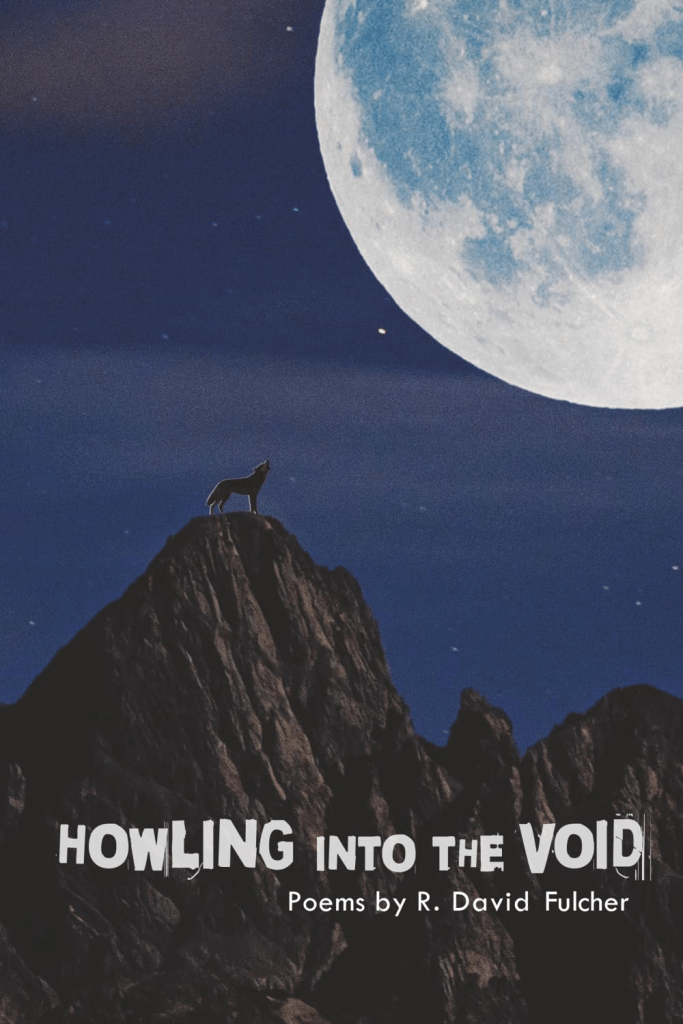
READ ONE OF OUR MEMBERS’ LATEST POETRY COLLECTION:
If you’ve never had a writing mentor, you may not realize you need one. If you’ve had a mentor, you probably know what an impact they’ve had on your writing.
A mentor’s role can be complex, encompassing the roles of teacher, editor, advisor, parent, friend, coach, cheerleader, critic, judge, proofreader, and sounding board.
As such, they are an invaluable resource at any stage of your career, but especially so at the beginning, whatever your age.
Many poets go it alone at first, but almost no one significantly improves alone. A good mentor shortens the time and distance between where you are and where you want your writing to be. They help you see the habits you repeat without noticing, the strengths you underestimate, and the opportunities you’d never spot on your own.
In a field where progress can feel slow and uneven, the guiding hand of a mentor gives you structure, accountability, and a clearer path forward. If you want your work to grow better with intention—not just luck—mentorship is one of the most effective tools you can invest in.
If you are lucky enough to find a mentor at the right stage in your writing life, then you will be ahead of the game in more ways than one.
Reasons You Need a Mentor
This article by Shane Manier makes a great case, among many other excellent points, for hiring a mentor as a time and money-saving move.
Many writers naturally gravitate toward MFA programs hoping to find that kind of mentorship; sometimes the magic happens and an inspirational teacher becomes a long-time mentor:
Dr. Cody Smith found one in her MFA professor Jonathan Johnson.
“I remember thinking, This is what it means to be a teacher. Jonathan was a teacher who, instead of teaching you the material, taught you how to love the material.”
But realistically, given the elusive and indefinable chemistry that is involved in the mentor/mentee relationship, and the time constraints, there aren’t enough Creative Writing professors to go around and they have so many students throughout the years, that it can’t always work out.
For those of you outside creative writing programs, there are other places you can search for mentors. In my case, I went searching for mine online. I began looking for the websites of poets whose work I had read and admired. Some of them offered workshops or classes. I found that one poet whose poetry I had never forgotten over the years, Andrea Hollander, offered one-on-one tutorials, so I contacted her.
That fortunate decision led to a years-long series of phone tutorials (no Zoom back then!) with Andrea, who became a friend and mentor as well. We have kept in touch over the years; we share our writing news and she continues to support my work and alert me to publishing opportunities. Even after all these years, every time I write, I hear her voice in my head, guiding me, much as you would remember what a parent would say or advise in certain situations.
You might prefer to meet with your mentor in person, in which case you should attend local poetry events to search for one, as this author did successfully:
“At a poetry open-mic event, I connected and found one of my mentors, having witnessed his performance and interaction with fellow poets and event organisers.”
”The AWP Writer to Writer Mentorship Program is open to all AWP members who identify as emerging writers, but they particularly encourage applications from those writers who have never been associated with an MFA program, and those writing from regions, backgrounds, and cultures that are too often underrepresented in the literary world.”
”The Latinx in Publishing Writers Mentorship Program offers the opportunity for unpublished and unagented writers who identify as Latinx (mentees) to strengthen their craft, gain knowledge about the traditional publishing industry, and expand their professional connections through work with experienced Latinx authors (mentors).”
“A five-session workshop on the vocabulary of poetics · Taught by Tamarah Rockwood
The heart of the workshop is the mentorship. Starting in Session 2, every participant submits one poem per session for individual written feedback from me, returned by email before the next class. Across the series, that produces forty-eight feedback letters, one for every poem from every poet in the room. This is not a lecture you are buying. It is a writing relationship.”
Some of you may fear to be too heavily influenced by a more experienced poet’s style in a mentor/mentee relationship and this discussion from New Writing North addresses that issue:
“I’ve heard people speak of mentors with concern. The usual fear is usually one of influence – that the mentor’s style and interests will rub off too heavily on their work. Personally, I see it as a dialogue. The chance to speak directly to a writer you admire about poetry in general, and about your poems specifically.”
Pay It Forward
In the end, we all can hope that the advantages outweigh these concerns and the difficulties we have to overcome to find a poetry mentor. In my case, I know I would not be where I am without my mentor’s timely guidance. She gave me confidence to find my own voice and style and helped me learn to distinguish between a promising poem and one that needed more work. She pushed me to challenge my abilities and try poetic forms I had not attempted before. She inspired me to submit my work more widely and to dare to aspire to more discerning markets. But most of all, she taught me how to be a good mentor in my turn. I have tried, in my small way, to emulate her and to encourage budding poets that I have met and give them confidence to send their work out into the world.
Everyone needs encouragement and poets especially operate in a very obscure and underrated field that is not always well received or understood by the general public.
As poet Chloe Yelena Miller says in a Savvy Verse & Witinterview by Serena Agosto-Cox, “May we all find the mentors we need at the right time”!
AL DENTE In cooking, pasta or risotto al dente (/ælˈdɛnteɪ/, Italian: [al ˈdɛnte]; lit. ’to the tooth’) is cooked to be firm to the bite, requiring a brief cooking time. The term also extends to firmly-cooked vegetables. In contemporary Italian cooking, it is considered to be the ideal consistency for pasta.
What does al dente mean to you? To your neighborhood vampire it probably means something different. How about to the prospector mining gold?
Send us something that you haven’t overcooked!
Submissions close on July 5, 2026; the issue publishes SEPTEMBER 1, 2026.
READ ONE OF OUR MEMBERS’ LATEST POETRY COLLECTION:


 OLD SCRATCH PRESS