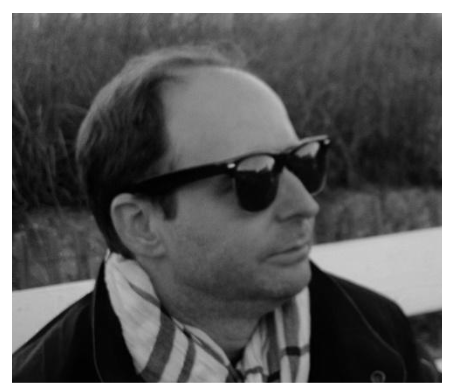
David Fulcher, a founding member and contributing editor of Old Scratch Press poetry/short form collective will be featured at Stone Soup Poetry October 28th, 7 pm ET, for a special horror-themed reading! David will be reading his poems and a short story.
To join this fun Halloween-themed event, go to Stone Soup’s Blog or follow the instructions below:
Stone Soup Poetry meets every Wednesday online from 7:00-9:00 PM via Zoom. Stay tuned for updates on any future live gatherings. On October 28, Stone Soup ends October with a proper horror themed reading from David Fulcher.
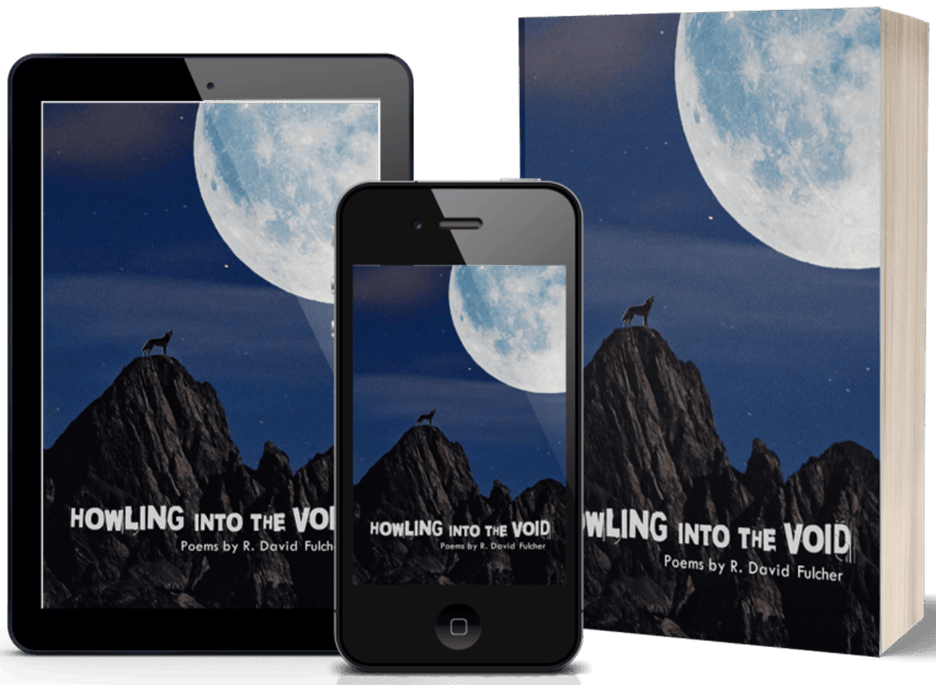
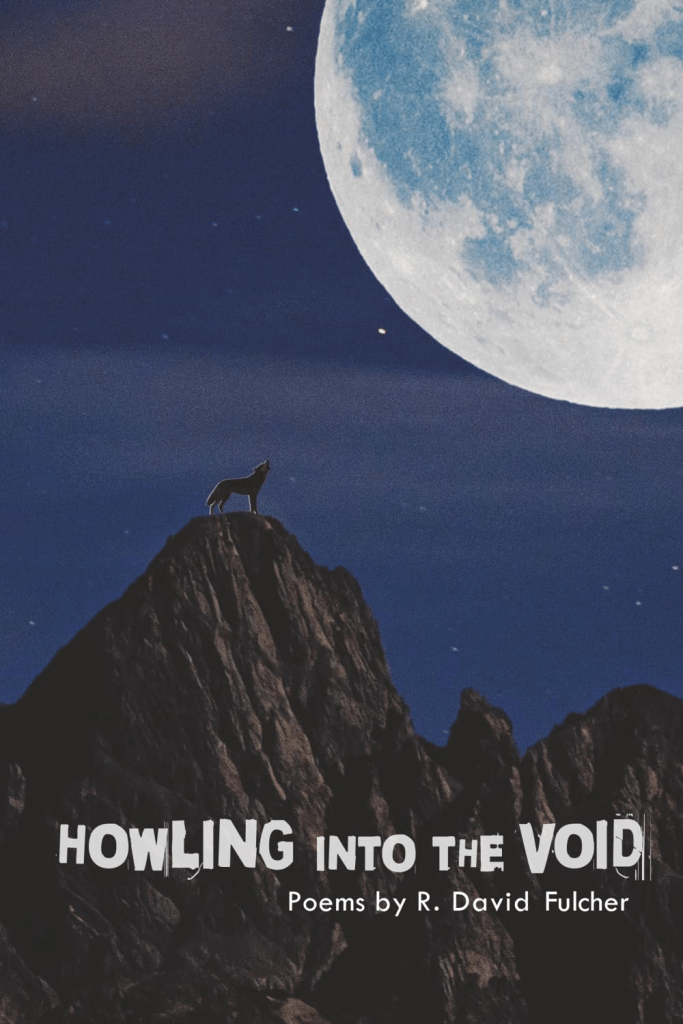
R. David Fulcher is a publisher, editor, and writer of fiction and poetry who lives in Ashburn, Virginia with his wife Lisa, and their rambunctious cats. He is a founding member/contributing editor of Old Scratch Press, including a curator for the digital magazine Instant Noodles. He also is a publisher/editor of the magazine Samsara. His books are The Pumpkin King and Other Tales of Terror, Asteroid 6: And Other Tales of Cosmic Horror, and Howling Into the Void. His shorter works are in Lovecraft’s Mystery Magazine, Black Satellite, The Martian Wave, Burning Sky, Shadowlands, Twilight Showcase, Heliocentric Net, Gateways, Weird Times, Freaky Frights and the anthologies Dimensions and Silken Ropes.
Join us on Wednesday, October 28, from 7:00 to 9:00 PM ET by clicking this link.
“What’s in a name? That which we call a rose By any other name would smell as sweet.”
~ Shakespeare’s Romeo and Juliet, spoken by Juliet, Act 2, Scene 2
Today I am writing about a subject dear to my heart—choosing titles for poems.
The opportunity to name something you created should not be wasted. You’d think people would give this more attention than they actually do.
Back in the 80s, there was a best-selling book called The Name Game and its main premise was that your name was your destiny. If you wanted your child to be popular, excel in school and marry well, you had to be very careful what you named that little baby in the bassinet.
It would seem to follow that naming your poem merits some consideration as well!
To be clear, I’m no expert and I’m not denigrating any method you may be in the habit of using to choose your titles (or name your children!). But I have a keen interest in this subject and it seems to be a somewhat neglected area of discussion in poetry.
Just to see if maybe something on this subject was buried in books about writing poetry, I checked out a few classic poetry craft books: Ted Kooser’s The Poetry Home Repair Manual and Robert Pinsky’s Singing School. Kooser devotes a few pages to the subject. Pinsky mentions nothing about titles but does provide lots of examples of classic poem titles to peruse.
I then checked in the library catalog of a library of 2 million+ volumes, and only ONE book comes up under the LC classification subject heading: Titles of poems, it is a book called The Title to the Poem by Anne Ferry. She explores the subject in depth, asking questions like “Who gives the title? Who has the title? Who “says” the poem? Who “hears” the poem? What genre does the poem belong to? What is the poem “about”?” and considers the deeper aspects of titling poems: “There are complex relationships between what titles purport to tell and what they actually tell, and this is true not only of titles so worded that they demand interpretation, but also of those that appear straightforward.”
A title can anchor a poem in space and time, giving the reader some necessary context with which to begin reading and enjoying it. For example, a recent poem I wrote I entitled:
“Native, Antilles High School, Ft. Buchanan, Puerto Rico”
I could have just named it “Native” but the place and the time were very relevant to understanding the background of this poem, so the title’s subtitle in this case was very important.
Similarly, a poem entitled “An Evening Encounter at the Arecibo Observatory” gives the reader a lot of information, the time, the place, and the sense that this encounter is not going to be an ordinary one, given the nature of the place!
A title can lend specificity and a sense of fun at the same time: For example, “At the Mayan Monkey Mijas Chocolate Factory” (and yes, this place really exists!)
First of all, how can you visit a place called the Mayan Monkey Mijas Chocolate Factory and NOT write a poem about it and use that name in the title?? However, I later thought I really should have called it “Touring the Mayan Monkey Mijas Chocolate Factory” and that would have conveyed even more relevant information because I was a tourist, not someone who worked there or a local who regularly visited, for example. This title conveys a specific place (Mijas, Spain), history and culture (Mayan), fun (monkeys!) and sensory detail (the aroma of chocolate) and opens all sorts of questions in the reader’s mind, such as: What does a chocolate factory in Mijas have to do with Mayan monkeys?
“…titles are hard to get just right and do really important work–namely, a great title shows the reader how to read a poem.
A poem’s title is where the reader is introduced to a poet, an invitation from the poet into the depths of a poem’s magic. This is, essentially, the main job description of a title: to welcome its readers at the doorway of the poem and to draw them inside. However, the specific function titles perform can vary.”
“As a poet, I haven’t always put as much emphasis on titles, but working as a reader and then an editor for a literary journal really changed that for me. When I was in that role I had to read about a thousand poems over the period of two months. This is not an uncommon experience for editors or readers. I had to pick around ten poems out of all these poems to share with others. But after reading so many they all started to merge together in my mind. It didn’t help that a number of them had the same title. Sometimes I’d try and remember a poem I liked, but then ended up not finding it because while I remembered part of the poem I didn’t remember the title.”
This problem would be exacerbated during the judging of a poetry contest, for example, and could keep your poem from winning an award! Imagine a judge reading dozens of poems called “A Dream” for example and trying to remember which one they liked best!
I think the approach of giving memorable titles to poems helped me when, after winning the 2nd annual Writer’s Digest poetry award with “Respiratory Tech at the Vietnam Memorial, 1989,” (which conveyed the speaker, place and time) I followed it up several years later with “The Menopausal Mermaid Takes Medical Advice” which came in at #36, I think. If you keep in mind that the first contest had ~4200 entries, and was only in its 2nd year, so the entries probably ballooned afterwards to even higher numbers, the importance of a memorable title becomes all the more obvious.
I think the saddest thing I see is “Untitled” as a title. I’m sure there are many brilliant poems by that title (though I can’t think of any off hand), and of course many poets just use the first line of their poem as a title, as per Emily Dickinson (but then again, most of her poems were not meant for publication.) But I feel like not giving your poem a title is a lost opportunity to engage with your reader on a different level.
He does warn that any technique used too often can quickly become monotonous, though.
His final advice should resonate with any poet: “A title doesn’t have to be clever, poetic, or punchy — but it should be deliberate. It’s the invitation, the signpost, the spell. It’s the first poem the reader reads, even before the first line. So give your poems the names they deserve.”
Banned books week isn’t until October, but for LBGTQ authors, every week is banned books week because their works are banned disproportionately more than any others. Books that touch upon LBGTQ themes are challenged more often and these attacks are increasingly coming from “pressure groups and government entities that include elected officials, board members and administrators” according to the American Library Association.
“ In 2025, ALA tracked 4,235 unique title challenges—the second highest ever documented by ALA. Of these titles, nearly 40% represent the lived experiences of LGBTQIA+ people and people of color. Of the 11 most targeted books last year, four were challenged on the basis of their LGBTQ+ content.”
Public libraries try to circumvent the bans by shifting books with LBGTQ themes to the adult collections, if possible, but that is just a bandaid compromise.
LBGTQ authors are concerned about children like themselves growing up and encountering no role models they can relate to in their reading. Children who encounter characters like themselves as the heroes and heroines in books can derive inspiration, pride, courage and solace from them.
This article is a comprehensive overview of the past and current state of book banning in our country.
It has a map showing banning activity in each state.
“The book bans that have accumulated in the past four years are unprecedented and undeniable. This report looks back at the 2024-2025 school year – the fourth school year in the contemporary campaign to ban books – and illustrates the continued attacks on books, stories, identities, and histories. “
And don’t forget to
READ
Throughout history and spanning cultures, the rainbow has symbolized hope, unity, connection, peace and equality–so this Pride month, try reading through rainbow-colored lenses!
Maybe it was the billboards promising paradise, maybe those fifty-nine miles with your hand in mine, maybe my sexy roadster, the top down, maybe the wind fingering your hair, sun on your thighs and bare chest, maybe it was just the ride over the sea split in two by the highway to Key Largo, or the idea of Key Largo. Maybe I was finally in the right place at the right time with the right person. Maybe there’d finally be a house, a dog named Chu, a lawn to mow, neighbors, dinner parties, and you forever obsessed with crossword puzzles and Carl Young, reading in the dark by the moonlight, at my bedside every night. Maybe. Maybe it was the clouds paused at the horizon, the blinding fields of golden sawgrass, the mangrove islands tangled, inseparable as we might be. Maybe I should’ve said something, promised you something, asked you to stay a while, maybe.
AL DENTE In cooking, pasta or risotto al dente (/ælˈdɛnteɪ/, Italian: [al ˈdɛnte]; lit. ’to the tooth’) is cooked to be firm to the bite, requiring a brief cooking time. The term also extends to firmly-cooked vegetables. In contemporary Italian cooking, it is considered to be the ideal consistency for pasta.
What does al dente mean to you? To your neighborhood vampire it probably means something different. How about to the prospector mining gold?
Send us something that you haven’t overcooked!
Submissions close on July 5, 2026; the issue publishes SEPTEMBER 1, 2026.
READ ONE OF OUR MEMBERS’ LATEST POETRY COLLECTION:
If you’ve never had a writing mentor, you may not realize you need one. If you’ve had a mentor, you probably know what an impact they’ve had on your writing.
A mentor’s role can be complex, encompassing the roles of teacher, editor, advisor, parent, friend, coach, cheerleader, critic, judge, proofreader, and sounding board.
As such, they are an invaluable resource at any stage of your career, but especially so at the beginning, whatever your age.
Many poets go it alone at first, but almost no one significantly improves alone. A good mentor shortens the time and distance between where you are and where you want your writing to be. They help you see the habits you repeat without noticing, the strengths you underestimate, and the opportunities you’d never spot on your own.
In a field where progress can feel slow and uneven, the guiding hand of a mentor gives you structure, accountability, and a clearer path forward. If you want your work to grow better with intention—not just luck—mentorship is one of the most effective tools you can invest in.
If you are lucky enough to find a mentor at the right stage in your writing life, then you will be ahead of the game in more ways than one.
Reasons You Need a Mentor
This article by Shane Manier makes a great case, among many other excellent points, for hiring a mentor as a time and money-saving move.
Many writers naturally gravitate toward MFA programs hoping to find that kind of mentorship; sometimes the magic happens and an inspirational teacher becomes a long-time mentor:
Dr. Cody Smith found one in her MFA professor Jonathan Johnson.
“I remember thinking, This is what it means to be a teacher. Jonathan was a teacher who, instead of teaching you the material, taught you how to love the material.”
But realistically, given the elusive and indefinable chemistry that is involved in the mentor/mentee relationship, and the time constraints, there aren’t enough Creative Writing professors to go around and they have so many students throughout the years, that it can’t always work out.
For those of you outside creative writing programs, there are other places you can search for mentors. In my case, I went searching for mine online. I began looking for the websites of poets whose work I had read and admired. Some of them offered workshops or classes. I found that one poet whose poetry I had never forgotten over the years, Andrea Hollander, offered one-on-one tutorials, so I contacted her.
That fortunate decision led to a years-long series of phone tutorials (no Zoom back then!) with Andrea, who became a friend and mentor as well. We have kept in touch over the years; we share our writing news and she continues to support my work and alert me to publishing opportunities. Even after all these years, every time I write, I hear her voice in my head, guiding me, much as you would remember what a parent would say or advise in certain situations.
You might prefer to meet with your mentor in person, in which case you should attend local poetry events to search for one, as this author did successfully:
“At a poetry open-mic event, I connected and found one of my mentors, having witnessed his performance and interaction with fellow poets and event organisers.”
”The AWP Writer to Writer Mentorship Program is open to all AWP members who identify as emerging writers, but they particularly encourage applications from those writers who have never been associated with an MFA program, and those writing from regions, backgrounds, and cultures that are too often underrepresented in the literary world.”
”The Latinx in Publishing Writers Mentorship Program offers the opportunity for unpublished and unagented writers who identify as Latinx (mentees) to strengthen their craft, gain knowledge about the traditional publishing industry, and expand their professional connections through work with experienced Latinx authors (mentors).”
“A five-session workshop on the vocabulary of poetics · Taught by Tamarah Rockwood
The heart of the workshop is the mentorship. Starting in Session 2, every participant submits one poem per session for individual written feedback from me, returned by email before the next class. Across the series, that produces forty-eight feedback letters, one for every poem from every poet in the room. This is not a lecture you are buying. It is a writing relationship.”
Some of you may fear to be too heavily influenced by a more experienced poet’s style in a mentor/mentee relationship and this discussion from New Writing North addresses that issue:
“I’ve heard people speak of mentors with concern. The usual fear is usually one of influence – that the mentor’s style and interests will rub off too heavily on their work. Personally, I see it as a dialogue. The chance to speak directly to a writer you admire about poetry in general, and about your poems specifically.”
Pay It Forward
In the end, we all can hope that the advantages outweigh these concerns and the difficulties we have to overcome to find a poetry mentor. In my case, I know I would not be where I am without my mentor’s timely guidance. She gave me confidence to find my own voice and style and helped me learn to distinguish between a promising poem and one that needed more work. She pushed me to challenge my abilities and try poetic forms I had not attempted before. She inspired me to submit my work more widely and to dare to aspire to more discerning markets. But most of all, she taught me how to be a good mentor in my turn. I have tried, in my small way, to emulate her and to encourage budding poets that I have met and give them confidence to send their work out into the world.
Everyone needs encouragement and poets especially operate in a very obscure and underrated field that is not always well received or understood by the general public.
As poet Chloe Yelena Miller says in a Savvy Verse & Witinterview by Serena Agosto-Cox, “May we all find the mentors we need at the right time”!
AL DENTE In cooking, pasta or risotto al dente (/ælˈdɛnteɪ/, Italian: [al ˈdɛnte]; lit. ’to the tooth’) is cooked to be firm to the bite, requiring a brief cooking time. The term also extends to firmly-cooked vegetables. In contemporary Italian cooking, it is considered to be the ideal consistency for pasta.
What does al dente mean to you? To your neighborhood vampire it probably means something different. How about to the prospector mining gold?
Send us something that you haven’t overcooked!
Submissions close on July 5, 2026; the issue publishes SEPTEMBER 1, 2026.
READ ONE OF OUR MEMBERS’ LATEST POETRY COLLECTION:
Last Chance to get published this year! SUBMISSIONS FOR 2025 ARE OPEN THROUGH 11.02.25.
The Old Scratch Press team asks that all fiction/non-fiction pieces adhere to a word count of 500 words or less.
Topics/themes for 2025
GRAVY is our 2025 winter holiday theme. Give us your best holiday gravy fails, mishaps, ridiculous gravy encounters (any December holiday, from Hanukkah, to Solstice, to NYE, etc.) or your best funny work about gravy, in general. The point of the end-of-year issue is to be light-hearted to downright silly.
Submissions close NOVEMBER 2, 2025; the issue will publish DECEMBER 1, 2025.
By R. David Fulcher, Old Scratch Press Founding Member
I love all things pumpkin, including pumpkin spice. However, I understand even fans of this seasonal gourd have their limits on just how much pumpkin spice is too much pumpkin spice.
Readers are the same way.
Even fans of scary stories have their own personal limits in terms of exactly how scary, how gory, or how unsettling a story they can bear.
Therefore, I’ve taken three of my pumpkin-related stories and rated them in spiciness, from the most mild to the most extreme.
Mild Spice: “Pumpkin Night at the Pinkstons”
In “Pumpkin Night at the Pinkstons”, from my book The Movies that Make You Scream!, a teenager discovers the secret behind his homecoming date. Full of gooey teenage love, this is the mildest of my pumpkin-themed stories, something like one of the Goosebumps tales by R.L. Stine.
I’ll call this the Pumpkin Spice Latte Level of story.
Here is an excerpt from “Pumpkin Night at the Pinkstons”:
I don’t know exactly how much time passed before realizing that something was very, very wrong. The texture of her kisses changed, becoming clumsy and pulpy in taste. Her smooth gums became loose and stringy, and when I tried to pull away, I realized she was attached to me like a barnacle adhered to the side of a boat’s hull. Long, pointed fingers now clenched my nose shut and I began to get dizzy as that sickening, fruity-vegetable stench began to overwhelm me.
But more horrible were the physical changes taking place to the body I embraced, a grotesque squishyness of the torso and organs like the skin of a rotting tomato.
Medium Spice: “Pumpkin Seed Spit”
In “Pumpkin Seed Spit”, from the Devil’s Party Press anthology Halloween Party 2019, three friends go trick-or-treating and make a horrible deal with an ancient spirit to ensure their survival. Although the protagonists are also teenagers in this story, the stakes are higher, and the final implications for humanity much darker.
I’ll call this the Pumpkin Muffin Level of story.
Here is an excerpt from “Pumpkin Seed Spit”:
Upon reaching the first house near a dead end, they knocked and said in unison, “Trick-or-Treat!” As fifty-year-old Henry Armitage opened the front door, Brian unearthed his bag. The middle-aged man frowned at the kids before starting to mutter something about the lateness of the hour. Armitage gazed into Brian’s bag of seeds and was immediately mesmerized. An orange energy tendril spiraled upward, carrying a single seed into Armitage’s mouth.
Brian, Matt, and Ria wanted to scream, but found it impossible. While their souls were wrenched into knots by the horror they witnessed, outwardly they stood emotionless, even tranquil, as layers of skin and flesh melted away until all that remained of Henry Armitage was a living skeleton.
When the transformation was complete, they advanced to the next house. Ria shared the seeds, and Asenath Waite, a young mother of two, was hideously transformed into a witch with boils, green teeth, and a trail of lesions across her forehead.
Matt was next to present The Pumpkin Tree’s offering to the world. Three seeds were received by a couple and their young baby. Within moments they became a trio of giant pale, eyeless larvae that oozed and squiggled out of their clothes.
Extra Spicy: “The Pumpkin King”
In “The Pumpkin King”, from my book The Pumpkin King and Other Tales of Terror, a man ignores the rules of Halloween to his own detriment. The protagonist is an adult, and this tale has the most shock value of the three.
I’ll call this the Pumpkin Imperial Pale Ale Level of story
Here is an excerpt from “The Pumpkin King”:
I spun around and made for the door, half convinced I was hallucinating if not dreaming. I unlatched the deadbolt, but it clicked back into place as soon as I started to turn the latch. I turned back to the jack-o’-lantern.
“An easy trick, but effective,” the jack-o’-lantern said, its orange light flashing in time to the latch on the deadbolt as it clicked back and forth at will.
“What do you want?” I begged.
“I want you to think on this. There is but one expectation of you this time of year. One simple obligation: To carve pumpkins. To pay homage to the king.”
“What king?”
“Samhain, the King of the Dead.” Its demeanor began to change. Its voice deepened and the reddish-orange glow rose like an enraged fire.
“This is ridiculous!” Now I was beginning to lose my fear and was feeling pissed. This thing, whatever it was, was in my house. I turned to climb the stairs and grab a baseball bat so that I could smash the talkative piece of vegetation into a hundred juicy bits. I was an educated man, and I knew of the myth of Samhain, the Lord of the Dead who arrived every fall to put nature in balance with the deadly strokes of his sickle. I also knew it was pure bunk.
I had only reached the first step when I heard a sound far worse than the maddening click-clacking of the door latch: the metallic whisper of a kitchen knife being drawn from the butcher block.
I turned back to the pumpkin. “Okay. You’ve got my attention. What do you want?”
“I want to carve you,” it replied simply.
So whatever your personal threshold is for pumpkin spice, pay homage to the spirits of All Hallows Eve, and savor the spice before it’s gone!
Happy Writing!
R.David Fulcher, Founding Member of Old Scratch Press
Are you a flash fiction, poetry, or short memoir writer with a finished manuscript—or one nearly ready to go? Old Scratch Press, a collaborative collective supported by Current Words Publishing, is now accepting applications for two new members to join us in 2026.
We’re a tight-knit, skill-sharing group that publishes each other’s books, runs the lit mag Instant Noodles, and supports each other with editing, design, marketing, and community.
We are hosting meet and greets on August 6th and August 13. To be invited you have to send a small sample. There are no fees to submit, and there are no fees to join, and there are no fees to publish your collection. There are no fees. Who else you gonna find to collaborate with who dedicates an entire issue of a literary magazine to that most magical of elixirs… gravy? If you’re eager to grow as a writer and be part of something creative and weird and wonderful, we’d love to meet you.
We’re looking to add members to Old Scratch Press! Here’s the deets: Old Scratch Press (OSP), a poetry and short-form collective sponsored by Current Words Publishing, is seeking two new members to join us starting at the end of 2025. Your book would be slated for publication in 2026–2027, pending a successful trial period.
OSP is a collaborative, grassroots press focused on uplifting fresh, bold voices in poetry, flash fiction, and creative non-fiction. We publish three books per year, along with Instant Noodles Lit Mag (3 issues/year), which is curated and edited by our members. To learn more about our work, we invite you to explore past editions of Instant Noodleshttps://instantnoodleslitmag.com/ and OSP-published books https://oldscratchpress.com/catalog/.
As a member of OSP, you will:
Receive a free publication of your manuscript (poetry, short prose, hybrid, or a mix of writing and art).
Get 10 free copies of your book and keep 100% of your royalties.
Participate in monthly OSP meetings (except December and August).
Proofread and support fellow members’ books and contribute to blog and promo efforts.
Be invited to monthly marketing meetings hosted by Current Words Publishing.
Join a supportive community of working writers committed to mutual aid, creativity, and literary growth.
We’re looking for:
Members who are kind, reliable, and team-oriented.
Writers with a completed or nearly completed manuscript ready for publication in 2026–2027.
People who can commit to at least two years of active participation.
Writers who reflect diversity in identity, perspective, or experience—including (but not limited to) people of color, LGBTQ+ writers, disabled writers, and others underrepresented in publishing.
Applicants who are not full-time creative writing faculty. We aim to support writers who do not already have institutional resources or access.
Writers who have a track record of publication (a few poems, flash pieces, essays, etc.), and a clear desire to communicate something meaningful through their work—someone we can respect as a fellow writer and collaborator.
A note about our trial period:
New members will begin with a six-month trial period before we formally commit to publishing your book. This ensures a good fit and gives everyone time to build rapport, share work, and participate in OSP activities.
To apply:
Please send the following:
A brief cover letter introducing yourself, why you’re interested in joining OSP, and how you’d contribute to the group.
A short author bio (3–5 sentences).
A brief personal essay (500–750 words) about your writing journey. Feel free to include publication history (with links or footnotes) and anything you’d like to share about the manuscript you hope to publish.
A sample of your manuscript-in-progress (up to 10 pages).
Applications will be reviewed collectively by current OSP members. Finalists will be invited for a short conversation via Zoom.
If this sounds like your kind of creative home, we’d love to hear from you!
By R. David Fulcher, Old Scratch Press Founding Member
Recently I had the honor of joining the Folkloring podcast. This podcast addresses how we can integrate folklore into our everyday lives, including our writing.
Preparing for this podcast prompted me to reflect upon the influence of folklore, myth and legend on my own writing and was surprised to discover the influence has been quite profound.
Below are some of categories of folklore I came up with in case they could be an inspiration for your writing.
1. Global folklore
By this I mean folklore that originated from a specific geographic location hundreds of years ago, but now is so well known it is generally accepted.
An example of this would be the legend of the vampire from Romania. First something that was very localized, vampires are now so common they now appear on cereal boxes and television series.
I integrate the vampire myth into my writing in several stories in my book The Pumpkin King and Other Tales of Terror in such stories as “The Night Flyer” and “The Watchman’s Web”.
2. Urban Legends/Localized Folklore
In this category would be legends still most popular in specific geographic regions, such as the legend of the New Jersey Devil that haunts the woods of New Jersey, or the infamous Bunny Man of Clifton, Virginia.
The mythology of native Americans is extremely rich and strongly connected to the natural world.
In my book The Cemetery of Hearts, I reference a native American myth from the American Southwest that claims that the majestic canyons and mesas were spun out of a gigantic spider.
In my story “The Land Spider”, a gigantic spider starts swallowing a small town in New Mexico building by building.
These are just a few ideas to get you started, but the world is full of legends and folklore, and weaving them into your writing will enrich your fiction and poetry.
You can learn more about the Folkloring podcasthere
Happy Writing!
R.David Fulcher, Founding Member of Old Scratch Press
We learn from asking questions, and what better way to explore the craft of writing than through an engaging Q&A with an author! This month the author I’m interviewing is R. David Fulcher who happens to be a member of the Old Scratch Press Poetry and Short Form Collective.
R. David Fulcher is a talented author with multiple books to his name. His most recent work, a captivating short story collection titled THE PUMPKIN KING AND OTHER TALES OF TERROR, showcases his passion for storytelling. A writer of both poetry and prose, he deeply loves speculative fiction, particularly science fiction and horror. You can explore more of his work on his blog at Rdavidfulcher.com.
This is the perfect month—the season of ghosts and goblins—to delve into the exciting craft of writing horror. Most of my questions in this post will focus on the intriguing insights from THE PUMPKIN KING AND OTHER TALES OF TERROR. Let’s celebrate the art of writing together!
Q: Question
R: Response
R. David Fulcher
Q: As a writer, what is your primary goal when interacting with your readers?
R: As a horror writer, I have two primary goals: 1) Establish an “eerie” atmosphere; and 2) Elicit a physical response in the reader. Yes, I hope to stimulate the readers’ minds as well, but I primarily want to elicit fear – a racing pulse, the small hairs standing up on the back of your neck, a shiver in your spine – only good horror tales have this effect.
Q: Was there a specific moment you remember, perhaps an experience that spurred you on to want to write this particular book?
R: The Pumpkin King and Other Tales of Terror (and the follow-up volume “Asteroid 6 and Other Tales of Cosmic Horror”) is sort of a “greatest hits” collection of my short stories, so unlike a traditional novel the stories were developed over many years and inspired by many moments and experiences throughout my life.
To give a sense of the age of some of the stories, the title story “The Pumpkin King” first appeared in a small press magazine entitled Mausoleum back in 2001! Of course, all the stories have been heavily revised in the new book.
To provide an experience that spurred me to write a particular story, “Castle Marienburg” was inspired by a tour of that very castle during a visit to Germany in college.
Q: As both a horror writer and a poet, how has Edgar Allen Poe influenced your work?
R: In a way, Edgar Allen Poe led me to my genre. My high school English teacher taught a semester on Poe, and I was hooked. I started writing dark, gothic short stories that day after school and submitting them to small press magazines shortly thereafter.
Q: Writing poetry and writing prose, how has the two different types of genres influenced each other in your writing?
R: My love for both poetry and prose has caused me to experiment with inserting sequences of poetry into my fiction. Some examples of my stories that include embedded poems are “A Night Out with Mr. Bones”, “The Faerie Lights”, and “All Across the Mountain”.
Q: Did you work alone or did you rely on some feedback from others?
R: I initially write on my own, but I really enjoy it when people close to me review my work and give feedback on it. For example, my brother Dale helped proofread the manuscript for The Pumpkin King and Other Tales of Terror, and after reading my short story “Asteroid 6” my wife Lisa was really impressed with the tale, so I was inspired to title my second volume coming out this Fall as “Asteroid 6 and Other Tales of Cosmic Horror”.
Of course, my publishers David and Dianne are also tremendous editors and their feedback has been essential to my work.
Q:Do you imagine you are writing for a specific person or a certain audience?
R: No specific audience. I will say that my writing is almost always in the realm of the fantastic, so fans of my work must be able to “suspend their disbelief” and just go along for the ride, trusting me to take them to a magical, almost unbelievable ending, even if all the facts don’t line up with reality. I think fans of hard science-fiction (Isaac Asimov, etc.) will have a hard time enjoying my work.
Q: How do you approach revision?
R:This goes back to things I’d tell my former self. I used to put down the pen (yes, I write my stories out long-hand!) after a long, intense burst of writing (sometimes an entire story in a single sitting), push the manuscript back on the desk with a smile, and say “Perfect!”
I would then immediately submit the tale for publication, only to receive rejection after rejection, never understanding why.
I’ve finally learned that being a professional writer means spending almost twice the amount of time revising your work as you spent writing it in the first place. So I approach it like work. I allocate time for editing/proofreading, I set deadlines, and I hold myself to them. The difference between my original manuscript written after a burst of artistic inspiration and the manuscript after several rounds of revision is often night and day.
Q: If you could give advice to your younger self, what would you want to tell them?
R: I’d remind my younger self that the success of a book is up to me. I used to self-publish with AuthorHouse (formerly 1st Books) and believed that getting my book on Amazon and buying the publisher’s “marketing kit” would instantly propel me to fame and the bestseller’s list. I have learned the hard way over the years this is not the case. Publishing the book is just Step 1. The real work is in the marking and promotion.
Q: How did you find your publisher or did they find you?
R: David and Dianne of Devil’s Party Press (now Current Words Publishing) met at the Indie Lit Fest at Frostburg State University in Frostburg, MD. At the time they were accepting submissions for one of their Halloween Party anthologies and provided me with the information. I submitted and was accepted. The rest as they say is history!
Q: Do you have a specific horror story favorite you’ve read?
R: Several novels by modern horror writers have had a tremendous influence on my writing. They include “Something Wicked This Way Comes” by Ray Bradbury, “The Tommyknockers” by Stephen King, and “HIdeaway” by Dean Koontz.
In your own portfolio, a story you are particularly proud of?
R: I have a few favorites among my stories that don’t always correlate to fan favorites. The first is “Castle Marienburg”, which was originally titled “Eyes in the Night”. A horror editor in the small press called it one of the best horror stories he had ever read, which was very satisfying. Others include “Spectra’s Masterpiece”, a science fiction story about AI published back in the early 2000’s well before AI became a commonplace topic, and “The Land Spider” in the way that it incorporates native American mythology.
Q: Do you have a “day job” to help pay for your writing habit, and it so, has it impacted in any way your writing?
R: During my day job I work as an IT Contractor. My work with computers has spilled into my fiction with my stories “ELECTRIC”, where a boy becomes one with his home computer, and “The Witch Toaster,” where a group of programmers within an IT Department must battle supernatural forces.
Thank you for reading and visit the Old Scratch Press Website to learn more about our authors and upcoming publications.