The Value of Pen and Paper in a Digital Age

By Nadja Maril, a founding member of Old Scratch Press Short Form and Poetry Collective

Even before our worries that the postal system has been intentionally slowed—handicapped by poor leadership and management—there’s been a cultural divide about paper communication. For the past twenty years we have shifted to using computers and smart phones for emails and messaging. We have been told to stop using paper. Stop printing. Save a tree by using less paper. Store documents on the cloud, thus preserving valuable space and resources.  Corporations have saved millions of dollars by training employees and clients to communicate digitally and to stop using paper. This has eliminated the need to mail out hard copies of bills, documents and reports.

Now citizens are concerned over the cost of energy and all the energy used by data centers. Maybe pen and paper isn’t such a bad thing.

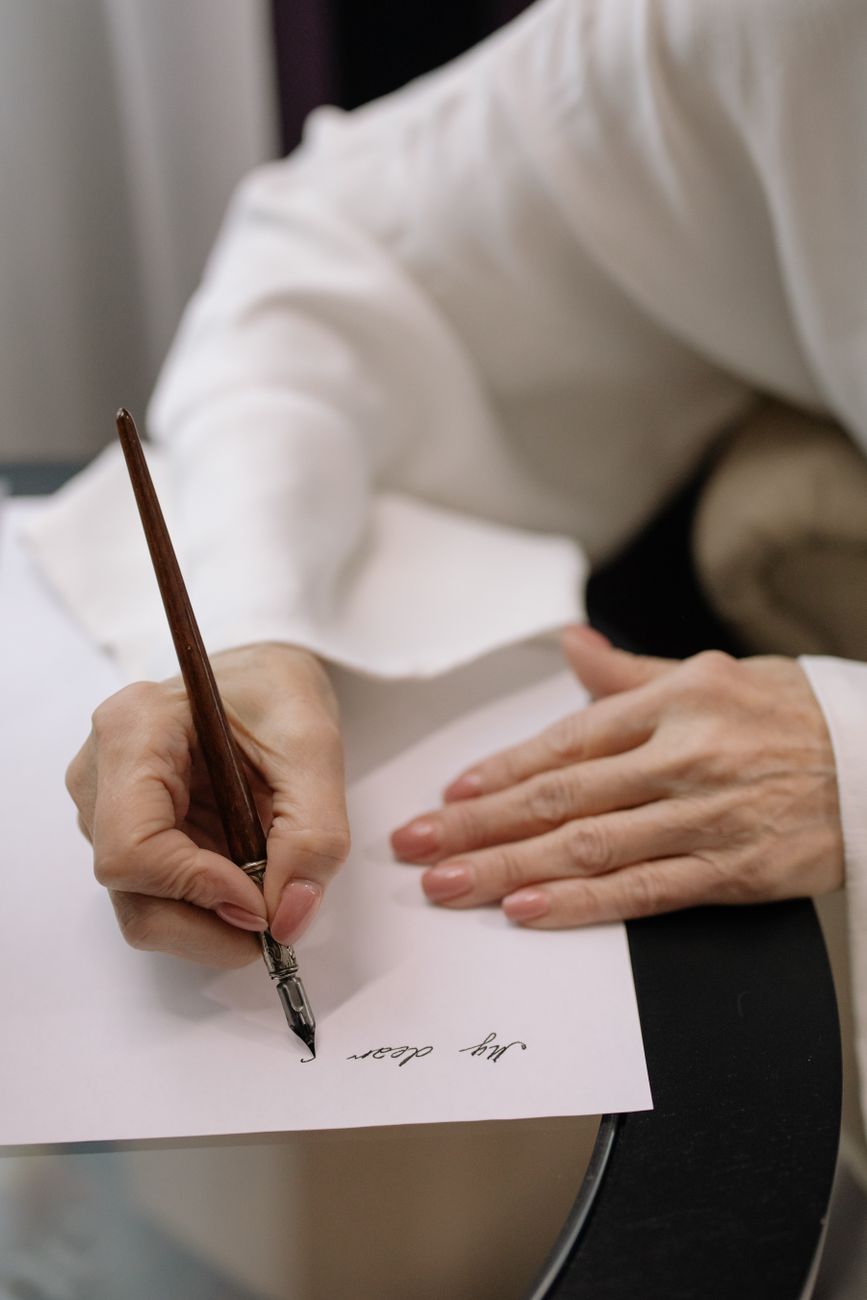
A hand-written letter is a beautiful way to communicate. The choice of paper, the shape and placement of the words, the color of the ink, are all qualities that cannot be reproduced by a text or email. Just as we wouldn’t want to replace the sound of a person’s voice with a generated computer message, it would be sad to lose the ability to send someone a letter or card through the mail.

BOOK SALES STRONG
Photo by GirlvsGlobe86 on Pexels.com

The crusade against paper and ink spread to the world of publishing. For several years I heard dire reports that it was only a matter of time before people stopped purchasing traditional books. It was predicted consumers would read only on digital devices or they’d listen to books on tape. Books would soon become extinct.

It’s entertaining to listen to a book read to me while I fold laundry or drive. Convenient to read stories on an electronic tablet. But nothing can replace the heft and weight of paper and the thrill of physically turning pages. Printed books still have their fans. In 2026 book sales are holding their own, hovering at approximately 762 million to over 3 billion total units across a combination of backlist and frontlist categories.

A phone call, a video chat, messaging and email help keep us connected, but a letter is something physical to hold and touch. If you haven’t sent a card or a letter in a while to someone you miss, maybe it’s time to give it a try. I keep a collection of cards inside my desk, along with a roll of stamps. I challenge myself to write something good when I press my pen down on the thick card paper.

WRITING ON PAPER

It’s tempting to always use a keyboard. If you don’t like the initial word choices you can easily erase them. But if you are writing creatively, it can be freeing not to edit, just to keep moving forward. Sometimes you discover things about yourself when you let your thoughts flow first and edit later.

Many writers complain about “Writer’s Block.” They become obsessed with perfection. Frozen by the need to edit each word they write nothing. Think of your initial sentences as warm-up exercises. Ultimately you may decide to delete them but the process of writing them down on paper helps you get to where you need to go.

Keep a notebook and use it. Expect that everything inside that notebook is a rough draft. Your words. Own them.

WRITING PROMPT
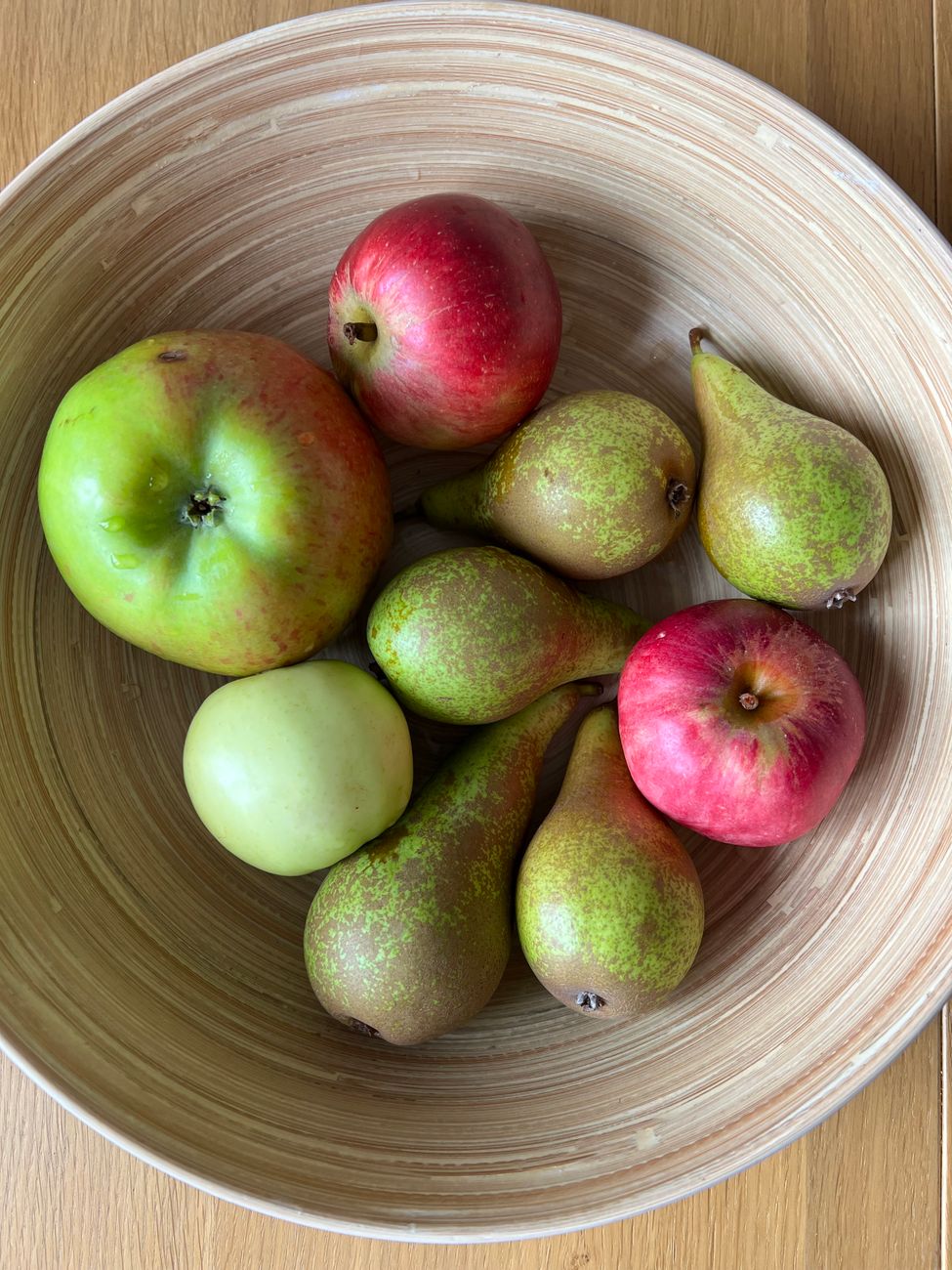
Photo by Luca Volpe Productions on Pexels.com

CHOOSE AN OBJECT IN THE ROOM. Write a story about that object, the very first thing that comes into your mind. The apple in the bowl is in love with the pear next to it. The story of how your favorite mug got its chip on the inside of the handle. USE PEN AND PAPER.  After you write your initial draft then you can revise. Delete the words and sentences you wish. Focus on surprise, suspense, and description. Discard adverbs. Maybe you have created something good.

You have one week left to submit a piece of prose or poem under 500 words to Instant Noodles Literary Magazine https://instantnoodleslitmag.com/submission-guidelines/. For other submission opportunities, check out https://duotrope.com/duosuma/submit/opportunities/

Sign up to follow Old Scratch Press each time we post and follow us on Facebook. Don’t forget to buy those pads of paper, a spiral bound notebook works best, and thank you for reading!

P. S. It doesn’t matter whether you lean to the left or the right, reliable mail delivery is important. This election cycle, the mid-terms, more than 19 million Americans have returned mail ballots. More Americans than ever this year have taken advantage of Early Voting. If you are a U.S. Citizen , don’t forget to vote. The official voting day is November 3rd. In my state of Maryland you can even use a paper ballot and mark it with a black pen!
Exploring Horror Writing: A Q&A with R. David Fulcher

We learn from asking questions, and what better way to explore the craft of writing than through an engaging Q&A with an author! This month the author I’m interviewing is R. David Fulcher who happens to be a member of the Old Scratch Press Poetry and Short Form Collective.

R. David Fulcher is a talented author with multiple books to his name. His most recent work, a captivating short story collection titled THE PUMPKIN KING AND OTHER TALES OF TERROR, showcases his passion for storytelling. A writer of both poetry and prose, he deeply loves speculative fiction, particularly science fiction and horror. You can explore more of his work on his blog at Rdavidfulcher.com.

This is the perfect month—the season of ghosts and goblins—to delve into the exciting craft of writing horror. Most of my questions in this post will focus on the intriguing insights from THE PUMPKIN KING AND OTHER TALES OF TERROR. Let’s celebrate the art of writing together!

Q: Question

R: Response

R. David Fulcher

Q: As a writer, what is your primary goal when interacting with your readers?

R: As a horror writer, I have two primary goals: 1) Establish an “eerie” atmosphere; and 2) Elicit a physical response in the reader. Yes, I hope to stimulate the readers’ minds as well, but I primarily want to elicit fear – a racing pulse, the small hairs standing up on the back of your neck, a shiver in your spine – only good horror tales have this effect.

Q: Was there a specific moment you remember, perhaps an experience that spurred you on to want to write this particular book?

R: The Pumpkin King and Other Tales of Terror (and the follow-up volume “Asteroid 6 and Other Tales of Cosmic Horror”) is sort of a “greatest hits” collection of my short stories, so unlike a traditional novel the stories were developed over many years and inspired by many moments and experiences throughout my life.

To give a sense of the age of some of the stories, the title story “The Pumpkin King” first appeared in a small press magazine entitled Mausoleum back in 2001!  Of course, all the stories have been heavily revised in the new book.

To provide an experience that spurred me to write a particular story, “Castle Marienburg” was inspired by a tour of that very castle during a visit to Germany in college.

Q: As both a horror writer and a poet, how has Edgar Allen Poe influenced your work?

R: In a way, Edgar Allen Poe led me to my genre. My high school English teacher taught a semester on Poe, and I was hooked.  I started writing dark, gothic short stories that day after school and submitting them to small press magazines shortly thereafter.

Q: Writing poetry and writing prose, how has the two different types of genres influenced each other in your writing?

R: My love for both poetry and prose has caused me to experiment with inserting sequences of poetry into my fiction.  Some examples of my stories that include embedded poems are “A Night Out with Mr. Bones”, “The Faerie Lights”, and “All Across the Mountain”.

Q: Did you work alone or did you rely on some feedback from others?

R: I initially write on my own, but I really enjoy it when people close to me review my work and give feedback on it.  For example, my brother Dale helped proofread the manuscript for The Pumpkin King and Other Tales of Terror, and after reading my short story “Asteroid 6” my wife Lisa was really impressed with the tale, so I was inspired to title my second volume coming out this Fall as “Asteroid 6 and Other Tales of Cosmic Horror”.

Of course, my publishers David and Dianne are also tremendous editors and their feedback has been essential to my work.

Q:Do you imagine you are writing for a specific person or a certain audience?

R: No specific audience. I will say that my writing is almost always in the realm of the fantastic, so fans of my work must be able to “suspend their disbelief” and just go along for the ride, trusting me to take them to a magical, almost unbelievable ending, even if all the facts don’t line up with reality. I think fans of hard science-fiction (Isaac Asimov, etc.) will have a hard time enjoying my work.

Q: How do you approach revision?

R:This goes back to things I’d tell my former self.  I used to put down the pen (yes, I write my stories out long-hand!) after a long, intense burst of writing (sometimes an entire story in a single sitting), push the manuscript back on the desk with a smile, and say “Perfect!”

I would then immediately submit the tale for publication, only to receive rejection after rejection, never understanding why.

I’ve finally learned that being a professional writer means spending almost twice the amount of time revising your work as you spent writing it in the first place.  So I approach it like work. I allocate time for editing/proofreading, I set deadlines, and I hold myself to them. The difference between my original manuscript written after a burst of artistic inspiration and the manuscript after several rounds of revision is often night and day.

Q: If you could give advice to your younger self, what would you want to tell them?

R: I’d remind my younger self that the success of a book is up to me. I used to self-publish with AuthorHouse (formerly 1st Books) and believed that getting my book on Amazon and buying the publisher’s “marketing kit” would instantly propel me to fame and the bestseller’s list.  I have learned the hard way over the years this is not the case. Publishing the book is just Step 1.  The real work is in the marking and promotion.

Q: How did you find your publisher or did they find you?

R: David and Dianne of Devil’s Party Press (now Current Words Publishing) met at the Indie Lit Fest at Frostburg State University in Frostburg, MD.  At the time they were accepting submissions for one of their Halloween Party anthologies and provided me with the information.  I submitted and was accepted. The rest as they say is history! 

Q: Do you have a specific horror story favorite you’ve read?

R: Several novels by modern horror writers have had a tremendous influence on my writing.  They include “Something Wicked This Way Comes” by Ray Bradbury, “The Tommyknockers” by Stephen King, and “HIdeaway” by Dean Koontz.

In your own portfolio, a story you are particularly proud of?

R: I have a few favorites among my stories that don’t always correlate to fan favorites.  The first is “Castle Marienburg”, which was originally titled “Eyes in the Night”. A horror editor in the small press called it one of the best horror stories he had ever read, which was very satisfying. Others include “Spectra’s Masterpiece”, a science fiction story about AI published back in the early 2000’s well before AI became a commonplace topic, and “The Land Spider” in the way that it incorporates native American mythology.

Q: Do you have a “day job” to help pay for your writing habit, and it so, has it impacted in any way your writing?

R: During my day job I work as an IT Contractor.  My work with computers has spilled into my fiction with my stories “ELECTRIC”, where a boy becomes one with his home computer, and “The Witch Toaster,” where a group of programmers within an IT Department must battle supernatural forces.

Thank you for reading and visit the Old Scratch Press Website to learn more about our authors and upcoming publications.