Why I Still Love Literary Magazines

One of the joys of literary magazines is that they introduce us to work we might never have sought out on our own.

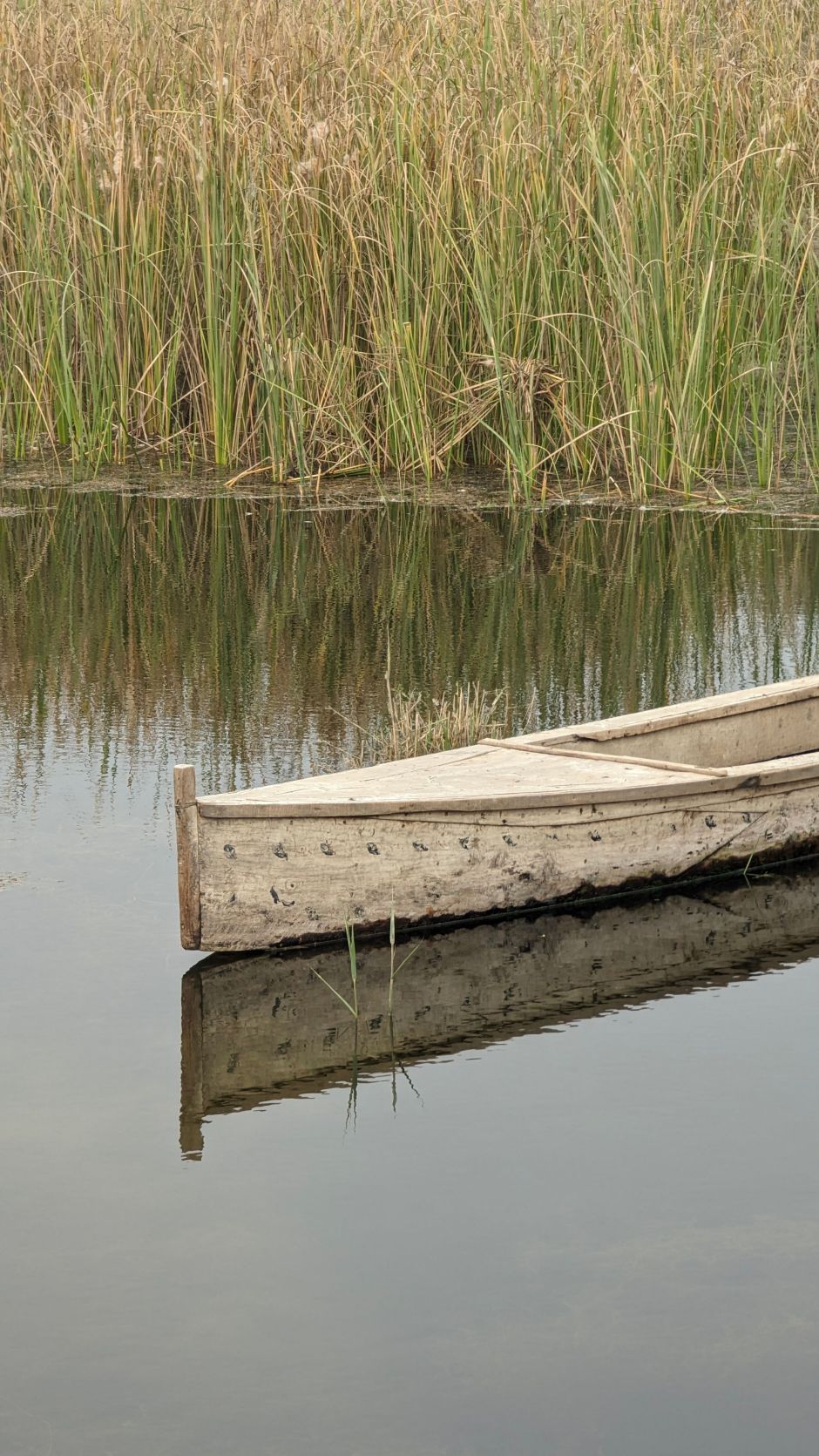
If someone had asked me whether I was looking for a poem about a pine-bark boat carrying a birthday-candle across a marsh under an equinox moon, I probably would have said no.

And yet here I am thinking about exactly that poem.

Morgan Golladay’s “Equinox Moon,” published in Instant Noodles Literary Magazine, is the kind of poem that reminds me why I keep returning to literary journals. It creates an entire world in just a few lines. We feel the cold leaching through boots and mittens. We see the still marsh. We watch a tiny handmade boat drift into the darkness carrying a small flame.

What I admire most is the poem’s quiet confidence. Nothing dramatic happens. There is no great revelation, no sudden twist. Instead, the poem trusts observation. It trusts atmosphere. It trusts the reader.

One image in particular stayed with me:

The line works beautifully within the scene, but it also feels larger than the poem itself. We have all experienced moments when something small, a kindness, a memory, a friend, a poem, becomes enough to carry us through a dark stretch of life.

That ability to suggest more than it says is one of poetry’s great strengths.

Reading a little about Golladay afterward made the poem make even more sense. She has said that poetry works best when it is heard and that it should be concise, simple, and tight. “Equinox Moon” embodies that philosophy. Every image earns its place. Nothing feels wasted.

It also reminds me that literary magazines are not simply collections of writing. They are collections of discoveries. Every issue offers readers the opportunity to encounter voices, perspectives, and images they might otherwise miss.

That’s certainly what happened to me here.

If you haven’t visited Instant Noodles Literary Magazine recently, I encourage you to spend some time with the current issue. You’ll find poetry, fiction, nonfiction, humor, and artwork from writers and artists working in a wide variety of styles and genres.

You may come for one piece and leave thinking about another entirely.

That’s part of the magic.

Have you discovered a poem recently that stayed with you long after you finished reading it? What poem was it?

A Ghost Ship, a Revenge Tale, and a Perfect Ending

Every once in a while, a piece lands in Instant Noodles Literary Magazine that reminds me exactly why I enjoy reading short fiction.

John Tures’s “Lex Talionis” has everything I could want in a flash piece: a ghost ship, naval warfare, a dash of history, supernatural revenge, and an ending that lands exactly where it should.

Set during the War of 1812, the story follows a British frigate pursuing what appears to be an American privateer. The captain dismisses warnings that the vessel ahead may be something far more dangerous than an enemy ship. Unfortunately for him, ghost stories have a way of becoming real at exactly the wrong moment.

One of the pleasures of flash fiction is watching a writer establish a world, create tension, and deliver a satisfying payoff in only a few hundred words. Tures accomplishes all three. The story moves quickly, but it never feels rushed. Instead, it unfolds like a campfire tale told by someone who knows exactly when to reveal the next detail.

I was also drawn to the historical setting. The War of 1812 doesn’t receive nearly as much attention in fiction as the American Revolution or the Civil War, which makes it fertile ground for storytelling. Add a phantom privateer seeking revenge on the British Navy, and you have a premise that immediately grabbed my attention.

The title is a clever touch as well. Lex talionis is a Latin phrase often translated as “the law of retaliation” or “an eye for an eye.” By the time the story reaches its conclusion, readers will understand exactly why that title was chosen.

One of the things I enjoy most about literary magazines is discovering work I might never have found otherwise. Every issue introduces me to new voices, new ideas, and occasionally a story that simply makes me smile because it delivers exactly what it promises.

“Lex Talionis” was one of those stories.

If you enjoy historical fiction, ghost stories, maritime adventures, or simply a well-executed piece of flash fiction, I encourage you to give it a read. Just remember: if an experienced sailor tells you not to chase the ghost ship, you should probably listen!

Have you gotten to peruse Boats Planes Cars and Trains yet? What was your favorite piece?


See John read “Lex Talionis”

What Is miniMAG, and Why Old Scratch Press Is Stepping Into Its Pages?

If you’ve never encountered miniMAG before, it’s a literary space built around immediacy, intensity, and voice.

Known for publishing short, powerful work, miniMAG has created a home for writing that lands quickly and lingers. It’s a platform that embraces experimentation, emerging voices, and pieces that don’t always fit neatly into traditional categories. The emphasis has often been on brevity, but more importantly, on impact.

Which is exactly why it’s such an exciting space for Old Scratch Press to step into.

For this upcoming issue, we’re not curating the work. We are the work.

Old Scratch Press is taking over the issue as contributing writers and artists, bringing a collection that reflects the range of what we do. That includes longer pieces alongside shorter ones, visual work alongside written, and voices that move between forms rather than staying confined to one.

This isn’t about fitting into a format. It’s about expanding it.

You’ll find work that holds tension, work that experiments, work that stretches. You’ll find pieces that are immediate and pieces that take their time. And yes, you’ll find writing that pushes beyond the expectation of what “mini” might suggest, and art as well. Many of us make with words and with other mediums too.

At Old Scratch Press, we care deeply about voice, about risk, and about creating space for work that feels alive on the page. This issue of miniMAG gives us the opportunity to bring that energy into a platform already known for bold, concentrated storytelling, and to widen the lens just a bit while we’re there.

We’re proud to be part of it.

Stay tuned for the release date.

Final Two Meet and Greets for New Members

Are you a flash fiction, poetry, or short memoir writer with a finished manuscript—or one nearly ready to go? Old Scratch Press, a collaborative collective supported by Current Words Publishing, is now accepting applications for two new members to join us in 2026.

We’re a tight-knit, skill-sharing group that publishes each other’s books, runs the lit mag Instant Noodles, and supports each other with editing, design, marketing, and community.

We are hosting meet and greets on August 6th and August 13. To be invited you have to send a small sample. There are no fees to submit, and there are no fees to join, and there are no fees to publish your collection. There are no fees. Who else you gonna find to collaborate with who dedicates an entire issue of a literary magazine to that most magical of elixirs… gravy?
If you’re eager to grow as a writer and be part of something creative and weird and wonderful, we’d love to meet you.

👉 Apply with a sample here:
https://duotrope.com/duosuma/submit/form.aspx?id=6idG3Mj-O0jFm-15Y7r2p

Spots are limited. Let’s make good things together.