The Person We Think We See

One of poetry’s great strengths is its ability to capture a moment of recognition.

Or, in some cases, a moment of misrecognition.

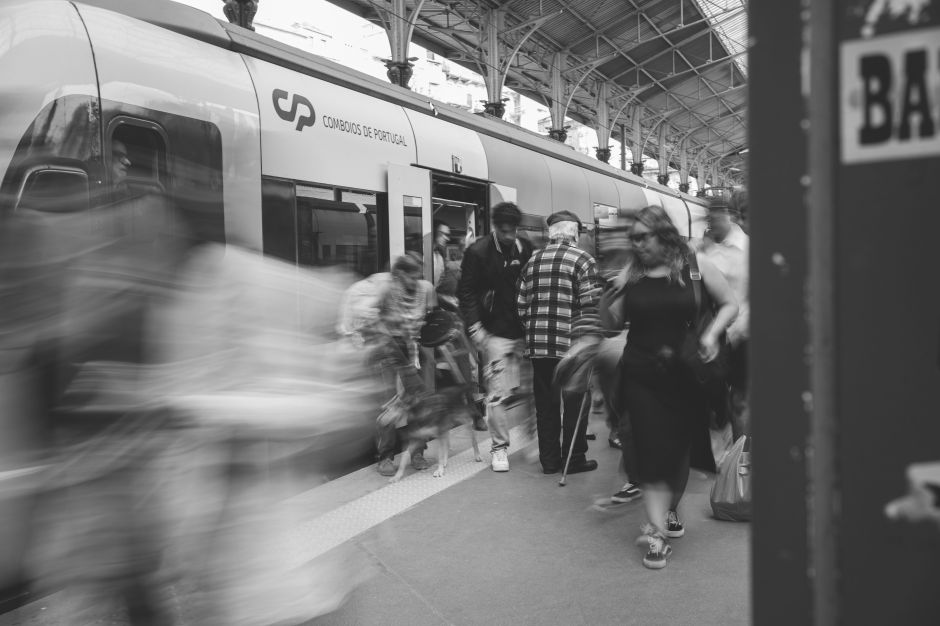
Toni Artuso’s “To the Woman Waiting on the Train Station Platform” begins with observation. The speaker notices a woman dressed in striking over-the-knee boots, a miniskirt, and a dark jacket. The details are vivid. The woman commands attention. She appears confident, glamorous, and perhaps a little intimidating.

Like the speaker, readers begin constructing a story.

Who is she?

Where is she going?

What kind of person dresses like this on a cold day?

The poem invites us to ask these questions while quietly reminding us that we don’t actually know the answers.

What follows is a wonderful example of how poetry can examine the assumptions we make about strangers. We see someone for a few moments and immediately begin filling in the blanks. Clothing becomes personality. Posture becomes character. Appearance becomes identity.

Then comes the turn.

The woman looks back.

Suddenly, the speaker notices traces of adolescent acne beneath carefully applied makeup. It is a small detail, but it changes everything. The glamorous stranger becomes a human being with a history. The mystery remains, but the distance narrows.

What I admire about the poem is its restraint. It never tells us what to think about the woman. It simply shows us how quickly we create stories about people we do not know and how easily those stories can be disrupted by a single unexpected detail.

In only a few lines, Artuso moves from attraction and curiosity to something deeper: empathy.

The poem also feels particularly well suited to its author. Toni Artuso is an emerging, and as she humorously describes herself, “aging” trans writer from Salem, Massachusetts. Her work has appeared in numerous publications, including The Christian Science MonitorThe Ekphrastic ReviewSalamander, and Honeyguide Literary Magazine, which nominated one of her villanelles for both a Pushcart Prize and Best of the Net.

Reading this poem, I found myself thinking about how often we mistake appearance for understanding. We notice what is visible and assume we know the rest. Yet every person carries experiences, struggles, triumphs, and insecurities that remain hidden from view.

The woman on the platform remains largely unknown to us. That is precisely why the poem succeeds. Artuso allows her to remain a stranger while reminding us that strangers are always more complicated than the stories we tell ourselves about them.

Long after I finished reading the poem, I found myself returning to that final image. Not because it answers the mystery of who the woman is, but because it reminds us how much of every human being remains unseen.

Have you ever imagined the life of a stranger?

There are so many more wonderful works to read, listen to, and see. Visit Instant Noodles!

You Might Already Have a Poet Laureate

When most people hear the term “Poet Laureate,” they think of a nationally recognized poet appointed to represent poetry across an entire country. What many writers don’t realize is that poet laureates exist at many levels, including states, cities, counties, tribal nations, universities, and even local arts organizations.

In fact, your community may already have a Poet Laureate.

The word laureate comes from the laurel wreaths awarded to distinguished individuals in ancient Greece and Rome. Over time, the term became associated with artists and writers who were formally recognized for their contributions. Today, a Poet Laureate is generally a poet selected to serve as an ambassador for poetry within a particular community.

While the United States Poet Laureate receives the most attention, local poet laureates often have a more direct impact on everyday readers and writers. Their responsibilities may include giving public readings, visiting schools, organizing workshops, promoting literacy programs, supporting local literary events, and encouraging people to engage with poetry.

The specifics vary from one community to another. A state Poet Laureate may travel widely throughout the state, while a city Poet Laureate might focus on local schools, libraries, and community events. Some positions are largely ceremonial. Others involve active outreach and public programming.

For poets, these positions are worth paying attention to for several reasons.

First, local poet laureates are often deeply connected to the literary life of their communities. They may organize readings, maintain event calendars, promote local writers, or create opportunities for poets to share their work.

Second, poet laureate programs frequently support projects that benefit writers and readers alike. Community anthologies, public poetry installations, workshops, festivals, and educational programs often emerge from laureate initiatives.

Third, some poets may eventually wish to pursue a laureate position themselves.

Many writers assume these positions are reserved for nationally known poets. While experience and publication history certainly help, local laureate programs often seek poets who are engaged with their communities and interested in promoting poetry. The ideal candidate is not always the most famous poet. Often, it is someone willing to serve as an advocate for literature and the arts.

Selection processes vary widely. Some poet laureates are appointed by elected officials, arts councils, libraries, or cultural commissions. Others are chosen by review committees after an open application process. In many communities, poets may nominate themselves, while in others they must be nominated by another individual or organization.

If the idea interests you, start by researching your local area. Search for your state’s Poet Laureate program, check with your city or county arts commission, visit local library websites, and explore arts organizations in your region. Even if your community does not currently have a poet laureate program, learning how neighboring communities operate theirs can be illuminating.

You may also discover opportunities to serve on committees, volunteer at literary events, participate in public readings, or support initiatives created by current laureates. These experiences can help you become more involved in your local literary community while building relationships with other writers and arts advocates.

Perhaps the most important lesson is that poetry exists far beyond books and literary journals. Poet laureates remind us that poetry can be part of civic life, education, public art, and community engagement. They help bring poetry into places where readers might not otherwise encounter it.

So here’s a challenge: spend a few minutes researching your community. Does your state have a Poet Laureate? Does your city? Your county? A nearby university? You may discover that a poetry ambassador is already working in your area, creating opportunities for writers and readers alike.

And if no such program exists, perhaps that’s a conversation worth starting.

We’d also love to hear what you discover. Does your state, city, county, tribal nation, or university have a Poet Laureate? What kinds of programs, readings, workshops, or literary initiatives are they involved in? Share what you find in the comments. One of the joys of the poetry community is discovering the many different ways poetry is supported across the country, and your local laureate may inspire poets in places far beyond your own backyard.


Virginia Watts

Virginia Watts is the author of poetry and stories found in The MacGuffin, Epiphany, CRAFT, The Florida Review, Reed Magazine, Pithead Chapel, Eclectica Magazine among others. She has been nominated four times for a Pushcart Prize. Her debut short story collection Echoes from the Hocker House was short listed for 2024 Eric Hoffer Grand Prize, selected as one of the Best Indie Books of 2023 by Kirkus Book Reviews, and won third place in the 2024 Feathered Quill Book Awards. Please visit her.

Virginia’s new book is now available from Old Scratch Press:

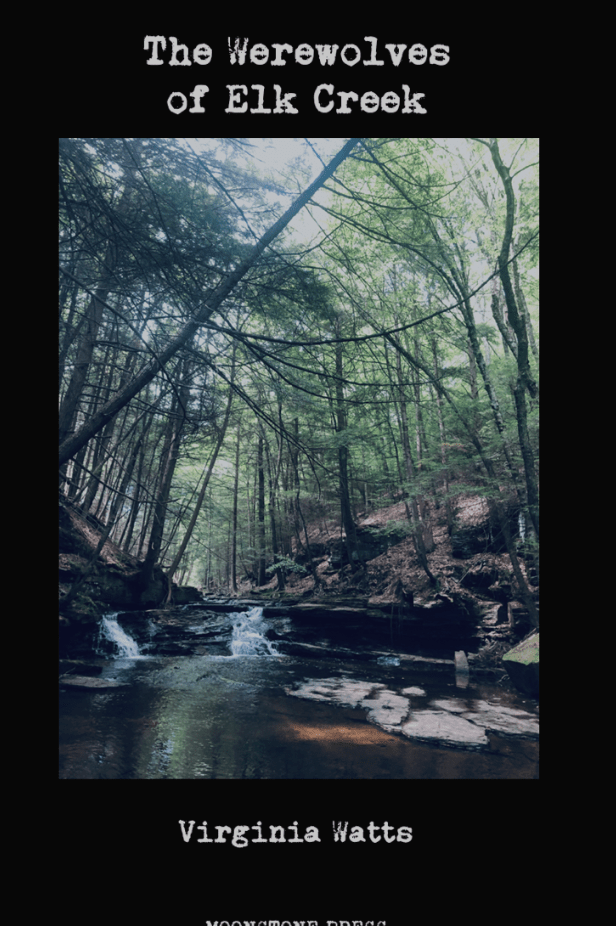
Her prior poetry chapbooks Shot Full of Holes and The Werewolves of Elk Creek 

 are available from Moonstone Press. And her debut short story collection Echoes from the Hocker House is not to be missed!

Thank God I’ll Never Be Famous Enough for a Biography.

This week in the New York Times there is an article about Mark Oppenheimer writing Judy Blume’s biography. When he began the project, so he says, she liked him and gave him access to her life and her circle, etc. When he sent her the draft, she no longer liked him or the book he was writing about her. Apparently she sent him quite a big pile of notes, and contact ceased soon after that. He published the book anyway. He, and book’s narrator, Molly Ringwald, feel like Judy has to put up with his book, and that Mark did a fine job. According to the NYT article, Molly said, “There might be moments that Judy doesn’t like or agree with, but overall I think it’s a respectful treatment of her and her literary significance.” And, “If Mark didn’t show Judy’s flaws or humanity, it would be hard to feel invested.”

At what point does your life stop being your own? I might argue it’s when you become a parent. But, eventually they grow up, and you get to pivot back to yourself somewhat. Mark could have written the book with, or without, Judy’s help, and that’s the danger of being that level of author, but the fact that she gave him permission at first, and then was unhappy with what he made of her life, gives me pause. How much do we own our own life story?

The NYT made the main photo of the piece one of Mark sitting in a bunk bed. I don’t like this. He’s not at the age, or in life circumstances where he would actually be the person who sleeps in that bed. To me it is a ploy to make him look more innocent. I don’t think he is. I’m disappointed in Molly. For full disclosure, I read a bit of Judy Blume as a kid, from Margaret to some of the adult books, most of them for the sexy bits, honestly. Hey, I was in middle school. But, with apologies to Judy, I have seldom thought of her since. I tried reading Margaret to my daughter when she was in middle school, and we both found it didn’t age well. Plus, my daughter was not raised with the same religiosity I was. So there’s that for the longevity of the book in my life. And anybody can write a biography of anybody. The trick, like it is with our own books, is to get people to read it.

Still, do Mark, Molly, and his publishing company have the right to own Judy’s story, to make the truth of Judy’s life Mark’s version of the truth?

I say no. I say this is another woman losing agency over her own body, life, and body of work, to a man and a corporation. And it seems her only recourse might be for Judy to write her autobiography, to set the record straight. I cannot imagine anything as boring as writing out my own life story. And believe you me, I’ve had a fascinating life. Ha! Whether I have or I haven’t, I’m not ready to relive it all like I’ve had a near death experience. No, no no.

So, whose life is it anyway?

I would love to hear your thoughts.


Dianne Pearce is the chief editor and bottle washer at Current Words Publishing, and the half-cocked imaginer behind Old Scratch Press and Instant Noodles. Pearce loves helping writers realize the dream of having their work published. I mean she is really crazy about doing that for some reason. To that end, to join in the fray, to look at the thing from the other side, to stand in another’s shoes, and all of those things, she is fully expecting and promising to publish her first collection of poetry, In the Cancer Cafeteria, spring of 2026. Please don’t hold your breath. For very long. Happy 2026!

What Do You Think of That “Poet Voice?” You Know the One.

If you’ve ever been to a poetry reading, you’ve probably heard it. The slow cadence. The dramatic pauses. The slightly mystical tone. The voice that signals: I am now doing Poetry.

In fact, when I think about that sentence read in “poetry voice” it would be read like this:

The voice
that signals
I am now
doing
poetry

And each line would end with an up tone, as if the performer was asking a question.

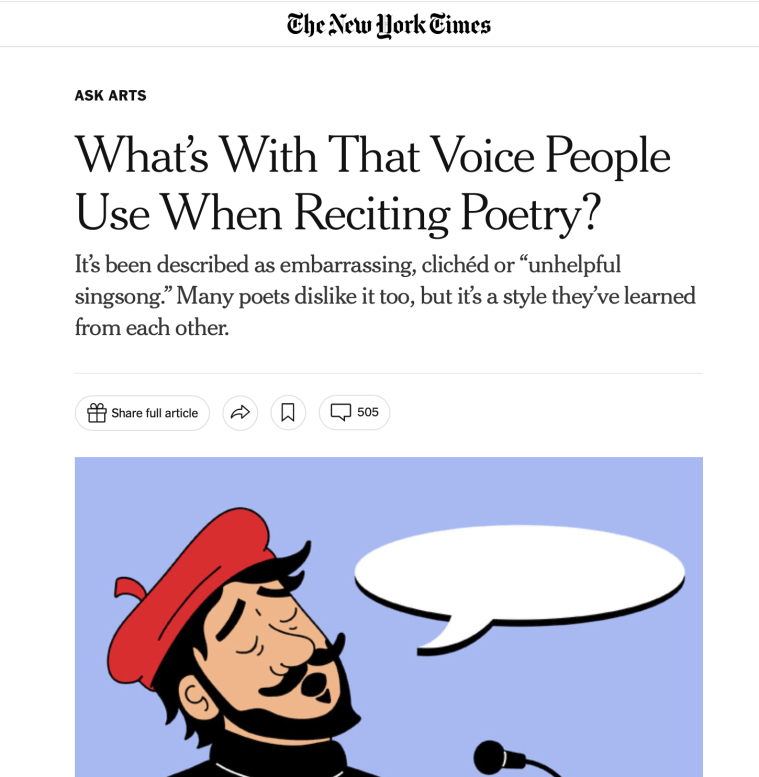
The recent New York Times article digs into this phenomenon, often called the “poet voice,” and asks why many poets fall into the same stylized way of reading their work aloud.

For some listeners, the article says, that way of reading feels comforting and familiar. For others, awkward, distancing, or makes the poem feel like a performance ritual rather than a piece of language meant to connect.

The article points out something important: this isn’t just about aesthetics. It’s about how poetry exists in two worlds at once. On the page, poetry is quiet, private, intimate. Out loud, it becomes physical, embodied, communal. Voice, breath, pacing, silence, and tone all reshape meaning. The same poem can feel completely different depending on how it’s read.

And yet, many readings sound strangely similar.

Why?

There’s also a bigger tension here. Poetry has deep roots in oral tradition. Long before books, poetry lived in voices, memory, and storytelling. But modern literary culture often treats performance and “serious writing” as separate worlds. Spoken word, slam, and performance poetry are seen as different categories entirely, even though they’re doing what poetry has always done: using voice to create meaning. They also might sound different, as performance, when compared to how people read on the performance evenings in your MFA program.

I remember, from the first time I saw poets read aloud, at a bar in Philadelphia in the 1990s, thinking that it was weird that many of them read their work in the same way, and wondering why they did.  When I was in my MFA program, and we would read our work at student readings, us poets, fellow students, often read that way. I remember it as mainly the other white women, and that the students and teachers/established visiting poets, could be people who did it. Not that all of them did it, you understand, but that it happened at times among student readers, teacher readers, and visiting poet readers, and it was, in the main, done by my fellow white women. I don’t remember the guys reading that way. I also remember that the teachers (minus a few) and the students in the poetry track were incredibly serious about the writing and performing of poetry. I don’t know that I ever got quite that serious, which is probably a character flaw. You know I’ve got me some of those.

On Threads people are losing their minds about the article (slow news day?) so, let’s talk about it:

• When you hear poetry read aloud, does it deepen your connection to the work or pull you out of it?
• Do you think “poet voice” is a real thing, or just a stereotype we’ve internalized?
• When you hear poetry read aloud, does it deepen your connection to the work or pull you out of it?
• Have you heard “poet voice?”
• How do you read your own work aloud? Casually, dramatically, flat, musical, conversational?
• Should poetry readings sound like performance, conversation, or something else entirely?
• Is hearing the poet’s voice an added layer of meaning, or an intrusion on the reader’s imagination?

Could you….
drop your thoughts….
in the comments?

Hurray for Dr. King~

Langston Hughes, Maya Angelou, Gwendolyn Brooks, Joy Harjo, Claudia Rankine, Ocean Vuong, Elizabeth Acevedo, Terrance Hayes, Frank O’Hara, Audre Lorde, Allen Ginsburg, all poets who have enhanced the canon of American writing with their writing and their diversity. Have you read any of them? Which ones have you tried? Which diverse poet is your favorite? What poem do you like that you can share with us?

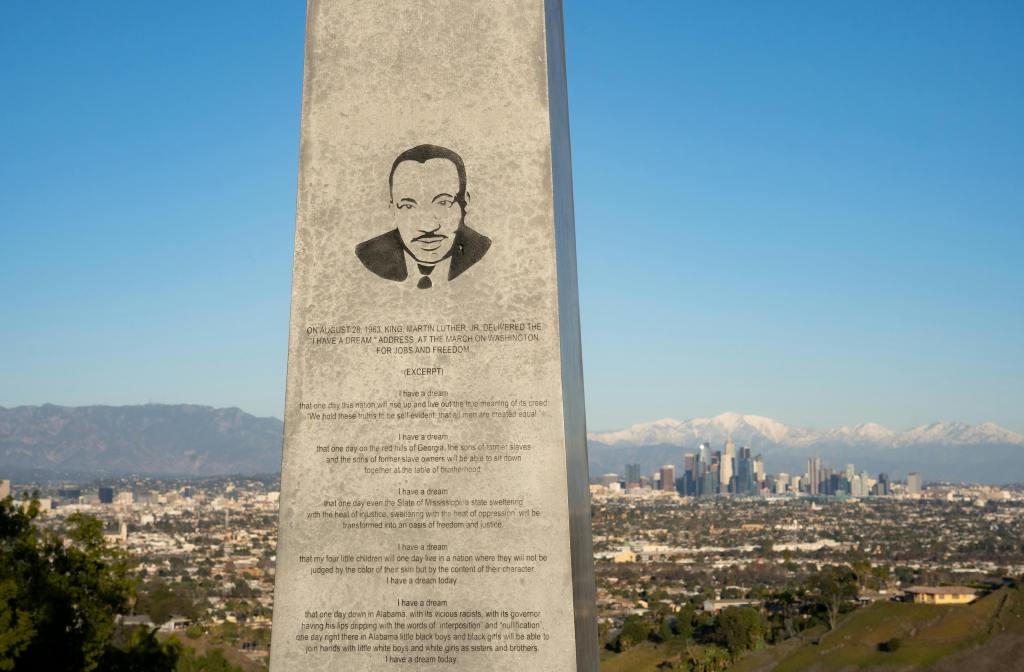
Did you know that Dr. Martin Luther King Jr. believed deeply in the power of voices, especially voices that had been ignored, dismissed, or pushed aside? That belief matters just as much in literature as it does anywhere else.

The literary canon is not a fixed monument. It is a living body of work that grows stronger, more truthful, and more beautiful when it includes diverse authors and perspectives. American literature is incomplete without the poets and writers who reflect the full range of American experience. Reading these voices does not diminish the canon. It expands it, strengthens it, and makes it more honest.

It may seem as if diverse authors exist on the margins of literature, but they don’t. They are central to it. They shape language, challenge assumptions, and help us see both history and the present more clearly. I have enjoyed so many authors who are so different from me, especially when we count the wealth of male writers we read in school. They are all wonderful writers, and I am also glad school now includes more writers who look like me, as well as writers who look like my daughter and my friends.

So today, as we celebrate Dr. King, let’s also celebrate the voices that widen our understanding of who we are. Pick up a book. Read a poem. Listen closely to someone, anyone, different from you, or simply listen to someone in need. How can you share your light?

On a slightly off-topic note, I was visiting my sister this weekend, and we each chose a stand up special to watch that is a pretty new special. I chose Mohaned Elshieky’s special No Need to Address Me, and my sister chose Marcello Hernandez’s special American Boy. Both were incredibly funny. Comedy benefits from diversity too.

I am happy for this day. Hurray for Dr. King and his marvelous legacy. Hurray for all poets. And hurray for a literary world that makes room for all of us.

~Dianne


Dianne Pearce is the chief editor and bottle washer at Current Words Publishing, and the half-cocked imaginer behind Old Scratch Press and Instant Noodles. Pearce loves helping writers realize the dream of having their work published. I mean she is really crazy about doing that for some reason. To that end, to join in the fray, to look at the thing from the other side, to stand in another’s shoes, and all of those things, she is fully expecting and promising to publish her first collection of poetry, In the Cancer Cafeteria, spring of 2026. Please don’t hold your breath. For very long. Happy 2026!

“Pink Dress” from the Forthcoming ~ In the Cancer Cafeteria~


Happy Saturday everyone.

I’m working on bringing out my poetry collection this year, and I thought I’d share one of my poems with you.
For the past year I’ve been traveling with my little sister to her cancer appointments. Luckily I do not have cancer, but I am cancer-adjacent, and that has its own challenges. When I want to say worrying things, when I read case studies, which I do, when I am by myself as she naps through a treatment and I wait, when I drive in and out of West Hollywood alone, sometimes in the threes and fours in the morning depending on treatment time, and I ruminate, I try to put it on paper, rather than on my sister. I’m also a clothes lover and a people watcher from back in junior high with my then boyfriend and bestie Joe Perna. We called ourselves the fashion police in 7th grade, like we were such good dressers. Joe and I observed details, and made guesses based on what we saw. In general the thing I am most curious about is the lives of other people. I think I am (possibly) overly empathetic, and I imagine stories for strangers all day long. I also tend to notice the small things happening around me. As I sit and wait for my sister, or drive alone, or struggle to make small talk (as I do without cancer! I have never been good at it), my brain is humming away wondering about people, and making stories to go with them, and wondering if their cancer is curable and how it will all play out. Most people I see only once, even though we go the same time and day quite often. It is my curse to want to know everything, and to never be able to know, purely because I am a nosy so-and-so. When cancer comes to town your ability to be quiet in the never-knowing is mightily tested.

I also don’t want this to be a totally maudlin book about being upset about my sister. I don’t want it to be a book about my sister. Though I love her dearly, her story is hers, and I don’t want to steal it, which would add, in my view, insult to injury. It’s important when you write about real-live people who are not famous people that you be considerate and kind. I am not able to do that when talking if a joke comes to mind. If I think of something funny about something you’ve said or how you look, etc., it’s coming out unfiltered, that second, and I’m going to laugh. Yeah. Kind of a shitty trait, but what do they say, “At least all the trauma made me hysterical.” Yup. But when I write about anyone who I will see again, it is important to me to serve my needs while not disregarding theirs. There are compromises. My sister may not want me announcing she has cancer, for example, but she has told the people in her life, and I need to be able to discuss it too, so she loses that bit of control, just another thing cancer steals, privacy. For that she has to allow me the book as a coping mechanism. Sorry sis.

Another thing to note, as I assume most people who read this blog are authors: you have to be careful where you put your work before you publish your book. I am publishing my book through OSP, so I can put this poem here, and OSP will not disallow it from the book. If another publisher was publishing my book, they might not be happy for me to stick a poem out in public on a blog. They may or may not be happy for me to publish a poem somewhere in advance, because that anthology or lit mag where the poem is published may hold rights that conflict with the publishing company then using the poem when publishing my book. So there’s that. You have to be careful. You can always post a question here, and one of us will try to answer it. In fact, I’ll run a monthly post that offers a chance for you to ask questions, and reminds you that you can do it.

This book has a theme that runs through the whole book. Some collections do have a theme, but often the theme is that all the poems are written by the same person. The theme in my book is cancer, but, more drilled down, my reactions to cancer, my observations on the cancer experience, which I am holding together in the idea of the cafeteria at the clinic. People who are going through cancer as patients or support are often in the cafeteria as a place to stop being wrapped up in the cancer events and procedures. It’s the downtime place, and, because of that, people drop their masks a bit there. I am not telling anyone’s secrets as much as I am interpreting what I see, which changes the observation from what it is, to what I see. There is much intrusion from observers, so don’t worry that I am revealing anyone’s truths besides my own.

I have trouble tapping a poem with my scepter and declaring it complete. I expect many poets are the same. Sometimes a poem comes out almost fully-formed, but most still have growing and shrinking to do.

I write longer poems. I write narrative poems. I tend to write personal poems. Sometimes my poems are true, and sometimes they are true in the sense that they are true, for me. That doesn’t mean they would qualify as legally true. If the person was a brunette, and brunette doesn’t work, guess what, red hair is what I am going to write.

This poem, “Pink Dress,” is pretty much done. I will say it is an uncorrected proof here, as I may change it a bit before it hits the book galley. But it feels good to me as it is, and I was able to read it aloud to myself without having major anxiety, so I feel like it is okay.

The OSP group has become my friends as well as my colleagues, and, based on schedules and etc., we often ask each other to look at each other’s work. That’s part of the deal with this collective. So far I have shared some of my writing for this book with Robert, Anthony, Gabby, and Ginny. I cannot express how much I have appreciated them and their taking the time to give me really helpful, kind, and actionable feedback.

Here, without further ado, is one of the poems destined to be released later this year in the collection, In the Cancer Cafeteria.

Pink Dress

Her pink dress is too tight too short
the old sneakers don’t go
hair twisted up and split
two rolls of mussed-up teddy ears.

He is all belly 
under his big and tall polo 
up top tangled hair needs 
a brush run through
but beard is spun silk. 
He is the one who gets up
moves around
paces because he’s in the cancer cafeteria and who doesn’t pace?

She doesn’t.
She smiles at the screen in her hands.

Whenever he gets up 
he runs his finger down her bicep. 
Her chubby thighs
twitch back at him against the tight pink hem.
The dress is a mini
I can see her cotton crotch and I don’t tell her
because each time he slides his finger down her arm 
her smile goes wicked at the corners 
for a second
as her thighs twitch
call and response
and it’s not my song to sing.

I shut up I pretend I don’t see.

When he manages to sit 
his chair is up against instead of across from
his long tangled curls try to nestle under her neck
wheedle around her earlobes. 
I can’t tell for certain who is victim
who is victim support.
Some secrets are not for me to know.

He needs to move again 
gets up abrupt 
clumsy all the other chairs 
tables reach for his legs
stepping around best he can into the hall
gazing in confusion at the baby grand 
sitting there
playing “Wichita Lineman” by itself
from 1968 
a year him and his girl know only as a number, and not real.

He stares at the piano
rocks on his heels in his shoes as he has rocked since he was five years old 
knees bend out to the sides 
a boy just learning how legs work
walking through a day’s same endless agenda
treatment, wait, consultation, wait, scan, wait. 

Head nodding at Jimmy Webb’s F major D major
he tries to find his way to the tune
gives up, moves back to her
comes in for a landing 
finger trails down and up
bare meaty skin. 
She ripples in response. 
Appearing now on all her bare places
languishing goose pimples 
long only to be released 
to go home 
so two may unzip the tight pink dress together. 


Dianne Pearce is the chief editor and bottle washer at Current Words Publishing, and the half-cocked imaginer behind Old Scratch Press and Instant Noodles. Pearce loves helping writers realize the dream of having their work published. I mean she is really crazy about doing that for some reason. To that end, to join in the fray, to look at the thing from the other side, to stand in another’s shoes, and all of those things, she is fully expecting and promising to publish her first collection of poetry, In the Cancer Cafeteria, spring of 2026. Please don’t hold your breath. For very long. Happy 2026!