Building a Readership: Five Paths for Poets, Path 2.

PATH 2: Literary Journals

Why Literary Journals Still Matter

When poets talk about building a readership, literary journals are often one of the first recommendations they receive. Yet many writers, especially those outside academic circles, wonder whether journals still matter in an age of websites, social media, and self-publishing.

The short answer is yes.

Literary journals remain one of the most accessible ways for poets to introduce their work to new readers, establish publishing credentials, and become part of the broader literary conversation. While publication in a journal rarely leads to instant fame or large sales numbers, it can help create the foundation upon which a readership is built.

For many poets, journals provide something equally important: discovery. Readers who may never have encountered your work otherwise can stumble across a poem in a magazine, become interested in your writing, and begin following your career. Editors, event organizers, workshop leaders, and fellow poets often discover new voices through journals as well.

If you’re new to submissions, finding journals is easier than ever. Resources such as Chill Subs, Duotrope, Poets & Writers, New Pages, and the Community of Literary Magazines and Presses (CLMP) maintain extensive databases of literary magazines and submission opportunities. Many journals also maintain active social media accounts where they announce open reading periods, special themes, and contests.

One of the most common mistakes beginning poets make is submitting without first reading the publication. Whenever possible, spend some time with a journal before sending your work. Read several poems. Pay attention to the styles, themes, and voices the editors seem to favor. Not because you should imitate them, but because you’ll gain a better sense of whether your work is likely to be a good fit.

Many journals now accept submissions through online platforms such as Submittable and Moksha. These systems make it easy to track submissions, but they have also increased competition by making it easier for writers to submit widely. Rejection remains a normal part of the process. Even accomplished poets accumulate large numbers of rejections throughout their careers.

At some point, every poet encounters the question of reading fees. Some journals charge a small fee, often between two and five dollars, to help cover administrative costs, software subscriptions, and staff expenses. Others operate entirely without fees. Opinions vary widely on the practice. Some writers avoid reading fees altogether, while others are comfortable paying modest amounts to support journals they respect.

There is no single correct approach. However, poets should be thoughtful about where they spend their money. A small fee for a well-established publication may be reasonable. Paying large amounts to submit work to unknown organizations is generally less advisable. As with any publishing opportunity, it pays to do a little research before opening your wallet.

Another decision involves print versus digital publications. Some poets strongly prefer print journals because they enjoy seeing their work in a physical publication and because print journals often carry a certain prestige. Others appreciate the accessibility of online journals, where poems can be discovered by readers around the world with a simple click.

The truth is that both formats offer advantages. Print journals provide permanence and a tangible reading experience. Online journals often offer broader reach, searchable archives, and the possibility of sharing links directly with readers. Many respected literary publications now operate in both formats, making the distinction less important than it once was.

It is also worth remembering that publication credits are not merely lines on a résumé. Every journal publication expands your visibility. A handful of well-placed poems can lead to invitations to readings, relationships with editors, opportunities for future publication, and readers who may eventually purchase your collection.

For poets considering a future book project, journal publication can be especially valuable. Individual poems published over time help establish a track record of activity and engagement within the literary community. They can also provide useful feedback about which poems resonate most strongly with readers and editors.

At the same time, don’t fall into the trap of believing that journal publication is the only path to legitimacy. Many excellent poets publish widely in journals. Many others build readership through readings, workshops, social media, teaching, community engagement, or independent publishing. Literary journals are one tool among many.

Ultimately, journals matter because they help connect poems with readers. They provide opportunities for discovery, conversation, and community. For poets seeking to build a readership, submitting to journals remains one of the most practical and effective ways to begin sharing work beyond their immediate circle.

If you’ve been considering submitting your poetry, start small. Find a few journals you genuinely enjoy reading, study their guidelines, and send your work into the world. Every publication began with a first submission, and every poet who appears in a journal today was once a writer nervously pressing “submit” for the very first time.

Building a Readership: Five Paths for Poets, Path 1.

PATH 1: Building a Readership Through Poetry Readings

When poets talk about building an audience, the conversation often turns immediately to social media, websites, and marketing strategies. While those tools can certainly help, many poets overlook one of the oldest and most effective ways to find readers: reading their work aloud.

Poetry began as an oral art form. Long before poems appeared in books, journals, and websites, they were shared through voice and performance. Even today, a strong reading can create a connection that no social media post can match.

Many poets hesitate to participate in readings because they assume they need a published collection, a large following, or years of experience before they are ready. In reality, most reading communities welcome poets at a wide range of experience levels. Open mics, community events, library programs, and local literary gatherings can all provide opportunities to share your work.

If you’re wondering where to begin, start by looking close to home. Libraries, independent bookstores, arts organizations, community colleges, literary festivals, and local writing groups often host readings and open mics. Social media can also help uncover opportunities. Follow poets, literary journals, bookstores, and writing organizations in your region and pay attention to the events they promote. You may discover that there are more opportunities to share your work than you realized.

Don’t overlook virtual events. Organizations such as Poetry Super Highway, The Writers Center, Poets & Writers, and many regional poetry groups regularly host online readings and open mics. Event calendars on Poets & Writers and Eventbrite can also help uncover opportunities throughout the year. Many poets have built meaningful friendships, readerships, and professional connections through virtual events they attended from their own living rooms.

screenshot of poets and writers event calendar

The benefits extend far beyond the reading itself. Every event introduces you to people who care about poetry. You meet other writers, potential readers, organizers, editors, and booksellers. Over time, these connections begin to form a literary community around your work.

Readings can also help you become a stronger poet. A poem that works beautifully on the page may reveal weaknesses when read aloud. Awkward phrasing, confusing transitions, and unnecessary words often become more obvious when spoken. The audience’s reaction can also teach you a great deal about how your work is being received.

One common misconception is that poetry readings only matter if they lead directly to book sales. While selling books is certainly welcome, the larger goal is visibility. Readers are far more likely to remember a poet whose work they have heard than a name they happened to scroll past online. Every reading plants seeds that may grow into future opportunities, whether that means invitations to other events, journal recommendations, workshop connections, or eventual book purchases.

For poets who are shy or nervous, it can help to start small. Attend a reading before signing up to participate. Read a single poem at an open mic. Volunteer to share work at a workshop or community event. Confidence grows with practice, and most poetry audiences are remarkably supportive.

If you have a collection available, bring copies. If you maintain a website, newsletter, or social media account, mention it briefly. Have a simple way for interested readers to stay connected. The goal is not to deliver a sales pitch, but to make it easy for people who enjoyed your work to find you again.

Perhaps most importantly, remember that building a readership happens one reader at a time. Very few poets wake up to discover thousands of devoted followers. Most audiences are built through repeated acts of showing up, sharing work, and participating in the literary community.

A successful poetry reading is not measured solely by the number of books sold or the size of the audience. Sometimes success looks like a conversation after the event, an invitation to read elsewhere, or a single person who tells you that your poem stayed with them long after the evening ended.

Poetry is meant to be read, but it is also meant to be heard. If you’re looking for ways to build a readership, consider stepping up to the microphone. You may discover that your next reader is already sitting in the audience.

Poetry is meant to be read, but it is also meant to be heard. If you’re looking for ways to build a readership, consider stepping up to the microphone. You may discover that your next reader is already sitting in the audience.

Just as importantly, be willing to sit in the audience yourself. Attend readings even when you’re not on the program. Support fellow poets. Listen carefully to their work. Literary communities thrive when writers show up for one another, and some of the most meaningful friendships, opportunities, and collaborations begin simply by being present. The poets who consistently support others often find that support returned when it is their turn to step up to the microphone.

Do you know of a virtual event that readers can apply to? Leave it in the comments, and we’ll share it!

You Might Already Have a Poet Laureate

When most people hear the term “Poet Laureate,” they think of a nationally recognized poet appointed to represent poetry across an entire country. What many writers don’t realize is that poet laureates exist at many levels, including states, cities, counties, tribal nations, universities, and even local arts organizations.

In fact, your community may already have a Poet Laureate.

The word laureate comes from the laurel wreaths awarded to distinguished individuals in ancient Greece and Rome. Over time, the term became associated with artists and writers who were formally recognized for their contributions. Today, a Poet Laureate is generally a poet selected to serve as an ambassador for poetry within a particular community.

While the United States Poet Laureate receives the most attention, local poet laureates often have a more direct impact on everyday readers and writers. Their responsibilities may include giving public readings, visiting schools, organizing workshops, promoting literacy programs, supporting local literary events, and encouraging people to engage with poetry.

The specifics vary from one community to another. A state Poet Laureate may travel widely throughout the state, while a city Poet Laureate might focus on local schools, libraries, and community events. Some positions are largely ceremonial. Others involve active outreach and public programming.

For poets, these positions are worth paying attention to for several reasons.

First, local poet laureates are often deeply connected to the literary life of their communities. They may organize readings, maintain event calendars, promote local writers, or create opportunities for poets to share their work.

Second, poet laureate programs frequently support projects that benefit writers and readers alike. Community anthologies, public poetry installations, workshops, festivals, and educational programs often emerge from laureate initiatives.

Third, some poets may eventually wish to pursue a laureate position themselves.

Many writers assume these positions are reserved for nationally known poets. While experience and publication history certainly help, local laureate programs often seek poets who are engaged with their communities and interested in promoting poetry. The ideal candidate is not always the most famous poet. Often, it is someone willing to serve as an advocate for literature and the arts.

Selection processes vary widely. Some poet laureates are appointed by elected officials, arts councils, libraries, or cultural commissions. Others are chosen by review committees after an open application process. In many communities, poets may nominate themselves, while in others they must be nominated by another individual or organization.

If the idea interests you, start by researching your local area. Search for your state’s Poet Laureate program, check with your city or county arts commission, visit local library websites, and explore arts organizations in your region. Even if your community does not currently have a poet laureate program, learning how neighboring communities operate theirs can be illuminating.

You may also discover opportunities to serve on committees, volunteer at literary events, participate in public readings, or support initiatives created by current laureates. These experiences can help you become more involved in your local literary community while building relationships with other writers and arts advocates.

Perhaps the most important lesson is that poetry exists far beyond books and literary journals. Poet laureates remind us that poetry can be part of civic life, education, public art, and community engagement. They help bring poetry into places where readers might not otherwise encounter it.

So here’s a challenge: spend a few minutes researching your community. Does your state have a Poet Laureate? Does your city? Your county? A nearby university? You may discover that a poetry ambassador is already working in your area, creating opportunities for writers and readers alike.

And if no such program exists, perhaps that’s a conversation worth starting.

We’d also love to hear what you discover. Does your state, city, county, tribal nation, or university have a Poet Laureate? What kinds of programs, readings, workshops, or literary initiatives are they involved in? Share what you find in the comments. One of the joys of the poetry community is discovering the many different ways poetry is supported across the country, and your local laureate may inspire poets in places far beyond your own backyard.


Virginia Watts

Virginia Watts is the author of poetry and stories found in The MacGuffin, Epiphany, CRAFT, The Florida Review, Reed Magazine, Pithead Chapel, Eclectica Magazine among others. She has been nominated four times for a Pushcart Prize. Her debut short story collection Echoes from the Hocker House was short listed for 2024 Eric Hoffer Grand Prize, selected as one of the Best Indie Books of 2023 by Kirkus Book Reviews, and won third place in the 2024 Feathered Quill Book Awards. Please visit her.

Virginia’s new book is now available from Old Scratch Press:

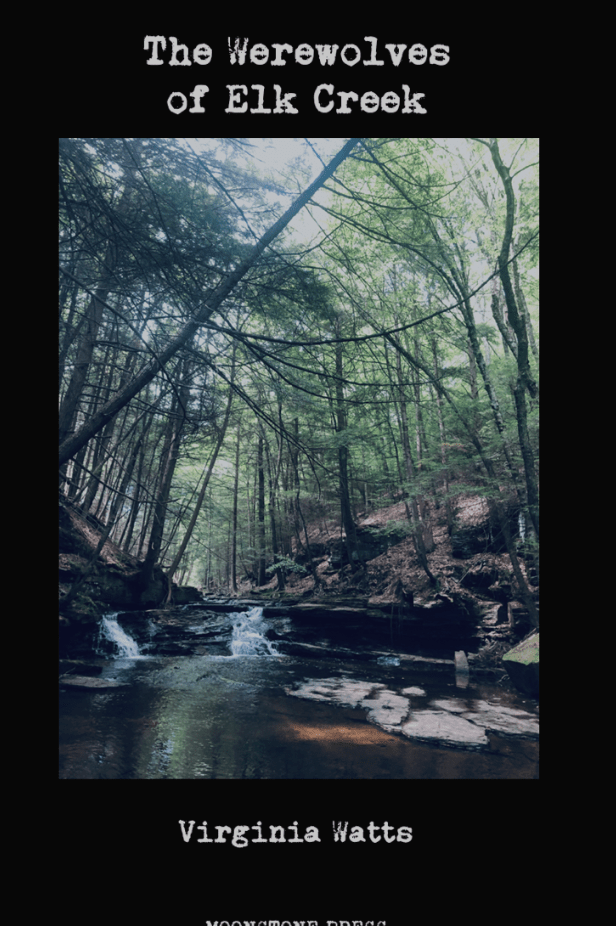
Her prior poetry chapbooks Shot Full of Holes and The Werewolves of Elk Creek 

 are available from Moonstone Press. And her debut short story collection Echoes from the Hocker House is not to be missed!

Should You Self-Publish Your Poetry Book?

One of the most common questions poets ask is whether they should self-publish their work or pursue traditional publication. Unfortunately, there is no single answer that fits every writer. The best choice depends on your goals, your audience, and what you hope to achieve with your collection.

Traditional publishing offers several advantages. An established publisher may provide editing, design, distribution, and marketing support. Publication through a respected press can also carry a certain level of prestige and may help introduce your work to readers who would not otherwise discover it. The challenge, of course, is that poetry collections can be difficult to place. Many presses receive far more submissions than they can publish, and acceptance often requires patience, persistence, and a willingness to face rejection.

Self-publishing offers a different path. It gives poets complete creative control over their work, from the selection of poems to the cover design and publication timeline. Rather than waiting months or years for a response from a publisher, authors can move forward when they feel their manuscript is ready. For poets who have already built an audience through readings, workshops, social media, or literary journals, self-publishing can be an effective way to connect directly with readers.

Some poets choose a middle path by working with a partner publisher or cooperative press. In these arrangements, authors may receive professional support with editing, design, production, and distribution while maintaining a greater degree of involvement and creative control than is typical in traditional publishing. Depending on the organization, costs, responsibilities, and royalties may be shared in different ways. For poets who value both collaboration and independence, this approach can offer an appealing alternative.

Regardless of the path you choose, publishing comes with responsibilities. Self-published authors often become project managers, responsible for editing, design, formatting, distribution, and promotion. While modern publishing platforms have made it easier than ever to produce a book, producing a professional-quality collection still requires time, effort, and attention to detail.

Cost and sales expectations should also be part of the decision. Most poetry collections sell modestly, regardless of how they are published. Traditional publishing may reduce or eliminate upfront costs for the author, but royalties are often lower and advances, when offered, tend to be small. Self-publishing allows authors to retain a larger share of each sale, but they are usually responsible for expenses such as editing, cover design, and formatting. Before choosing a path, it is worth considering not only how you want to publish your collection, but also who you expect to buy it and how you plan to reach those readers.

Another factor worth considering is where you are in your writing life. Many poets who choose self-publishing or cooperative publishing are not necessarily doing so because they failed to secure a traditional contract. Often, they are at a stage where they no longer wish to spend years waiting for permission to share work that feels ready. They want to hold the book in their hands, place it in front of readers, and move on to the next project.

At the same time, younger poets sometimes underestimate the opportunities self-publishing can create. A professionally produced collection can help establish a readership, create speaking opportunities, and serve as a foundation for future publishing projects. Publishing independently does not close doors. In some cases, it opens them.

Some poets hesitate to publish independently because they worry it will make them seem less legitimate than poets associated with universities, MFA programs, or established literary presses. Those concerns are understandable. The literary world can sometimes feel hierarchical, and it is easy to conclude that certain credentials matter more than the work itself.

In reality, good poetry emerges from many places. Many wonderful poets come out of MFA programs, universities, and literary journals. Poetry has always been larger than academia.

What is also true is that many poets outside those circles sometimes feel excluded, intimidated, or invisible. It can be easy to assume that publication by a university press or admission to a prestigious program automatically makes someone a better poet.

Yet poetry’s history tells a more complicated story. Whitman wasn’t an MFA. Dickinson wasn’t an MFA. Frost wasn’t an MFA. Bukowski wasn’t an MFA. Mary Oliver wasn’t an MFA.

The truth is that poetry has many rooms. The university is one of them. It isn’t the whole house.

There is also a reality that many poets, regardless of publishing path, eventually discover: marketing is largely the poet’s responsibility. Traditional publishers can help, and some presses do far more than others, but few poetry collections succeed because a publisher does all the promotional work. Readers connect with poets who are willing to participate in readings, interviews, social media, literary events, newsletters, podcasts, and conversations about their work. Whether your collection is traditionally published, self-published, or released through a cooperative press, your willingness to help readers discover it will have a significant impact on its success.

Perhaps the most important question is this: Why do you write poetry?

If your primary goal is to secure a publishing contract, your path may look very different from someone whose goal is to share meaningful work with readers. Most poets do not begin writing because they dream of contracts, advances, or industry recognition. They write because they love language, because they have something to say, or because poetry helps them make sense of the world.

A publishing contract can be gratifying, but it is not a measure of artistic worth. Many talented poets never receive one. Publication decisions are influenced by timing, editorial preferences, market considerations, and simple luck, not talent alone. Failing to secure a traditional publishing deal does not make someone a failed poet. Likewise, receiving a publishing contract does not automatically make someone a great one. The quality of the work and the commitment behind it matter far more than the path it takes into the world.

For many poets, the goal is not to generate significant income, but to be read. We spend countless hours shaping language in the hope that a poem will connect with another human being. Whether that connection happens with ten readers or ten thousand, there is something remarkable about knowing your words have found a home in someone else’s mind.

A well-crafted collection that finds its readers is a success, regardless of the path it takes to get there. Poetry isn’t really complete until somebody reads it.

What has your experience been? Have you self-published poetry, pursued traditional publication, or explored both routes? We’d love to hear your thoughts in the comments.

Hurray for Dr. King~

Langston Hughes, Maya Angelou, Gwendolyn Brooks, Joy Harjo, Claudia Rankine, Ocean Vuong, Elizabeth Acevedo, Terrance Hayes, Frank O’Hara, Audre Lorde, Allen Ginsburg, all poets who have enhanced the canon of American writing with their writing and their diversity. Have you read any of them? Which ones have you tried? Which diverse poet is your favorite? What poem do you like that you can share with us?

Did you know that Dr. Martin Luther King Jr. believed deeply in the power of voices, especially voices that had been ignored, dismissed, or pushed aside? That belief matters just as much in literature as it does anywhere else.

The literary canon is not a fixed monument. It is a living body of work that grows stronger, more truthful, and more beautiful when it includes diverse authors and perspectives. American literature is incomplete without the poets and writers who reflect the full range of American experience. Reading these voices does not diminish the canon. It expands it, strengthens it, and makes it more honest.

It may seem as if diverse authors exist on the margins of literature, but they don’t. They are central to it. They shape language, challenge assumptions, and help us see both history and the present more clearly. I have enjoyed so many authors who are so different from me, especially when we count the wealth of male writers we read in school. They are all wonderful writers, and I am also glad school now includes more writers who look like me, as well as writers who look like my daughter and my friends.

So today, as we celebrate Dr. King, let’s also celebrate the voices that widen our understanding of who we are. Pick up a book. Read a poem. Listen closely to someone, anyone, different from you, or simply listen to someone in need. How can you share your light?

On a slightly off-topic note, I was visiting my sister this weekend, and we each chose a stand up special to watch that is a pretty new special. I chose Mohaned Elshieky’s special No Need to Address Me, and my sister chose Marcello Hernandez’s special American Boy. Both were incredibly funny. Comedy benefits from diversity too.

I am happy for this day. Hurray for Dr. King and his marvelous legacy. Hurray for all poets. And hurray for a literary world that makes room for all of us.

~Dianne


Dianne Pearce is the chief editor and bottle washer at Current Words Publishing, and the half-cocked imaginer behind Old Scratch Press and Instant Noodles. Pearce loves helping writers realize the dream of having their work published. I mean she is really crazy about doing that for some reason. To that end, to join in the fray, to look at the thing from the other side, to stand in another’s shoes, and all of those things, she is fully expecting and promising to publish her first collection of poetry, In the Cancer Cafeteria, spring of 2026. Please don’t hold your breath. For very long. Happy 2026!

“Pink Dress” from the Forthcoming ~ In the Cancer Cafeteria~


Happy Saturday everyone.

I’m working on bringing out my poetry collection this year, and I thought I’d share one of my poems with you.
For the past year I’ve been traveling with my little sister to her cancer appointments. Luckily I do not have cancer, but I am cancer-adjacent, and that has its own challenges. When I want to say worrying things, when I read case studies, which I do, when I am by myself as she naps through a treatment and I wait, when I drive in and out of West Hollywood alone, sometimes in the threes and fours in the morning depending on treatment time, and I ruminate, I try to put it on paper, rather than on my sister. I’m also a clothes lover and a people watcher from back in junior high with my then boyfriend and bestie Joe Perna. We called ourselves the fashion police in 7th grade, like we were such good dressers. Joe and I observed details, and made guesses based on what we saw. In general the thing I am most curious about is the lives of other people. I think I am (possibly) overly empathetic, and I imagine stories for strangers all day long. I also tend to notice the small things happening around me. As I sit and wait for my sister, or drive alone, or struggle to make small talk (as I do without cancer! I have never been good at it), my brain is humming away wondering about people, and making stories to go with them, and wondering if their cancer is curable and how it will all play out. Most people I see only once, even though we go the same time and day quite often. It is my curse to want to know everything, and to never be able to know, purely because I am a nosy so-and-so. When cancer comes to town your ability to be quiet in the never-knowing is mightily tested.

I also don’t want this to be a totally maudlin book about being upset about my sister. I don’t want it to be a book about my sister. Though I love her dearly, her story is hers, and I don’t want to steal it, which would add, in my view, insult to injury. It’s important when you write about real-live people who are not famous people that you be considerate and kind. I am not able to do that when talking if a joke comes to mind. If I think of something funny about something you’ve said or how you look, etc., it’s coming out unfiltered, that second, and I’m going to laugh. Yeah. Kind of a shitty trait, but what do they say, “At least all the trauma made me hysterical.” Yup. But when I write about anyone who I will see again, it is important to me to serve my needs while not disregarding theirs. There are compromises. My sister may not want me announcing she has cancer, for example, but she has told the people in her life, and I need to be able to discuss it too, so she loses that bit of control, just another thing cancer steals, privacy. For that she has to allow me the book as a coping mechanism. Sorry sis.

Another thing to note, as I assume most people who read this blog are authors: you have to be careful where you put your work before you publish your book. I am publishing my book through OSP, so I can put this poem here, and OSP will not disallow it from the book. If another publisher was publishing my book, they might not be happy for me to stick a poem out in public on a blog. They may or may not be happy for me to publish a poem somewhere in advance, because that anthology or lit mag where the poem is published may hold rights that conflict with the publishing company then using the poem when publishing my book. So there’s that. You have to be careful. You can always post a question here, and one of us will try to answer it. In fact, I’ll run a monthly post that offers a chance for you to ask questions, and reminds you that you can do it.

This book has a theme that runs through the whole book. Some collections do have a theme, but often the theme is that all the poems are written by the same person. The theme in my book is cancer, but, more drilled down, my reactions to cancer, my observations on the cancer experience, which I am holding together in the idea of the cafeteria at the clinic. People who are going through cancer as patients or support are often in the cafeteria as a place to stop being wrapped up in the cancer events and procedures. It’s the downtime place, and, because of that, people drop their masks a bit there. I am not telling anyone’s secrets as much as I am interpreting what I see, which changes the observation from what it is, to what I see. There is much intrusion from observers, so don’t worry that I am revealing anyone’s truths besides my own.

I have trouble tapping a poem with my scepter and declaring it complete. I expect many poets are the same. Sometimes a poem comes out almost fully-formed, but most still have growing and shrinking to do.

I write longer poems. I write narrative poems. I tend to write personal poems. Sometimes my poems are true, and sometimes they are true in the sense that they are true, for me. That doesn’t mean they would qualify as legally true. If the person was a brunette, and brunette doesn’t work, guess what, red hair is what I am going to write.

This poem, “Pink Dress,” is pretty much done. I will say it is an uncorrected proof here, as I may change it a bit before it hits the book galley. But it feels good to me as it is, and I was able to read it aloud to myself without having major anxiety, so I feel like it is okay.

The OSP group has become my friends as well as my colleagues, and, based on schedules and etc., we often ask each other to look at each other’s work. That’s part of the deal with this collective. So far I have shared some of my writing for this book with Robert, Anthony, Gabby, and Ginny. I cannot express how much I have appreciated them and their taking the time to give me really helpful, kind, and actionable feedback.

Here, without further ado, is one of the poems destined to be released later this year in the collection, In the Cancer Cafeteria.

Pink Dress

Her pink dress is too tight too short
the old sneakers don’t go
hair twisted up and split
two rolls of mussed-up teddy ears.

He is all belly 
under his big and tall polo 
up top tangled hair needs 
a brush run through
but beard is spun silk. 
He is the one who gets up
moves around
paces because he’s in the cancer cafeteria and who doesn’t pace?

She doesn’t.
She smiles at the screen in her hands.

Whenever he gets up 
he runs his finger down her bicep. 
Her chubby thighs
twitch back at him against the tight pink hem.
The dress is a mini
I can see her cotton crotch and I don’t tell her
because each time he slides his finger down her arm 
her smile goes wicked at the corners 
for a second
as her thighs twitch
call and response
and it’s not my song to sing.

I shut up I pretend I don’t see.

When he manages to sit 
his chair is up against instead of across from
his long tangled curls try to nestle under her neck
wheedle around her earlobes. 
I can’t tell for certain who is victim
who is victim support.
Some secrets are not for me to know.

He needs to move again 
gets up abrupt 
clumsy all the other chairs 
tables reach for his legs
stepping around best he can into the hall
gazing in confusion at the baby grand 
sitting there
playing “Wichita Lineman” by itself
from 1968 
a year him and his girl know only as a number, and not real.

He stares at the piano
rocks on his heels in his shoes as he has rocked since he was five years old 
knees bend out to the sides 
a boy just learning how legs work
walking through a day’s same endless agenda
treatment, wait, consultation, wait, scan, wait. 

Head nodding at Jimmy Webb’s F major D major
he tries to find his way to the tune
gives up, moves back to her
comes in for a landing 
finger trails down and up
bare meaty skin. 
She ripples in response. 
Appearing now on all her bare places
languishing goose pimples 
long only to be released 
to go home 
so two may unzip the tight pink dress together. 


Dianne Pearce is the chief editor and bottle washer at Current Words Publishing, and the half-cocked imaginer behind Old Scratch Press and Instant Noodles. Pearce loves helping writers realize the dream of having their work published. I mean she is really crazy about doing that for some reason. To that end, to join in the fray, to look at the thing from the other side, to stand in another’s shoes, and all of those things, she is fully expecting and promising to publish her first collection of poetry, In the Cancer Cafeteria, spring of 2026. Please don’t hold your breath. For very long. Happy 2026!

YIKES! Don’t Publish That!

One of the perks of running Old Scratch Press (OSP) and Instant Noodles Lit Mag (IN) is that I (we, OSP) get to belong the Community of Literary Magazines and Presses. They are incredibly helpful, and have so many resources we can use, including the ability to ask the other presses questions through the LISTSERV.

This week I listened to a webinar from a bit back on what you can and cannot use from others’ work in your work… spoiler alert, nope. nope, nope, you cannot use those Taylor Swift lyrics, no matter how perfect they are for your piece. Why? Because Taylor wrote them, for her piece. Cry me a small stream (see what I did there?) but you gotta write your own!

One form the webinar really did not recommend was Cento. And from the looks of my very unscientific Google search, there are a lot of them:

Well, why not?

As in the Taylor Swift example, those poets wrote those lines in their poems, to express their thoughts, and that doesn’t mean you can co-opt them, even though it is a fun writing exercise to try to knit them together. They also recommend against publishing Golden Shovels.

The webinar, for CLMP members, was helmed by Jeffrey Levine (a lawyer and Publisher of Tupelo Press) and Fred Courtright (President of The Permissions Company). And I was shocked to find out how many instances there are where authors should be getting permission, but maybe aren’t.

Copyright is, very basically, attached to intellectual property, so something we cannot touch with our fingers, even if those ideas are pressed into an LP, or printed in a book, or applied to watercolor paper. It’s the imaginings, the wordplay, the artistic or editorial or even advertising verbiage, or the design, creation, work of another artist. And we can’t use what isn’t ours without permission from its creator, or, and maybe more likely, its rights holder. Frankly, and this is where some writers disagree with me, this makes perfect sense to me if I think about someone taking my work, and using it in their own piece, and it also makes sense to me as an artist. I want so badly to use the lyrics to songs that I imbue with this meaning and emotion that only they can have, and it’s tougher to come up with my own “pretend” song, but I really need to push my writing to the next level, and do it. You don’t have to register your work with US Copyright to be protected, but we do copyright all books we publish as a matter of course.

What does copyright leave out? It does not apply to material that is not truly original, to anything already in the public domain, or to broad concepts such as ideas, systems, processes, or methods. Those belong more to patent and trademark, which overlap only in small ways that I’m not expert enough on to explain, so investigate. Copyright also does not cover names, titles, slogans, or very short phrases. In literary settings, though, it is usually safer to treat even brief lines as if they might be protected, simply to avoid trouble. How long does copyright protection remain in place? In most cases it lasts for the lifetime of the author plus an additional seventy years. For anonymous work or work created as a work for hire, the term is different. It lasts either ninety five years from the date it was first published or one hundred twenty years from the date it was created, and it ends when the earlier of those two periods runs out.

The publisher never takes copyright. The copyright remains with the author. The publisher only licenses the copyright, meaning the publisher has the right to print (or otherwise make available) or produce the work for some (limited) period of time. But if you publish a poem, for example, with a publisher, and you sign a contract, that poem may “belong” to the publisher for the duration of the contract. We’ve never held back an author from taking a work back or using it somewhere else, but I cannot speak for all publishers, so, though it should not be a problem to include in your chapbook a poem you published somewhere else, you may have to obtain permission to reprint it in another place. Do you have time to do that?

Another really interesting point the webinar brought up was that if a work is in the public domain, you do not need permission to use it. Fair use is a grey area, and so I would never recommend deciding on your own that something is fair use. I would suggest you contact Fred.

If you want to use an old poem in its original language, a piece that is long out of copyright, you can quote it freely. But if you want to use a modern translation of that same piece, the translation is probably under copyright. If you want to use something that is still in copyright, you might need permission from the copyright holder and also the holder of the copyright of the translation, and suddenly you’re in the weeds. And a lot of this costs money, to track down the copyright, and to pay for use. The webinar recommended the Watch File at the Harry Ransom Center as a good place to start. One person on the call said she often would ask bands directly, on their social media, if she could use their music or lyrics, but the presenters pointed out that while the band may (may, important distinction) hold copyright, someone else may hold the rights, and those folks could have very good “bots” looking for it on the internet, and show up with a big bill for you.

Even internet memes, tweets, etc., could belong to the person who posted them, and there could be consequences (of the financial kind is what we’re talking here) for you if you use them. And I liked that they made it clear that attribution (taken from “Friend of the Devil” by the Grateful Dead) does not give you permission: you can still find yourself on the hook for a lot of money. Yikes! And just because the author of a poem holds the copyright this doesn’t mean they’re not in a publishing deal where the publisher might own the reprint rights. You have to check it out to be sure.

The advice out there can differ greatly, and even The Poetry Foundation may have advice about fair use that the federal courts would not agree with, so the webinar strongly recommended that you either get permission, using someone like Fred, or skip it.

What do you think? Have you been playing with licensing fire? I am always encouraging authors to start an editing and publishing fund, but you may need a violation fund too! I hope not!

So friends I hope that you can sees
"fair use" doesn't grow like leaves
and poets and other fools like me
as much as you would like it free
accept that permission has a fee
and you can't pick from another's tree.

Dianne Pearce is the chief editor and bottle washer at Current Words Publishing, and the half-cocked imaginer behind Old Scratch Press and Instant Noodles. Pearce loves helping writers realize the dream of having their work published. I mean she is really crazy about doing that for some reason. To that end, to join in the fray, to look at the thing from the other side, to stand in another’s shoes, and all of those things, she is fully expecting and promising to publish her first collection of poetry, In the Cancer Cafeteria, spring of 2026. Please don’t hold your breath. For very long. Happy Holidays!