Building a Readership: Five Paths for Poets, Path 2.

PATH 2: Literary Journals

Why Literary Journals Still Matter

When poets talk about building a readership, literary journals are often one of the first recommendations they receive. Yet many writers, especially those outside academic circles, wonder whether journals still matter in an age of websites, social media, and self-publishing.

The short answer is yes.

Literary journals remain one of the most accessible ways for poets to introduce their work to new readers, establish publishing credentials, and become part of the broader literary conversation. While publication in a journal rarely leads to instant fame or large sales numbers, it can help create the foundation upon which a readership is built.

For many poets, journals provide something equally important: discovery. Readers who may never have encountered your work otherwise can stumble across a poem in a magazine, become interested in your writing, and begin following your career. Editors, event organizers, workshop leaders, and fellow poets often discover new voices through journals as well.

If you’re new to submissions, finding journals is easier than ever. Resources such as Chill Subs, Duotrope, Poets & Writers, New Pages, and the Community of Literary Magazines and Presses (CLMP) maintain extensive databases of literary magazines and submission opportunities. Many journals also maintain active social media accounts where they announce open reading periods, special themes, and contests.

One of the most common mistakes beginning poets make is submitting without first reading the publication. Whenever possible, spend some time with a journal before sending your work. Read several poems. Pay attention to the styles, themes, and voices the editors seem to favor. Not because you should imitate them, but because you’ll gain a better sense of whether your work is likely to be a good fit.

Many journals now accept submissions through online platforms such as Submittable and Moksha. These systems make it easy to track submissions, but they have also increased competition by making it easier for writers to submit widely. Rejection remains a normal part of the process. Even accomplished poets accumulate large numbers of rejections throughout their careers.

At some point, every poet encounters the question of reading fees. Some journals charge a small fee, often between two and five dollars, to help cover administrative costs, software subscriptions, and staff expenses. Others operate entirely without fees. Opinions vary widely on the practice. Some writers avoid reading fees altogether, while others are comfortable paying modest amounts to support journals they respect.

There is no single correct approach. However, poets should be thoughtful about where they spend their money. A small fee for a well-established publication may be reasonable. Paying large amounts to submit work to unknown organizations is generally less advisable. As with any publishing opportunity, it pays to do a little research before opening your wallet.

Another decision involves print versus digital publications. Some poets strongly prefer print journals because they enjoy seeing their work in a physical publication and because print journals often carry a certain prestige. Others appreciate the accessibility of online journals, where poems can be discovered by readers around the world with a simple click.

The truth is that both formats offer advantages. Print journals provide permanence and a tangible reading experience. Online journals often offer broader reach, searchable archives, and the possibility of sharing links directly with readers. Many respected literary publications now operate in both formats, making the distinction less important than it once was.

It is also worth remembering that publication credits are not merely lines on a résumé. Every journal publication expands your visibility. A handful of well-placed poems can lead to invitations to readings, relationships with editors, opportunities for future publication, and readers who may eventually purchase your collection.

For poets considering a future book project, journal publication can be especially valuable. Individual poems published over time help establish a track record of activity and engagement within the literary community. They can also provide useful feedback about which poems resonate most strongly with readers and editors.

At the same time, don’t fall into the trap of believing that journal publication is the only path to legitimacy. Many excellent poets publish widely in journals. Many others build readership through readings, workshops, social media, teaching, community engagement, or independent publishing. Literary journals are one tool among many.

Ultimately, journals matter because they help connect poems with readers. They provide opportunities for discovery, conversation, and community. For poets seeking to build a readership, submitting to journals remains one of the most practical and effective ways to begin sharing work beyond their immediate circle.

If you’ve been considering submitting your poetry, start small. Find a few journals you genuinely enjoy reading, study their guidelines, and send your work into the world. Every publication began with a first submission, and every poet who appears in a journal today was once a writer nervously pressing “submit” for the very first time.

Building a Readership: Five Paths for Poets, Path 1.

PATH 1: Building a Readership Through Poetry Readings

When poets talk about building an audience, the conversation often turns immediately to social media, websites, and marketing strategies. While those tools can certainly help, many poets overlook one of the oldest and most effective ways to find readers: reading their work aloud.

Poetry began as an oral art form. Long before poems appeared in books, journals, and websites, they were shared through voice and performance. Even today, a strong reading can create a connection that no social media post can match.

Many poets hesitate to participate in readings because they assume they need a published collection, a large following, or years of experience before they are ready. In reality, most reading communities welcome poets at a wide range of experience levels. Open mics, community events, library programs, and local literary gatherings can all provide opportunities to share your work.

If you’re wondering where to begin, start by looking close to home. Libraries, independent bookstores, arts organizations, community colleges, literary festivals, and local writing groups often host readings and open mics. Social media can also help uncover opportunities. Follow poets, literary journals, bookstores, and writing organizations in your region and pay attention to the events they promote. You may discover that there are more opportunities to share your work than you realized.

Don’t overlook virtual events. Organizations such as Poetry Super Highway, The Writers Center, Poets & Writers, and many regional poetry groups regularly host online readings and open mics. Event calendars on Poets & Writers and Eventbrite can also help uncover opportunities throughout the year. Many poets have built meaningful friendships, readerships, and professional connections through virtual events they attended from their own living rooms.

screenshot of poets and writers event calendar

The benefits extend far beyond the reading itself. Every event introduces you to people who care about poetry. You meet other writers, potential readers, organizers, editors, and booksellers. Over time, these connections begin to form a literary community around your work.

Readings can also help you become a stronger poet. A poem that works beautifully on the page may reveal weaknesses when read aloud. Awkward phrasing, confusing transitions, and unnecessary words often become more obvious when spoken. The audience’s reaction can also teach you a great deal about how your work is being received.

One common misconception is that poetry readings only matter if they lead directly to book sales. While selling books is certainly welcome, the larger goal is visibility. Readers are far more likely to remember a poet whose work they have heard than a name they happened to scroll past online. Every reading plants seeds that may grow into future opportunities, whether that means invitations to other events, journal recommendations, workshop connections, or eventual book purchases.

For poets who are shy or nervous, it can help to start small. Attend a reading before signing up to participate. Read a single poem at an open mic. Volunteer to share work at a workshop or community event. Confidence grows with practice, and most poetry audiences are remarkably supportive.

If you have a collection available, bring copies. If you maintain a website, newsletter, or social media account, mention it briefly. Have a simple way for interested readers to stay connected. The goal is not to deliver a sales pitch, but to make it easy for people who enjoyed your work to find you again.

Perhaps most importantly, remember that building a readership happens one reader at a time. Very few poets wake up to discover thousands of devoted followers. Most audiences are built through repeated acts of showing up, sharing work, and participating in the literary community.

A successful poetry reading is not measured solely by the number of books sold or the size of the audience. Sometimes success looks like a conversation after the event, an invitation to read elsewhere, or a single person who tells you that your poem stayed with them long after the evening ended.

Poetry is meant to be read, but it is also meant to be heard. If you’re looking for ways to build a readership, consider stepping up to the microphone. You may discover that your next reader is already sitting in the audience.

Poetry is meant to be read, but it is also meant to be heard. If you’re looking for ways to build a readership, consider stepping up to the microphone. You may discover that your next reader is already sitting in the audience.

Just as importantly, be willing to sit in the audience yourself. Attend readings even when you’re not on the program. Support fellow poets. Listen carefully to their work. Literary communities thrive when writers show up for one another, and some of the most meaningful friendships, opportunities, and collaborations begin simply by being present. The poets who consistently support others often find that support returned when it is their turn to step up to the microphone.

Do you know of a virtual event that readers can apply to? Leave it in the comments, and we’ll share it!

Should You Self-Publish Your Poetry Book?

One of the most common questions poets ask is whether they should self-publish their work or pursue traditional publication. Unfortunately, there is no single answer that fits every writer. The best choice depends on your goals, your audience, and what you hope to achieve with your collection.

Traditional publishing offers several advantages. An established publisher may provide editing, design, distribution, and marketing support. Publication through a respected press can also carry a certain level of prestige and may help introduce your work to readers who would not otherwise discover it. The challenge, of course, is that poetry collections can be difficult to place. Many presses receive far more submissions than they can publish, and acceptance often requires patience, persistence, and a willingness to face rejection.

Self-publishing offers a different path. It gives poets complete creative control over their work, from the selection of poems to the cover design and publication timeline. Rather than waiting months or years for a response from a publisher, authors can move forward when they feel their manuscript is ready. For poets who have already built an audience through readings, workshops, social media, or literary journals, self-publishing can be an effective way to connect directly with readers.

Some poets choose a middle path by working with a partner publisher or cooperative press. In these arrangements, authors may receive professional support with editing, design, production, and distribution while maintaining a greater degree of involvement and creative control than is typical in traditional publishing. Depending on the organization, costs, responsibilities, and royalties may be shared in different ways. For poets who value both collaboration and independence, this approach can offer an appealing alternative.

Regardless of the path you choose, publishing comes with responsibilities. Self-published authors often become project managers, responsible for editing, design, formatting, distribution, and promotion. While modern publishing platforms have made it easier than ever to produce a book, producing a professional-quality collection still requires time, effort, and attention to detail.

Cost and sales expectations should also be part of the decision. Most poetry collections sell modestly, regardless of how they are published. Traditional publishing may reduce or eliminate upfront costs for the author, but royalties are often lower and advances, when offered, tend to be small. Self-publishing allows authors to retain a larger share of each sale, but they are usually responsible for expenses such as editing, cover design, and formatting. Before choosing a path, it is worth considering not only how you want to publish your collection, but also who you expect to buy it and how you plan to reach those readers.

Another factor worth considering is where you are in your writing life. Many poets who choose self-publishing or cooperative publishing are not necessarily doing so because they failed to secure a traditional contract. Often, they are at a stage where they no longer wish to spend years waiting for permission to share work that feels ready. They want to hold the book in their hands, place it in front of readers, and move on to the next project.

At the same time, younger poets sometimes underestimate the opportunities self-publishing can create. A professionally produced collection can help establish a readership, create speaking opportunities, and serve as a foundation for future publishing projects. Publishing independently does not close doors. In some cases, it opens them.

Some poets hesitate to publish independently because they worry it will make them seem less legitimate than poets associated with universities, MFA programs, or established literary presses. Those concerns are understandable. The literary world can sometimes feel hierarchical, and it is easy to conclude that certain credentials matter more than the work itself.

In reality, good poetry emerges from many places. Many wonderful poets come out of MFA programs, universities, and literary journals. Poetry has always been larger than academia.

What is also true is that many poets outside those circles sometimes feel excluded, intimidated, or invisible. It can be easy to assume that publication by a university press or admission to a prestigious program automatically makes someone a better poet.

Yet poetry’s history tells a more complicated story. Whitman wasn’t an MFA. Dickinson wasn’t an MFA. Frost wasn’t an MFA. Bukowski wasn’t an MFA. Mary Oliver wasn’t an MFA.

The truth is that poetry has many rooms. The university is one of them. It isn’t the whole house.

There is also a reality that many poets, regardless of publishing path, eventually discover: marketing is largely the poet’s responsibility. Traditional publishers can help, and some presses do far more than others, but few poetry collections succeed because a publisher does all the promotional work. Readers connect with poets who are willing to participate in readings, interviews, social media, literary events, newsletters, podcasts, and conversations about their work. Whether your collection is traditionally published, self-published, or released through a cooperative press, your willingness to help readers discover it will have a significant impact on its success.

Perhaps the most important question is this: Why do you write poetry?

If your primary goal is to secure a publishing contract, your path may look very different from someone whose goal is to share meaningful work with readers. Most poets do not begin writing because they dream of contracts, advances, or industry recognition. They write because they love language, because they have something to say, or because poetry helps them make sense of the world.

A publishing contract can be gratifying, but it is not a measure of artistic worth. Many talented poets never receive one. Publication decisions are influenced by timing, editorial preferences, market considerations, and simple luck, not talent alone. Failing to secure a traditional publishing deal does not make someone a failed poet. Likewise, receiving a publishing contract does not automatically make someone a great one. The quality of the work and the commitment behind it matter far more than the path it takes into the world.

For many poets, the goal is not to generate significant income, but to be read. We spend countless hours shaping language in the hope that a poem will connect with another human being. Whether that connection happens with ten readers or ten thousand, there is something remarkable about knowing your words have found a home in someone else’s mind.

A well-crafted collection that finds its readers is a success, regardless of the path it takes to get there. Poetry isn’t really complete until somebody reads it.

What has your experience been? Have you self-published poetry, pursued traditional publication, or explored both routes? We’d love to hear your thoughts in the comments.

Friendly Reminder: This Is Today.

I can help you submit! Submit!

You know that story you’ve been meaning to write? The poem sitting in your notebook? The idea you’ve been carrying around for three weeks while telling yourself you’ll get to it “soon”?

Well, this is your official notice. “Soon” is today.

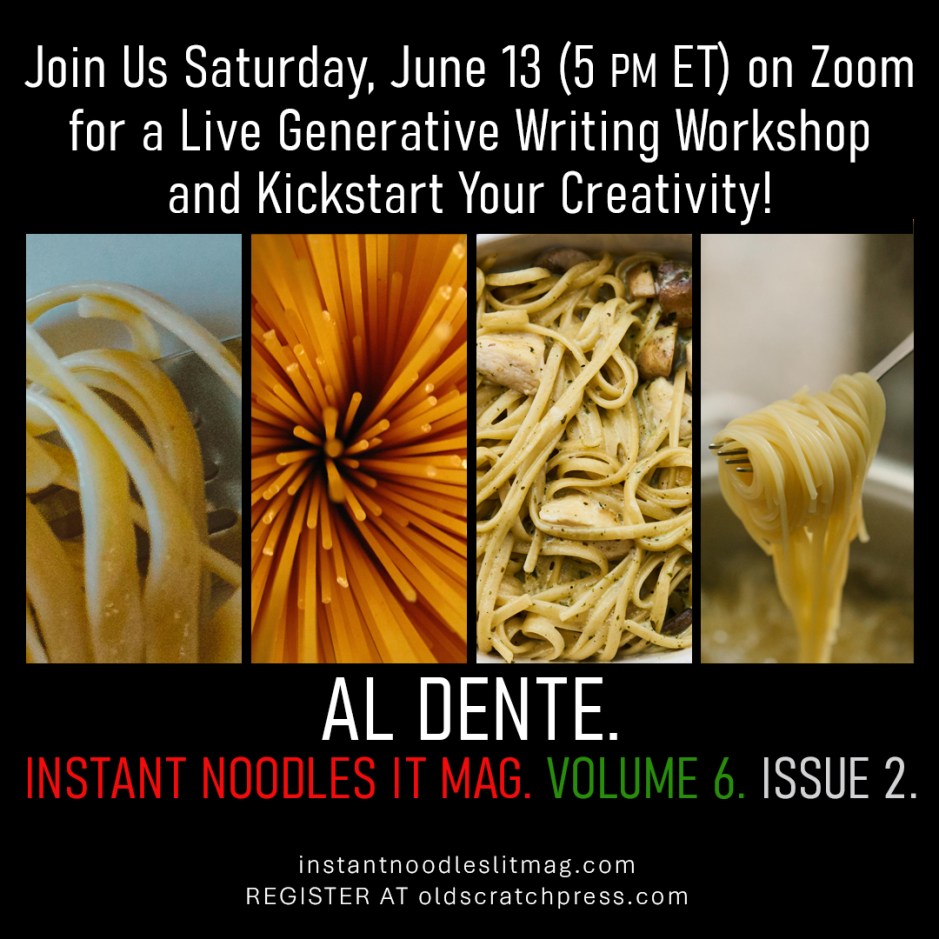
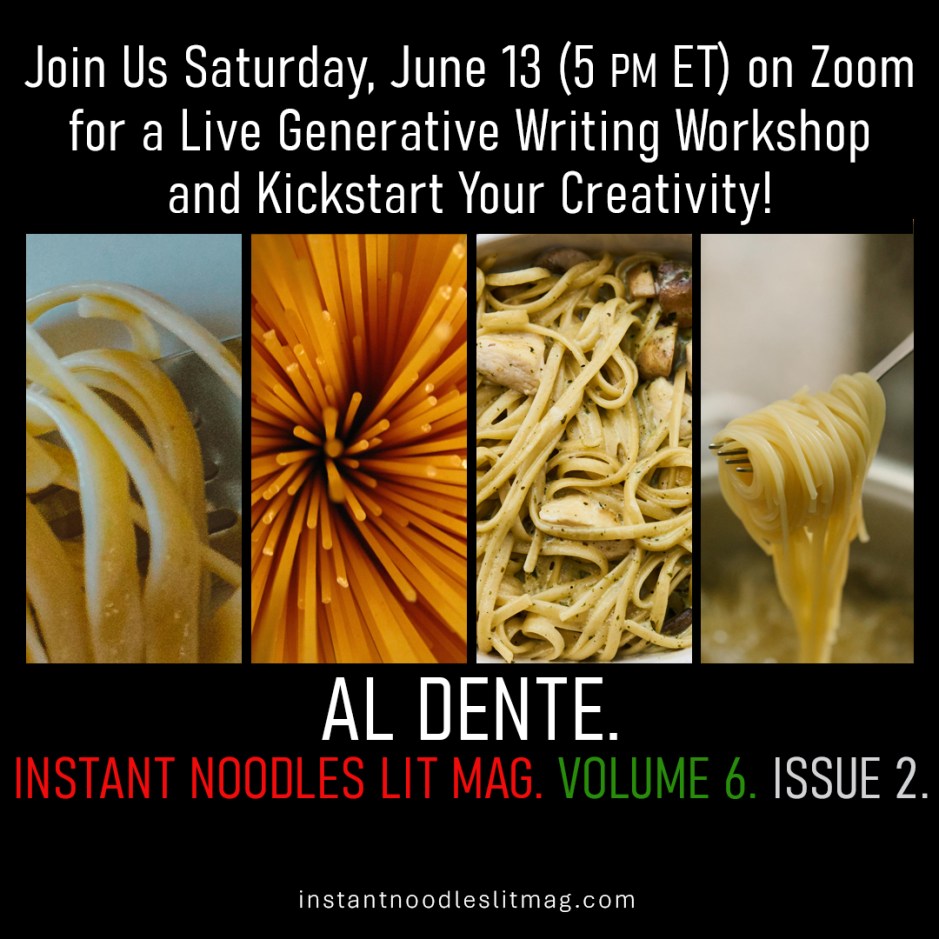
The Instant Noodles Lit Mag Al Dente Writing Workshop with Robert Fleming takes place today at 5 PM Eastern (2 PM Pacific), and we’d love to see you there.

Whether you’re a writer, poet, artist, or creative dabbler who occasionally stares out a window pretending to work, this free online workshop is designed to help spark ideas, answer questions about submissions, and get you thinking about our upcoming Al Dente issue.

No fancy credentials required. No publication history required. No secret literary handshake required.

Just bring yourself, your curiosity, and whatever creative project has been lurking in the back of your mind.

Seats are limited, and once the workshop starts, you’ll have to live with the knowledge that everyone else is talking about writing while you’re reorganizing a drawer or scrolling social media.

Register now.

We’ll save you a seat:

Join the Free Workshop!

Thinking about submitting to the upcoming Instant Noodles Lit Mag issue, Al Dente?

Before you hit “send,” join Editor Robert Fleming for a free online workshop on Saturday, June 13, at 5 PM Eastern (2 PM Pacific).

This informal session is designed for writers, poets, and artists who want to learn more about the theme, explore ideas, and discover what kinds of work might be a good fit for the issue.

Literary magazines can sometimes feel intimidating from the outside. This workshop is an opportunity to ask questions, generate new material, and connect with fellow creatives in a welcoming environment.

Whether you already have a submission in progress or are still waiting for inspiration to strike, you’ll leave with fresh ideas and a better understanding of where your work might fit.

Attendance is free, but seating is limited.

Reserve your spot today and help us make the next issue of Instant Noodles Lit Mag something special.

Got Writer’s Block? Bring It to Robert.

Every issue of Instant Noodles Lit Mag starts somewhere.

A line scribbled in a notebook. A strange image that won’t leave you alone. A poem that refuses to behave. A story that exists everywhere except on the page.

If you’ve been looking for a reason to finally sit down and create something, consider this your invitation.

On Saturday, June 13, at 5 PM Eastern (2 PM Pacific), Instant Noodles Lit Mag Editor Robert Fleming will host a free online Al Dente Writing Workshop designed to help writers, poets, and artists generate ideas, get inspired, and learn more about submitting to our upcoming issue, Al Dente.

Whether you’re a seasoned contributor or someone who’s never submitted a piece before, you’re welcome to join us.

The workshop is free, but space is limited.

Bring your imagination. We’ll provide the noodles.

Register today and join us for an evening of creativity and community.

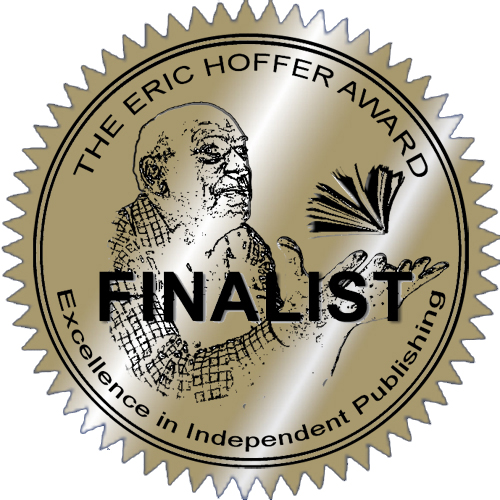
Jonah’s Map of the Whale and Other Poems, by Old Scratch Press member Anthony Doyle, is a 2026 Eric Hoffer Book Award Category Finalist. 

Jonah’s Map of the Whale and Other Poems, by Old Scratch Press member Anthony Doyle, is a 2026 Eric Hoffer Book Award Category Finalist. 

Jonah is my first volume of poetry, so it was especially gratifying to look at the list of Category Finalists posted to the Hoffer Award website and see it there in all its glory. Just as parents can instantly spot their own kids in a crowded park full of other children not objectively dissimilar to their own in any real way, my eyes were instantly drawn to that familiar sequence of words: Jonah’s Map of the Whale. Next, of course, I checked my name—you know, just in case there was another Jonah’s Map of the Whale by some not-Anthony—, and then, certified that it was indeed my Jonah, I smiled at the sight of three little words that have come to mean a lot to me: Old Scratch Press. 

I am in the process of completing my second volume of poetry, so “Jonah” seems at times like a distant country I once used to live in and hope to return to someday. So I went back to a review poet and critic Billie Mills so kindly wrote about it when it came out last year, just to see it through someone else’s eyes before writing anything about it. The book consists of three sections, each devoted to a different “persona”, which Mills described as “nearer to archetypes than individuals, carrying something of a mythical nature […] narratives, fables, romances, but never anecdotes.” It’s a good description, but that does not mean the book is non- (or im-)personal, because that narrative, mythical, fable-like quality is perhaps the most any of us can aspire to in our best (and worst) moments. 

I have a thing about threes, perhaps because three was the last number I can say I ever managed to understand. I get three. I can feel three. Anything from four to the Googolplexian, and I’ll just have to take your word for it.  But threes work; threes make sense. So this book, naturally, has three sections.

The first of these is a group of poems about a fictional character named Flounder, sometimes presented as a young man with mental health and addiction issues, other times as a flatfish on the floor of the Irish Sea. So when he’s not a floundering human, he’s a very human flounder, and what tips him one way or the other is how deep he sinks into his overactive, intrusive unconscious self.  

The second character, Blundra, is everything Flounder is not. The world likes Blundra, and Blundra knows how to make it give her what she wants. The problem is, what she really, really wants is something this world cannot give. Constantly on the verge of an epiphany that never quite comes, she experiences a frustration that is also a sort of longing. This revelation-in-the-making whispers to her from afar in the form of her dead grandmother’s voice. 

The third section of the book, the title poem, is a turn-of-the-21st-century rereading of the Jonah story, and it shares an origin with my speculative novel Hibernaculum (2024 Next Generation Indie Book Awards Science Fiction Category Finalist). 

Jonah and Hibernaculum are kindred works, as they were both initially parts of a literary triptych called Three Jonahs. The third panel was the as-yet-unpublished Jestor

I scrapped the triptych idea when Hibernaculum and Jestor turned into full-length, standalone novels, and “Jonah’s Map of the Whale” found a new home alongside “Blundra” and “Flounder”. 

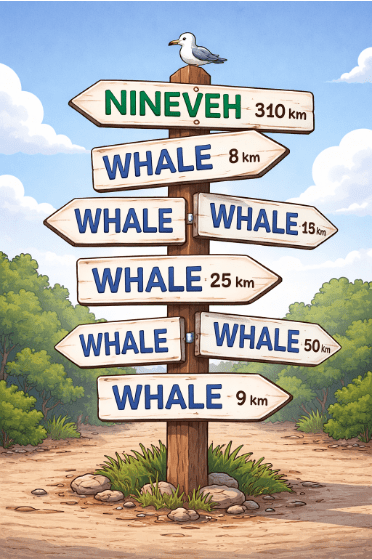
Although the triptych was disbanded in practice, it remains very much together in spirit. There is a Jonah and a whale in each of these works. Jonahs fleeing their own private Ninevehs, whales catching them halfway between one Joppa and another Tarshish. The whale can be a person or entity (Jestor), a process  (human hibernation)or it can even be oneself and one’s past, as in “Jonah’s Map of the Whale”.  

Personally and collectively, we’re constantly fleeing and being dragged back. It’s part of the cycle of existence. The Jonah tale is pure dialectic (thesis, antithesis, synthesis…repeat), and so is history, so is an individual life. 

So what sort of cartography is this “map”? In the book, it’s a two-track reverse chronology: the misadventures of Alex Iden Grey, on one hand, and the turn of the 21st century, on the other. Wrong turns, missed opportunities, and ignored warnings, all seen in retrospect and laid out as cautionary tales. And what is a cautionary tale if not a map in negative, a map that says “the guy who went this way got swallowed by a whale.” 

A simple map, really… in hindsight. 

That’s what the book is about. It took a long time to write  (dewrite, rewrite, repeat…) and now it is what it is, no take-backs, no changes. 

And with a cute little golden seal on the cover.

Thank you, Eric Hoffer!


Anthony Doyle

Born in Dublin and raised in Wicklow Town, Anthony Doyle holds a joint honours degree in English and Philosophy and a master’s degree in Philosophy from University College Dublin, Ireland. 

He moved to São Paulo, Brazil, in 1999, where he works as a translator from Portuguese to English. 

He writes poetry and fiction for adults, teens and children.

Hurray for Dr. King~

Langston Hughes, Maya Angelou, Gwendolyn Brooks, Joy Harjo, Claudia Rankine, Ocean Vuong, Elizabeth Acevedo, Terrance Hayes, Frank O’Hara, Audre Lorde, Allen Ginsburg, all poets who have enhanced the canon of American writing with their writing and their diversity. Have you read any of them? Which ones have you tried? Which diverse poet is your favorite? What poem do you like that you can share with us?

Did you know that Dr. Martin Luther King Jr. believed deeply in the power of voices, especially voices that had been ignored, dismissed, or pushed aside? That belief matters just as much in literature as it does anywhere else.

The literary canon is not a fixed monument. It is a living body of work that grows stronger, more truthful, and more beautiful when it includes diverse authors and perspectives. American literature is incomplete without the poets and writers who reflect the full range of American experience. Reading these voices does not diminish the canon. It expands it, strengthens it, and makes it more honest.

It may seem as if diverse authors exist on the margins of literature, but they don’t. They are central to it. They shape language, challenge assumptions, and help us see both history and the present more clearly. I have enjoyed so many authors who are so different from me, especially when we count the wealth of male writers we read in school. They are all wonderful writers, and I am also glad school now includes more writers who look like me, as well as writers who look like my daughter and my friends.

So today, as we celebrate Dr. King, let’s also celebrate the voices that widen our understanding of who we are. Pick up a book. Read a poem. Listen closely to someone, anyone, different from you, or simply listen to someone in need. How can you share your light?

On a slightly off-topic note, I was visiting my sister this weekend, and we each chose a stand up special to watch that is a pretty new special. I chose Mohaned Elshieky’s special No Need to Address Me, and my sister chose Marcello Hernandez’s special American Boy. Both were incredibly funny. Comedy benefits from diversity too.

I am happy for this day. Hurray for Dr. King and his marvelous legacy. Hurray for all poets. And hurray for a literary world that makes room for all of us.

~Dianne


Dianne Pearce is the chief editor and bottle washer at Current Words Publishing, and the half-cocked imaginer behind Old Scratch Press and Instant Noodles. Pearce loves helping writers realize the dream of having their work published. I mean she is really crazy about doing that for some reason. To that end, to join in the fray, to look at the thing from the other side, to stand in another’s shoes, and all of those things, she is fully expecting and promising to publish her first collection of poetry, In the Cancer Cafeteria, spring of 2026. Please don’t hold your breath. For very long. Happy 2026!

“Pink Dress” from the Forthcoming ~ In the Cancer Cafeteria~


Happy Saturday everyone.

I’m working on bringing out my poetry collection this year, and I thought I’d share one of my poems with you.
For the past year I’ve been traveling with my little sister to her cancer appointments. Luckily I do not have cancer, but I am cancer-adjacent, and that has its own challenges. When I want to say worrying things, when I read case studies, which I do, when I am by myself as she naps through a treatment and I wait, when I drive in and out of West Hollywood alone, sometimes in the threes and fours in the morning depending on treatment time, and I ruminate, I try to put it on paper, rather than on my sister. I’m also a clothes lover and a people watcher from back in junior high with my then boyfriend and bestie Joe Perna. We called ourselves the fashion police in 7th grade, like we were such good dressers. Joe and I observed details, and made guesses based on what we saw. In general the thing I am most curious about is the lives of other people. I think I am (possibly) overly empathetic, and I imagine stories for strangers all day long. I also tend to notice the small things happening around me. As I sit and wait for my sister, or drive alone, or struggle to make small talk (as I do without cancer! I have never been good at it), my brain is humming away wondering about people, and making stories to go with them, and wondering if their cancer is curable and how it will all play out. Most people I see only once, even though we go the same time and day quite often. It is my curse to want to know everything, and to never be able to know, purely because I am a nosy so-and-so. When cancer comes to town your ability to be quiet in the never-knowing is mightily tested.

I also don’t want this to be a totally maudlin book about being upset about my sister. I don’t want it to be a book about my sister. Though I love her dearly, her story is hers, and I don’t want to steal it, which would add, in my view, insult to injury. It’s important when you write about real-live people who are not famous people that you be considerate and kind. I am not able to do that when talking if a joke comes to mind. If I think of something funny about something you’ve said or how you look, etc., it’s coming out unfiltered, that second, and I’m going to laugh. Yeah. Kind of a shitty trait, but what do they say, “At least all the trauma made me hysterical.” Yup. But when I write about anyone who I will see again, it is important to me to serve my needs while not disregarding theirs. There are compromises. My sister may not want me announcing she has cancer, for example, but she has told the people in her life, and I need to be able to discuss it too, so she loses that bit of control, just another thing cancer steals, privacy. For that she has to allow me the book as a coping mechanism. Sorry sis.

Another thing to note, as I assume most people who read this blog are authors: you have to be careful where you put your work before you publish your book. I am publishing my book through OSP, so I can put this poem here, and OSP will not disallow it from the book. If another publisher was publishing my book, they might not be happy for me to stick a poem out in public on a blog. They may or may not be happy for me to publish a poem somewhere in advance, because that anthology or lit mag where the poem is published may hold rights that conflict with the publishing company then using the poem when publishing my book. So there’s that. You have to be careful. You can always post a question here, and one of us will try to answer it. In fact, I’ll run a monthly post that offers a chance for you to ask questions, and reminds you that you can do it.

This book has a theme that runs through the whole book. Some collections do have a theme, but often the theme is that all the poems are written by the same person. The theme in my book is cancer, but, more drilled down, my reactions to cancer, my observations on the cancer experience, which I am holding together in the idea of the cafeteria at the clinic. People who are going through cancer as patients or support are often in the cafeteria as a place to stop being wrapped up in the cancer events and procedures. It’s the downtime place, and, because of that, people drop their masks a bit there. I am not telling anyone’s secrets as much as I am interpreting what I see, which changes the observation from what it is, to what I see. There is much intrusion from observers, so don’t worry that I am revealing anyone’s truths besides my own.

I have trouble tapping a poem with my scepter and declaring it complete. I expect many poets are the same. Sometimes a poem comes out almost fully-formed, but most still have growing and shrinking to do.

I write longer poems. I write narrative poems. I tend to write personal poems. Sometimes my poems are true, and sometimes they are true in the sense that they are true, for me. That doesn’t mean they would qualify as legally true. If the person was a brunette, and brunette doesn’t work, guess what, red hair is what I am going to write.

This poem, “Pink Dress,” is pretty much done. I will say it is an uncorrected proof here, as I may change it a bit before it hits the book galley. But it feels good to me as it is, and I was able to read it aloud to myself without having major anxiety, so I feel like it is okay.

The OSP group has become my friends as well as my colleagues, and, based on schedules and etc., we often ask each other to look at each other’s work. That’s part of the deal with this collective. So far I have shared some of my writing for this book with Robert, Anthony, Gabby, and Ginny. I cannot express how much I have appreciated them and their taking the time to give me really helpful, kind, and actionable feedback.

Here, without further ado, is one of the poems destined to be released later this year in the collection, In the Cancer Cafeteria.

Pink Dress

Her pink dress is too tight too short
the old sneakers don’t go
hair twisted up and split
two rolls of mussed-up teddy ears.

He is all belly 
under his big and tall polo 
up top tangled hair needs 
a brush run through
but beard is spun silk. 
He is the one who gets up
moves around
paces because he’s in the cancer cafeteria and who doesn’t pace?

She doesn’t.
She smiles at the screen in her hands.

Whenever he gets up 
he runs his finger down her bicep. 
Her chubby thighs
twitch back at him against the tight pink hem.
The dress is a mini
I can see her cotton crotch and I don’t tell her
because each time he slides his finger down her arm 
her smile goes wicked at the corners 
for a second
as her thighs twitch
call and response
and it’s not my song to sing.

I shut up I pretend I don’t see.

When he manages to sit 
his chair is up against instead of across from
his long tangled curls try to nestle under her neck
wheedle around her earlobes. 
I can’t tell for certain who is victim
who is victim support.
Some secrets are not for me to know.

He needs to move again 
gets up abrupt 
clumsy all the other chairs 
tables reach for his legs
stepping around best he can into the hall
gazing in confusion at the baby grand 
sitting there
playing “Wichita Lineman” by itself
from 1968 
a year him and his girl know only as a number, and not real.

He stares at the piano
rocks on his heels in his shoes as he has rocked since he was five years old 
knees bend out to the sides 
a boy just learning how legs work
walking through a day’s same endless agenda
treatment, wait, consultation, wait, scan, wait. 

Head nodding at Jimmy Webb’s F major D major
he tries to find his way to the tune
gives up, moves back to her
comes in for a landing 
finger trails down and up
bare meaty skin. 
She ripples in response. 
Appearing now on all her bare places
languishing goose pimples 
long only to be released 
to go home 
so two may unzip the tight pink dress together. 


Dianne Pearce is the chief editor and bottle washer at Current Words Publishing, and the half-cocked imaginer behind Old Scratch Press and Instant Noodles. Pearce loves helping writers realize the dream of having their work published. I mean she is really crazy about doing that for some reason. To that end, to join in the fray, to look at the thing from the other side, to stand in another’s shoes, and all of those things, she is fully expecting and promising to publish her first collection of poetry, In the Cancer Cafeteria, spring of 2026. Please don’t hold your breath. For very long. Happy 2026!

Dreams of the Return

dreams of the return

Alan Bern is more than just the author of DREAMS OF THE RETURN—he’s also one of the founding voices of Old Scratch Press, a collective born from a group of terrific writers with a deep love of traditional and hybrid poetry, prose, and art. As a retired children’s librarian and cofounder (with Robert Woods) of the fine-press publisher Lines & Faces, Alan has long pursued the merging of word, image, and place.

In DREAMS OF THE RETURN, he turns his lens to Italy—in particular the South—bringing to life landscapes both storied and luminous through his own photographs and through classic Italian poetry, delivered both in its original form and in his own translations. The journey is lyrical, immersive: it’s not merely a travel guide, but a portrait of longing, place, memory, and beauty.

And that’s something Alan does beautifully—his artistry weaves together what he’s done throughout his life: poetry, prose, photography, memoir, all fueled by a love for Italy. Within the OSP community, he is known for “photo-poems,” a daily practice in which images and language overlap, inviting the reader to travel with him across geographies and inward, into self.

In addition to poems and photographs, DREAMS OF THE RETURN also includes intimate personal essays that layer history, memory, and lived experience. In “The Good One,” for example, Alan recounts a walk through Naples’ Quartieri Spagnoli with his friend Marco. What begins as a conversation about Jewish philosopher Don Isaac Abravanel and the sacred geography of southern Italy turns into a heartbreaking encounter with a community altar for “o’ Bono”—a young man accidentally killed during a New Year’s Eve celebration. Through this story, Alan reveals how place, tragedy, resilience, and human connection are intertwined in ways both profound and ordinary.

A true perfectionist, Alan (pictured left) worked closely with his good friend, Peter Truskier, to ensure that the photos selected would sparkle in the book just like the locations did in real life.

DREAMS OF THE RETURN is, in effect, another way Alan invites us to travel: through light and verse, through time and place. It’s a book to savor—start with a wind-soft sun, ruins, olive trees and history; consume it slowly with pizza margherita and red wine; linger into the evening with the sweetness of roccoco napoletani and an espresso kissed with Sambuca. You can order a copy of your own here: