And the Winner Is…..

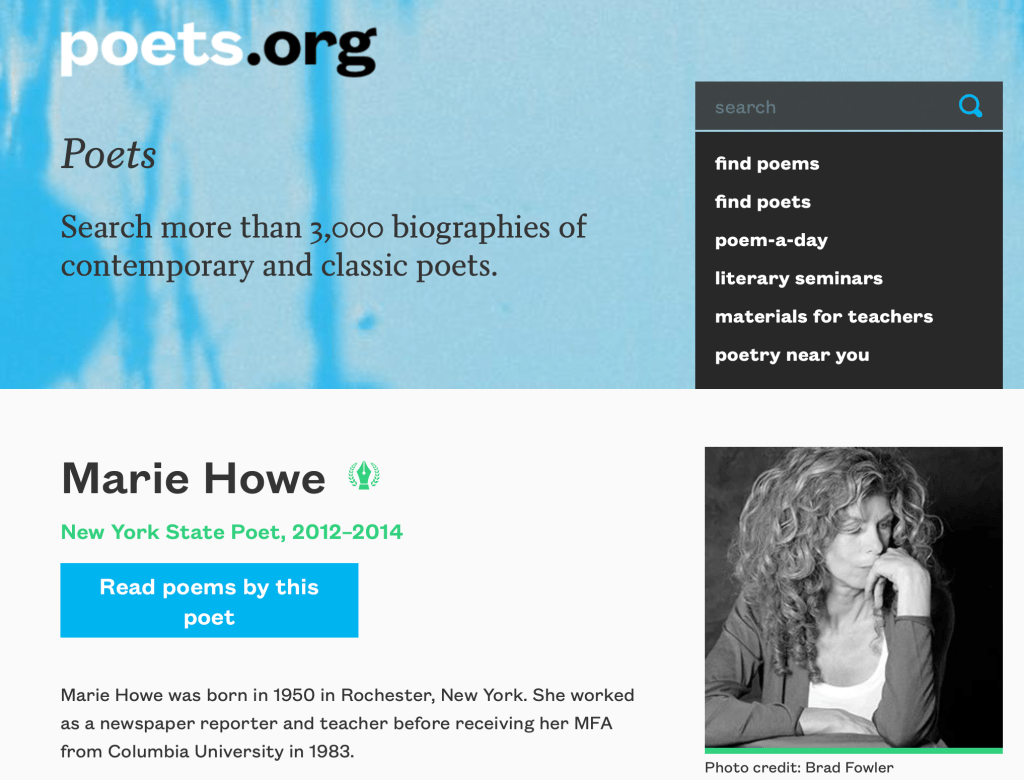
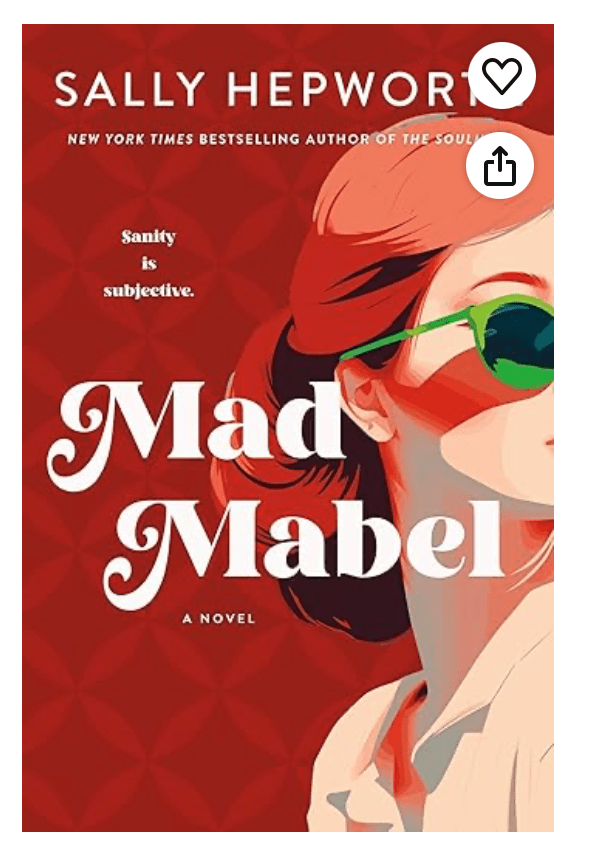
Yes, poetry collections win Pulitzer Prizes too. The 2025 Pulitzer Prize for Poetry has been awarded to Marie Howe’s New and Selected Poems. Howe is known for her observations of everyday life. She explores themes of contemporary womanhood, personal loss, human miracles, sorrow and joy. There are 111 poems in the winning collection. Howe’s direct and honest voice is her trademark. She’s a poet of our time who should not be missed. Some of her most well-known poems involve the loss of her brother in 1989 who died of AIDS-related illnesses. This is what drew me personally to her work many years ago, because I lost a brother about the same time in the same way. Here is one of her poems about this terrible sadness.

What the Living Do

Marie Howe

Johnny, the kitchen sink has been clogged for days, some utensil probably fell down there.
And the Drano won’t work but smells dangerous, and the crusty dishes have piled up

waiting for the plumber I still haven’t called. This is the everyday we spoke of.
It’s winter again: the sky’s a deep, headstrong blue, and the sunlight pours through

the open living-room windows because the heat’s on too high in here and I can’t turn it off.
For weeks now, driving, or dropping a bag of groceries in the street, the bag breaking,

I’ve been thinking: This is what the living do. And yesterday, hurrying along those
wobbly bricks in the Cambridge sidewalk, spilling my coffee down my wrist and sleeve,

I thought it again, and again later, when buying a hairbrush: This is it.
Parking. Slamming the car door shut in the cold. What you called that yearning.

What you finally gave up. We want the spring to come and the winter to pass. We want
whoever to call or not call, a letter, a kiss—we want more and more and then more of it.

But there are moments, walking, when I catch a glimpse of myself in the window glass,
say, the window of the corner video store, and I’m gripped by a cherishing so deep

for my own blowing hair, chapped face, and unbuttoned coat that I’m speechless:
I am living. I remember you.

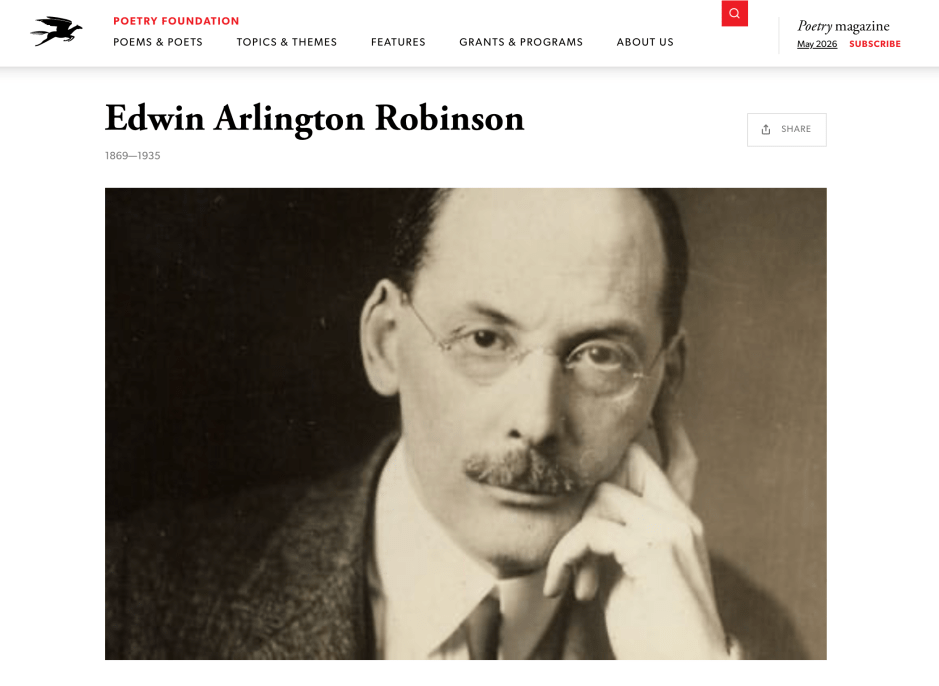
I thought it might be fun to revisit the winner of the first Pulitzer Prize for Poetry. That poet’s name was Edwin Arlington Robinson, and he won the prize two more times after being the first winner. He was known for his narrative skill and psychological depth. Here is what is considered by many to be his most famous poem. It seems a long time ago when he was writing poetry, yet when you read this poem in particular, it seems that he could be writing this poem today. This is because all poetry is about one very complicated subject: humanity.

Richard Cory
Edwin Arlington Robinson

Whenever Richard Cory went down town,

We people on the pavement looked at him:

He was a gentleman from sole to crown,

Clean favored, and imperially slim.

And he was always quietly arrayed,

And he was always human when he talked;

But still he fluttered pulses when he said,

“Good-morning,” and he glittered when he walked.

And he was rich—yes, richer than a king—

And admirably schooled in every grace:

In fine, we thought that he was everything

To make us wish that we were in his place.

So on we worked, and waited for the light,

And went without the meat, and cursed the bread;

And Richard Cory, one calm summer night,

Went home and put a bullet through his head.

Virginia Watts is the author of poetry and stories found in The MacGuffin, Epiphany, CRAFT, The Florida Review, Reed Magazine, Pithead Chapel, Eclectica Magazine among others. She has been nominated four times for a Pushcart Prize. Her debut short story collection Echoes from the Hocker House was short listed for 2024 Eric Hoffer Grand Prize, selected as one of the Best Indie Books of 2023 by Kirkus Book Reviews, and won third place in the 2024 Feathered Quill Book Awards. Please visit her.

Virginia’s new book is now available from Old Scratch Press:

Her prior poetry chapbooks Shot Full of Holes and The Werewolves of Elk Creek 
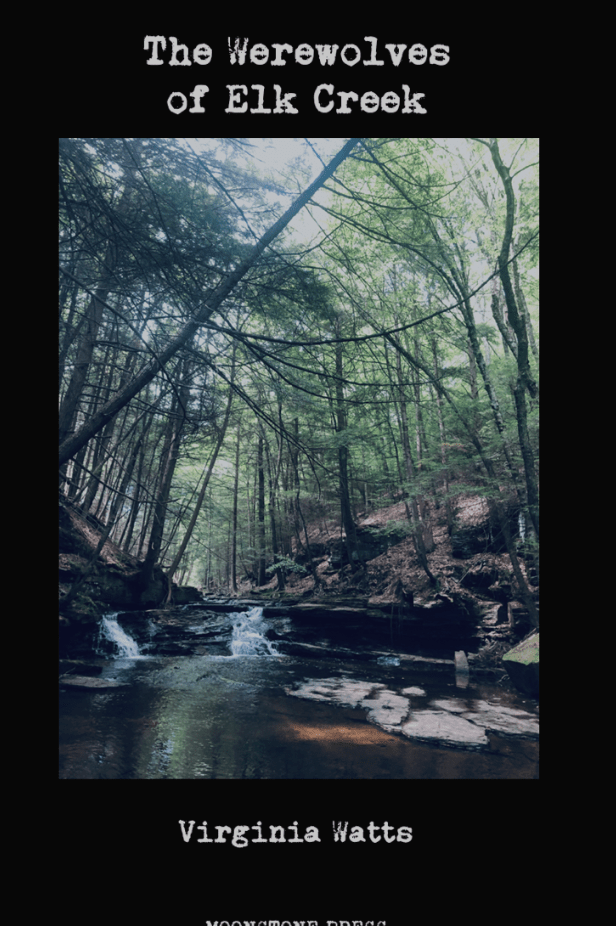
 are available from Moonstone Press. And her debut short story collection Echoes from the Hocker House is not to be missed!

Jonah’s Map of the Whale and Other Poems, by Old Scratch Press member Anthony Doyle, is a 2026 Eric Hoffer Book Award Category Finalist. 

Jonah’s Map of the Whale and Other Poems, by Old Scratch Press member Anthony Doyle, is a 2026 Eric Hoffer Book Award Category Finalist. 

Jonah is my first volume of poetry, so it was especially gratifying to look at the list of Category Finalists posted to the Hoffer Award website and see it there in all its glory. Just as parents can instantly spot their own kids in a crowded park full of other children not objectively dissimilar to their own in any real way, my eyes were instantly drawn to that familiar sequence of words: Jonah’s Map of the Whale. Next, of course, I checked my name—you know, just in case there was another Jonah’s Map of the Whale by some not-Anthony—, and then, certified that it was indeed my Jonah, I smiled at the sight of three little words that have come to mean a lot to me: Old Scratch Press. 

I am in the process of completing my second volume of poetry, so “Jonah” seems at times like a distant country I once used to live in and hope to return to someday. So I went back to a review poet and critic Billie Mills so kindly wrote about it when it came out last year, just to see it through someone else’s eyes before writing anything about it. The book consists of three sections, each devoted to a different “persona”, which Mills described as “nearer to archetypes than individuals, carrying something of a mythical nature […] narratives, fables, romances, but never anecdotes.” It’s a good description, but that does not mean the book is non- (or im-)personal, because that narrative, mythical, fable-like quality is perhaps the most any of us can aspire to in our best (and worst) moments. 

I have a thing about threes, perhaps because three was the last number I can say I ever managed to understand. I get three. I can feel three. Anything from four to the Googolplexian, and I’ll just have to take your word for it.  But threes work; threes make sense. So this book, naturally, has three sections.

The first of these is a group of poems about a fictional character named Flounder, sometimes presented as a young man with mental health and addiction issues, other times as a flatfish on the floor of the Irish Sea. So when he’s not a floundering human, he’s a very human flounder, and what tips him one way or the other is how deep he sinks into his overactive, intrusive unconscious self.  

The second character, Blundra, is everything Flounder is not. The world likes Blundra, and Blundra knows how to make it give her what she wants. The problem is, what she really, really wants is something this world cannot give. Constantly on the verge of an epiphany that never quite comes, she experiences a frustration that is also a sort of longing. This revelation-in-the-making whispers to her from afar in the form of her dead grandmother’s voice. 

The third section of the book, the title poem, is a turn-of-the-21st-century rereading of the Jonah story, and it shares an origin with my speculative novel Hibernaculum (2024 Next Generation Indie Book Awards Science Fiction Category Finalist). 

Jonah and Hibernaculum are kindred works, as they were both initially parts of a literary triptych called Three Jonahs. The third panel was the as-yet-unpublished Jestor

I scrapped the triptych idea when Hibernaculum and Jestor turned into full-length, standalone novels, and “Jonah’s Map of the Whale” found a new home alongside “Blundra” and “Flounder”. 

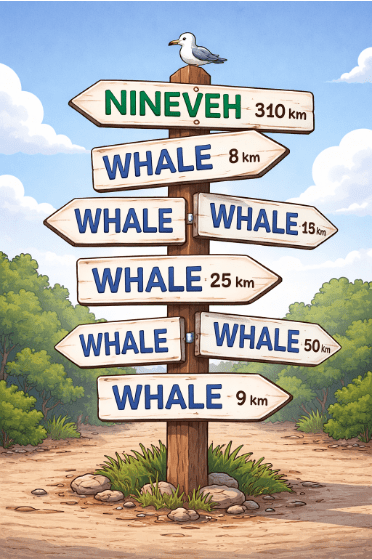
Although the triptych was disbanded in practice, it remains very much together in spirit. There is a Jonah and a whale in each of these works. Jonahs fleeing their own private Ninevehs, whales catching them halfway between one Joppa and another Tarshish. The whale can be a person or entity (Jestor), a process  (human hibernation)or it can even be oneself and one’s past, as in “Jonah’s Map of the Whale”.  

Personally and collectively, we’re constantly fleeing and being dragged back. It’s part of the cycle of existence. The Jonah tale is pure dialectic (thesis, antithesis, synthesis…repeat), and so is history, so is an individual life. 

So what sort of cartography is this “map”? In the book, it’s a two-track reverse chronology: the misadventures of Alex Iden Grey, on one hand, and the turn of the 21st century, on the other. Wrong turns, missed opportunities, and ignored warnings, all seen in retrospect and laid out as cautionary tales. And what is a cautionary tale if not a map in negative, a map that says “the guy who went this way got swallowed by a whale.” 

A simple map, really… in hindsight. 

That’s what the book is about. It took a long time to write  (dewrite, rewrite, repeat…) and now it is what it is, no take-backs, no changes. 

And with a cute little golden seal on the cover.

Thank you, Eric Hoffer!


Anthony Doyle

Born in Dublin and raised in Wicklow Town, Anthony Doyle holds a joint honours degree in English and Philosophy and a master’s degree in Philosophy from University College Dublin, Ireland. 

He moved to São Paulo, Brazil, in 1999, where he works as a translator from Portuguese to English. 

He writes poetry and fiction for adults, teens and children.

Chuffed!

Here I am with Linwood Jackson, President of the Delaware Press Association.

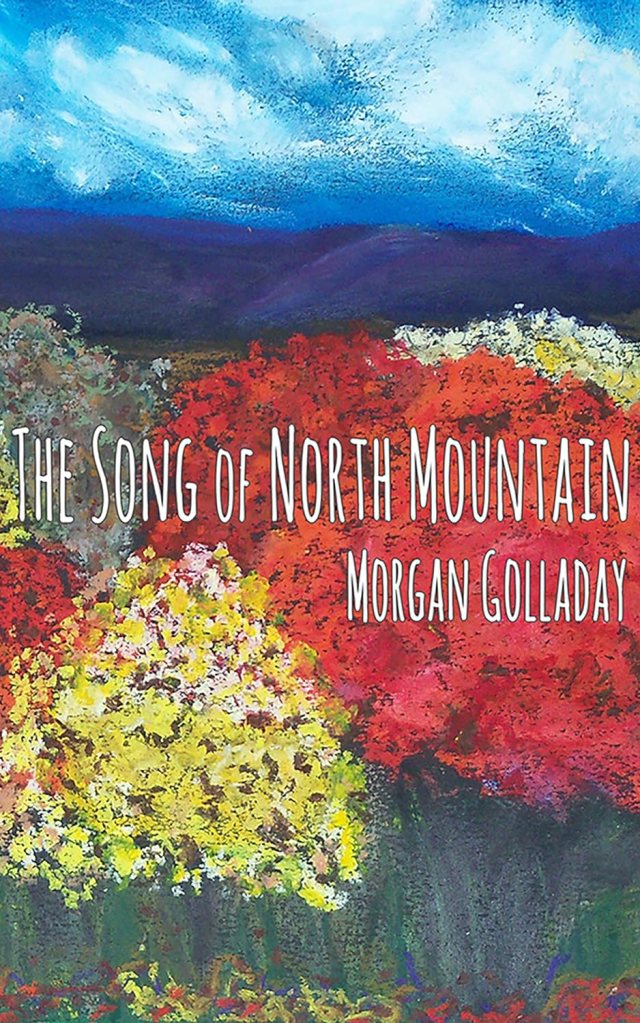
On May 1, I was awarded a Second Place in the Delaware Press Association Communications Awards for my book, The Song of North Mountain. This was my veryfirstever book released solely under my name, and the award presentation was exactly one year after the book hit publication.

I am quoting the judge, whose name I don’t know, in their comments regarding the award. “This is a beautifully crafted collection of poems that takes readers on a journey through nature, personal reflection, and the deep connection between the land and the human sprit. With vivid imagery and emotional insight, You (sic) capture the essence of the North Mountain landscape, blending personal growth, exploration, and the rhythms of life. The poems are rich with sensory details and metaphor, drawing readers into the natural world where every “rustle of leaves, shift of light, and breath of wind carries meaning.” I find that your writing, both introspective and outward-looking, intertwines the inner and outer worlds, exploring themes of solitude, contemplation, and the passage of time with tenderness and reverence, giving the collection a meditative quality.”

Many of us, particularly of my generation, suffer from imposter syndrome, that feeling that we’re really just pretending to be . . . smart, kind, good at what we do, talented, strong, etc. I’ve been writing since I was a teenager. Mostly doggerel, lines about angst, loss, imaginary friends, and wry observations. As I’ve aged and matured, so has my writing. I’ve discovered poets other than those I was raised on (Longfellow, Holmes, Browning) and many who write in rhymed and metered verse.

College introduced me to more complicated poetry – Ferlinghetti, Hopkins, Stevens, Auden, Eliot, Yeats. And then, foreign writers, like Rumi, whose ideas were so very different from those I had been immersed in.

So, I still wrote, but still privately, only sharing sparingly, for I still did not consider myself a “good” poet.

Well, I guess I am now. This anonymous judge really liked my work! The DPA, in their wisdom, selected judges that were not from Delaware. Delaware, being such a small state, is one where everyone knows everyone else, especially in communications and writing. So all I know about this anonymous judge is that he or she is not from around here. And, they liked my work.

Being a creator, whether in writing, arts, crafts, or just about anything, we have the angels and devils on our shoulders. One says, “Perfect. Absolutely PERFECT. Don’t change a thing!”

The other angel is the voice of the imposter. “Really? You expect anyone to like this? What balderdash! This is ROTTEN!” So we hide our creation away, or simply refuse to edit it.

I think we’ve all been there. The fact is, creating is a matter of taking risks. Making changes. Wondering if what we have written can be said better. And having the courage to play with it. Editing. Changing the recipe. Adding a stroke of color. 

I can certainly attest that every single poem and sketch in this book was analyzed, edited, and reworked (and rethought) at least 5 times.

Ghost Light, the poem I included in my last blog, was awarded a Second Place, also. This judge commented that “Your evocative, photographic-like details set the ghost-like mood and scene from the beginning. . . .” And, ‘the last stanza is particularly well-turned — “by chance or intent,/ catch the moment, . . . in a sudden shaft of dawnbreak.’”

The judge noticed. They noticed the internal rhyme, the alliteration, the combining of words to create a new meaning. These are ‘tools’ I labored over, hoping the reader would listen to these words and how they created an atmosphere, a feeling, a response.

We all too often hesitate to read out loud, to ourselves or to anyone else. But it is important. Whether we read to a child, or are read to, there is a chance for us to escape into the word picture created by the author. That’s what I try to do — create word pictures for you to explore.

You can find The Song of North Mountain on Amazon and other retailers, and my author page on Amazon. Follow me on social media at Facebook as Morgan Golladay, Writer and Artist, in Instagram as morgangi13, and please FOLLOW my blog too.

If you have a copy of The Song of North Mountain, please leave a review. Thank you! I appreciate it!

May 15, 2025

Pick up a copy!

Powell’s Books
Paperback
eBook

Audio (no subscription: download to your device)

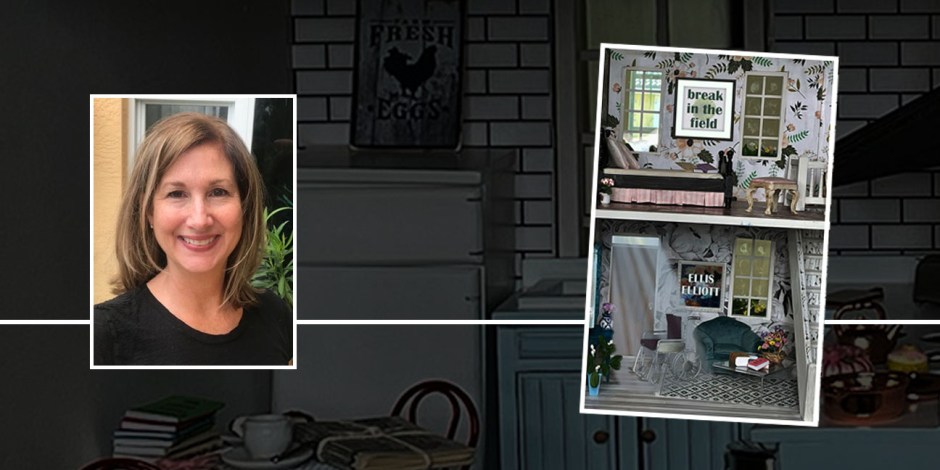
Happy Book-a-versary to Ellis Elliott!

It’s just about one year since Ellis’ book, the first Old Scratch Press book, was released.

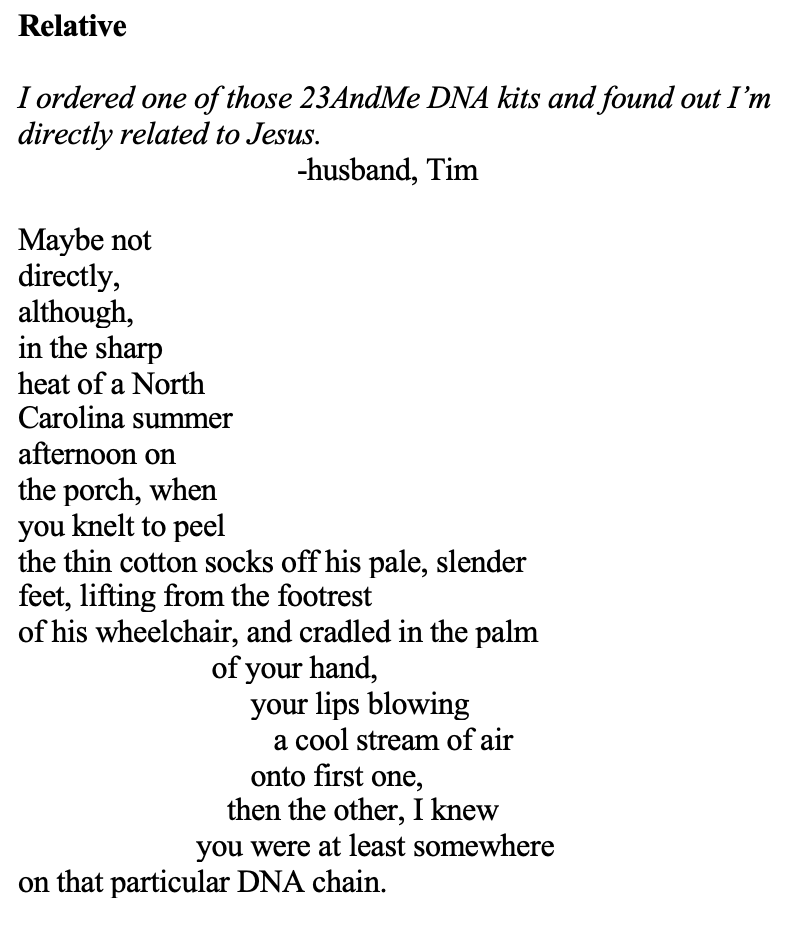
Here are a few poems for you to dip your toes into:

Gosh, this is such a lovely collection. And right now it is FREE for the month of July, 2024!

Get your free copy (eBook, or audiobook) HERE.

Congratulations Ellis on one year! And thanks for all your contributions to Old Scratch Press.

Follow Ellis

Golladay Grabs Second Place in the Nationals!

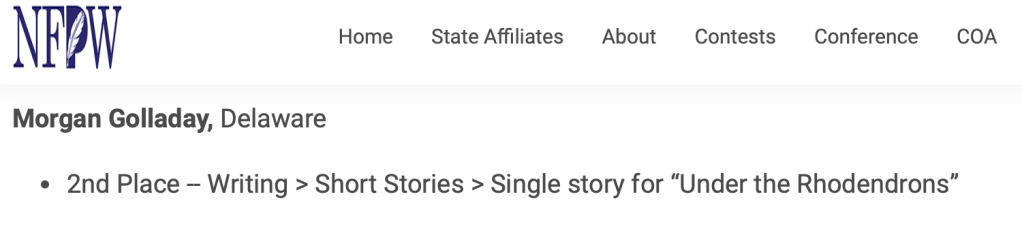
Big shoutout to Morgan Golladay! Her short story “Under the Rhododendrons,” featured in HALLOWEEN PARTY ’23 (Gravelight Press), snagged second place in the National Federation of Press Women’s national short story competition.

Morgan also just wrote, illustrated, and released her first poetry book, THE SONG OF NORTH MOUNTAIN, which is up for a National Book Award!

The good news just keeps rolling in for Morgan!

Want to know how she does what she does? Check out her blog, FB, and don’t miss this in-depth interview with her.

Way to go, Morgan! We’re so thrilled for your success!