Every Fourth of July, Americans revisit familiar symbols: fireworks, flags, parades, and historical speeches. This year, I’d like to suggest revisiting a poem.
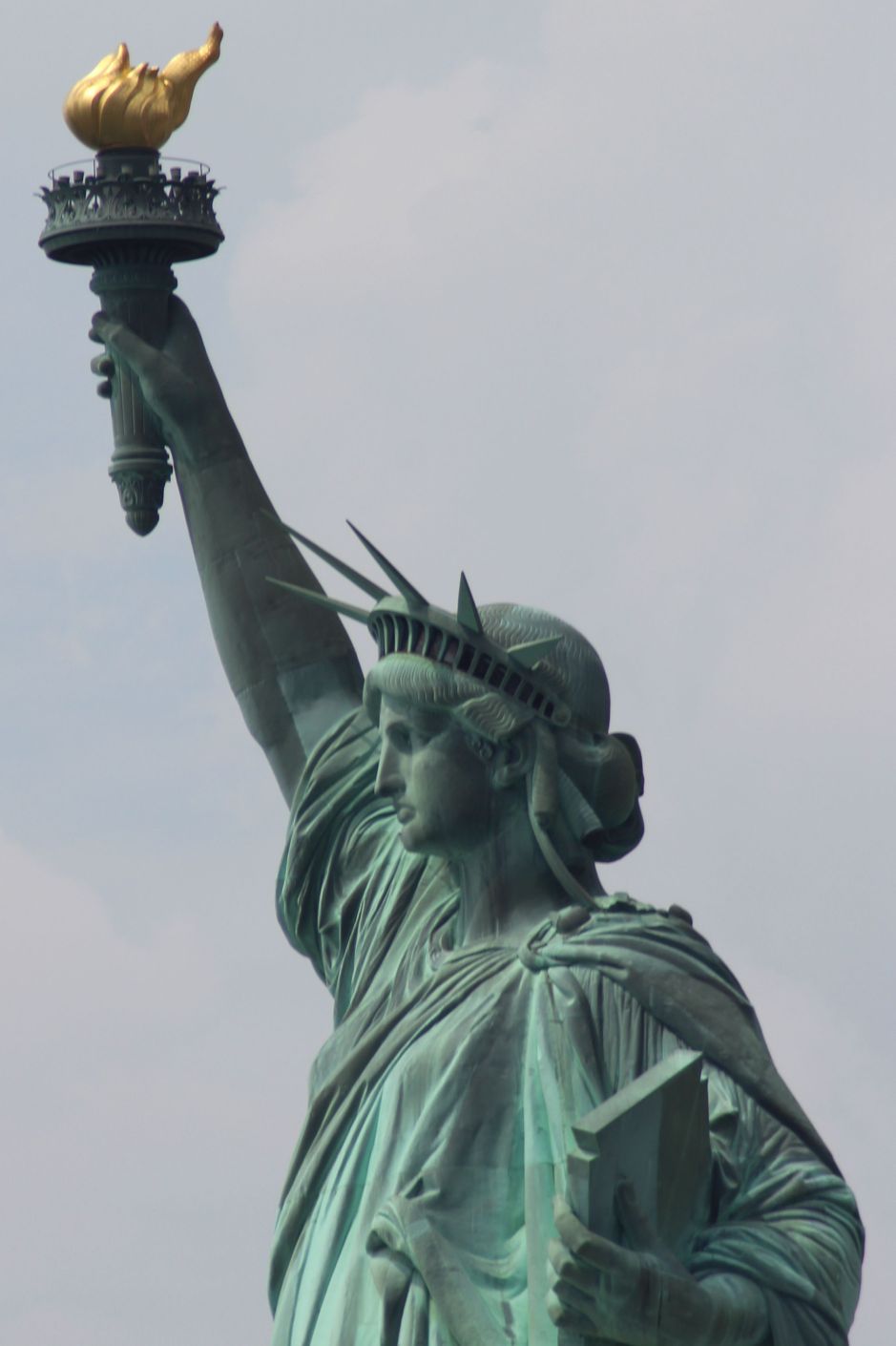
One of the most influential poems in American history is “The New Colossus” by Emma Lazarus. Written in 1883 to help raise funds for the pedestal of the Statue of Liberty, the poem was not originally intended to become famous. In fact, it was largely forgotten for years after it was written.
Most people are surprised to learn that the poem was not originally part of the Statue of Liberty. The statue itself was a gift from France celebrating liberty and democracy. It was only in 1903, sixteen years after Lazarus’s death, that a bronze plaque bearing the poem was installed inside the pedestal.
Today, however, many readers recognize its closing lines, which have become inseparable from the monument itself:
“Give me your tired, your poor, Your huddled masses yearning to breathe free…”
Emma Lazarus
What fascinates me about “The New Colossus” is that it did something very few poems ever accomplish. It changed the way people saw a monument.
The Statue of Liberty was already standing in New York Harbor when Lazarus wrote her poem. Yet over time, her words became so closely associated with the statue that many people now think of the poem and the monument as a single work. A few lines of poetry helped shape how generations of Americans understood one of the country’s most recognizable landmarks.
That’s an extraordinary accomplishment for any writer.
As poets and readers, we sometimes forget how powerful language can be. Most poems will never become part of a national conversation, nor do they need to. Yet “The New Colossus” offers a reminder that poetry can leave a lasting mark on culture in unexpected ways.
I also enjoy the fact that the poem’s influence wasn’t immediate. It wasn’t a viral sensation. It wasn’t an overnight success. It spent years in relative obscurity before eventually finding its place in American history. There is something encouraging about that for writers.
As Independence Day approaches, consider taking a few minutes to read “The New Colossus.” Even if you’ve encountered those famous closing lines before, reading the entire poem offers a new appreciation for what Emma Lazarus accomplished.
More than a century later, people are still discussing her words. That’s not a bad legacy for a poem.
Do you have a favorite poem that feels especially American to you? We’d love to hear about it in the comments.
The New Colossus
BY EMMA LAZARUS
Not like the brazen giant of Greek fame, With conquering limbs astride from land to land; Here at our sea-washed, sunset gates shall stand A mighty woman with a torch, whose flame Is the imprisoned lightning, and her name Mother of Exiles. From her beacon-hand Glows world-wide welcome; her mild eyes command The air-bridged harbor that twin cities frame. “Keep, ancient lands, your storied pomp!” cries she With silent lips. “Give me your tired, your poor, Your huddled masses yearning to breathe free, The wretched refuse of your teeming shore. Send these, the homeless, tempest-tost to me, I lift my lamp beside the golden door!”
One of poetry’s great strengths is its ability to capture a moment of recognition.
Or, in some cases, a moment of misrecognition.
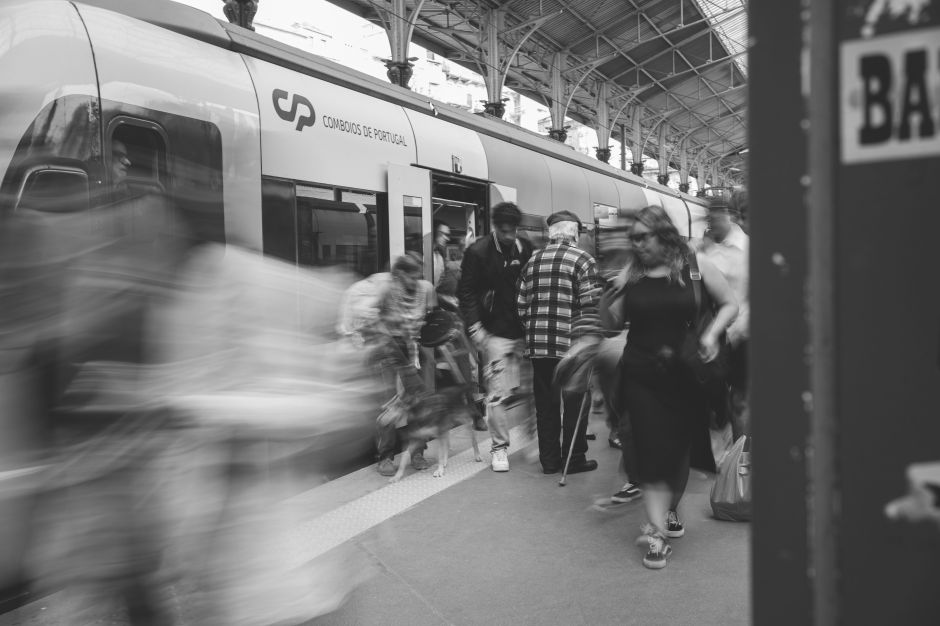
Toni Artuso’s “To the Woman Waiting on the Train Station Platform” begins with observation. The speaker notices a woman dressed in striking over-the-knee boots, a miniskirt, and a dark jacket. The details are vivid. The woman commands attention. She appears confident, glamorous, and perhaps a little intimidating.
Like the speaker, readers begin constructing a story.
Who is she?
Where is she going?
What kind of person dresses like this on a cold day?
The poem invites us to ask these questions while quietly reminding us that we don’t actually know the answers.
What follows is a wonderful example of how poetry can examine the assumptions we make about strangers. We see someone for a few moments and immediately begin filling in the blanks. Clothing becomes personality. Posture becomes character. Appearance becomes identity.
Then comes the turn.
The woman looks back.
Suddenly, the speaker notices traces of adolescent acne beneath carefully applied makeup. It is a small detail, but it changes everything. The glamorous stranger becomes a human being with a history. The mystery remains, but the distance narrows.
What I admire about the poem is its restraint. It never tells us what to think about the woman. It simply shows us how quickly we create stories about people we do not know and how easily those stories can be disrupted by a single unexpected detail.
In only a few lines, Artuso moves from attraction and curiosity to something deeper: empathy.
The poem also feels particularly well suited to its author. Toni Artuso is an emerging, and as she humorously describes herself, “aging” trans writer from Salem, Massachusetts. Her work has appeared in numerous publications, including The Christian Science Monitor, The Ekphrastic Review, Salamander, and Honeyguide Literary Magazine, which nominated one of her villanelles for both a Pushcart Prize and Best of the Net.
Reading this poem, I found myself thinking about how often we mistake appearance for understanding. We notice what is visible and assume we know the rest. Yet every person carries experiences, struggles, triumphs, and insecurities that remain hidden from view.
The woman on the platform remains largely unknown to us. That is precisely why the poem succeeds. Artuso allows her to remain a stranger while reminding us that strangers are always more complicated than the stories we tell ourselves about them.
Long after I finished reading the poem, I found myself returning to that final image. Not because it answers the mystery of who the woman is, but because it reminds us how much of every human being remains unseen.
Have you ever imagined the life of a stranger?
There are so many more wonderful works to read, listen to, and see. Visit Instant Noodles!
PATH 1: Building a Readership Through Poetry Readings
When poets talk about building an audience, the conversation often turns immediately to social media, websites, and marketing strategies. While those tools can certainly help, many poets overlook one of the oldest and most effective ways to find readers: reading their work aloud.
Poetry began as an oral art form. Long before poems appeared in books, journals, and websites, they were shared through voice and performance. Even today, a strong reading can create a connection that no social media post can match.
Many poets hesitate to participate in readings because they assume they need a published collection, a large following, or years of experience before they are ready. In reality, most reading communities welcome poets at a wide range of experience levels. Open mics, community events, library programs, and local literary gatherings can all provide opportunities to share your work.
If you’re wondering where to begin, start by looking close to home. Libraries, independent bookstores, arts organizations, community colleges, literary festivals, and local writing groups often host readings and open mics. Social media can also help uncover opportunities. Follow poets, literary journals, bookstores, and writing organizations in your region and pay attention to the events they promote. You may discover that there are more opportunities to share your work than you realized.
Don’t overlook virtual events. Organizations such as Poetry Super Highway, The Writers Center, Poets & Writers, and many regional poetry groups regularly host online readings and open mics. Event calendars on Poets & Writers and Eventbrite can also help uncover opportunities throughout the year. Many poets have built meaningful friendships, readerships, and professional connections through virtual events they attended from their own living rooms.
The benefits extend far beyond the reading itself. Every event introduces you to people who care about poetry. You meet other writers, potential readers, organizers, editors, and booksellers. Over time, these connections begin to form a literary community around your work.
Readings can also help you become a stronger poet. A poem that works beautifully on the page may reveal weaknesses when read aloud. Awkward phrasing, confusing transitions, and unnecessary words often become more obvious when spoken. The audience’s reaction can also teach you a great deal about how your work is being received.
One common misconception is that poetry readings only matter if they lead directly to book sales. While selling books is certainly welcome, the larger goal is visibility. Readers are far more likely to remember a poet whose work they have heard than a name they happened to scroll past online. Every reading plants seeds that may grow into future opportunities, whether that means invitations to other events, journal recommendations, workshop connections, or eventual book purchases.
For poets who are shy or nervous, it can help to start small. Attend a reading before signing up to participate. Read a single poem at an open mic. Volunteer to share work at a workshop or community event. Confidence grows with practice, and most poetry audiences are remarkably supportive.
If you have a collection available, bring copies. If you maintain a website, newsletter, or social media account, mention it briefly. Have a simple way for interested readers to stay connected. The goal is not to deliver a sales pitch, but to make it easy for people who enjoyed your work to find you again.
Perhaps most importantly, remember that building a readership happens one reader at a time. Very few poets wake up to discover thousands of devoted followers. Most audiences are built through repeated acts of showing up, sharing work, and participating in the literary community.
A successful poetry reading is not measured solely by the number of books sold or the size of the audience. Sometimes success looks like a conversation after the event, an invitation to read elsewhere, or a single person who tells you that your poem stayed with them long after the evening ended.
Poetry is meant to be read, but it is also meant to be heard. If you’re looking for ways to build a readership, consider stepping up to the microphone. You may discover that your next reader is already sitting in the audience.
Just as importantly, be willing to sit in the audience yourself. Attend readings even when you’re not on the program. Support fellow poets. Listen carefully to their work. Literary communities thrive when writers show up for one another, and some of the most meaningful friendships, opportunities, and collaborations begin simply by being present. The poets who consistently support others often find that support returned when it is their turn to step up to the microphone.
Do you know of a virtual event that readers can apply to? Leave it in the comments, and we’ll share it!
When most people hear the term “Poet Laureate,” they think of a nationally recognized poet appointed to represent poetry across an entire country. What many writers don’t realize is that poet laureates exist at many levels, including states, cities, counties, tribal nations, universities, and even local arts organizations.
In fact, your community may already have a Poet Laureate.
The word laureate comes from the laurel wreaths awarded to distinguished individuals in ancient Greece and Rome. Over time, the term became associated with artists and writers who were formally recognized for their contributions. Today, a Poet Laureate is generally a poet selected to serve as an ambassador for poetry within a particular community.
While the United States Poet Laureate receives the most attention, local poet laureates often have a more direct impact on everyday readers and writers. Their responsibilities may include giving public readings, visiting schools, organizing workshops, promoting literacy programs, supporting local literary events, and encouraging people to engage with poetry.
The specifics vary from one community to another. A state Poet Laureate may travel widely throughout the state, while a city Poet Laureate might focus on local schools, libraries, and community events. Some positions are largely ceremonial. Others involve active outreach and public programming.
For poets, these positions are worth paying attention to for several reasons.
First, local poet laureates are often deeply connected to the literary life of their communities. They may organize readings, maintain event calendars, promote local writers, or create opportunities for poets to share their work.
Second, poet laureate programs frequently support projects that benefit writers and readers alike. Community anthologies, public poetry installations, workshops, festivals, and educational programs often emerge from laureate initiatives.
Third, some poets may eventually wish to pursue a laureate position themselves.
Many writers assume these positions are reserved for nationally known poets. While experience and publication history certainly help, local laureate programs often seek poets who are engaged with their communities and interested in promoting poetry. The ideal candidate is not always the most famous poet. Often, it is someone willing to serve as an advocate for literature and the arts.
Selection processes vary widely. Some poet laureates are appointed by elected officials, arts councils, libraries, or cultural commissions. Others are chosen by review committees after an open application process. In many communities, poets may nominate themselves, while in others they must be nominated by another individual or organization.
If the idea interests you, start by researching your local area. Search for your state’s Poet Laureate program, check with your city or county arts commission, visit local library websites, and explore arts organizations in your region. Even if your community does not currently have a poet laureate program, learning how neighboring communities operate theirs can be illuminating.
You may also discover opportunities to serve on committees, volunteer at literary events, participate in public readings, or support initiatives created by current laureates. These experiences can help you become more involved in your local literary community while building relationships with other writers and arts advocates.
Perhaps the most important lesson is that poetry exists far beyond books and literary journals. Poet laureates remind us that poetry can be part of civic life, education, public art, and community engagement. They help bring poetry into places where readers might not otherwise encounter it.
So here’s a challenge: spend a few minutes researching your community. Does your state have a Poet Laureate? Does your city? Your county? A nearby university? You may discover that a poetry ambassador is already working in your area, creating opportunities for writers and readers alike.
And if no such program exists, perhaps that’s a conversation worth starting.
We’d also love to hear what you discover. Does your state, city, county, tribal nation, or university have a Poet Laureate? What kinds of programs, readings, workshops, or literary initiatives are they involved in? Share what you find in the comments. One of the joys of the poetry community is discovering the many different ways poetry is supported across the country, and your local laureate may inspire poets in places far beyond your own backyard.
Virginia Watts
Virginia Watts is the author of poetry and stories found in The MacGuffin, Epiphany,CRAFT, The Florida Review, Reed Magazine, Pithead Chapel, Eclectica Magazine among others. She has been nominated four times for a Pushcart Prize. Her debut short story collection Echoes from the Hocker House was short listed for 2024 Eric Hoffer Grand Prize, selected as one of the Best Indie Books of 2023 by Kirkus Book Reviews, and won third place in the 2024 Feathered Quill Book Awards. Please visit her.
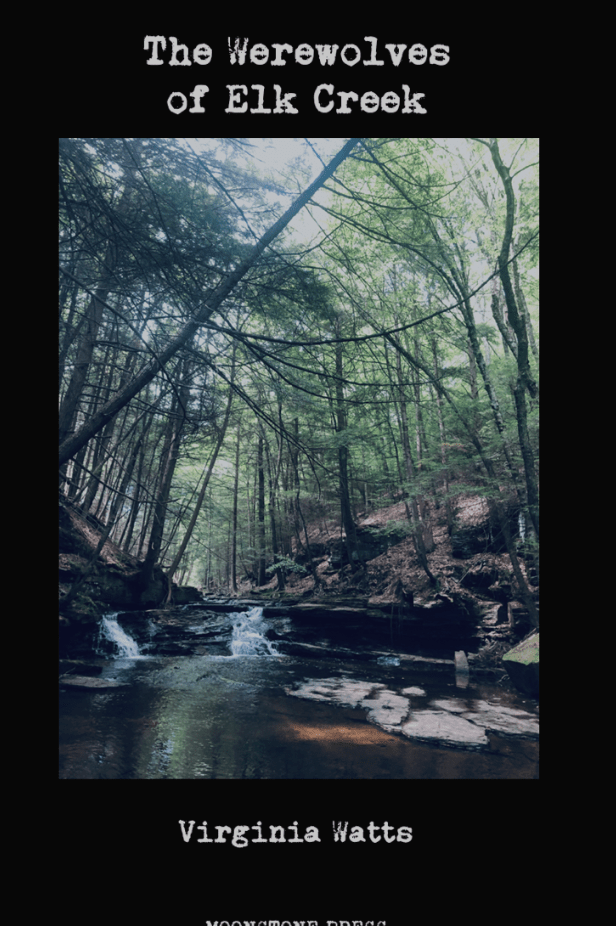
Virginia’s new book is now available from Old Scratch Press:
One of the most common questions poets ask is whether they should self-publish their work or pursue traditional publication. Unfortunately, there is no single answer that fits every writer. The best choice depends on your goals, your audience, and what you hope to achieve with your collection.
Traditional publishing offers several advantages. An established publisher may provide editing, design, distribution, and marketing support. Publication through a respected press can also carry a certain level of prestige and may help introduce your work to readers who would not otherwise discover it. The challenge, of course, is that poetry collections can be difficult to place. Many presses receive far more submissions than they can publish, and acceptance often requires patience, persistence, and a willingness to face rejection.
Self-publishing offers a different path. It gives poets complete creative control over their work, from the selection of poems to the cover design and publication timeline. Rather than waiting months or years for a response from a publisher, authors can move forward when they feel their manuscript is ready. For poets who have already built an audience through readings, workshops, social media, or literary journals, self-publishing can be an effective way to connect directly with readers.
Some poets choose a middle path by working with a partner publisher or cooperative press. In these arrangements, authors may receive professional support with editing, design, production, and distribution while maintaining a greater degree of involvement and creative control than is typical in traditional publishing. Depending on the organization, costs, responsibilities, and royalties may be shared in different ways. For poets who value both collaboration and independence, this approach can offer an appealing alternative.
Regardless of the path you choose, publishing comes with responsibilities. Self-published authors often become project managers, responsible for editing, design, formatting, distribution, and promotion. While modern publishing platforms have made it easier than ever to produce a book, producing a professional-quality collection still requires time, effort, and attention to detail.
Cost and sales expectations should also be part of the decision. Most poetry collections sell modestly, regardless of how they are published. Traditional publishing may reduce or eliminate upfront costs for the author, but royalties are often lower and advances, when offered, tend to be small. Self-publishing allows authors to retain a larger share of each sale, but they are usually responsible for expenses such as editing, cover design, and formatting. Before choosing a path, it is worth considering not only how you want to publish your collection, but also who you expect to buy it and how you plan to reach those readers.
Another factor worth considering is where you are in your writing life. Many poets who choose self-publishing or cooperative publishing are not necessarily doing so because they failed to secure a traditional contract. Often, they are at a stage where they no longer wish to spend years waiting for permission to share work that feels ready. They want to hold the book in their hands, place it in front of readers, and move on to the next project.
At the same time, younger poets sometimes underestimate the opportunities self-publishing can create. A professionally produced collection can help establish a readership, create speaking opportunities, and serve as a foundation for future publishing projects. Publishing independently does not close doors. In some cases, it opens them.
Some poets hesitate to publish independently because they worry it will make them seem less legitimate than poets associated with universities, MFA programs, or established literary presses. Those concerns are understandable. The literary world can sometimes feel hierarchical, and it is easy to conclude that certain credentials matter more than the work itself.
In reality, good poetry emerges from many places. Many wonderful poets come out of MFA programs, universities, and literary journals. Poetry has always been larger than academia.
What is also true is that many poets outside those circles sometimes feel excluded, intimidated, or invisible. It can be easy to assume that publication by a university press or admission to a prestigious program automatically makes someone a better poet.
Yet poetry’s history tells a more complicated story. Whitman wasn’t an MFA. Dickinson wasn’t an MFA. Frost wasn’t an MFA. Bukowski wasn’t an MFA. Mary Oliver wasn’t an MFA.
The truth is that poetry has many rooms. The university is one of them. It isn’t the whole house.
There is also a reality that many poets, regardless of publishing path, eventually discover: marketing is largely the poet’s responsibility. Traditional publishers can help, and some presses do far more than others, but few poetry collections succeed because a publisher does all the promotional work. Readers connect with poets who are willing to participate in readings, interviews, social media, literary events, newsletters, podcasts, and conversations about their work. Whether your collection is traditionally published, self-published, or released through a cooperative press, your willingness to help readers discover it will have a significant impact on its success.
Perhaps the most important question is this: Why do you write poetry?
If your primary goal is to secure a publishing contract, your path may look very different from someone whose goal is to share meaningful work with readers. Most poets do not begin writing because they dream of contracts, advances, or industry recognition. They write because they love language, because they have something to say, or because poetry helps them make sense of the world.
A publishing contract can be gratifying, but it is not a measure of artistic worth. Many talented poets never receive one. Publication decisions are influenced by timing, editorial preferences, market considerations, and simple luck, not talent alone. Failing to secure a traditional publishing deal does not make someone a failed poet. Likewise, receiving a publishing contract does not automatically make someone a great one. The quality of the work and the commitment behind it matter far more than the path it takes into the world.
For many poets, the goal is not to generate significant income, but to be read. We spend countless hours shaping language in the hope that a poem will connect with another human being. Whether that connection happens with ten readers or ten thousand, there is something remarkable about knowing your words have found a home in someone else’s mind.
A well-crafted collection that finds its readers is a success, regardless of the path it takes to get there. Poetry isn’t really complete until somebody reads it.
What has your experience been? Have you self-published poetry, pursued traditional publication, or explored both routes? We’d love to hear your thoughts in the comments.
INSTANT NOODLES LIT MAG is seeking contributors for our upcoming issue, Al Dente — and we want your work
If you’re an indie writer, poet, or artist, join us Saturday, June 13, at 5 PM Eastern (2 PM Pacific) for a free online workshop to spark your creative energies and learn where to send completed submissions.
Hosted by Robert Fleming of Old Scratch Press, Instant Noodles Lit Mag, and the Rehoboth Beach Wrier’s Guild.
Seats are free, and limited. Three lucky participants will win a signed copied of an Old Scratch Press book!
Yes, poetry collections win Pulitzer Prizes too. The 2025 Pulitzer Prize for Poetry has been awarded to Marie Howe’s New and Selected Poems. Howe is known for her observations of everyday life. She explores themes of contemporary womanhood, personal loss, human miracles, sorrow and joy. There are 111 poems in the winning collection. Howe’s direct and honest voice is her trademark. She’s a poet of our time who should not be missed. Some of her most well-known poems involve the loss of her brother in 1989 who died of AIDS-related illnesses. This is what drew me personally to her work many years ago, because I lost a brother about the same time in the same way. Here is one of her poems about this terrible sadness.
Johnny, the kitchen sink has been clogged for days, some utensil probably fell down there. And the Drano won’t work but smells dangerous, and the crusty dishes have piled up
waiting for the plumber I still haven’t called. This is the everyday we spoke of. It’s winter again: the sky’s a deep, headstrong blue, and the sunlight pours through
the open living-room windows because the heat’s on too high in here and I can’t turn it off. For weeks now, driving, or dropping a bag of groceries in the street, the bag breaking,
I’ve been thinking: This is what the living do. And yesterday, hurrying along those wobbly bricks in the Cambridge sidewalk, spilling my coffee down my wrist and sleeve,
I thought it again, and again later, when buying a hairbrush: This is it. Parking. Slamming the car door shut in the cold. What you called that yearning.
What you finally gave up. We want the spring to come and the winter to pass. We want whoever to call or not call, a letter, a kiss—we want more and more and then more of it.
But there are moments, walking, when I catch a glimpse of myself in the window glass, say, the window of the corner video store, and I’m gripped by a cherishing so deep
for my own blowing hair, chapped face, and unbuttoned coat that I’m speechless: I am living. I remember you.
I thought it might be fun to revisit the winner of the first Pulitzer Prize for Poetry. That poet’s name was Edwin Arlington Robinson, and he won the prize two more times after being the first winner. He was known for his narrative skill and psychological depth. Here is what is considered by many to be his most famous poem. It seems a long time ago when he was writing poetry, yet when you read this poem in particular, it seems that he could be writing this poem today. This is because all poetry is about one very complicated subject: humanity.
Virginia Watts is the author of poetry and stories found in The MacGuffin, Epiphany,CRAFT, The Florida Review, Reed Magazine, Pithead Chapel, Eclectica Magazine among others. She has been nominated four times for a Pushcart Prize. Her debut short story collection Echoes from the Hocker House was short listed for 2024 Eric Hoffer Grand Prize, selected as one of the Best Indie Books of 2023 by Kirkus Book Reviews, and won third place in the 2024 Feathered Quill Book Awards. Please visit her.
Virginia’s new book is now available from Old Scratch Press:
A photo I took, and then photoshopped a bit, of black radishes. I haven’t tried them yet. They’re as large as beets. Have you tried them?
As a human perhaps the toughest task I face is what the heck to feed me, and the spouse and child, each day for dinner. Breakfast everyone is on their own. Daughter, who has a light appetite, has a protein shake. Spouse, who has a sweet tooth, has some sort of flaky thing and coffee. I have several coffeeeeeees, and, well, I never know. Could be beans on toast. Coudl be leftover takeout. Could be tomatoes and olives in a bowl. Could be yogurt. Might be soup. Seldom is eggs.
Lunch… do people eat lunch? I don’t always. The meals seem to run into each other, and usually lunch is the loser for me, because there is not time to have breakfast, do all the morning things, then do the work things, and fit in lunch too, before it’s time for dinner. But I love lunch. I love lentils and tuna, salads of any kind, rice and tofu, possibly more yogurt. Daughter eats the same meal every day, packed in a lunch bag, Annie’s Organic Star Pasta. We put it in a thermos, and, for about four years now, she eats it…. every. single. day. Dedication. Spouse eats, most likely, more sweet and flaky things. But me, I am most apt to have more coffee, and maybe chomp on some lettuce as I am adding some to the guinea pig cage.
Dinner. Dinner ie exasperating. You know it is! There are, if your life is anything like mine, too many people (and we are only three) who like too disparate things, and have crazy schedules, and it can be downright tough to get everything ready on time for everyone’s schedule, but the toughest of all is thinking WHAT?? what to feed everyone.
Enter poetry, short memoir, short short stories, and art, to save the day, as usual!
As you may know, if you have read this blog before. I started a lit mag, Instant Noodles (gee, named after food. Obsessed? Maybe…..), and now Old Scratch Press is running it. Up until this year I was the only one choosing the pieces, and, often I was moved to choose pieces about food. And I have to say, on a side note, getting to read so many wonderful entries has been nothing but a pleasure. I love Instant Noodles, and I have really enjoyed all the pieces, and all the art too. But, yes, it may be possible to make the assumption that I am slightly food… centric? Motivated? Obsessed? And I have often been charmed by pieces that relate to food in some way, even if it is only in my mind.
And so, in this post, I want to direct you to take a look at a few of them.
The first is the memory piece by John Johnson, “Moss Soup and Manicotti,” where he remembers his grandmother’s cooking, “For love in this family was measured by the number of courses served and the temperature in the kitchen….”
I have long loved, “This Is Just to Say,” by William Carlos Williams, the famous short piece about plums. I also love “Stolen Plums,” by Benjiman B. White:
“Shit! I forgot to buy the fucking fresh tomatoes. But we have sun-dried. I’ll work around it.”
Of course she will, as she did two days prior when she forgot the dough needed 24 hours to rise and recovered by scrubbing the pizza for pasta primavera or five days earlier when she left her cherished butter lettuce at the grocery and could atone for the evil deed only with a luscious chopped salad or two weeks ago when she entered her realm crowing about the terrific tuna casserole we were going to enjoy only to realize she had bought sardines and would have to settle for a salad Niçoise (that of course was not chopped liver).
So, for dinner tonight, I fell back on a childhood meal that both my mother and my father used to make from time-to-time when magic and inspiration failed them: leftover meat in gravy ladled over extra cripsy toast. I like to eat mine with hot cherry peppers, and each bite will have, if I’m lucky, meat, bread, gravy, a smidgeon of some sort of potato (I made scalloped), a little scrap of veg., and a small bit of hot cherry pepper, to cut through all that thick buttery gravy and make the moutful pop.
It’s pouring down cold buckets of icy rain where I am.
Wherever you are, may you be full of something nice and warm.
Participate in the Reclaiming Mni Sota Indigenous Writers Grant 24-Hour Fundraiser!
Join us for a dynamic online event: the Reclaiming Mni Sota Indigenous Writers Grant 24-Hour Live Fundraiser, starting on Friday, Nov 3, at 7pm (Central Daylight Time). This event is dedicated to supporting and elevating Indigenous writers in Mni Sota (Minnesota).
Over the course of 24 hours, we’ll host a series of captivating interviews featuring distinguished guests from the writing, editing, and publishing realms. You’ll have the opportunity to connect with accomplished writers, delve into their experiences, and gain insights into their creative processes.
By participating in this fundraiser, you’ll be making a meaningful contribution to the Reclaiming Mni Sota Indigenous Writers Grant, an initiative promoting literary diversity by aiming to raise $10,000 for a Minnesota-based Indigenous writer. Your support can have a significant impact on nurturing Indigenous voices and storytelling.
Make a note on your calendar and be part of this extraordinary event. Together, let’s celebrate and pay tribute to Indigenous writers, their narratives, and their invaluable contributions to our communities.
The silent auction, featuring numerous exclusive prizes, begins on Tuesday, October 10, and concludes on Saturday, November 4, just an hour before the 24-hour live fundraiser ends. The winners of the silent auction items will be announced during the final hour of the event. All proceeds from the auction will directly benefit the Reclaiming Mni Sota Indigenous Writers Grant. To view and place bids on the items, visit this link: https://historythroughfiction.betterworld.org/auctions/reclaiming-mni-sota