
beguile, verb, as in to fascinate.

to attract or delight as if by magic…
What have you been beguiled by?

beguile, verb, as in to fascinate.
to attract or delight as if by magic…
What have you been beguiled by?

Many poets spend years submitting individual poems to journals, attending readings, participating in workshops, and building relationships within the literary community. These activities are valuable and often necessary. Yet at some point, many poets begin asking a different question:
“When is it time to put a collection together?”
For some writers, the answer arrives naturally. A group of poems begins to speak to one another. Certain themes emerge. Images recur. The manuscript starts to feel less like a collection of individual works and more like a conversation taking place across dozens of pages.
For others, the decision is more difficult. Many poets delay publishing a collection because they worry they are not ready, that they have not accumulated enough publication credits, or that they have not yet found a traditional publisher. While those concerns are understandable, they sometimes prevent writers from sharing work that is already prepared to meet readers.
One of the great misconceptions about poetry publishing is that publication itself is the finish line. In reality, publication is often the beginning of a new stage in a poet’s development.
A collection gives readers a place to go.
Someone may enjoy a poem in a journal, hear you at a reading, or discover your work through social media. A collection allows those readers to spend more time with your voice and ideas. It transforms a series of individual encounters into a deeper relationship between writer and reader.
Collections also create opportunities that individual poems sometimes cannot. A published book can lead to readings, interviews, festival appearances, workshop invitations, review opportunities, podcast conversations, and future publishing projects. It becomes a calling card for your work and a record of your growth as a writer.
This is one reason many poets discover that one collection often leads to another.
The process of assembling, revising, publishing, and promoting a manuscript teaches skills that carry into future projects. You learn how poems work together. You learn how readers respond to your work. You learn what aspects of publishing you enjoy and which ones you would rather delegate to others. Most importantly, you gain confidence from completing a substantial creative project.
Fortunately, poets today have more publishing options than ever before.

Some writers pursue traditional publication through independent presses, university presses, and literary publishers. This route can provide editorial support, distribution, and professional recognition, but it often requires patience. Many presses receive far more manuscripts than they can publish, and response times can stretch for months.
Others choose to self-publish. This approach offers complete creative control and allows poets to move forward on their own timeline. Modern print-on-demand services have made self-publishing more accessible than ever. However, self-publishing also requires authors to manage editing, design, formatting, distribution, and promotion themselves or hire professionals to assist with those tasks.
A third option involves working with a partner publisher, cooperative press, or author-services organization. These arrangements often combine professional support with greater author involvement and control. Depending on the organization, responsibilities and costs may be shared in different ways. For many poets, this middle path provides a balance between independence and guidance.
The best choice depends on your goals. Some poets value the prestige associated with a traditional press. Others prioritize speed, flexibility, or creative control. Still others appreciate a collaborative approach that allows them to remain closely involved in the process while receiving professional assistance.
Whatever path you choose, remember that a collection does not need to be perfect before it can be published. Every published poet can point to lines they would revise differently years later. Growth does not stop when a book is released. In many ways, publication simply marks the next stage of the journey.
This is particularly important for poets who find themselves waiting endlessly for permission to move forward. A manuscript sitting unread on a hard drive reaches no one. A collection in the hands of readers has the opportunity to create conversations, build connections, and leave a lasting impression.
That does not mean every manuscript should be rushed into print. Thoughtful revision remains essential. Feedback matters. Professional editing can strengthen a collection dramatically. The goal is not speed for its own sake. The goal is to avoid allowing fear, perfectionism, or uncertainty to keep a finished project hidden forever.
Many poets spend years hoping someone will discover them. There is nothing wrong with pursuing traditional publication, and many excellent collections find homes that way. At the same time, poets today have more choices than previous generations. If your work is ready, there may be more than one path to publication.
After all, the purpose of a collection is not simply to exist. It is to be read.
The poems you’ve spent years writing deserve the opportunity to find readers. And sometimes the first collection does more than reach an audience. Sometimes it gives you the confidence, experience, and momentum to begin the next one.
This concludes our five-part series on building a readership for poetry. We hope you’ve found a few ideas worth trying, whether you’re just beginning to share your work or preparing your next collection. We’d love to hear from you. Which strategies have helped you find readers? What challenges are you facing? And what topics would you like to see us explore next? Leave a comment below, connect with us on social media, or reach out through the Old Scratch Press website. Old Scratch Press exists because poets learn from one another, and we’d love your ideas for future articles and series you’d like to see us tackle.
We’re also launching a new occasional contributor feature called “What’s One Thing You Wish Someone Had Told You?” Poetry is full of lessons we often learn the hard way, and we’d love to share some of that wisdom with the community. If there’s one thing you wish you’d known earlier about writing, submitting, publishing, readings, workshops, marketing, or the poetry life in general, consider writing a short guest article of 500-800 words.
Authors whose articles are selected will be featured on the Old Scratch Press website and along with a short biography, links to their website and social media, and one poem of their choice, whether previously published or not. Our goal is to help poets share both their experience and their work with a wider audience.
If you’re interested, send your article or proposal to guestpost@oldscratchpress.com. We look forward to learning from your experiences.

Many poets begin writing in solitude. A notebook, a keyboard, a quiet room, and a handful of ideas are often all that’s required to start. Yet while poetry is frequently written alone, few poets build a lasting writing life entirely by themselves.
One of the most valuable resources available to poets is community.
For some writers, that community takes the form of a workshop. For others, it may be a reading group, an online gathering, a local poetry organization, or an informal circle of trusted readers. Whatever form it takes, a strong community can help poets grow, remain motivated, and continue writing through the inevitable ups and downs of the creative process.
Workshops, in particular, offer several benefits. They provide opportunities to receive feedback, hear how readers interpret your work, and identify strengths and weaknesses that may be difficult to see on your own. A thoughtful workshop can help a poet sharpen individual poems while also developing skills that carry into future projects.
At the same time, workshops are not simply about critique. Some of the most valuable lessons come from reading and discussing the work of others. Evaluating another poet’s choices often teaches us as much about writing as receiving feedback on our own poems.
For poets who have never participated in a workshop, finding one is often easier than expected. Local libraries, community colleges, arts organizations, independent bookstores, and writing centers frequently host workshops. Online options have expanded dramatically in recent years, making it possible to connect with poets from around the world without leaving home.
For poets wondering where to begin, there are more options than ever before. Local libraries, community colleges, independent bookstores, arts organizations, and state poetry societies frequently host workshops and discussion groups. Many literary journals, writing centers, and nonprofit arts organizations also offer virtual workshops that allow writers to participate from anywhere.
If you’re looking online, start by following organizations such as Poets & Writers, The Writers Center, local arts councils, and poetry organizations in your region. Facebook groups, Bluesky communities, and writer-focused newsletters can also help uncover opportunities. Don’t overlook literary events themselves. Many workshops are discovered through readings, conferences, and conversations with other writers.
As you explore, remember that workshops serve different purposes. Some focus on craft and detailed critique. Others emphasize accountability, encouragement, or community. Before committing to a long-term group, ask yourself what you hope to gain. Are you trying to improve individual poems? Complete a manuscript? Meet other poets? Build confidence sharing your work? The answers can help you find a community that fits your goals.
One final suggestion: don’t wait for the perfect workshop. Attend a reading. Join an online discussion. Participate in a one-day class. Introduce yourself to another poet. Literary communities are rarely built through a single dramatic step. More often, they grow through a series of small, consistent acts of participation.
When choosing a workshop, it is worth remembering that not every group will be the right fit. Some focus heavily on craft. Others emphasize encouragement and accountability. Some are highly structured, while others are more conversational. If one group does not feel productive or welcoming, that does not mean workshops are not for you. It may simply mean you have not yet found the right community.

Community also plays an important role beyond the workshop itself. The poetry world is built on relationships. The poets you meet today may become future collaborators, readers, editors, event organizers, or simply trusted friends who understand the unique challenges of the writing life.
Many opportunities arise through these relationships. Invitations to readings, recommendations for journals, introductions to editors, and collaborative projects often emerge through conversations within the literary community. While talent and hard work remain essential, few poets navigate the literary landscape entirely alone.
Perhaps most importantly, community helps sustain writers over the long term.
The reality is that poetry rarely offers immediate rewards. Publication may take months or years. Collections can require years to complete. Rejections are common. Audience growth is usually gradual. Writers who expect quick results often become discouraged.
This is where community becomes invaluable. Fellow poets understand the excitement of an acceptance, the disappointment of a rejection, the frustration of a stalled manuscript, and the satisfaction of finally solving a difficult line. They remind us that we are not working in isolation and that the challenges we face are shared by many others.
The most successful poets are not always the most talented. Often, they are the ones who remain engaged long enough for their work to mature. They continue reading, writing, revising, submitting, and participating in the literary world year after year.
This is the long game of poetry.
A workshop will not instantly transform your writing. Joining a community will not guarantee publication. Neither will produce thousands of readers overnight. What they can provide is something far more valuable: growth, support, accountability, and connection.
Over time, those small advantages accumulate. One workshop leads to stronger poems. Stronger poems lead to publications. Publications lead to readings. Readings lead to new readers and new opportunities. A writing life is rarely built through a single breakthrough. More often, it is built through years of showing up, learning, and participating.
If you’re looking to build a readership, don’t focus only on promotion. Invest in community as well. The relationships you build along the way may ultimately become one of the most rewarding parts of your poetry journey.

Mention social media to a group of poets and you’ll likely get a wide range of reactions. Some embrace it enthusiastically. Others tolerate it reluctantly. A few would happily throw their phones into the nearest lake if they thought it would help them write more poems.
If you’re trying to build a readership, social media can be a useful tool. The challenge is remembering that it is a tool, not a destination.
Many writers approach social media with unrealistic expectations. They assume they need thousands of followers, viral posts, or a constant stream of content in order to be successful. In reality, most poets build readership the same way they build literary communities: slowly, one connection at a time. Poets with fifty engaged readers who genuinely care about their work are often in a stronger position than someone with thousands of followers who rarely interact with what they post. Readers matter more than numbers.
One of the most common mistakes poets make is treating every post as a sales pitch. Constantly asking people to buy a book, attend an event, or subscribe to a newsletter can quickly exhaust an audience. Social media works best when it feels like a conversation rather than an advertisement. Consider sharing parts of your writing life instead. Talk about a poem you’re working on. Share a favorite line from a poet you admire. Discuss a recent reading you attended. Recommend a literary journal. Celebrate another writer’s success. Give people a reason to follow you beyond the occasional book announcement.
It is also important to remember that not every platform serves the same purpose. Some poets enjoy Instagram’s visual focus. Others prefer Facebook groups, Bluesky, Substack, Threads, or TikTok. Rather than trying to maintain a presence everywhere, choose one or two platforms that feel comfortable and sustainable.
One of the most effective ways to use social media is to join existing communities rather than trying to build an audience from scratch. Look for groups dedicated to poetry, books, literary journals, reading challenges, independent publishing, or genres that align with your work. Readers are already gathering in these spaces. Your goal is not to convince everyone to read your poetry. Your goal is to find the people who already enjoy poetry and become part of the conversation.
The key is to participate as a community member first and a writer second. Read what others post. Offer encouragement. Share recommendations. Celebrate successes. Ask thoughtful questions. People are far more likely to become interested in your work when they know you as a person rather than someone who appears only to promote a book or drop a link. In other words, don’t treat social media groups as billboards. Treat them as communities. The strongest literary relationships often develop through genuine conversations that have little to do with selling anything at all.
Consistency generally matters more than volume. Posting once or twice a week for a year will often accomplish more than posting twenty times a day for two weeks and then disappearing for six months. Readers appreciate reliability far more than intensity. Social media can also be a valuable way to discover opportunities. Many literary journals, bookstores, festivals, workshops, and reading series announce events through their social media accounts. Following organizations you admire can help you stay informed about submission calls, readings, contests, and publishing opportunities.
At the same time, poets should be careful not to confuse visibility with productivity. It is possible to spend hours discussing writing online without actually writing. Most readers ultimately care about the poems themselves, not the number of posts that appeared along the way.
One helpful question to ask is this: “Would I still do this if nobody clicked ‘like’?” If the answer is yes, you’re probably using social media in a healthy way. If the answer is no, it may be worth reconsidering how much time and emotional energy you’re investing in the platform.
It is also important to remember that social media tends to reward attention-grabbing content, while poetry often rewards reflection, patience, and subtlety. A post that receives little engagement is not necessarily unimportant. Likewise, a viral post is not necessarily meaningful. The value of your work cannot be measured by an algorithm.
For many poets, the healthiest approach is to view social media as a bridge rather than a home. Use it to connect with readers, discover opportunities, support fellow writers, and share your work. Then log off and return to the page.
The poets who seem most comfortable online are often those who understand this balance. They participate in conversations, support their communities, and remain visible, but they do not allow social media to become the center of their creative lives.
In the end, readers are built through relationships, not algorithms. Social media can help create those relationships, but it cannot replace the work of writing good poems, supporting other writers, and participating in the literary community.
Use social media if it serves your goals. Ignore the pressure to be everywhere at once. Share your work, encourage others, and remember that the most important part of being a poet still happens away from the screen.

When poets talk about building a readership, literary journals are often one of the first recommendations they receive. Yet many writers, especially those outside academic circles, wonder whether journals still matter in an age of websites, social media, and self-publishing.
The short answer is yes.
Literary journals remain one of the most accessible ways for poets to introduce their work to new readers, establish publishing credentials, and become part of the broader literary conversation. While publication in a journal rarely leads to instant fame or large sales numbers, it can help create the foundation upon which a readership is built.
For many poets, journals provide something equally important: discovery. Readers who may never have encountered your work otherwise can stumble across a poem in a magazine, become interested in your writing, and begin following your career. Editors, event organizers, workshop leaders, and fellow poets often discover new voices through journals as well.
If you’re new to submissions, finding journals is easier than ever. Resources such as Chill Subs, Duotrope, Poets & Writers, New Pages, and the Community of Literary Magazines and Presses (CLMP) maintain extensive databases of literary magazines and submission opportunities. Many journals also maintain active social media accounts where they announce open reading periods, special themes, and contests.
One of the most common mistakes beginning poets make is submitting without first reading the publication. Whenever possible, spend some time with a journal before sending your work. Read several poems. Pay attention to the styles, themes, and voices the editors seem to favor. Not because you should imitate them, but because you’ll gain a better sense of whether your work is likely to be a good fit.
Many journals now accept submissions through online platforms such as Submittable and Moksha. These systems make it easy to track submissions, but they have also increased competition by making it easier for writers to submit widely. Rejection remains a normal part of the process. Even accomplished poets accumulate large numbers of rejections throughout their careers.
At some point, every poet encounters the question of reading fees. Some journals charge a small fee, often between two and five dollars, to help cover administrative costs, software subscriptions, and staff expenses. Others operate entirely without fees. Opinions vary widely on the practice. Some writers avoid reading fees altogether, while others are comfortable paying modest amounts to support journals they respect.

There is no single correct approach. However, poets should be thoughtful about where they spend their money. A small fee for a well-established publication may be reasonable. Paying large amounts to submit work to unknown organizations is generally less advisable. As with any publishing opportunity, it pays to do a little research before opening your wallet.
Another decision involves print versus digital publications. Some poets strongly prefer print journals because they enjoy seeing their work in a physical publication and because print journals often carry a certain prestige. Others appreciate the accessibility of online journals, where poems can be discovered by readers around the world with a simple click.
The truth is that both formats offer advantages. Print journals provide permanence and a tangible reading experience. Online journals often offer broader reach, searchable archives, and the possibility of sharing links directly with readers. Many respected literary publications now operate in both formats, making the distinction less important than it once was.
It is also worth remembering that publication credits are not merely lines on a résumé. Every journal publication expands your visibility. A handful of well-placed poems can lead to invitations to readings, relationships with editors, opportunities for future publication, and readers who may eventually purchase your collection.
For poets considering a future book project, journal publication can be especially valuable. Individual poems published over time help establish a track record of activity and engagement within the literary community. They can also provide useful feedback about which poems resonate most strongly with readers and editors.
At the same time, don’t fall into the trap of believing that journal publication is the only path to legitimacy. Many excellent poets publish widely in journals. Many others build readership through readings, workshops, social media, teaching, community engagement, or independent publishing. Literary journals are one tool among many.
Ultimately, journals matter because they help connect poems with readers. They provide opportunities for discovery, conversation, and community. For poets seeking to build a readership, submitting to journals remains one of the most practical and effective ways to begin sharing work beyond their immediate circle.
If you’ve been considering submitting your poetry, start small. Find a few journals you genuinely enjoy reading, study their guidelines, and send your work into the world. Every publication began with a first submission, and every poet who appears in a journal today was once a writer nervously pressing “submit” for the very first time.

When poets talk about building an audience, the conversation often turns immediately to social media, websites, and marketing strategies. While those tools can certainly help, many poets overlook one of the oldest and most effective ways to find readers: reading their work aloud.
Poetry began as an oral art form. Long before poems appeared in books, journals, and websites, they were shared through voice and performance. Even today, a strong reading can create a connection that no social media post can match.
Many poets hesitate to participate in readings because they assume they need a published collection, a large following, or years of experience before they are ready. In reality, most reading communities welcome poets at a wide range of experience levels. Open mics, community events, library programs, and local literary gatherings can all provide opportunities to share your work.
If you’re wondering where to begin, start by looking close to home. Libraries, independent bookstores, arts organizations, community colleges, literary festivals, and local writing groups often host readings and open mics. Social media can also help uncover opportunities. Follow poets, literary journals, bookstores, and writing organizations in your region and pay attention to the events they promote. You may discover that there are more opportunities to share your work than you realized.
Don’t overlook virtual events. Organizations such as Poetry Super Highway, The Writers Center, Poets & Writers, and many regional poetry groups regularly host online readings and open mics. Event calendars on Poets & Writers and Eventbrite can also help uncover opportunities throughout the year. Many poets have built meaningful friendships, readerships, and professional connections through virtual events they attended from their own living rooms.

The benefits extend far beyond the reading itself. Every event introduces you to people who care about poetry. You meet other writers, potential readers, organizers, editors, and booksellers. Over time, these connections begin to form a literary community around your work.
Readings can also help you become a stronger poet. A poem that works beautifully on the page may reveal weaknesses when read aloud. Awkward phrasing, confusing transitions, and unnecessary words often become more obvious when spoken. The audience’s reaction can also teach you a great deal about how your work is being received.
One common misconception is that poetry readings only matter if they lead directly to book sales. While selling books is certainly welcome, the larger goal is visibility. Readers are far more likely to remember a poet whose work they have heard than a name they happened to scroll past online. Every reading plants seeds that may grow into future opportunities, whether that means invitations to other events, journal recommendations, workshop connections, or eventual book purchases.
For poets who are shy or nervous, it can help to start small. Attend a reading before signing up to participate. Read a single poem at an open mic. Volunteer to share work at a workshop or community event. Confidence grows with practice, and most poetry audiences are remarkably supportive.
If you have a collection available, bring copies. If you maintain a website, newsletter, or social media account, mention it briefly. Have a simple way for interested readers to stay connected. The goal is not to deliver a sales pitch, but to make it easy for people who enjoyed your work to find you again.
Perhaps most importantly, remember that building a readership happens one reader at a time. Very few poets wake up to discover thousands of devoted followers. Most audiences are built through repeated acts of showing up, sharing work, and participating in the literary community.
A successful poetry reading is not measured solely by the number of books sold or the size of the audience. Sometimes success looks like a conversation after the event, an invitation to read elsewhere, or a single person who tells you that your poem stayed with them long after the evening ended.
Poetry is meant to be read, but it is also meant to be heard. If you’re looking for ways to build a readership, consider stepping up to the microphone. You may discover that your next reader is already sitting in the audience.
Poetry is meant to be read, but it is also meant to be heard. If you’re looking for ways to build a readership, consider stepping up to the microphone. You may discover that your next reader is already sitting in the audience.
Just as importantly, be willing to sit in the audience yourself. Attend readings even when you’re not on the program. Support fellow poets. Listen carefully to their work. Literary communities thrive when writers show up for one another, and some of the most meaningful friendships, opportunities, and collaborations begin simply by being present. The poets who consistently support others often find that support returned when it is their turn to step up to the microphone.
Do you know of a virtual event that readers can apply to? Leave it in the comments, and we’ll share it!

One of the most common questions poets ask is whether they should self-publish their work or pursue traditional publication. Unfortunately, there is no single answer that fits every writer. The best choice depends on your goals, your audience, and what you hope to achieve with your collection.
Traditional publishing offers several advantages. An established publisher may provide editing, design, distribution, and marketing support. Publication through a respected press can also carry a certain level of prestige and may help introduce your work to readers who would not otherwise discover it. The challenge, of course, is that poetry collections can be difficult to place. Many presses receive far more submissions than they can publish, and acceptance often requires patience, persistence, and a willingness to face rejection.
Self-publishing offers a different path. It gives poets complete creative control over their work, from the selection of poems to the cover design and publication timeline. Rather than waiting months or years for a response from a publisher, authors can move forward when they feel their manuscript is ready. For poets who have already built an audience through readings, workshops, social media, or literary journals, self-publishing can be an effective way to connect directly with readers.
Some poets choose a middle path by working with a partner publisher or cooperative press. In these arrangements, authors may receive professional support with editing, design, production, and distribution while maintaining a greater degree of involvement and creative control than is typical in traditional publishing. Depending on the organization, costs, responsibilities, and royalties may be shared in different ways. For poets who value both collaboration and independence, this approach can offer an appealing alternative.
Regardless of the path you choose, publishing comes with responsibilities. Self-published authors often become project managers, responsible for editing, design, formatting, distribution, and promotion. While modern publishing platforms have made it easier than ever to produce a book, producing a professional-quality collection still requires time, effort, and attention to detail.
Cost and sales expectations should also be part of the decision. Most poetry collections sell modestly, regardless of how they are published. Traditional publishing may reduce or eliminate upfront costs for the author, but royalties are often lower and advances, when offered, tend to be small. Self-publishing allows authors to retain a larger share of each sale, but they are usually responsible for expenses such as editing, cover design, and formatting. Before choosing a path, it is worth considering not only how you want to publish your collection, but also who you expect to buy it and how you plan to reach those readers.
Another factor worth considering is where you are in your writing life. Many poets who choose self-publishing or cooperative publishing are not necessarily doing so because they failed to secure a traditional contract. Often, they are at a stage where they no longer wish to spend years waiting for permission to share work that feels ready. They want to hold the book in their hands, place it in front of readers, and move on to the next project.
At the same time, younger poets sometimes underestimate the opportunities self-publishing can create. A professionally produced collection can help establish a readership, create speaking opportunities, and serve as a foundation for future publishing projects. Publishing independently does not close doors. In some cases, it opens them.
Some poets hesitate to publish independently because they worry it will make them seem less legitimate than poets associated with universities, MFA programs, or established literary presses. Those concerns are understandable. The literary world can sometimes feel hierarchical, and it is easy to conclude that certain credentials matter more than the work itself.

In reality, good poetry emerges from many places. Many wonderful poets come out of MFA programs, universities, and literary journals. Poetry has always been larger than academia.
What is also true is that many poets outside those circles sometimes feel excluded, intimidated, or invisible. It can be easy to assume that publication by a university press or admission to a prestigious program automatically makes someone a better poet.
Yet poetry’s history tells a more complicated story. Whitman wasn’t an MFA. Dickinson wasn’t an MFA. Frost wasn’t an MFA. Bukowski wasn’t an MFA. Mary Oliver wasn’t an MFA.
The truth is that poetry has many rooms. The university is one of them. It isn’t the whole house.
There is also a reality that many poets, regardless of publishing path, eventually discover: marketing is largely the poet’s responsibility. Traditional publishers can help, and some presses do far more than others, but few poetry collections succeed because a publisher does all the promotional work. Readers connect with poets who are willing to participate in readings, interviews, social media, literary events, newsletters, podcasts, and conversations about their work. Whether your collection is traditionally published, self-published, or released through a cooperative press, your willingness to help readers discover it will have a significant impact on its success.
Perhaps the most important question is this: Why do you write poetry?
If your primary goal is to secure a publishing contract, your path may look very different from someone whose goal is to share meaningful work with readers. Most poets do not begin writing because they dream of contracts, advances, or industry recognition. They write because they love language, because they have something to say, or because poetry helps them make sense of the world.
A publishing contract can be gratifying, but it is not a measure of artistic worth. Many talented poets never receive one. Publication decisions are influenced by timing, editorial preferences, market considerations, and simple luck, not talent alone. Failing to secure a traditional publishing deal does not make someone a failed poet. Likewise, receiving a publishing contract does not automatically make someone a great one. The quality of the work and the commitment behind it matter far more than the path it takes into the world.
For many poets, the goal is not to generate significant income, but to be read. We spend countless hours shaping language in the hope that a poem will connect with another human being. Whether that connection happens with ten readers or ten thousand, there is something remarkable about knowing your words have found a home in someone else’s mind.
A well-crafted collection that finds its readers is a success, regardless of the path it takes to get there. Poetry isn’t really complete until somebody reads it.
What has your experience been? Have you self-published poetry, pursued traditional publication, or explored both routes? We’d love to hear your thoughts in the comments.
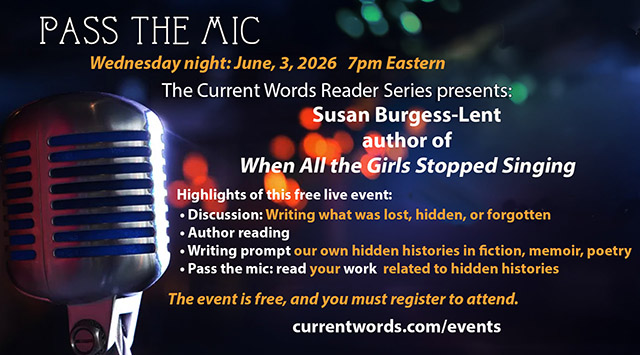
Some families have stories they tell over and over.
Others have stories they never tell at all.
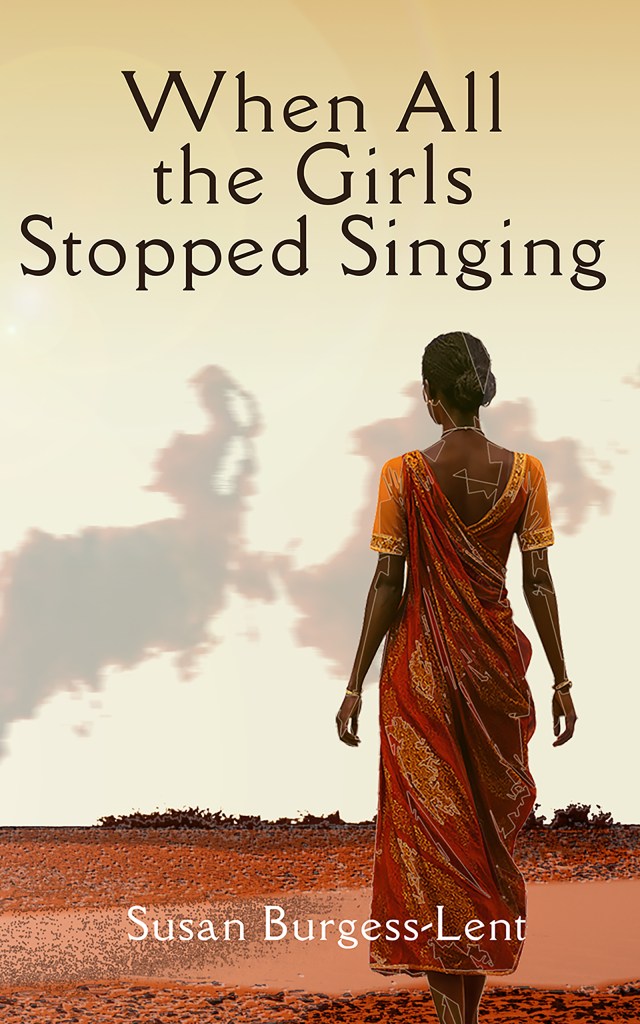
Tonight, Current Words Publishing welcomes Susan Burgess-Lent, author of When All the Girls Stopped Singing, for a special Reader Series event exploring hidden histories, family secrets, and the stories that shape our lives.
Join us live on Zoom at 7 PM Eastern (4P Pacific) for conversation, reading, writing, and community.
Susan will discuss writing about lost, forgotten, and hidden histories, read from her novel, and answer audience questions. We’ll also offer a short writing prompt, an optional Pass the Mic session for readers and writers, and some attendees will win an autographed copy of When All the Girls Stopped Singing.
Whether you’re a writer, a reader, a family historian, or simply someone fascinated by the secrets hidden in ordinary lives, this is an event you won’t want to miss.
The event is free, but you’ll need to reserve your spot.
We hope you’ll join us.


This week in the New York Times there is an article about Mark Oppenheimer writing Judy Blume’s biography. When he began the project, so he says, she liked him and gave him access to her life and her circle, etc. When he sent her the draft, she no longer liked him or the book he was writing about her. Apparently she sent him quite a big pile of notes, and contact ceased soon after that. He published the book anyway. He, and book’s narrator, Molly Ringwald, feel like Judy has to put up with his book, and that Mark did a fine job. According to the NYT article, Molly said, “There might be moments that Judy doesn’t like or agree with, but overall I think it’s a respectful treatment of her and her literary significance.” And, “If Mark didn’t show Judy’s flaws or humanity, it would be hard to feel invested.”
At what point does your life stop being your own? I might argue it’s when you become a parent. But, eventually they grow up, and you get to pivot back to yourself somewhat. Mark could have written the book with, or without, Judy’s help, and that’s the danger of being that level of author, but the fact that she gave him permission at first, and then was unhappy with what he made of her life, gives me pause. How much do we own our own life story?
The NYT made the main photo of the piece one of Mark sitting in a bunk bed. I don’t like this. He’s not at the age, or in life circumstances where he would actually be the person who sleeps in that bed. To me it is a ploy to make him look more innocent. I don’t think he is. I’m disappointed in Molly. For full disclosure, I read a bit of Judy Blume as a kid, from Margaret to some of the adult books, most of them for the sexy bits, honestly. Hey, I was in middle school. But, with apologies to Judy, I have seldom thought of her since. I tried reading Margaret to my daughter when she was in middle school, and we both found it didn’t age well. Plus, my daughter was not raised with the same religiosity I was. So there’s that for the longevity of the book in my life. And anybody can write a biography of anybody. The trick, like it is with our own books, is to get people to read it.
Still, do Mark, Molly, and his publishing company have the right to own Judy’s story, to make the truth of Judy’s life Mark’s version of the truth?
I say no. I say this is another woman losing agency over her own body, life, and body of work, to a man and a corporation. And it seems her only recourse might be for Judy to write her autobiography, to set the record straight. I cannot imagine anything as boring as writing out my own life story. And believe you me, I’ve had a fascinating life. Ha! Whether I have or I haven’t, I’m not ready to relive it all like I’ve had a near death experience. No, no no.

So, whose life is it anyway?
I would love to hear your thoughts.

Dianne Pearce is the chief editor and bottle washer at Current Words Publishing, and the half-cocked imaginer behind Old Scratch Press and Instant Noodles. Pearce loves helping writers realize the dream of having their work published. I mean she is really crazy about doing that for some reason. To that end, to join in the fray, to look at the thing from the other side, to stand in another’s shoes, and all of those things, she is fully expecting and promising to publish her first collection of poetry, In the Cancer Cafeteria, spring of 2026. Please don’t hold your breath. For very long. Happy 2026!
If you’ve ever been to a poetry reading, you’ve probably heard it. The slow cadence. The dramatic pauses. The slightly mystical tone. The voice that signals: I am now doing Poetry.
In fact, when I think about that sentence read in “poetry voice” it would be read like this:
The voice
that signals
I am now
doing
poetry
And each line would end with an up tone, as if the performer was asking a question.
The recent New York Times article digs into this phenomenon, often called the “poet voice,” and asks why many poets fall into the same stylized way of reading their work aloud.
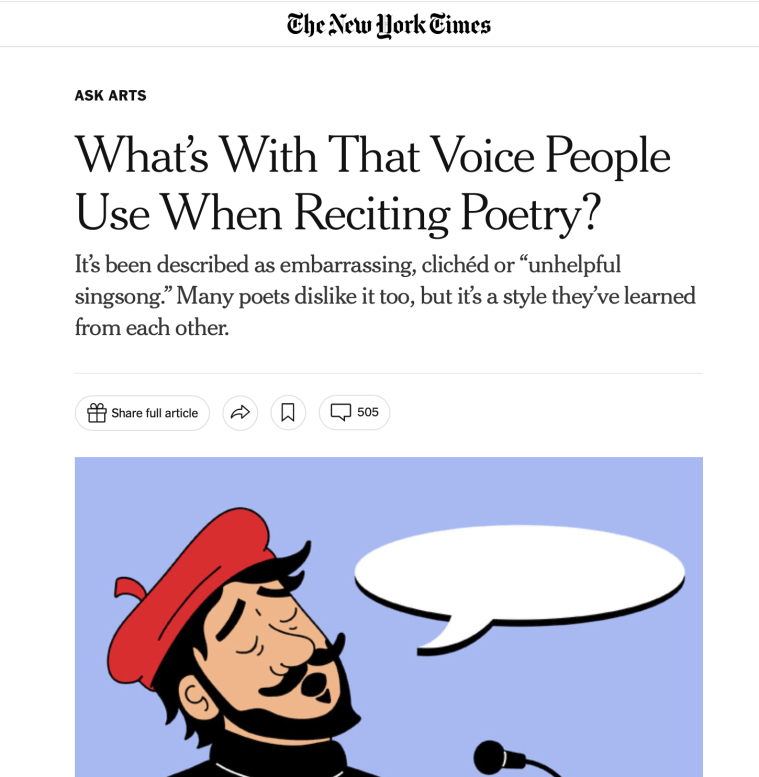
For some listeners, the article says, that way of reading feels comforting and familiar. For others, awkward, distancing, or makes the poem feel like a performance ritual rather than a piece of language meant to connect.
The article points out something important: this isn’t just about aesthetics. It’s about how poetry exists in two worlds at once. On the page, poetry is quiet, private, intimate. Out loud, it becomes physical, embodied, communal. Voice, breath, pacing, silence, and tone all reshape meaning. The same poem can feel completely different depending on how it’s read.
And yet, many readings sound strangely similar.
Why?
There’s also a bigger tension here. Poetry has deep roots in oral tradition. Long before books, poetry lived in voices, memory, and storytelling. But modern literary culture often treats performance and “serious writing” as separate worlds. Spoken word, slam, and performance poetry are seen as different categories entirely, even though they’re doing what poetry has always done: using voice to create meaning. They also might sound different, as performance, when compared to how people read on the performance evenings in your MFA program.
I remember, from the first time I saw poets read aloud, at a bar in Philadelphia in the 1990s, thinking that it was weird that many of them read their work in the same way, and wondering why they did. When I was in my MFA program, and we would read our work at student readings, us poets, fellow students, often read that way. I remember it as mainly the other white women, and that the students and teachers/established visiting poets, could be people who did it. Not that all of them did it, you understand, but that it happened at times among student readers, teacher readers, and visiting poet readers, and it was, in the main, done by my fellow white women. I don’t remember the guys reading that way. I also remember that the teachers (minus a few) and the students in the poetry track were incredibly serious about the writing and performing of poetry. I don’t know that I ever got quite that serious, which is probably a character flaw. You know I’ve got me some of those.
On Threads people are losing their minds about the article (slow news day?) so, let’s talk about it:
• When you hear poetry read aloud, does it deepen your connection to the work or pull you out of it?
• Do you think “poet voice” is a real thing, or just a stereotype we’ve internalized?
• When you hear poetry read aloud, does it deepen your connection to the work or pull you out of it?
• Have you heard “poet voice?”
• How do you read your own work aloud? Casually, dramatically, flat, musical, conversational?
• Should poetry readings sound like performance, conversation, or something else entirely?
• Is hearing the poet’s voice an added layer of meaning, or an intrusion on the reader’s imagination?
Could you….
drop your thoughts….
in the comments?

