There’s a certain stereotype about writers: distracted, dreamy, maybe a little moody, often lost in their own heads. Then there are those of us whose third-grade teacher writes on her report card, “Ellis is very sensitive. She says she doesn’t feel good when she doesn’t want to participate and sometimes puts her hands over her ears.”
What we don’t always name is that many of us identify with something more specific—ADHD, anxiety, depression, OCD, autism, bipolar disorder. In other words, neurodivergence.
Far from being a barrier, these brain patterns often come hand-in-hand with creativity. Our ability to notice connections others overlook, to hyper-focus on a project for hours, or to sense language at a heightened level can all be part of what makes us writers. (Doesn’t everyone have a list of words they hate simply because the way the word feels in their mouth?)
The Double-Edged Sword
Of course, the same brain that gifts us with creative leaps can also work against us. ADHD can make finishing projects feel like climbing Everest. Anxiety can whisper that nothing we write is ever good enough. Depression can steal the life-force necessary to even begin. The very sensitivity that makes us attuned to metaphor and meaning can leave us overwhelmed by the noise of the world.
Reframing the Narrative
Instead of treating neurodivergence as something to battle, what if we reframed it as part of the writer’s toolkit?
Hyperfocus can become a superpower for deep revision. Or help you finish the book!
Restless energy can fuel bursts of freewriting that break past creative blocks. That, and dance breaks.
Heightened sensitivity can deepen character work, dialogue, and description. As long as you remember to take breaks.
The key is learning how to manage the edges—finding rest, support, and strategies so that the gift doesn’t become a burden.
Practical Ways to Support Your Creative Brain
Chunk your writing time. Short, timed sessions (15–25 minutes) can harness focus without overwhelming you.
Write rituals, not rules. A small ritual (lighting a candle, stretching, a playlist) helps train your brain to enter writing mode.
Name the inner critic. Literally give it a name or persona so it loses power over you.
Seek community. Writing groups, workshops, or even online spaces help balance the solitary nature of the work.
Honor rest. Brains that run hot need recovery time. Pushing the pause-button isn’t failing—it’s part of the process.
Why It Matters
When we share openly about the link between writing and neurodivergence, we create permission for others. Permission to stop beating themselves up for struggling with deadlines. Permission to see their “quirks” as part of their artistry. Permission to make choices others might not understand. Permission to write anyway.
Do you identify as a neurodivergent writer? How does it show up in your creative process—both the gifts and the challenges?
Ellis Elliott
Founding member Old Scratch Press Poetry Collective
Author of Break in the Field poetry collection and A Witch Awakens: A Fire Circle Mystery.
Steps Toward Your First Acceptance in a Literary Journal
To my fellow writers out there, I began submitting prose and eventually poetry to literary magazines in 2014. Since that time, I have been published over a hundred times. How did I do it? I learned the ropes and never gave up. More importantly, I never wrote for the purpose of being published. It’s an honor, a wonderful feeling, to have a piece accepted, but in the end of the day, the real joy for me as it is for most writers, is the creative process. Publishing is a very small piece of this magical puzzle. Even so, as writers, most of us would like our work to be read so here are some tips I learned along the way.
Present your best work always. If you have written something, set it aside for some time and return to it later for perspective. ALWAYS have feedback through a professional writing group. One or two friends reading your work will not do. You need professional critique and then you must listen and learn to edit accordingly. None of us can judge our own writing. We simply cannot. Don’t let your ego get in the way of your success.
Prepare a third-person biography. Include information like your location, your publications if you have some, your social media handles and website. If you have not been published, simply say nothing about that or mention that this would be a debut publication. Don’t try to be funny or clever. Be professional.
Prepare a cover letter and keep it simple and professional as well. Address the editor by name if you can. Start with something like: I appreciate the opportunity to submit my fiction story titled “Wind Warp” of 4900 words. Follow with your biography. End by thanking the editor for considering your work. That’s it.
Make a list of journals where your work appears to be a fit as you prepare to submit your work. This will mean reading some of the work the journals have accepted in the past. Lucky for us, many journals are online now or have some excerpts online. Consult resources by Erika Krouse or Clifford Garstang for a ranking of literary journals.
At first, I tried to select mostly smaller, well-respected journals for the bulk of my submissions. Once I got some traction, I aimed higher. If you can find a local journal that limits submissions to local writers, even better. One example of this is Philadelphia Stories, a journal that only publishes writers who are living in or originally from Pennsylvania, Delaware or New Jersey. A smaller pool helps your odds. There is nothing wrong with submitting to a new journal either. In fact, I recommend it. New journals need our support.
I would send a piece to at least twenty journals to start with and see how it goes.
Use standard manuscript format 12-point font Times New Roman. Double Space prose. Single Space poetry. And don’t forget page numbers.
Be encouraged if editors write you a personal note about enjoying your work even though it was not accepted or asking you to submit more work in the future or telling you that you made it to the final cut. All of these are a very big deal so be happy!
You will receive a lot of rejections. I submitted for about a year and a half before I received my first acceptance. Since then, I have had times where I have been “hot” and times of drought. Don’t give up and don’t get discouraged. There are many reasons a piece is not chosen that have nothing to do with the quality of the writing. You get used to the rejections. Promise me. The way I look at it is this writing that I am submitting is what I have to offer. I’ve got nothing else! This is me. I write what comes to me and what I want to write about. Above all, I just hope to tell a good story. I give every poem or story my all. There have been stories that I never placed, and I am okay with that. Some of these did get out in the world in later collections of mine alongside published stories. Be true to yourself and what your heart wants to write about and you will be fine.
Do not follow up with inquiries about your work after it is submitted. If you don’t hear anything for a year, consider the piece unaccepted and move on.
Make sure you keep a list of all the places you submit a piece so when you do have an acceptance, you can quickly withdraw it from other journals considering your piece.
Remember too that when submitting to always follow the guidelines such as whether the journal wants to read blind or not.
Set up a Submittable account because most journals use that now for submissions although some still have their own Submission System or they accept submissions via email only.
Another good idea is to go out for dinner and some glasses of wine with fellow writers submitting their work to share your experiences. Laughter is the best medicine, and you can learn from each other.
I wish all of you the very best in your writing journey!
Virginia Watts is the author of poetry and stories found in The MacGuffin, Epiphany,CRAFT, The Florida Review, Reed Magazine, Pithead Chapel, Eclectica Magazine among others. She has been nominated four times for a Pushcart Prize. Her debut short story collection Echoes from the Hocker House was short listed for 2024 Eric Hoffer Grand Prize, selected as one of the Best Indie Books of 2023 by Kirkus Book Reviews, and won third place in the 2024 Feathered Quill Book Awards. Please visit her.
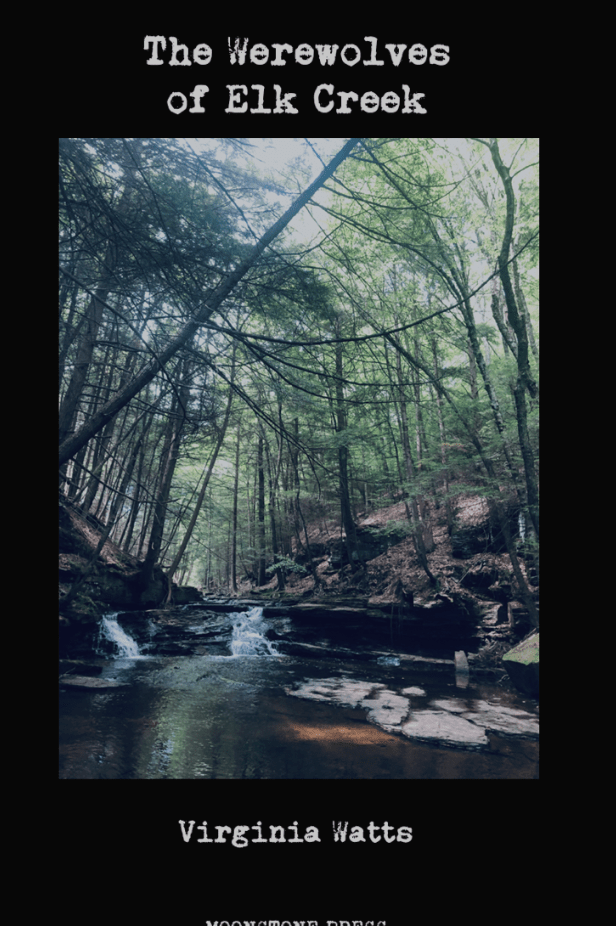
Virginia’s new book is now available from Old Scratch Press:
The holiday/end of year issue of INSTANT NOODLES, the issue where we always ask people to try for humor. Do you have what it takes to make us smile?
Submissions for 2025 are open through November 2, 2025.
The Old Scratch Press team asks that all fiction/non-fiction pieces adhere to a word count of 1,000 words or less.
2025 Themes and Topics
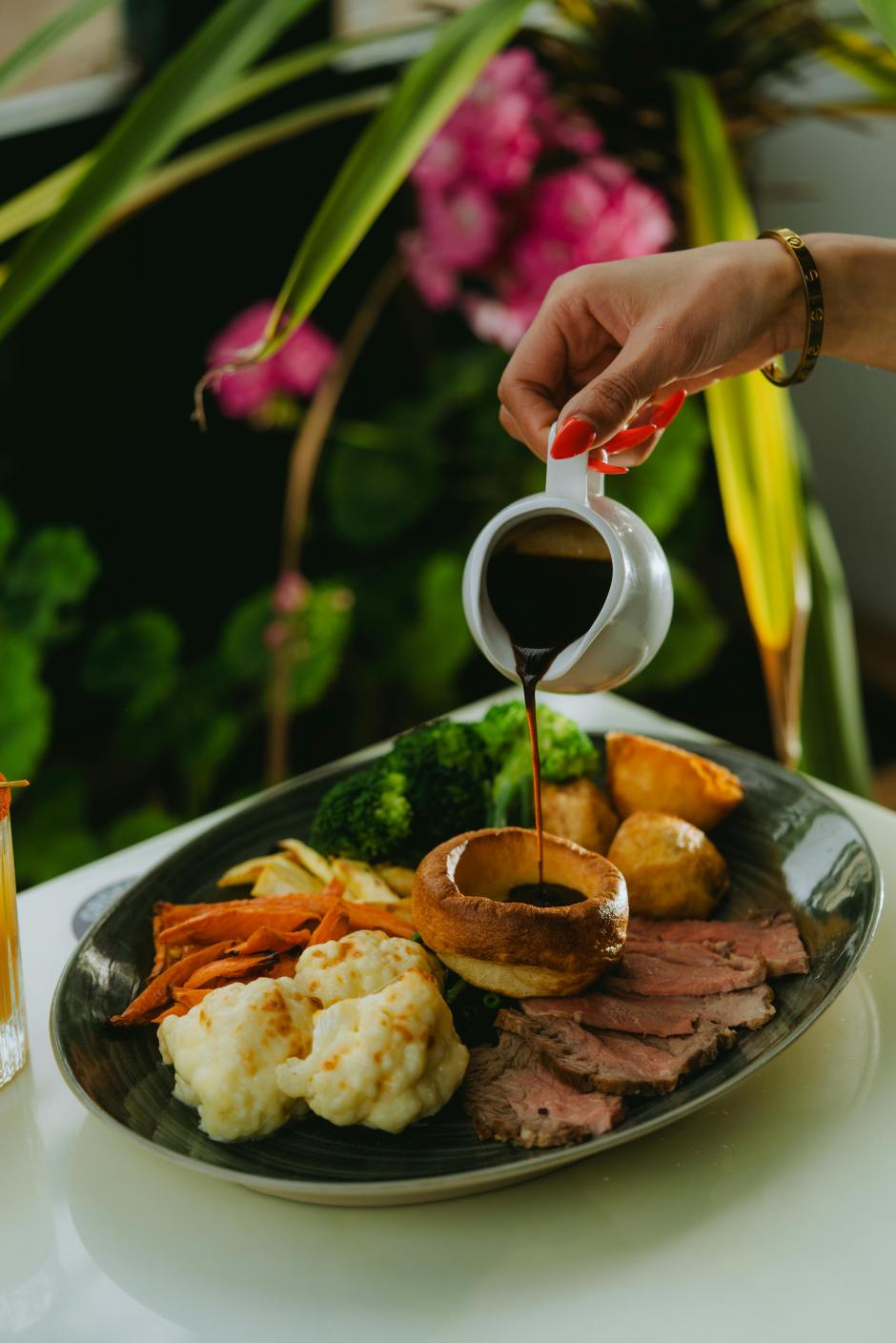
GRAVY is our 2025 winter holiday theme. Give us your best holiday gravy fails, mishaps, ridiculous gravy encounters (any December holiday, from Hannukah, to Solstice, to NYE, etc.) or your best wry work about gravy, in general. The point of the end-of-year issue is always to be light-hearted to downright silly. Submissions for GRAVY are open through NOVEMBER 2, 2025; the issue will publish on DECEMBER 1, 2025.Please CLICK HERE to submit. We’re looking for short fiction, non-fiction, poetry, drama, art, and multi-media.
INSTANT NOODLES is always free to submit to, and free to read. We’re about to announce the pieces that were published that we’re submitting to BEST OF THE NET and PUSHCART, so stay tuned to this station!
Thanks for being an INSTANT NOODLES participant and/or fan! We appreciate you giving indie authors a place to get read!
Sitting on a bench sharing a coffee with old friends in a little northern Pennsylvania village, I saw it for myself. How much poetry in public places matters, even there, in remote mountains, where only about a hundred people reside year-round. Dangling from the willing arms of trees, laminated cards with phrases from poems or short poems that captivated both young and old. Children read them to each other aloud. Adults stopped on their morning walk to pause, read, reflect, nod, sigh or smile. Even some hard to please teenagers stopped their bike tires to read. What I didn’t expect to feel is how much it meant to them and to me. Poetry matters, folks. It matters big time. All writing matters. The Arts make all the difference in the world.
This little town is reflecting other larger movements to display poetry in outdoor places from around the world. Many people have heard of the Poetry in Motion initiative launched 1992 by the NYC Metropolitan Transportation Authority and the Poetry Society of America to bring poetry to millions of harried and stressed commuters. Poetry was displayed is subway cars and digital screens in stations. Each poem was accompanied by artwork. By 2002, 150 poems had been shared from all over the world, spanning the centuries. The poems reached out and met people in their own busy lives and enriched them. Readers reported looking forward to a new poem. They would snap pictures and send them to their friends. The world was different, changed and better.
The Poetry in Motion Initiative was relaunched in 2012 under MTA Arts and Design. You can visit their website to read poems and learn of upcoming programs. Over 30 other US cities launched similar initiatives in the wake of Poetry in Motion including Philadelphia, LA, Nashville, San Francisco and Providence. Public poetry has popped up in many other places such as cafes, libraries, playgrounds and picnic tables in seven national parks thanks to Ada Limon our 24th Poet Laureate who championed the idea of transforming picnic tables into public art by including a historic poem with some connection to the park.
There is also a Facebook page “The Poetry in Public Places Project” that encourages everyone, you and me, to display poetry outdoors. You can visit this page to enjoy creative and inspiring ideas. For example, from Hoboken, NJ, a photo of a box of poetry where people are invited to TAKE ONE, yard signs from the Mercer County Library System, a poem painted on a breakwater in Milwaukee.
I wondered what poems went first in the NYC Poetry in Motion. There were four of them. “Crossing Brooklyn Ferry” by Walt Whitman, “When You Are Old” by William Butler Yeats, “Let There Be New Flowering” by Lucille Clinton and one of my favorites. Enjoy this poem and cheers to more poetry in the open air and hope!
—Ginny
“Hope” is the thing with feathers
“Hope” is the thing with feathers – That perches in the soul – And sings the tune without the words – And never stops – at all – And sweetest – in the Gale – is heard – And sore must be the storm – That could abash the little Bird That kept so many warm – I’ve heard it in the chillest land – And on the strangest Sea – Yet – never – in Extremity, It asked a crumb – of me.
Emily Dickinson
If the New York Subway System asked you for a poem, what would you write?
Virginia Watts has been fortunate to have published nearly 100 pieces in literary magazines including CRAFT, The Florida Review, Reed Magazine, Pithead Chapel, Permafrost Magazine, Broadkill Review, Two Thirds North, Hawaii Pacific Review, Sky Island Journal, Eastern Iowa Review, Evening Star Review and Streetlight Magazine. Nominated four times for a Pushcart Prize and four times for Best of the Net, in 2019, Watts won The Florida Review Meek Award in nonfiction.
Virginia’s new book is now available from Old Scratch Press:
There has been much in the news within literary circles lately about literary journals with questionable practices, mostly focused upon submission fees and how these fees are used. No one should question the idea that it is expensive to run a literary magazine with such costs as editing and overhead, and most importantly, not everything about submission fees should be seen as negative. It is possible that when writers must pay a nominal fee to submit their work to literary magazines, they may be inspired to submit a more edited and stronger piece. However, it’s one thing to pay $3.00 to one journal to submit but let’s face it, most writers must submit the same piece to many magazines if they want to increase their chance of having it published. This is why submission fees can really add up. There is also the idea that if submission fees are charged, less submissions will come in and this will lead to faster publication decisions by editors. Like it or not, it does seem that submission fees are here to stay. If we accept that fact, then we must understand some realities about submission fees.
I am not going to name names here, but some well know literary journals have been engaging in practices that are shameful. It’s hard enough and expensive enough to be a writer trying to get work published in literary journals without these bad actors but, unfortunately, they do exist. One well known journal accepted submissions and charged for over a year but had already stopped reading and publishing new word. They later folded and changed their name. I have personally submitted to journals several times only to realize they had gone defunct. I was never able to get my submission fees back. Recently, several well-known journals held contests, charged the high submission fees customary in literary contests, and never announced any winners. Suffice it to say that just because something calls itself a literary journal doesn’t mean it should.
So, what is a writer to do? How can we protect ourselves from unethical practices and scam journals? Here are some practical ideas to consider.
Is the journal listed on reputable databases such as Poets and Writers, Submittable, NewPages.com, Clifford Gastang Literary Magazine Rankings, MLA International Bibliography, JSTOR
Is the journal’s website polished, free of grammatical and spelling errors. Is it easy to navigate? Does is look professional? A poor website design might be a cause for concern.
Do their publication terms comply with normal industry standards. Publication guidelines should always be clear and concise and include all requirements such as formatting parameters.
Be very concerned if a journal is asking for all rights to your work. They should be asking only for first serial rights.
RED FLAG: Is their submission fee unreasonably high? Are they charging $15.00 as an example when most journals are at $3.00. This should worry you.
Do they explain why they are charging a submission fee of any amount?
If they do charge submissions fees, do they also have yearly contests where they offer a monetary prize?
It should never be difficult to find contact information on the journal’s website, and there should be some explanation of who the editors are and what their editorial process is. A journal should have a physical address and an email address.
Look at their publication history. Have they been publishing consistently? Can you purchase copies of the journal on their website? Look at the most recent issue. Look at the quality.
If the journal has a blog on their website, is it being maintained?
Does the journal submit work to contests such as Pushcart Prize or/and O. Henry Awards?
Do they have a social media presence such as Facebook where they regularly promote the work they publish?
Be aware of any unrealistic or boastful claims about readership.
If you are submitting to a contest, look to see if the list of winners from last year’s contest is listed on the journal’s website. It should be.
Be aware if a journal repeatedly pushes back contest deadlines.
I have been submitting to literary journals for many years and have been lucky to have some level of success. Be aware of where you are sending your writing, but don’t let a few bad apples dissuade you from submitting to literary journals!!! The overwhelming majority are ethical to a fault and the writing world would be lost without literary journals. They are an invaluable part of our art form. I read literary journals, subscribe to them, admire them immensely and thank them for all the wonderful writing they bring to the world. So, happy submitting to my fellow writers and the best of luck to you all!
~Ginny
Virginia Watts has been fortunate to have published nearly 100 pieces in literary magazines including CRAFT, The Florida Review, Reed Magazine, Pithead Chapel, Permafrost Magazine, Broadkill Review, Two Thirds North, Hawaii Pacific Review, Sky Island Journal, Eastern Iowa Review, Evening Star Review and Streetlight Magazine. Nominated four times for a Pushcart Prize and four times for Best of the Net, in 2019, Watts won The Florida Review Meek Award in nonfiction.
Virginia’s new book is now available from Old Scratch Press:
That’s a photo of my local Trader Joe’s, where I was yesterday buying dog treats and ice cream and flowers and frozen gnocchi. I like Trader Joes. I like it because it is small, and what I mean by small is there are limited choices. I can easily super-overload a cart because I am curious… Ooo, what’s that fruit? I should buy six of those! I like Trader Joe’s because it saves me from that. BUT, I hate checking out there. I HATE IT. Why? It challenges all the introvert things about me. Their checkers are trained? told? naturally? forced to be? chatty!
I am horrible at small talk. I am awkward, and dorky. And I am exhausted afterwards (mentally). I am more a fan of self-checkout, but I do feel like I’m taking someone’s job every time I use one. I long for the A&P days, where the checker was (usually) a woman, and she was too tired on her feet to talk, though she’d smile, and be efficient.
Yesterday the TJ’s was fairly empty, so there was no need for a bagger at my check-out, and I always will bag, but the extra person helps diffuse the awkwardness, because then there’s two people to make annoying small talk with. Usually I end up pulling out my phone to show them a photo of my dog, and they pretend to care. My dog is extra cute though, but I still know we’re all pretending.
Oliver… The Trader Joe’s display photo.
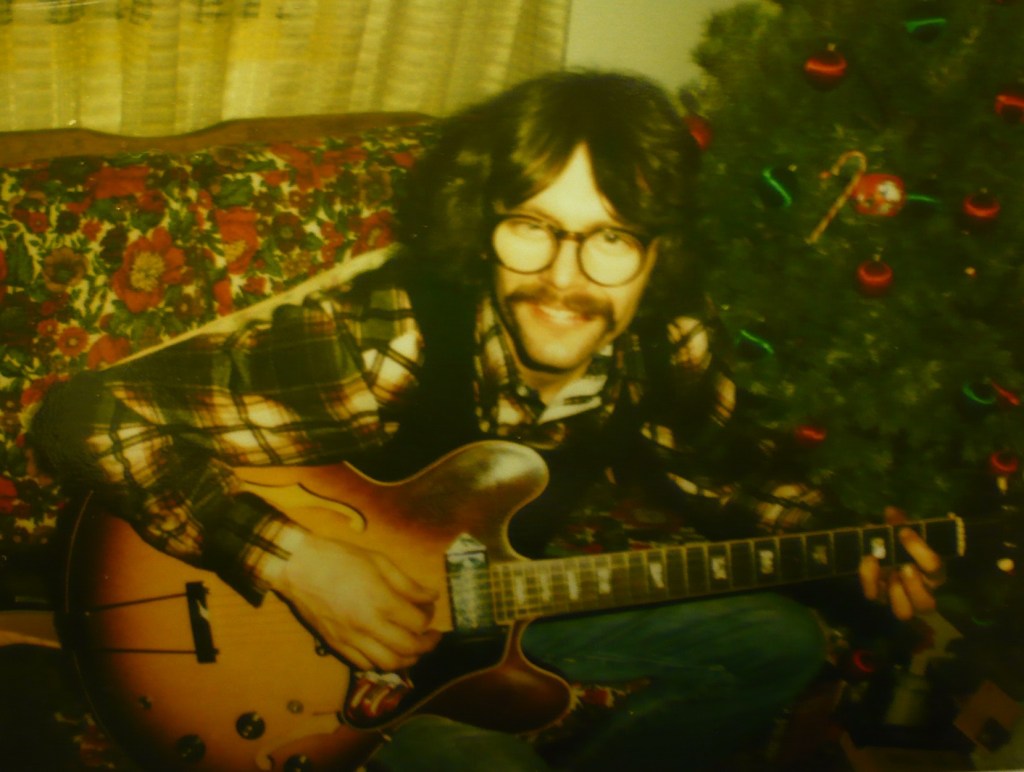
Yesterday the guy checking me out was trying to talk to me, and I was rapidly bagging (I bring huge bags, and try to organize by FREEZER, FRIDGE, PANTRY, but I’ll get desperate to keep up and be done talking, and just start chucking stuff in.). He was trying to talk, but his heart wasn’t in it, and neither was mine because, that checker, he kinda looked like this:
He looked quite a bit like that photo, which is a photo of my brother circa 1978 or so.
That TJs checker looked so much like my brother. A little taller, but otherwise spot on, and I have been checked out by him before, but yesterday it was the light or something, or the quiet between us. I know people not in California think TJs are tripping hazards here, and they’re not. They’re usually a good 20-40 minutes apart, so I kinda wish this guy would get another job. You know what I’m saying? Because there isn’t another TJs close by, and because that checker looks like my brother circa 1978.
My brother died in 2020, in June or July I don’t really want to remember the date. I found out he was dying hours before he did. He was up in a hospital in PA while I was two hours south in DE. Covid was raging, so they were not going to let us come see him. He didn’t have Covid, He had gangrene, probably from a bladder infection he had never fully recovered from, and he didn’t like doctors because they made him feel mortal and dumb, and he hadn’t gone to one for about five months while everything in his body was probably going bananas, and when Covid hit he was really afraid of dying from it, and probably feeling pretty sick most days anyway. My sister-in-law didn’t force him to do anything about it, probably because he was grumpy, and she is an avoider, and they both were potheads and pill heads and whatever when they could get it. They both had a tendency to approach family gatherings with something in their systems to take the edge off of my mother, and, I sometimes think, maybe that is the best way to approach her. Maybe I missed something great about coping there. Which makes me laugh to think of, and would have made my brother laugh his butt off.
My brother was very funny. He raised me to love George Carlin and The Three Stooges. One of the times he most liked in our history together was when he was visiting us in Los Angeles, and I got us all singing narcissistic songs. You take any song that is about romance/lust, etc. and you turn it into a song about yourself. So, Gladys Knight’s classic, “Best Thing That Ever Happened to Me” becomes [I’M the] “Best Thing That Every Happened to Me.” Divinyls’ “I Touch Myself” becomes [When I think about ME] “I Touch Myself.” Get it? We laughed our butts off, and he always talked about it, and we often tried to recreate it, but sometimes with humor the success is situational (you had to be there), and that perfect night was like that. And maybe he was a little high too, and I didn’t know it.
You can’t recreate those perfect moments in life, and trying often leaves you cold. My brother was a great practitioner of trying to recreate the things he loved, trying to hold onto vapor.
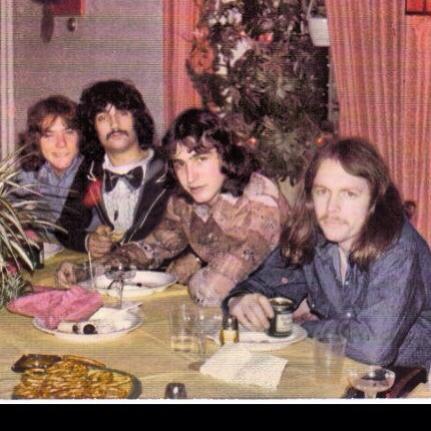
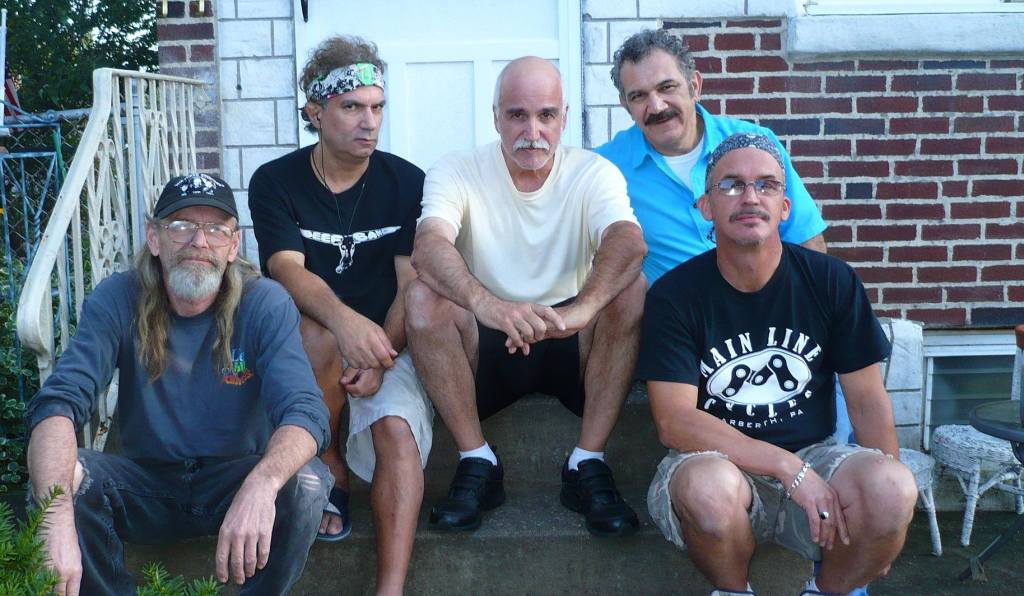
Here is his band in the early ’70s:
Bill is in the front right.
So cute. And here they are in the late 2010s:
Bill is in the front left.
Bill is gone, but the ones who are still here are still playing together at the bars local to Ridley Park, Pennsylvania. Most of those guys, living and dead, never got their shit quite all the way together. They could always play, and play well, but they were still partying like the Rolling Stones circa 1968. And maybe still being able to get out there and rock the house is a sort of having it together that’s just a bit different from how I would define it.
I miss my brother, and it’s awkward to have a checker at TJs remind me of him so completely that it renders me unable to make small talk or even flash the photo of my dog. My brother had a lope-y way of walking not unlike Shaggy in Scooby Doo, and this guy moves like that. It’s awkward because grief is awkward and comes casually loping up behind you at the most unexpected times. Someone told me grief is a metal ball in the glass jar of your life, and as you move away from the time of your loss the jar gets bigger, but the ball is permanently there, and rolls around, bumping up against everything, sometimes quietly, sometimes banging the glass hard enough that you think it will crack. Poetry is a very helpful receptacle for grief. I think poetry works well because it is often short, and emotional, and vague, not pinning grief down to a specific grief style or emotion or reason. Poetry might move the ball away from the glass, or give you a little breathing room when your lungs have constricted so much you feel like your ribs have laced up extra tight around them. My favorite brother poem has long been this one, and was so even before my brother winked so quickly out of existence.
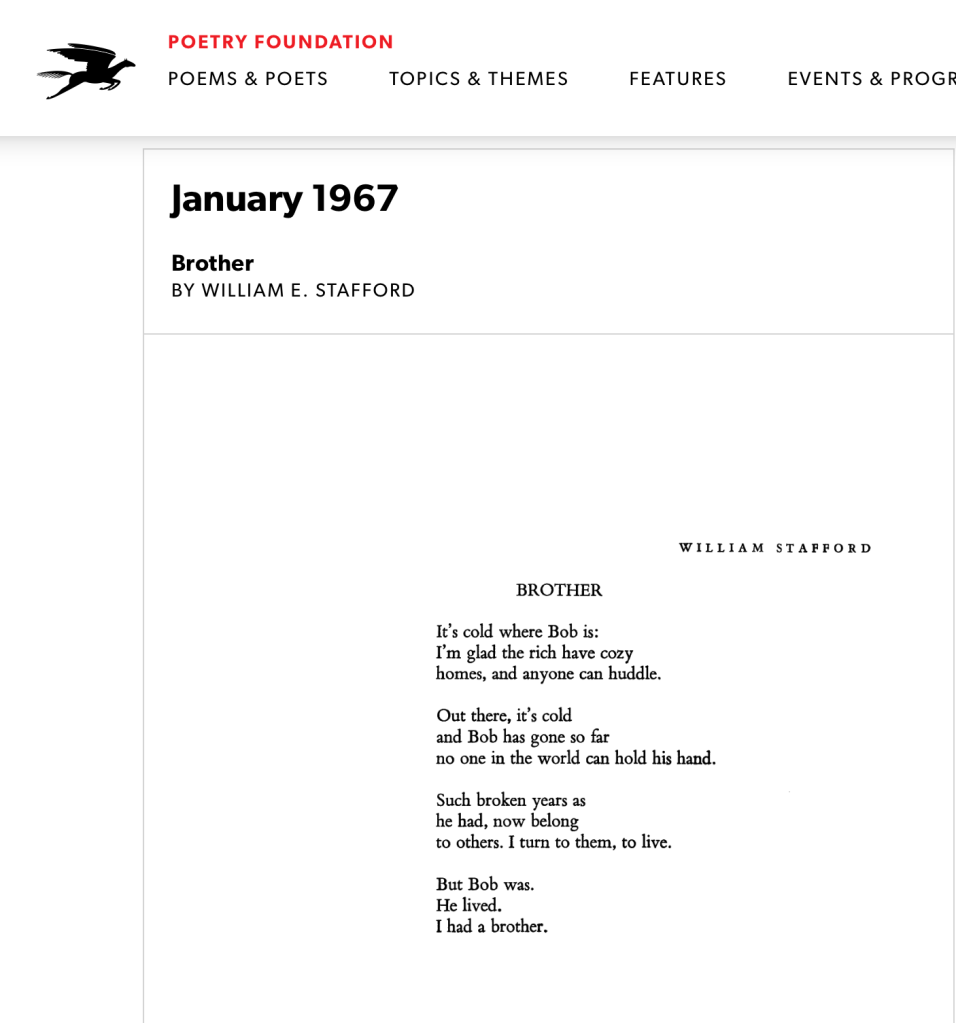
But today I found another one. It loosens up the tight ribs too, if by loosening them you mean jabbing an ice pick in there. But ice pick or not, it does what it’s supposed to do, connects you directly to the pain, so you can feel it, instead of dodging it all the time. Then you can move on with your life, even as the brother you miss cannot move on with his, which feels supremely unfair to me, and I really value being fair, so there’s that. But for that day, that moment, at least, you can get back to what you were doing that you are doing because your life is still going. This poem is by William E. Stafford, and is called “Brother.”
We’re so lucky The Poetry Foundation exists, and has this database of poems just waiting to tend to our needs.
If someone gave you some paper, scissors, glue, rocks, crayons, clay, wire, papier-mâché, bowling balls, aluminum foil, fabric scraps, paint, sea glass, what would you create? What would your sculpture of grief look like? What medium would you use? What shape would you make? If you were only allowed eight words, one for each day in a week and one extra just in case, what words would you write? How would you arrange them? Would they be poetry, lyrics, a string of obscenities lobbed at the world, or a short burst of prose? Would they be quiet, loud, or snap, crackle, and pop? And would you want them to tighten up your ribs, or let them loose? Could you share it with the world or would it be too awkward for prime time?
Some of us come to that hard, clinking, lurking ball-bearing version of grief mercifully later in life than others. The less time you have to carry it the better: it means you had a longer shot at joy. But it finds us all eventually. I think that when we’re younger we grieve for ourselves: all the things we haven’t put into place yet that we long for, all the things we want to be that we just haven’t attained. As we get older, from any point in space because we all live at our own pace, we grieve more for others, and our missed opportunities to be with them. But Bill was. He lived. I had a brother.
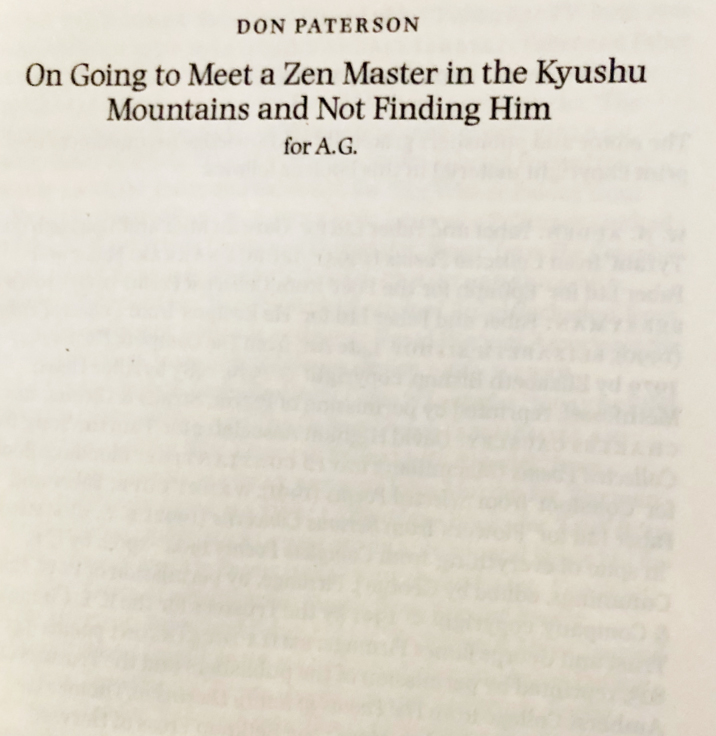
Above you see Don Paterson’s take on the titular poem, with a poem where the title is the whole poem.
A titular poem is a poem where the title is part of the poem, a line in it. In my own poetry I have really liked using this device, and often use my titles as the last line of the poem, the conclusion to the whole action of the poem. I have been described by my teachers as a narrative and magical realist poet. In my defense against these allegations I will let you know that I grew up listening to songs like “Jolene,” by Dolly Parton, “Ruby,” by Kenny Rodgers, “The Wreck of the Edmund Fitzgerald,” by Gordon Lightfoot, “Dark Lady” by Cher, and the oddest one of all, “Angie Baby,” by Helen Reddy. My formative years were two-to-three decades of songs with strange narratives in them. It isn’t my fault!
I have written many titular poems, some remarkably more successful than others, but I will share with you today one that is probably my personal favorite. This was written when I was in graduate school for my first writing degree. I had moved back in with my family. My house was helmed by two working parents, both too ready to have a drink, both too generous with money and not much else, and both not great at respecting boundaries. But I was able to go to school for my Master’s Degree and teach at the school part time, which pretty much took up 10 hours of each day, but made about one third of what a person needed for rent in those days, so, without my old room, I never could have done it. There were a lot of challenges though, one of which was a mother who was threatened by education, and really tried to impede it even as she envied it. My most repeated story, and least believed, was the one where I went up to my room to work on a paper due the next day that had to be twenty-five pages. My mother burst in to the room, my dad in tow, and began to lay out sheets of wallpaper over my (yes, I’m not kidding) word processor and desk. “We’re wallpapering the bathroom,” my mother announced. “What, now? Tonight? It’s seven,” I said in disbelief. “We have to do it now,” she said. “Right Vince?” My dad looked at me and shrugged. What could I do? I went downstairs, and waited. They finished a little after eleven, and I finished the paper a little after four the next morning. Yes, I should have probably written it sooner, but that aside, who competes with their kid with wallpaper? Sigh. No one I shared my graduation program with ever believed my stories. So, one day I wrote this poem to see if it could explain it to my fellow authors that my stories were true. As you read the poem remember… this is a titular poem, so see if you can understand how the title works as the title, and also as the last line of the poem. Yes, there are obscenities in the poem that some may find offensive. I’m a salty old girl, and, once, I was a salty young one.
A Few Dry Old Peas Rattling Around In A Waxed Paper Dixie Cup
Jesus fucking Christ goes through my mind as I sit here, trying to read the poems from my poetry workshop, and my brother, who doesn’t live here, appears suddenly at the front window like an unwelcome trio of Jehova’s Witnesses, causing my dog, who had just been whining at my leg for my bagel to bark loudly and repeatedly at the window as the phone rings, making me jump like a bean, and I answer it, all the while looking in exasperation at my beloved bother of a brother, who is unaware that I am here, and if he comes in the house will joke, as if he were the opening act for the Jerry Lewis Telethon, “Still in your pajamas? Ah you and that school racket,” while I say, “Hello” the the phone with my voice trying to sound pointed and pissed and my mother’s voice says, “Read me what the calendar says my dentist appointment is,” and says, “I know you’d like nothing better than to put my wash in the dryer—how ’bout it?” and says, “Don’t just sit around; do your windows,” and says, “You’re home todays so I won’t be home to let the dogs out,” although she wants to be ’cause she thinks I don’t do it right, and tells me again how to do it before she hangs up, but my brother has not come in, has disappeared, so I go back to reading for two seonds because here comes the dog again, whine whine bagel bagel scratch me, and I stamp at her; she looks at me—Big whoop—says her scroungy toothless expression, and I hear a loud banging, so I look up and a strange truck, a truck that would have turned up the noses of Sanford and Son and a man who obviously was designed with the truck in mind, are in the driveway, and he is pulling a gigundous lawnmower off the truck while I try to think and come up with Jesus, shit! Don’t unload that! Did I ask for that thing?! and Who the fuck is this toothless guy? and wonder for a scared second if he’s a relative I don’t recognize which is usual for me, when I see my brother coming ’round the side of the truck and I run upstairs thinking, What the hell is that guy here for? Bill is going to bring this strange man to see me in my pajamas, and the dog is lifting off the floor now in little hydraulic barks—I am thinking Christ Bill, now you’re going to wake Lee and I am giving up on reading poetry; I’ll write some instead, and I retreat to my room and start typing trying to ignore the barking of slamming truck parts and lawnmowers out front, but I am right, my brother does wake my sister, and when she gets up, by opening her door she releases another dog to bark, and it runs downstairs to join in, eager to catch up, while my sister walks into the bathroom and pees loudly with the door open, and does not flush, puts on striped spandex, and goes tour-de-fourcing down the stairs where, like a swift grifter, she switches out the tape in the VCR for an aerobics tape and turns it up up “Lift ’em up! That’s grrrreat! You can do it!” but I can’t do it because I can still hear my brother and Mister May-Be-A-Relative, so I am able to hear another voice added to theirs as my mother says, “Oh, I wondered if you’d be here. I just came home to let the dogs out,” and my friends wonder why I’m tense and why I never want to visit the zoo, and I think, Dad must be coming home any minute to tell us all the jokes he’s heard today, like, “Duck walks into a pharmacist, says gimmee a Chapstick and put it on my bill,” or the one about the Avon lady who farts in a elevator, after which he will laugh that long, wheeze, Lou Costello laugh “Hey Abbott” and somehow, in this rapidly escalating cacophony, a small sound, like a maraca gently shaken, is in my ears pulling me to it, causing me to think one final thought at the end of my morning study time, because, pricklingly familiar, I think I’ve heard that small hollow sound before, and I think I now know exactly what my brain is like.
Did you make it to the end? Could you see how the titular title ended the poem? I must admit I’ve always felt that the title must work as the title, of course, but should also resonate at the end of a poem, because our eyes, having reached the end, especially of a long poem, will zip back up to the top to refresh, remind us of what we were reading in the first place.
Have you ever written a titular poem? If so, I’d love to have you share it in the comments. Have you ever read one that you especially liked, or that flummoxed you? Let me know.
All these years later, through many different rounds of education at many schools, through being a life-long adjunct: always running place-to-place, through infertility and a trip to China to become a mother, through a few trips back and forth across the country with a full car and a moving van, through working with so many different and wildly talented authors, I do still feel a bit like I’m a plate-spinner with a brain that might like a long vacation on a deserted island. Thanks for reading! I hope you’ll share back something titular.~ Dianne
Dianne Pearce is the publisher and main editor at Current Words Publishing. She also designs and formats each issue of INSTANT NOODLES LIT MAG, and had to learn how to work computers to do it!
Don’t miss the second submission period for INSTANT NOODLES 2025. Submit today!
I have participated in quite a few of writing critique groups for many years now, and I can say that the feedback I have received from fellow writers has been critical to my success in publishing my work. It is true that if you remain with the same group over an extended period, there will be certain people that you will agree with more than others for suggestions for editing your work. There is nothing wrong with that. After all, everyone has different tastes and preferences. That being said, it is important to read and consider all comments you receive. Here are a few tips to guide you in getting the most from the process of critique.
Decide what you are honestly looking for before you submit a manuscript. If you just want to know if the story is worth working on at all, then submitting a very rough draft might make sense but I never do that. My approach is to put in all the time necessary to complete a short story or poem and make it the best I can. This means, for me, several months of writing and many edits. I probably edit a piece fifty times or more before I feel I have done all that I can for it. I prefer to circulate what I believe is “a finished story.”
During the critique, just sit quietly and listen. In the groups I attend, I will receive written comment, so I don’t have to write notes during the oral critique. You can learn a lot by listening to colleagues discuss and debates questions or concerns they may have about your writing. Above all, don’t say anything as the writer. You aren’t there to explain your work and above all, you are not there to defend it. You don’t want people to feel that they cannot give you honest and open feedback. That’s what you are there for and as writers, that is what we all need.
Try not to feel hurt about “negative” comments about your writing. At first, for most writers, we do feel hurt but in time, this goes away as you realize that critique is an honest exchange of creative suggestions meant only to help you decide what final edits you wish to make. We cannot read our own work in a way that will make it the best it can be. We don’t have the distance to be able to do this. In short, we need each other. Of course, the critique should be done in a constructive, professional way. I have always had good group leaders who have insisted upon this.
At the end of a critique, I always make sure to thank everyone for taking the time to read and critique my work. I know it takes time and effort, because when I read for others, I give it my all too. It is the greatest gift we can give to each other as writers.
So now that you have your critiques, it is very important to set everything aside for a minimum of a month before you return to make edits. Early on I made the mistake of making edits too quickly and they were knee jerk and not good. You need time to let things sink in and percolate. Give it a rest.
When I do edit, I go through each written critique and fix all mechanical edits first, such as spelling errors. While doing that, I keep a running list of more involved edits that I will look at more carefully to see if I agree with them. This might be things such as a section of unrealistic dialogue, an ending that needs less or more, a character that lacks some necessary background.
I have never not changed a story or a poem based on professional feedback. Some more than others, but all have been edited because of ideas or suggestions or questions raised by writing colleagues and I can honestly say that my work has been improved immeasurably by the critique process. I am so grateful for my writing colleagues and friends. I do have one writing friend who I give my final edited pieces to for one final read. And another tip for writers. Seek out readers of all ages to critique your work. You will get different perspectives that will improve your final product.
An important final comment about writing groups. Over the years. I have made such wonderful, close friendships with the people I have met in these groups. It’s funny how life works. You go looking for something and you come away with something so much more valuable than you expected.
Good luck with your writing and enjoy all of the process, including critique and editing in response to critique. I promise you that you will find it rewarding to not only give critique but also to receive it. It is part of our art form.
Enjoy your group!
~Ginny
Virginia Watts has been fortunate to have published nearly 100 pieces in literary magazines including CRAFT, The Florida Review, Reed Magazine, Pithead Chapel, Permafrost Magazine, Broadkill Review, Two Thirds North, Hawaii Pacific Review, Sky Island Journal, Eastern Iowa Review, Evening Star Review and Streetlight Magazine. Nominated four times for a Pushcart Prize and four times for Best of the Net, in 2019, Watts won The Florida Review Meek Award in nonfiction.
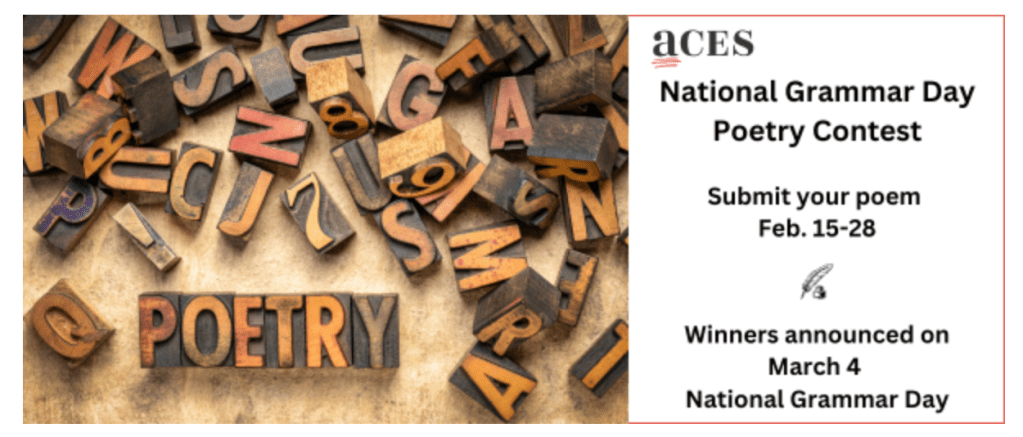
All poems submitted for consideration must be original, unpublished, and short.
Short is key. No epics, please.
Meter, rhyme, free verse? Haiku, limerick, quatrain, sonnet? The choice is yours.
Entries should make a point about language: grammar, usage, typos, writing, editing — whatever inspires you think captures the spirit of National Grammar Day.
Who can enter
Everyone is invited to participate. You do not need to be a member of ACES or work as an editor. The winning entry will be selected by a panel of judges that includes the previous year’s winner, along with language and poetry experts. ACES administers the award; it does not decide the winners.
That said, we encourage you to share your entries on your favorite social media platforms. If you tag #ACES and #GrammarDay we will be able to find you and reshare.
When to submit
The submission form is open Feb. 15-28. The link will be available here during that window.
Learning the results
ACES will announce the winner on, naturally, March 4, in a post on its news channel and in its social media channels. The winning poem will be included in the story, along with the runner-up entries.
It’s the “dog days of summer.” Where I live we’ve had only brief periods of respite from the extra hot days, and these sweaty days force me inside, where they, ostensibly, give me more time to write. And so I am thinking about all of that. And I’m wondering, those of you who write, have you ever considered taking classes, or have you taken classes, in writing? It occurs to me that while my daughter can play a few songs on the piano through trial and error, she is much better when she is actively taking lessons. She doesn’t take lessons because she wishes to be the next piano great, or even play professionally. She takes lessons because she enjoys playing the piano, and would like to be able to play it better. I pay for the lessons gladly, without a thought about it. Do we do that as writers, with writing?
When I went back to school to get my MA it was because I wanted to get better at writing. Yes, I had the hope of publishing, but mostly I just wanted to be better at writing my stories and poems. I signed on for my MFA primarily because the teachers in my MA program, who were not affiliated with the MFA schools, suggested that I had a spark, and could get it even sparkier with more training. And so I did it, the MFA, for me.
I am curious and would love to hear what you think about this. Have you ever done any “professional” training for writing? Something like lessons? Have you spent money on your development? Do you hope to move from hobbyist to pro? Or, perhaps, consider and reply to this by telling me about lessons that you have taken in something else, or paid for in order that a child or someone else in your life is able to take lessons. I would be very curious to hear what you think makes something a skill that you might need training in versus something you come fully equipped for, without training.
I’m laughing to myself now, sitting here, thinking about “the dog days of summer,” and how I once paid for dog training for my prior delightful pup, an out-of-control terrier who I’d adopted when he was still a puppy. I had named him Chad,
and he came after I lost the dog who preceded him, a very fancy little terrier named BeBe who walked beside me like a queen, and never needed a leash or a single command, from the moment I brought her home. Chad, on the other hand, chewed everything: my toes as I crossed the room, my ears as I sat on the sofa or lay in bed, my boyfriend’s brand new Nikes, huge holes in his blanket, and he pooped blue wool for a week after, half a wooden magazine rack while I was at work one day, scads of toilet paper rolls. He peed everywhere. There was a moment where I listened to him cry from behind the baby gate in the kitchen thinking, “One of us is not going to make it out of this relationship.” I found a dog trainer all right. I could not wait for her to get to my house! And I remember her like it was yesterday, though it was more likely 2001, when she arrived, and I let the beast loose on her, and she said to me, “Okay. I can see he has a lot of energy. Let’s start training you to be a better owner.” By the end of the session, several hours later, I admit, for I was a slow learner, I was fully trained, and Chad and I lived harmoniously from that moment on, for sixteen and a half years.
And just now, as I prepared to publish this post, I thought to myself, Maybe throw this post in Word and check the spelling, even though I know my writing does not need it! But I did, and I found four spelling errors, due to poor typing skills, which tells me that it seems that I am still, to this day, a stubborn and slow learner. 😉
So what about you? Do you train at writing at all? Are there other things you will use training for? Do you think of writing as something a person can improve at with training? I am curious to see if it is only me.