And the Winner Is…..

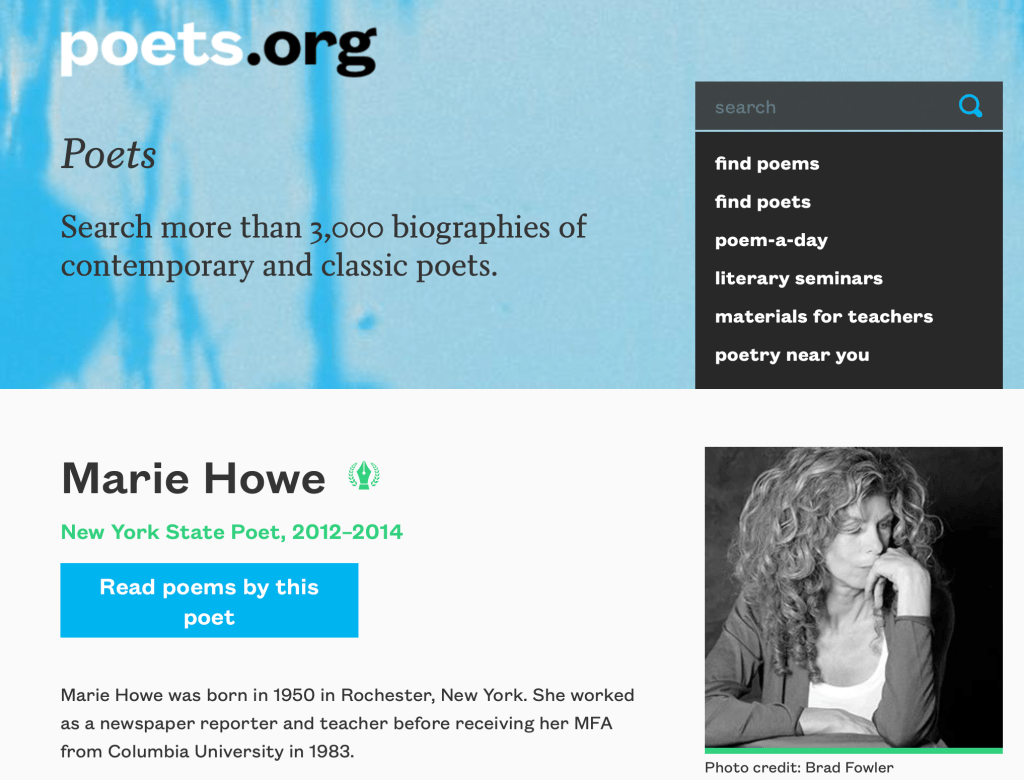
Yes, poetry collections win Pulitzer Prizes too. The 2025 Pulitzer Prize for Poetry has been awarded to Marie Howe’s New and Selected Poems. Howe is known for her observations of everyday life. She explores themes of contemporary womanhood, personal loss, human miracles, sorrow and joy. There are 111 poems in the winning collection. Howe’s direct and honest voice is her trademark. She’s a poet of our time who should not be missed. Some of her most well-known poems involve the loss of her brother in 1989 who died of AIDS-related illnesses. This is what drew me personally to her work many years ago, because I lost a brother about the same time in the same way. Here is one of her poems about this terrible sadness.

What the Living Do

Marie Howe

Johnny, the kitchen sink has been clogged for days, some utensil probably fell down there.
And the Drano won’t work but smells dangerous, and the crusty dishes have piled up

waiting for the plumber I still haven’t called. This is the everyday we spoke of.
It’s winter again: the sky’s a deep, headstrong blue, and the sunlight pours through

the open living-room windows because the heat’s on too high in here and I can’t turn it off.
For weeks now, driving, or dropping a bag of groceries in the street, the bag breaking,

I’ve been thinking: This is what the living do. And yesterday, hurrying along those
wobbly bricks in the Cambridge sidewalk, spilling my coffee down my wrist and sleeve,

I thought it again, and again later, when buying a hairbrush: This is it.
Parking. Slamming the car door shut in the cold. What you called that yearning.

What you finally gave up. We want the spring to come and the winter to pass. We want
whoever to call or not call, a letter, a kiss—we want more and more and then more of it.

But there are moments, walking, when I catch a glimpse of myself in the window glass,
say, the window of the corner video store, and I’m gripped by a cherishing so deep

for my own blowing hair, chapped face, and unbuttoned coat that I’m speechless:
I am living. I remember you.

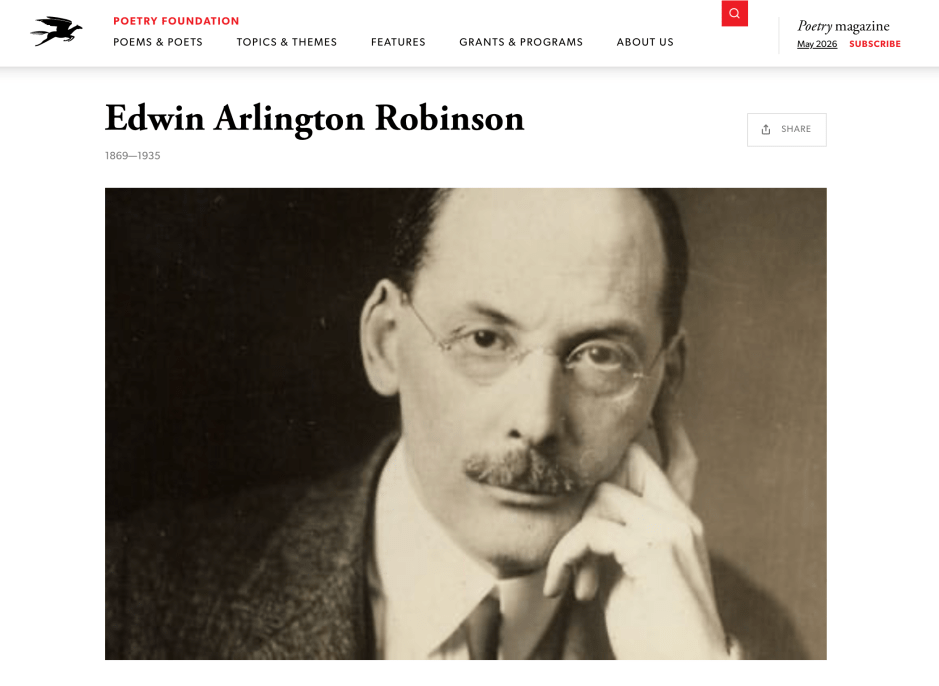
I thought it might be fun to revisit the winner of the first Pulitzer Prize for Poetry. That poet’s name was Edwin Arlington Robinson, and he won the prize two more times after being the first winner. He was known for his narrative skill and psychological depth. Here is what is considered by many to be his most famous poem. It seems a long time ago when he was writing poetry, yet when you read this poem in particular, it seems that he could be writing this poem today. This is because all poetry is about one very complicated subject: humanity.

Richard Cory
Edwin Arlington Robinson

Whenever Richard Cory went down town,

We people on the pavement looked at him:

He was a gentleman from sole to crown,

Clean favored, and imperially slim.

And he was always quietly arrayed,

And he was always human when he talked;

But still he fluttered pulses when he said,

“Good-morning,” and he glittered when he walked.

And he was rich—yes, richer than a king—

And admirably schooled in every grace:

In fine, we thought that he was everything

To make us wish that we were in his place.

So on we worked, and waited for the light,

And went without the meat, and cursed the bread;

And Richard Cory, one calm summer night,

Went home and put a bullet through his head.

Virginia Watts is the author of poetry and stories found in The MacGuffin, Epiphany, CRAFT, The Florida Review, Reed Magazine, Pithead Chapel, Eclectica Magazine among others. She has been nominated four times for a Pushcart Prize. Her debut short story collection Echoes from the Hocker House was short listed for 2024 Eric Hoffer Grand Prize, selected as one of the Best Indie Books of 2023 by Kirkus Book Reviews, and won third place in the 2024 Feathered Quill Book Awards. Please visit her.

Virginia’s new book is now available from Old Scratch Press:

Her prior poetry chapbooks Shot Full of Holes and The Werewolves of Elk Creek 
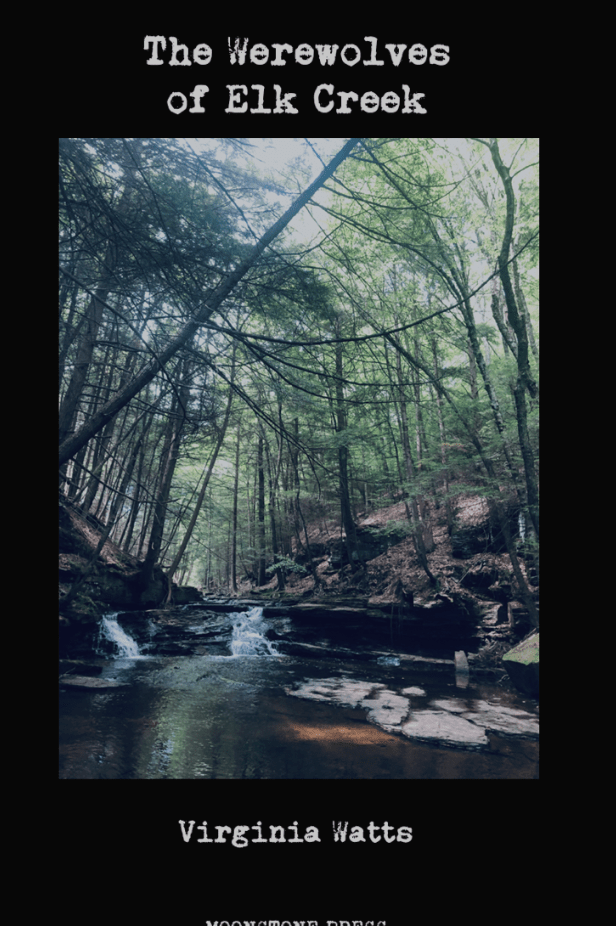
 are available from Moonstone Press. And her debut short story collection Echoes from the Hocker House is not to be missed!

Oh Lordy, It’s Mother’s Day (in the USA)

Wouldn’t I just be lucky enough to get Mother’s Day as my regularly scheduled blog post day. *sigh* 
I’m not a fan, in general, of prescribed celebration days like this one. However one of the first things my husband and I bonded over was Mother’s Day. We stood in a Ralphs together, a few weeks before the event, looking at cards:

“Mom, you were always there for me.”
“Not so much.”
“Mom your hugs are the warmest.”
“Um, well….”
And so on, until we smiled ruefully at each other, looking for the most non-sappy card, and laughing at our shared predicament.

Yes, it’s Mother’s Day, but we also have to be honest that not all mothers are the mother we need. Some are not kind or safe. Some are just cold, like hugging an ironing board instead of a loving mother, or absent, or not interested. In those cases, we learn something important. We mother ourselves. We learn to speak gently where others were harsh. We learn to protect what is still tender. We learn to become the steady presence we once needed. And, even those marginal mothers… I feel like we have to allow that not everyone who becomes a mother wanted to be a mother, and so it seems almost natural that some are not going to be good at it. Until all mothers become mothers solely by choice, there’s something demanded of, and taken from, women that also negates their personhood. So, Mother’s Day is a mixed bag at best, in my opinion and experience.

Mother’s Day does force us to think about our mothers, which I guess is the point, but let’s think beyond our biological mothers to all the ways mothers and mothering show up in our lives. Mothering does not belong to one shape, one role, or one person. We mother children. We mother pets who rely on us for warmth, routine, and the quiet comfort of being known. We mother friends when they are exhausted and cannot hold themselves up for a while. We mother partners, siblings, parents, and sometimes even strangers, offering care that asks for nothing back. Sometimes dads do the mothering better, and men can mother as well as women.

We also mother our homes, our gardens, our work. We tend to them. We notice what is growing and what is struggling. We prune what no longer serves, and we stay present long enough for things to take root.

Mothering is not only about giving birth. It is about giving attention. It is about noticing life and choosing to care for it, again and again, in all its forms.

As authors, we mother each other too. We nurture stories before they are ready to stand on their own. We encourage drafts that are still learning how to breathe. We remind each other to keep going when doubt gets loud. I have been especially grateful for Virginia Watts (who I also think of affectionately as “Dead Wood” because she has a remarkable gift for cutting away everything unnecessary from my writing). There is something deeply maternal in that kind of care. She has helped me shape my forthcoming book, and I am forever grateful because her mothering gave me courage to keep writing.

And, on Mother’s Day, I am always especially grateful for my daughter. I didn’t birth her, but I mother the heck out of her, and she often allows it and even tolerates it pleasantly, for which I am forever full of gratitude. I love being a mother, and I love mothering. It is one of my main joys in life, and on this day I send so much love to my pets, and my wonderful daughter, without whom I would not a mother be.

Happy Mother’s Day to all the variety of mothers, and to those grieving mothers or mother’s love, a hug and a wish for peace for you.

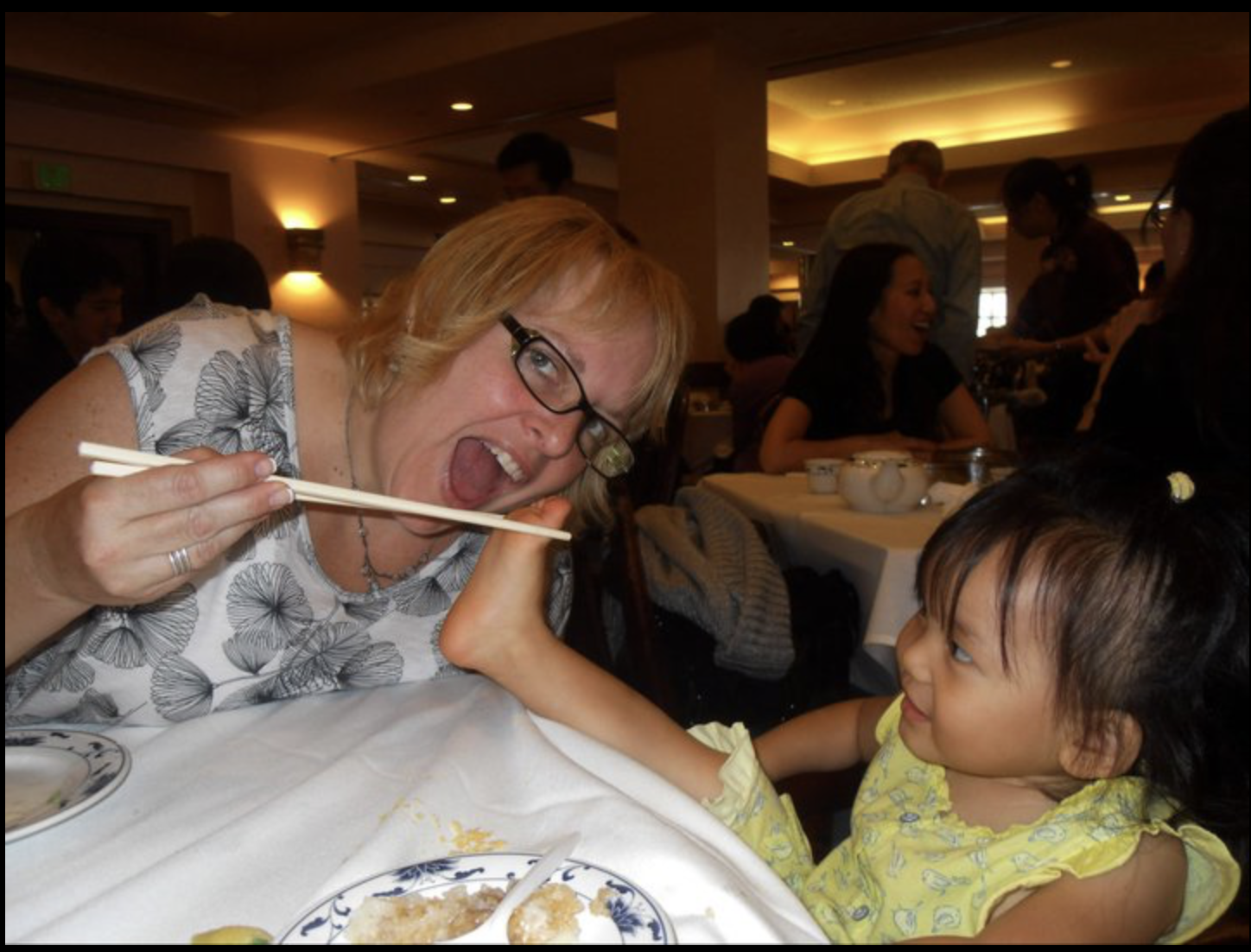
Mother’s Day also means forcing your family to do what you want to do. We’re gonna go eat dim sum now. LOL Sticky rice!

Poems Come in Many Forms. Let’s Look at Odes


            There are many types of formal poetry and for anyone who likes to write poetry, it’s worth your time getting to know these forms and trying a few as well. This teaches us all about meter and rhyme, how a poem should look on the page, and trying some of these is just plain fun. Here is a short run down of twenty different types of poetry. See how you do with some of these! You might surprise yourself, find a from you really like, and write a collection of them. 

Acrostic: first letter of each line spells something

Ballad: narrative like a folk story

Blank Verse: Unrhymed but has iambic pentameter

Cinquain: five-line poem with 2-4-6-8-2 syllables per line

Concrete: has a shape on the page like a tree

Elegy: a mourning to someone gone

Epic: long, narrative work like Hiawatha

Found: taking and reframing words from other sources like newspapers

Ghazal: couplets that share rhyme and refrain

Haiku: Japanese form of 5-7-5 syllable pattern 

Limerick: a humorous poem of 5 lines

Lyric: short poems of emotion

Narrative: a form of story telling

Ode: message to a subject, event or object

Pastural: Idealized environment, often rural life

Sestina: complex 39-line poem

Slam: Oral, competitive poetry

Sonnet: 14-line poem with specific rhyme scheme about love think Shakespeare

Villanelle: 19-line. 5 tercets followed by a quatrain with 2 repeating rhymes and 2 refrains

The Ode is a great form to try. Odes were developed in Ancient Greece. An ode then was a song or chant performed to celebrate athletic victories. Odes are praise using rich and clever description. Here’s a famous example of an ode poem. 

Ode to the Hotel Near the Children’s Hospital

BY KEVIN YOUNG

Praise the restless beds

Praise the beds that do not adjust

     that won’t lift the head to feed

     or lower for shots

     or blood

     or raise to watch the tinny TV

Praise the hotel TV that won’t quit

      its murmur & holler

Praise the room service

      that doesn’t exist

      just the slow delivery to the front desk

      of cooling pizzas

      & brown bags leaky

      greasy & clear

Praise the vending machines

Praise the change

Praise the hot water

& the heat

       or the loud cool

       that helps the helpless sleep.

Praise the front desk

       who knows to wake

       Rm 120 when the hospital rings

Praise the silent phone

Praise the dark drawn

       by thick daytime curtains

       after long nights of waiting,

       awake.

Praise the waiting & then praise the nothing

       that’s better than bad news

Praise the wakeup call

       at 6 am

Praise the sleeping in

Praise the card hung on the door

       like a whisper

       lips pressed silent

Praise the stranger’s hands

       that change the sweat of sheets

Praise the checking out

Praise the going home

       to beds unmade

       for days

Beds that won’t resurrect

       or rise

that lie there like a child should

        sleeping, tubeless

Praise this mess

         that can be left


Virginia Watts is the author of poetry and stories found in The MacGuffin, Epiphany, CRAFT, The Florida Review, Reed Magazine, Pithead Chapel, Eclectica Magazine among others. She has been nominated four times for a Pushcart Prize. Her debut short story collection Echoes from the Hocker House was short listed for 2024 Eric Hoffer Grand Prize, selected as one of the Best Indie Books of 2023 by Kirkus Book Reviews, and won third place in the 2024 Feathered Quill Book Awards. Please visit her.

Virginia’s new book is now available from Old Scratch Press:

Her prior poetry chapbooks Shot Full of Holes and The Werewolves of Elk Creek 

 are available from Moonstone Press. And her debut short story collection Echoes from the Hocker House is not to be missed!
Pop Star Poets


Bob Dylan famously called himself a poet first, then a musician. It’s often been said that every poem is a song. Many famous musicians also published poetry including Patti Smith, John Lennon, Joni Mitchell, Lou Reed. More recent examples are Taylor Swift, Lana Del Rey, Drake, Halsey, Tupac Shakur, Kelsea Ballerini, Alicia Keys.

Jewel published her first book of poems in 1998 A Night without Armor. She sold over 2 million copies, and her book remains one of American’s best-selling poetry collections of all time. The poems were inspired by the journals Jewel kept throughout her life. She has talked about writing poems since childhood, that it’s not music she needs, but “poetry.” That poetry reflects who she really is and unlike pop music, it allows people to get her. There are poems in the collection about human life, family, her Alaskan childhood, heartbreak, healing, divorce. It’s one of those collections that feels brave as an open heart. Here is Jewel talking about her poetry and her process with Charlie Rose.

I focus on Jewel here because when I first heard her music, I immediately thought of it more as words on a page. The words led for me, and the tune came after. The images were so clear and inspiring. Poets should listen to music, because music can teach us about cadence and rhythm. Music helps with pacing. Sound is important in poems. Music also has structures that help with poetic structures such as refrain and verse. Also, listening to songs can be inspire us. Music evokes emotion. Boosts mood and creativity. Music takes our minds from where we are into another space and that often leads to words on a page. Here is a song by Jewel that demonstrates why songs are poems and poems are songs and why poets need music. We wouldn’t be at our best without it. We were meant for each other. 


Virginia Watts is the author of poetry and stories found in The MacGuffin, Epiphany, CRAFT, The Florida Review, Reed Magazine, Pithead Chapel, Eclectica Magazine among others. She has been nominated four times for a Pushcart Prize. Her debut short story collection Echoes from the Hocker House was short listed for 2024 Eric Hoffer Grand Prize, selected as one of the Best Indie Books of 2023 by Kirkus Book Reviews, and won third place in the 2024 Feathered Quill Book Awards. Please visit her.

Virginia’s new book is now available from Old Scratch Press:

Her prior poetry chapbooks Shot Full of Holes and The Werewolves of Elk Creek 

 are available from Moonstone Press. And her debut short story collection Echoes from the Hocker House is not to be missed!