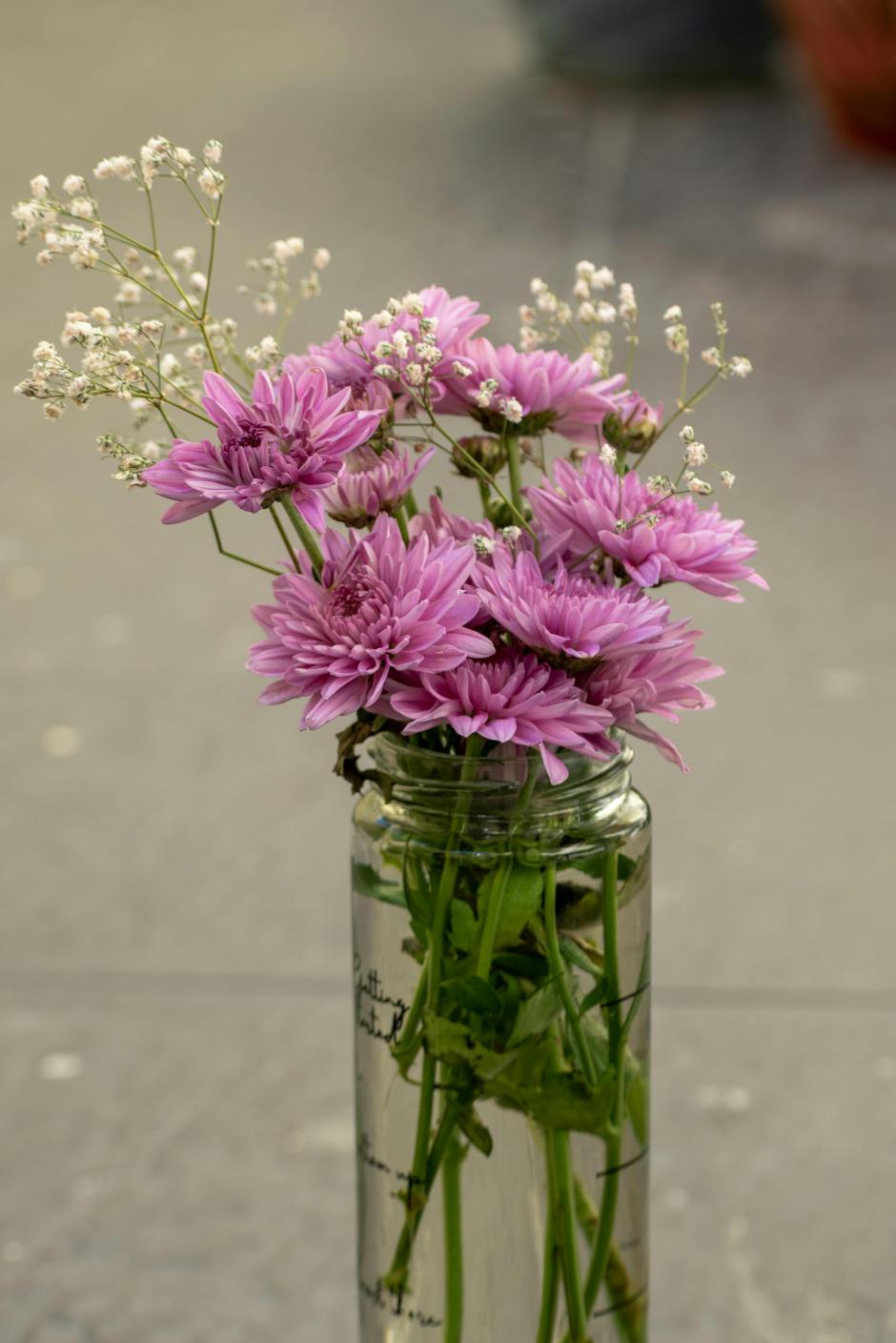
Oh Lordy, It’s Mother’s Day (in the USA)

Wouldn’t I just be lucky enough to get Mother’s Day as my regularly scheduled blog post day. *sigh* 
I’m not a fan, in general, of prescribed celebration days like this one. However one of the first things my husband and I bonded over was Mother’s Day. We stood in a Ralphs together, a few weeks before the event, looking at cards:

“Mom, you were always there for me.”
“Not so much.”
“Mom your hugs are the warmest.”
“Um, well….”
And so on, until we smiled ruefully at each other, looking for the most non-sappy card, and laughing at our shared predicament.

Yes, it’s Mother’s Day, but we also have to be honest that not all mothers are the mother we need. Some are not kind or safe. Some are just cold, like hugging an ironing board instead of a loving mother, or absent, or not interested. In those cases, we learn something important. We mother ourselves. We learn to speak gently where others were harsh. We learn to protect what is still tender. We learn to become the steady presence we once needed. And, even those marginal mothers… I feel like we have to allow that not everyone who becomes a mother wanted to be a mother, and so it seems almost natural that some are not going to be good at it. Until all mothers become mothers solely by choice, there’s something demanded of, and taken from, women that also negates their personhood. So, Mother’s Day is a mixed bag at best, in my opinion and experience.

Mother’s Day does force us to think about our mothers, which I guess is the point, but let’s think beyond our biological mothers to all the ways mothers and mothering show up in our lives. Mothering does not belong to one shape, one role, or one person. We mother children. We mother pets who rely on us for warmth, routine, and the quiet comfort of being known. We mother friends when they are exhausted and cannot hold themselves up for a while. We mother partners, siblings, parents, and sometimes even strangers, offering care that asks for nothing back. Sometimes dads do the mothering better, and men can mother as well as women.

We also mother our homes, our gardens, our work. We tend to them. We notice what is growing and what is struggling. We prune what no longer serves, and we stay present long enough for things to take root.

Mothering is not only about giving birth. It is about giving attention. It is about noticing life and choosing to care for it, again and again, in all its forms.

As authors, we mother each other too. We nurture stories before they are ready to stand on their own. We encourage drafts that are still learning how to breathe. We remind each other to keep going when doubt gets loud. I have been especially grateful for Virginia Watts (who I also think of affectionately as “Dead Wood” because she has a remarkable gift for cutting away everything unnecessary from my writing). There is something deeply maternal in that kind of care. She has helped me shape my forthcoming book, and I am forever grateful because her mothering gave me courage to keep writing.

And, on Mother’s Day, I am always especially grateful for my daughter. I didn’t birth her, but I mother the heck out of her, and she often allows it and even tolerates it pleasantly, for which I am forever full of gratitude. I love being a mother, and I love mothering. It is one of my main joys in life, and on this day I send so much love to my pets, and my wonderful daughter, without whom I would not a mother be.

Happy Mother’s Day to all the variety of mothers, and to those grieving mothers or mother’s love, a hug and a wish for peace for you.

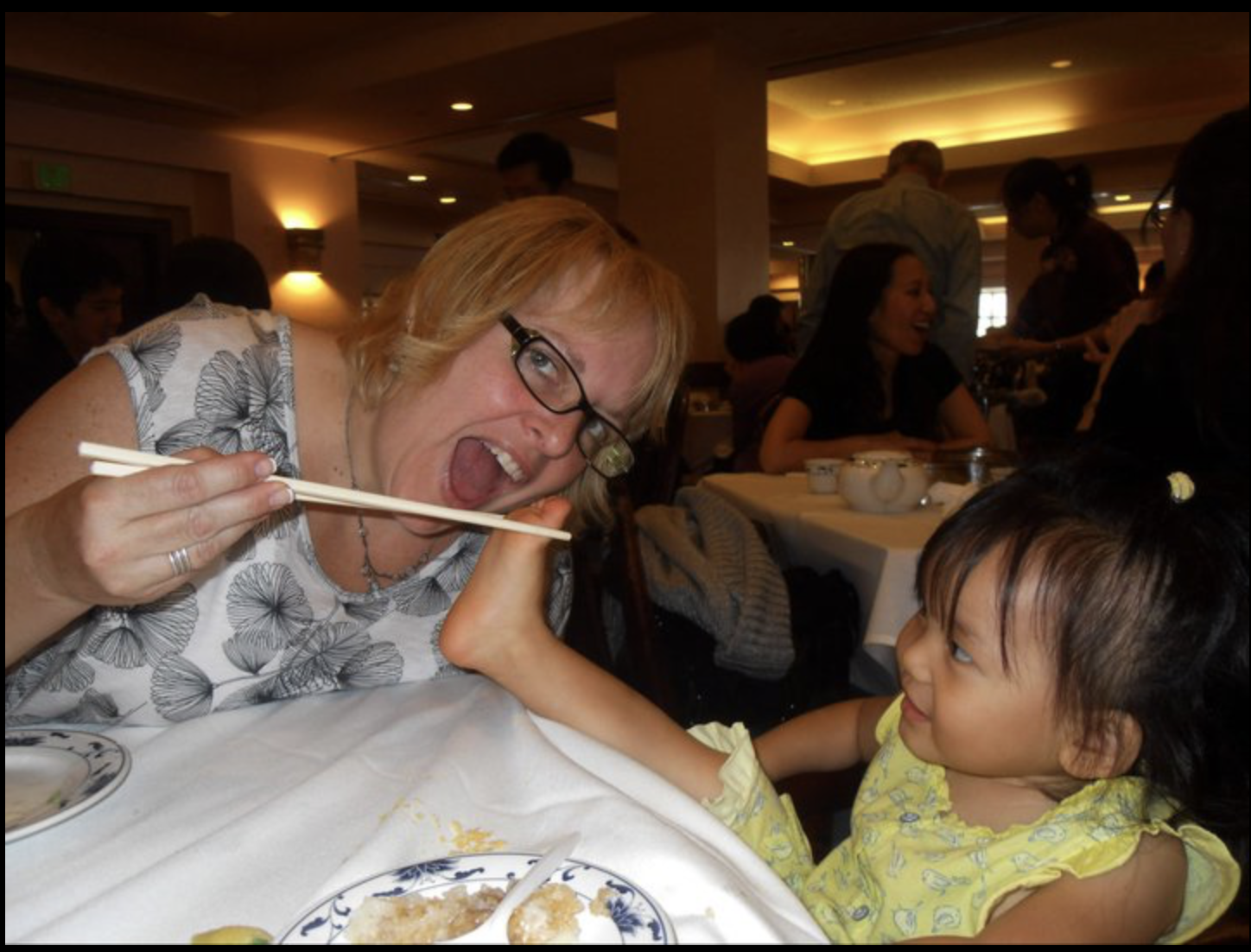
Mother’s Day also means forcing your family to do what you want to do. We’re gonna go eat dim sum now. LOL Sticky rice!
Unlocking Your Writing Through Movement

In high school I watched the clock in last period, because I knew as soon as the bell rang I was heading straight to dance class, and all the teen angst and hormonal folderal of the day would be disappear once I got there.

I’ve taught dance for over forty years now, and that was the beginning of a lifetime of learning how the mind/body connection affects my creativity and well-being.

We’re taught early on that writing is supposed to come from the neck up—brain first, fingers second. We believe the words live in our head. But I’ve come to understand this: the stories I care about—the ones that ache and sing—live in my body. And if I want to write them honestly, I have to move.

Movement Makes Space for Story

When I’m stuck on a line in a poem or in a scene, walking often is my default means to address it. It might just be a walk around the block that allows my shoulders to drop and my breath to even out.

There’s something about the gentle rhythm of walking—or swaying, or stretching—that stirs the sediment at the bottom of the creative well. It shakes loose a phrase, a memory, an emotion I hadn’t thought to name.

We say “I’m working it out,” and often we mean emotionally—but there’s a physical truth there, too.

“ But I do believe very strongly that the best poetry is rooted in bodily experience. We experience reality through our bodies and senses, and truth, to the extent that it is apprehensible.”      -Poet Rebecca Foust

The Dance Between Emotion and Motion

As someone who grew up dancing, I know I carry emotion in my body, and in order to gain access I have to move. In order for the reader to feel what I am writing about, I must first feel it myself, and that is not going to happen if I stay entirely in my head.

Movement helps me feel it. And when it’s a big feeling—grief, rage, shame, heartbreak—moving my body helps metabolize it. When we experience trauma or hold strong emotions, our bodies remember. They contract around those memories. Notice how we hold our breath or the body tenses up. If we don’t move them, we risk writing around the truth instead of into it. And I don’t have to run a marathon or take up kickboxing. I can simply take a deep breath, raise and lower my arms a few times, twist gently side to side–all in my deskchair.

Moving lets the emotion pass through me so it can move onto the page.
Otherwise, it stays stuck in the pipes.

Stillness Is Its Own Kind of Movement

Sometimes, the writing calls for the opposite.
Stillness. Not scrolling or skimming or daydreaming—but deliberate, open stillness.
The kind that invites something deeper in. The kind that looks like staring out the window.

This is the space where I can hear the quieter parts of my story—the voice of a child I’d forgotten to listen to, or the image I saw in a dream but brushed off. Lying still and staring at the ceiling can be just as powerful as dancing. For me, it is my meditation practice. It’s all part of the same body-based practice.

Final Thought: You Are the Instrument
Your body is not a machine that carries your brain to your desk.
I tell my students of both writing and dance that the body is an instrument that vibrates with memory, story, longing, and truth.
When you write from your whole body, your work carries a different kind of resonance.
So move.
Let the story or poem move with you.
And then write like your body remembers something your mind forgot.

Click this link for a quick 5-minute seated stretch to get the body moving and the words flowing: https://youtu.be/n0VlNd3nLFw


Ellis Elliott
Bewilderness Writing
https://bewildernesswriting.com/
Old Scratch Press Founding Member
https://oldscratchpress.com/
Author: Break in the Field poetry collection
and A Fire Circle Mystery: A Witch Awakens coming this May