So… you’ve written several chapbooks and now your fellow poets are urging you to publish a full-length poetry book. The first question that may come to mind is what’s the difference between a chapbook and a full-length collection? Chapbooks are generally anywhere from 15-40 pages and are more focused–often devoted to a single theme, idea, or form. Full length books tend to be longer, about 60-100 pages and cover a broader range of themes, representing a more expansive view of the poet’s work.
Gathering enough poems for a full-length collection and then organizing them can be a daunting experience. After all, these are most likely poems you have published over the course of many years, perhaps decades. Keep in mind that some of the poems can or most likely will be previously published, but a subsection of the content can also introduce new material.
In my case, I had previously published three poetry chapbooks—each one very different from the previous one. My first chapbook consisted mainly of persona poems written in the voice of historical, legendary and fictional female characters. Over time, I had written more persona poems, including some of my personal favorites, as my writing expertise grew, and I shaped these into another chapbook which I submitted to contests. This chapbook garnered much positive feedback and praise from editors and came close to winning several contests, named a finalist, honorable mention, runner-up, but never quite reaching the top spot.
When I first conceived of creating a full-length collection, I naturally wanted to use many of the poems from this never-published chapbook, but I also wanted my new collection to include persona poems written in male voices, some written in response to the female-voiced persona poems, as well as many other types of poems. I began to build the new book on the spine of the chapbook, which was divided into three sections united by a long narrative poem that served as the overarching thematic touchstone: The Story of the Stones.”
ORGANIZING YOUR POEMS
You can choose many ways to organize your poems: theme, form or length, date written or covered, place, imagery, biographical significance or association.
I organized the sections roughly by the time period covered in the poem, be it fictional or historical, and gathered poems that addressed more modern times into the third section. That way the tone and vocabulary of the poems wouldn’t create too stark a contrast with each other. I also placed the pairs of response poems next to each other: Heloise/Abelard, Guinevere/Launcelot, Maid Marian/Robin, Sherlock Holmes/Irene Adler–some of which were published together for the first time.
The contents fell almost naturally into three roughly equal sections of 14-18 poems, each covering about 20 pages due to the varying length of the poems. The order within each section was not strictly in chronological order. In some cases, imagery from one poem links it to the next in a fluid fashion, but I did not agonize over the order of the poems too much.
The reason for this is that I personally do not read poems in a collection in sequential order. My natural instinct when I pick up a poetry book (or any book, really) is to open it a random page and begin reading. If I am intrigued by what I read, then I continue, or backtrack, or jump ahead a few pages/chapters, sometimes to the ending. I very rarely read a book from beginning to end without skipping around. The less I know exactly what is going on in the story, the more fun I find the reading process.
I know this approach may be anathema to some readers, but I think poetry books lend themselves to this random sampling method much better than novels, for example, and that may be why I’m a poet and not a novelist!
TITLING YOUR FULL-LENGTH COLLECTION
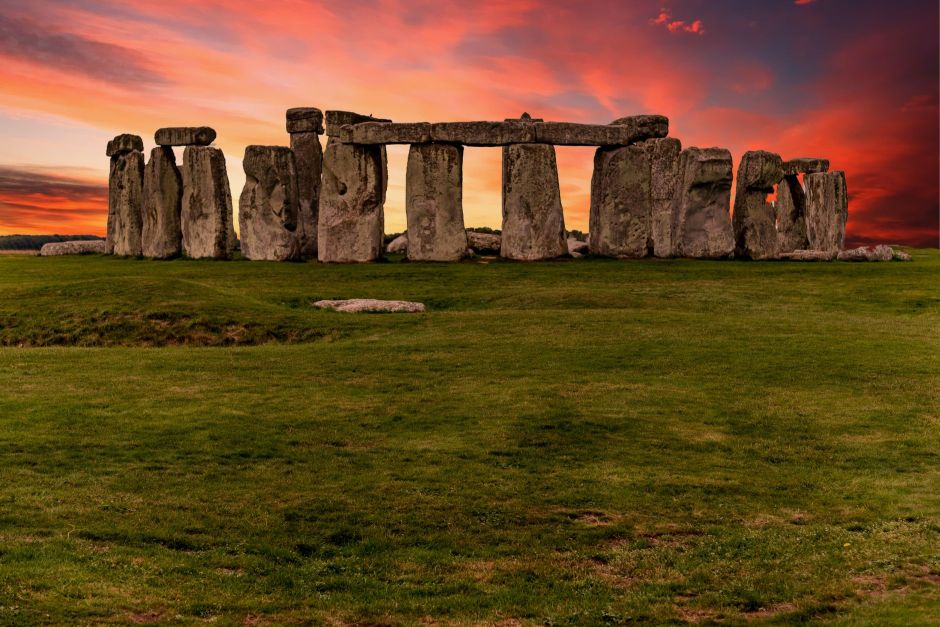
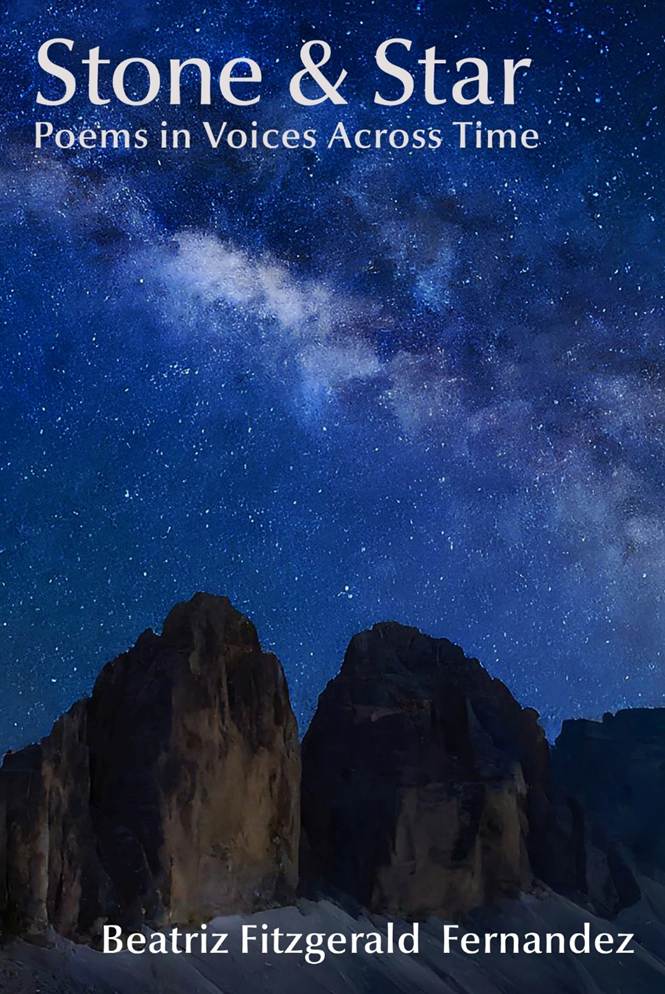
Many poets use the title of one of the individual poems in the collection as the title of the whole because that poem is an important one for them personally or they use a line from one of the key poems in the collection. In my case, I gathered the poems first and examined them as a group. I knew I wanted to use” The Story of the Stones” (based on a visit to Stonehenge) as the central poem, but not as the title. When I chanced upon the version of “Evening” by Rainer Maria Rilke (one of my favorite poets) translated by Stephen Mitchell, which ends “now bounded, now immeasurable/ it is alternately stone in you and star” I knew I had identified two key images that my poems returned to again and again and which for me defined the dichotomy of the human condition the poems celebrated.
The subtitle “Poems in Voices Across Time” was inevitable as I wanted to emphasize that most of these poems were in voices not my own and not necessarily from my time period. I’ve always loved time travel as a fictional device and through my poems I travel from antiquity to the modern era.
PLEASE YOUR FIRST READER: YOURSELF
While there should be some rhyme and reason to the ordering of your book, it doesn’t necessarily have to please the masses. You are a poet and a poetry reader—consult yourself first. (Unless you are a perfectionist, in which case you may delay publication forever!) Do you like poetry collections organized a certain way? Do you feel confused if the poems seem randomly grouped? Do you feel there must be a central theme running throughout? Do you enjoy reading poems arranged by alternating lengths?
Above all, you should please yourself first when putting together your book. There is no one “right” way and there are no poetry gods to be appeased. Stretch that poetic license as far as you feel is desirable and necessary!
The best result is not if your book wins prizes or garners praise from others (although that is nice when it happens!), the most important thing is that you are proud of the resulting work and feel that it truly reflects your personal creative style.
One of my favorite poems from this new collection is somewhat appropriate to the month of October, as it combines gothic elements and hints of Frankenstein and applies them to Wuthering Heights.
Emily Brontë Addresses Her Creation
“But Fancy still will sometimes deem
Her fond creation true.” ~ A Day Dream
I named you after the things I loved–
the heath I walked on every good day of my life,
the stone cliffs I climbed as a girl,
for yours was the companion spirit I found there,
your face the vision that hounded me,
when clouds churned across those wind-worn heights.
All that one soul calls forth in another,
I poured into you, my willing vessel
—and you in return guided my hand
more surely than any god could,
you who dared navigate the seas of Gondal
in my childhood, led armies across continents—
my melancholy gypsy boy, man of mystery,
you were both commander and commandment.
At times you wore my brother Branwell’s face—
not the playmate I lost to London Town,
but he who returned home in his place.
When I stood at the chasm of his grave
my mind full of fears I’d soon share
the dark refuge he found there,
I thought back to the first time
I penned your name—Heathcliff—
and wondered whether I did right
to birth what some would later claim
was a monster in the heather,
weave a cradle of bracken fronds
and release you on the fragile river of men—
where your lips declared desires
I dare not speak of, and your black heart
would out-beat mine.
Happy Halloween, readers!
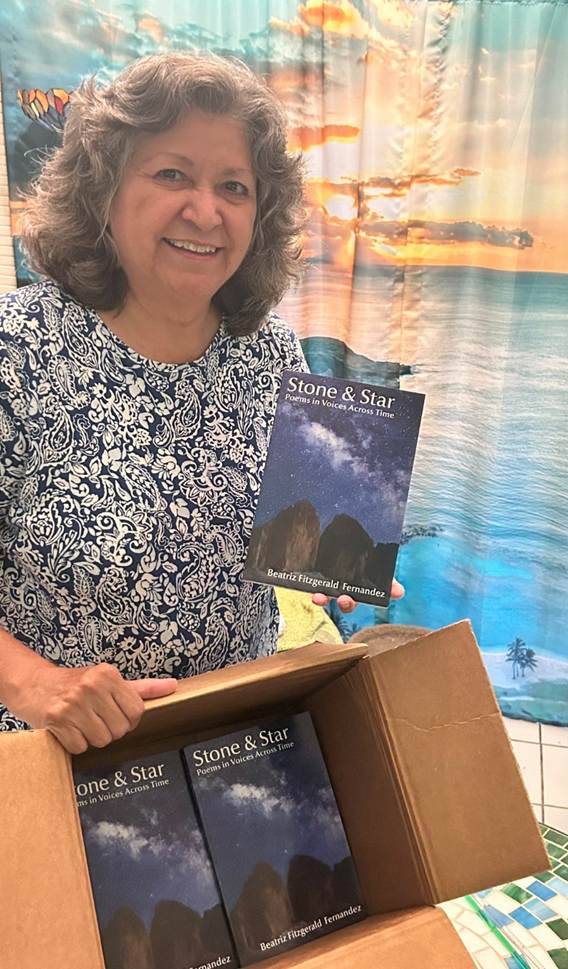
Beatriz F. Fernandez is a poet and short fiction writer. Join me for my November 1st reading (along with Miguel Mitchell) as part of the Speculative Sunday Reading series! Presented and moderated by Akua Lezlie Hope.
Readings are live on Zoom and tickets are free via the Eventbrite link.
Thank you for reading and please follow us here and on Facebook: https://www.facebook.com/OLDSCRATCHPRESS/
Old Scratch Press’s latest publications: Old Scratch Press Catalog