Join the Masquerade! Writing Persona Poetry

If you’ve never written a poem in any voice but your own, you might want to try writing a persona poem—it may lead you down unexplored paths of creativity!

The Academy of American Poets defines a persona poem thus:

“A persona poem is a poem in which the poet speaks through an assumed voice….Also known as a dramatic monologue, this poetic form shares many characteristics with a theatrical monologue: an audience is implied; there is no dialogue; and the poet takes on the voice of a character, a fictional identity, or a persona.”

The voice you adopt when you write a persona poem can be a fictional, imaginary or historical character, an animal, an inanimate object, a collective such as a country, or even an omniscient god-like voice.  This is when the fun begins!

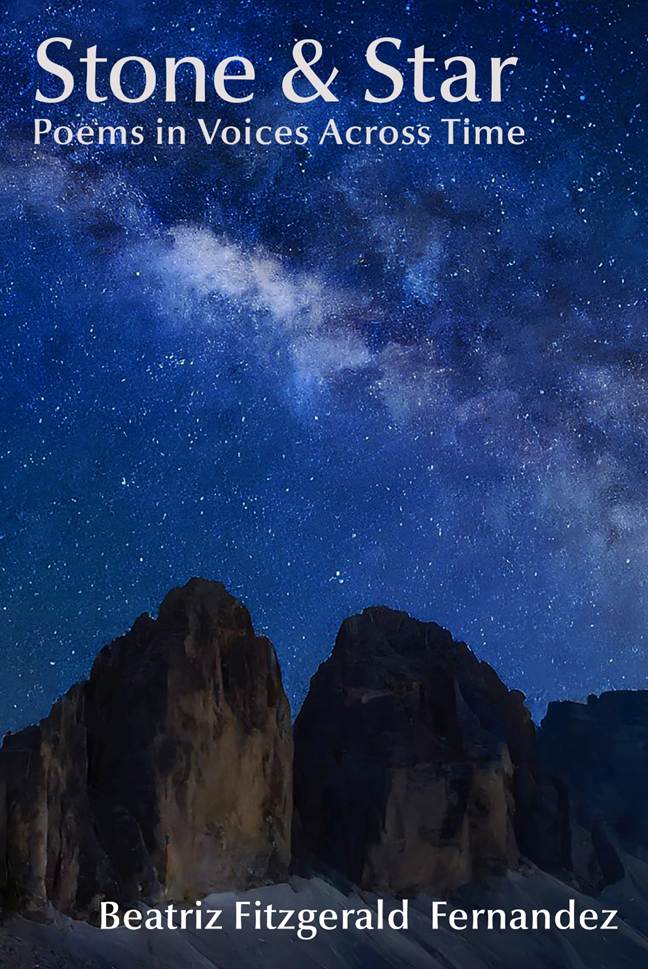
In “Richard the Lionheart’s Mummified Heart Examined,” a poem inspired by a true story and reprinted in my latest collection, Stone & Star: Poems in Voices Across Time, I alternately adopt the voice of the King’s Minstrel, the Royal surgeon, Richard I, his wife Berengaria of Navarre, the heart itself, and the forensic scientists who examined the heart in modern times.  Needless to say, this was a fun poem to write and the voices seemed to meld seamlessly to tell the story.
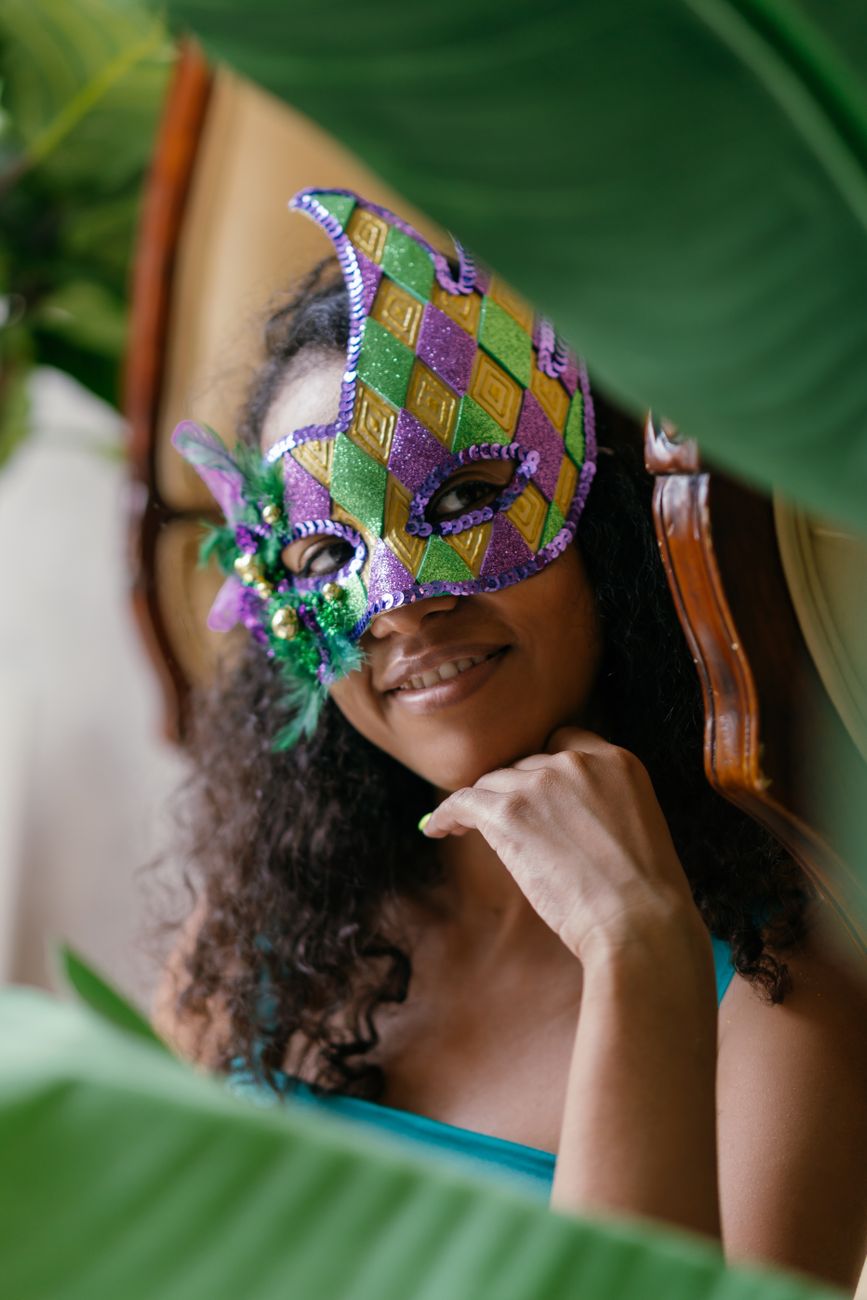
In psychological terms, Jung described persona as a social mask that conceals “the true nature of the individual.”  The term originates from the theater in ancient Greece where actual masks were worn by actors on stage to represent different points of view.

However, I find that writing persona poetry rather than concealing, frees the writer to reveal their subjective truths to the reader without the constraints of their own personality. 

Writing persona poetry is the closest I will ever come to acting, and I find it incredibly liberating.  I first found my own voice via persona poetry and it is still my favorite poetical form to use.

When writing as a historical character, I do some research and try to read letters written by that person if they are available, to pick up some of their personal vocabulary.  The way they address and sign their letters, their general tone, their “voice” is usually apparent and I use that to guide my own writing of the poem. 

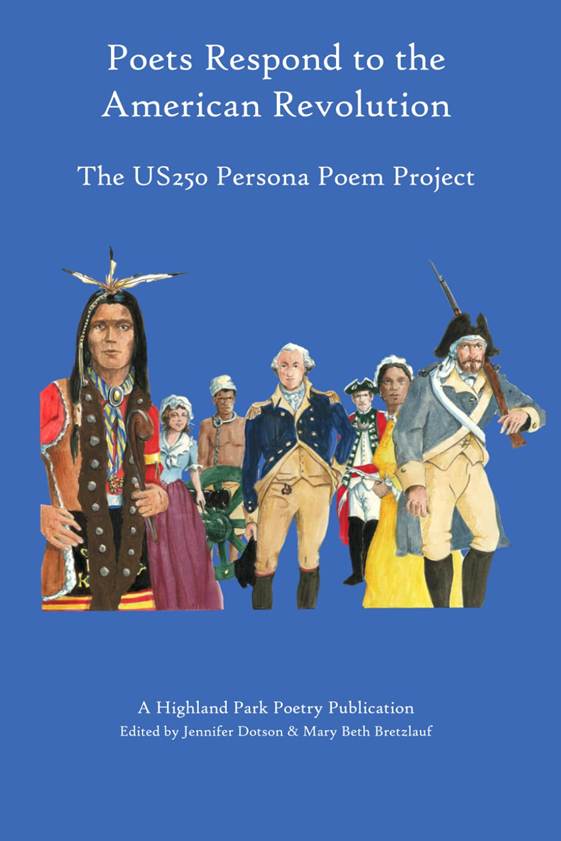
Recently, my poem “Lafayette Gingerbread” was published in an anthology,  Poets Respond to the American Revolution: The US250 Persona Poem Project by Highland Park Poetry, which was devoted entirely to persona poetry about U.S. history from 1765-1800, leading up the American Revolution. 

We were asked to write from the point of view of fictional or historical persons, animals or objects:  one poet wrote from the perspective of Brown Beauty, the horse Paul Revere rode, some wrote from the perspective of symbols such as the Tree of Liberty or the Liberty Bell.
When writing as a fictional character, I try to stay within the confines of the work they appeared in, and use vocabulary suited to the time period of the novel.  I have fun imagining what some fictional characters would say, given a chance, especially when in the original work they were not given much dialogue.  In this spirit, I’ve given voice to Weena, the Time Traveler’s mostly mute companion in H.G. Well’s The Time Machine, and Nova, the beautiful mute heroine in the original 1968 Planet of the Apes film. 

I find most of the persona poems I write are emotional in nature, speaking from the heart in a more direct and universal way than I could write from my own limited experience. Some writers may feel uncomfortable putting words into another’s mouth, so to speak. Unlike novelists or playwrights, who regularly write dialogue for fictional and in some cases historical characters, poets are used to thinking of their writing as highly personal and not open to other’s voices. But isn’t most poetry persona poetry, in a way?  Because whenever we write, we almost unconsciously adopt a persona, a writing voice, that is not our everyday voice, but which nonetheless reflects our authentic and true nature.

Beatriz F. Fernandez is a poet and short fiction writer. Join me for my November 1st reading (along with Miguel Mitchell) as part of the Speculative Sunday Reading series!  Presented and moderated by Akua Lezlie Hope. Readings are live on Zoom and tickets are free via the Eventbrite link.

Thank you for reading and please follow us here and on Facebook:  https://www.facebook.com/OLDSCRATCHPRESS/

Old Scratch Press’s latest publications: Old Scratch Press Catalog
Launch Your Imagination: Speculative Poetry in the Artemis Age

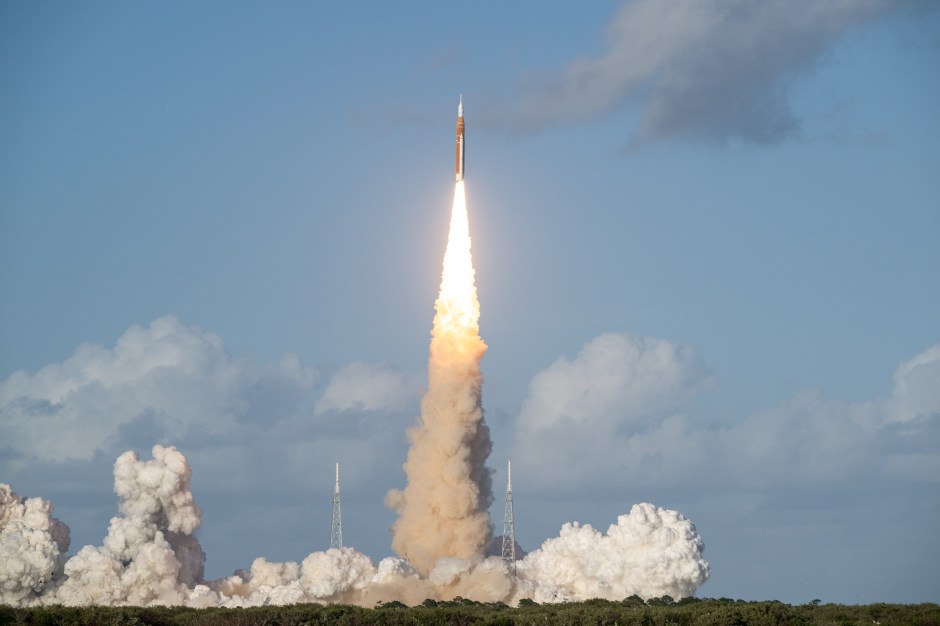
(Image Credit: NASA/Keegan Barber)

This year’s National poetry month began with the successful liftoff of NASA’s Orion spacecraft as part of the Artemis mission, a forward step in manned spaceflight to the Moon—so it’s a perfect month to open a discussion about the future of Speculative poetry!

Speculative poetry is having a moment…

Speculative poetry, or SpecPo as it is also known, is coming into its own, especially in the last few years.  Long overshadowed by science fiction literature, speculative poetry has finally been accepted by the Science Fiction and Fantasy Writers Association (SFWA) as valid publications to become a member and even has its own Nebula Award category as of 2025, with perhaps a permanent Hugo award category in the works as well.

These are the 2025 Nebula Award finalists for best poem. (You can read most of them online by clicking on the title.)

Of course, the SFPA-the Science Fiction & Fantasy Poetry Association—established in 1978–has long awarded speculative poetry in all its many incarnations: the Dwarf Stars award, the Rhysling, the Elgin, and Grand Master and Lifetime Service awards. It also bears noting that the Canadian Science Fiction and Fantasy Association has been awarding an Aurora Award for “best poem/song” since 2011.

But with the addition of the Nebula and possibly Hugo awards, the momentum for speculative poetry is increasing.

What is Speculative poetry?

Speculative poetry generally refers to a poem with hard science-fiction or high fantasy elements, the latter which can include horror, mythology, fairy tales, folklore, so you can argue that it has been around forever.  But it has evolved over time to be more futuristic and diverse in nature, a situation which I think will continue to gather speed as we race for the Moon and Mars via future space missions.

The SFPA’s founder addresses some of the difficulties in defining Speculative poetry in this essay:

About Science Fiction Poetry, by Suzette Haden Elgin

Like many writers interested in science fiction, I started out writing poetry and then attempted to write science fiction short stories, never pausing to consider speculative poetry as a natural next step instead.  When my sallies into short science fiction failed to match my vision, I began to explore poetry more deeply, especially narrative poetry, but again, never considered speculative poetry specifically.  The truth is, I was not encountering much speculative poetry in my reading.  In the science fiction magazines I read, poems seemed to appear as filler while the stories and novellas were the main attractions.  The pieces tended to be very short and from a limited number of authors. This was my perception at the time, though I’m sure it was not unique. There were and have been many magazines publishing speculative poetry all along, but they did not come across my radar as a fledgling writer.

After many years of writing and publishing poetry, I began to explore short fiction again.  I wrote an opening scene for what I first envisioned as a story, but it just didn’t materialize further.  I was excited about the scene, though, and the vision would not leave me.  Finally, the light bulb came on and I realized that this scene would work just as well, maybe better, as a poem!  That reworked scene became a poem that was later accepted by Star*Line.

Speculative Poetry from Past to Present

To read some poems from speculative poetry’s past, peruse Poems of the Fantastic and Macabre a list curated by Theodora Goss, a professional fantasy writer, poet, and Victorian literature scholar who teaches Fantasy literature.

There’s a lot of excitement surrounding Speculative Poetry and in my research I ran across several articles that express that:

Locus Magazine has a feature on Speculative poetry this month: The Great Shapeshifter: Speculative Poetry

Reactor Magazine‘s article Weird as Hell: Falling in Love with Speculative Poetry by Diane Callahan. She explains how speculative poetry can serve as a gateway into poetry for people who don’t normally read it or embrace the label.

What you can do to support Speculative poetry right now

Join the Speculative poetry initiative to make the Hugo Award for Poetry a permanent category. It is a process that takes two years and must be ratified by the World Science Fiction Society (WSFS) (TheHugoAwards.org) who administer the award.

Submit your work and read magazines that publish speculative poetry:

The SFPA publishes a market list of paying and non-paying speculative poetry magazines.

Attend or participate in one of Speculative Poetry’s Speculative Sunday reading series

Read a book from Speculative Poetry’s Speculative Poetry Book Collections.

The Future and Speculative Poetry

The future of Speculative poetry looks bright–it is a form exceptionally adaptable to our changing world and open to the increasingly diverse visions of reality and the future of humankind. It’s accessible and welcoming to the exploration of social, political and multicultural issues.

And as the SFWA states in their Introduction to Speculative Poetry,

“Speculative poetry is not only for science fiction and fantasy fans. It is for any human with a heart and a desire to declare that their dreams should be heard.”

Thank you for reading!

Beatriz F. Fernandez is a Miami area poet and University Reference librarian. She is the author of three poetry chapbooks, the most recent of which is Simultaneous States  (2025) by Bainbridge Island Press.  In 2025, she became a member of the Old Scratch Press writing collective.

Please follow us here and on Facebook. https://www.facebook.com/OLDSCRATCHPRESS/

Our current theme for submissions is Al Dente. For more information click here.

AL DENTE In cooking, pasta or risotto al dente (/ælˈdɛnteɪ/, Italian: [al ˈdɛnte]; lit. ’to the tooth’) is cooked to be firm to the bite, requiring a brief cooking time. The term also extends to firmly-cooked vegetables. In contemporary Italian cooking, it is considered to be the ideal consistency for pasta.

What does al dente mean to you? To your neighborhood vampire it probably means something different. How about to the prospector mining gold?

Send us something that you haven’t overcooked!

Submissions close on July 5, 2026; the issue publishes SEPTEMBER 1, 2026.

OSP members are featured in an issue of MiniMAG!–curated and compiled by OSP founding member Anthony Doyle.