If you’ve never written a poem in any voice but your own, you might want to try writing a persona poem—it may lead you down unexplored paths of creativity!
The Academy of American Poets defines a persona poem thus:
“A persona poem is a poem in which the poet speaks through an assumed voice….Also known as a dramatic monologue, this poetic form shares many characteristics with a theatrical monologue: an audience is implied; there is no dialogue; and the poet takes on the voice of a character, a fictional identity, or a persona.”
The voice you adopt when you write a persona poem can be a fictional, imaginary or historical character, an animal, an inanimate object, a collective such as a country, or even an omniscient god-like voice. This is when the fun begins!
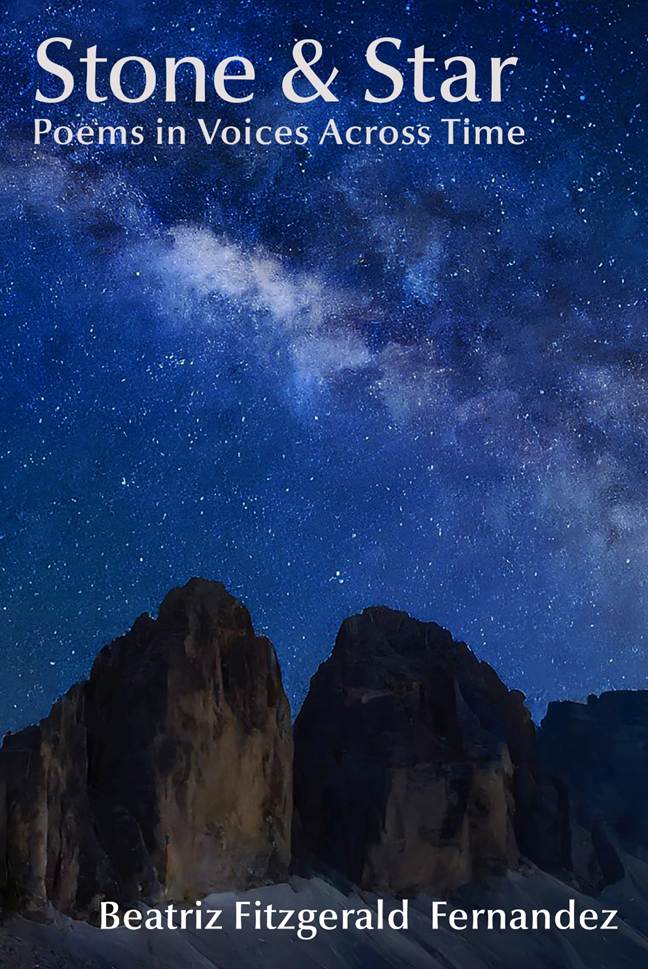
In “Richard the Lionheart’s Mummified Heart Examined,” a poem inspired by a true story and reprinted in my latest collection, Stone & Star: Poems in Voices Across Time, I alternately adopt the voice of the King’s Minstrel, the Royal surgeon, Richard I, his wife Berengaria of Navarre, the heart itself, and the forensic scientists who examined the heart in modern times. Needless to say, this was a fun poem to write and the voices seemed to meld seamlessly to tell the story.
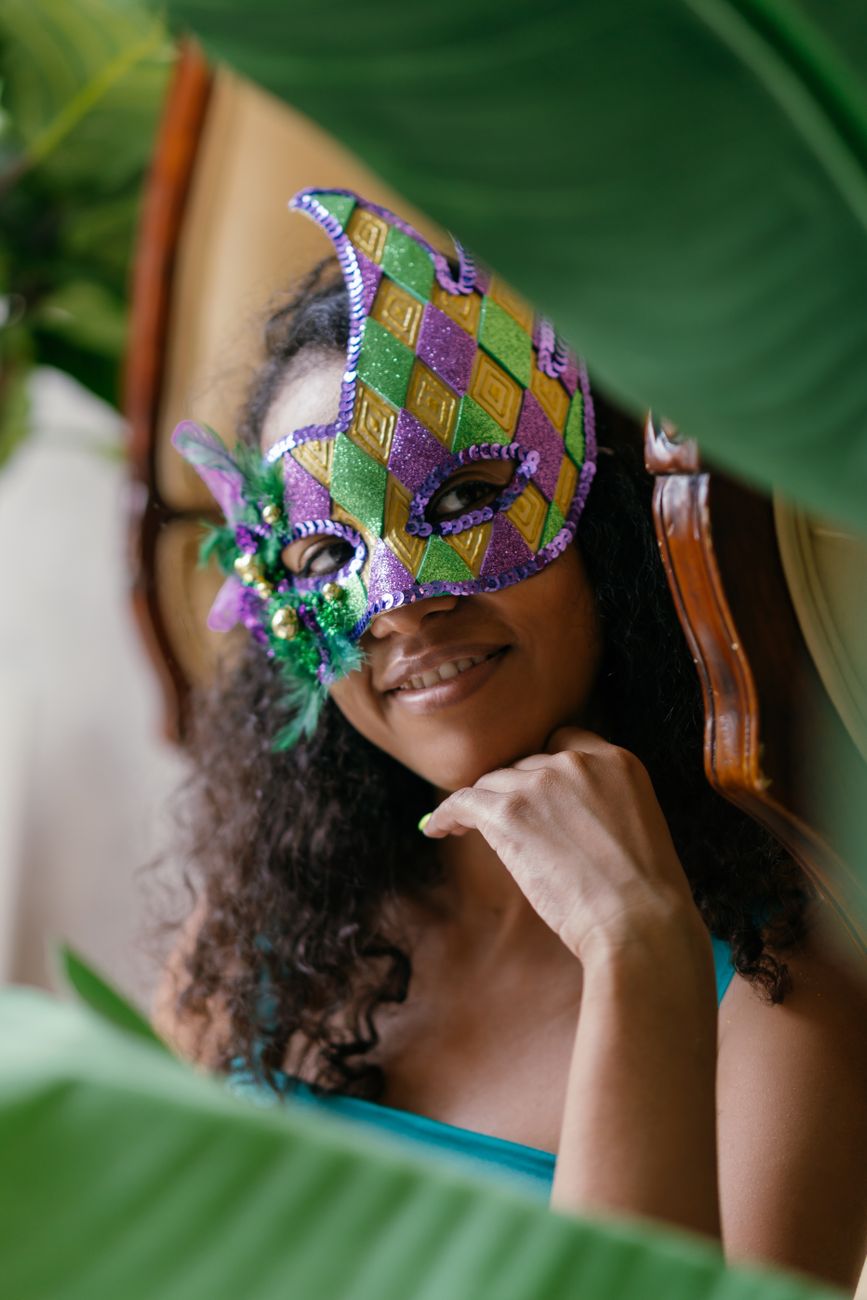
In psychological terms, Jung described persona as a social mask that conceals “the true nature of the individual.” The term originates from the theater in ancient Greece where actual masks were worn by actors on stage to represent different points of view.
However, I find that writing persona poetry rather than concealing, frees the writer to reveal their subjective truths to the reader without the constraints of their own personality.
Writing persona poetry is the closest I will ever come to acting, and I find it incredibly liberating. I first found my own voice via persona poetry and it is still my favorite poetical form to use.
When writing as a historical character, I do some research and try to read letters written by that person if they are available, to pick up some of their personal vocabulary. The way they address and sign their letters, their general tone, their “voice” is usually apparent and I use that to guide my own writing of the poem.
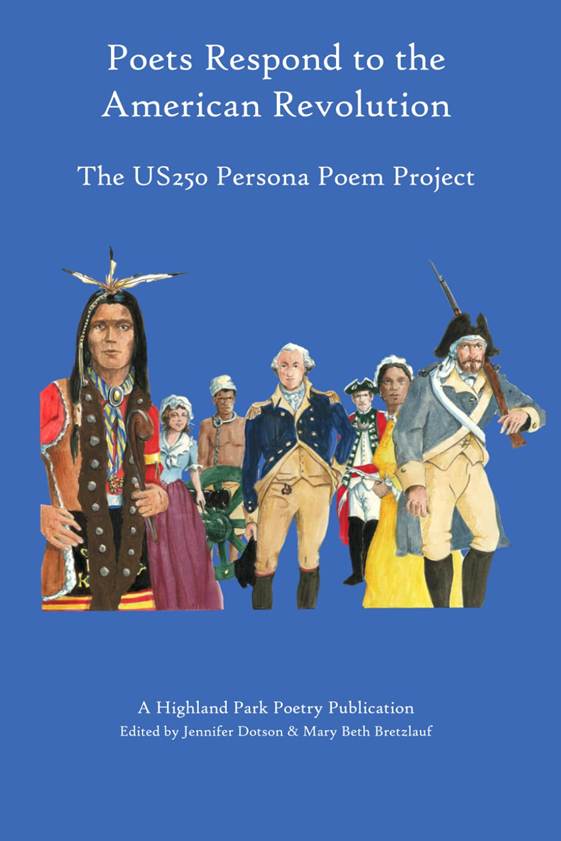
Recently, my poem “Lafayette Gingerbread” was published in an anthology, Poets Respond to the American Revolution: The US250 Persona Poem Project by Highland Park Poetry, which was devoted entirely to persona poetry about U.S. history from 1765-1800, leading up the American Revolution.
We were asked to write from the point of view of fictional or historical persons, animals or objects: one poet wrote from the perspective of Brown Beauty, the horse Paul Revere rode, some wrote from the perspective of symbols such as the Tree of Liberty or the Liberty Bell.
When writing as a fictional character, I try to stay within the confines of the work they appeared in, and use vocabulary suited to the time period of the novel. I have fun imagining what some fictional characters would say, given a chance, especially when in the original work they were not given much dialogue. In this spirit, I’ve given voice to Weena, the Time Traveler’s mostly mute companion in H.G. Well’s The Time Machine, and Nova, the beautiful mute heroine in the original 1968 Planet of the Apes film.
I find most of the persona poems I write are emotional in nature, speaking from the heart in a more direct and universal way than I could write from my own limited experience. Some writers may feel uncomfortable putting words into another’s mouth, so to speak. Unlike novelists or playwrights, who regularly write dialogue for fictional and in some cases historical characters, poets are used to thinking of their writing as highly personal and not open to other’s voices. But isn’t most poetry persona poetry, in a way? Because whenever we write, we almost unconsciously adopt a persona, a writing voice, that is not our everyday voice, but which nonetheless reflects our authentic and true nature.
Beatriz F. Fernandez is a poet and short fiction writer. Join me for my November 1st reading (along with Miguel Mitchell) as part of the Speculative Sunday Reading series! Presented and moderated by Akua Lezlie Hope. Readings are live on Zoom and tickets are free via the Eventbrite link.
Thank you for reading and please follow us here and on Facebook: https://www.facebook.com/OLDSCRATCHPRESS/
Old Scratch Press’s latest publications: Old Scratch Press Catalog