
The Power of Poetry Workshops

By Virginia Watts ( a member of the Old Scratch Press Collective)

Several years ago, I was in an online poetry workshop with a woman called Joan. Even seated far away from each other in the real world and only together in the great, cold world of the internet, I felt a connection to her. What was it exactly. Her beautiful, novel, highly creative, arresting, heart rendered poetry for sure, but it was more than that. I appreciated how much thought she put into her critique of the other poetry in the group. I could tell she had taken a great deal of time to read and reread, to think and rethink, as I do when I am involved in writing critique groups, and I have and am a part of quite a few of those. I take my role as a fellow writer offering critique very seriously. Here’s the thing. No one can critique their own writing. It’s impossible. What you need to be the best you can be as a writer are fellow writers who give it their all when reading your work. People who are willing to always comment honestly on the work you circulate. In other works, you need people like Joan.

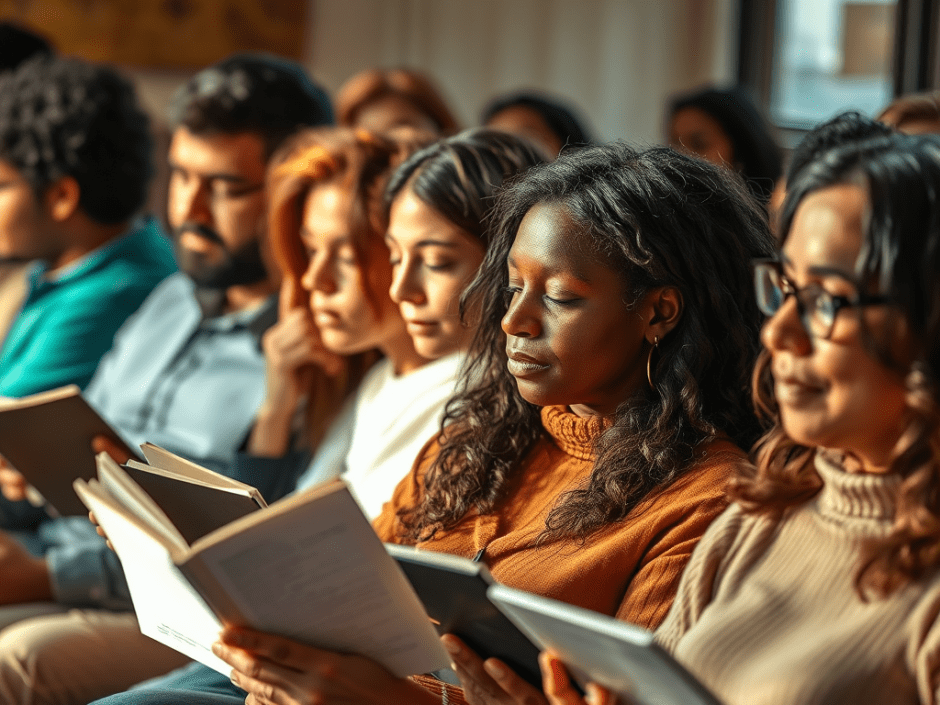
            So, imagine how thrilled I was when Joan emailed me after the online workshop ended to see if I would be interested in joining a Sunday morning critique group of six other poets. I couldn’t say yes fast enough and that started years of the best morning of the week on my calendar. We are a group of diverse styles living in different east coast states. Currently four men and four woman because another has joined our group. Each Sunday, we take turns reading our draft poem and then the floor opens up to comments. Titles that don’t do enough work are called out. Areas that are confusing, messages that seem weak or not fully realized. How the poem looks on the page. Whole stanzas that sometimes just don’t need to be there. All things poetry and how to make it better. Every single Sunday I sign off and look at my poem as revised by the group and think. There is absolutely no way I could have written this poem in the final best form it can be without them.

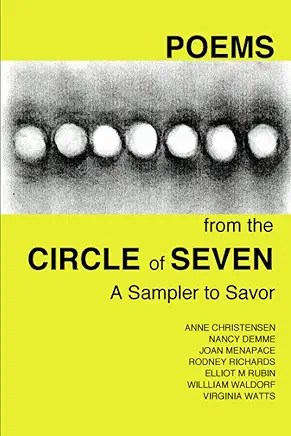
            A few years ago, the group put together a cooperative collection of poems available on Amazon called Poems from the Circle of Seven. A Sampler to Savor. One of the members’ sons kindly assisted us with our cover art which turned out beautifully. It was special and moving to see ourselves all together on the page inside the cover of one unified book.  Special because something special happens every Sunday morning that I don’t think we can explain exactly. Call it chemistry. Call if magic. We have eight now, so I am sure at some point we’ll put together another collection.

            And of course, while our writing brings us together, something we all care about, love to do and literally need in our lives, now we have a group friendship too. I can speak for myself in saying that less than a year ago I had open heart surgery and seeing the faces and hearing the words of encouragement before and after as I recovered meant a great deal to me. One of our members has a seriously ill spouse and we all grieve this. One has been going through the process of retiring and moving. On the flipside we have shared countless laughs about the ups and downs of real life. We have also heard about great adventures. Recently one member went skydiving. That made for an unforgettable poem. So, to writers everywhere, if you have the chance and are lucky enough to enter a circle of fellow writers sprint there and take your seat. It will uplift you and bring the greatest joy to your writing process.

What I Learned from Poet and Essayist Artress Bethany White

By Virginia Watts

Artress Bethany White is a poet and essayist I met during a summer writing conference at Rosemont College. I was fortunate enough to attend her poetry workshop where I learned so much about the craft and art of poetry. Artress is the author of the essay collection Survivor’s Guilt: Essays on Race and American Identity (New Rivers Press, 2020) and My Afmerica: Poems (Trio House Press, 2019). Her work is unique and unflinching. She is forging new ground. It is at one turn poetry that leaves you dead in your tracks and in another historical documentation. She is an unfailingly brave writer willing to wade into the complex racial dilemma of our country. She is the kind of writer that can make a difference. Read one of her poems or essays and you will want to read them all. Then you will never forget them.

Her personal story adds another layer of interest to her work. She herself is descended from one of the largest slaveholding families in America and she is raising her own transracial family. What I remember about her most is how encouraging she was to her students, fledging poets. She had a way of making us believe in ourselves and that we too had something importantly human to say.

Pancakes Keep Coming to Mind: A Sestina Commemorating the Demise of Aunt Jemima on the Pancake Box 

BY ARTRESS BETHANY WHITE

June 2020

I invoke my great-great-grandmother’s name on exhaled breath,

the vowels arranging themselves in shorts and longs,

syntax and semantics duking it out.

Mima, that could have been birthed from an African tongue.

Enee, meenemimamo, respectable marriage of village,

continent, and town, without a diabolic Je like a pendulum swing

to the scarlet kerchief blooming in my brain, pancakes on my tongue,

unwilling to utter that name over black families now living out

their American dream. Like reinvention, how the heart longs

to reconcile past and present, within a village

raising a newer child clawing out of epicureal stink to swing

free from stereotypes, auction block, and Aunt Jemima’s mealy breath.

Instead, pancakes every time my forebears’ syllabics touch my tongue.

Mima sans  Je, not Meema, or Mi’ma[e], coy notes stepping out

of a history where grits and flapjacks were birthed in a village

to skirt my teeth or strut ’cross my lips on exhaled breath,

that ample bosom and backside mocking me, she who longs

to rear up and bark Breakfast! and Brunch! on a revolving door swing.

You are not my Auntie or Aunt pronounced like the creature crawling out

over cadavers of supermarket boxes choking my breath

on a collapsed lung of shady marketing to keep bodies bound in a village-

cum-ghetto of stranger than strange imagined black things, girl-on-a-swing

dreams culled from western imaginings of what that colored gal longs

to do over a hot stove, flipping and flapping ’cause the griddle got her tongue.

Names as revenue monikers on revue, line dancing on a hip swing.

Oh, how daring to cogitate on destiny, each syllable a village

of preferred ubiquity, once the Ghanaian name Afua translated out

to first girl child born on a Friday, sonic genealogy on the tongue,

but changed to post-baptismal Mary, a rigid catechism of colonial breath

blowing across centuries of arid longing.

Food me, fooled me, sold me, told me, held me, bled me, tongue

afire with dreams of love, life, and freedom a profusion of days swinging

between something and more. My village compound, my village

quarters, my village a city block, each century censuring my breath.

What I seek is what I speak, not handed a script of nostalgic longing.

Jemima wrenched from shelves, but a litany in my brain still playing out.

Ain’t nothing but a jonesing to tweak culinary history so my village

knows my branches are thick, swaying and swinging with longing and breath,

rolling descendancy off my tongue, blessing consumption out. 

Source: Poetry (May 2021)

Thank you for reading this week’s blog post from Old Scratch Press, written by collective member VIrginia Watts. Her collection of short stories Echoes From the Hocker House just won the Bronze Feathered Quill Book award fro Best Anthology. You can purchase a copy here.

Grateful

Hi All. Virginia (Ginny) Watts here. I am excited and honored to be a part of this new poetry collective. Poetry is good for the world and good for our souls! Sometimes people ask me what my favorite poem is or favorite poet. I have many, but one poet I read over and over again is Joy Harjo: three times the Poet Laureate of the United States. Here is one of her most famous and unforgettable works:


Perhaps the World Ends Here

By Joy Harjo

The world begins at a kitchen table. No matter what, we must eat to live.

The gifts of earth are brought and prepared, set on the table. So it has been since creation, and it will go on.

We chase chickens or dogs away from it. Babies teethe at the corners. They scrape their knees under it.

It is here that children are given instructions on what it means to be human. We make men at it, we make women.

At this table we gossip, recall enemies and the ghosts of lovers.

Our dreams drink coffee with us as they put their arms around our children. They laugh with us at our poor falling-down selves and as we put ourselves back together once again at the table.

This table has been a house in the rain, an umbrella in the sun.

Wars have begun and ended at this table. It is a place to hide in the shadow of terror. A place to celebrate the terrible victory.

We have given birth on this table, and have prepared our parents for burial here.

At this table we sing with joy, with sorrow. We pray of suffering and remorse. We give thanks.

Perhaps the world will end at the kitchen table, while we are laughing and crying, eating of the last sweet bite.

“Perhaps the World Ends Here” from The Woman Who Fell From the Sky by Joy Harjo. Copyright © 1994 by Joy Harjo. Used by permission of W.W. Norton & Company, Inc., http://www.wwnorton.com.

Source: The Woman Who Fell From the Sky (W. W. Norton and Company Inc., 1994)

  • Living
  • Relationships