

By R. David Fulcher, Founding Member of the Old Scratch Press Poetry and Short Form Collective
Floetry (my definition) a written form of expression combining fiction and poetry.
It is uncommon, but not unheard of, for writers to embrace both fiction and poetry. As one of the writers in this category, I often wonder if this is a benefit or a detriment. To a purist, being competent in both could perhaps mean I’m a master of neither, to echo the old saying “jack of all trades, master of none”.
More recently, I’ve decided being fluent in both fiction and poetry is a definite advantage. To begin with, several of the masters of speculative fiction integrate poetry into their work to great effect. Consider these lines of from Stephen King’s novel The Tommyknockers:
Last night
And the night before,
Tommyknockers, Tommyknockers
Knocking at my door.
And these lines from Ray Bradbury’s novel Something Wicked This Way Comes:
By the pricking of my thumb,
Something wicked this way comes.
These are by no means the only examples. Dean Koontz dives into poetic verse within his many novels, and it can be argued that the fantasy writings of the Irish writer and dramatist Lord Dunsany (a possible influencer or JRR Tolkien, discover more here) read more like poetry rather than prose.
Therefore, having made the case for “floetry”, how do I employ it? Primarily I interweave poetry into my prose in two ways:
- As bookends to start and end my books, with the remainder of the book being fiction, and
- Injected directly into the middle of a story
Case 1: Bookends
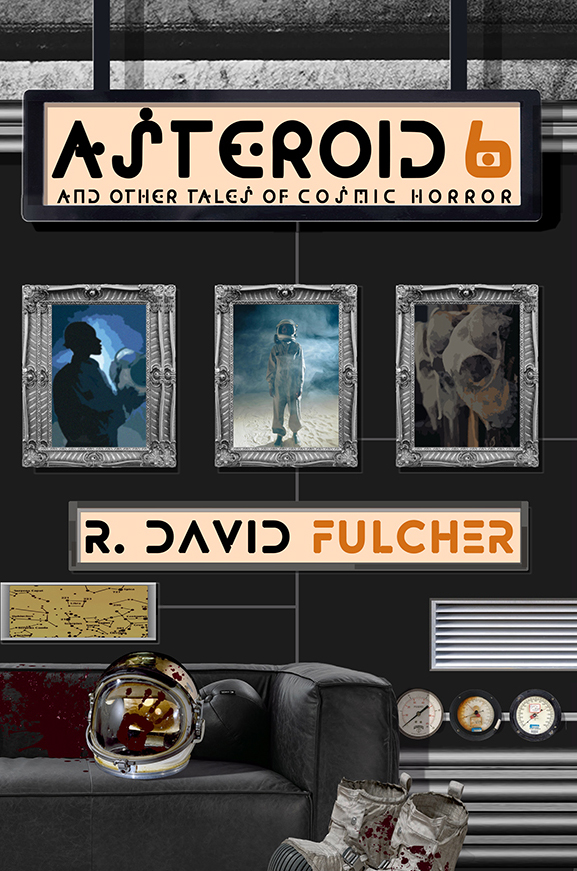
I employ the bookend strategy in my two my recents books, The Pumpkin King and Other Tales of Terror and Asteroid 6 and Other Tales of Cosmic Horror. I’ll provide an example of each.
The Pumpkin King and Other Tales of Terror starts with my poem “Eulogy to E.A. Poe”:
Man of dark musings and opiate visions!
Mind of pits and rats,
Black cats and ancestral corpses!
How is it that love sparkled within those dark recesses, Like diamonds within a bedrock of obsidian— That verse sprang from that ebony hand,
As vibrant and unlikely as lilacs from snow?
Tales of cities under the sea,
Of waves weeping softly, “Annabel Lee!”
Did the bells, the bells, the bells, foretell of your demise, Or was it borne on Raven’s wings, thus falling from the sky?
Could it be that your last vision was your brightest?
Oh, soul of all that is night,
Inspire my pen to wail and to write.
In a similar fashion, my book Asteroid 6 and Other Tales of Cosmic Horror starts with the poem “The Outer Reaches of Unknown Kadaath” (Kadaath is a reference to the works of H.P. Lovecraft):
Who would’ve thought
That H.P. was right
The Old Ones they beckon
Through the nebular night
Those in suspension
Suffocate in sleep
Yog-Sothoth promised
His secret to keep
The terminals flicker
The life support hums
The engines propel me
From the touch of our sun
Soon I will sleep,
Dreaming of the Mountains of Madness and the door
behind the Silver Key
The end of mankind to be unlocked—
By one spaceship and me
Case 2: Direct Injection
In my story “The Faerie Lights” within my book The Lighthouse at Montauk Point and Other Stories I start off with prose, and very quickly inject a poem into the tale:
Rest awhile, friend, for it is clear that you have walked far over hill and valley, and penetrated the wild and strange woods, to have happened upon this long-preserved manuscript beneath the moss-covered rocks.
I came upon this very spot, perhaps many years ago now, as just a lad. Here I took my respite, beckoned by a fair breeze sweeping over the verdant fields and a song sung in dulcet tones far sweeter than any produced by mortal throats. I was weary from hiking many miles, and my body eagerly fell into a deep sleep.
A song floated over my consciousness, sung by a thousand child-like voices:
Weary traveler,
Rest your head,
And sleep awhile
Where the faeries tread.
Weary traveler,
Laugh in kind,
And take deep draughts
Of faerie wine.
Weary traveler,
Spend the night,
Follow the trail
Of the faerie lights!
Additional stanzas of poetry are injected into other parts of the tale, with the intent of lulling the reader into a sleepy, dream-like state.
Final Thoughts
So there you have it – a brief introduction into the concept of “floetry” with several examples of usage.
What do you think?
Can poetry and prose peacefully coexist on the same page?
Please leave your thoughts in the comments!
Thanks for reading,
-R. David Fulcher, Old Scratch Press Founding Member
BIO: https://rdavidfulcher.com/about/
R. David Fulcher’s latest book is Asteroid 6 and Other Tales of Cosmic Horror
Thank you for reading. Please sign up to follow us on Facebook and to follow us here on WordPress to expand your knowledge about poetry and short form writing as well as to receive the latest news about publication opportunities.
 OLD SCRATCH PRESS
2 thoughts on “Exploring Floetry: The Fusion of Fiction and Poetry.”