
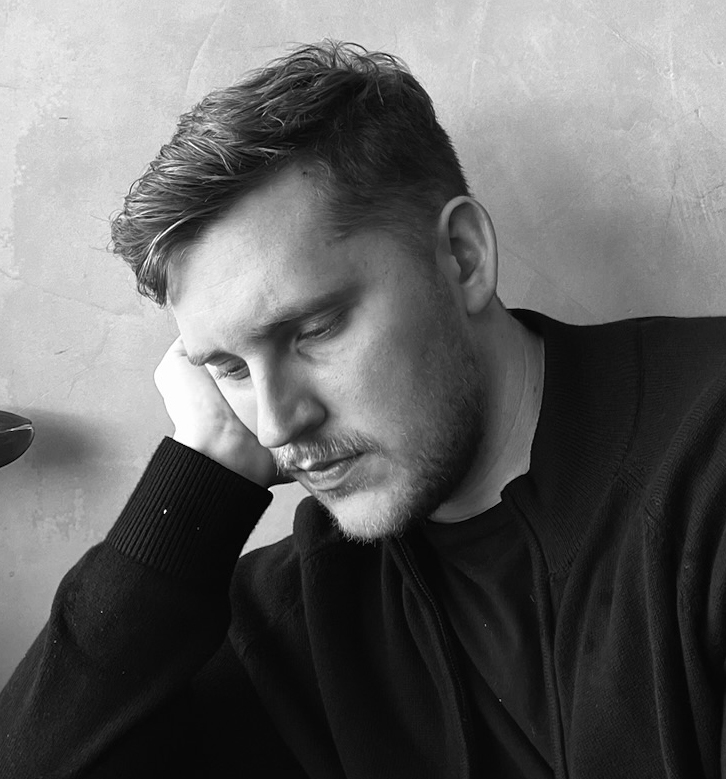
One of the pleasures of blogging for Old Scratch Press is discovering other writers through WordPress. I noticed that poet William Delaat, creator of Primitive Poetry, had been liking some of our posts, so I decided to see what he was writing.
I found a poet with a healthy skepticism toward literary rules and pretension, a fondness for contradiction, and some interesting things to say about writing and sharing poetry. I enjoyed exploring his work enough that I contacted him to ask whether he’d be interested in an interview for OSP.
Happily, he agreed! We talked about literary gatekeeping, writing under a pseudonym, the terror of reading your own poetry aloud, and the challenges of finding a genuine literary community online.
An Interview with William Delaat
Old Scratch Press: On Primitive Poetry, you write about literary gatekeeping and pretension. What do you find pretentious about the poetry world, and what would you like to see change?
William Delaat: To clarify, on that page I have a line that says, “Poetry is pretentious. I love that.”
When I first started writing poetry, I had no literary training (I still really do not). I used it as a way to express myself in my journal in a more creative way. I did this for years before I ever published anything online. I had no concept that there were people who apply rules and logic to poetry. I just wrote what I enjoyed, and that was enough.
In my last year of undergrad, I took a creative writing class. I had taken some writing and English classes before, and part of my degree was in philosophy, so I was accustomed to writing and reading. I had even taken some “creativity” classes that mostly focused on thinking outside the box and (to be honest) marketing. This creative writing class was the first time I was in a formal setting where we were given assignments where I could say whatever I wanted, and in ways I could not throughout the rest of college.
And YET, my poetry was, for the first time, critiqued in ways I had never experienced. Suddenly, I was having to read books about how to write poetry. These books, typically written by successful poets, were far too nitpicky. It put a taste in my mouth that if this were my first time interacting with writing poetry, I would quickly walk away.
It seems silly to put rules and regulations around a form of art that is so fluid. I should note that this experience is from 2018, and I think the more I engage with poetry online, the more I see that other poets agree with the idea that poetry cannot be relegated to just one form. Perhaps these folks who write instructions on how to write poetry should clarify they are teaching how to write poetry like them. I do not care for that.
As for pretentiousness in the poetry world, I think many poets would agree that we write in strange ways. I do wish that many poets would be themselves more than the poets they see successful online. How often do you see people post something along the lines of “In English we say, ‘I love you.’ In poetry we say, ‘my heart sticks to you like the tide does to the shore.'”
Come on. You saw someone else get engagement doing something like that, so you replicated it and passed it off as poetry. It’s not you. I want to read poetry that shows who you are, and how you see the world, even if it is pretentious! I have written many pretentious things, but I truly felt that way in the moment. Be pretentious, but be you.
OSP: You write under a pen name that honors your parents. How does writing as William Delaat affect what you’re comfortable sharing, or how freely you write?
William: I first started writing under a pen name because I was afraid. I grew up in small-town Midwest America. Weekends were usually spent by the bonfire with lots of beer. Traditional values, and traditional views of the world. The pen name made it so I could write without anyone knowing who I was.
I wrote some nasty things when I first started. Things that I’m not proud of. I have deleted three poems from my site because they were too far, yet I feel as if they needed to be written and needed to exist. Writing under a pen name gave me that ability.
While I still write under a pen name, much of what I do now is public. I make spoken-word videos, and I cannot hide anymore. While close friends and family know that I write online, it is still kept quiet. This has changed some of my writing.
Every once in a great while, I write something that makes me think, “Maybe this one is just for me and my wife.” It is very rare, but it does happen.
OSP: You mention that “Academia Is Dead” remains your favorite poem, even though you wrote it in college. What makes that poem particularly important to you? Has your understanding of it changed over time?
William: Academia Is Dead was written in 2018, when I was in that creative writing class mentioned above. Maybe I still like it because it’s moody. Maybe because I am skeptical of higher ed (even though I have a master’s degree).
Although, as I age and fall more into what makes my writing uniquely mine, I think I enjoy storytelling more. Academia Is Dead is a story, after all. It is the visitation of an old friend, begging to be buried alive, but then I suggest she should be publicly executed so all have to stare at what they have done.
It’s a strange contradiction, in a way. I blame technology for what it has done for the classroom, while I wrote it in college, on a laptop. I think people sometimes have a hard time grasping that contradiction, as much as we may hate it, is boiled into our blood. Academia Is Dead is a contradictory piece. I mourn her, yet I suggest a different type of death than what she requests.
I also wrote this in my fifth year of undergrad. Watching freshmen come in and how they complained about having to write four-page papers. Meanwhile, my super-senior friends and I were writing dozens of pages and arguing over who was right.
Maybe it was the angsty music I listened to at that time flowing through. Maybe it was an observation of changes in trends. I don’t know. What I do know is that I have great concerns for college students and the way they now have to navigate AI. I often wonder if they read the poem and see it the way I do.
For those who read it, and are true academics, I hope they don’t view it as a condemnation of them. I hope they can change my perspective on academia.
Featured Poem: Academia Is Dead
William selected Academia Is Dead to accompany this interview because it remains an important piece in his development as a poet and connects directly to several of the subjects we’ve discussed.
Read “Academia Is Dead” on Primitive Poetry
OSP: Your website includes both written poems and spoken-word performances. What changes for you when a poem moves from the page to your own voice? Do you find that some poems work better in one form than the other?
William: Writing poems is easy for me. Reading them is terrifying. The camera is not my friend. I’ve always read my poems while writing them, but when it is just me hiding in my attic office, I don’t care. I, like anyone else on the internet, care how they are received.
There certainly are poems that work better when they stay in written form. I have many scrapped videos that I just couldn’t get the rhythm or tone right. I don’t know if this is just a “me” problem or the poem’s problem.
I had a poem a couple of months ago that someone else read and posted to their website. They read it better than I ever could. Again, contradiction. I read aloud every poem I write, but that doesn’t mean every poem I write should be read aloud.
OSP: You write openly about producing work that doesn’t always meet your own standards. How do you decide which poems to share publicly, and what do you do with the ones that don’t make the cut?
William: I suffer greatly from imposter syndrome. At least once a day I wonder why and how I have an audience on my website. I often think that my standard for what is good is far too high, and yet I cannot bring myself to lower it.
The compromise I’ve made is that I just post things. Primitive Poetry is full of poems that have no ending, are missing details, simply because there came a point where I could not go on. My journal is full of even more.
I have over 100 drafts sitting in my WordPress dashboard right now. Eventually, I just get to the point where I panic-post and call it good.
Sometimes I go back and edit already posted poems, even some that were posted years ago. The ones that don’t make the cut live in my drafts or journal, waiting for the day when I visit them and hopefully bring them new life.
OSP: You describe Primitive Poetry as a place to connect with other artists who enjoy writing without taking themselves too seriously. What would you like that community to look like, and what kinds of connections have you made through the site?
William: I owe a lot of my audience to WordPress. The Reader function on WordPress makes it easy to connect with other writers. Dianne, it’s how I found Old Scratch Press.
Unfortunately, I think WordPress is losing touch with the way people interact. Building a community on WordPress is incredibly difficult and takes an immense amount of time. I’ve been doing this for eight years and have 1,500 subscribers. The best way I’ve found to engage with the community is through comments. This is not what I want the community to look like.
I’ve been exploring different avenues: Instagram, YouTube, Facebook, even TikTok despite my disgust with it (hey, another contradiction). Substack offers some promise, but it feels like starting over again.
Yet I’ve made incredible connections through WordPress and Primitive Poetry. I met a fellow who reads classic poetry. The way he reads is true art. I’ve met other writers who pour their hearts onto the page. I’ve met people who point out the problems in my poetry and are actually trying to help (now THAT is rare!).
These are all good connections, but they are done through email and the occasional comment. I believe in proximity being an important part of relationships and community. I don’t think Primitive Poetry lends itself to that very well. It is on the forefront of my mind, and I am actively trying to find ways to fix it.
A Final Thought from William
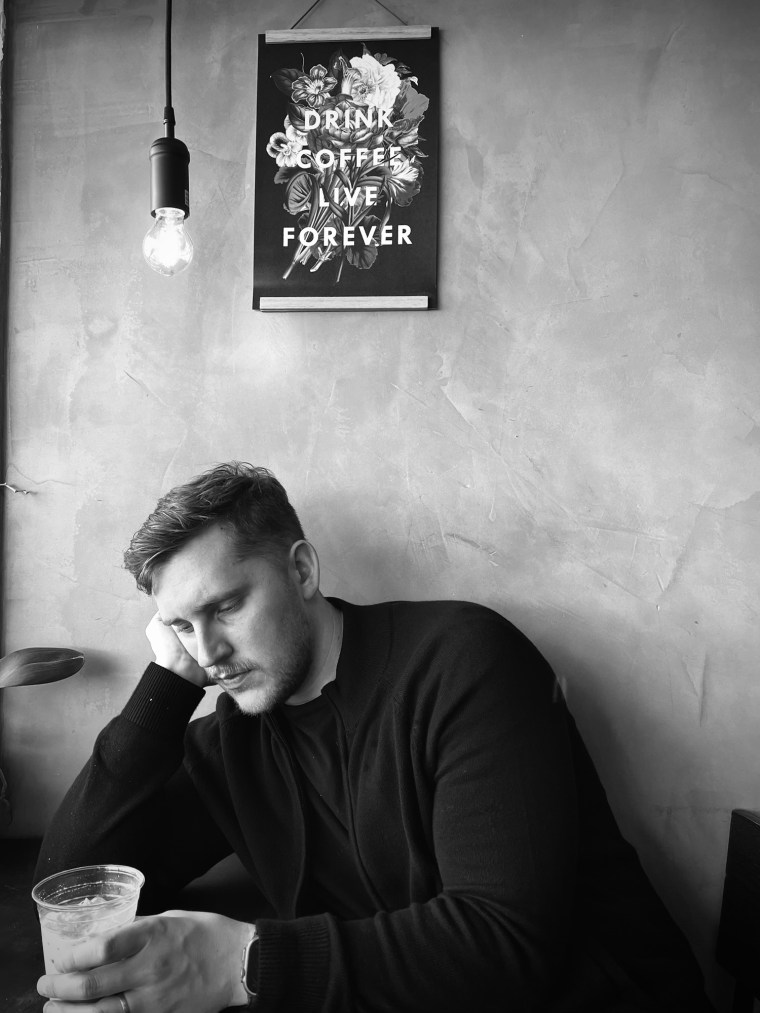
This world we live in is becoming ever more complex and divided. One of the beauties of art is that it shows things how they are and calls it out. We need more art. Whether that be painting, sketching, singing, or writing of any kind, we need it.
Live within the contradiction, point it out, and laugh at it. No one is without contradiction.
If there is anyone who has considered writing poetry but is worried about starting, or confused about where to start, they are welcome to reach out to me through my website. I’ll talk them through what I’ve done that has worked, and things that have failed. Maybe that is how we build the community.
About William Delaat
William Delaat writes poetry with themes of nature, family, grief, and the quiet weight of ordinary life. Through Primitive Poetry, he explores love, loss, contradictory lives, and belonging. He invites readers to slow down and take a closer look to find meaning in the ordinary.
Explore William’s work and connect with him:
Website: Primitive Poetry
Social media and other links: William Delaat on Linktree
Our thanks to William for sharing his thoughts and work with Old Scratch Press. We hope you’ll spend some time exploring Primitive Poetry and joining the conversation.
Sharing Is Caring!
Getting attention for poetry, books, and independent art isn’t easy. There are so many talented writers and artists out there, and one of the simplest ways we can help one another is by sharing our audiences.
If you’re visiting Old Scratch Press, why not consider featuring one of our members on your own blog, website, podcast, or social media? We’d love to introduce you to our writers and artists, and we’re always interested in opportunities to introduce our readers to new creative voices, too.
Interviews, guest posts, reviews, and featured works are all possibilities. It doesn’t have to be complicated, and it doesn’t have to cost anything. Sometimes all it takes is a little curiosity and a willingness to share the spotlight.
The more we help one another find readers and audiences, the stronger our creative community becomes.
Interested? Reach out to Old Scratch Press and let’s see what we can do together! Let’s show each other off!

