Nadja Maril’s prose and poetry has been published in literary magazines that include Change Seven, Lunch Ticket, Thin Air, and The Compressed Journal of Creative Arts. She is the author of Recipes From My Garden, a chapbook published by Old Scratch Press that includes both poetry and creative nonfiction prose. Author of two children’s books illustrated with paintings by her father Herman Maril, as well as Who IS Santa? for which she did her own illustrations, Nadja is also the author of two reference books on antique American Lighting, published by Schiffer. A former journalist and magazine editor, Nadja has an MFA in Creative Writing from the Stonecoast Program at the University of Southern Maine. To read more of her work and follow her weekly blog posts, visit Nadjamaril.com https://nadjamaril.com/
NM: In your notes about the book, you mention wanting initially to tell the story of Jonah and the Whale. How do you see that story relating to the plotline of Hibernaculum?
AD: The Jonah story has always held a particular fascination for me. Both the Christian and the Islamic versions are so rich in symbolism and psychological truths that I could go on writing about them and never get bored (though the reader probably would). Hibernaculum was originally intended as part of a triptych called Three Jonahs. The other installments are a recently-finished novel called Jestor, and a poetry chapbook called Jonah’s Map of the Whale (which is currently with Old Scratch Press). Each work explores the Jonah story from a different angle. In Hibernaculum, I imagined the process of hibernation and the hibernaculum dome itself as a “whale” that swallows the sleeper. Instead of 3 days, this descent into the underworld lasts 3 months or more. Jonah had plotted his course: he was going to board a ship at Joppa Port and sail away to Tarshish (Gibraltar). That was his plan, but it wasn’t the right one (he was supposed to go to the city of Nineveh). We have our plan, our course, collectively and individually, and it doesn’t seem to be the right one either, and sooner or later we’re going to be tipped out of our own boat and forced to reconsider. That’s what Hibernaculum is about: a society forced to reconsider its “course”.
Hibernaculum began life in Kindle Vella, but KV does not have the whole story. If you began reading it there, you’ll want to get your hands on the book, to see what happens at the end, when the dystopian becomes…. Orwellian.
Anthony Doyle is an amazing author, and while Hibernaculum is his first published novel, it will not be his last. I highly suggest you follow him to follow his career, especially if you like deep books that challenge our modern world. And, in his current post, he has an extra Hibernaculum story posted that you won’t want to miss!
As his publishers, we feel incredibly lucky that we are the ones to publish this book, and we’re looking forward to getting a chance to sit down with the print book and enjoy it all over again. The journey the book takes the reader on is…. unexpected, and when you think you’ve seen behind the curtain, there is more to know, and more secrets revealed. And, if you enjoy fiction that is also culturally relevant, this is the book for you. Like the best sci fi, it is a prescient book, and when you read it, and realize it was written before any hint of the Russian invasion of Ukraine, you’ll think that Anthony is a seer, and it will shock you to realize exactly where tough climate choices could take our children someday. No, you will not be able to put Hibernaculum down! But don’t take my word for it. Listen to the experts:
“Thought-provoking SF delivered in an intriguingly panoramic form.” KIRKUS REVIEWS
“Doyle has hit on something rare: an original approach to climate fiction.” BOOKLIFE REVIEWS
“Gripping, revealing, and frightening.” MIDWEST BOOK REVIEW“The contrast between notes and experiences of those who navigate this world are exceptionally well done, and will lend to book club discussions and sci-fi reader delight. Libraries and readers seeking a futuristic exploration which examines sleepers of the world and the social and political truths and realities that underlie their motivations will find Hibernaculum replete with a growing horror of realization that awakens, at the end, into a nightmare of manipulation and truth. It will leave readers thinking long after the story’s final startling revelations.” DONOVAN’S BOOKSHELF
In an imploding world, time is money, time is trouble, and time is risk. For those who can neither afford or bear to exist 24/7, 365 days a year, time is also a solution.
In Anthony Doyle’s startling debut novel, you’ll step into a world where global voluntary hibernation facilities provide a way out, a chance to step off the status quo carousel. Hibernaculum takes you into the before, during, and after of this strange new process and posits the question: Do things really look better after a good, long sleep?
A compelling, unsettling glimpse into the world of tomorrow.
And see what the readers thought who read the abbreviated version on Kindle Vella:
Yes, we’ve been recommending Anthony’s book for some time now, but it’s finally here! And you know that in a few weeks you’re going to start shopping for Christmas presents or Holiday gifts, and why not give your friends and loved ones not just another “thing,” a tie, socks, etc., why not give them an entire week of great reading? People love and remember experiences more than things, and no one will be able to forget this book, or put it down.
DO YOU RUN A BOOKSTORE? ARE YOU A LIBRARIAN? DO YOU HAVE A PODCAST?
Anthony is a warm and engaging human, and he is free, willing, and able to Zoom with you and your guests to talk about his book, or climate change, or sci fi that predicts the future, or how to write and publish your debut novel, or any number of other topics.
As evidenced in this week’s post, constantly reading poetry helps to cultivate the poet in all of us. Whether you’re just starting out or you’ve been writing poetry for years, there are always new poets to discover and poets from previous centuries to rediscover!
My Favorite Poem
By Gabby Gilliam
I have a hard time picking favorites. Whenever someone asks me my favorite book or favorite song, I’m incapable of narrowing it down to only one. I’ve found the same can be said for poetry.
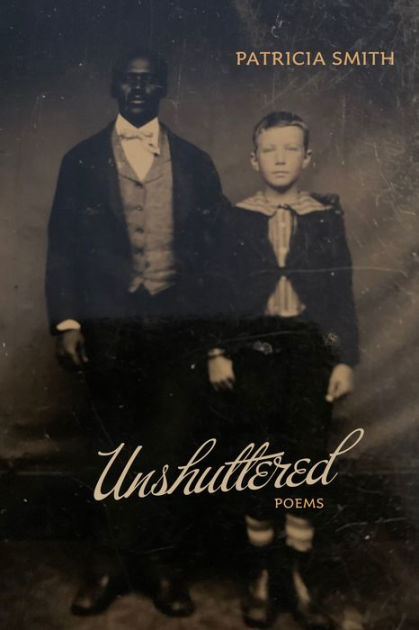
I try to read at least one collection of poems a month, though I catch snippets of poetry daily. I have some perennial favorites, but I have a new favorite poem every time I come across a poem that resonates with me. I recently finished Unshuttered by Patricia Smith. It’s a beautiful ekphrastic collection inspired by old photographs she has collected from thrift stores. The first poem in the collection immediately struck me and has become my current favorite, though the rest of the poems are also wonderful. The poems in Unshuttered are titled by their position in the book, so my current favorite poem is titled 1.
One of the things I enjoyed about 1 is the end rhyme. It’s rare to come across a poem with such perfect end rhyme that doesn’t feel forced. Nothing about Smith’s poem feels obvious. I also think the direct address to Anna and the speaker’s pleading make the poem feel so personal.
I don’t often read rhyming poetry, but it’s funny that both poems that immediately came to mind when thinking about favorites happen to rhyme. One of my first favorite poets was Dorothy Parker, and I’m still delighted by her poetry. She taught me that poetry doesn’t have to be lofty and difficult to interpret. That sharp words can resonate as forcefully as flowery prose (and usually more so!). Parker’s poems Resumé and One Perfect Rose both made me chuckle the first time I read them. Unlike Smith, Parker’s use of rhyme is purposefully obvious. It’s her unexpected images and phrasing that make the poems an unexpected surprise. I think poets often take themselves too seriously, and Parker wasn’t afraid to have fun with her writing.
One Perfect Rose
By Dorothy Parker 1893 – 1967
A single flow’r he sent me, since we met. All tenderly his messenger he chose; Deep-hearted, pure, with scented dew still wet— One perfect rose.
I knew the language of the floweret; “My fragile leaves,” it said, “his heart enclose.” Love long has taken for his amulet One perfect rose.
Why is it no one ever sent me yet One perfect limousine, do you suppose? Ah no, it’s always just my luck to get One perfect rose.
From Enough Rope (Boni & Liveright, 1926) by Dorothy Parker. This poem is in the public domain.
These two poets are drastically different, but I love their work for the response their work evokes in me––which I think we can agree is what we’re all looking for in a good poem.
We are proud to announce that Old Scratch Press will be publishing Gabby’s first chapbook of poems. The working title is No Ocean Spit Me Out. Approximately 30 pages in length, the poems in No Ocean Spit Me Out explore the dynamics and evolution of family relationships. It is scheduled for release in 2024, so keep following our website as well as Gabby for more details.
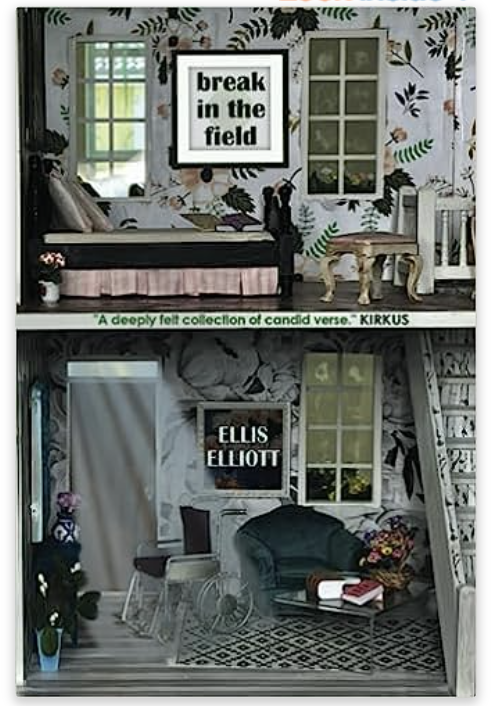
“A deeply felt collection of candid verse.” KIRKUS
“Ellis Elliott’s compelling Break in the Field creates associations between humanity, nature, and time that deserve not only individual inspection and appreciation, but spirited discussions about contemporary poetry’s ability to attract and react to life’s events with bigger-picture reflections about growth, freedom, and life lessons.” MIDWEST BOOK REVIEW
“This gripping, heart wrenching exploration of her inner most thoughts and feelings while caring for her extreme needs stepson, “[whose] brain vessels shattered at birth into a million stars,” are so raw, so deeply forthright, from a place of such compassion, tenderness, and introspection that I found myself tearful many times.” KARI GUNTER-SEYMOUR Ohio Poet Laureate and author of ALONE IN THE HOUSE OF MY HEART
Devil’s Party proudly presents BREAK IN THE FIELD, a captivating and heartfelt poetry collection by Ellis Elliott. Deeply personal, Ellis’ collection looks at the enlightening experience of parenting a profoundly disabled stepson, while simultaneously embracing the other shifts in mid-life.
A 2023 National Book Award nominee title, this outstanding collection arrives July 2023 under the DPP imprint, Old Scratch Press.
We are proud to announce that Old Scratch Press will be publishing Gabby’s first chapbook of poems. The working title is No Ocean Spit Me Out. Approximately 30 pages in length, the poems in No Ocean Spit Me Out explore the dynamics and evolution of family relationships. It is scheduled for release in 2024, so keep following our website as well as Gabby for more details.
When Old Scratch Poetry Collective Members were asked to write about a favorite poem, I knew my choice would be my first poem love affair. Before this poem, which I was introduced to in college, I had a healthy love of words, and a newfound interest in poetry, but it was more about my intrigue with the craft of it. I liked learning how things like rhyme and meter, form and pattern, didn’t need to hit you over the head. The tools of poetry were more like puzzle pieces that you both created, took apart, then put together again. But then came Emily.
Ample Make This Bed
by Emily Dickinson
Ample make this bed. Make this bed with awe; In it wait till judgment break Excellent and fair.
Be its mattress straight, Be its pillow round; Let no sunrise’ yellow noise Interrupt this ground.
I can’t explain exactly what alchemical combination occurred to cause me to fall for this particular poem by Emily Dickinson. I know it had to do mostly with the way the lines, “Let no sunrise’ yellow noise/Interrupt this ground” made me feel. I was blown away by two lines. The image of the “noise” of a sunrise, the choice of the word “interrupt”, the idea of this sacred “ground”. All of it. Who knows how or why such a thing speaks to you?
Much like falling in love, the factors that come together to create the feeling are a mystery. I know it was a combination of the known entity of craft mixed with the necessary ingredient of emotion. I had no need to do a critical exorcism of the poem, or analyze each syllable in every word, to know how the poem made me feel.
Dickinson scholar Marta Warner says that “she (Dickinson) is a constant summons to think about language and its preciseness. And not only its preciseness, but its power”. Dickinson was prolific, writing over 1800 poems, and while her image is as a recluse, she was actually quite social in her younger years. She lived in the mid-1800’s, and her poetry was practically unknown during her lifetime. It certainly was not a time of female literary empowerment (has that happened yet?). Dickinson would go on to become a “beacon of verbal power”, and I know her light certainly led me to a lifelong love of poetry.
***
Old Scratch Press is delighted to be publishing Ellis’s first chapbook, a collection of poems entitled A Break in the Field. In her poetic statement about herself on her Bewilderness Writing website, Ellis says,
“I am a perennial student of nature, inner realms, and the wisdom of the body, and write to bear witness and disentangle the world as I perceive it.”
Approximately fifty pages in length, the poems in A Break in the Field grapple with the concept of how human perception can change, depending on the vantage point. You can pre-order the book by clicking on the link in the previous sentence.
ABOUT THE AUTHOR:
Ellis Elliott is a writer, ballet teacher, and facilitator of online writing groups called Bewilderness Writing. She has a blended family of six grown sons and splits her time between Juno Beach, FL., and the mountains of Crozet, VA. She has an MFA from Queens University, is a contributing writer for the Southern Review of Books, and an editor/workshop teacher for The Dewdrop contemplative journal. She has been published in Signal Mountain Review, Ignation Literary Magazine, Literary Mama, OPEN: Journal of Arts and Letter, Plainsongs Poetry Magazine/Award Poem, Sierra Nevada Review, Women of Appalachia Project Anthology, Delmarva Review, The Rail, Spotlong Review, Euphony Journal, and others.
Our series on “Favorite Poems” and why we think about them over and over again, continues with a post by Contributing Editor Virginia Watts.
Perhaps the World Ends Here
by Joy Harjo
The world begins at a kitchen table. No matter what, we must eat to live.
The gifts of earth are brought and prepared, set on the table. So it has been since creation, and it will go on.
We chase chickens or dogs away from it. Babies teethe at the corners. They scrape their knees under it.
It is here that children are given instructions on what it means to be human. We make men at it, we make women.
At this table we gossip, recall enemies and the ghosts of lovers.
Our dreams drink coffee with us as they put their arms around our children. They laugh with us at our poor falling-down selves and as we put ourselves back together once again at the table.
This table has been a house in the rain, an umbrella in the sun.
Wars have begun and ended at this table. It is a place to hide in the shadow of terror. A place to celebrate the terrible victory.
We have given birth on this table, and have prepared our parents for burial here.
At this table we sing with joy, with sorrow. We pray of suffering and remorse. We give thanks.
Perhaps the world will end at the kitchen table, while we are laughing and crying, eating of the last sweet bite.
I love this poem because as much as the kitchen table is metaphor, it is not. I remember both of my grandmother’s kitchen tables, one had a well-worn aquamarine Formica top and the other was round and oak.
I remember the things I ate there, tea sandwiches, lemon sponge pie, fresh caught rainbow trout from the mountain creek tumbling by. I remember the smell of coffee. I remember listening to the adults, learning about life.
The table in Harjo’s poem can be seen as a metaphor for a human lifetime. Within it, childhood, adulthood, love, births, old age, war, joy, sorrow, death. Throughout what it means to live a human life we can always return to the feeling a being surrounded by those who nurture us, believe in us, where we were shaped and where we dreamed. We are never alone at this table and if you think about it, our kitchen table is with us always.
Do you have a favorite poem you’d like to share? We’d be happy to publish your comments here. Part of the mission of Old Scratch Press is to promote the love of poetry.
Poetry Practice:
Twice a week, says Virginia Watts, I listen to the podcast Poetry Unbound where Irish poet Padraig O Tuama unpacks one poem in his uniquely contemplative, conversational, kind and down to earth way. Each podcast is less than fifteen minutes. Like his recent book “50 Poems to Open Your World” his podcast opens hearts and minds to poems and poets from around the world. It feels like an invaluable gift each and every time I listen.
Don’t forget to follow us on Facebook and Twitter.