How Spicy are You?

By R. David Fulcher, Old Scratch Press Founding Member

I love all things pumpkin, including pumpkin spice. However, I understand even fans of this seasonal gourd have their limits on just how much pumpkin spice is too much pumpkin spice.

Readers are the same way.

Even fans of scary stories have their own personal limits in terms of exactly how scary, how gory, or how unsettling a story they can bear.

Therefore, I’ve taken three of my pumpkin-related stories and rated them in spiciness, from the most mild to the most extreme.

Mild Spice: “Pumpkin Night at the Pinkstons”

In “Pumpkin Night at the Pinkstons”, from my book The Movies that Make You Scream!, a teenager discovers the secret behind his homecoming date. Full of gooey teenage love, this is the mildest of my pumpkin-themed stories, something like one of the Goosebumps tales by R.L. Stine.

I’ll call this the Pumpkin Spice Latte Level of story.

Here is an excerpt from “Pumpkin Night at the Pinkstons”:

I don’t know exactly how much time passed before realizing that something was very, very wrong. The texture of her kisses changed, becoming clumsy and pulpy in taste. Her smooth gums became loose and stringy, and when I tried to pull away, I realized she was attached to me like a barnacle adhered to the side of a boat’s hull. Long, pointed fingers now clenched my nose shut and I began to get dizzy as that sickening, fruity-vegetable stench began to overwhelm me.

But more horrible were the physical changes taking place to the body I embraced, a grotesque squishyness of the torso and organs like the skin of a rotting tomato.

Medium Spice: “Pumpkin Seed Spit”

In “Pumpkin Seed Spit”, from the Devil’s Party Press anthology Halloween Party 2019, three friends go trick-or-treating and make a horrible deal with an ancient spirit to ensure their survival. Although the protagonists are also teenagers in this story, the stakes are higher, and the final implications for humanity much darker.

I’ll call this the Pumpkin Muffin Level of story.

Here is an excerpt from “Pumpkin Seed Spit”:

Upon reaching the first house near a dead end, they knocked and said in unison, “Trick-or-Treat!” As fifty-year-old Henry Armitage opened the front door, Brian unearthed his bag. The middle-aged man frowned at the kids before starting to mutter something about the lateness of the hour. Armitage gazed into Brian’s bag of seeds and was immediately mesmerized. An orange energy tendril spiraled upward, carrying a single seed into Armitage’s mouth.

Brian, Matt, and Ria wanted to scream, but found it impossible. While their souls were wrenched into knots by the horror they witnessed, outwardly they stood emotionless, even tranquil, as layers of skin and flesh melted away until all that remained of Henry Armitage was a living skeleton.

When the transformation was complete, they advanced to the next house. Ria shared the seeds, and Asenath Waite, a young mother of two, was hideously transformed into a witch with boils, green teeth, and a trail of lesions across her forehead.

Matt was next to present The Pumpkin Tree’s offering to the world. Three seeds were received by a couple and their young baby. Within moments they became a trio of giant pale, eyeless larvae that oozed and squiggled out of their clothes.

Extra Spicy: “The Pumpkin King”

In “The Pumpkin King”, from my book The Pumpkin King and Other Tales of Terror, a man ignores the rules of Halloween to his own detriment. The protagonist is an adult, and this tale has the most shock value of the three.

I’ll call this the Pumpkin Imperial Pale Ale Level of story 

Here is an excerpt from “The Pumpkin King”:

I spun around and made for the door, half convinced I was hallucinating if not dreaming. I unlatched the deadbolt, but it clicked back into place as soon as I started to turn the latch. I turned back to the jack-o’-lantern.

“An easy trick, but effective,” the jack-o’-lantern said, its orange light flashing in time to the latch on the deadbolt as it clicked back and forth at will.

“What do you want?” I begged.

“I want you to think on this. There is but one expectation of you this time of year. One simple obligation: To carve pumpkins. To pay homage to the king.”

“What king?”

“Samhain, the King of the Dead.” Its demeanor began to change. Its voice deepened and the reddish-orange glow rose like an enraged fire.

“This is ridiculous!” Now I was beginning to lose my fear and was feeling pissed. This thing, whatever it was, was in my house. I turned to climb the stairs and grab a baseball bat so that I could smash the talkative piece of vegetation into a hundred juicy bits. I was an educated man, and I knew of the myth of Samhain, the Lord of the Dead who arrived every fall to put nature in balance with the deadly strokes of his sickle. I also knew it was pure bunk.

I had only reached the first step when I heard a sound far worse than the maddening click-clacking of the door latch: the metallic whisper of a kitchen knife being drawn from the butcher block.

I turned back to the pumpkin. “Okay. You’ve got my attention. What do you want?”

“I want to carve you,” it replied simply.

So whatever your personal threshold is for pumpkin spice, pay homage to the spirits of All Hallows Eve, and savor the spice before it’s gone!

Happy Writing!

R.David Fulcher, Founding Member of Old Scratch Press 

Oldscratchpress.com

Rdavidfulcher.com

What Genre Scares You The Most?

By R. David Fulcher, Old Scratch Press Founding Member

While most authors have a preferred genre, many authors have dabbled in others. For example, while I am primarily a speculative fiction writer (horror, fantasy, and science fiction), I have also written historical fiction, drama, romance, and poetry.

However, I’ve always found one genre intimidating: Westerns.

I realize that author Louis L’Amour made a fine career out of writing Westerns, what he called “frontier stories,” but I haven’t been able to catch that particular spark. Perhaps it is simply that I’ve never invested the time to understand the difference between the gravy train or the chuck wagon, or when to precisely call in the calvary.

While I’ve enjoyed a few Western films such as Tombstone and True Grit, and appreciated the genre-blending Westerns such as Blazing Saddles, Cowboys & Aliens, and Firefly, I’d be lying if I said I were a true fan of Westerns.

Since every psychologist recommends facing your fears, I think I’ll give it a try.

So, without further ado, here is my flash fiction Western, “Down Goes the Rodeo Clown.”

Down Goes the Rodeo Clown

Roger Roy tightened his grip on the bridle. His horse, Mustang Sally, had a wild streak, and he didn’t intend to lose control while calf roping.

Suddenly the gate opened, and the crowd in the stands roared as a gate on the opposite side of the arena opened and a young black and white calf stumbled out.

Roger steered Sally towards the calf and reached for the lasso at his side to confirm it was there.  Staring ahead, Roger didn’t notice that one of the loops of the lasso had caught the trigger of his six gun.

Something seemed off with the calf, too; it stumbled around like it was drunk.

Roger had a job to do, drunk calf or not, and approached the poor creature.

He tugged on the lasso to remove it, and it seemed stuck on something. Roger tugged harder the second time and felt his pistol shift and the hammer cock.

A single shot reverberated through the air: bang!

The calf awkwardly fell to the dirt with a gut-wrenching cry of anguish. A red blossom of blood stained the black and white coat.

Roger leaped off his horse to help the poor creature, only to see a pair of cowboy boots sticking out from under the coat.

He threw back the coat, only to see the body of the rodeo clown shoot right through the heart. His painted face was twisted in pain and his orange hair fluttered in the light breeze.

The crowd began to point and scream. 

Roger Roy tipped his hat in their direction and said, “I guess that’s his last joke.  This one was on him.”

And with a jangle of spurs Roger swung into the saddle and trotted away.

So there it is – corny, unbelievable even, but my first Western nonetheless, and you, dear reader, were there to witness it.

The moral of this story is to confront your fears, try that genre that has always scared you the most, and you might strike pay dirt.

Or as an old miner forty-niner might say, “There’s gold in them thar’ hills!”

Happy Writing!

R.David Fulcher, Founding Member of Old Scratch Press 

Oldscratchpress.com

Rdavidfulcher.com

Exploring the intersection between fiction and religion

By R. David Fulcher Founding Member of the Old Scratch Press Poetry and Short Form Collective

Authors have often used religion as an inspiration for their work. 

Consider such literary gems as Umberto Eco’s In the Name of the Rose which revolves around a murder that takes place in a monastery, or Hermann Hesse’s buddhist tale Siddhartha.

In my own work, I experimented with this intersection in my story “All Across the Mountain”, appearing in December 2023 on spillwords.

The story switches back and forth between the point of view of an occultist named James Blackwood, and a church parishioner named Parrish Pious. The story takes place on Easter Day, and opens before dawn with James Blackwood making preparations to destroy the town by raising ancient and powerful monsters.

The story utilizes a common literary theme – the struggle between good and evil.

It relies on juxtaposition to build tension and suspense.  Consider some of the contrasting characteristics between the church (representing good, and manifested by Parrish) and the occult (representing evil, as manifested by James Blackwood):

The Church (Parrish Pious)The Occult (James Blackwood)
Community of BelieversActs Alone
Operates in PublicActs Secretly/Covertly
Celebrates one person, Jesus, with two natures – one human, and one divineWorships alien gods, cold and disconnected from human nature

The story also weaves a church hymn into the prose (for more on this, see my OSP blog post on Exploring Floetry: The Fusion of Fiction and Poetry), per this excerpt from the tale:

The members of the congregation were on their feet, almost giddy in their Easter finery as they belted out an inspired if somewhat tuneless rendition of “Christ the Lord Is Risen Today:”

Christ the Lord is risen today, Alleluia!
Earth and heaven in chorus say, Alleluia!
Raise your joys and triumphs high, Alleluia!
Sing, ye heavens, and earth reply, Alleluia!

Parrish felt exalted and she closed her eyes, imagining herself being lifted up on beams of bright light towards the stained glass windows at the height of the church’s apex. The lively clothing of the parishioners made it seem to Parrish like she was floating above a sea of pastels – soft pinks, bright yellows, and subtle key limes undulated beneath her.
The unified voices seemed to shake the very timbers of the building itself, and the creaking and groaning of the wood made Parrish open her eyes as if the earth itself did reply with a tremble as they sang out “Sing, ye heavens, and earth reply.”

So there you have it, an example of interweaving religion and fiction. Explore this fertile ground on your own and see what amazing stories you can create!

Have you been folkloring?

By R. David Fulcher, Old Scratch Press Founding Member

Recently I had the honor of joining the Folkloring podcast. This podcast addresses how we can integrate folklore into our everyday lives, including our writing.

Preparing for this podcast prompted me to reflect upon the influence of folklore, myth and legend on my own writing and was surprised to discover the influence has been quite profound.

Below are some of categories of folklore I came up with in case they could be an inspiration for your writing.

1. Global folklore 

By this I mean folklore that originated from a specific geographic location hundreds of years ago, but now is so well known it is generally accepted. 

An example of this would be the legend of the vampire from Romania.  First something that was very localized, vampires are now so common they now appear on cereal boxes and television series.

I integrate the vampire myth into my writing in several stories in my book The Pumpkin King and Other Tales of Terror in such stories as “The Night Flyer” and “The Watchman’s Web”.

2. Urban Legends/Localized Folklore 

In this category would be legends still most popular in specific geographic regions, such as the legend of the New Jersey Devil that haunts the woods of New Jersey, or the infamous Bunny Man of Clifton, Virginia.

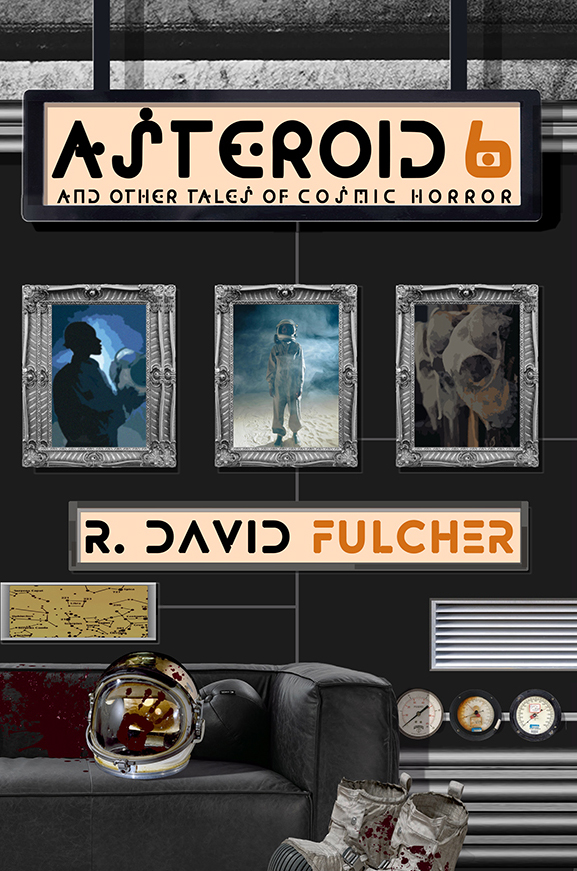
I draw upon the legend of The Boogeyman in my book Asteroid 6 and Other Tales of Cosmic Horror in my story “The Boogeyman, Part II”.

3. Native American Myths

The mythology of native Americans is extremely rich and strongly connected to the natural world. 

In my book The Cemetery of Hearts, I reference a native American myth from the American Southwest that claims that the majestic canyons and mesas were spun out of a gigantic spider.

In my story “The Land Spider”, a gigantic spider starts swallowing a small town in New Mexico building by building.

These are just a few ideas to get you started, but the world is full of legends and folklore, and weaving them into your writing will enrich your fiction and poetry.

You can learn more about the Folkloring podcast here

Happy Writing!

R.David Fulcher, Founding Member of Old Scratch Press 

Oldscratchpress.com

Rdavidfulcher.com

Exploring Floetry: The Fusion of Fiction and Poetry.

By R. David Fulcher, Founding Member of the Old Scratch Press Poetry and Short Form Collective

Floetry (my definition) a written form of expression combining fiction and poetry.

It is uncommon, but not unheard of, for writers to embrace both fiction and poetry. As one of the writers in this category, I often wonder if this is a benefit or a detriment. To a purist, being competent in both could perhaps mean I’m a master of neither, to echo the old saying “jack of all trades, master of none”.  

More recently, I’ve decided being fluent in both fiction and poetry is a definite advantage. To begin with, several of the masters of speculative fiction integrate poetry into their work to great effect.  Consider these lines of from Stephen King’s novel The Tommyknockers:

Last night

And the night before,

Tommyknockers, Tommyknockers

Knocking at my door.

And these lines from Ray Bradbury’s novel Something Wicked This Way Comes:

By the pricking of my thumb,

Something wicked this way comes.

These are by no means the only examples.  Dean Koontz dives into poetic verse within his many novels, and it can be argued that the fantasy writings of the Irish writer and dramatist Lord Dunsany (a possible influencer or JRR Tolkien, discover more here) read more like poetry rather than prose.

Therefore, having made the case for “floetry”, how do I employ it?  Primarily I interweave poetry into my prose in two ways:

  1. As bookends to start and end my books, with the remainder of the book being fiction, and
  2. Injected directly into the middle of a story

Case 1: Bookends

I employ the bookend strategy in my two my recents books, The Pumpkin King and Other Tales of Terror and Asteroid 6 and Other Tales of Cosmic Horror.  I’ll provide an example of each.

The Pumpkin King and Other Tales of Terror starts with my poem “Eulogy to E.A. Poe”:

Man of dark musings and opiate visions! 

Mind of pits and rats,  

Black cats and ancestral corpses!  

How is it that love sparkled within those dark recesses,  Like diamonds within a bedrock of obsidian—  That verse sprang from that ebony hand,  

As vibrant and unlikely as lilacs from snow?  

Tales of cities under the sea,  

Of waves weeping softly, “Annabel Lee!”  

Did the bells, the bells, the bells, foretell of your demise,  Or was it borne on Raven’s wings, thus falling from the sky?  

Could it be that your last vision was your brightest?  

Oh, soul of all that is night,  

Inspire my pen to wail and to write. 

In a similar fashion, my book Asteroid 6 and Other Tales of Cosmic Horror starts with the poem “The Outer Reaches of Unknown Kadaath” (Kadaath is a reference to the works of H.P. Lovecraft):

Who would’ve thought

That H.P. was right

The Old Ones they beckon

Through the nebular night

Those in suspension

Suffocate in sleep

Yog-Sothoth promised

His secret to keep

The terminals flicker

The life support hums

The engines propel me

From the touch of our sun

Soon I will sleep,

Dreaming of the Mountains of Madness and the door

behind the Silver Key

The end of mankind to be unlocked—

By one spaceship and me

Case 2: Direct Injection

In my story “The Faerie Lights” within my book The Lighthouse at Montauk Point and Other Stories I start off with prose, and very quickly inject a poem into the tale:

Rest awhile, friend, for it is clear that you have walked far over hill and valley, and penetrated the wild and strange woods, to have happened upon this long-preserved manuscript beneath the moss-covered rocks.

I came upon this very spot, perhaps many years ago now, as just a lad. Here I took my respite, beckoned by a fair breeze sweeping over the verdant fields and a song sung in dulcet tones far sweeter than any produced by mortal throats. I was weary from hiking many miles, and my body eagerly fell into a deep sleep.

A song floated over my consciousness, sung by a thousand child-like voices:

Weary traveler,

Rest your head,

And sleep awhile

Where the faeries tread.

Weary traveler,

Laugh in kind,

And take deep draughts

Of faerie wine.

Weary traveler,

Spend the night,

Follow the trail

Of the faerie lights!

Additional stanzas of poetry are injected into other parts of the tale, with the intent of lulling the reader into a sleepy, dream-like state.

Final Thoughts

So there you have it – a brief introduction into the concept of “floetry” with several examples of usage.

What do you think?

Can poetry and prose peacefully coexist on the same page? 

Please leave your thoughts in the comments!

Thanks for reading,

-R. David Fulcher, Old Scratch Press Founding Member

BIO: https://rdavidfulcher.com/about/

R. David Fulcher’s latest book is Asteroid 6 and Other Tales of Cosmic Horror

Thank you for reading. Please sign up to follow us on Facebook and to follow us here on WordPress to expand your knowledge about poetry and short form writing as well as to receive the latest news about publication opportunities. 

The Runaway Christmas Train

When I was a little boy, my father would assemble a huge train table in our living room next to the Christmas tree. The table was easily ten feet wide by ten feet long, and three feet high. In addition to the tiny figures of the villagers, quaint tiny homes and buildings, working street lights, fake trees and assorted trains that adorned the table, crepe paper in a red brick pattern was attached to all sides of the table. The paper ran from the sides of the table all the way down to the carpet, creating the illusion that the table was supported by brick walls all around.

Or from my point of view, the perfect fort wherein I could hide.

The strategy was to sneak underneath the table after my parents had gone to sleep and wait for Santa to place the presents under the tree. I actually made it to my secret hiding place each year, carefully separating the folds of the brick crepe paper back in place behind me so that nothing looked out of place.

And like clock work, every year I would promptly fall asleep before sighting Santa.

So that is the memory, suspended in time for more than forty years, like an image trapped within an icicle that never melts.

The reality is starkly different.

The old house was sold many years ago, the train table dismantled and perhaps rotting in some unknown wood pile, and the assorted engines, passenger cars, and cabooses stored away in bubble wrap for another generation.

Things are different with my wonderful parents as well. Mom passed away in 2022, and Dad is struggling every day in a memory care unit.

Despite all of these life changes, I still hold on to this memory, this specific icicle of time has not yet eluded my grasp.

My attempt to preserve this memory in poetry appears below. The poem is called “Christmas Eve from Under the Train Table” and first appeared in The Hot-Buttered Holidays Issue of Instant Noodles in 2021.

I hope you can find something special in my memory as well.

Happy Holidays,

-R. David Fulcher

CHRISTMAS EVE FROM UNDER THE TRAIN TABLE

There I was,
and there I would remain,
Expectant and curled-up beneath the great trains
which had whistles and steam and a radio tower that lit up.
The trains were sleeping, but my breath replaced their din,
Escaping my lips like an anxious child.

It is not the darkness I fear.
I fear that my mischievous breath will plume forth and collect Itself into a crystal ball,
and then roll out from under the brick-red crepe paper,
a great red marble full of my embarrassment.

The clock clangs midnight.
I can hear my parents through the walls,
their secret laughter like soft explosions
accompanied by the faint swish and whisper of wrapping paper.

Now I can their slippered arrival.
My heart pummels in my chest with incessant fluttering,
sick of this distant observation,
insane with the knowledge that all this espionage is for me.

Exploring the Intersection of Sports and Poetry

October is a sports lover’s dream. Most of the major leagues are in full swing, from the NBA, NFL to the NHL. There are college football games every weekend, and even the crisp Fall air makes it feel like football weather.

So what does this have to do with poetry?

There are some cases, perhaps uncommon, where sports and poetry intersect. While in school, I was introduced to the excellent baseball-related poem “Casey at the Bat” by the poet Ernest Lawrence Thayer. From the roar of the crowd to the “Strike!” being called by the umpire, Thayer does a remarkable job of transporting the reader to that fateful match in Mudville. The poem culminates with perhaps its most famous line: “But there is no joy in Mudville—mighty Casey has struck out.”

In college my friends and I would play pickup basketball on the courts on campus. These were disorganized gatherings with teams hastily assembled at the last moment, but these were some of my favorite memories from my college years.

My poem below is an attempt to recapture some of those moments. Unlike “Casey at the Bat”, there was much joy to be found in College Park during those amateur games.

This was written during my college years, and I don’t know if I could write this today, or even should write something like this today, as this poem is full of rough edges and not overflowing with beautiful language.

However, that is what I think I love about it. Much like our simple attempts at basketball all those years ago, the poem is pure and raw, even somewhat unfinished. Ah, the folly of youth!

Photo by Pixabay on Pexels.com

So without further introduction, I hope you enjoy my poem “Hoops”.

Hoops

It wasn’t the easy, fluid style of play you see on TV,
It was the jerky, nervous style of amateurs
played on asphalt several feet away from where I was sitting.
My shorts had ripped horrendously down the back during the last game,
but that really didn’t matter in the big scheme of things,
and besides, the jocky guy Chris would have never
picked me to play after screwing up the last game so badly.
An observer watched the game from the other side of the court, grinning to himself secretly.
Perhaps he was happy to see the different bodies working so well together, Van, the Vietnamese guy; Joy, the Indian; Greg the African American and Danny the Anglo; or perhaps that was just what I wanted to see.

Chris the jock made a three-pointer, and murmurs of approval such as, “Good shot, man” or “Nice one, Chris” fill the air, replacing the sound of the tennis shoes against the pavement.
I never questioned Chris’ basketball prowess.
It was his attitude that puzzled me.
I wanted to shake him and say, “Hey, Chris! Listen to what I’m saying, man! You’re just a pebble in the stream, man! Just a lowly grain of salt! This shot won’t change the world, dig?”
But you can’t tell a guy like Chris something that big.
He would just laugh it off and call you a stinkin’ liberal hippie, and go about his business of shooting politically correct jump shots, while I would go about my business of trying to change the things that couldn’t be changed.

-R. David Fulcher, OSP Founding Member

Some Odes to Autumn

By R. David Fulcher

Autumn has always held a special magic for me, a season in which the poet John Keats aptly described as “a season of mists and mellow fruitfulness.”

Indeed, if there is an hour for magic, it strikes in the crisp dawn of an early Fall day. And further, if magic has a language, surely its language is poetry.

So I find this an appropriate time to post some of my own verse (hopefully imbued with magic itself) for your reading pleasure.

The first poem is “Ode to the Night”, and it hints at the darker aspects of this time of year, a time when pumpkins cast you crooked smiles and ghosts and goblins are generally free to roam:

Ode to the Night

To the Night, the Night, the dark delight,

The children sleep soundly in gentle white,

Breathing in time with the Raven’s flight.

To the Night, the Night, the waxen moon,

Audience of one to the witches’ croon,

Driving the tides for the sailors’ doom.

To the Night, the Night, its starlit fires,

Which guide the ghosts from funeral pyres,

Which soften the Harpy to play the lyre.

I hope you enjoyed “Ode to the Night”, and at a minimum it puts you into the Halloween spirit!

My second poem is “Melinda”, a story of lost love, and although not directly a tribute to the season was nonetheless designed to evoke a haunted mood:

Melinda

Sometimes in the lonely hours

I would walk the hill

Leaving the clamor and din behind

For headstones gray and still,

As I neared the place where the dead did lie

I knelt and bowed my head

A fool is he who visits the graves

Without homage to the dead,

‘Melinda’ read the stone I sought

Melinda, my betrothed,

Only a thief as clever as Death

Could steal the health of Melinda, my love

Often I hear Melinda’s voice

Soft upon the breeze

I answer her call of eternal love

And grow hoarse among the trees.

I hope you enjoyed “Melinda”! Last but not least is an ode to a much maligned creature, a symbol of the undead, but in reality a beautiful animal that sustains our ecosystem. This last poem is called “The Bat”:

Photo by Photo By: Kaboompics.com on Pexels.com

The Bat

Taking inverted Sabbath in the caverns of Carlsbad

I measure time in locust-breath and calcite drip,

My bird-chest rising and falling with the gentle tides

Of this black carpet of brotherhood.

Footsteps fill my dreams,

Sun-bleached tourists groping into the cavern’s belly

To enter the sublime,

Their voices like a million valves releasing pressure.

For an instant they will recognize the face of God in this hard darkness,

The stalactite points of his beard,

The cascading rock formations of his brow,

And that fraction of animal intellect will rush forth,

Freed from concept and equation,

To join our ranks as we veer through this Jerusalem darkness

Toward dusk and sustenance,

Toward the amphitheater where they wait for their own departure.

Thank you for reading! I hope you enjoyed these odes to the season and wish all of you a sublime Autumn.

-R. David Fulcher, Founding Member of Old Scratch Press

Celebrating PRIDE MONTH an Interview with Beyond The Veil Press: publisher of LGBTQIA+ Poetry & Art Anthologies

By Robert Fleming

LGBTQIA+ (lesbian, gay, bisexual, transgender, queer/questioning, intersex, asexual, + (two-spirit, non-binary, pansexual, demisexual, aromantic, genderfluid, agender)

Curious to learn what a LGBTQIA+ publishers offer readers, as a Contributing Editor at Old Scratch Press and a LGBTQIA+ author myself, I interviewed Sarah Herrin Co- Founder and Editor of Beyond the Veil Press.

BVP is an indie press based in San Diego, California and Denver, Colorado, United States.

Beyond The Veil Press – Poetry & Art For Mental Health Awareness.

Sarah Herrin, (they/them) BVP, co-founder and editor in chief

Robert:            What opportunities do you have for readers?

Sarah:  We publish work centered on themes of mental health awareness. As a reader, one could find voices similar to their own and learn of new experiences they may also relate with. Sharing work on such vulnerable topics as violence against queer people or surviving sexual assault builds empathy and community.

Robert: What genres have you published?

Sarah:  We publish print anthologies of poetry and visual art, as well as eBooks.

Robert: For pride reading what do you recommend in your catalogue and why?

Sarah: For Pride, we’ve published two anthologies so far: We Apologize For The Inconvenience in response to the Club Q shooting in November 2022

We Apologize For The Inconvenience: Queer and Trans Voices: Press, Beyond The Veil: 9798373661560: Amazon.com: Books

and Relics of Unbearable Softness with the theme of Queer Joy

Relics of Unbearable Softness: A Poetry & Art Anthology of Queer Joy: Veil Press, Beyond the: 9798858878872: Amazon.com: Books

Robert: outside of your catalogue, what do you recommend and why?

Sarah: We suggest work by Ouch! Magazine, a queer-focused zine based in California

ouch! collective (ouchcollective.com)

and Querencia Press based in Chicago who donates a lot of their proceeds to nonprofits.

Querencia Press

Robert: What are your published authors/books and what do they offer the reader?

Sarah: Neurotica for the Modern Doomscroller by Eddie Brophy offers a relatable look at doomscroll culture and examines the collective trauma that Millennials have grown up with.

Neurotica for the Modern Doomscroller: Brophy, Eddie, Veil Press, Beyond The: 9798859549757: Amazon.com: Books

Heretic: A Story of Spiritual Liberation in Poems by Kristy Webster tells the struggles of one queer  woman’s fight to free herself and her children from the religious cult she was born into.

Amazon.com: Heretic: A Story Of Spiritual Liberation In Poems: 9798376825822: Webster, Kristy, Veil Press, Beyond the, Herrin, Sarah: Books

Robert: What are your upcoming authors/books and what do they offer the reader?

Sarah: Taking Back The Body by Talicha J. about recovering from and living with the trauma of sexual assault – May ’24

Acid Rain Epithalamium by Becca Downs about coping with sudden divorce after only 3 months of  marriage and redefining the relationship structures society places on us – July ’24.

Interview Responses End

**

yours truly, asked, but unanswered:

LGBTQIA+ includes new categories: queer/questioning, intersex, asexual, two-spirit, non-binary, pansexual, demisexual, aromantic, genderfluid, agender

Do you have any offerings whom the protagonist/voice are the last added?

  • If yes, what do they offer the reader in themes and forms? (give author name, work name, purchase link)

with no responses, what is the response to an Amazon search:

book category: queer/questioning

closest category found: LGBTQ+ Demographic Studies

A Queer World: The Center for Lesbian and Gay Studies Reader 

A Queer World: The Center for Lesbian and Gay Studies Reader: Duberman, Martin: 9780814718759: Amazon.com: Books

book category: intersex

closest category found: Genetics (Books)

A Comprehensive Guide to Intersex by Jay Kyle Petersen 

A Comprehensive Guide to Intersex: Petersen, Jay Kyle, Laukaitis, Christina M.: 9781785926310: Amazon.com: Books

book category: asexual, pansexual, demisexual

closest category found: Legal Theory & Systems

Sexual Category Type by Olivia Emma (Author)

Sexual Category Type: Emma, Olivia: 9798891817999: Amazon.com: Books

book category: non-binary

closest category found: none

The Category is Me: A non-binary journal by Jeremy Brown (Author)

Amazon.com: The Category is Me: A non-binary journal: 9798747372955: Brown, Jeremy: Books

book category: genderfluid

closest category found: LGBTQ+ Demographic Studies

How to Understand Your Gender by Alex Iantaffi (Author)

Amazon.com: How to Understand Your Gender: 9781785927461: Iantaffi, Alex: Books

book category: two-spirit, aromantic, agender

closest category found: none

books: none

for the no-response to “two-spirit, aromantic, agender”, retry search for pride 2025, until then attend the June, 2024 pride art show at Camp Rehoboth, Rehoboth Delaware CAMP Rehoboth |

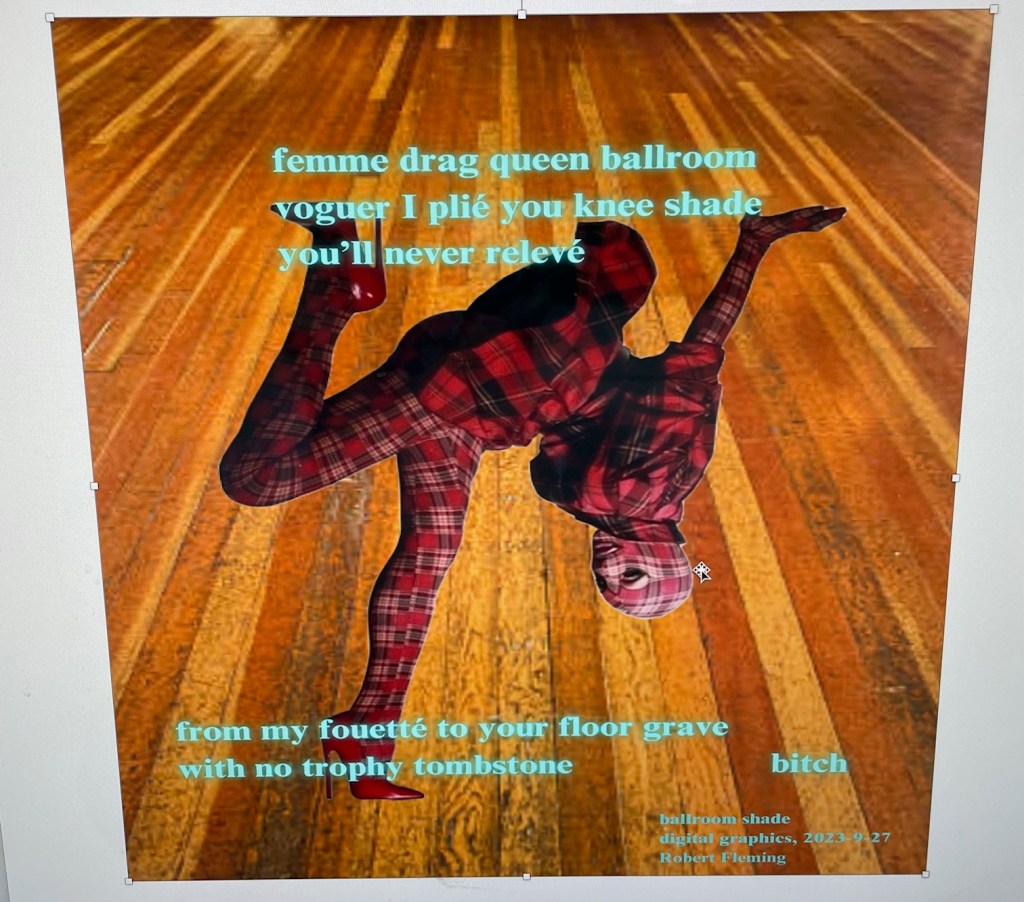
to include one of yours truly’s visual poems:

if you like my visual poetry, buy my visual poetry book White Noir

white noir: Fleming, Robert: 9781957224183: Amazon.com: Books

Follow our Old Scratch Press blog or visit our facebook page for the latest news. Thank you.

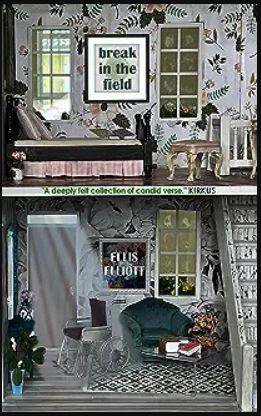
A REVIEW OF ELLIS ELLIOTT’S BREAK IN THE FIELD BY R. DAVID FULCHER

This book is not for the faint of heart. It can be heartbreaking, gut wrenching, and bleak. 

At the same time, it is loving, faithful, soaring and inspiring.

A constant theme emerges – the fierce love of a mother for her son.  But the intensity of that love takes a toll.  After all, who is there to care for the caregiver?  A caregiver that experienced her own broken childhood, surrounded by rings of cigarette smoke and uncertainty?

Ultimately there is a search for faith and understanding, and the author is open to whatever form provides the answers she is desperately seeking, whether that be Christianity, Buddhism or even tarot cards.

Ultimately, unknowingly, the author has already reached the Nirvana she is seeking.  By loving her son unconditionally, that is enough.