The Ugly Duckling: Lessons in Creative Rejection

by Nadja Maril, a Founding Member of the Old Scratch Press Short Form and Poetry Collective

I got a rejection this morning. I received the standard form rejection for a piece of creative writing: We appreciate the chance to read it. Unfortunately, the piece is not for us.

I get rejected all the time. It doesn’t matter how many times my work has been published, I’m not famous and editors have a multitude of tastes. What was interesting to me was the poem in question had already been published and well received.  This time I’d entered it into a contest that was also considering previously published work. Maybe they didn’t think it was prizeworthy, but I felt like they didn’t like the poem at all. This made me sad.

Then I thought of The Ugly Duckling, http://hca.gilead.org.il/ugly_duc.html by Hans Christian Anderson, one of my favorite fairy tales. The bird that emerges from a hatched egg is not at all like the other ducklings in the farmyard. He endures all kinds of painful ridicule until he discovers his true identity as a swan.

“He now felt glad at having suffered sorrow and trouble, because it enabled him to enjoy so much better all the pleasure and happiness around him; for the great swans swam round the new-comer, and stroked his neck with their beaks, as a welcome.

Photo by Ezgi Kaya on Pexels.com

Into the garden presently came some little children, and threw bread and cake into the water.”

I share this little story to remind all writers, particularly anyone just starting their journey, that it can take months or even years to find your audience. Yes, it could be you just don’t have the talent needed to “make it” as a writer, but tastes on what is good and worth publishing vary tremendously. An ugly duckling may also be a graceful swan.

We all have probably had the experience of seeing a movie or reading a book that got great reviews, but we found to be boring. We may have attended a party in someone’s home and overheard guests raving about a gorgeous painting or a rug that we secretly think is hideous.

People have different tastes. Where we grew up, where we’ve traveled, what our parents taught us, all influence what we value and how we judge things. The quest for diversity, when I wear an editor’s hat, is my desire to try to open my mind to a multitude of ways to see the world. But we tend to gravitate to the familiar because it’s comfortable.

A big word among editors is resonate. If a piece of writing resonates with the reader, it affects them emotionally and they may continue to think about that story or poem for days. That type of connection is something a writer longs to achieve.  But it’s unlikely to happen with every reader. We all have different histories. We’re all slightly different so what affects one reader may not necessarily affect another.

It may be that something you wrote is not ready for publication and needs more revision. On the other hand, it could be really good, but needs to find the right audience.

I can’t emphasize enough, writing groups and reading groups to gain different perspectives. A writer toils alone, but feedback is important.  I can’t emphasize enough the importance of beta readers, fellow writers with whom you can exchange work.

Fellow collective member Ellis Elliot wrote about writing groups back in January and you can read her blog here.  https://oldscratchpress.com/tag/writing-community/  and member Virginia Watts posted a blog in April that focused on critique groups  you can read here. https://oldscratchpress.com/author/virginiawatts/

Do not write in a vacuum. Find the approach that works best for you, but don’t give up on something you feel in your bones is important. If you’ve written something you’d like to share with the world, keep submitting. A rejection is a badge of honor. 

 It shows you’re out there swinging the bat and you’re still in the game.

About the author:

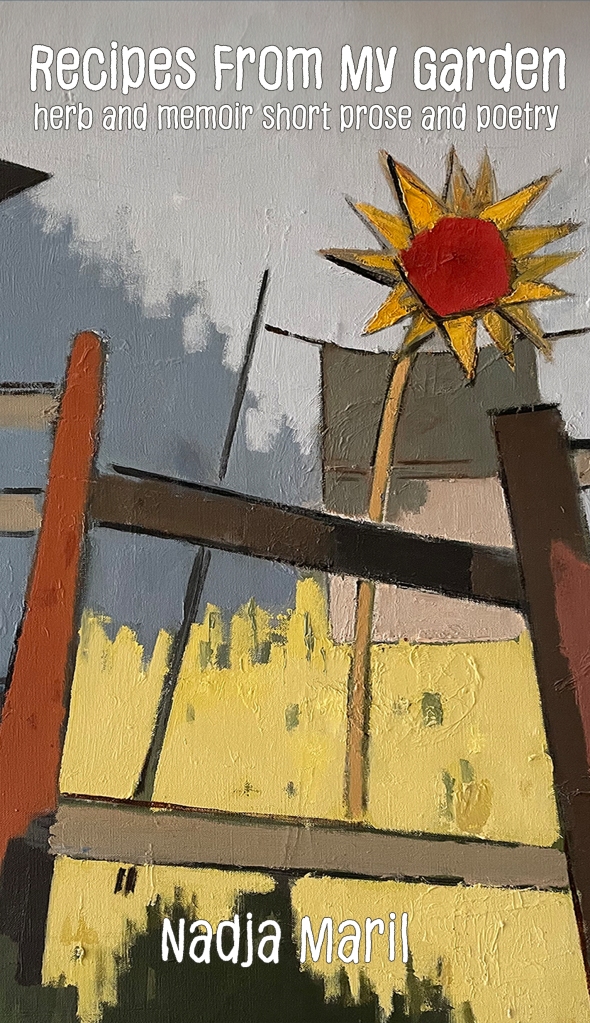
Nadja Maril is the author of Recipes from My Garden, Old Scratch Press, September 2024. Nadja Maril’s short stories, poems and essays have been published in dozens of small online and print literary journals and anthologies including: Lunch Ticket, Spry Literary Journal, Invisible City Literary Review, and The Journal of Compressed Creative Arts.She has an MFA in creative writing from Stonecoast at USM. A former newspaper columnist and magazine editor, she writes a weekly blog and you can visit her website at www.Nadjamaril.com.
Thank you for reading. Please sign up to follow us here on WordPress and on Facebook.
Want to Get Published? Where & How to Submit Your Work

By Ellis Elliot

Sharing your work by submitting it for publication can be a daunting task in many ways, not only because it causes a vulnerability hangover, but also because it can be overwhelming and hard to figure out where to start. I’m hardly an expert, but I have submitted dozens of poems to literary journals and contests, and found a good bit of success, and this is what I’ve learned.

            First, begin by stalking online and print literary journals. Find some you like and respect. Consider the type of writing you want to submit. You would not submit your Southern Gothic short story to a literary journal for Christian Sci-Fi (yes, that’s a thing). Find the right kind of “fit”, as far as genre and theme, for your work. See if the journal resonates with you. And while it is never wrong to “shoot for the stars” and submit to the New Yorker or another of that ilk, it also makes sense to spread your net wide, over a variety of journals, big and small.

How do you even find these journals in the first place? Maybe your school has one, or you can broadly search online for ones in your genre, and then read some. Read to get a sense of specific journals, and what all is out there.

Also, there are numerous free and paid websites that have lists of journals, and some can even narrow it down for you based on your preferences.  A few I use are: Submittable, Duotrope, Poets and Writers magazine, Writer’s Digest, and Authors Publish. (See links below) These provide lists of publications, along with dates and details. Always check if there are fees involved, and choose wisely. I’m the first to admit, it is a lot of work to wade through the sea of lit journals in order to filter down to the ones you want, but once you find them, your list has begun, and from there you can only add to it. Plus, once those algorithms get in your computer, you’ll be getting all sorts of lit-related stuff, like it or not.

Once you’ve narrowed it down to the journals you want to send your work to, be sure to read the guidelines carefully. You don’t want your work tossed because you sent five poems when they asked for one, or sent a 500-word bio when they asked for 50.

Photo by Pixabay on Pexels.com

Be prepared with a good cover letter, short biography, and a photo. Your cover letter should be addressed to the editor of your genre in that publication. It should be brief and can include references to the journal you’re submitting to, like how you enjoyed their recent issue on butterfly migration, but don’t overdo. They are there to read your writing, not your cover letter. Be sure to thank them for their time and effort, because it does require a lot of both.

The bio should also be matter-of-fact, including salient facts, like where you live, what job you have, or family and pets. Include any writing-related experience you’ve had, whether it’s school, workshops, or clubs. If you’ve been previously published, be sure to include those titles. 

You can always throw in a little personality and add things like, “in my spare time I like to taxidermy butterflies and run on the beach.”

            Finally, the photo. I recently paid for a headshot, but that was only after years of using shots I made my husband take of me immediately after I got home from the hair salon. Just be sure you have something ready to go.

            Once you’ve sent your best work in the best way you can, you wait. Most lit journals get a boat-load of submissions and turn-over time can take months. When you get an inevitable rejection, know that the process is entirely subjective. If it is your best, then it is art, and no two people necessarily will see your art in the same way. If you get accepted, let that feeling cover you like syrup, do a happy dance, then get to work withdrawing from all the journals you sent that piece to. Most journals allow “simultaneous submissions” with the caveat that you alert them if it is accepted elsewhere. It’s a good problem, but necessary to maintain good

            I write all of the above only after having made every conceivable mistake and had innumerable rejections. But, I have learned a lot along the way.  Like anything, submitting is work, and a job unto itself. It is also well worth it when you have the satisfaction of seeing your work in print.

Ellis is one of our founding collective members. Her poetry collection, Break in the Field, is available for purchase here.

Below are some links to get you started on sending out your work.

https://www.submittable.com/

https://duotrope.com/

https://www.pw.org/