Exploring Floetry: The Fusion of Fiction and Poetry.

By R. David Fulcher, Founding Member of the Old Scratch Press Poetry and Short Form Collective

Floetry (my definition) a written form of expression combining fiction and poetry.

It is uncommon, but not unheard of, for writers to embrace both fiction and poetry. As one of the writers in this category, I often wonder if this is a benefit or a detriment. To a purist, being competent in both could perhaps mean I’m a master of neither, to echo the old saying “jack of all trades, master of none”.  

More recently, I’ve decided being fluent in both fiction and poetry is a definite advantage. To begin with, several of the masters of speculative fiction integrate poetry into their work to great effect.  Consider these lines of from Stephen King’s novel The Tommyknockers:

Last night

And the night before,

Tommyknockers, Tommyknockers

Knocking at my door.

And these lines from Ray Bradbury’s novel Something Wicked This Way Comes:

By the pricking of my thumb,

Something wicked this way comes.

These are by no means the only examples.  Dean Koontz dives into poetic verse within his many novels, and it can be argued that the fantasy writings of the Irish writer and dramatist Lord Dunsany (a possible influencer or JRR Tolkien, discover more here) read more like poetry rather than prose.

Therefore, having made the case for “floetry”, how do I employ it?  Primarily I interweave poetry into my prose in two ways:

  1. As bookends to start and end my books, with the remainder of the book being fiction, and
  2. Injected directly into the middle of a story

Case 1: Bookends

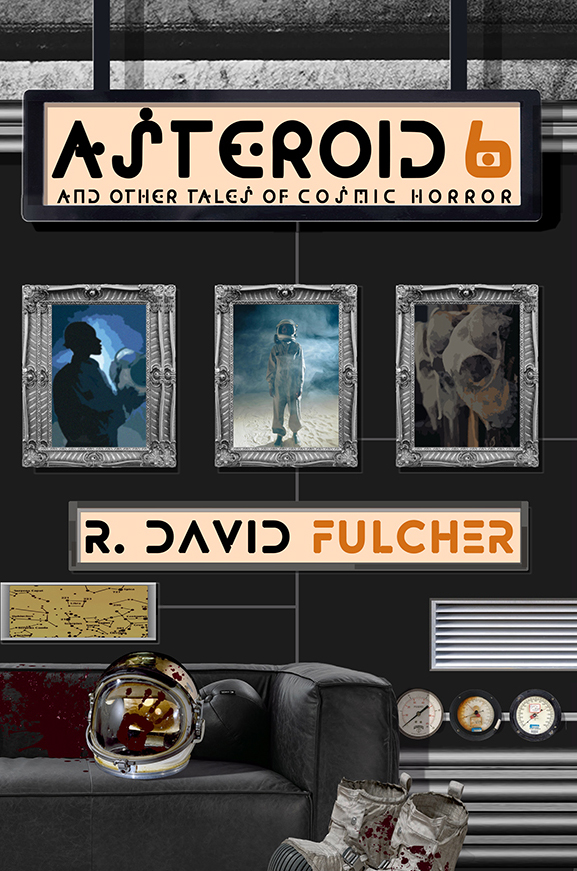
I employ the bookend strategy in my two my recents books, The Pumpkin King and Other Tales of Terror and Asteroid 6 and Other Tales of Cosmic Horror.  I’ll provide an example of each.

The Pumpkin King and Other Tales of Terror starts with my poem “Eulogy to E.A. Poe”:

Man of dark musings and opiate visions! 

Mind of pits and rats,  

Black cats and ancestral corpses!  

How is it that love sparkled within those dark recesses,  Like diamonds within a bedrock of obsidian—  That verse sprang from that ebony hand,  

As vibrant and unlikely as lilacs from snow?  

Tales of cities under the sea,  

Of waves weeping softly, “Annabel Lee!”  

Did the bells, the bells, the bells, foretell of your demise,  Or was it borne on Raven’s wings, thus falling from the sky?  

Could it be that your last vision was your brightest?  

Oh, soul of all that is night,  

Inspire my pen to wail and to write. 

In a similar fashion, my book Asteroid 6 and Other Tales of Cosmic Horror starts with the poem “The Outer Reaches of Unknown Kadaath” (Kadaath is a reference to the works of H.P. Lovecraft):

Who would’ve thought

That H.P. was right

The Old Ones they beckon

Through the nebular night

Those in suspension

Suffocate in sleep

Yog-Sothoth promised

His secret to keep

The terminals flicker

The life support hums

The engines propel me

From the touch of our sun

Soon I will sleep,

Dreaming of the Mountains of Madness and the door

behind the Silver Key

The end of mankind to be unlocked—

By one spaceship and me

Case 2: Direct Injection

In my story “The Faerie Lights” within my book The Lighthouse at Montauk Point and Other Stories I start off with prose, and very quickly inject a poem into the tale:

Rest awhile, friend, for it is clear that you have walked far over hill and valley, and penetrated the wild and strange woods, to have happened upon this long-preserved manuscript beneath the moss-covered rocks.

I came upon this very spot, perhaps many years ago now, as just a lad. Here I took my respite, beckoned by a fair breeze sweeping over the verdant fields and a song sung in dulcet tones far sweeter than any produced by mortal throats. I was weary from hiking many miles, and my body eagerly fell into a deep sleep.

A song floated over my consciousness, sung by a thousand child-like voices:

Weary traveler,

Rest your head,

And sleep awhile

Where the faeries tread.

Weary traveler,

Laugh in kind,

And take deep draughts

Of faerie wine.

Weary traveler,

Spend the night,

Follow the trail

Of the faerie lights!

Additional stanzas of poetry are injected into other parts of the tale, with the intent of lulling the reader into a sleepy, dream-like state.

Final Thoughts

So there you have it – a brief introduction into the concept of “floetry” with several examples of usage.

What do you think?

Can poetry and prose peacefully coexist on the same page? 

Please leave your thoughts in the comments!

Thanks for reading,

-R. David Fulcher, Old Scratch Press Founding Member

BIO: https://rdavidfulcher.com/about/

R. David Fulcher’s latest book is Asteroid 6 and Other Tales of Cosmic Horror

Thank you for reading. Please sign up to follow us on Facebook and to follow us here on WordPress to expand your knowledge about poetry and short form writing as well as to receive the latest news about publication opportunities. 

Secrets to a Publisher Relationship

by Robert Fleming

You’ve published three works. You have the acceptance rate of +-3%. Fed up with the time and submission costs of rejections? Resubmit to a magazine editor who published your work before. This may lead to a relationship with a magazine publisher/editor. Why would you want that? Aren’t editors grinches handing out rejection coal? Some editors are coal distributors, but other offer something you may want:

  • They publish books in your genre and may publish your book.
  • They repeat the same writers: either multiple works in the same or different issue. How can you figure this out? If your published work is digital (online), find an author you like, who was published in the magazine you were published in; type their name in “search.” Does the search results list only their current work or multiple works? If only one, try again with at least two different authors you like.
  • Nominates writers for awards (magazine award, Best of the Net, Pushcart)

How do you know if the editor is interested in a relationship with you?

  • They accept your work in three days or less from submission.
  • They locate your work in the first three pages of the issue.
  • They publish more than one of your works.
  • In the issue forward, they mention your name.
  • They ask you to publish previously submitted rejected work from their slush (reject) pile.
  • Nominate you for an award

The benefits of having +-10 magazines with repeat publications are

  • Create 120 works a year = 10 magazines * 4 submissions a year * 3 works per submission
  • Create enough work for a full-length book of +-70 pages
  • Be selected as a featured reader: Robert is a repeat writer for Oddball magazine, I want him to feature for me.
  • Be invited to be an associate first line editor of a magazine

Show appreciation for the editor/publisher:

  • Once your work is published, put a posting on your social media (Facebook, Instagram, TikTok), that announces your publication with links to the publisher’s magazine.
  • When you read work, say it was published by “editor name” in “magazine name” and announce the magazine’s next publication with their links.

Once you are a repeat writer for a magazine, submit quarterly.

Even yours truly, with over seven hundred publications, only has a +-33% acceptance rate with a new magazine. One of my publication strategies was to create and now maintain a relationship with +-10 magazine editors.

Yours Truly is:

Robert Fleming, a contributing editor of Old Scratch Press

OLD SCRATCH PRESS – a poetry/short-form collective | estd. 2023

who published an Amazon best seller visual poetry book: White Noir

white noir: Fleming, Robert: 9781957224183: Amazon.com: Books

an editor of the digital magazine Instant Noodles

About – INSTANT NOODLES

The Runaway Christmas Train

When I was a little boy, my father would assemble a huge train table in our living room next to the Christmas tree. The table was easily ten feet wide by ten feet long, and three feet high. In addition to the tiny figures of the villagers, quaint tiny homes and buildings, working street lights, fake trees and assorted trains that adorned the table, crepe paper in a red brick pattern was attached to all sides of the table. The paper ran from the sides of the table all the way down to the carpet, creating the illusion that the table was supported by brick walls all around.

Or from my point of view, the perfect fort wherein I could hide.

The strategy was to sneak underneath the table after my parents had gone to sleep and wait for Santa to place the presents under the tree. I actually made it to my secret hiding place each year, carefully separating the folds of the brick crepe paper back in place behind me so that nothing looked out of place.

And like clock work, every year I would promptly fall asleep before sighting Santa.

So that is the memory, suspended in time for more than forty years, like an image trapped within an icicle that never melts.

The reality is starkly different.

The old house was sold many years ago, the train table dismantled and perhaps rotting in some unknown wood pile, and the assorted engines, passenger cars, and cabooses stored away in bubble wrap for another generation.

Things are different with my wonderful parents as well. Mom passed away in 2022, and Dad is struggling every day in a memory care unit.

Despite all of these life changes, I still hold on to this memory, this specific icicle of time has not yet eluded my grasp.

My attempt to preserve this memory in poetry appears below. The poem is called “Christmas Eve from Under the Train Table” and first appeared in The Hot-Buttered Holidays Issue of Instant Noodles in 2021.

I hope you can find something special in my memory as well.

Happy Holidays,

-R. David Fulcher

CHRISTMAS EVE FROM UNDER THE TRAIN TABLE

There I was,
and there I would remain,
Expectant and curled-up beneath the great trains
which had whistles and steam and a radio tower that lit up.
The trains were sleeping, but my breath replaced their din,
Escaping my lips like an anxious child.

It is not the darkness I fear.
I fear that my mischievous breath will plume forth and collect Itself into a crystal ball,
and then roll out from under the brick-red crepe paper,
a great red marble full of my embarrassment.

The clock clangs midnight.
I can hear my parents through the walls,
their secret laughter like soft explosions
accompanied by the faint swish and whisper of wrapping paper.

Now I can their slippered arrival.
My heart pummels in my chest with incessant fluttering,
sick of this distant observation,
insane with the knowledge that all this espionage is for me.

Romance vs Reality in the Writing Life: 9 Tips to Help Tackle Reality

I have a trove of old New Yorker cartoons I’ve saved in a folder since forever. The premise of this one (from the fabulous cartoonist Roz Chast) is the romanticized version of Thoreau’s life vs. the reality. My argument was always “of course he can simplify. He has no kids, no partner, and his mom does his laundry.”

I think we also can hold that same romanticized ideal for writing.

“I WON’T BE COMING IN TODAY.
I’M JUST NOT FEELING IT”

…was the text my friend received, canceling their appointment together 15 minutes before it was to start. What bravado, I thought. What mixture of honesty, courage, chutzpah, and downright rudeness is this?

And how many times have I felt like saying the exact same thing? Especially when it came to staying motivated to finish, organize, edit, submit separate poems, and find a publisher for my poetry collection. Not today. I’m just not feelin’ it.

The option is to feel it. Even when you really, really don’t want to. There are so many other demands on our time, and I am easily overwhelmed if I only look at the long game. I have to break it all down into bite-size “feelable” pieces.

What that looks like for me is:

1.    I can sit here for 10 minutes and freewrite with one of the 500 prompts I find and keep and never do anything with. 

2.    I can spend 10 minutes on the website Duotrope to find 5 more places to submit my poems. 

3.    I can print out all these poems, spread them out on the bed, and figure out how they make sense together. 

4.    I can spend 5 minutes on an email to “make the ask” of a trusted someone to read my work. 

5.    I can take a break from it all and not beat myself up about it.

6.    I can “manage the myth” that my work is valuable and someone, somewhere will love it, until it becomes the truth. 

7.    I can submit the poetry collection to contests of all shapes and sizes.

8.    I can make an effort to forge connections in the writing world. I can join writing groups, create writing groups, take classes and workshops, reach out for help, or join a collective. You never know when you might meet the right person that could lead to your book publication (like I did!). 

9.    I can endure countless rejections, knowing the subjectiveness inherent in the game, and know to never take anything personally. 

10.  Do it again and again. Hang in there, until what’s foreign becomes familiar and the stars align, because you kept at it. And as for the end result, sometimes knowing whatever you have done is enough.

And what a divine feeling that is, indeed.

By Ellis Elliott—Thanks for Reading! Join me at https://bewildernesswriting.com/ Find my poetry collection, Break in the Field, from Old Scratch Press, on Amazon. My new cozy mystery fiction novel, Fire Circle Mysteries: A Witch Awakens will be available in Spring 2025.

Making Moments Count

One of the things I like best about poetry is its ability to capture the beauty of a single moment, even if it’s not something that would normally be seen as beautiful. At its heart, poetry is emotional storytelling. A moment becomes significant when it is infused with feeling—joy, sorrow, nostalgia, or wonder

Last year, I edited an issue of Instant Noodles with the theme of ‘instant.’ I was looking for poems that captured that exact essence of poetry that appeals so much to me. I wanted the beauty of the grief or the joy of a single moment captured in a poem. It’s probably my favorite issue of Instant Noodles that I’ve edited to date. I think the poems we published in that issue were the kind that will resonate long after reading them because every reader shares that moment with the poet.

That issue of Instant Noodles can be read for free here . I highly recommend giving it a look.

Life is filled with fleeting moments—those golden, mundane, or bittersweet slices of time that often pass unnoticed. But poetry has the unique ability to crystallize these moments, transforming them into something timeless and profound. Capturing moments in poetry is about taking the ephemeral and making it eternal.

Here’s a poem of mine that captures the moment when I held my son for the first time. It appeared in the Instant issue of Instant Noodles.

Contraction

After hours of flesh seizing 
muscles finally relaxed 
and I cradled a fresh universe 
in my arms, puckered face 
already rooting for food. 

My world imploded, contracting 
until nothing existed but this 
one tiny fist raised at the audacity 

of the air to be so dry 
the lights so bright 
the scream that replaced the rhythm 
of my familiar heartbeat 

and I traced constellations 
across freckled skin as I eased
into a new center of gravity.

The Power of Specificity

Great poetry thrives on specificity. Think of a single red leaf falling on a crisp autumn afternoon or the smell of fresh bread wafting through an open window. These details evoke emotions and anchor the reader in the poet’s world. Poetry doesn’t need grand metaphors to capture the essence of a moment. Sometimes, a simple, honest line is more powerful than elaborate language.

Share Your Moments

Because life is poetry, everyone is a poet. You can write about your own moments and shape your memories into poems. Then, you’re sharing that moment with others. Your words let them feel what you felt and maybe even remind them of their own special memories.

Poetry helps us slow down and notice what’s around us. It takes the little things that we might normally ignore and makes them important. So grab a notebook, start noticing the world, and turn your moments into poems that last forever.

Gratitude and Grit

Gratitude and Grit

A couple of years ago, I had one session of Bewilderness Writing focused on poems related to “grit and gratitude,” remembering that not all gratitude is the same. Sometimes, it comes long after an event we would never deem worthy of our thankfulness at the time, or sometimes, it comes from a simple shift in our perception of things.

Below are some poems with writing prompts that I hope might help you through whatever is challenging you. I’m a big believer in working it out on the page, hoping to come out on the other side with a sense of renewal.

Losing Heart by James Crews

Describe a time in the past when you “lost heart” and yet were eventually able to return to the moment at hand. What brought you back? See if you can describe it with strong sensory detail.

Chore by Angela Narciso Torres

How might you bring a sense of the sacred and reverence to your everyday activities? Is there a chore that has changed, or might be changed, into an act of mindfulness or devotion?

The Grove by Michael Kleber-Diggs

Notice how, as Kleber-Diggs speaks in the voice of trees, he seems to be speaking for all of humanity at the moment as well. Choose some group of living things from the natural world and write in their voice, describing how it feels to be them in a world like this.

By Ellis Elliott, Bewilderness Writing, https://bewildernesswriting.com/

Writer. Poetry Collection, Break in the Field, Devil’s Party Press, 2023. A Fire Circle Mystery: A Witch Awakens cozy mystery novel coming in 2025.

5 Reasons Every Book Lover Should Attend a Book Festival

For book lovers, there’s nothing quite like the magic of a book festival. These vibrant events bring readers, authors, and publishers together in a celebration of storytelling, creativity, and community. If you’ve never been to one, here are five great reasons to mark your calendar for the next book festival near you.

1. Meet Your Favorite Authors

Imagine having a face-to-face conversation with the authors behind your favorite stories. Book festivals often feature a wide array of authors—from bestsellers to emerging voices. You can attend book signings, hear authors speak on panels, and even ask questions during Q&A sessions. It’s a great chance to connect with the creative minds shaping today’s literary landscape.

2. Discover New Books

Browsing through endless stalls at a book festival can feel like stepping into a treasure trove. You’ll have access to books you may not find at your local store, including limited editions, indie publications, and advanced releases. Plus, many vendors offer special discounts, so it’s the perfect time to stock up on fresh reads.

3. Participate in Workshops and Panels

Book festivals aren’t just for browsing and buying; they’re also educational. Many events feature workshops, panel discussions, and lectures that cover topics ranging from writing techniques to industry trends. Book festivals are usually free to attend which gives you the chance to attend these workshops for free! Whether you’re an aspiring writer or just curious about the publishing process, these sessions offer valuable insights.

4. Connect with Fellow Book Lovers

If you’re passionate about reading, there’s nothing quite like bonding with others who share your enthusiasm. Book festivals provide a space for literary conversations, allowing you to swap recommendations, discuss your favorite genres, and maybe even join a book club. It’s a community experience that extends beyond the event itself.

5. Support Local and Independent Authors

Book festivals often highlight local talent and independent authors (like me!) who might not have the same platform as big-name writers. Attending a festival gives you a chance to support these creators, discover hidden gems, and diversify your reading list with unique, lesser-known voices.

From meeting your favorite authors to discovering new books and making connections with fellow readers, book festivals are a must for anyone passionate about literature. Whether you’re a casual reader or a die-hard bibliophile, attending one can enhance your love of books in unexpected ways. So, find the next book festival near you, grab your tote bag, and dive into the literary world!

In the Season of the Witch: Discovering the Appalachian Granny Witch

When I first read my great-great-grandfather’s Civil War memoir*, I wasn’t expecting to find stories that would inspire my own writing. But tucked among the tales of battle, violence, and survival was a mention of a woman named “Granny Grills”—a healer who gave him charms for protection and herbal preparations for healing. This mysterious “granny witch” lived in the mountains of East Tennessee, tending to her community with a mix of folk wisdom and the magic of the mountains.

Granny Grills introduced me to the rich tradition of the Appalachian Granny Witches (or Granny Women) who served in the isolated towns with the combined roles of midwife, herbal healer, and preparer of the dead for burial. While inspired by Appalachian folklore, the archetype of the folk healer—often a wise, self-sufficient woman—is found across many cultures, from Latin American curanderas to the hedge witches of England. Each of these traditions reflects our very human need to connect with the earth, heal with natural remedies, and seek wisdom from those who live closest to the land.

We live in an age where technology rules, and I think folk magic endures in literature because it connects us with something deeper and often forgotten: our roots. The figure of the granny witch, like other folk healers, symbolizes resilience, self-reliance, and a deep respect for nature—all qualities we find ourselves yearning for in our increasingly tech-centric world. These characters are timeless because they remind us of the power within ourselves (and for me, this is called intuition) and the importance of connection, whether it is to the earth, our community, or our heritage.

Bringing folk magic into fiction isn’t just about fantasy. It can be a way to explore values like resilience, diversity, and community. Granny witches and other similar folk traditions speak to readers because they represent a balance of independence and tradition. They remind us that wisdom is often found where it is least expected, and that those who honor nature and listen to their own “still, small voice” hold a unique kind of power.

*The Thrilling Adventures of Daniel Ellis: 1861-1865, Harper and Bros. 1867. Available on Amazon.

Ellis Elliott is the author of the poetry collection Break in the Field and is currently working on her first cozy mystery novel based on a lineage of Appalachian granny witches.

Poems and cockroaches…call the exterminator!

by Anthony Doyle

Pluriplaneta apocalyptica

Poor poetry. Such a bad rep. 

As Ben Lerner says in The Hatred of Poetry, writing a poem is a heroic gesture doomed to failure, because it attempts to do something nigh-impossible: be totally unique whilst speaking to universal experience—and doing all that with song

It’s not hard to be unique (we all are). It’s not hard to speak to universal experience (we’re born contributors). But try doing both at once, and set to a drumbeat made out of syllables… Poetry, he says, “arises from the desire to get beyond the finite and the historical . . . and to reach the transcendent or divine.” What could possibly go wrong? Tilting at fire-breathing windmills…it’s a strange occupation to choose, and a thankless one, too. 

When poets are not being scoffed at for being genuine failures, we can also be derided for being posers (inauthentic failures). That’s largely because being a poet is quite easy to fake. You can appear to be doing it without actually doing it. Just write down pretty much anything, break it up into shorter lines, throw in some indents, give it a catchy title and…voilà: you’re a poet. 

So failure or poser, the poet cannot win; paradoxically, we’re the only thing full of hot air that never actually rises.  

Individually, we’re an inconvenience. Collectively, we’re a plague. An infestation.

Yes, poets are everywhere, and so are our poems. You’ll find us/them on social media, on hand towels, on subway trains, graffitied on underpasses, printed on T-shirts. You’ll find us scrawled on the third tile from the left, three rows up from the floor of the school restroom, just under the leaky sink…

Yes…poems are literature’s cockroaches. Want proof?

  • They teem in their millions
  • They feed on literally anything at all
  • Kill one, ten more take its place
  • You’re never more than a foot away from one, know it or not
  • There are 4,600 different types
  • They will survive a nuclear blast

Okay, that last one is not exactly true. Contrary to popular belief, cockroaches would not survive a nuclear war. Blattaphiles (yes, “roach lovers”) reluctantly acknowledge that the intense heat would put an end to their beloved Gregor Samsas, one and all. 

But poems would survive. Poems will. 

When those post-apocalyptic, bunker-dwelling Adams and Eves re-emerge from underground, minus their smartphones, laptops, tablets, moleskines, poems will begin to appear all over the waste land, scratched into the walls of ruins or etched into rockfaces. Poems will mysteriously turn up on charred ground, like crop circles in corn fields, or old SOSes arranged out of wreckage on dead beaches. There’ll be elegies smeared onto the sides of burnt-out cars; odes scrawled with metal into blackened concrete; sonnets gouged into radioactive mud in some brave new cuneiform. With time, epics will strut triumphantly across abandoned concourses, the flagstones turned to stanzas, daubed, if need be, in human blood.  

If we survive, poems will survive. Because when our vast literature gets blown to pieces along with the badly designed Death Star that is our civilization, it’ll be poetry they take with them into the escape pods. No novels, no plays, just a volume of poems. Condensed poiesis. Poetry is the seed, the source code. An iamb’s all it takes to set the cogs in motion again. 

Perhaps on those long Fallout nights, with no streaming, no social-media feeds, nothing to entertain us, the poet will be appreciated for what Lerner calls our “tragic failures”, and for the occasional bawdy limerick or snide acrostic. Our day will come again. Our star will rise. 

And we still won’t sell, because there won’t be any money.  

As for the cockroaches, not even the anti-Noahs of the exterminating arts will keep them out of those arks. So they, too, will escape the purge. We’ll see them scuttle free alongside us to reclaim the world…with a haiku scribbled on their backs.

Anthony Doyle is the author of the novel Hibernaculum and the poetry book Jonah’s Map of the Whale, coming soon from OSP.

Five Books for Teens or Tweens to Read Before Halloween

With Halloween just around the corner, it’s the perfect time to cozy up with a good book that brings just the right mix of spooky thrills, chills, and adventure. Whether you’re a teen or tween looking for something eerie or simply a fan of supernatural stories, here are five great books to read before Halloween!

The Screaming Staircase (Lockwood & Co.) by Jonathan Stroud

Genre: Supernatural, Mystery

London is plagued by ghosts, and psychic agencies are tasked with containing them. Lockwood & Co. is a small but talented team of ghost hunters led by the charismatic Anthony Lockwood. When Lucy Carlyle joins them, they take on their most dangerous case yet, facing terrifying spirits and uncovering dark secrets. With fast-paced action, witty banter, and eerie hauntings, this series is a thrilling Halloween read. (As a bonus, Netflix made one season based off of this book series. It’s a great series, and a shame Netflix didn’t renew it.)

Perfect for fans of: Ghost hunting, supernatural mysteries, and witty characters.

City of Ghosts by Victoria Schwab

Genre: Paranormal, Adventure

Cassidy Blake can see ghosts, and her best friend happens to be one. When her family heads to Edinburgh, one of the world’s most haunted cities, for a paranormal TV show, Cassidy discovers that the city is filled with more than just legends. As she navigates her ability to cross the “Veil” between the living and the dead, she gets entangled in a chilling adventure. This spooky, fast-paced story is a perfect October read.

Perfect for fans of: Ghosts, supernatural adventures, and haunted locations.

Miss Peregrine’s Home for Peculiar Children by Ransom Riggs

Genre: Fantasy, Dark Adventure

This eerie fantasy novel is perfect for those who like a mix of spooky and magical elements. Sixteen-year-old Jacob stumbles upon an orphanage that houses children with peculiar abilities, and he quickly becomes involved in their strange world. The story, woven with vintage photographs, creates a mysterious and haunting atmosphere that’s bound to get readers in the Halloween spirit.

Perfect for fans of: Mysteries, dark fantasy, and stories with a touch of the supernatural.

The House with a Clock in its Walls by John Bellairs

Genre: Gothic Mystery

When orphaned Lewis Barnavelt moves in with his Uncle Jonathan, he expects an ordinary life. But he quickly learns his new home is anything but normal—his uncle and their neighbor, Mrs. Zimmermann, are both witches! Lewis is thrilled to witness their magical abilities and enjoys Mrs. Zimmermann’s delicious cookies. At first, simply watching is enough for Lewis, but his curiosity soon gets the best of him. When he tries magic on his own, he accidentally revives Selenna Izard, the house’s sinister former owner. Selenna and her husband had hidden a deadly clock in the walls—one that could wipe out humanity. With the ominous ticking growing louder, the Barnavelts must race against time to find the clock and stop its destructive power.


Perfect for fans of: Eerie atmospheres, ghost stories, and magical adventures.

The Dark Lord Clementine by Sarah Jean Horwitz

Genre: Fantasy, Adventure

Clementine Morcerous has grown up as the heir to her father’s dark magic throne. But when her father falls under a curse, Clementine begins to question her life as a future Dark Lord. This whimsical yet spooky story mixes dark humor, magic, and adventure, making it an entertaining Halloween read.

Perfect for fans of: Quirky fantasy, dark humor, and magical adventures.

If you didn’t see anything that inspired you to curl up under a blanket with a cup of cocoa or hot tea, I’d like to offer an extra suggestion. My novella duology is a spooky read for teen readers! Both books are available now. 

Two teens discover what they think is a cure for a dangerous parasite that turns humans into mindless husks. However, administering the cure is dangerous and none of the grown-ups in charge want to listen to them. Follow Tyler and Bree as they travel across husk-ravaged lands to test their cure and prove they might be able to save humanity from the threat of husks once a for all!