Exploring the Role of the U.S. Poet Laureate

By Virginia Watts, Founding Member of the Old Scratch Press Collective

Many people have heard of title The United States Poet Laureate, official title Poetry Laureate Consultant in Poetry, but they do not know much about this position. The Poet Laureate serves for an eight-month term running from October to May, elected by The Librarian of Congress. Traditionally a poet will hold this title for two terms. In choosing the recipient of this prestigious title, the Librarian consults with experts in the field of poetry as well as former Poet Laureates. Additionally, suggestions from the general public are accepted.

The Poet Laureate only has two officials duties they must perform, two readings at the beginning and end of their term. The idea is that each Poet Laureate should be given the space and freedom to decide for themselves how they can use their role to encourage people throughout the nation to read, write and develop an appreciation for the art of poetry. The Poet Laureate receives a stipend of $35,000 and $5000 for travel expenses. Prior the 1986, the Poet Laureates were known as Consultants in Poetry. The well known poets Robert Frost and Gwendolyn Brooks were Consultants. Since 1986, there have been 24 Poet Laureates, Louise Gluck and Ted Kooser among them.

So, what have some of our Poet Laureates done during their tenure to spread the love of poetry?

In 1997, Robert Pinsky, the 39th Poet Laureate, put out an open call for people to share their favorite poem. Many Americans sent poems. Poems came flooding in from all ages, all states, from people of diverse backgrounds and interests. Pinsky’s call set off a domino effect leading to reading of favorite poems in hundreds of cities and towns.

Gwendolyn Brooks is well known for her focus on elementary school students. Early learning about poetry and writing it is bound to foster a lifelong love of the art form.

 Joseph Brodsky thought the best way to have people experience poetry is for them to find free samples of it in their everyday lives and places, such as airports and hotel rooms.

Billy Collins published an anthology inspired by his time serving as the United State Poet Laureate. “Poetry 180” makes it easy for high school students to read or hear one poem each day during their school year. Collins is often quoted as believing that poetry is a kind of social engagement, that a poem should feel like it reaches out and invites the reader inside.

Rita Dove brought writers with a focus on African diaspora together. Maxine Kumin focused on shining a light on the works of women writers and Joy Harjo, the 23rd United States Poet Laureate, was the first Native American to hold this honor.
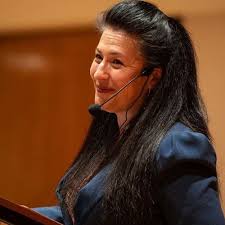
Our current Poet Laureate is Ada Limon. She is from a Mexican American background and grew up in California. As part of her position, she penned a poem dedicated to NASA’s Europa Clipper Mission. Her poem is engraved in her handwriting on a metal plate aboard the Europa Clipper spacecraft. This spacecraft launched in 2024 and will enter the Juniper system in 2030.  Here is Limon’s gorgeous piece. She is one of the must-read poets of our times, well deserving of the title of United States Poet Laureate.

In Praise of Mystery: A Poem for Europa

Ada Limón

1976 –

Arching under the night sky inky
with black expansiveness, we point
to the planets we know, we

pin quick wishes on stars. From earth,
we read the sky as if it is an unerring book
of the universe, expert and evident.

Still, there are mysteries below our sky:
the whale song, the songbird singing
its call in the bough of a wind-shaken tree.

We are creatures of constant awe,
curious at beauty, at leaf and blossom,
at grief and pleasure, sun and shadow.

And it is not darkness that unites us,
not the cold distance of space, but
the offering of water, each drop of rain,

each rivulet, each pulse, each vein.
O second moon, we, too, are made
of water, of vast and beckoning seas.

We, too, are made of wonders, of great
and ordinary loves, of small invisible worlds,
of a need to call out through the dark.
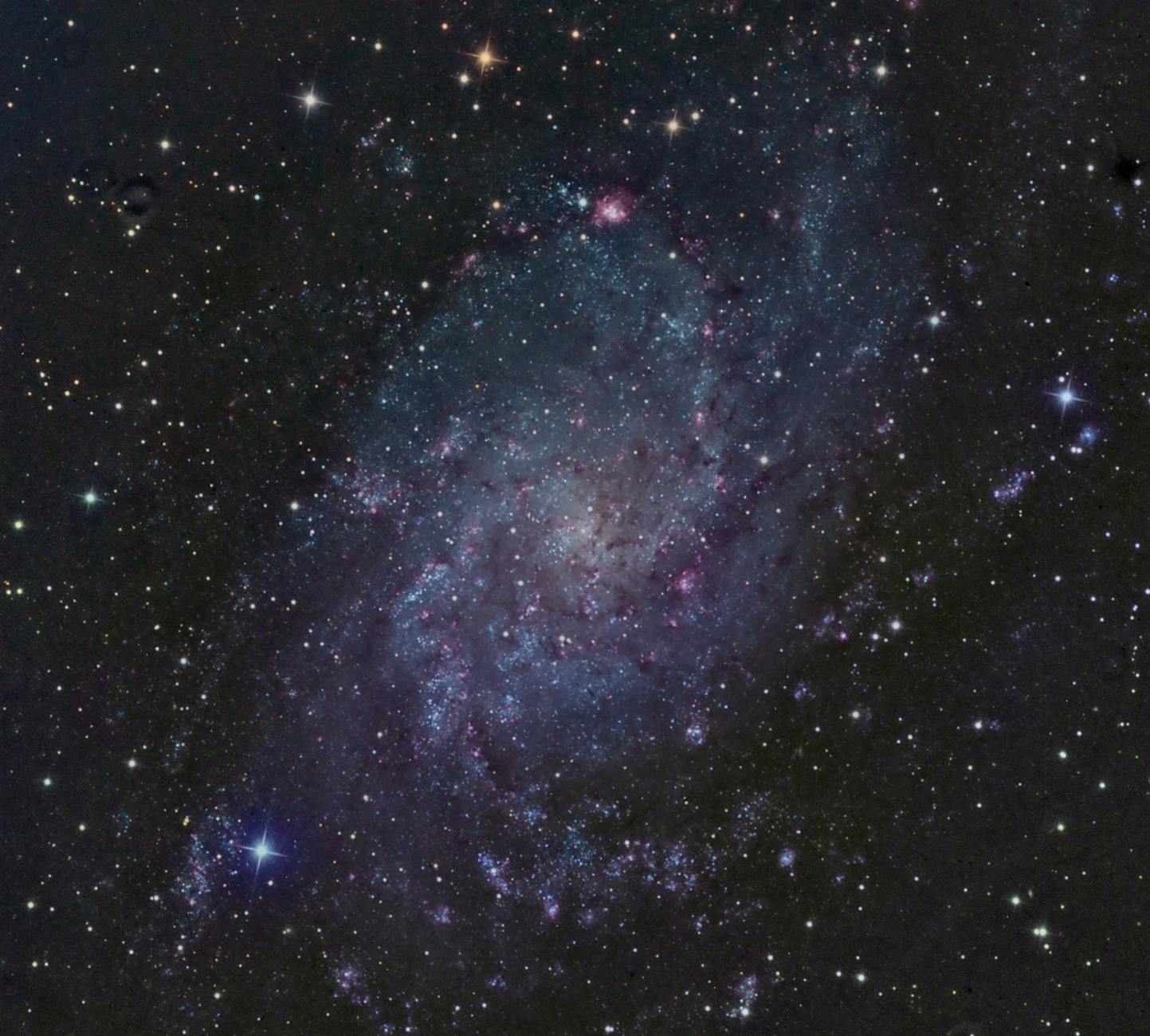
Photo by David Kopacz on Pexels.com

“In Praise of Mystery” by Ada Limón was released at the Library of Congress on June 1, 2023, in celebration of the poem’s engraving on NASA’s Europa Clipper, scheduled to launch in October of 2024. Copyright Ada Limón, 2023. All rights reserved. The reproduction of this poem may in no way be used for financial gain.

About the author: Virginia Watts is the author of poetry and stories found in Epiphany, CRAFT, The Florida Review, Reed Magazine, Pithead Chapel, Words & Whispers, Sky Island Journal among others. She has been nominated four times for a Pushcart Prize and four times for Best of the Net. Her debut short story collection Echoes from The Hocker House won third place in the 2024 Feathered Quill Book Awards.

Virginia Watts grew up in Hershey, Pennsylvania and spent summer vacations in the Endless Mountains of Sullivan County with her Quaker grandparents. Many of her stories and poems revolve around small town life and rural roadways that are not always what they seem.

Thank you for reading. Please sign up to follow us on Facebook and to follow us here on WordPress to expand your knowledge about poetry and short form writing as well as to receive the latest news about publication opportunities.

A Favorite Poem and Thoughts on Metaphors

Our series on “Favorite Poems” and why we think about them over and over again, continues with a post by Contributing Editor Virginia Watts.

Perhaps the World Ends Here

by Joy Harjo

The world begins at a kitchen table. No matter what, we must eat to live.

The gifts of earth are brought and prepared, set on the table. So it has been since creation,
     and it will go on.

We chase chickens or dogs away from it. Babies teethe at the corners. They scrape their
     knees under it.

It is here that children are given instructions on what it means to be human. We make
     men at it, we make women.

At this table we gossip, recall enemies and the ghosts of lovers.

Our dreams drink coffee with us as they put their arms around our children. They laugh
     with us at our poor falling-down selves and as we put ourselves back together once
     again at the table.

This table has been a house in the rain, an umbrella in the sun.

Wars have begun and ended at this table. It is a place to hide in the shadow of terror.
     A place to celebrate the terrible victory.

We have given birth on this table, and have prepared our parents for burial here.

At this table we sing with joy, with sorrow. We pray of suffering and remorse. We give
     thanks.

Perhaps the world will end at the kitchen table, while we are laughing and crying, eating
     of the last sweet bite.


I love this poem because as much as the kitchen table is metaphor, it is not. I remember both of my grandmother’s kitchen tables, one had a well-worn aquamarine Formica top and the other was round and oak.

I remember the things I ate there, tea sandwiches, lemon sponge pie, fresh caught rainbow trout from the mountain creek tumbling by. I remember the smell of coffee. I remember listening to the adults, learning about life.

The table in Harjo’s poem can be seen as a metaphor for a human lifetime. Within it, childhood, adulthood, love, births, old age, war, joy, sorrow, death. Throughout what it means to live a human life we can always return to the feeling a being surrounded by those who nurture us, believe in us, where we were shaped and where we dreamed. We are never alone at this table and if you think about it, our kitchen table is with us always.

Do you have a favorite poem you’d like to share? We’d be happy to publish your comments here. Part of the mission of Old Scratch Press is to promote the love of poetry.

Poetry Practice:

Twice a week, says Virginia Watts, I listen to the podcast Poetry Unbound where Irish poet Padraig O Tuama unpacks one poem in his uniquely contemplative, conversational, kind and down to earth way. Each podcast is less than fifteen minutes. Like his recent book “50 Poems to Open Your World” his podcast opens hearts and minds to poems and poets from around the world. It feels like an invaluable gift each and every time I listen.

Don’t forget to follow us on Facebook and Twitter.

National Poetry Month A Time For Reading-Out- Loud

April is the month for poetry, and in the part of the United States where I live, I’m fortunate to have a hiking trail where years ago small signs were posted with quotes from poetry. What a delight, to only hear the sounds of my shoes crunching into the dirt and the twitter of birds and insects, blue sky overhead, surrounded by green. I pause and read the poem painted on a wooden sign. If I am with a friend, I read it to them aloud. If I am alone, I still read it out loud to myself, because poetry is meant to be heard.

National Poetry Month was established in 1996 by the Academy of American Poets. According to the Academy, it is the largest literary celebration in the world. Listening to a poet read their own work is a treat. Click on the previous link to see and hear Joy Harjo read one of her exquisite poems.

One of the earliest poets I was introduced to in school was William Shakespeare. Today, due to the evolution of the English language, his works are not as frequently read. Some of the words and phrasing may seem “odd” to your modern ear, but listen to the phrasing and the selection of vowel sounds and consonants. Read him aloud and his work may start to grow on you.

Discovering new poets and rediscovering forgotten favorites, is part of the fun of National Poetry Month.

Writer and Artist Morgan Golladay, a founding member of the Old Scratch Poetry and Short Form Collective, created this beautiful piece of artwork featuring a flower found in many spring gardens, Impatiens.

Sonnet 98: From You Have I Been Absent in the Spring

BY WILLIAM SHAKESPEARE

From you have I been absent in the spring,

When proud-pied April, dressed in all his trim,

Hath put a spirit of youth in everything,

That heavy Saturn laughed and leaped with him.

Yet nor the lays of birds, nor the sweet smell

Of different flowers in odour and in hue,

Could make me any summer’s story tell,

Or from their proud lap pluck them where they grew:

Nor did I wonder at the lily’s white,

Nor praise the deep vermilion in the rose;

They were but sweet, but figures of delight

Drawn after you, – you pattern of all those.

    Yet seem’d it winter still, and, you away,

    As with your shadow I with these did play.

IF you have a favorite poet or poem you’d like to share, let us know. Follow us on WordPress, Facebook, and Twitter.

Thank you for reading.