Romance vs Reality in the Writing Life: 9 Tips to Help Tackle Reality

I have a trove of old New Yorker cartoons I’ve saved in a folder since forever. The premise of this one (from the fabulous cartoonist Roz Chast) is the romanticized version of Thoreau’s life vs. the reality. My argument was always “of course he can simplify. He has no kids, no partner, and his mom does his laundry.”

I think we also can hold that same romanticized ideal for writing.

“I WON’T BE COMING IN TODAY.
I’M JUST NOT FEELING IT”

…was the text my friend received, canceling their appointment together 15 minutes before it was to start. What bravado, I thought. What mixture of honesty, courage, chutzpah, and downright rudeness is this?

And how many times have I felt like saying the exact same thing? Especially when it came to staying motivated to finish, organize, edit, submit separate poems, and find a publisher for my poetry collection. Not today. I’m just not feelin’ it.

The option is to feel it. Even when you really, really don’t want to. There are so many other demands on our time, and I am easily overwhelmed if I only look at the long game. I have to break it all down into bite-size “feelable” pieces.

What that looks like for me is:

1.    I can sit here for 10 minutes and freewrite with one of the 500 prompts I find and keep and never do anything with. 

2.    I can spend 10 minutes on the website Duotrope to find 5 more places to submit my poems. 

3.    I can print out all these poems, spread them out on the bed, and figure out how they make sense together. 

4.    I can spend 5 minutes on an email to “make the ask” of a trusted someone to read my work. 

5.    I can take a break from it all and not beat myself up about it.

6.    I can “manage the myth” that my work is valuable and someone, somewhere will love it, until it becomes the truth. 

7.    I can submit the poetry collection to contests of all shapes and sizes.

8.    I can make an effort to forge connections in the writing world. I can join writing groups, create writing groups, take classes and workshops, reach out for help, or join a collective. You never know when you might meet the right person that could lead to your book publication (like I did!). 

9.    I can endure countless rejections, knowing the subjectiveness inherent in the game, and know to never take anything personally. 

10.  Do it again and again. Hang in there, until what’s foreign becomes familiar and the stars align, because you kept at it. And as for the end result, sometimes knowing whatever you have done is enough.

And what a divine feeling that is, indeed.

By Ellis Elliott—Thanks for Reading! Join me at https://bewildernesswriting.com/ Find my poetry collection, Break in the Field, from Old Scratch Press, on Amazon. My new cozy mystery fiction novel, Fire Circle Mysteries: A Witch Awakens will be available in Spring 2025.

Gratitude and Grit

Gratitude and Grit

A couple of years ago, I had one session of Bewilderness Writing focused on poems related to “grit and gratitude,” remembering that not all gratitude is the same. Sometimes, it comes long after an event we would never deem worthy of our thankfulness at the time, or sometimes, it comes from a simple shift in our perception of things.

Below are some poems with writing prompts that I hope might help you through whatever is challenging you. I’m a big believer in working it out on the page, hoping to come out on the other side with a sense of renewal.

Losing Heart by James Crews

Describe a time in the past when you “lost heart” and yet were eventually able to return to the moment at hand. What brought you back? See if you can describe it with strong sensory detail.

Chore by Angela Narciso Torres

How might you bring a sense of the sacred and reverence to your everyday activities? Is there a chore that has changed, or might be changed, into an act of mindfulness or devotion?

The Grove by Michael Kleber-Diggs

Notice how, as Kleber-Diggs speaks in the voice of trees, he seems to be speaking for all of humanity at the moment as well. Choose some group of living things from the natural world and write in their voice, describing how it feels to be them in a world like this.

By Ellis Elliott, Bewilderness Writing, https://bewildernesswriting.com/

Writer. Poetry Collection, Break in the Field, Devil’s Party Press, 2023. A Fire Circle Mystery: A Witch Awakens cozy mystery novel coming in 2025.

In the Season of the Witch: Discovering the Appalachian Granny Witch

When I first read my great-great-grandfather’s Civil War memoir*, I wasn’t expecting to find stories that would inspire my own writing. But tucked among the tales of battle, violence, and survival was a mention of a woman named “Granny Grills”—a healer who gave him charms for protection and herbal preparations for healing. This mysterious “granny witch” lived in the mountains of East Tennessee, tending to her community with a mix of folk wisdom and the magic of the mountains.

Granny Grills introduced me to the rich tradition of the Appalachian Granny Witches (or Granny Women) who served in the isolated towns with the combined roles of midwife, herbal healer, and preparer of the dead for burial. While inspired by Appalachian folklore, the archetype of the folk healer—often a wise, self-sufficient woman—is found across many cultures, from Latin American curanderas to the hedge witches of England. Each of these traditions reflects our very human need to connect with the earth, heal with natural remedies, and seek wisdom from those who live closest to the land.

We live in an age where technology rules, and I think folk magic endures in literature because it connects us with something deeper and often forgotten: our roots. The figure of the granny witch, like other folk healers, symbolizes resilience, self-reliance, and a deep respect for nature—all qualities we find ourselves yearning for in our increasingly tech-centric world. These characters are timeless because they remind us of the power within ourselves (and for me, this is called intuition) and the importance of connection, whether it is to the earth, our community, or our heritage.

Bringing folk magic into fiction isn’t just about fantasy. It can be a way to explore values like resilience, diversity, and community. Granny witches and other similar folk traditions speak to readers because they represent a balance of independence and tradition. They remind us that wisdom is often found where it is least expected, and that those who honor nature and listen to their own “still, small voice” hold a unique kind of power.

*The Thrilling Adventures of Daniel Ellis: 1861-1865, Harper and Bros. 1867. Available on Amazon.

Ellis Elliott is the author of the poetry collection Break in the Field and is currently working on her first cozy mystery novel based on a lineage of Appalachian granny witches.

Breaking Through

Strategies for Overcoming Creative Blocks

Creative blocks can be frustrating, but they’re a normal part of the creative process. Here, I explore three common types of creative blocks that I experience on a regular basis, and share my strategies to overcome them and get back into my creative flow.

Common Types of Creative Blocks:

  • Self-Doubt: Feeling like your work isn’t good enough? That would be a hard yes for me, every single day. Self-doubt can paralyze creativity. Who am I to go to grad school in writing at my age? Who am I to publish a poetry book? Who am I to think I can even begin to write a mystery novel? Remember, while there are plenty of success stories out there, we won’t know our own abilities unless we give it a try. You might decide it’s not your thing, or get caught up in the process and ride the wave to the end. By all means, do not compare yourself to others, unless you think it’s really bad, in which case the thought should be, “I can do this, but better”. It really doesn’t matter what you think until you actually start something. Like the curling sticky note on my desk says: Begin.
  • Perfectionism: Waiting for the perfect idea or execution can stop you in your tracks. As will waiting for the perfect time, or the perfect desk chair, or external motivation. Embrace imperfection and focus on progress rather than perfection. It’s called a “shitty first draft” for a reason.
  • Burnout: Sometimes, the creative well runs dry. Recognize when you need rest and allow yourself to recharge (see below).

Strategies to Overcome Blocks:

  • Change of Scenery: Sometimes a change of scenery can spark new ideas. Go for a walk, visit a museum, or simply move to a different room. Move your body, listen to music, or anything to temporarily switch off the “I’m Stuck” reel playing in your head.
  • Experiment with PLAY: This is my favorite. Take a break from your current project and try something completely different—doodle, cook, or build with LEGOS. I like to cut and paste, myself. Play can reignite creativity.
  • Set Bite-Size Goals: Break down your project into manageable tasks, i.e. Write for 10 minutes. Completing small steps can build momentum and reduce overwhelm.

“Creative Reset”: Set a timer for 15 minutes and engage in a creative activity unrelated to your current project. The goal is to refresh your mind and relieve pressure, allowing creativity to flow more freely when you return to your work.

Finally, I once had a teacher who said there was no such thing as a creative block, and the problem was not that there was nothing to draw from, but that there was too much. Too much, or not enough? You decide.

Ellis Elliott

Ellis Elliott

Ellis Elliott is a published author and poet. Join her Bewilderness Writing Workshops and use free writing to find yourself and your voice on the page. Order her poetry collection Break in the Field and find out about her Work-in-Progress, a mystery novel set in the misty mountains of Appalachia.

Writer’s Toolkit: 5 Techniques for Handling Emotional Intensity in Writing

By Ellis Elliot

As writers, we often draw from our own lives for inspiration, tapping into our memories and emotions. However, delving into difficult experiences or memories can be challenging. It’s important to use techniques, or “lifelines”, to navigate this process. For example, author Gillian Flynn separates herself from the intense emotions of her writing by enjoying her favorite Broadway show tunes for a few minutes after she finishes writing. Poet Ada Limón ensures she has a way out of the emotional intensity by reminding herself that writing is the outlet for her feelings.

“Memory takes a lot of poetic license. It omits some details; others are exaggerated, according to the emotional value of the articles it touches, for memory is seated predominantly in the heart. The interior is therefore rather dim and poetic.”

                                 -Tennessee Williams

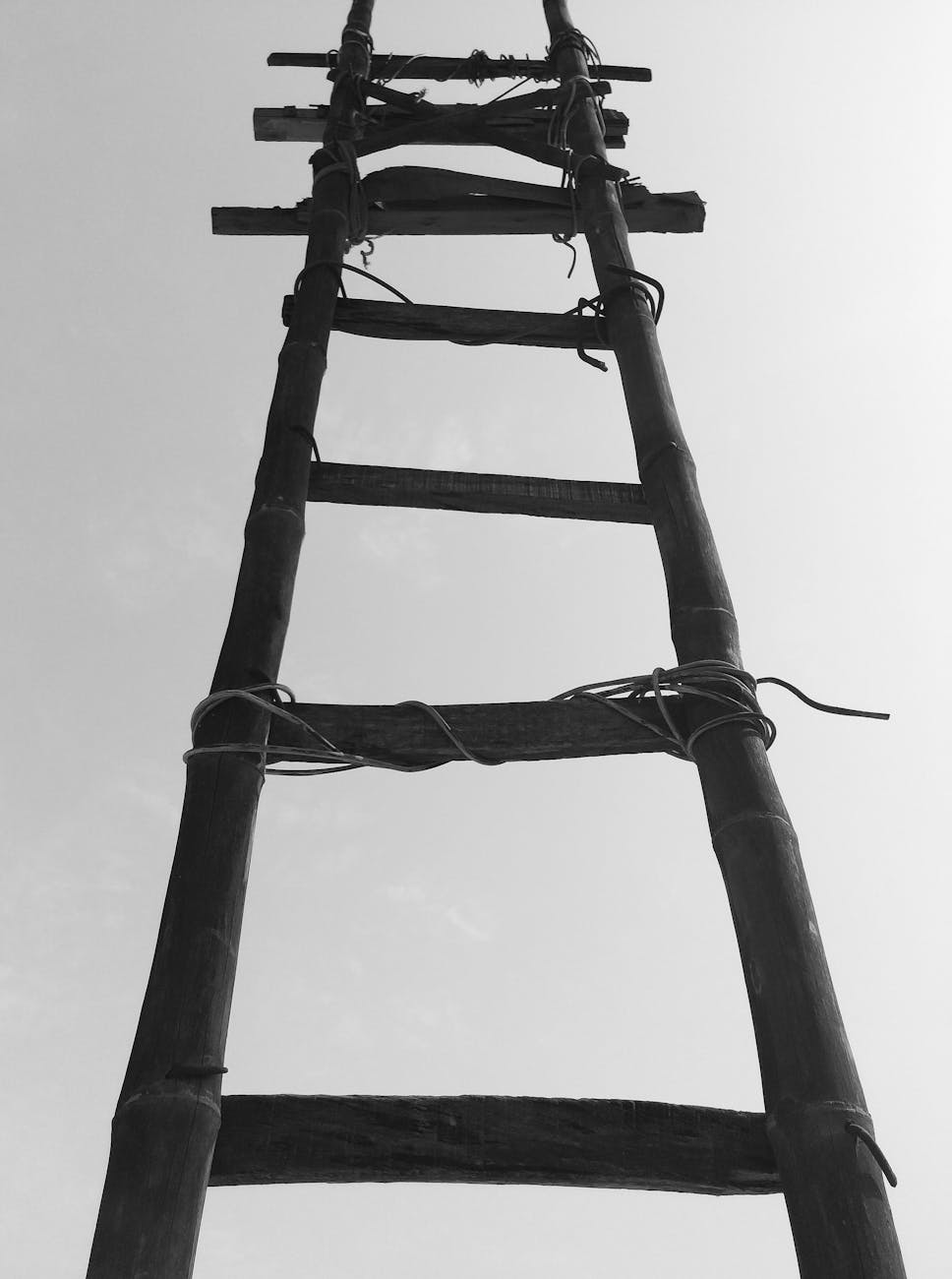
What does the “ladder out” look like? For me, the five techniques below are the rungs I use and find most helpful when the “going gets hard”:

Photo by Khimish Sharma on Pexels.com
  1. Method to Shift from Interior to Exterior- when I feel myself spiraling, I will tell myself to notice: 5 things I can see, 4 things you can hear, 3 things you can touch, 2 things you can smell, and 1 thing you can taste, OR NOTICE 3 things in the shape of a square, 3 things in the shape of a circle, and 3 things in the shape of a rectangle.(I thank my therapist for that one!)
  • Breath Work-Breath connects directly to the nervous system, hence, when our breath quickens with excitement/fear we can consciously slow it down to bring calm. There are a lot of different kinds of breath-work, but the method I use (because I can remember it) when on the high-dive is called “box breathing”. You simply inhale 4 counts, hold 4, exhale 4, hold 4. More info here: https://www.calm.com/blog/breathing-exercises-for-anxiety
  • Form Constraints-Choose a form, any form. Maybe it’s a sonnet, or as simple as making a list. Maybe it’s a haiku, or in the form of dialogue. Having a form helps switch the brain away from emotionally charged subject matter, and over to the more linear, logical side. Like swim-lane ropes, it helps give our work specific direction when it feels like we’re dog-paddling to nowhere.
  • Movement and/or Music-Take a walk. Sit in your chair, reach your arms out and upward as you breathe in, bring them down as you exhale. Roll your shoulders. Try some chair yoga. Turn on the music. Take a dance break. The mind/body connection is a strong and proven one. Get out of your head and into your body. Discharge that pent-up emotional energy with movement. Your writing, and your body, will thank you.
  • Decline the Invitation-“Going there” in your writing is up to you. Trust the wisdom of your body. If something comes up you don’t want to address, you can absolutely say, “no, thank you”, and shut the door behind it.

Maybe think of the above as the hard-hat and knee-pads for certain aspects of the hard work of writing. Find comfort in knowing that many are sharing the journey with you. If you’re lucky enough to have writer friends, talk about it. Many of us circle and circle around our truths, but never get there. Suit up and see where it can take your writing.

Thank you for reading. For more about the author Ellis Elliot visit. And check out her book.

Break in the Field

Bam, Crack, Klunk: Why Sound Matters in Poetry

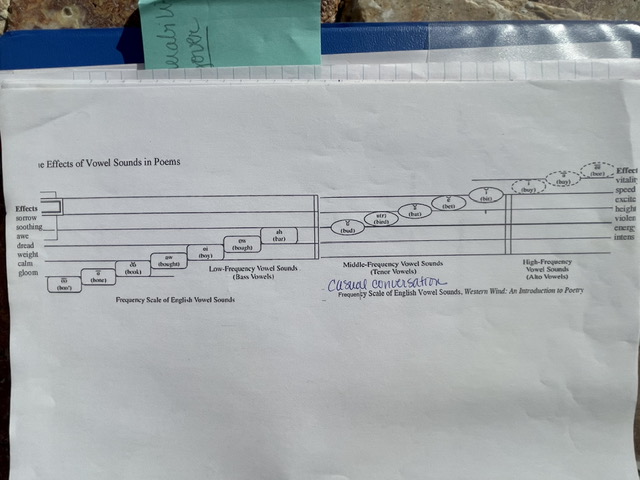
“Bam!”, “Crrraack!”, “Klunk!” are just a few on the list of words used in the 1960’s TV show Batman, usually held within a colorful cartoon bubble. We immediately conjure what is trying to be conveyed, and part of that understanding is because of the sounds of these particular words. In any writing, the sounds of words can produce not only feelings, but physical effects on the body. In poetry specifically, sounds become even more important because words must be carefully chosen in order to “say the most with the least”. We must pay attention to the vowels, consonants, stresses, etc. in the words we choose dependent on the idea or tone we are trying to convey.

Take a look at the information about vowel and consonant sounds pictured above, courtesy of Cathy Smith Bowers, Queens University., (excuse my notes and shadow!)Then, look at these two examples below. Read them aloud and ask yourself if it feels like flow and glide, or stop and start? Is there an emotion or physical reaction you can sense as you read?

I caught this morning morning’s minion, king-

            dom of daylight’s dauphin, dapple-dawn-drawn Falcon, in his

            riding.

                                                -from The Windhover,by Gerard Manley Hopkins

We real cool. We

Left school. We

Lurk late. We

Strike straight.

                                                –from We Real Cool by Gwendolyn Brooks

That was pretty easy, huh? Now, go to one of your favorite poems and see if you can see how the word choices the poet made regarding sound serve the tone, subject matter, and larger themes of the poem. Then, look at one of your own.

Sound is just one of the many devices poets use, and it is a powerful one. A poem that uses short lines with high-frequency vowel sounds will sound very different than one with long lines using low-frequency sounds. And remember, the importance comes from not just the reaction to the words in your ears, but also the subsequent emotion or felt reaction in the body, and there is music to be found in all of them.

Thank you for reading. Don’t forget to sign up to follow our blog as well as follow us on facebook.

Ellis is author of the National Book Award nominee poetry collection Break in the Field published by Old Scratch Press.

New ways of seeing

My name is Ellis Elliott and I am proud to be a part of the Old Scratch Poetry Collective. I recently read Ben Weakley’s first poetry collection, Heat + Pressure. Ben is an Army veteran of Iraq and Afghanistan. I am not one normally drawn to books or movies about war, because it is much easier to keep something at a safe distance, to pretend it’s not there, if we do not engage with it. But poetry has a particular way of helping us see with new eyes, and this time the writer is bringing us along with him on patrol with his infantry, at home with his young son, watching the events of Jan. 6, and back to his childhood, when war meant a game to be played. This collection is visceral as well as lyrical, and will linger long after you’ve read the last poem.

Field Dressing 

The silent doe stiffened in her bed of leaves,

where moments ago she fell, panting.

Her last breath rattled.

Life passed from nutbrown eyes

into damp January morning.

The snow wrapped us in a womb of silence.

My frost-tipped fingers gripped tight

around the stained handle of a buck-knife,

the curved edge trembling.

Warm against my back, my father’s hand.

Soft against my ear, my father’s voice—

Careful, son. Cut gently.

We eat what we kill.

We honor the animal.

We honor the dead who gave us life.

Boys like me are not made with words enough for this. 

                                    -Ben Weakley