Gabby Gilliam, a fellow member of the collective who like myself lives in the Greater Washington D.C. region which encompasses Northern Virginia and Maryland, recently posted a link on social media about the Second Annual Short Poem Edition just published by the nonprofit Washington Writers Publishing House.
The three-line poems posted, immediately drew my attention and got me to thinking about the power of short poetry. Gabby will be the guest poetry editor for the Winter “Cooold Turkey” themed issue of the literary magazine Instant Noodles. Get more information here.
Short poetry has power. Thank you for reading and if you’d like to share a favorite short poem, please send it in via “comments.” Remember to also follow the Old Scratch Press Facebook page and check out what people are saying about our first book release A Break in the Field by Ellis Elliot.
Thanks to Annette Tarpley for choosing to highlight Ellis on her program! Ellis reads some of her book and has a nice long chat with Annette. Stop by and watch!
As evidenced in this week’s post, constantly reading poetry helps to cultivate the poet in all of us. Whether you’re just starting out or you’ve been writing poetry for years, there are always new poets to discover and poets from previous centuries to rediscover!
My Favorite Poem
By Gabby Gilliam
I have a hard time picking favorites. Whenever someone asks me my favorite book or favorite song, I’m incapable of narrowing it down to only one. I’ve found the same can be said for poetry.
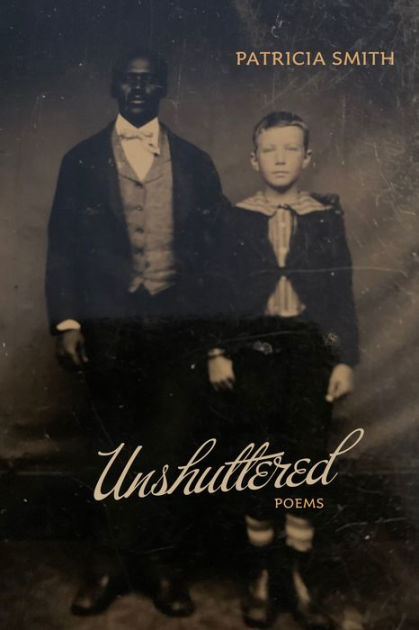
I try to read at least one collection of poems a month, though I catch snippets of poetry daily. I have some perennial favorites, but I have a new favorite poem every time I come across a poem that resonates with me. I recently finished Unshuttered by Patricia Smith. It’s a beautiful ekphrastic collection inspired by old photographs she has collected from thrift stores. The first poem in the collection immediately struck me and has become my current favorite, though the rest of the poems are also wonderful. The poems in Unshuttered are titled by their position in the book, so my current favorite poem is titled 1.
One of the things I enjoyed about 1 is the end rhyme. It’s rare to come across a poem with such perfect end rhyme that doesn’t feel forced. Nothing about Smith’s poem feels obvious. I also think the direct address to Anna and the speaker’s pleading make the poem feel so personal.
I don’t often read rhyming poetry, but it’s funny that both poems that immediately came to mind when thinking about favorites happen to rhyme. One of my first favorite poets was Dorothy Parker, and I’m still delighted by her poetry. She taught me that poetry doesn’t have to be lofty and difficult to interpret. That sharp words can resonate as forcefully as flowery prose (and usually more so!). Parker’s poems Resumé and One Perfect Rose both made me chuckle the first time I read them. Unlike Smith, Parker’s use of rhyme is purposefully obvious. It’s her unexpected images and phrasing that make the poems an unexpected surprise. I think poets often take themselves too seriously, and Parker wasn’t afraid to have fun with her writing.
One Perfect Rose
By Dorothy Parker 1893 – 1967
A single flow’r he sent me, since we met. All tenderly his messenger he chose; Deep-hearted, pure, with scented dew still wet— One perfect rose.
I knew the language of the floweret; “My fragile leaves,” it said, “his heart enclose.” Love long has taken for his amulet One perfect rose.
Why is it no one ever sent me yet One perfect limousine, do you suppose? Ah no, it’s always just my luck to get One perfect rose.
From Enough Rope (Boni & Liveright, 1926) by Dorothy Parker. This poem is in the public domain.
These two poets are drastically different, but I love their work for the response their work evokes in me––which I think we can agree is what we’re all looking for in a good poem.
We are proud to announce that Old Scratch Press will be publishing Gabby’s first chapbook of poems. The working title is No Ocean Spit Me Out. Approximately 30 pages in length, the poems in No Ocean Spit Me Out explore the dynamics and evolution of family relationships. It is scheduled for release in 2024, so keep following our website as well as Gabby for more details.
Old Scratch Press (OSP) was formed as a way to help poets get their poetry out there. It is our hope that someday we will offer many opportunities for poets. Our first mission, though, was to see if we could publish the books of the group members, as a way to see if we could support each other, function well as a cohesive group, etc., before we took on other people and their poetry or short-form dreams.
And so the first OSP book has been released: Break in the Field by Ellis Elliott. Why is Ellis’ book first? She won the coin-toss, or, in our virtual case, the random-#-generator-toss.
However, that luck of the draw does not lesson the beauty of the book. It’s a beautiful book, and the poetry is accessible and so relatable. I have a daughter with a disability, and I found this, really, meditation on mothering and parenting, so moving and important. I also worked for years in group homes and etc. for people with disabilities, and the book really speaks to me because it humanizes people with disabilities, and, too often, their disabilities make them so unable to make good contact with those of us of average capabilities, that we never stop to imagine their needs or feelings or think that they even have desires. Ellis’ book tackles that notion of supplying the concept of being human from the outside in, to a person who can seem like an object more than a person. I struggled, in my years as a staff trainer, to help the staff I trained to come around to that more full view of the people we took care of, but it was a tough sell, sadly, to some of the staff. Ellis’ makes it something we don’t learn, but we feel and know in our bones. I love this book for that.
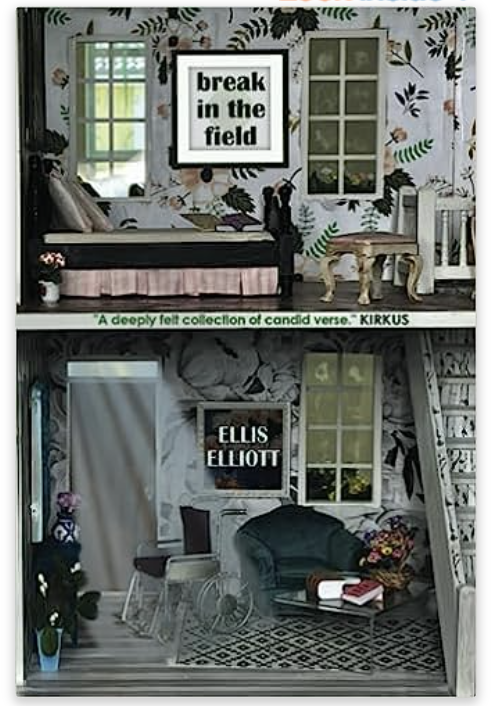
The cover is a photo of one of the dollhouses Ellis rehabs as one of her artistic outlets. On her blog she has a very lovely post explaining how she came to want to have that as her cover, and I think you’d enjoy that too. Ellis is also in process on a cozy mystery series, and I highly suggest you follow her on her very interesting blog, especially if you are an author, or an aspiring author, as she offers lots of writing tips.
I earned my MFA as a poet, something I never expected to get into when I decided to further study writing, and I’ve always really loved poetry (my own included…. lol) and I am so very happy that we can publish poetry. The book was put together by the Devil’s Party Press crew of two, but also proofread and dusted and cleaned by volunteers from the collective. There is no way at all, though, that I, or Dave and I, could have done it without all of the OSP members: Nadja, Ellis, Anthony, David, Ginny, Gabby, Janet, Alan, Morgan, and stalwart meeting leader, Robert, may the poetry gods bless him for always remembering to hit record, among other things. These folks are volunteering their time to show up to Saturday morning meetings, to take minutes (the ultimate sacrifice) at these meetings, to edit each others’ books, and working to promote each others’ books, and that is what every author needs, a team of supporters. Poets are not TikTok influencers, racking up 10,000 likes, but poetry is more important. I think that poetry makes the unexplainable able to be shared; that’s how I would sum it up. I’m not sure which of the members volunteered to do an edit and proofread for Ellis, but all of the members are helping OSP in general, to grow.
Back in 1989 when I was putting a poem and two dollar bills in an envelope with an SASE and sending it off in the mail, I almost never even found out if the poem had reached its destination, but when it did make it, I always received a request back, in my SASE, to please subscribe to the Zine. I never did, because I made about 60/week, and most of that went on bus fare, and, frankly, I didn’t care about other people’s poetry. I cared about mine. But, that was wrong. I mean, I couldn’t help the financial situation back then, and, though that hasn’t much changed now (lol), when I have a friend put out a poetry collection, or a poet I don’t know but admire puts out a new collection, I buy it. I usually buy two, actually, and give one as a gift. Without people doing that, poetry will fade from view, and we’ll lose something that is all magic. Magic is rare. Poetry is one way to hold magic.
The collective is going to curate the holiday/end-of-year issue of Instant Noodles, and choose the theme for next year’s issues, and we are in talks to see what other opportunities we can provide for poetry readers and writers, so follow us, and see what we bring to the world of poetry and short-form writing, and, if we make it. We could end up as a fabulous poetry cooperative, or as the modern, poetic version of the Donner Party, or anything in between. This is still an experiment. So far, I think we can feel quite proud, all of us in the group, of our first book.
And I am really excited for the next book too: White Noir, by Robert Fleming. It’s very different from Break in the Field, and I like the diversity of movement from one book to the next, and that our group has such variety of style. It is very exciting. White Noir should be up for pre-order in the coming months…. hopefully sooner than later, but there hasn’t been an author, from a single story or poem, to a whole book, who hasn’t had to be patient waiting for DPP to get caught up. 🙂 We appreciate the patience, and we hope you’ll follow along on the great experiment of OSP.
Thank you for supporting these wonderful authors, and independent publishing, and authors over 40, and late bloomers, and poetry, art, words as art…. It means so much to me.
Congratulations, Old Scratch Press, on a book successfully and collaboratively done.
Congratulation Ellis, on your wonderful book of poetry.
When Old Scratch Poetry Collective Members were asked to write about a favorite poem, I knew my choice would be my first poem love affair. Before this poem, which I was introduced to in college, I had a healthy love of words, and a newfound interest in poetry, but it was more about my intrigue with the craft of it. I liked learning how things like rhyme and meter, form and pattern, didn’t need to hit you over the head. The tools of poetry were more like puzzle pieces that you both created, took apart, then put together again. But then came Emily.
Ample Make This Bed
by Emily Dickinson
Ample make this bed. Make this bed with awe; In it wait till judgment break Excellent and fair.
Be its mattress straight, Be its pillow round; Let no sunrise’ yellow noise Interrupt this ground.
I can’t explain exactly what alchemical combination occurred to cause me to fall for this particular poem by Emily Dickinson. I know it had to do mostly with the way the lines, “Let no sunrise’ yellow noise/Interrupt this ground” made me feel. I was blown away by two lines. The image of the “noise” of a sunrise, the choice of the word “interrupt”, the idea of this sacred “ground”. All of it. Who knows how or why such a thing speaks to you?
Much like falling in love, the factors that come together to create the feeling are a mystery. I know it was a combination of the known entity of craft mixed with the necessary ingredient of emotion. I had no need to do a critical exorcism of the poem, or analyze each syllable in every word, to know how the poem made me feel.
Dickinson scholar Marta Warner says that “she (Dickinson) is a constant summons to think about language and its preciseness. And not only its preciseness, but its power”. Dickinson was prolific, writing over 1800 poems, and while her image is as a recluse, she was actually quite social in her younger years. She lived in the mid-1800’s, and her poetry was practically unknown during her lifetime. It certainly was not a time of female literary empowerment (has that happened yet?). Dickinson would go on to become a “beacon of verbal power”, and I know her light certainly led me to a lifelong love of poetry.
***
Old Scratch Press is delighted to be publishing Ellis’s first chapbook, a collection of poems entitled A Break in the Field. In her poetic statement about herself on her Bewilderness Writing website, Ellis says,
“I am a perennial student of nature, inner realms, and the wisdom of the body, and write to bear witness and disentangle the world as I perceive it.”
Approximately fifty pages in length, the poems in A Break in the Field grapple with the concept of how human perception can change, depending on the vantage point. You can pre-order the book by clicking on the link in the previous sentence.
ABOUT THE AUTHOR:
Ellis Elliott is a writer, ballet teacher, and facilitator of online writing groups called Bewilderness Writing. She has a blended family of six grown sons and splits her time between Juno Beach, FL., and the mountains of Crozet, VA. She has an MFA from Queens University, is a contributing writer for the Southern Review of Books, and an editor/workshop teacher for The Dewdrop contemplative journal. She has been published in Signal Mountain Review, Ignation Literary Magazine, Literary Mama, OPEN: Journal of Arts and Letter, Plainsongs Poetry Magazine/Award Poem, Sierra Nevada Review, Women of Appalachia Project Anthology, Delmarva Review, The Rail, Spotlong Review, Euphony Journal, and others.
Old Scratch Press (OSP) is pleased to announce that our contributing editor Robert Fleming is one of just six poets who were short-listed for 2023 the Blood Rag Poet of the Year and we couldn’t be prouder.
In Blood Rag Editor Matt Wall’s audio blog, three of Robert’s poems, previously published in the Blood Rag, were featured
And for your reading pleasure, here is one of Robert’s published poems.
Included in Issue #8 of Blood Rag 6-word flash fiction
Madame chopstick walker trips on kabuki.
Melt Marilyn Monroe into a pizza.
The hungry poisoner fed a pear.
Praying the tea will be strong.
I unbrick to Annabel Lee’s silence.
Five bullets left in the barrel.
My vocal cords speak for silence.
Matt Wall says: “I like how weird and strange Robert is; he describes himself as a word-artist; Robert is out there, not what others are doing; unique voice distinct as shit.
In the meantime, you may want to check out Robert’s 12-page poetry chapbook, Con-Way, a tribute to P.T. Barnum, published 7/9/2023 as part of Four Feathers Press: 4 in 1 November, 2023.
You too can support poets and writers by 1) commenting on the work you admire when you read it online 2) purchasing their books and supporting the publications where their work is featured 3) Contacting editors and publishers directly to suggest nominations for various awards 4) Voting, when you are able, if awards ask for reader participation. THANK YOU.
Our series on “Favorite Poems” and why we think about them over and over again, continues with a post by Contributing Editor Virginia Watts.
Perhaps the World Ends Here
by Joy Harjo
The world begins at a kitchen table. No matter what, we must eat to live.
The gifts of earth are brought and prepared, set on the table. So it has been since creation, and it will go on.
We chase chickens or dogs away from it. Babies teethe at the corners. They scrape their knees under it.
It is here that children are given instructions on what it means to be human. We make men at it, we make women.
At this table we gossip, recall enemies and the ghosts of lovers.
Our dreams drink coffee with us as they put their arms around our children. They laugh with us at our poor falling-down selves and as we put ourselves back together once again at the table.
This table has been a house in the rain, an umbrella in the sun.
Wars have begun and ended at this table. It is a place to hide in the shadow of terror. A place to celebrate the terrible victory.
We have given birth on this table, and have prepared our parents for burial here.
At this table we sing with joy, with sorrow. We pray of suffering and remorse. We give thanks.
Perhaps the world will end at the kitchen table, while we are laughing and crying, eating of the last sweet bite.
I love this poem because as much as the kitchen table is metaphor, it is not. I remember both of my grandmother’s kitchen tables, one had a well-worn aquamarine Formica top and the other was round and oak.
I remember the things I ate there, tea sandwiches, lemon sponge pie, fresh caught rainbow trout from the mountain creek tumbling by. I remember the smell of coffee. I remember listening to the adults, learning about life.
The table in Harjo’s poem can be seen as a metaphor for a human lifetime. Within it, childhood, adulthood, love, births, old age, war, joy, sorrow, death. Throughout what it means to live a human life we can always return to the feeling a being surrounded by those who nurture us, believe in us, where we were shaped and where we dreamed. We are never alone at this table and if you think about it, our kitchen table is with us always.
Do you have a favorite poem you’d like to share? We’d be happy to publish your comments here. Part of the mission of Old Scratch Press is to promote the love of poetry.
Poetry Practice:
Twice a week, says Virginia Watts, I listen to the podcast Poetry Unbound where Irish poet Padraig O Tuama unpacks one poem in his uniquely contemplative, conversational, kind and down to earth way. Each podcast is less than fifteen minutes. Like his recent book “50 Poems to Open Your World” his podcast opens hearts and minds to poems and poets from around the world. It feels like an invaluable gift each and every time I listen.
Don’t forget to follow us on Facebook and Twitter.
Congratulations to OLD SCRATCH PRESS founding member Robert Fleming, whose poem “we were before waring,” featured in impspired was a Delaware Press Award winner.
WAY TO GO ROBERT!
we were before waring
we were before waring
we wore hair keratin like baboons & knocked our chests like gorillas
we wore skin like zebras & bent-over to water like wilder-beasts
we wore muscle like lions & paw swatted flies like bears
we wore bones like swine & dug dirt worms like robins
we wore blood like falcons & taloned on branches like pigeons
we wore fig leaves like chameleons & hide motionless like a rat out-preying an ambush snake
Philip Levine, courtesy of the National Poetry Foundation
When Nadja Maril, who manages the posts of OSP, asked us each to write about our favorite poem, this was the one that came to my mind, immediately, as it so often does whenever I want to teach anyone about poetry, or whenever I think of a poem that I love.
What’s Your Favorite Poem?
Philip Levine is a very famous and celebrated poet, and he was also Jewish, which is why it matters, in this poem that the speaker’s brother is using his talent as an opera singer to sing operas by Wagner, who was loved by Hitler.
And so Levine uses this poem to tease out the thorniness of family connections.
And though I have spent the majority of my adult life college-educated and in jobs that would be called white collar, they have almost universally been shitty jobs, which means the pay was low, the hours long, the expectations high: over-supervised, under-appreciated, crap work. And my non-degree-requiring jobs were pretty shitty too: the restaurant owner was a drunk when I was a waitress, the lamp store owner liked to see me crawling on the floor, picking staples out of the thickly-woven carpet to save the upright vacuum cleaner, and the mall store manager wouldn’t let us leave until every item on his list was checked, even though it meant I missed the last trolly, and had to walk the tracks home alone and late at night. Crap jobs abound in my history.
The men who people Levine’s poem also do crap jobs. The brother, at least, is trying to wring some joy from his life, but he does it through singing Wagner, which confounds and hurts his brother.
What I like about this is how it is a pretty good example of the “what” of poetry. What is poetry trying to do?
Levine could simply write it out: I love my brother but his choice of loves, recreation, music, confounds me and upsets me.
We’d all say, “I hear you man,” and we’d all go on with our lives, having heard him, but not “felt” him, or understood.
Better to put us in the rain, shifting foot to foot, to understand that the brother loves singing opera so much that he will slog through the shitty job for it, the humiliation of being told there is no work, the dependence, the lack of agency, all to be able to sing.
The speaker is standing in the rain, getting flooded, and feeling hopeless, and then he is flooded by the love he feels for his brother, a love which he feels from, perhaps, at last understanding how much singing means to his bother, and how much his brother, and the happiness of his brother, means to him: enough that he will do what it takes to love a brother who loves:
Wagner, the opera you hate most,
the worst music ever invented.
And how long has it been since he held his brother and told him he loved him? And how infinite do we all think life is?
My brother died suddenly and unexpectedly during lockdown, and I was not able to see him for all of the eight or so hours I knew he was dying, and I don’t know that I’ll ever get over it. Our time together is not infinite; my love for my brother was, but he tried that bond many times and in many ways, and don’t we all do that to our siblings?
Levine writes in free verse, and uses enjambment frequently, and so do I. I like the closeness and intimacy of free verse, and I like the way enjambment will not let you walk away: it pulls you to the next line. I like how simple Levine is too: this is a poem almost everyone can understand and be moved by. That is Democracy in action right there. That is inclusiveness. We can all get in on this poem. We can all find a little hand-hold.
And mostly I like how this poem, long before my brother was even ill, always flooded me with love for him, and my sister, every time I read it, and made me consider the ways in which we are like cacti for hugging with our family, when we may be like cashmere with everyone else. And if you don’t know this, and you haven’t done the work to hug the cacti anyway,
Old Scratch Press will feature original chapbooks and short-form prose
For Immediate Release
June 15, 2023 – Los Angeles: Devil’s Party Press of Los Angeles announced the launch of a new publishing imprint, Old Scratch Press. This new imprint, based in southern Delaware, will produce quality chapbooks that feature poetry and short-form prose by leading authors.
Supporting this endeavor will be ten contributing editors, members of the Old Scratch Press Short-Form Prose and Poetry Collective: poets and writers Alan Bern, Anthony Doyle, Ellis Elliott, Robert Fleming. R. David Fulcher, Gabby Gilliam, Morgan Golladay, Nadja Maril, Dianne Pearce, Janet Holmes Uchendu, and Virginia Watts who will work together to help promote the love of poems and short form prose.
Old Scratch Press’ inaugural publication is Break in the Field, a collection of verse by award-winning poet, Ellis Elliott. Ms. Elliott is a contributing writer for the Southern Review of Books, an editor/workshop teacher for The Dewdrop, and facilitator of the Bewilderness Writing Workshops. Her publishing credits include Signal Mountain Review, Ignation Literary Magazine, and Literary Mama.
Break in the Field addresses how human perception can change, depending on the vantage point. “I am a perennial student of nature, inner realms, and the wisdom of the body,” says Elliott, “and I write to bear witness and disentangle the world as I perceive it.” Break in the Field will be available in mid-July 2023.
November 2023 will see the publication of White Noir, a chapbook by Robert Fleming. White Noir is a black and white visual poetry exploration of human birth to death and beyond on Earth. A prize-winning poet who explores masculinity, sexual orientation, sin and virtue, and dystopia in words and graphics, Fleming is a self-described word-artist whose work has been published internationally in more than 95 print and online publications, and has appeared in art galleries and in online mic features. “The vibe is dark, Goethe, and dystopian, but I lighten it up by including humor, and it offers a hopeful ending,” notes Fleming of his upcoming collection.
Beginning in 2024, Old Scratch Press will produce three or more original titles per year, available in both print and Ebook formats. For more information visit oldscratchpress.com and devilspartypress.com.
About Devil’s Party Press Devil’s Party Press, LLC, an independent publishing house located in Los Angeles, was founded in 2017 by Dianne Pearce, an award-winning author, editor, and publisher. The mission of Devil’s Party is to help showcase the work of unsung authors over 40 years of age. Devil’s Party publishes literary fiction while its four imprints are genre specific: Gravelight Press (horror), Hawkshaw Press (crime/cozy), Out-of-This-World Press (sci-fi), and Old Scratch Press (poetry). To date, Devil’s Party and its imprints have published over 200 authors internationally. In addition to print publications, Devil’s Party produces the award-winning online literary magazine, Instant Noodles












 OLD SCRATCH PRESS