It’s Awkward

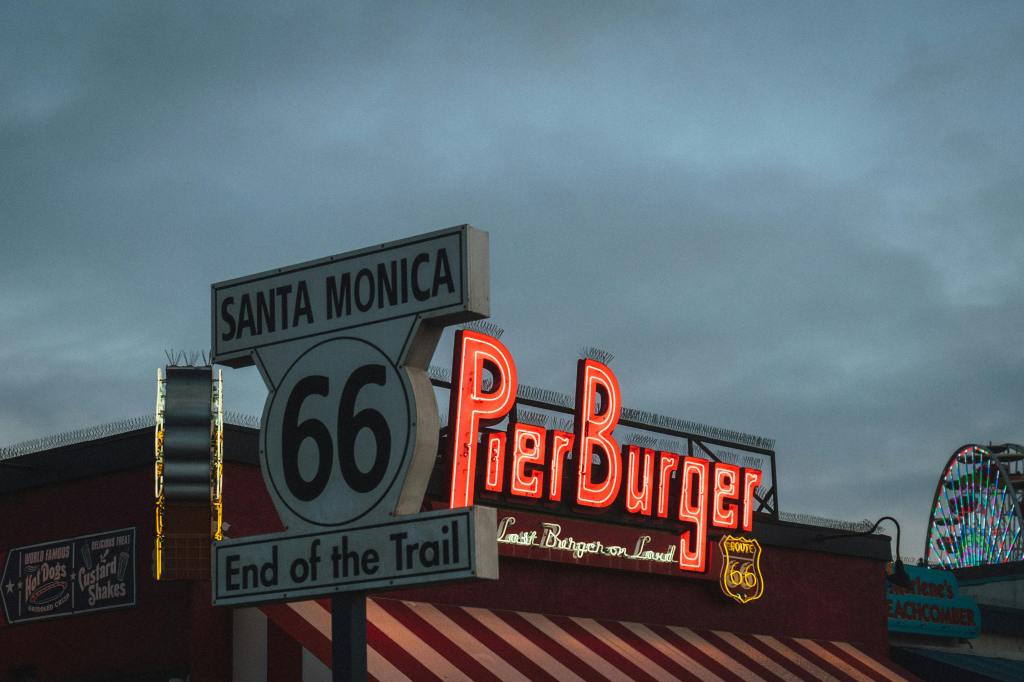
That’s a photo of my local Trader Joe’s, where I was yesterday buying dog treats and ice cream and flowers and frozen gnocchi. I like Trader Joes. I like it because it is small, and what I mean by small is there are limited choices. I can easily super-overload a cart because I am curious… Ooo, what’s that fruit? I should buy six of those! I like Trader Joe’s because it saves me from that. BUT, I hate checking out there. I HATE IT. Why? It challenges all the introvert things about me. Their checkers are trained? told? naturally? forced to be? chatty!

I am horrible at small talk. I am awkward, and dorky. And I am exhausted afterwards (mentally). I am more a fan of self-checkout, but I do feel like I’m taking someone’s job every time I use one. I long for the A&P days, where the checker was (usually) a woman, and she was too tired on her feet to talk, though she’d smile, and be efficient.

Yesterday the TJ’s was fairly empty, so there was no need for a bagger at my check-out, and I always will bag, but the extra person helps diffuse the awkwardness, because then there’s two people to make annoying small talk with. Usually I end up pulling out my phone to show them a photo of my dog, and they pretend to care. My dog is extra cute though, but I still know we’re all pretending.

Oliver… The Trader Joe’s display photo.

Yesterday the guy checking me out was trying to talk to me, and I was rapidly bagging (I bring huge bags, and try to organize by FREEZER, FRIDGE, PANTRY, but I’ll get desperate to keep up and be done talking, and just start chucking stuff in.). He was trying to talk, but his heart wasn’t in it, and neither was mine because, that checker, he kinda looked like this:
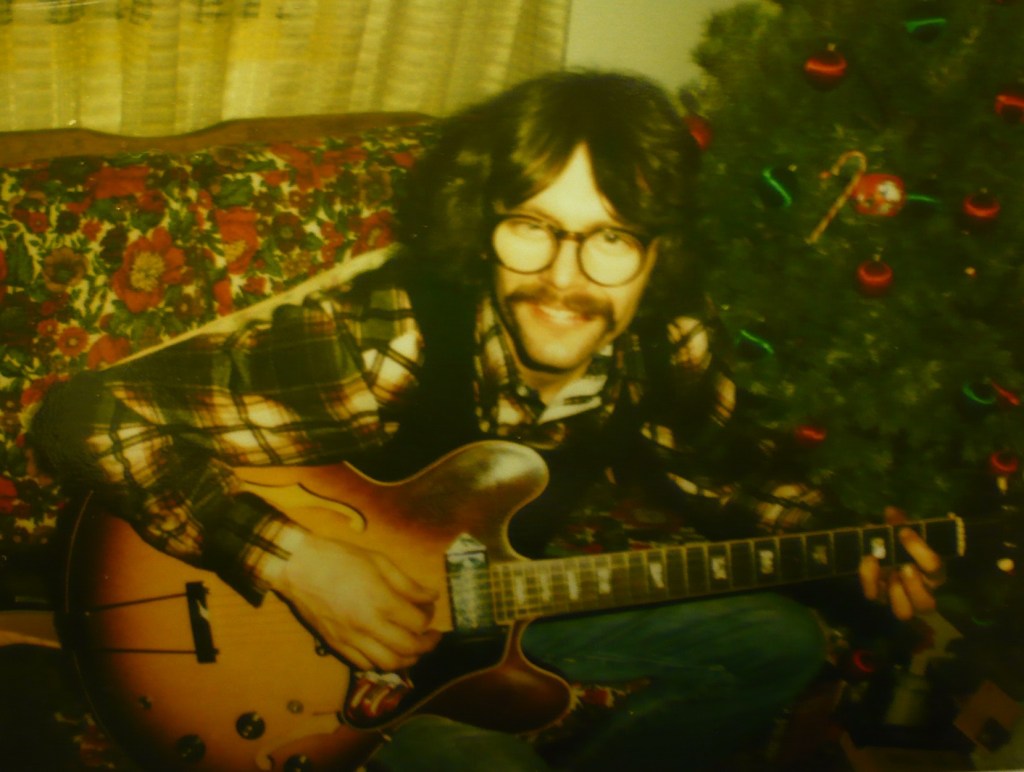
He looked quite a bit like that photo, which is a photo of my brother circa 1978 or so.

That TJs checker looked so much like my brother. A little taller, but otherwise spot on, and I have been checked out by him before, but yesterday it was the light or something, or the quiet between us. I know people not in California think TJs are tripping hazards here, and they’re not. They’re usually a good 20-40 minutes apart, so I kinda wish this guy would get another job. You know what I’m saying? Because there isn’t another TJs close by, and because that checker looks like my brother circa 1978.

My brother died in 2020, in June or July I don’t really want to remember the date. I found out he was dying hours before he did. He was up in a hospital in PA while I was two hours south in DE. Covid was raging, so they were not going to let us come see him. He didn’t have Covid, He had gangrene, probably from a bladder infection he had never fully recovered from, and he didn’t like doctors because they made him feel mortal and dumb, and he hadn’t gone to one for about five months while everything in his body was probably going bananas, and when Covid hit he was really afraid of dying from it, and probably feeling pretty sick most days anyway. My sister-in-law didn’t force him to do anything about it, probably because he was grumpy, and she is an avoider, and they both were potheads and pill heads and whatever when they could get it. They both had a tendency to approach family gatherings with something in their systems to take the edge off of my mother, and, I sometimes think, maybe that is the best way to approach her. Maybe I missed something great about coping there. Which makes me laugh to think of, and would have made my brother laugh his butt off.

My brother was very funny. He raised me to love George Carlin and The Three Stooges. One of the times he most liked in our history together was when he was visiting us in Los Angeles, and I got us all singing narcissistic songs. You take any song that is about romance/lust, etc. and you turn it into a song about yourself. So, Gladys Knight’s classic, “Best Thing That Ever Happened to Me” becomes [I’M the] “Best Thing That Every Happened to Me.” Divinyls’ “I Touch Myself” becomes [When I think about ME] “I Touch Myself.” Get it? We laughed our butts off, and he always talked about it, and we often tried to recreate it, but sometimes with humor the success is situational (you had to be there), and that perfect night was like that. And maybe he was a little high too, and I didn’t know it.

You can’t recreate those perfect moments in life, and trying often leaves you cold. My brother was a great practitioner of trying to recreate the things he loved, trying to hold onto vapor.

Here is his band in the early ’70s:
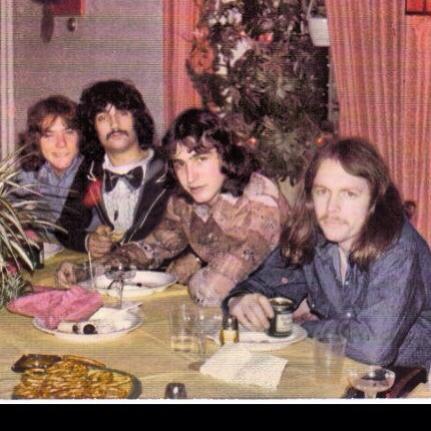
Bill is in the front right.

So cute. And here they are in the late 2010s:
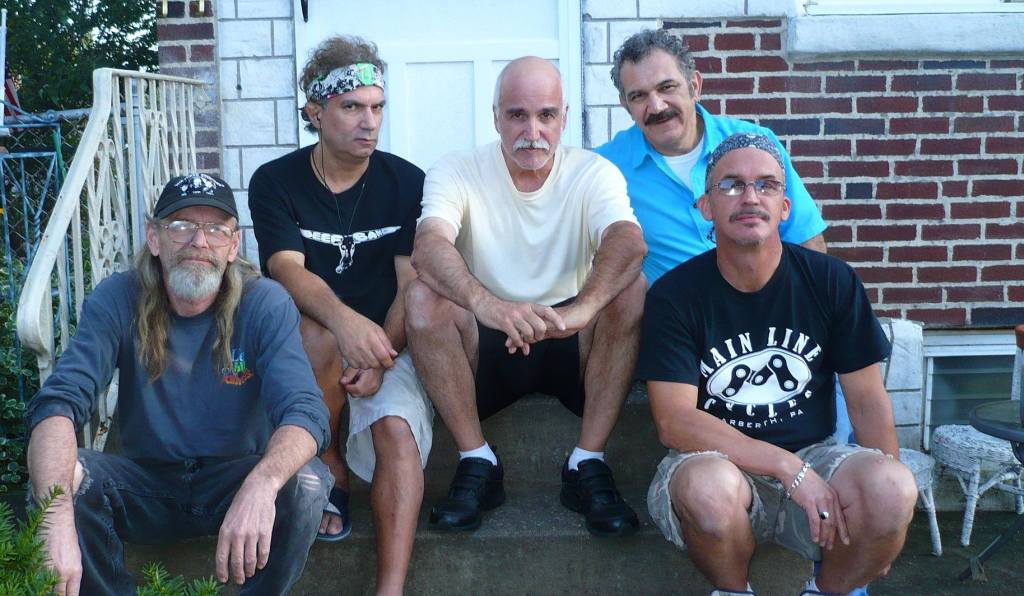
Bill is in the front left.

Bill is gone, but the ones who are still here are still playing together at the bars local to Ridley Park, Pennsylvania. Most of those guys, living and dead, never got their shit quite all the way together. They could always play, and play well, but they were still partying like the Rolling Stones circa 1968. And maybe still being able to get out there and rock the house is a sort of having it together that’s just a bit different from how I would define it.

I miss my brother, and it’s awkward to have a checker at TJs remind me of him so completely that it renders me unable to make small talk or even flash the photo of my dog. My brother had a lope-y way of walking not unlike Shaggy in Scooby Doo, and this guy moves like that. It’s awkward because grief is awkward and comes casually loping up behind you at the most unexpected times. Someone told me grief is a metal ball in the glass jar of your life, and as you move away from the time of your loss the jar gets bigger, but the ball is permanently there, and rolls around, bumping up against everything, sometimes quietly, sometimes banging the glass hard enough that you think it will crack. Poetry is a very helpful receptacle for grief. I think poetry works well because it is often short, and emotional, and vague, not pinning grief down to a specific grief style or emotion or reason. Poetry might move the ball away from the glass, or give you a little breathing room when your lungs have constricted so much you feel like your ribs have laced up extra tight around them. My favorite brother poem has long been this one, and was so even before my brother winked so quickly out of existence.

But today I found another one. It loosens up the tight ribs too, if by loosening them you mean jabbing an ice pick in there. But ice pick or not, it does what it’s supposed to do, connects you directly to the pain, so you can feel it, instead of dodging it all the time. Then you can move on with your life, even as the brother you miss cannot move on with his, which feels supremely unfair to me, and I really value being fair, so there’s that. But for that day, that moment, at least, you can get back to what you were doing that you are doing because your life is still going. This poem is by William E. Stafford, and is called “Brother.”
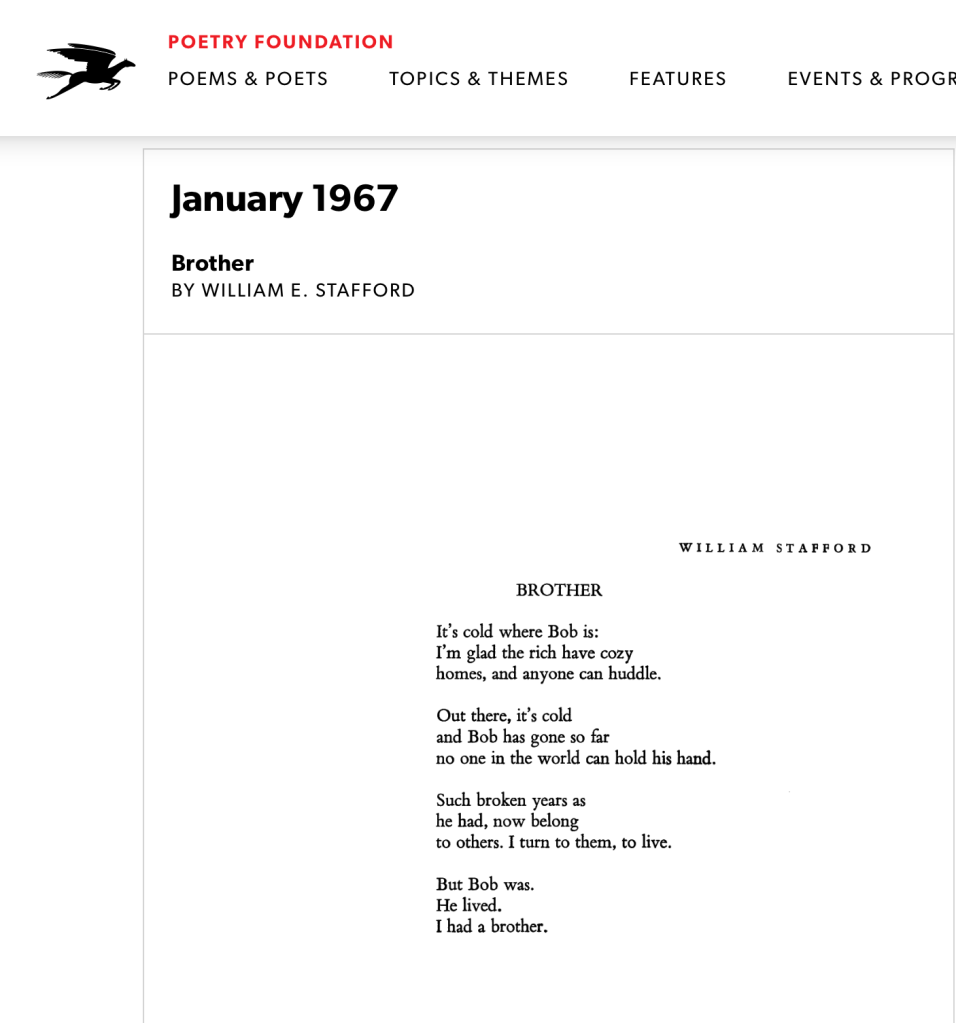
We’re so lucky The Poetry Foundation exists, and has this database of poems just waiting to tend to our needs.

If someone gave you some paper, scissors, glue, rocks, crayons, clay, wire, papier-mâché, bowling balls, aluminum foil, fabric scraps, paint, sea glass, what would you create? What would your sculpture of grief look like? What medium would you use? What shape would you make? If you were only allowed eight words, one for each day in a week and one extra just in case, what words would you write? How would you arrange them? Would they be poetry, lyrics, a string of obscenities lobbed at the world, or a short burst of prose? Would they be quiet, loud, or snap, crackle, and pop? And would you want them to tighten up your ribs, or let them loose? Could you share it with the world or would it be too awkward for prime time?

Some of us come to that hard, clinking, lurking ball-bearing version of grief mercifully later in life than others. The less time you have to carry it the better: it means you had a longer shot at joy. But it finds us all eventually. I think that when we’re younger we grieve for ourselves: all the things we haven’t put into place yet that we long for, all the things we want to be that we just haven’t attained. As we get older, from any point in space because we all live at our own pace, we grieve more for others, and our missed opportunities to be with them. But Bill was. He lived. I had a brother.
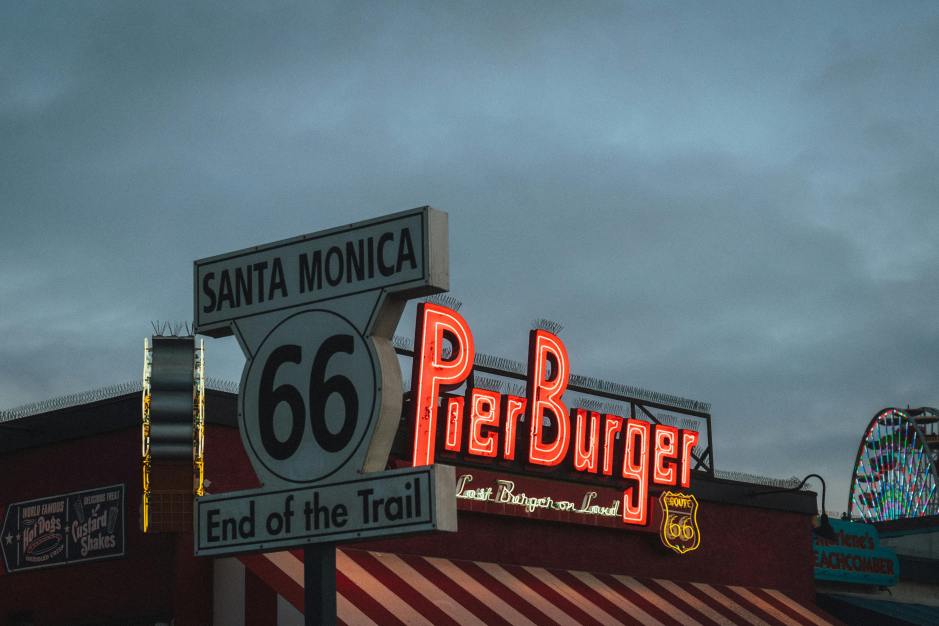
Sometimes Being a Witness Is All You Can Do

Picture courtesy Eric Cruz Lopez

I live in Los Angeles, and it’s been a little bit unnerving to see what is on the news about us. 

When I first moved to Los Angeles I lived in Venice Beach, on the Westside, by the Pacific Ocean. Venice Beach is beautiful, and weird, and has been heavily gentrified even since I lived there, and is now almost evenly split between people living in three million dollar homes, and people living in tents. It’s a problem on both ends of that financial situation. Of course, can you imagine being homeless? You would pitch a tent in a minute if you could, and you would definitely want to be in a temperate climate where people were laid-back, and where there were a lot of other people just like you around, to make you feel less obvious, and safer. I watched a video just yesterday about people who have chosen to live in vehicles (cars, campers) not in Venice Beach, but in the USA, and how they (being very digital) will meet up and hang out in different free camping areas to have a community. And why would people without homes be any different?

Los Angeles has a homeless, or unhoused, people problem. 

Los Angeles, and all of Southern California, has a lot of immigrants. Many of them are legal immigrants, some are illegal. Some are only here for work. Many want to get enough money through work here to send home to family in order to eventually rejoin family. I have met many people with that plan from Asian countries and countries south of the USA. Those folks are not wanting to live here forever. They’re trying to make enough money that everyone can live well, back home. But there is no mechanism for that of any workable consequence here in the USA. The visas for work are not for waiters and day laborers. The visas for work are for IT people and doctors, that sort of person. In Los Angeles we know that the Uber driver, the waiter, the grass cutter, is probably not here legally, and not intending to stay. We get it, and I think, for the most part, we’re happy to have the low-cost help.

Then there are other people who want to stay: people who came here fleeing violence, people who came here as babies and have only known here, people who came here as students and experienced so much prosperity and freedom compared to life back home that they don’t want to go back. As Americans we cannot really understand how different life can be, especially for the very poor, and women in general, in other countries, even countries like China or India that we might see as very western. When we were in China (my husband Dave and I) to adopt our daughter in 2009 we met our daughter at our hotel, a huge, lovely hotel, about twenty floors or so, and absolutely where the wealthy and foreigners stayed. As soon as my daughter was placed in my arms I lost the ability to sleep, and so I spent the long nights in the hotel hanging out in the bathroom, so I didn’t wake up Dave and daughter, and it had a floor to ceiling glass window next to the shower, and I could see right down the main street of Nanchang. Next to us was another tall building, and each balcony had laundry and sausages hanging off of it. And if we were on flour fourteen of the hotel, it was probably floor eleven of the apartment building that was completely blown out. I don’t know what had happened there, but it was rubble like you might see in a Tom Cruise movie. And above it, and below it, the balconies had laundry and sausages hanging. Rain or dry, explosion, crumbled concrete or not, the balconies had laundry and sausages hanging. And on the streets, during the day, scores of people stood over lit barrels boiling eggs to sell, any kind of egg you could possibly want: quail, chicken, duck, and probably more I am too American to think of. The eggs came in all shapes and sizes, and the egg vendors huddled over the steamy pots trying to stay warm. 

When we went into Nanchang from the airport we started first driving (in the passenger van with the other parents) through marsh, wetlands, dark and stinky, Then the marsh started having bits of high and dry land, and as soon as those appeared, there were tents and carboard shacks on them: people were living there. And as we progressed on (it was a long drive from the airport) there were more shacks. As the land got more livable the shacks got a little bigger, and then there were small villages with tiny crumbling houses, and then towns, and finally cities, and Nanchang was a huge city with underpasses and overpasses and pedestrian tunnels due to there being too much traffic on the eight-lane streets for people to cross safely. And in Nanchang the people lived stacked up twenty stories high in little efficiency apartments where their clothes and their dinner hung outside in the high breeze all year long, hot, cold, wet, dry, frozen or not. In Nanchang the city was so full and so busy that even at three in the morning there was a constant cacophony of car horns blaring below me, way below, fourteen stories below, in the street. The noise was significant, even up as high as I was. It was bumper to bumper car lights all night long. The bathtub in my bathroom was deep, and the hot water was endless, and I could soak and secretly watch the entire world below, all night long as I worried I was going to suck as a parent.

The day after we got our daughter we took the van across the street. The street was so large and so busy we had to take the van to safely get across, and we went to the “adopt your child here” building, which was easily fifteen stories high itself. I remember my ears popping as we rode the elevator up. When we got to the “this is where you give the boxed ginseng from Pennsylvania and sign the forms” floor we got off. It was freezing cold on that floor, and there were no electric lights turned on, so it was fairly dim, on a rainy forty degrees day, as we dipped our thumbs in red ink and signed our papers severing our child from one nation and attaching her to another. Each clerk we dealt with was wearing a winter coat and gloves with the fingertips cut out, over their business suits. I felt, in all honesty, both so lucky, and also that I had saved my tiny daughter from a hard life.

Dave and I ate Chinese food (of course we did) eagerly and with relish the whole time we were there, but there was one afternoon where I had been dragging Dave and our baby daughter exploring around, that we were just tired, and we went to a McDonalds in an eight-story shopping mall. I remember it was elevators only, and people were always waiting, and they would literally leap over you to get in. I think we waited at least three times to get on. When we got off and made our way to the McDonalds the line was about two blocks from the restaurant door. It moved quickly, and as we went inside I saw that they had the tables McDonalds had had when I was a kid, like cafeteria tables with immovable swivel chairs attached. Each chair had three people sitting on it. Let that sink in. One small hard plastic swivel chair, and three butts. Yes, butts in China are very much smaller than in the USA, and that tells you something right there that has nothing to do with genetics.

I remember when all of us (all across the world) who had submitted our paperwork in March of 2005 were talking in a Yahoo group about everything China-adoption related. It was common for people from the same month to design a t-shirt to wear in China so that they could spot each other (as if white people with Asian babies wasn’t enough of a clue). And I remember a whole passel of American members got up in arms because our group wanted a rainbow on the shirt, and those up in arms didn’t because they did not want to be associated with anything “gay.” And I remember thinking, in that moment, as if a lightning bolt had hit me, You may have been able to check a box for a gender preference, but even that wasn’t a guarantee, and what if your child turns out gay? Are you not open to whoever your child turns out to be? It wasn’t the first or last time the adoption process has taught me lessons about how little control I have in life. But what really hit me then was how it made me view those parents-to-be both as dumb, and unkind. 

If you have not experienced life in a place with real poverty, you cannot imagine what people would do to get their families out of it.  Could you sit all day in the cold, trying to sell your steaming eggs alongside hundreds of other people steaming eggs, baby tied to your back, little dog on a newspaper on the ground, everyone trying to stay warm and have enough to eat?

Los Angeles is okay, folks. It’s fine today, and it was fine last week, even with the homeless and all the immigrants of varying status. It’s actually a place where, rich or impoverished, people are generally in a good mood and kind and a heck of a lot more pleasant than my Philly neighbors used to be. (No disrespect Philly; you’re a great town, and you have your reasons.) We’re not bothered by immigrants at all. We are bothered, in many different ways, by some homes costing three million and some homes being cardboard shacks like in the marsh in China. But the current administration is not helping us with either of those problems. And it is potentially creating a lot more that we don’t need or deserve simply because most of us in this county voted for the Black woman. 

But in this moment, what difference can I make? What can I do to help? 

It is another hard lesson to learn that sometimes the only thing to do is to witness, to see, and to report back, honestly, on what you saw. There are many things that feel out of control right now, and many that you, also, probably want to stop, even if your list isn’t the same as mine. Take a picture, with your phone, camera, or mind, and share it. Write it down, make a picture with your words. Share it, and accept other people’s experiences too. You’re not playing fair if yours are the only right ones. 

The reason I wrote this post is not because of what is happening in Los Angeles, actually. It is because my fellow member and friend Nadja shared The Gaza Poets Society Substack with me. When Hamas kidnapped those people from Israel it hit me in the heart. I’m of an age that indicates that I, and my fellow kids of the 70s and 80s, were raised on The Diary of Anne Frank as a big thing in school, and I went on, as a child, to order many other Holocaust-related books from the Scholastic catalogue. I read so many that I sometimes couldn’t sleep as I tried to plan how I would help my family escape from the Nazis (and I’m not Jewish by nationality or religion). And the first book I edited professionally was a Holocaust memoir. I just felt that Jewish people needed a place to be safe from the rest of us, and the kidnappings in 2023 underlined that. 

But in college I read an interview with Yassar Arafat that changed how I thought about Palestinians. Though I still felt that Jewish people needed a place to be safe, I began to see that Palestinians also needed a place. Since the kidnappings happened in 2023, it’s been hard to watch the fallout. But, like the administration sending Marines we don’t need to Los Angeles to try and break it, there doesn’t seem to be much I can do about what the kidnappings unleashed.

Still it is important to know, to witness, to not turn your eyes away from something because it’s intractable, no matter what you think or feel is truth. And so I wanted to find a way, in this post, to share that Substack with you. The poetry is both well-written and moving. And as all writers share the feeling of “writing into the void,” I think the one thing we could give them is eyes on the page. It doesn’t mean we turn our back on one group for another. It does mean we take a look at all that is going on in the world of poetry. People in the USA often say, in the years since 2016, that not everything is political. But that is not true by a long shot. There is a reason some people in China shiver in a cardboard house in a marsh and some shiver next to a pot of boiling eggs in an actual metropolis. There is a reason why some people died of Covid and others did not. And in the USA, where most of us in this group are, the people in the nation do not (as a sweeping generalization, of course: so many shades of grey) easily understand how dangerous and revolutionary poetry often is in the rest of the world. Revolutionary precisely because it is a way of witnessing. 

It seems not at all odd, to me, to hear that bombs are falling in Gaza, to see it on the news. Sadly it doesn’t shock me at all. But it does shock me to hear that there has been a mass shooting in Austria, and it does shock me to see that Marines are in downtown Los Angeles. It’s a matter of degree, of what narratives and images we are accustomed to versus those we are not. 

As for what you see on the news, that’s not what I’m experiencing here, though I can hear helicopters for twenty-four hours now. It would take me about an hour, in good traffic, to get to where the news is taking its pictures, and it’s important to understand there is no one photo that can give you a true picture of all of Los Angeles. Can you imagine that it might be the same in other parts of the country and the world too?

Keep your spirits up, however you can. My recipe is potato chips, coffee, crosswords, and walking the dog. Check out the poetry on The Gaza Poets Society Substack. And don’t stop witnessing.

Writer’s Toolkit: 5 Techniques for Handling Emotional Intensity in Writing

By Ellis Elliot

As writers, we often draw from our own lives for inspiration, tapping into our memories and emotions. However, delving into difficult experiences or memories can be challenging. It’s important to use techniques, or “lifelines”, to navigate this process. For example, author Gillian Flynn separates herself from the intense emotions of her writing by enjoying her favorite Broadway show tunes for a few minutes after she finishes writing. Poet Ada Limón ensures she has a way out of the emotional intensity by reminding herself that writing is the outlet for her feelings.

“Memory takes a lot of poetic license. It omits some details; others are exaggerated, according to the emotional value of the articles it touches, for memory is seated predominantly in the heart. The interior is therefore rather dim and poetic.”

                                 -Tennessee Williams

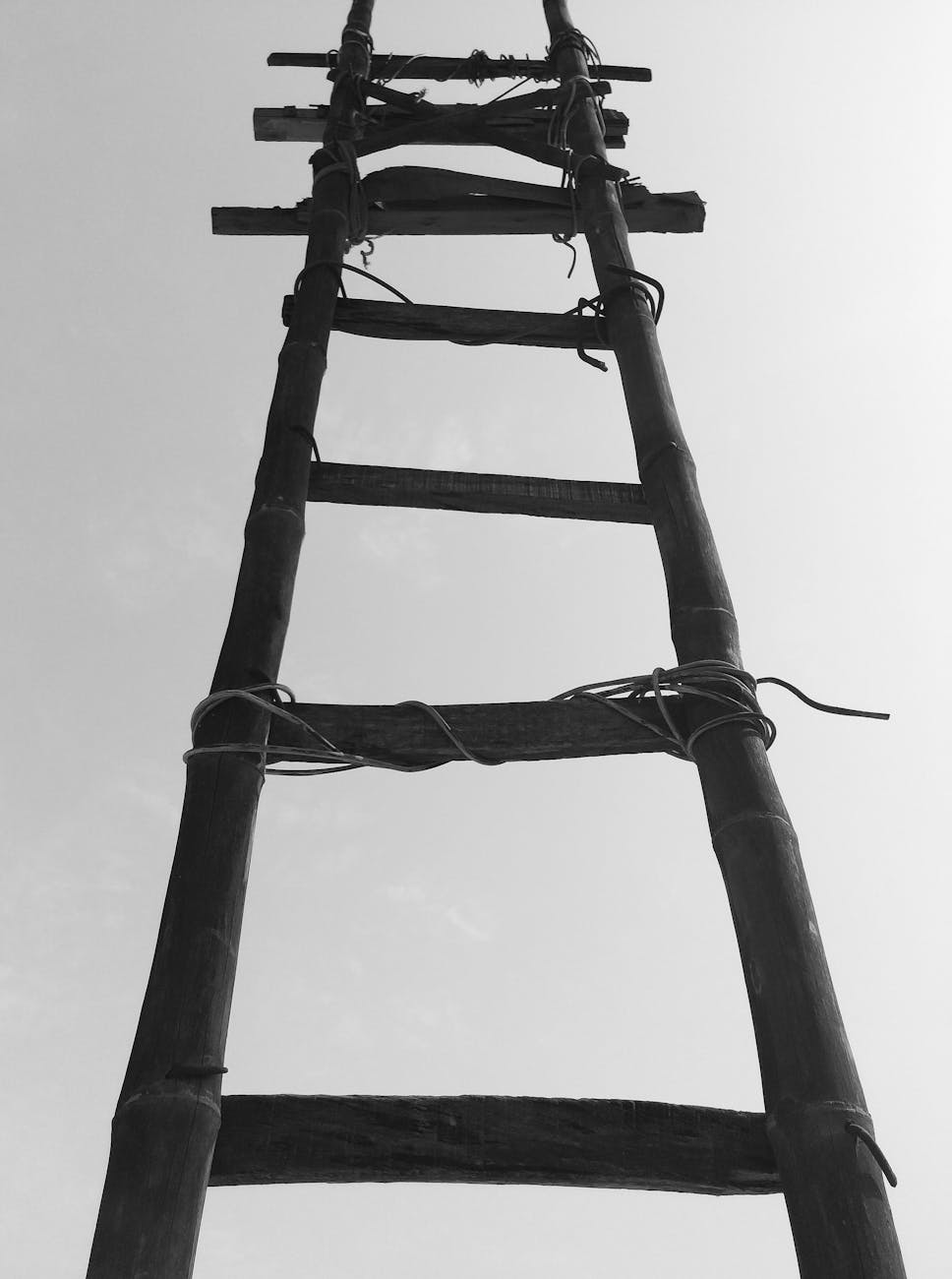
What does the “ladder out” look like? For me, the five techniques below are the rungs I use and find most helpful when the “going gets hard”:

Photo by Khimish Sharma on Pexels.com
  1. Method to Shift from Interior to Exterior- when I feel myself spiraling, I will tell myself to notice: 5 things I can see, 4 things you can hear, 3 things you can touch, 2 things you can smell, and 1 thing you can taste, OR NOTICE 3 things in the shape of a square, 3 things in the shape of a circle, and 3 things in the shape of a rectangle.(I thank my therapist for that one!)
  • Breath Work-Breath connects directly to the nervous system, hence, when our breath quickens with excitement/fear we can consciously slow it down to bring calm. There are a lot of different kinds of breath-work, but the method I use (because I can remember it) when on the high-dive is called “box breathing”. You simply inhale 4 counts, hold 4, exhale 4, hold 4. More info here: https://www.calm.com/blog/breathing-exercises-for-anxiety
  • Form Constraints-Choose a form, any form. Maybe it’s a sonnet, or as simple as making a list. Maybe it’s a haiku, or in the form of dialogue. Having a form helps switch the brain away from emotionally charged subject matter, and over to the more linear, logical side. Like swim-lane ropes, it helps give our work specific direction when it feels like we’re dog-paddling to nowhere.
  • Movement and/or Music-Take a walk. Sit in your chair, reach your arms out and upward as you breathe in, bring them down as you exhale. Roll your shoulders. Try some chair yoga. Turn on the music. Take a dance break. The mind/body connection is a strong and proven one. Get out of your head and into your body. Discharge that pent-up emotional energy with movement. Your writing, and your body, will thank you.
  • Decline the Invitation-“Going there” in your writing is up to you. Trust the wisdom of your body. If something comes up you don’t want to address, you can absolutely say, “no, thank you”, and shut the door behind it.

Maybe think of the above as the hard-hat and knee-pads for certain aspects of the hard work of writing. Find comfort in knowing that many are sharing the journey with you. If you’re lucky enough to have writer friends, talk about it. Many of us circle and circle around our truths, but never get there. Suit up and see where it can take your writing.

Thank you for reading. For more about the author Ellis Elliot visit. And check out her book.

Break in the Field