Autumn has always held a special magic for me, a season in which the poet John Keats aptly described as “a season of mists and mellow fruitfulness.”
Indeed, if there is an hour for magic, it strikes in the crisp dawn of an early Fall day. And further, if magic has a language, surely its language is poetry.
So I find this an appropriate time to post some of my own verse (hopefully imbued with magic itself) for your reading pleasure.
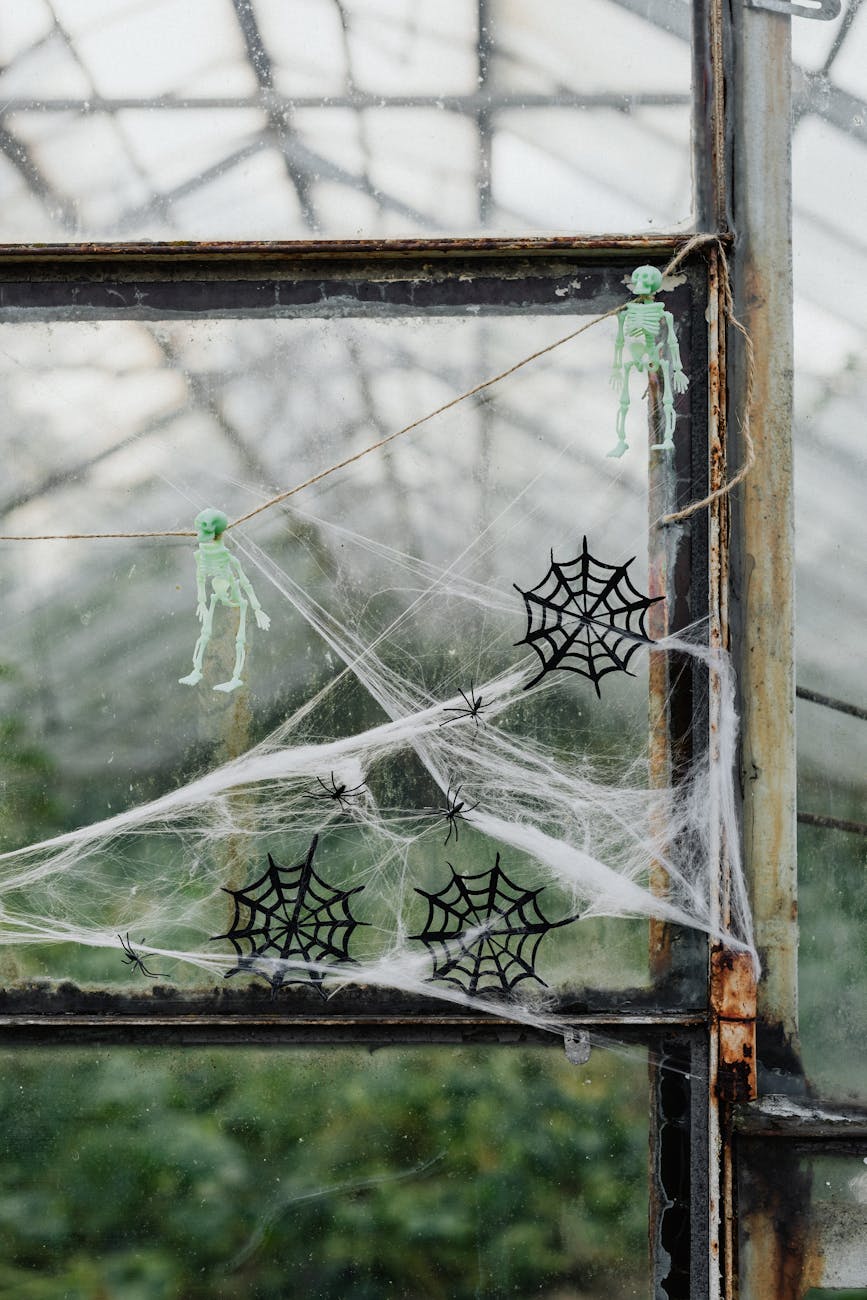
The first poem is “Ode to the Night”, and it hints at the darker aspects of this time of year, a time when pumpkins cast you crooked smiles and ghosts and goblins are generally free to roam:
Ode to the Night
To the Night, the Night, the dark delight,
The children sleep soundly in gentle white,
Breathing in time with the Raven’s flight.
To the Night, the Night, the waxen moon,
Audience of one to the witches’ croon,
Driving the tides for the sailors’ doom.
To the Night, the Night, its starlit fires,
Which guide the ghosts from funeral pyres,
Which soften the Harpy to play the lyre.
I hope you enjoyed “Ode to the Night”, and at a minimum it puts you into the Halloween spirit!
My second poem is “Melinda”, a story of lost love, and although not directly a tribute to the season was nonetheless designed to evoke a haunted mood:
Melinda
Sometimes in the lonely hours
I would walk the hill
Leaving the clamor and din behind
For headstones gray and still,
As I neared the place where the dead did lie
I knelt and bowed my head
A fool is he who visits the graves
Without homage to the dead,
‘Melinda’ read the stone I sought
Melinda, my betrothed,
Only a thief as clever as Death
Could steal the health of Melinda, my love
Often I hear Melinda’s voice
Soft upon the breeze
I answer her call of eternal love
And grow hoarse among the trees.
I hope you enjoyed “Melinda”! Last but not least is an ode to a much maligned creature, a symbol of the undead, but in reality a beautiful animal that sustains our ecosystem. This last poem is called “The Bat”:
We learn from asking questions, and what better way to explore the craft of writing than through an engaging Q&A with an author! This month the author I’m interviewing is R. David Fulcher who happens to be a member of the Old Scratch Press Poetry and Short Form Collective.
R. David Fulcher is a talented author with multiple books to his name. His most recent work, a captivating short story collection titled THE PUMPKIN KING AND OTHER TALES OF TERROR, showcases his passion for storytelling. A writer of both poetry and prose, he deeply loves speculative fiction, particularly science fiction and horror. You can explore more of his work on his blog at Rdavidfulcher.com.
This is the perfect month—the season of ghosts and goblins—to delve into the exciting craft of writing horror. Most of my questions in this post will focus on the intriguing insights from THE PUMPKIN KING AND OTHER TALES OF TERROR. Let’s celebrate the art of writing together!
Q: Question
R: Response
R. David Fulcher
Q: As a writer, what is your primary goal when interacting with your readers?
R: As a horror writer, I have two primary goals: 1) Establish an “eerie” atmosphere; and 2) Elicit a physical response in the reader. Yes, I hope to stimulate the readers’ minds as well, but I primarily want to elicit fear – a racing pulse, the small hairs standing up on the back of your neck, a shiver in your spine – only good horror tales have this effect.
Q: Was there a specific moment you remember, perhaps an experience that spurred you on to want to write this particular book?
R: The Pumpkin King and Other Tales of Terror (and the follow-up volume “Asteroid 6 and Other Tales of Cosmic Horror”) is sort of a “greatest hits” collection of my short stories, so unlike a traditional novel the stories were developed over many years and inspired by many moments and experiences throughout my life.
To give a sense of the age of some of the stories, the title story “The Pumpkin King” first appeared in a small press magazine entitled Mausoleum back in 2001! Of course, all the stories have been heavily revised in the new book.
To provide an experience that spurred me to write a particular story, “Castle Marienburg” was inspired by a tour of that very castle during a visit to Germany in college.
Q: As both a horror writer and a poet, how has Edgar Allen Poe influenced your work?
R: In a way, Edgar Allen Poe led me to my genre. My high school English teacher taught a semester on Poe, and I was hooked. I started writing dark, gothic short stories that day after school and submitting them to small press magazines shortly thereafter.
Q: Writing poetry and writing prose, how has the two different types of genres influenced each other in your writing?
R: My love for both poetry and prose has caused me to experiment with inserting sequences of poetry into my fiction. Some examples of my stories that include embedded poems are “A Night Out with Mr. Bones”, “The Faerie Lights”, and “All Across the Mountain”.
Q: Did you work alone or did you rely on some feedback from others?
R: I initially write on my own, but I really enjoy it when people close to me review my work and give feedback on it. For example, my brother Dale helped proofread the manuscript for The Pumpkin King and Other Tales of Terror, and after reading my short story “Asteroid 6” my wife Lisa was really impressed with the tale, so I was inspired to title my second volume coming out this Fall as “Asteroid 6 and Other Tales of Cosmic Horror”.
Of course, my publishers David and Dianne are also tremendous editors and their feedback has been essential to my work.
Q:Do you imagine you are writing for a specific person or a certain audience?
R: No specific audience. I will say that my writing is almost always in the realm of the fantastic, so fans of my work must be able to “suspend their disbelief” and just go along for the ride, trusting me to take them to a magical, almost unbelievable ending, even if all the facts don’t line up with reality. I think fans of hard science-fiction (Isaac Asimov, etc.) will have a hard time enjoying my work.
Q: How do you approach revision?
R:This goes back to things I’d tell my former self. I used to put down the pen (yes, I write my stories out long-hand!) after a long, intense burst of writing (sometimes an entire story in a single sitting), push the manuscript back on the desk with a smile, and say “Perfect!”
I would then immediately submit the tale for publication, only to receive rejection after rejection, never understanding why.
I’ve finally learned that being a professional writer means spending almost twice the amount of time revising your work as you spent writing it in the first place. So I approach it like work. I allocate time for editing/proofreading, I set deadlines, and I hold myself to them. The difference between my original manuscript written after a burst of artistic inspiration and the manuscript after several rounds of revision is often night and day.
Q: If you could give advice to your younger self, what would you want to tell them?
R: I’d remind my younger self that the success of a book is up to me. I used to self-publish with AuthorHouse (formerly 1st Books) and believed that getting my book on Amazon and buying the publisher’s “marketing kit” would instantly propel me to fame and the bestseller’s list. I have learned the hard way over the years this is not the case. Publishing the book is just Step 1. The real work is in the marking and promotion.
Q: How did you find your publisher or did they find you?
R: David and Dianne of Devil’s Party Press (now Current Words Publishing) met at the Indie Lit Fest at Frostburg State University in Frostburg, MD. At the time they were accepting submissions for one of their Halloween Party anthologies and provided me with the information. I submitted and was accepted. The rest as they say is history!
Q: Do you have a specific horror story favorite you’ve read?
R: Several novels by modern horror writers have had a tremendous influence on my writing. They include “Something Wicked This Way Comes” by Ray Bradbury, “The Tommyknockers” by Stephen King, and “HIdeaway” by Dean Koontz.
In your own portfolio, a story you are particularly proud of?
R: I have a few favorites among my stories that don’t always correlate to fan favorites. The first is “Castle Marienburg”, which was originally titled “Eyes in the Night”. A horror editor in the small press called it one of the best horror stories he had ever read, which was very satisfying. Others include “Spectra’s Masterpiece”, a science fiction story about AI published back in the early 2000’s well before AI became a commonplace topic, and “The Land Spider” in the way that it incorporates native American mythology.
Q: Do you have a “day job” to help pay for your writing habit, and it so, has it impacted in any way your writing?
R: During my day job I work as an IT Contractor. My work with computers has spilled into my fiction with my stories “ELECTRIC”, where a boy becomes one with his home computer, and “The Witch Toaster,” where a group of programmers within an IT Department must battle supernatural forces.
Thank you for reading and visit the Old Scratch Press Website to learn more about our authors and upcoming publications.
Reprinted by permission from one of his blog posts available at Davidfulcher.com
When I was young, before I had written a word of fiction, I believed that all writers lived a glamorous life. Ernest Hemingway in particular seemed to embody this image – traveling on safari, sport fishing in the Gulf of Mexico, drinking whiskey as if he were a fish himself – doing almost everything except writing.
The writer Ernest Hemingway in his later years.
Now that I am older and wiser, I know that Hemingway wrote for hours each day, making him one of the more disciplined writers of his time. But the larger-than-life Hemingway was a more appealing character to imagine, and therefore the one my younger self gravitated towards.
So, I am writing this post to the new breed of writers out there to let them know some of the disciplines they will find useful in their writing lives, and leaving the catching of Marlins to Salt Water Sportsman Magazine.
Bait the hook and try to catch something big. It’s more difficult than you think.
What Writing is Really Like…Computer Programming
Computer Programming is all about language and syntax, and so is writing. I know something of this as programming is my day job. I have often spent hours debugging some code, only to find that a misplaced semi-colon or comma was the culprit. Writers also will find themselves laboring over the usage and placement of punctuation, understanding that punctuation in the wrong place can change the entire meaning of a sentence.
What Writing is Really Like…Project Management
Project Managers track task and project status, in addition to schedule, budget and other project elements. As your writing career grows, you will quickly find yourself in need of a spreadsheet, database or other tool to know what you’ve submitted where, when to send a query letter, relevant contact information for publishers and publications, etc. You will also need to track readings, book fairs, online interviews, etc. on your Outlook or Google calendar. These demands will intensify as your writing becomes a fulltime occupation, and as you began to spend more time collaborating with others.
What Writing is Really Like…Marketing Executive
While the big publishing houses have marketing resources of their own, new writers trying to make a name for themselves in small independent presses will find themselves on their own to promote their work. You will be faced with questions like which social media channels reach the biggest (or more importantly, the most relevant) reading audiences, and does it make sense to subscribe to marketing service to promote your books. Additional considerations involve creating your own author’s website and blog, all of which may require you to acquire new skill sets. Your ability to effectively promote your work becomes even more critical if your work is self-published.
What Writing is Really Like…Accountant
While writing is an art and not a science, sooner or later you will be focused with financial decisionsand issues related to your writing. These may be simple decisions such as whether to enter a writing contest that charges a fee, or whether to hire an independent designer to design your author’s web site. Other more complicated issues will involve reporting any book sale royalties on your income taxes or tracking the sales tax to be submitted from cash sales at a book fair. And when you’re finally ready to take the leap and go fulltime, the big financial question: how much will I have to make on my writing to make a living?
What Writing is Really Like…Lawyer
Finally, you will be faced with legal issues during your writing career. I’ll give you a real-life example. Unbeknownst to me, a designer at one of the publishing companies used an image on my book cover that was copyrighted. Several years later, I was contacted by the copyright holder demanding a correction, and I referred him to my publisher. The publisher finally admitted the mistake, and at their expense, corrected the cover. Other examples include understanding reprint rights for your previously published stories and interpreting contractual agreements with publishers when you begin to get your first professional sales of your stories and novels.
So, there you have it – instead of being glamorous, the above disciplines can be tedious, if not downright boring. However, these skills will propel your writing career much further than your ability to bait a hook.
You can read more of David Fulcher’s posts and learn about his books here.
To learn more about the latest Old Scratch Press publications click here.The Song of North Mountain by prizewinning author Morgan Golladay is just one of several exciting new chapbooks! To learn more about Old Scratch Press and our poetry an short form collective follow us on WordPress at Oldscratchpress.comDav








 OLD SCRATCH PRESS