
by Nadja Maril,a founding member of Old Scratch Press Collective
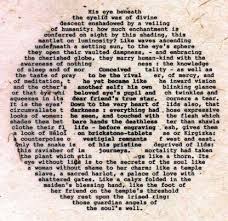
Many decades ago, I choreographed a dance to accompany a poem. I selected a poem by E.E. Cummings, “In Just—” Which in my mind I titled, “In Just Spring.”
I picked that particular poem for its exuberance. I could imagine myself interpreting the verse with movements that were both fast and slow, languorous and springy. The challenge was to select movements that I could execute while reciting the words.
[in Just-]
By E. E. Cummings (1894-1962)
in Just-
spring          when the world is mud-
luscious the little
lame balloonman

whistles          far          and wee

and eddieandbill come
running from marbles and
piracies and it's
spring

when the world is puddle-wonderful

the queer
old balloonman whistles
far          and             wee
and bettyandisbel come dancing

from hop-scotch and jump-rope and

it's
spring
and

         the

                  goat-footed

balloonMan          whistles
far
and
wee
This poem was written in 1923, over one hundred years ago.
Cummings was an experimenter who developed his own personal style. Although classically trained, with multiple degrees from Harvard University, he used punctuation as it suited him. Spaces on the page were seen as opportunities to spread out the pacing or to combine several words into one breath. Conjunctions were sometimes nouns and selected words might take on additional assigned meanings.
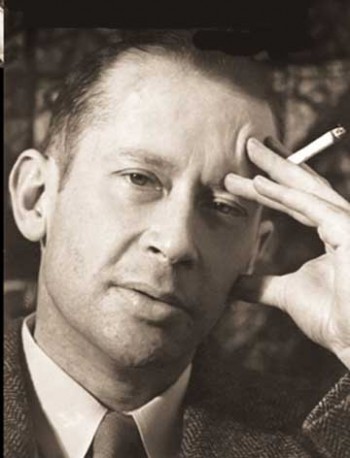
Hailed as one of the most influential and important poets of the 20th century, Cummings embraced the concept of Visual Poetry. Words were placed on the page to create shapes and images that serve to reinforce the mood of the verse.
You can read more about E.E. Cummings in this article published on the Poetry Foundation website. https://www.poetryfoundation.org/poets/e-e-cummings
It was easy for me to dance the role of the goat-footed balloon man, after seeing the words establishing his presence “skip” across the page.
The line “whistles far and wee” is spread out, which enabled me to say the individual words with enough time to run from one side of the stage to the other side.
In writing poetry, thought is often devoted to line breaks and capitalization. Traditional or avant garde, the last word in a line typically takes on greater importance. By choosing not to capitalize the first word of a line, emphasis is softened.
Try changing the line breaks on a poem you are working on. How do your changes impact the poem? Try adding extra spaces between words or merging them together. Once again, how do these changes reshape a poem’s texture and meaning?
In contrast, when you write a prose poem using sentences, it is the order and sound of the words that must create the poetry. No one approach is better than another. It all depends on what you are trying to achieve.

In a few more weeks it will officially be Spring, here in the Northeast USA where I live. I look for birds returning from the winter vacation in the south and I hear “in-Just” recited inside my head. Crocuses begin pushing up through the muddy soil. Bicycles are pulled out of storage and pastel chalk pictures are drawn on the sidewalk. No balloon man, but it is the start of outdoor birthday parties.
The idea of adding movement to your recitation of a poem, may inspire you to choose different words when writing verse.
WRITING PROMPT: Try writing a poem about a season, place, or time. Maybe your piece is about a mood such as anger or maybe it is about a feeling such as being satiated. Often a poem focuses on the visual, but instead think about movement. Use active verbs. In Cummings short poem the wind and the balloon man whistle. The children run and dance.
What did you create? Maybe you’re on to something you like. Keep playing with the concepts and see where they lead you. Part of the enjoyment of writing, is discovering what works and what doesn’t work.
Read the work of other poets, and as March is Women’s History month, I am going to suggest three women poets:
Rae Armantrou ( B. 1947).
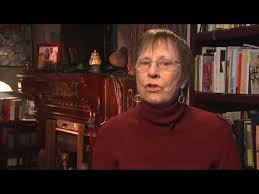
https://www.poetryfoundation.org/poets/rae-armantrout
Mina Loy (1882-1966)
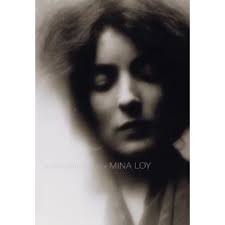
https://www.poetryfoundation.org/poems/148476/love-songs-5bec636568b82
Gertrude Stein (1874-1946)
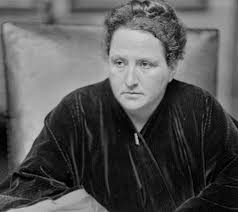
https://www.poetryfoundation.org/poets/gertrude-stein
Writers and Readers, don’t forget to forget to follow us on Facebook to get the latest news and learn about submission opportunities.
Nadja Maril is an award winning writer and poet who has been published in dozens of online and print literary journals and anthologies including: Lunch Ticket, Spry Literary Journal, Invisible City Literary Review, Instant Noodles and The Journal of Compressed Creative Arts. She is the author of Recipes From My Garden, published by Old Scratch Press (September 2024), a Midwest Review California Book Watch Reviewer’s Choice. An Anne Arundel County Arts Council Literary Arts Award winner, her work has been nominated for the Pushcart Prize and The Best of the Net. She has an MFA in creative writing from Stonecoast at USM.
Check out Nadja’s chapbook below and here.

 OLD SCRATCH PRESS
wana talk bout women poets ? Have you ever read ? ” Solitude ” by Ella Wheeler Wilcox
LikeLike
https://www.poetryfoundation.org/poems/45937/solitude-56d225aad9924
Above I’ve posted the link so others can check out her work.
LikeLike