Writing About Food and Announcing the Latest Issue of Instant Noodles Literary Magazine!

by Nadja Maril,a founding member of Old Scratch Press Collective

Food. We spend a substantial part each day preparing, serving, and eating. The tastes, aromas and textures bring back memories. And over the winter holidays, the sensations become magnified as we taste the turkey roasting in the oven, the creamy mashed potatoes, the fragrant puddings, the sweet and savory carrots, onion topped green beans, latkes and apple sauce, cheese blintzes, and buttery chocolate chip cookies.

This is why I enjoy writing about food. It’s easy. All I have to do is close my eyes, remember and think of words to describe memorable dishes, new tastes I discovered, and meals I’ve shared. Try it. Think of a favorite meal, why it stands out in your mind and the emotions you associate with that time. Write down you uncensored thoughts. Read over what you’ve written. Maybe cross out a few sentences and rewrite others. You’ve begun to write memoir, the start of what is called Creative Nonfiction and it wasn’t hard at all.

You can take those food thoughts and memories and turn them into fiction as well. There’s no shortage of food in fairy tales: the witch in Hansel and Gretal with the house made of gingerbread and candy, the red apple in Snow White, the porridge eaten by Goldilocks and the Three Bears.

Wonderful poems have been written about food ingredients. One of the most important items I use in savory dishes is onion. Chilean poet Pablo Neruda (1904-1973) wrote a wonderful poem about the onion I’d like to share.

ODE TO THE ONION
by Pablo Neruda

Onion,
luminous flask,
your beauty formed
petal by petal,
crystal scales expanded you
and in the secrecy of the dark earth
your belly grew round with dew.
Under the earth
the miracle
happened
and when your clumsy
green stem appeared,
and your leaves were born
like swords
in the garden,
the earth heaped up her power
showing your naked transparency,
and as the remote sea
in lifting the breasts of Aphrodite
duplicating the magnolia,
so did the earth
make you,
onion
clear as a planet
and destined
to shine,
constant constellation,
round rose of water,
upon
the table
of the poor.

You make us cry without hurting us.
I have praised everything that exists,
but to me, onion, you are
more beautiful than a bird
of dazzling feathers,
heavenly globe, platinum goblet,
unmoving dance
of the snowy anemone

and the fragrance of the earth lives
in your crystalline nature.

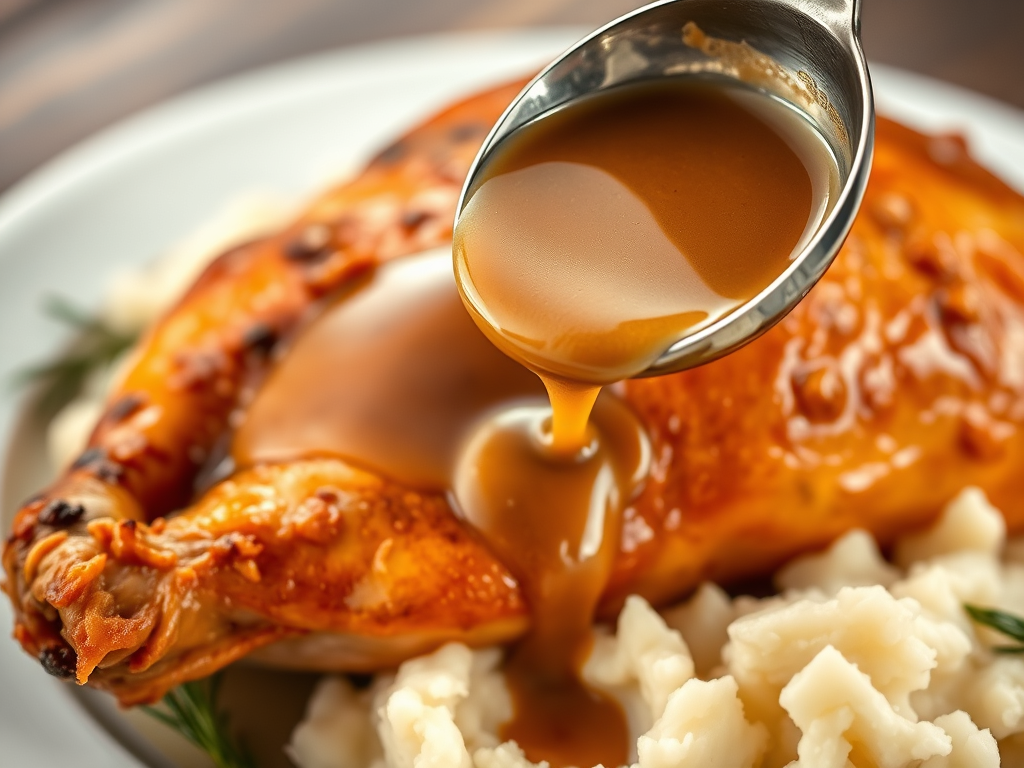
If you need more inspiration, start reading the latest issue of Instant Noodles Literary Magazine .All the stories and poems are inspired by GRAVY.

One of my favorites in this issue is “Thanksgiving Leftovers” by Arielle Arbushites which begins “Gravy gravy everywhere/and not a drop to drink” Hear her read the poem by clicking this link.

Forty-two creative expressions inspired by GRAVY! Who would have thought we’d get so many fine submissions on this topic. Read them and enjoy the writer’s different takes on the subject. Maybe it is a holiday dinner that goes wrong or a humble food offering that needs a splash of pzazz but all the stories have something to do with gravy.

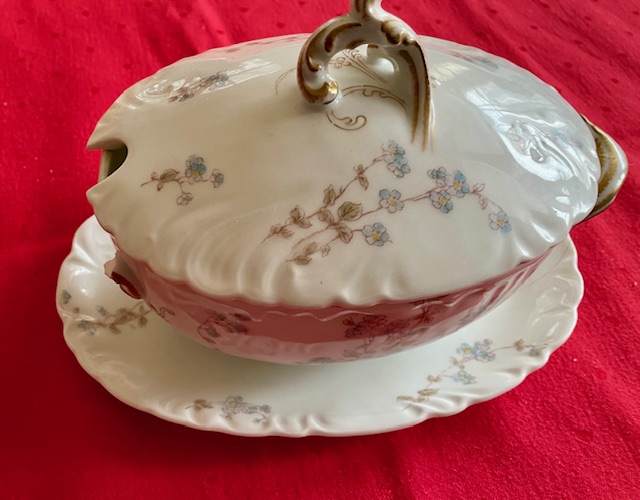
My creative nonfiction includes a nod to my great-grandmother’s Limoges covered gravy dish and a recipe. You can access it here or if you don’t want to read, you can listen here

Writers and Readers, don’t forget to forget to follow us on Facebook to get the latest news and learn about submission opportunities.

Nadja Maril is an award winning writer and poet who has been published in dozens of online and print literary journals and anthologies including: Lunch Ticket, Spry Literary Journal, Invisible City Literary Review, Instant Noodles and The Journal of Compressed Creative Arts. She is the author of Recipes From My Garden, published by Old Scratch Press (September 2024), a Midwest Review California Book Watch Reviewer’s Choice. An Anne Arundel County Arts Council Literary Arts Award winner, her work has been nominated for the Pushcart Prize and The Best of the Net. She has an MFA in creative writing from Stonecoast at USM.

Check out Nadja’s chapbook below and here.

The Art of Storytelling: New Perspectives on Old Fairy Tales

By Nadja Maril

Perhaps it was the illustrations that captivated me when I’d pour through the fairytale books, the dragons and the princesses with long gowns and tresses, but of all the picture books in my room when I was a young child, I liked the fairytales the best.

I can still remember many of those books, the way they looked with their ornate borders and their detailed portraits of the handsome Puss N’ Boots or the angry face of Rumpelstiltskin as he stamps hard enough to crash through a floor and into oblivion. Styles evolve and change, and the animated images of the Walt Disney studios who’ve popularized many fairy tales by converting them into cartoon movies, don’t have the same depth of detail as those old illustrations. I love the old woodcut and color plate illustrations, but many contemporary artists add new magic and perspective to an old story.  When you read a fairytale or any story for that matter, the possibilities for elaboration are endless.

“Happily Ever After” isn’t always the case in some of the Hans Christian Anderson Tales, such as “The Red Shoes” and “The Little Mermaid.”  But as fairy tales have been told and retold so many times, multiple versions circulate. Children today probably have no idea that the original “Little Mermaid” is a tragic story of desire and loss. The little mermaid was unable to permanently become a human. Her attempts at transformation cause her to lose her life as a mermaid. What remains, is her hope that one day she’ll become part of the eternal universe.

In the hands of the Disney writing team, however, “The Little Mermaid,” became a story about family conflict, friendship, love, and fulfillment. The result is a story with a happy ending.

What story would you like to write?

But that’s okay, because fairy tales are part of our oral tradition and why not use the familiar tropes from our childhood as building blocks to create new stories or retell old ones. I think it is important to remember and learn from what went before. However, the stories of our lives keep evolving. So, what story would you like to tell?

To get you started, I’m sharing the work of several writers who were and still are inspired by fairy tales.

Many poetry enthusiasts will probably be familiar with the poem “Goblin Market “by Victorian era British poet Christina Rossetti(1830-1894). It utilizes the folklore of goblins to set the scene with lines like these:

"Pricking up her golden head:
"We must not look at goblin men
We must not buy their fruits:
Who knows upon what soil they fed
Their hungry thirsty roots?”
“Come buy,” call the goblins
Hobbling down the glen."

To read the entire poem and learn more about Christina Rossetti, click here.

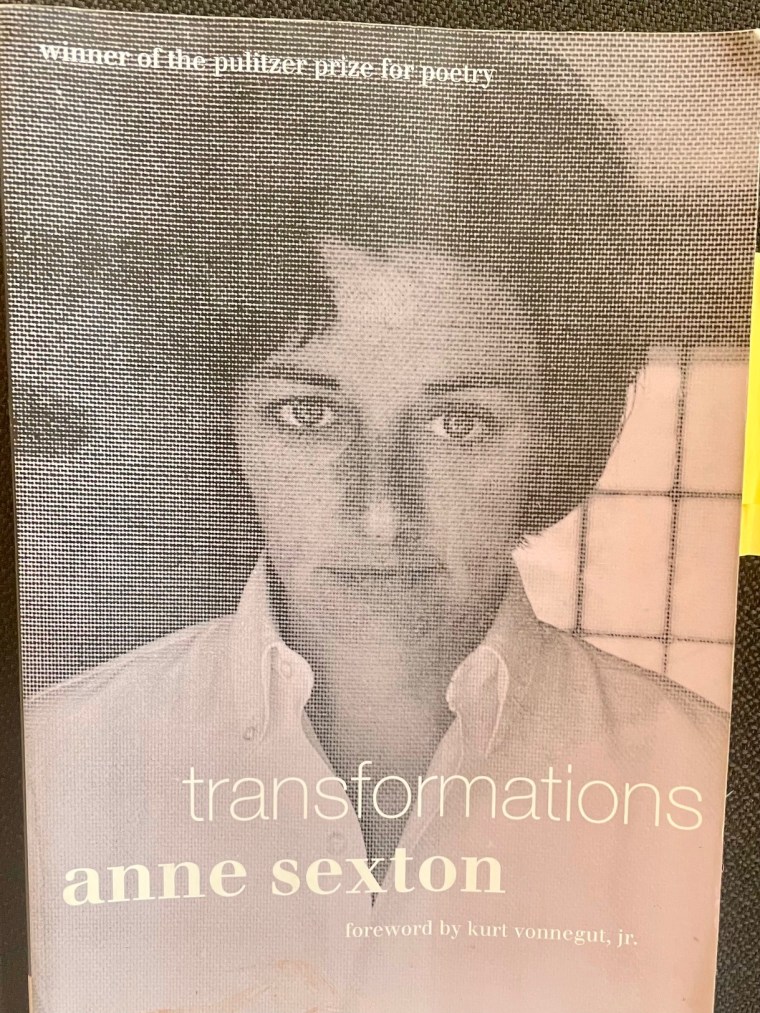
Another writer, Anne Sexton (1928-1974) took fairy tales as a launching point to reimagine social norms.

American poet Anne Sexton is considered a pivotal figure in the confessional poetry movement that emerged in the mid-20th century. Her work holds nothing back as it shares her personal struggles. Themes she explores include: mental illness, sexuality, and the complexities of womanhood. Her poetry collection Transformations contains seventeen poems inspired by Grimm Fairy Tales, that include Red Riding Hood, Rapunzel and CInderella, that challenged the prevailing norms of her times. I highly recommend adding this volume of poetry, the contents of which are unavailable online, to your library.

“The Cinder Girl Burns Brightly” by Theodora Goss is a different take on the Cinderella fairytale, told in poetry. Hungarian American author Theodora Goss (1968–) is a prolific author of novels, short stories, poetry and essays, and more of her work can be accessed at this link.

And finally I share a short story by American writer Michael Cunningham, famous for his novel The Hours, this little story, Wild Swan is inspired by the Hans Christian Anderson fairytale “The Wild Swans.” Brilliantly he takes the premise of the original story and creates an alternate re-telling set in modern times that focuses on one of the enchanted princes.

Need a writing prompt? Just read a favorite fairytale and think about how you’d like to retell it differently or take just one character or element and spin it into a poem or story.

Thank you for reading. Please sign up to follow Old Scratch Press here on WordPress and on Facebook.

Nadja Maril is an award winning writer and poet who has been published in dozens of online and print literary journals and anthologies including: Lunch Ticket, Spry Literary Journal, Invisible City Literary Review, Instant Noodles and The Journal of Compressed Creative Arts. She is the author of Recipes From My Garden, published by Old Scratch Press (September 2024), a Midwest Review California Book Watch Reviewer's Choice. An Anne Arundel County Arts Council Literary Arts Award winner, her work has been nominated for the Pushcart Prize and The Best of the Net. She has an MFA in creative writing from Stonecoast at USM. 


Creative Writing Prompt Inspired by Ann Patchett’s novel Tom Lake

By Nadja Maril, a founding member of the Old Scratch Short Form and Poetry Collective.

Summer and reading go hand in hand. You go on vacation and take along a stack of all those books you’ve been meaning to read.

Sometimes, for me I have to confess I’m actually listening instead of turning pages.( Did you know that most of the books published by Old Scratch Press are available as audio books as well as ebooks?) Half of the books I enjoy these days are recorded books because I can listen and do various chores at the same time.

I can also eat lunch and be entertained by a book without smearing avocado or salad dressing on its pages.

And then if I really love the book, or just want to see it laid out on the page, I get a physical copy from the library and enjoy it again.

I try really hard not to read books by the same authors, so I can introduce myself to new voices. However, I couldn’t resist downloading Ann Patchett’s latest novel, Tom Lake, because I was curious about what it had to do with cherry orchards. The audio version is narrated by Meryl Streep. What a treat.

I’m a Meryl Streep fan and the narrator and protagonist of Tom Lake, the novel is a former actress. True, she is a different kind of actress, “a natural”, as she reveals in her story telling, unlike Streep who has portrayed a wide range of characters, but the protagonist has performed on stage and screen nevertheless. Streep does an impeccable job

What I truly want to recommend about the novel is its construction. So, writers, and aspiring writers pay attention. Not only does Patchett incorporate unpredictable twists and turns into the storyline, but she skillfully interweaves past and present.

The present setting is a farm near Traverse City Michigan during the Covid Pandemic. The past setting, that jumps back and forth into the storyline, is a summer stock theater also in Northern Michigan called Tom Lake. Part of the fun of this story is the gradual reveal of how present and past fit together.

I highly dislike predictable plotlines. Thus, I shout the praises for a novel that continued to surprise me to the very last page.

If you are a writer, continuing. on the journey of further refining your craft, you may be interested in the upcoming opportunity to join the Old Scratch Press Writing Collective or the opportunity to become published in Instant Noodles Literary Review. The Collective applications are available here and the deadline is closing soon.

The next theme subject for the Holiday/Winter Issue of Instant Noodles is Gravy. Write a true story, a poem or a piece of fiction related to Gravy. Keep it short. We prefer prose that is less than 500 words in length.

Back to my thoughts on the novel Tom Lake and not wanting to give any spoilers, I’m going to provide a WRITING PROMPT instead:

Photo by Sarah Chai on Pexels.com

IMAGINE your very first boyfriend or girlfriend, remember what they were like to be with and then write about what attracted you to them, what you admired. Now, write about their flaws.

Take a break. Maybe wait an hour or a day. Then imagine yourself with that person and what your life would be like. The third part to this writing assignment is to first think about what you would tell that person, if you had the opportunity, write them something—a letter, an essay, a poem—whatever genre form you choose. Do you have things you’d like to apologize about, or explain, or share?

Maybe this exercise will give you an idea for a story. Maybe not, but I guarantee you’ll learn something about yourself.

THANK YOU for reading. If you haven’t already signed up (it’s free!), please follow me on WordPress. Medium or Substack and visit my website Nadjamaril.com to read more of my work.

Nadja Maril is an award winning writer and poet who has been published in dozens of online and print literary journals and anthologies including: Lunch Ticket, Spry Literary Journal, Invisible City Literary Review, Instant Noodles and The Journal of Compressed Creative Arts. She is the author of Recipes From My Garden, published by Old Scratch Press (September 2024), a Midwest Review California Book Watch Reviewer’s Choice. An Anne Arundel County Arts Council Literary Arts Award winner, her work has been nominated for the Pushcart Prize and The Best of the Net. She has an MFA in creative writing from Stonecoast at USM. 

Join Us: Deadline to Apply 8/31/2025

Hi All~

We’re looking to add members to Old Scratch Press!
Here’s the deets:
Old Scratch Press (OSP), a poetry and short-form collective sponsored by Current Words Publishing, is seeking two new members to join us starting at the end of 2025. Your book would be slated for publication in 2026–2027, pending a successful trial period.

OSP is a collaborative, grassroots press focused on uplifting fresh, bold voices in poetry, flash fiction, and creative non-fiction. We publish three books per year, along with Instant Noodles Lit Mag (3 issues/year), which is curated and edited by our members. To learn more about our work, we invite you to explore past editions of Instant Noodles https://instantnoodleslitmag.com/ and OSP-published books https://oldscratchpress.com/catalog/.

As a member of OSP, you will:

  • Receive a free publication of your manuscript (poetry, short prose, hybrid, or a mix of writing and art).
  • Get 10 free copies of your book and keep 100% of your royalties.
  • Participate in monthly OSP meetings (except December and August).
  • Proofread and support fellow members’ books and contribute to blog and promo efforts.
  • Be invited to monthly marketing meetings hosted by Current Words Publishing.
  • Join a supportive community of working writers committed to mutual aid, creativity, and literary growth.

We’re looking for:

Members who are kind, reliable, and team-oriented.

Writers with a completed or nearly completed manuscript ready for publication in 2026–2027.

People who can commit to at least two years of active participation.

Writers who reflect diversity in identity, perspective, or experience—including (but not limited to) people of color, LGBTQ+ writers, disabled writers, and others underrepresented in publishing.

Applicants who are not full-time creative writing faculty. We aim to support writers who do not already have institutional resources or access.

Writers who have a track record of publication (a few poems, flash pieces, essays, etc.), and a clear desire to communicate something meaningful through their work—someone we can respect as a fellow writer and collaborator.

A note about our trial period:

New members will begin with a six-month trial period before we formally commit to publishing your book. This ensures a good fit and gives everyone time to build rapport, share work, and participate in OSP activities.

To apply:

Please send the following:

  • A brief cover letter introducing yourself, why you’re interested in joining OSP, and how you’d contribute to the group.
  • A short author bio (3–5 sentences).
  • A brief personal essay (500–750 words) about your writing journey. Feel free to include publication history (with links or footnotes) and anything you’d like to share about the manuscript you hope to publish.
  • A sample of your manuscript-in-progress (up to 10 pages).

Applications will be reviewed collectively by current OSP members. Finalists will be invited for a short conversation via Zoom.

If this sounds like your kind of creative home, we’d love to hear from you!

Apply, as usual, through Duotrope~

Exploring Floetry: The Fusion of Fiction and Poetry.

By R. David Fulcher, Founding Member of the Old Scratch Press Poetry and Short Form Collective

Floetry (my definition) a written form of expression combining fiction and poetry.

It is uncommon, but not unheard of, for writers to embrace both fiction and poetry. As one of the writers in this category, I often wonder if this is a benefit or a detriment. To a purist, being competent in both could perhaps mean I’m a master of neither, to echo the old saying “jack of all trades, master of none”.  

More recently, I’ve decided being fluent in both fiction and poetry is a definite advantage. To begin with, several of the masters of speculative fiction integrate poetry into their work to great effect.  Consider these lines of from Stephen King’s novel The Tommyknockers:

Last night

And the night before,

Tommyknockers, Tommyknockers

Knocking at my door.

And these lines from Ray Bradbury’s novel Something Wicked This Way Comes:

By the pricking of my thumb,

Something wicked this way comes.

These are by no means the only examples.  Dean Koontz dives into poetic verse within his many novels, and it can be argued that the fantasy writings of the Irish writer and dramatist Lord Dunsany (a possible influencer or JRR Tolkien, discover more here) read more like poetry rather than prose.

Therefore, having made the case for “floetry”, how do I employ it?  Primarily I interweave poetry into my prose in two ways:

  1. As bookends to start and end my books, with the remainder of the book being fiction, and
  2. Injected directly into the middle of a story

Case 1: Bookends

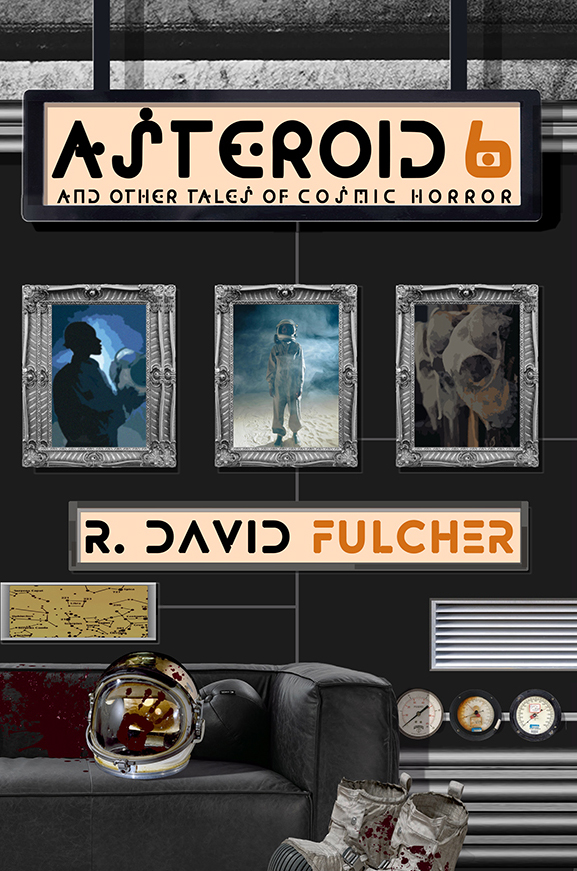
I employ the bookend strategy in my two my recents books, The Pumpkin King and Other Tales of Terror and Asteroid 6 and Other Tales of Cosmic Horror.  I’ll provide an example of each.

The Pumpkin King and Other Tales of Terror starts with my poem “Eulogy to E.A. Poe”:

Man of dark musings and opiate visions! 

Mind of pits and rats,  

Black cats and ancestral corpses!  

How is it that love sparkled within those dark recesses,  Like diamonds within a bedrock of obsidian—  That verse sprang from that ebony hand,  

As vibrant and unlikely as lilacs from snow?  

Tales of cities under the sea,  

Of waves weeping softly, “Annabel Lee!”  

Did the bells, the bells, the bells, foretell of your demise,  Or was it borne on Raven’s wings, thus falling from the sky?  

Could it be that your last vision was your brightest?  

Oh, soul of all that is night,  

Inspire my pen to wail and to write. 

In a similar fashion, my book Asteroid 6 and Other Tales of Cosmic Horror starts with the poem “The Outer Reaches of Unknown Kadaath” (Kadaath is a reference to the works of H.P. Lovecraft):

Who would’ve thought

That H.P. was right

The Old Ones they beckon

Through the nebular night

Those in suspension

Suffocate in sleep

Yog-Sothoth promised

His secret to keep

The terminals flicker

The life support hums

The engines propel me

From the touch of our sun

Soon I will sleep,

Dreaming of the Mountains of Madness and the door

behind the Silver Key

The end of mankind to be unlocked—

By one spaceship and me

Case 2: Direct Injection

In my story “The Faerie Lights” within my book The Lighthouse at Montauk Point and Other Stories I start off with prose, and very quickly inject a poem into the tale:

Rest awhile, friend, for it is clear that you have walked far over hill and valley, and penetrated the wild and strange woods, to have happened upon this long-preserved manuscript beneath the moss-covered rocks.

I came upon this very spot, perhaps many years ago now, as just a lad. Here I took my respite, beckoned by a fair breeze sweeping over the verdant fields and a song sung in dulcet tones far sweeter than any produced by mortal throats. I was weary from hiking many miles, and my body eagerly fell into a deep sleep.

A song floated over my consciousness, sung by a thousand child-like voices:

Weary traveler,

Rest your head,

And sleep awhile

Where the faeries tread.

Weary traveler,

Laugh in kind,

And take deep draughts

Of faerie wine.

Weary traveler,

Spend the night,

Follow the trail

Of the faerie lights!

Additional stanzas of poetry are injected into other parts of the tale, with the intent of lulling the reader into a sleepy, dream-like state.

Final Thoughts

So there you have it – a brief introduction into the concept of “floetry” with several examples of usage.

What do you think?

Can poetry and prose peacefully coexist on the same page? 

Please leave your thoughts in the comments!

Thanks for reading,

-R. David Fulcher, Old Scratch Press Founding Member

BIO: https://rdavidfulcher.com/about/

R. David Fulcher’s latest book is Asteroid 6 and Other Tales of Cosmic Horror

Thank you for reading. Please sign up to follow us on Facebook and to follow us here on WordPress to expand your knowledge about poetry and short form writing as well as to receive the latest news about publication opportunities. 

Secrets to a Publisher Relationship

by Robert Fleming

You’ve published three works. You have the acceptance rate of +-3%. Fed up with the time and submission costs of rejections? Resubmit to a magazine editor who published your work before. This may lead to a relationship with a magazine publisher/editor. Why would you want that? Aren’t editors grinches handing out rejection coal? Some editors are coal distributors, but other offer something you may want:

  • They publish books in your genre and may publish your book.
  • They repeat the same writers: either multiple works in the same or different issue. How can you figure this out? If your published work is digital (online), find an author you like, who was published in the magazine you were published in; type their name in “search.” Does the search results list only their current work or multiple works? If only one, try again with at least two different authors you like.
  • Nominates writers for awards (magazine award, Best of the Net, Pushcart)

How do you know if the editor is interested in a relationship with you?

  • They accept your work in three days or less from submission.
  • They locate your work in the first three pages of the issue.
  • They publish more than one of your works.
  • In the issue forward, they mention your name.
  • They ask you to publish previously submitted rejected work from their slush (reject) pile.
  • Nominate you for an award

The benefits of having +-10 magazines with repeat publications are

  • Create 120 works a year = 10 magazines * 4 submissions a year * 3 works per submission
  • Create enough work for a full-length book of +-70 pages
  • Be selected as a featured reader: Robert is a repeat writer for Oddball magazine, I want him to feature for me.
  • Be invited to be an associate first line editor of a magazine

Show appreciation for the editor/publisher:

  • Once your work is published, put a posting on your social media (Facebook, Instagram, TikTok), that announces your publication with links to the publisher’s magazine.
  • When you read work, say it was published by “editor name” in “magazine name” and announce the magazine’s next publication with their links.

Once you are a repeat writer for a magazine, submit quarterly.

Even yours truly, with over seven hundred publications, only has a +-33% acceptance rate with a new magazine. One of my publication strategies was to create and now maintain a relationship with +-10 magazine editors.

Yours Truly is:

Robert Fleming, a contributing editor of Old Scratch Press

OLD SCRATCH PRESS – a poetry/short-form collective | estd. 2023

who published an Amazon best seller visual poetry book: White Noir

white noir: Fleming, Robert: 9781957224183: Amazon.com: Books

an editor of the digital magazine Instant Noodles

About – INSTANT NOODLES

Some Odes to Autumn

By R. David Fulcher

Autumn has always held a special magic for me, a season in which the poet John Keats aptly described as “a season of mists and mellow fruitfulness.”

Indeed, if there is an hour for magic, it strikes in the crisp dawn of an early Fall day. And further, if magic has a language, surely its language is poetry.

So I find this an appropriate time to post some of my own verse (hopefully imbued with magic itself) for your reading pleasure.

The first poem is “Ode to the Night”, and it hints at the darker aspects of this time of year, a time when pumpkins cast you crooked smiles and ghosts and goblins are generally free to roam:

Ode to the Night

To the Night, the Night, the dark delight,

The children sleep soundly in gentle white,

Breathing in time with the Raven’s flight.

To the Night, the Night, the waxen moon,

Audience of one to the witches’ croon,

Driving the tides for the sailors’ doom.

To the Night, the Night, its starlit fires,

Which guide the ghosts from funeral pyres,

Which soften the Harpy to play the lyre.

I hope you enjoyed “Ode to the Night”, and at a minimum it puts you into the Halloween spirit!

My second poem is “Melinda”, a story of lost love, and although not directly a tribute to the season was nonetheless designed to evoke a haunted mood:

Melinda

Sometimes in the lonely hours

I would walk the hill

Leaving the clamor and din behind

For headstones gray and still,

As I neared the place where the dead did lie

I knelt and bowed my head

A fool is he who visits the graves

Without homage to the dead,

‘Melinda’ read the stone I sought

Melinda, my betrothed,

Only a thief as clever as Death

Could steal the health of Melinda, my love

Often I hear Melinda’s voice

Soft upon the breeze

I answer her call of eternal love

And grow hoarse among the trees.

I hope you enjoyed “Melinda”! Last but not least is an ode to a much maligned creature, a symbol of the undead, but in reality a beautiful animal that sustains our ecosystem. This last poem is called “The Bat”:

Photo by Photo By: Kaboompics.com on Pexels.com

The Bat

Taking inverted Sabbath in the caverns of Carlsbad

I measure time in locust-breath and calcite drip,

My bird-chest rising and falling with the gentle tides

Of this black carpet of brotherhood.

Footsteps fill my dreams,

Sun-bleached tourists groping into the cavern’s belly

To enter the sublime,

Their voices like a million valves releasing pressure.

For an instant they will recognize the face of God in this hard darkness,

The stalactite points of his beard,

The cascading rock formations of his brow,

And that fraction of animal intellect will rush forth,

Freed from concept and equation,

To join our ranks as we veer through this Jerusalem darkness

Toward dusk and sustenance,

Toward the amphitheater where they wait for their own departure.

Thank you for reading! I hope you enjoyed these odes to the season and wish all of you a sublime Autumn.

-R. David Fulcher, Founding Member of Old Scratch Press

Hard Learned Lessons Regarding a Writer’s Glamorous Life

By R. David Fulcher

Collective member R. David Fulcher opines about Writing and “the Process”

Reprinted by permission from one of his blog posts available at Davidfulcher.com

When I was young, before I had written a word of fiction, I believed that all writers lived a glamorous life. Ernest Hemingway in particular seemed to embody this image – traveling on safari, sport fishing in the Gulf of Mexico, drinking whiskey as if he were a fish himself – doing almost everything except writing.

The writer Ernest Hemingway in his later years.

Now that I  am older and wiser, I know that Hemingway wrote for hours each day, making him one of the more disciplined writers of his time.  But the larger-than-life Hemingway was a more appealing character to imagine, and therefore the one my younger self gravitated towards.

So, I am writing this post to the new breed of writers out there to let them know some of the disciplines they will find useful in their writing lives, and leaving the catching of Marlins to Salt Water Sportsman Magazine.

Bait the hook and try to catch something big. It’s more difficult than you think.

What Writing is Really Like…Computer Programming

Computer Programming is all about language and syntax, and so is writing.  I know something of this as programming is my day job.  I have often spent hours debugging some code, only to find that a misplaced semi-colon or comma was the culprit.  Writers also will find themselves laboring over the usage and placement of punctuation, understanding that punctuation in the wrong place can change the entire meaning of a sentence.

What Writing is Really Like…Project Management

Project Managers track task and project status, in addition to schedule, budget and other project elements.  As your writing career grows, you will quickly find yourself in need of a spreadsheet, database or other tool to know what you’ve submitted where, when to send a query letter, relevant contact information for publishers and publications, etc.  You will also need to track readings, book fairs, online interviews, etc. on your Outlook or Google calendar.  These demands will intensify as your writing becomes a fulltime occupation, and as you began to spend more time collaborating with others.

What Writing is Really Like…Marketing Executive

While the big publishing houses have marketing resources of their own, new writers trying to make a name for themselves in small independent presses will find themselves on their own to promote their work.  You will be faced with questions like which social media channels reach the biggest (or more importantly, the most relevant) reading audiences, and does it make sense to subscribe to marketing service to promote your books.  Additional considerations involve creating your own author’s website and blog, all of which may require you to acquire new skill sets. Your ability to effectively promote your work becomes even more critical if your work is self-published.

What Writing is Really Like…Accountant

While writing is an art and not a science, sooner or later you will be focused with financial decisionsand issues related to your writing.  These may be simple decisions such as whether to enter a writing contest that charges a fee, or whether to hire an independent designer to design your author’s web site.  Other more complicated issues will involve reporting any book sale royalties on your income taxes or tracking the sales tax to be submitted from cash sales at a book fair.  And when you’re finally ready to take the leap and go fulltime, the big financial question:  how much will I have to make on my writing to make a living? 

What Writing is Really Like…Lawyer

Finally, you will be faced with legal issues during your writing career.  I’ll give you a real-life example.  Unbeknownst to me, a designer at one of the publishing companies used an image on my book cover that was copyrighted.  Several years later, I was contacted by the copyright holder demanding a correction, and I referred him to my publisher.  The publisher finally admitted the mistake, and at their expense, corrected the cover.  Other examples include understanding reprint rights for your previously published stories and interpreting contractual agreements with publishers when you begin to get your first professional sales of your stories and novels.

So, there you have it – instead of being glamorous, the above disciplines can be tedious, if not downright boring.  However, these skills will propel your writing career much further than your ability to bait a hook.

You can read more of David Fulcher’s posts and learn about his books here.

To learn more about the latest Old Scratch Press publications click here. The Song of North Mountain by prizewinning author Morgan Golladay is just one of several exciting new chapbooks! To learn more about Old Scratch Press and our poetry an short form collective follow us on WordPress at Oldscratchpress.comDav

Update from Alan Bern

Hello Friends,

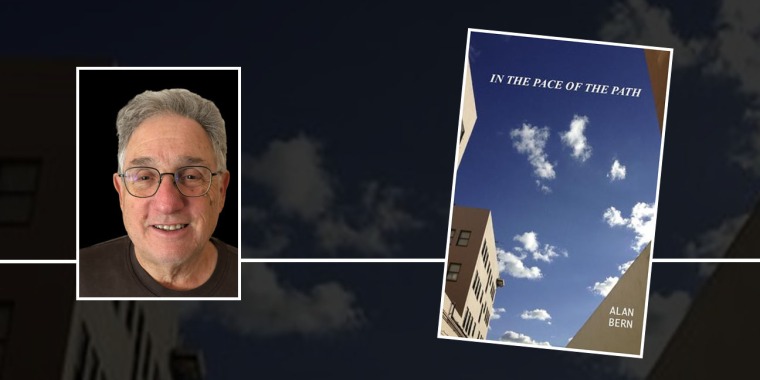
If you’re in the Berkely (California) area please join us at Pegasus Books Downtown on Thursday, June 27th for an evening of music, text, and storytelling with me, Alan Bern, Berkeley-based storyteller, performer, author of IN THE PACE OF THE PATH. Bern’s reading will be accompanied by music from cellist Gael Alcock. Recently released by UnCollected Press, IN THE PACE OF THE PATH is a hybrid work of poetry, prose, and photos that charts my life in my hometown of Berkeley and my career at the Berkeley Public Library.

From 6:30-7pm, browse books and enjoy Bach’s Cello Suite #4 performed by Alcock, in memory of Larry Bensky, host of KPFA’s ‘Sunday Salon’ and ‘Piano’.” Reading and conversation with me will follow, at 7pm. Copies of the book will be available for purchase and signing at the reading.

Alan Bern’s IN THE PACE OF THE PATH walks the border between poetry and prose, between the surreal and the realism where surrealism spawns, between the past and future which is the pace of the moment by moment of a life. I have learned from Bern’s clarity in poetry and prose to walk the edges of my homeland and step out into the unknown, while carrying the life I have lived within me. This is such an important work to read now and reread as we move through our lives.

—Rusty Morrison, Co-Publisher of Omnidawn—

Enjoy a video by L. Scott Jones of Wrapped in Ruins, a gallery piece and the most recent performance of PACES: dance & poetry fit to the space, a collaboration with other artists of dancer/choreographer Lucinda Weaver and me:

I will also present an art piece near the end of:

FREE LIVE EVENT: INSTANT NOODLES LAUNCH AND LIVE AUTHOR READING.

DATE: June 20, 2024
TIME: 4:30 PM PT  | 7:30 PM ET
Join us in celebrating the release of the newest issue of INSTANT NOODLES, the online literary magazine that features original poetry, art, and short fiction. Meet the authors and listen in as they perform their work live. This online event is open to the public. Click below to register.

https://us06web.zoom.us/meeting/register/tZUlfumprTgsE93vS-zfSLwlM-Mf-Vvyy-KU#/registration

There is wonderful writing in this issue of Instant Noodles, and I hope you can attend!

Thanks so much for your interest in the work of the authors of Old Scratch Press!

—Alan

CONGRATULATIONS TO GABBY and THANK YOU!

Hi All~

Today we celebrated the launch of Gabby Gilliam’s book: NO OCEAN SPIT ME OUT with a reading on Zoom by Gabby and Robert and Alan.

I am going to guess that many of the guests were friends/family of the authors, and I am so grateful for their kindness as we navigated our first live event since 2020, in a different house, on different equipment, and on the opposite coast. I’m not going to say we were a well-oiled machine, but our hearts were in the right place. 😉

Within the coming week we will create a nice video of the event and post it here, as well as send it to the participants.

If you attended, or if you missed, please consider coming to future events. It meant so much to me to hear the authors read the books live that Dave and I often work on alone, in silence. I tend to read the books we publish a few times, but this is a whole different and rich experience.

So, if you were able to attend, I thank you for doing so, and being such a gracious guest.

If you were unable to attend, not to worry, as we will be posting the event here ASAP.

And don’t forget to visit the catalogue page and see what OSP books are available! The OSP authors keep 100% of their royalties, so help them earn a little coin at this writing game.

Also, next week, if you’re feeling game and supportive, join us again for the live reading of INSTANT NOODLES… VOLUME 4 (has it been 4 years???) ISSUE 1.

The writing for this issue, chosen by Gabby Gilliam, Anthony Doyle, Nadja Maril, and with visuals chosen by Robert Fleming and Alan Bern, is not to be missed!

Thank you for supporting indie authors.

Much love~

Dianne & David