Check out the wonderful writing and art: curated by Old Scratch Press!
Lot’s of poetry for National Poetry Month plus other literary delights await you!
Just like a great lunch you can get it in an instant!

Check out the wonderful writing and art: curated by Old Scratch Press!
Lot’s of poetry for National Poetry Month plus other literary delights await you!
Just like a great lunch you can get it in an instant!


I want to share with you today, as I do my 9-5 job, one of my favorite poems ever, “Hay for the Horses,” by Gary Snyder.
Gary Snyder reading Hay for the Horses
Hay for the Horses
by Gary Snyder
He had driven half the night
From far down San Joaquin
Through Mariposa, up the
Dangerous Mountain roads,
And pulled in at eight a.m.
With his big truckload of hay
behind the barn.
With winch and ropes and hooks
We stacked the bales up clean
To splintery redwood rafters
High in the dark, flecks of alfalfa
Whirling through shingle-cracks of light,
Itch of haydust in the
sweaty shirt and shoes.
At lunchtime under Black oak
Out in the hot corral,
—The old mare nosing lunchpails,
Grasshoppers crackling in the weeds—
“I’m sixty-eight” he said,
“I first bucked hay when I was seventeen.
I thought, that day I started,
I sure would hate to do this all my life.
And dammit, that’s just what
I’ve gone and done.”
I like to think of this poem periodically, to make sure I am doing what I want to do with my life.
It’s tax season. That’s a time I also always wonder if I am doing something worthwhile, or at least not onerous, for my daily bread.
Are you a writer or artisit who’s been bucking hay for 51 years instead of making?
Time to create!

April is almost here, time for National Poetry Month, an entire month to celebrate poetry. Do you have a favorite poem or poet? Let us know and we’ll try to post a story about the poet or the poem on the Old Scratch Press website.
National Poetry Month was launched in 1996 by the Academy of American Poets as a way to promote educational events that encourage students to interact with poets and poetry.

One of these programs sponsored by the Academy of American Poets is called Dear Poet. Designed for students in grades five through twelve, participating students can write letters in response to poems this year ( 2024) read online by Patricia Smith, Ed Roberston, Mara Pastor, John James, Nikky Finney, Nicole Cecillia Delgado, Marilyn Chin, and Chen Chen.The submission period for Dear Poet 2024 is now open until April 22, 2024.
If asked, who is my favorite poet it really very much depends on the time of year, time of day, and my mood because I was lucky to have grown up in a household filled with poetry books.
My mom was an English major and she enjoyed reading me her favorites. At a young age I listened to Gerald Manley Hopkins, T.S. Elliot, Robert Frost and Emily DIckinson.
Children love repetition, and when they discover a favorite story they like to have it read to them over and over again. Many Many times I’d ask to be read my two favorite poetry books in pre-school: A.A. Milne’s When We Were Very Young and Robert Louis Stevenson’s, A Child’s Garden of Verses.
I remember reading to myself “The Swing” at age eight.
The Swing

By Robert Louis Stevenson (1850-1894)
How do you like to go up in a swing,
Up in the air so blue?
Oh, I do think it the pleasantest thing
Ever a child can do!
Up in the air and over the wall,
Till I can see so wide,
River and trees and cattle and all
Over the countryside—
Till I look down on the garden green,
Down on the roof so brown—
Up in the air I go flying again,
Up in the air and down!
I found all the poems in When We Were Very Young to be irresistible, but my constant favorite was the one about that difficult girl named Mary Jane.

What is the matter with Mary Jane?
She’s crying with all her might and main,
And she won’t eat her dinner – rice pudding again –
What is the matter with Mary Jane?
What is the matter with Mary Jane?
I’ve promised her dolls and a daisy-chain,
And a book about animals – all in vain –
What is the matter with Mary Jane?
What is the matter with Mary Jane?
She’s perfectly well, and she hasn’t a pain;
But, look at her, now she’s beginning again! –
What is the matter with Mary Jane?
What is the matter with Mary Jane?
I’ve promised her sweets and a ride in the train,
And I’ve begged her to stop for a bit and explain –
What is the matter with Mary Jane?
What is the matter with Mary Jane?
She’s perfectly well and she hasn’t a pain,
And it’s lovely rice pudding for dinner again!
What is the matter with Mary Jane?
If you have school children, don’t forget to check out all the poetry programs this month and whatever your age make a point of reading a poem a day. The Old Scratch Press is trying to make new poetry more available by publishing several chapbooks each year, so check out what’s in our catalogue and what is about to be released by following us here as well as following our Facebook page. Thank you for reading.

Old Scratch Press is pleased to announce the upcoming release of The Song of North Mountain, by Morgan Golladay. Slated for May release, the book includes original artwork by the author to accompany her poems. The collection is now available for pre-order.
Founded in 2023, Old Scratch Press is a cooperative of poets and short-form authors who have come together to promote the publication and appreciation of poetry and short-form writing. The Song of North Mountain will be the third chapbook, published by the small independent press.
Break in the Field by Ellis Elliot was their first book, nominated for the National Book Award, followed by avante-garde wordsmith and artist Robert Fleming’s poetry collection, White Noir.
The Song of North Mountain, says Morgan, “is about my relationship with this Earth, focusing on one small mountain in one small chain, in one small part of this vast world.
This book is about a connection – my personal experience sitting in stillness on this mountain, as well as many other mountains. North Mountain is, for me, a symbol of my relationship with this Earth. The permanence of the land, regardless of how it changes; the cycles of life, the quiet continuation of change. It has been a long time since I personally was able to sit quietly and listen to the tree branches and leaves speak to each other. I cannot scale the trails as I once did. But the magic of place is still in my memory, whether it’s the rocks in the rivers, the trails on the mountain tops, or the joy of sharing ripe wild berries.
“…my personal experience sitting in stillness on this mountain, as well as many other mountains. North Mountain is, for me, a symbol of my relationship with this Earth.”
Morgan Golladay
The cover design, an original painting, and the 10 black and white interior illustrations were created specifically for the book. Pre-order availability on Amazon and on the Old Scratch catalogue page will be coming soon.
To keep up with the latest news, please follow our blog here for free and also follow us on Facebook. Later this year look for more chapbooks penned by Gabby Gilliam, Alan Bern, and Nadja Maril. Thank you for reading. Special note: the deadline for Instant Noodles LIterary Magazine submissions has been extended to the end of the month.

Looking for recommendations for what to read to your toddler? Poet, writer and former Children’s Librarian Alan Bern has a favorite:
“The Owl and the Pussycat” by Edward Lear, illustrated by James Marshall ; afterword by Maurice Sendak.
By Alan Bern
Edward Lear’s “classic love ballad, “The Owl and the Pussycat,” was voted the most popular British childhood poem in 2014, and has been set to music by everyone from Stravinsky to Laurie Anderson.” (”The Sense Beneath Edward Lear’s Nonsense” by Adam Gopnik, The New Yorker, April 16, 2018) If not as popular in the United States, “The Owl and the Pussycat” has spawned a number of illustrated picture books here. Of the many illustrated picture books of this absolutely brilliant poem for very young listeners and readers by Edward Lear, “The Owl and the Pussycat,” my top choice is the version by James Marshall. Next to Lear’s own illustrations for his poem, James Marshall’s illustrations, although he died before fully finishing them, are my favorites. Marshall creates wonderful characters that match so perfectly the sounds and voices of Lear’s poem. It is a nonsense poem, but it’s always made perfect sense to me and to so many. Young children will love the poem and the book; so will elementary school kids when they need to feel just a bit regressed. Heck, adults will love it, too. As I do.
Nonsense Suggesting Sense
As Gopnik explains later in his essay: “This gift for creating pathos without sacrificing absurdity is what makes “The Owl and the Pussycat” one of the greatest poems in the language… In “The Owl and the Pussycat,” meanings rush in:
They dined on mince, and slices of quince,
Which they ate with a runcible spoon…
Not even Humpty Dumpty could explain what a runcible spoon is. We know it by its verbal vibration, by its presence, by its sheer runcibleness… This gift for making something felt without having first to make it familiar is one that we later admire in Beckett. Nonsense suggesting sense is a familiar pattern. Nonsense suggesting the numinous is not.”

Personal Connections
And here’s a personal story to go with the poem. As a children’s librarian for many years, I was honored to serve on the American Library Association’s Caldecott Committee in 1992, and I suggested Marshall’s illustrations for this book as a finalist. It was not chosen, most probably because Marshall never quite finished the illustrations. I continued to love the book anyway, and I always wondered why the poem always spoke to me… when I read it or when I listened to another read it. Shortly after my Mom died, I found out why. One day while going through some letters, from my Mom to my Aunt, letters that my Aunt had kept from the early 1950s. My parents were on sabbatical leave (my Dad was a young professor) in Cambridge, England, and I was almost two. In one letter, my Mom wrote: ‘It’s wonderful to be here, Howard and I are having such a good time, and we love having our little boy with us; however, he does drive us crazy and asks over and over and over that we read “The Owl and the Pussycat” to him.’ That brought such a wide smile to my face: of course, I don’t remember it, but it now explains, in part, my continuing love for the poem. Thanks, Mom and Dad, and thank you very kindly, Mr. Edward Lear! And now I shall reach for my runcible spoon.
Thank you for reading . Remember, only a few days remain before the submission window for the spring issue of the literary magazine, curated by members of the Old Scratch Press Collective closes. Submit here –https://duotrope.com/duosuma/submit/instant-noodles-O0jFm
If you haven’t done so already, please follow our blog here for free and also follow us on Facebook.And coming soon is our newest chapbook release, The Song of North Mountain, by Morgan Golladay followed by chapbooks penned by Gabby Gilliam, Alan Bern, and Nadja Maril.

As a human perhaps the toughest task I face is what the heck to feed me, and the spouse and child, each day for dinner. Breakfast everyone is on their own. Daughter, who has a light appetite, has a protein shake. Spouse, who has a sweet tooth, has some sort of flaky thing and coffee. I have several coffeeeeeees, and, well, I never know. Could be beans on toast. Coudl be leftover takeout. Could be tomatoes and olives in a bowl. Could be yogurt. Might be soup. Seldom is eggs.
Lunch… do people eat lunch? I don’t always. The meals seem to run into each other, and usually lunch is the loser for me, because there is not time to have breakfast, do all the morning things, then do the work things, and fit in lunch too, before it’s time for dinner. But I love lunch. I love lentils and tuna, salads of any kind, rice and tofu, possibly more yogurt. Daughter eats the same meal every day, packed in a lunch bag, Annie’s Organic Star Pasta. We put it in a thermos, and, for about four years now, she eats it…. every. single. day. Dedication. Spouse eats, most likely, more sweet and flaky things. But me, I am most apt to have more coffee, and maybe chomp on some lettuce as I am adding some to the guinea pig cage.
Dinner. Dinner ie exasperating. You know it is! There are, if your life is anything like mine, too many people (and we are only three) who like too disparate things, and have crazy schedules, and it can be downright tough to get everything ready on time for everyone’s schedule, but the toughest of all is thinking WHAT?? what to feed everyone.
Enter poetry, short memoir, short short stories, and art, to save the day, as usual!
As you may know, if you have read this blog before. I started a lit mag, Instant Noodles (gee, named after food. Obsessed? Maybe…..), and now Old Scratch Press is running it. Up until this year I was the only one choosing the pieces, and, often I was moved to choose pieces about food. And I have to say, on a side note, getting to read so many wonderful entries has been nothing but a pleasure. I love Instant Noodles, and I have really enjoyed all the pieces, and all the art too. But, yes, it may be possible to make the assumption that I am slightly food… centric? Motivated? Obsessed? And I have often been charmed by pieces that relate to food in some way, even if it is only in my mind.
And so, in this post, I want to direct you to take a look at a few of them.
The first is the memory piece by John Johnson, “Moss Soup and Manicotti,” where he remembers his grandmother’s cooking, “For love in this family was measured by the number of courses served and the temperature in the kitchen….”
“If Only,” by Bethany A. Beeler, is a wonderful painting that looks, to me, like my dearest love, a steaming mug of coffee:

My second favorite edible may be butter… True!
“…the wood cylinder moans,
the paddles slow,
the moon is full,
the butter comes.”
Writes Cynthia Gallaher in her poem “Butter Eaters.”
I have long loved, “This Is Just to Say,” by William Carlos Williams, the famous short piece about plums. I also love “Stolen Plums,” by Benjiman B. White:
“…In a lonely field
Full of future and autumn
And a windblown harvest
Forced by growth
To thump against gravity
And hunger….”
And, finally, if you cannot wait a second longer to eat, you can meet me and Willie Schatz in “Molly’s Magic Kitchen,”
“Shit! I forgot to buy the fucking fresh tomatoes. But we have sun-dried. I’ll work around it.”
Of course she will, as she did two days prior when she forgot the dough needed 24 hours to rise and recovered by scrubbing the pizza for pasta primavera or five days earlier when she left her cherished butter lettuce at the grocery and could atone for the evil deed only with a luscious chopped salad or two weeks ago when she entered her realm crowing about the terrific tuna casserole we were going to enjoy only to realize she had bought sardines and would have to settle for a salad Niçoise (that of course was not chopped liver).
So, for dinner tonight, I fell back on a childhood meal that both my mother and my father used to make from time-to-time when magic and inspiration failed them: leftover meat in gravy ladled over extra cripsy toast. I like to eat mine with hot cherry peppers, and each bite will have, if I’m lucky, meat, bread, gravy, a smidgeon of some sort of potato (I made scalloped), a little scrap of veg., and a small bit of hot cherry pepper, to cut through all that thick buttery gravy and make the moutful pop.
It’s pouring down cold buckets of icy rain where I am.
Wherever you are, may you be full of something nice and warm.
What’s for dinner at your place?

By Gabby Gilliam
So many people think poetry is serious and difficult to understand. But language can also be fun. There are so many poets that use words to delight readers with something unexpected. Most people are familiar with Shel Silverstein, whose poems are light-hearted, but there are so many poems out there that both you and your kids will love for their silliness.
Many know Judith Viorst for Alexander and the No Good, Horrible, Very Bad Day, but she also wrote this fun poem about a mom who really doesn’t want a pet.

Mother Doesn’t Want a Dog
by Judith Viorst
Mother doesn’t want a dog.
Mother says they smell,
And never sit when you say sit,
Or even when you yell.
And when you come home late at night
And there is ice and snow,
You have to go back out because
The dumb dog has to go.
Mother doesn’t want a dog.
Mother says they shed,
And always let the strangers in
And bark at friends instead,
And do disgraceful things on rugs,
And track mud on the floor,
And flop upon your bed at night
And snore their doggy snore.
Mother doesn’t want a dog.
She’s making a mistake.
Because, more than a dog, I think
She will not want this snake.
https://poets.org/poem/mother-doesnt-want-dog
One of the first books I ever remember buying for myself was The New Kid on the Block by Jack Prelutsky, so it’s no surprise that a poem by him makes this list. I was in elementary school, and must have used birthday money. I was so excited about getting the book that I started reading it in the car on the way to a different store. While I loved the poems, I also discovered reading makes me extremely carsick. It was not a pleasant birthday lesson, but I treasured the book anyway. Here’s a great example of the fun poems in that book.

Be Glad Your Nose is on Your Face
by Jack Prelutsky
Be glad your nose is on your face,
not pasted on some other place,
for if it were where it is not,
you might dislike your nose a lot.
Imagine if your precious nose
were sandwiched in between your toes,
that clearly would not be a treat,
for you’d be forced to smell your feet.
Your nose would be a source of dread
were it attached atop your head,
it soon would drive you to despair,
forever tickled by your hair.
Within your ear, your nose would be
an absolute catastrophe,
for when you were obliged to sneeze,
your brain would rattle from the breeze.
Your nose, instead, through thick and thin,
remains between your eyes and chin,
not pasted on some other place—
be glad your nose is on your face!
https://poets.org/poem/be-glad-your-nose-your-face
My son’s friend introduced me to the next poet. Chris Harris plays with words in a way that will delight both adults and kids alike. He claims he’s not very good at writing poems, but I think his I’m Just No Good at Rhyming books are delightful. I even used one as an example when we discussed humorous poetry in the Teen Poetry Workshop I facilitate at my local library.
By Chris Harris
© Innarenko
Published by Family Friend Poems on 02/12/2020
My family’s gone; there’s no one home.
It’s only me who’s home alone.
I shouldn’t hear a single squeak.
There shouldn’t even be a creak,
So what’s that thumping that I hear?
It must mean one thing: death is near.
“You’re an adult, you’ll be just fine.”
I tell myself as I dial “nine”…
Was that a knock upon the door?
My heart beats faster than before
I know it’s closed; I’ve checked the lock.
At least my killer knows to knock?
I cannot sleep, though I’m in bed.
I’ve made amends with God instead.
If He decides that it’s my time,
Then this will be my very last rhyme.
I hear a bang and then a break.
My head shoots up; there’s no mistake!
I turn my music volume high
So I won’t hear the way I die.
I run upstairs, desk lamp in hand.
Over my head, ready to land,
And right before it did just that…
I remembered – I have a cat.
Those who aren’t familiar with Brian Bilson’s work are in for a treat. I will caution that some of his poems, though very fun, may not be suitable to read with children. This visual poem, though, is spatially interesting and shows poetry can do unexpected things. It makes me smile every time I come across it. If you enjoy this poem, I recommend checking out more of his work. Click below on the word “needles”.
Thank you for reading. Which poems are your favorite children’s poems. We’d like to know. We welcome guest posts. Please follow Old Scratch Press by subscribing to this blog for FREE and following us on Facebook. Learn more about Collective member Gabby Gilliam by visiting her website.
By Gabby Gilliam
Author of Drumming for the Dead, Black Hare Press and founding member of Old Scratch Press
Every year, I set a goal of reading 52 books before the year ends. In 2023, I went well above my goal, and read 74 books. I’ve made it a personal goal to read more collections of poetry, and I think that helped boost my number.
One of my top reads for the year was a collection of poems, Unshuttered, by Patricia Smith. An ekphrastic anthology of poems inspired by vintage photographs of Black men, women, and children the author collected, Smith’s poems give the photographs’ subjects a voice. The collection is powerful. I highly recommend it.

The remaining books in my top five are fiction, and have at least a taste of magic in them.
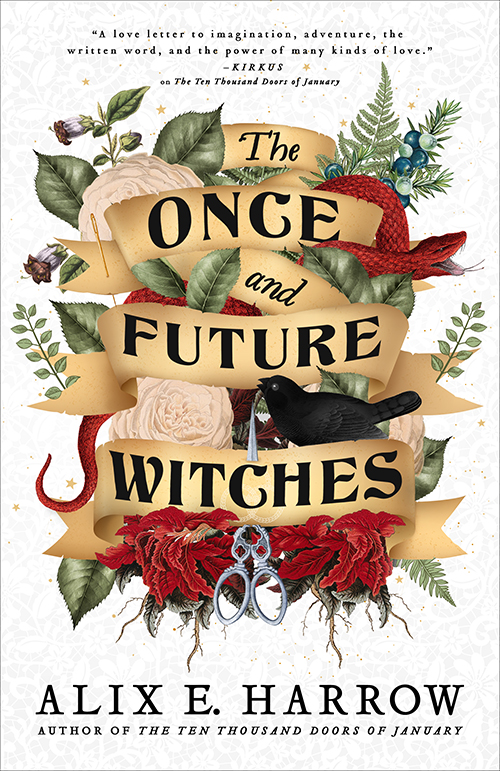
When I was younger, one of my favorite Disney films was The Sword in the Stone. In high school, I read The Once and Future King by E.B. White as an assigned novel for English class. So, when I came across The Once and Future Witches by Alix E. Harrow, I borrowed it from my local library.
I wasn’t disappointed. There’s magic and wit and the tangled storylines of three sisters that slowly converge. The youngest sister, Juniper reminds me of Granny Weatherwax from Terry Pratchett’s books (who is one of my favorite witches of all time). In Once and Future Witches, Harrow gives us a feminist adventure story full of magic, and I devoured every page of it.

I only picked up Nettle & Bone by T. Kingfisher because I was trying to read all of the Hugo Award nominees. I didn’t expect much since it’s such a short read. The heroine of the novella is given three impossible tasks and, through stubborn determination, begins to make her way through them. What I liked about this fairy tale is that the princess didn’t wait to be saved by anyone. She didn’t even want to marry a prince. Instead, she does her best to kill one.

I’m more than a little late to the party, but I started the Wheel of Time series by Robert Jordan last year. I decided to give the first book a try after watching the first season of the television series. The show left me with some questions that I hoped the book would answer. I was right. And the book was so good that I decided to dive into the rest of the series, even though I suspect it will be a few years before I make it through them all since the hold list for the audiobooks is rather long.
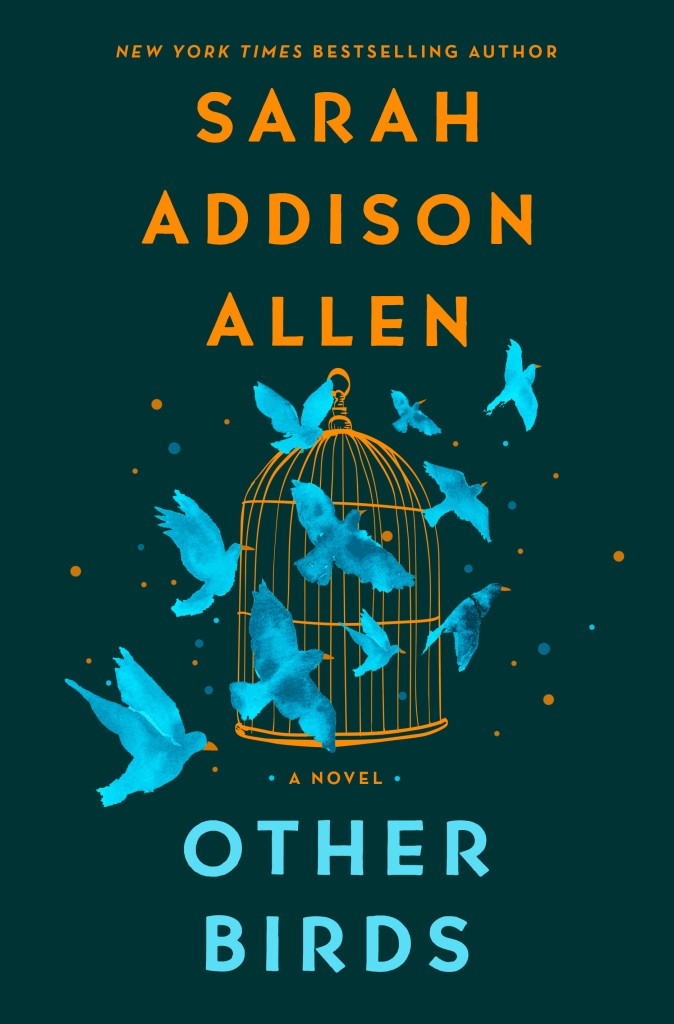
My favorite read of the year came from one of my favorite authors, Sarah Addison Allen. Allen is a master of magical realism. While her novel, Other Birds, wasn’t my all-time best-loved book of hers (that honor belongs to Garden Spells), I still loved this story of complicated grief and the bond formed between found family.
I’ve set a goal of 52 books again for 2024. I’m off to a slow start, but I really enjoyed Fourth Wing by Rebecca Yarros (I recommend the Graphic Audio version. A full cast really enhances the experience.).
The year is still young, and I’m looking forward to chipping away at my growing to-be-read list. What was the last great book you read? I’d love to add it to my list! Please leave a comment on this post on the Old Scratch website or on our Old Scratch Facebook page.


Instant Noodles is an online lit magazine formerly curated by me, alone, and now curated by Old Scratch Press.
For Valentine’s Day, here are a few of my favorite poems about love from the magazine, pieces that I chose for publication.
My bureaus and dressers,
all crossed with blue tape,
a sea of cubed cardboard
spilling out into the hallway
and into all the other rooms.
Where is my bedside table?
Why does the morning smell
like fresh coats of paint,
and why a sound
like a parade of identical cars?
My muscles still burn
from the hours of unpacking
from yesterday’s move.
Where is my toothbrush? My comb?
Then I see you,
tranquil and sleeping
and I know
I am home.
Greg’s poem, so sweet, simple about the things that are not fireworks about love, but make us exceedingly happy all the same.
We were linked long before we met.
We have been down the same wrong path
at different times with the same rancid rogues.
When we met, I was coming out the wrong side;
you were still there floundering hopelessly.
At first, I didn’t pay you much notice at all.
The death of a dear mutual friend
brought us together at the freshly dug gravesite.
We are good, now, together, walking that tightrope
of ‘fall off the wagon at any time’ good
that depends so much on breathing love’s balance.
Gerry’s poem, about all the ways that love connects us, adds wholeness to our lives, even as we get past the frenzy of youth.
My son found the dragon’s tooth amongst
some rocks and fine white sand. He washed
it clean in a tidal pool. A Hermit crab stole it,
scraping the tip then sucking the remnant root.
The boy threw some sand and stole it back.
He climbed up on the rocks with me to sit.
We examined the hard fire, inner blackened.
Easily sold to tourists later, paying us much more
to guarantee their safe return passage .
Colin’s poem I always took to be about parental love: how our children absolutely make us filled and absorbed and imaginative and plain old grateful to be in their magical world.
moon over wooden hull
us under birch wood
left hand forward 4 ur bow
thwarted by ur stern pry stroke
back stroke 2 ur gunnel
seeking ur back sweep stroke
u j-stroke away
non-swimming clothes on
prefer clothes off
cross draw stroke 2 ur dock
u eskimo roll out
ur knee on deck
solo under skin
draw stroke my wood
Robert, a member of Old Scratch Press, may correct me, but I always took this to be a poem at the beginning, heady stage of love, and so much about the abandonment that I always feel in the time of transition from spring to early summer.

Betahany’s poem always seemed like lust to me, which is beefy and delicious, in my view, like biting into a huge strawberry covered in dark, dark chocolate, and certainly an important part of romantic love.
Lastly, on this hopefully gentle day that comes to you with a hug, or, perhaps a kiss, another from Greg Hill, possibly my favorite poem submitted to Instant Noodles to date. Happy Valentine’s Day. May you find love, or love find you!
the day
starts in bed
we make
coffee and
something from milk
flour eggs
water
in the shower
warming us together
after breakfast
you brush
a dollop of shampoo
on my nose
as I rinse my hair
even the nothing
you do
is something
to me
By Robert Fleming
On Valentine’s Day, write a sonnet. A sonnet is for love. In the 13th-century, the sonnet was invented by Giacomo da Lentini, a member of the Italian Court of the Holy Roman Emperor Frederick II in Palermo, Sicily.

William Shakespeare popularized the sonnet. William lived 1564–1616 in Stratford-upon-Avon, Warwickshire, England.

The original sonnet is a fourteen-line poem in iambic pentameter with endline rhyme with the sequence: ABAB CDCD EFEF GG. The last two lines, GG, are a change, called a Volta. I still confuse iambic pentameter with the Olympic Pentameter event where a shepherd guides lambs over hurdles.
Perhaps, William’s most famous sonnet is #18: Shall I compare thee to a summer’s day?
Shall I compare thee to a summer’s day?
Thou art more lovely and more temperate:
Rough winds do shake the darling buds of May,
And summer’s lease hath all too short a date;
Sometime too hot the eye of heaven shines,
And often is his gold complexion dimm’d;
And every fair from fair sometime declines,
By chance or nature’s changing course untrimm’d;
But thy eternal summer shall not fade,
Nor lose possession of that fair thou ow’st;
Nor shall death brag thou wander’st in his shade,
When in eternal lines to time thou grow’st:
So long as men can breathe or eyes can see,
So long lives this, and this gives life to thee.
Where is William’s poetry title? Don’t poems have to have a title? Some poets don’t give titles and when published the publisher makes the first line the title.
As a poet for fifty years, I have written many sonnets and teach a two-hour workshop on how to write a sonnet. I am proud, at the end of my workshop, many participants write a first draft and complain they are exhausted. Beware of the sonnet sweat.

My writing which responds to William’s sonnet #18:
William does this frock make me look fat?
Why should I compare you?
Shall my rating do good?
Will it make me want
you more than what I had,
nor worse than what I can’t get?
Your score will be my score.
Shall there come a day when you won’t ask?
Oh no, no, not that frock, take it off!
Robert, your poem does have a title, but only nine lines. It is not a sonnet. As a tribute to Cole Porter, who composed Anything Goes in 1934, the less taxing American sonnet was invented which is a fourteen-line poem that does not demand iambic pentameter nor endline rhymes. If the American sonnet’s fourteen lines is still too sweaty for you, write a monostich-1 line poem: I Love You.
The author, Robert Fleming is a founding/contributing editor of Old Scratch Press (OSP). To read more of Robert’s work: