

WHITE NOIR, by Old Scratch Press founding member Robert Fleming has hit the best sellers’ list!
CONGRATULATIONS Robert! We love your book! Well-deserved!

WHITE NOIR, by Old Scratch Press founding member Robert Fleming has hit the best sellers’ list!
CONGRATULATIONS Robert! We love your book! Well-deserved!
Bewilderness Writing is the brainchild of Old Scratch member Ellis Elliot. Ellis offers so many things for writers on her website. I look forward to the newsletter too, for all its tips and tricks. Check out her site. You’re going to love it!


We’re thrilled to shine the spotlight on Anthony Doyle, a writer with a captivating journey from the historic town of Wicklow, Ireland, to the vibrant streets of São Paulo, Brazil. In this exclusive interview, Anthony shares insights into his creative process, inspirations drawn from dramatic landscapes, and the unique linguistic gems that grace his works.
Curious to delve into the mind of this imaginative wordsmith? Read the full interview here. Embark on a literary journey and explore the diverse influences that shape Anthony’s writing, from Viking tales to the bustling diversity of São Paulo.
Don’t miss the chance to uncover the essence of Anthony Doyle’s creative spirit. Head over to the interview now!
And get your copy of his groundbreaking novel of human hibernation, deep thought, and climate change, HIBERNACULUM.
In the USA? Start reading it for free in the Kindle Vella!


Check out the holiday issue of Instant Noodles lit mag: each piece chosen by a member of the Old Scratch Press cooperative!
 Are you ready to embark on an unforgettable journey through the depths of human existence? Look no further than WHITE NOIR, by Robert Fleming, a mesmerizing black and white visual poetry book that delves into the enigmatic tapestry of life, from birth to death and beyond. This book is not just a collection of verses; it’s a visual and emotional experience that will leave you spellbound.Who Should Dive into WHITE NOIR?Appreciators of Visual Poetry: If you’re someone who finds beauty in the fusion of words and images,WHITE NOIR is your treasure trove. Fleming’s mastery of visual poetry will leave you in awe.Lovers of Graphic Arts: This book is a canvas of creativity, merging the artistry of words and visuals in a way that will captivate anyone with an appreciation for graphic arts.Devotees of Dark Humor: WHITE NOIR thrives on dark humor, taking you on a rollercoaster ride of emotions that ultimately ends with a glimmer of hope. It’s a unique blend of wit and introspection.What Awaits You in WHITE NOIR?A Profound Human Journey: WHITE NOIR takes you on a journey that spans the entire lifespan of humanity. It explores the diverse facets of existence, from the raw and unfiltered to moments of humor and reflection.Balance of Text and Images: The book strikes a perfect balance between text and visuals, creating a multi-sensory experience that will leave you immersed in its world.Taboo Themes: Fleming fearlessly tackles taboo subjects, including religion, sex, politics, and gun violence, inviting readers to confront and contemplate these complex issues.Experimental Poetry Forms: Get ready for a literary adventure as Fleming explores experimental poetry forms, such as phone texting, Alexa questions, and palindromes, pushing the boundaries of conventional poetry.Why Will You Love WHITE NOIR?A Petite Delectation: You can devour this thought-provoking journey in a single sitting, making it perfect for a cozy afternoon or an intellectual escape.Original and Modern: “White Noir” is a testament to contemporary poetry, offering a fresh perspective on life’s most profound questions.Perfect Gift: Looking for a unique gift for a friend or loved one? “White Noir” is a one-of-a-kind present that will leave a lasting impression.Robert Fleming, the Doodleman, infuses his work with influences from literary giants like Robert Frost, Dr. Seuss, and the Beats, as well as the artistic visions of Salvador Dali and Andy Warhol. With over 400 works published internationally, Fleming’s talent is undeniable, earning him recognition and accolades from various literary circles.Don’t miss the opportunity to explore the captivating world of “White Noir.” Order your copy today and join the ranks of those who have been moved and inspired by Robert Fleming’s unique vision of human existence. It’s not just a book; it’s an experience waiting to be embraced…. Are you ready to embark on an unforgettable journey through the depths of human existence? Look no further than WHITE NOIR, by Robert Fleming, a mesmerizing black and white visual poetry book that delves into the enigmatic tapestry of life, from birth to death and beyond. This book is not just a collection of verses; it’s a visual and emotional experience that will leave you spellbound.Who Should Dive into WHITE NOIR?Appreciators of Visual Poetry: If you’re someone who finds beauty in the fusion of words and images,WHITE NOIR is your treasure trove. Fleming’s mastery of visual poetry will leave you in awe.Lovers of Graphic Arts: This book is a canvas of creativity, merging the artistry of words and visuals in a way that will captivate anyone with an appreciation for graphic arts.Devotees of Dark Humor: WHITE NOIR thrives on dark humor, taking you on a rollercoaster ride of emotions that ultimately ends with a glimmer of hope. It’s a unique blend of wit and introspection.What Awaits You in WHITE NOIR?A Profound Human Journey: WHITE NOIR takes you on a journey that spans the entire lifespan of humanity. It explores the diverse facets of existence, from the raw and unfiltered to moments of humor and reflection.Balance of Text and Images: The book strikes a perfect balance between text and visuals, creating a multi-sensory experience that will leave you immersed in its world.Taboo Themes: Fleming fearlessly tackles taboo subjects, including religion, sex, politics, and gun violence, inviting readers to confront and contemplate these complex issues.Experimental Poetry Forms: Get ready for a literary adventure as Fleming explores experimental poetry forms, such as phone texting, Alexa questions, and palindromes, pushing the boundaries of conventional poetry.Why Will You Love WHITE NOIR?A Petite Delectation: You can devour this thought-provoking journey in a single sitting, making it perfect for a cozy afternoon or an intellectual escape.Original and Modern: “White Noir” is a testament to contemporary poetry, offering a fresh perspective on life’s most profound questions.Perfect Gift: Looking for a unique gift for a friend or loved one? “White Noir” is a one-of-a-kind present that will leave a lasting impression.Robert Fleming, the Doodleman, infuses his work with influences from literary giants like Robert Frost, Dr. Seuss, and the Beats, as well as the artistic visions of Salvador Dali and Andy Warhol. With over 400 works published internationally, Fleming’s talent is undeniable, earning him recognition and accolades from various literary circles.Don’t miss the opportunity to explore the captivating world of “White Noir.” Order your copy today and join the ranks of those who have been moved and inspired by Robert Fleming’s unique vision of human existence. It’s not just a book; it’s an experience waiting to be embraced…. |
You can get a copy of white noir on Amazon !
By Ellis Elliot
Sharing your work by submitting it for publication can be a daunting task in many ways, not only because it causes a vulnerability hangover, but also because it can be overwhelming and hard to figure out where to start. I’m hardly an expert, but I have submitted dozens of poems to literary journals and contests, and found a good bit of success, and this is what I’ve learned.
First, begin by stalking online and print literary journals. Find some you like and respect. Consider the type of writing you want to submit. You would not submit your Southern Gothic short story to a literary journal for Christian Sci-Fi (yes, that’s a thing). Find the right kind of “fit”, as far as genre and theme, for your work. See if the journal resonates with you. And while it is never wrong to “shoot for the stars” and submit to the New Yorker or another of that ilk, it also makes sense to spread your net wide, over a variety of journals, big and small.
How do you even find these journals in the first place? Maybe your school has one, or you can broadly search online for ones in your genre, and then read some. Read to get a sense of specific journals, and what all is out there.
Also, there are numerous free and paid websites that have lists of journals, and some can even narrow it down for you based on your preferences. A few I use are: Submittable, Duotrope, Poets and Writers magazine, Writer’s Digest, and Authors Publish. (See links below) These provide lists of publications, along with dates and details. Always check if there are fees involved, and choose wisely. I’m the first to admit, it is a lot of work to wade through the sea of lit journals in order to filter down to the ones you want, but once you find them, your list has begun, and from there you can only add to it. Plus, once those algorithms get in your computer, you’ll be getting all sorts of lit-related stuff, like it or not.
Once you’ve narrowed it down to the journals you want to send your work to, be sure to read the guidelines carefully. You don’t want your work tossed because you sent five poems when they asked for one, or sent a 500-word bio when they asked for 50.
Be prepared with a good cover letter, short biography, and a photo. Your cover letter should be addressed to the editor of your genre in that publication. It should be brief and can include references to the journal you’re submitting to, like how you enjoyed their recent issue on butterfly migration, but don’t overdo. They are there to read your writing, not your cover letter. Be sure to thank them for their time and effort, because it does require a lot of both.
The bio should also be matter-of-fact, including salient facts, like where you live, what job you have, or family and pets. Include any writing-related experience you’ve had, whether it’s school, workshops, or clubs. If you’ve been previously published, be sure to include those titles.
You can always throw in a little personality and add things like, “in my spare time I like to taxidermy butterflies and run on the beach.”
Finally, the photo. I recently paid for a headshot, but that was only after years of using shots I made my husband take of me immediately after I got home from the hair salon. Just be sure you have something ready to go.
Once you’ve sent your best work in the best way you can, you wait. Most lit journals get a boat-load of submissions and turn-over time can take months. When you get an inevitable rejection, know that the process is entirely subjective. If it is your best, then it is art, and no two people necessarily will see your art in the same way. If you get accepted, let that feeling cover you like syrup, do a happy dance, then get to work withdrawing from all the journals you sent that piece to. Most journals allow “simultaneous submissions” with the caveat that you alert them if it is accepted elsewhere. It’s a good problem, but necessary to maintain good
I write all of the above only after having made every conceivable mistake and had innumerable rejections. But, I have learned a lot along the way. Like anything, submitting is work, and a job unto itself. It is also well worth it when you have the satisfaction of seeing your work in print.
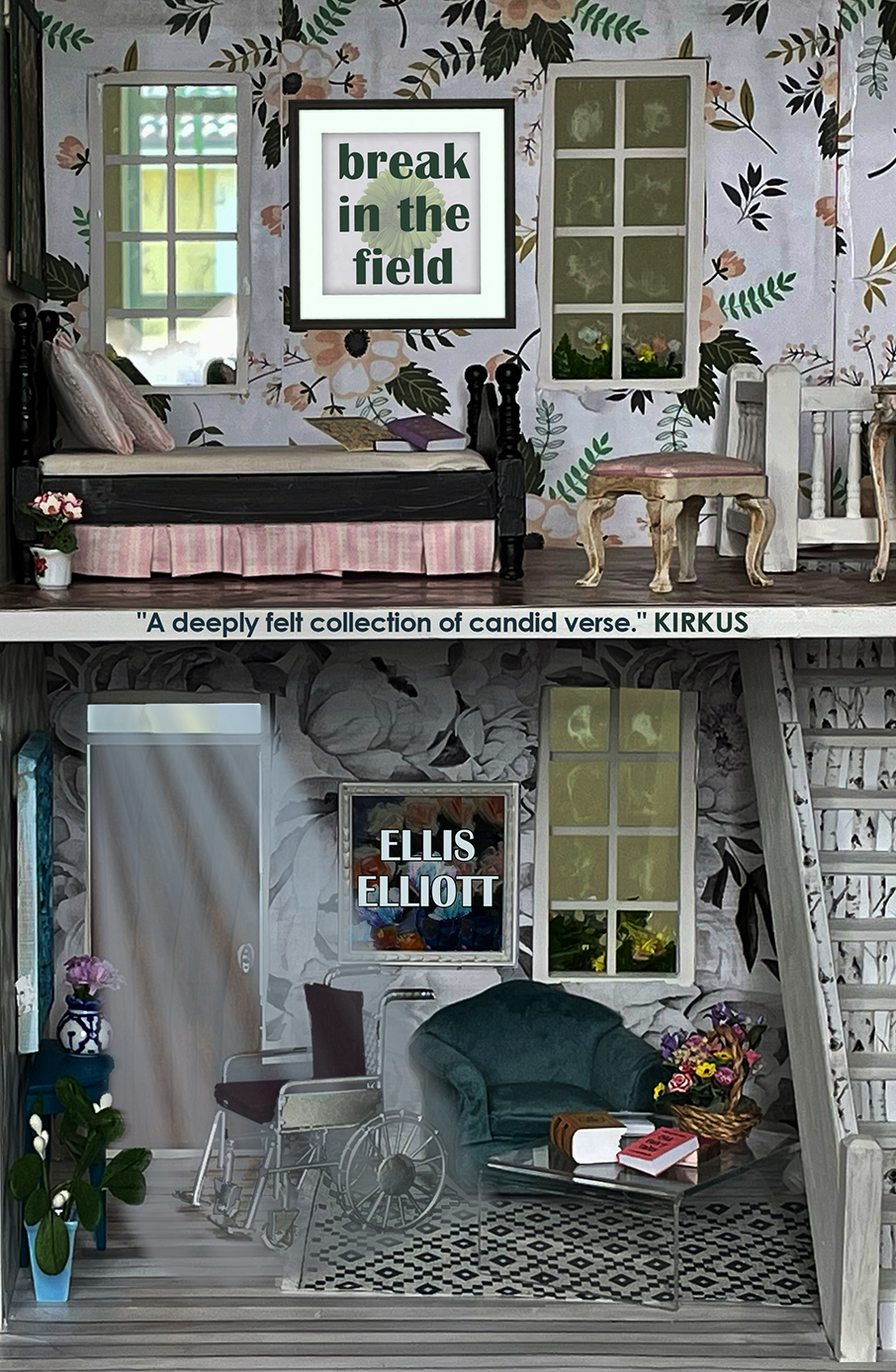
Ellis is one of our founding collective members. Her poetry collection, Break in the Field, is available for purchase here.
Below are some links to get you started on sending out your work.
By Virginia Watts
When people hear that I try to write some poetry, I can tell they are thinking, formulating the common question. I stiffen and get ready for it. “Who is your favorite poet?” I used to respond with the complete truth, that I have many favorites. Sometimes I’d tick off a list of names they didn’t ask for and wouldn’t remember.
Now, I tell them first that a favorite poet is someone a reader returns to when they need them most. Your favorite poet is a companion, a friend’s voice in the dark. Poetry gives us laughter when we need it. Poetry comforts us when we are afraid, sad, lost. I tell people this because I hope they will search for a favorite poet of their own. I know once they find one, they’ll understand.
My favorite poet is Ted Kooser, a former United States Poet Laureate and winner of the Pulitzer Prize in 2005. He has published numerous books of poetry as well as children’s books and works of nonfiction. Kooser’s poems are drawn from midwestern landscape and everyday rural life. I read poetry often, as much as I can, but Kooser’s poems are the ones I return to like home’s fire to sit with again.

IT DOESN’T TAKE MUCH
BY TED KOOSER
Maybe an hour before sunrise, driving alone
on the way to reach somewhere, seeing,
set back from the highway, the dark shape
of a farmhouse up against deeper darkness,
a light in one window. Or farther along
into a gray, watery dawn, passing
a McDonald’s, lighted bright as a city,
and seeing one man, in ball cap, alone
in a booth, not looking down at his table
but ahead, over the empty booths. Or
maybe an hour farther, in full daylight,
at a place where a bus stops, seeing
a woman somewhere in her forties,
dressed for cold, wearing white ear muffs,
a red and white team jacket, blue jeans
and Muk Luks, one knit mitten holding
a slack empty mitten, her bare hand
extended, pinching a lit cigarette,
dry leaves—the whole deck of a new day—
fanned out face-down in the gutter, but
she’s not stooping to turn over a card,
but instead watching a long ash grow
even longer at the ends of her fingers.
Just that much might be enough for one
morning to make you feel part of it all.
From The Path to Kindness: Poems of Connection & Joy.
Forthcoming from Storey Publishing, 2022.
Thank you for reading. Follow us on Facebook and X. We’d love to hear about which poets inspire you.


Old Scratch Press founding member, poet and novelist, Anthony Doyle has a few suggestions:
“Science fiction envisions the future. The best way to imagine future change is to look at how and when change occurred in the past.
The drivers seldom change: climate, war, and famine. None of those indicators are looking particularly good for humanity right now. Dudley Young’s masterful, poetic, and irreverent scholarly work about the origins of the sacred in human history is the most enjoyable and rewarding book I have read on human evolution and development. So many things began to make sense to me after reading it.”
Westchest University Poetry Center sponsors the
Deadline: November 15, 2023
The distinguished American poet Donald Justice is recognized as one of the finest poets of the late twentieth century.
• Accepts – Poetry • Fee: $25 • Prize: $1500
Munster Literature Centre sponsors
Gregory O’Donoghue International Poetry Competition
Deadline: November 30, 2023
The competition is open to original poems in the English language of 40 lines or fewer that have never been publicly broadcast or published. The poem can be on any subject, in any style, by a writer of any nationality, living anywhere in the world.
• Accepts – Poetry • Fee: €7 or €30 for 5 • Prize: €2,000
Frontier Magazine Award for New Poets
Deadline: December 1, 2023
They are looking to uplift an up-and-coming poet, with no more than one full-length collection forthcoming or published at the time of submission. “We award $3,000 for the winning poem, selected by our guest judge. Our second- and third-place winners receive $300 and $200, respectively. All three winners will be published”
• Accepts – Poetry • Fee: Yes • Prize: $3000
Slippery Elm Literary Journal
Deadline: February 1st
Entry is $15. All entrants will receive a copy of their 2024 print issue.

Elizabethtown College
Deadline: December 1, 2023
We are honored to host the annual Joy Bale Boone Poetry Prize whose winners and finalists will appear in the following Spring issue of The Heartland Review.
Read contest rules carefully. Most contests require your name be removed from all work and many have specific requirements for formatting. Do not wait until the last minute and check your work over carefully before sending. Good Luck! May Your Words Resonate With the Judges! Please sign up to follow the Old Scratch Press blog so you never miss submission opportunities.
By Nadja Maril
Today I was attending an online workshop led by CNF writer and poet Nicole Breit and she was talking about different writing forms. One of those forms was the list format, which Nicole has used in her essay entitled, Atmospheric Pressure, published in Room Magazine. Her lyric list form essay jumps backwards and forwards in time to convey the cycle of grief
The mention of lists, immediately brought to mind flash prose. Plenty of flash fiction and CNF flash stories use the list form. Just think of what kind of story you can tell with a curated shopping list, a packing list, or list of desired skills in the Help Wanted section of the classifieds.
Before Nicole began focusing on writing memoir, she was writing poetry, Many of her creative ideas for creative nonfiction come from poetry, which got me to thinking about List Poetry.
Simply stated, a list poem consists of a list of images or adjectives. The compilation of the items as a group creates the poem. By their nature, List Poems use repetition. They also often use what is called anaphora, the reoccurrence of the same sound to create a driving rhythm.
An old favorite poem of mine is by Alice Duer Miller (1874-1942) who was very active in the American suffragette movement.

Why We Oppose Pockets for Women
By Alice Duer Miller
1. Because pockets are not a natural right.
2. Because the great majority of women do not want pockets. If they did they would have them.
3. Because whenever women have had pockets they have not used them.
4. Because women are required to carry enough things as it is, without the additional burden of pockets.
5. Because it would make dissension between husband and wife as to whose pockets were to be filled.
6. Because it would destroy man’s chivalry toward woman, if he did not have to carry all her things in his pockets.
7. Because men are men, and women are women. We must not fly in the face of nature.
8. Because pockets have been used by men to carry tobacco, pipes, whiskey flasks, chewing gum and compromising letters. We see no reason to suppose that women would use them more wisely.
Another famous poem that also takes the form of a list, is Walt Witman’s (1819-1892) I Hear America Singing.

I Hear America Singing
By Walt Whitman
I hear America singing, the varied carols I hear,
Those of mechanics, each one singing his as it should be blithe and strong,
The carpenter singing his as he measures his plank or beam,
The mason singing his as he makes ready for work, or leaves off work,
The boatman singing what belongs to him in his boat, the deckhand singing on the steamboat deck,
The shoemaker singing as he sits on his bench, the hatter singing as he stands,
The wood-cutter’s song, the ploughboy’s on his way in the morning, or at noon intermission or at sundown,
The delicious singing of the mother, or of the young wife at work, or of the girl sewing or washing,
Each singing what belongs to him or her and to none else,
The day what belongs to the day—at night the party of young fellows, robust, friendly,
Singing with open mouths their strong melodious songs.
Thank you for reading the Old Scratch Press blog. Please sign up to follow us if you haven’t already done so, and check out our next chapbook, Robert Fleming’s White Noir.
 OLD SCRATCH PRESS