Submitters Beware

There has been much in the news within literary circles lately about literary journals with questionable practices, mostly focused upon submission fees and how these fees are used. No one should question the idea that it is expensive to run a literary magazine with such costs as editing and overhead, and most importantly, not everything about submission fees should be seen as negative. It is possible that when writers must pay a nominal fee to submit their work to literary magazines, they may be inspired to submit a more edited and stronger piece. However, it’s one thing to pay $3.00 to one journal to submit but let’s face it, most writers must submit the same piece to many magazines if they want to increase their chance of having it published. This is why submission fees can really add up. There is also the idea that if submission fees are charged, less submissions will come in and this will lead to faster publication decisions by editors. Like it or not, it does seem that submission fees are here to stay. If we accept that fact, then we must understand some realities about submission fees.

I am not going to name names here, but some well know literary journals have been engaging in practices that are shameful. It’s hard enough and expensive enough to be a writer trying to get work published in literary journals without these bad actors but, unfortunately, they do exist. One well known journal accepted submissions and charged for over a year but had already stopped reading and publishing new word. They later folded and changed their name. I have personally submitted to journals several times only to realize they had gone defunct. I was never able to get my submission fees back. Recently, several well-known journals held contests, charged the high submission fees customary in literary contests, and never announced any winners. Suffice it to say that just because something calls itself a literary journal doesn’t mean it should. 

So, what is a writer to do? How can we protect ourselves from unethical practices and scam journals? Here are some practical ideas to consider.

  1. Is the journal listed on reputable databases such as Poets and Writers, Submittable, NewPages.com, Clifford Gastang Literary Magazine Rankings, MLA International Bibliography, JSTOR
  2. Is the journal’s website polished, free of grammatical and spelling errors. Is it easy to navigate? Does is look professional? A poor website design might be a cause for concern.
  3. Do their publication terms comply with normal industry standards. Publication guidelines should always be clear and concise and include all requirements such as formatting parameters. 
  4. Be very concerned if a journal is asking for all rights to your work. They should be asking only for first serial rights. 
  5. RED FLAG: Is their submission fee unreasonably high? Are they charging $15.00 as an example when most journals are at $3.00. This should worry you.
  6. Do they explain why they are charging a submission fee of any amount?
  7. If they do charge submissions fees, do they also have yearly contests where they offer a monetary prize?
  8. It should never be difficult to find contact information on the journal’s website, and there should be some explanation of who the editors are and what their editorial process is. A journal should have a physical address and an email address.
  9. Look at their publication history. Have they been publishing consistently? Can you purchase copies of the journal on their website? Look at the most recent issue. Look at the quality.
  10. If the journal has a blog on their website, is it being maintained? 
  11. Does the journal submit work to contests such as Pushcart Prize or/and O. Henry Awards?
  12. Do they have a social media presence such as Facebook where they regularly promote the work they publish?
  13. Be aware of any unrealistic or boastful claims about readership. 
  14. If you are submitting to a contest, look to see if the list of winners from last year’s contest is listed on the journal’s website. It should be.
  15. Be aware if a journal repeatedly pushes back contest deadlines. 

I have been submitting to literary journals for many years and have been lucky to have some level of success. Be aware of where you are sending your writing, but don’t let a few bad apples dissuade you from submitting to literary journals!!! The overwhelming majority are ethical to a fault and the writing world would be lost without literary journals. They are an invaluable part of our art form. I read literary journals, subscribe to them, admire them immensely and thank them for all the wonderful writing they bring to the world. So, happy submitting to my fellow writers and the best of luck to you all!

~Ginny

Virginia Watts has been fortunate to have published nearly 100 pieces in literary magazines including CRAFT, The Florida Review, Reed Magazine, Pithead Chapel, Permafrost Magazine, Broadkill Review, Two Thirds North, Hawaii Pacific Review, Sky Island Journal, Eastern Iowa Review, Evening Star Review and Streetlight Magazine. Nominated four times for a Pushcart Prize and four times for Best of the Net, in 2019, Watts won The Florida Review Meek Award in nonfiction.

Virginia’s new book is now available from Old Scratch Press:

Her prior poetry chapbooks Shot Full of Holes and The Werewolves of Elk Creek 
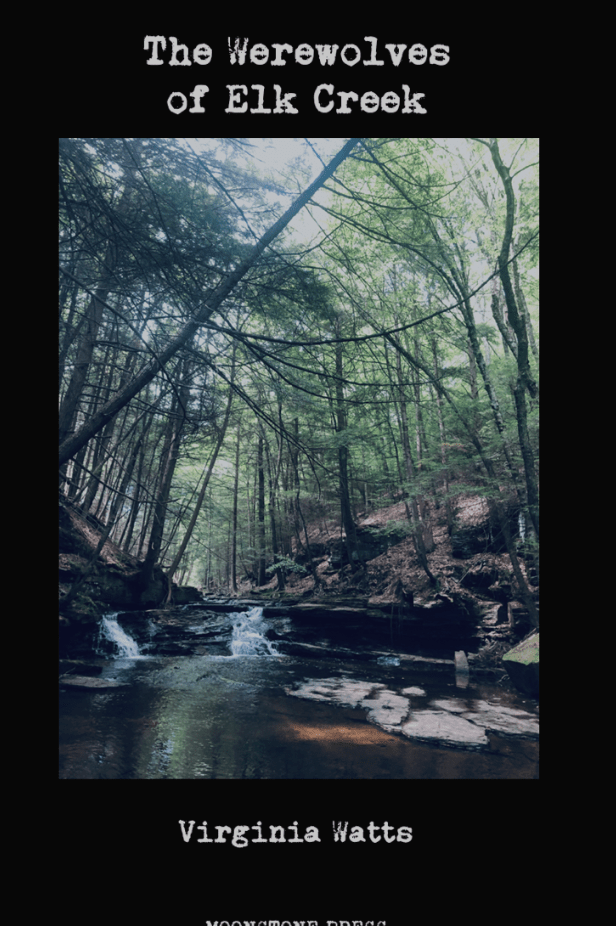
 are available from Moonstone Press. And her debut short story collection Echoes from the Hocker House is not to be missed!

How to Get the Most Out of Critique Groups

I have participated in quite a few of writing critique groups for many years now, and I can say that the feedback I have received from fellow writers has been critical to my success in publishing my work. It is true that if you remain with the same group over an extended period, there will be certain people that you will agree with more than others for suggestions for editing your work. There is nothing wrong with that. After all, everyone has different tastes and preferences. That being said, it is important to read and consider all comments you receive. Here are a few tips to guide you in getting the most from the process of critique. 

  1. Decide what you are honestly looking for before you submit a manuscript. If you just want to know if the story is worth working on at all, then submitting a very rough draft might make sense but I never do that. My approach is to put in all the time necessary to complete a short story or poem and make it the best I can. This means, for me, several months of writing and many edits. I probably edit a piece fifty times or more before I feel I have done all that I can for it. I prefer to circulate what I believe is “a finished story.” 
  • During the critique, just sit quietly and listen. In the groups I attend, I will receive written comment, so I don’t have to write notes during the oral critique. You can learn a lot by listening to colleagues discuss and debates questions or concerns they may have about your writing. Above all, don’t say anything as the writer. You aren’t there to explain your work and above all, you are not there to defend it. You don’t want people to feel that they cannot give you honest and open feedback. That’s what you are there for and as writers, that is what we all need. 
  • Try not to feel hurt about “negative” comments about your writing. At first, for most writers, we do feel hurt but in time, this goes away as you realize that critique is an honest exchange of creative suggestions meant only to help you decide what final edits you wish to make. We cannot read our own work in a way that will make it the best it can be. We don’t have the distance to be able to do this. In short, we need each other. Of course, the critique should be done in a constructive, professional way. I have always had good group leaders who have insisted upon this.
  • At the end of a critique, I always make sure to thank everyone for taking the time to read and critique my work. I know it takes time and effort, because when I read for others, I give it my all too. It is the greatest gift we can give to each other as writers.
  • So now that you have your critiques, it is very important to set everything aside for a minimum of a month before you return to make edits. Early on I made the mistake of making edits too quickly and they were knee jerk and not good. You need time to let things sink in and percolate. Give it a rest.
  • When I do edit, I go through each written critique and fix all mechanical edits first, such as spelling errors. While doing that, I keep a running list of more involved edits that I will look at more carefully to see if I agree with them. This might be things such as a section of unrealistic dialogue, an ending that needs less or more, a character that lacks some necessary background. 
  • I have never not changed a story or a poem based on professional feedback. Some more than others, but all have been edited because of ideas or suggestions or questions raised by writing colleagues and I can honestly say that my work has been improved immeasurably by the critique process. I am so grateful for my writing colleagues and friends. I do have one writing friend who I give my final edited pieces to for one final read. And another tip for writers. Seek out readers of all ages to critique your work. You will get different perspectives that will improve your final product. 
  • An important final comment about writing groups. Over the years. I have made such wonderful, close friendships with the people I have met in these groups. It’s funny how life works. You go looking for something and you come away with something so much more valuable than you expected.
  • Good luck with your writing and enjoy all of the process, including critique and editing in response to critique. I promise you that you will find it rewarding to not only give critique but also to receive it. It is part of our art form. 

Enjoy your group!  

~Ginny

Virginia Watts has been fortunate to have published nearly 100 pieces in literary magazines including CRAFT, The Florida Review, Reed Magazine, Pithead Chapel, Permafrost Magazine, Broadkill Review, Two Thirds North, Hawaii Pacific Review, Sky Island Journal, Eastern Iowa Review, Evening Star Review and Streetlight Magazine. Nominated four times for a Pushcart Prize and four times for Best of the Net, in 2019, Watts won The Florida Review Meek Award in nonfiction.

Her poetry chapbooks The Werewolves of Elk Creek 

and Shot Full of Holes are available from Moonstone Press. Her debut short story collection Echoes from the Hocker House is available on Amazon.

Hard Learned Lessons Regarding a Writer’s Glamorous Life

By R. David Fulcher

Collective member R. David Fulcher opines about Writing and “the Process”

Reprinted by permission from one of his blog posts available at Davidfulcher.com

When I was young, before I had written a word of fiction, I believed that all writers lived a glamorous life. Ernest Hemingway in particular seemed to embody this image – traveling on safari, sport fishing in the Gulf of Mexico, drinking whiskey as if he were a fish himself – doing almost everything except writing.

The writer Ernest Hemingway in his later years.

Now that I  am older and wiser, I know that Hemingway wrote for hours each day, making him one of the more disciplined writers of his time.  But the larger-than-life Hemingway was a more appealing character to imagine, and therefore the one my younger self gravitated towards.

So, I am writing this post to the new breed of writers out there to let them know some of the disciplines they will find useful in their writing lives, and leaving the catching of Marlins to Salt Water Sportsman Magazine.

Bait the hook and try to catch something big. It’s more difficult than you think.

What Writing is Really Like…Computer Programming

Computer Programming is all about language and syntax, and so is writing.  I know something of this as programming is my day job.  I have often spent hours debugging some code, only to find that a misplaced semi-colon or comma was the culprit.  Writers also will find themselves laboring over the usage and placement of punctuation, understanding that punctuation in the wrong place can change the entire meaning of a sentence.

What Writing is Really Like…Project Management

Project Managers track task and project status, in addition to schedule, budget and other project elements.  As your writing career grows, you will quickly find yourself in need of a spreadsheet, database or other tool to know what you’ve submitted where, when to send a query letter, relevant contact information for publishers and publications, etc.  You will also need to track readings, book fairs, online interviews, etc. on your Outlook or Google calendar.  These demands will intensify as your writing becomes a fulltime occupation, and as you began to spend more time collaborating with others.

What Writing is Really Like…Marketing Executive

While the big publishing houses have marketing resources of their own, new writers trying to make a name for themselves in small independent presses will find themselves on their own to promote their work.  You will be faced with questions like which social media channels reach the biggest (or more importantly, the most relevant) reading audiences, and does it make sense to subscribe to marketing service to promote your books.  Additional considerations involve creating your own author’s website and blog, all of which may require you to acquire new skill sets. Your ability to effectively promote your work becomes even more critical if your work is self-published.

What Writing is Really Like…Accountant

While writing is an art and not a science, sooner or later you will be focused with financial decisionsand issues related to your writing.  These may be simple decisions such as whether to enter a writing contest that charges a fee, or whether to hire an independent designer to design your author’s web site.  Other more complicated issues will involve reporting any book sale royalties on your income taxes or tracking the sales tax to be submitted from cash sales at a book fair.  And when you’re finally ready to take the leap and go fulltime, the big financial question:  how much will I have to make on my writing to make a living? 

What Writing is Really Like…Lawyer

Finally, you will be faced with legal issues during your writing career.  I’ll give you a real-life example.  Unbeknownst to me, a designer at one of the publishing companies used an image on my book cover that was copyrighted.  Several years later, I was contacted by the copyright holder demanding a correction, and I referred him to my publisher.  The publisher finally admitted the mistake, and at their expense, corrected the cover.  Other examples include understanding reprint rights for your previously published stories and interpreting contractual agreements with publishers when you begin to get your first professional sales of your stories and novels.

So, there you have it – instead of being glamorous, the above disciplines can be tedious, if not downright boring.  However, these skills will propel your writing career much further than your ability to bait a hook.

You can read more of David Fulcher’s posts and learn about his books here.

To learn more about the latest Old Scratch Press publications click here. The Song of North Mountain by prizewinning author Morgan Golladay is just one of several exciting new chapbooks! To learn more about Old Scratch Press and our poetry an short form collective follow us on WordPress at Oldscratchpress.comDav