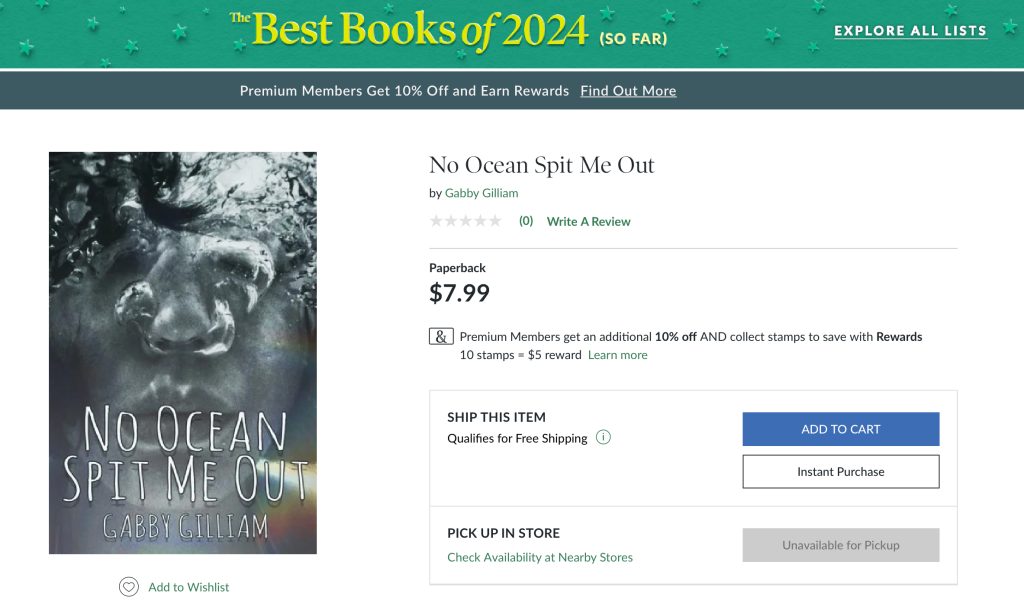
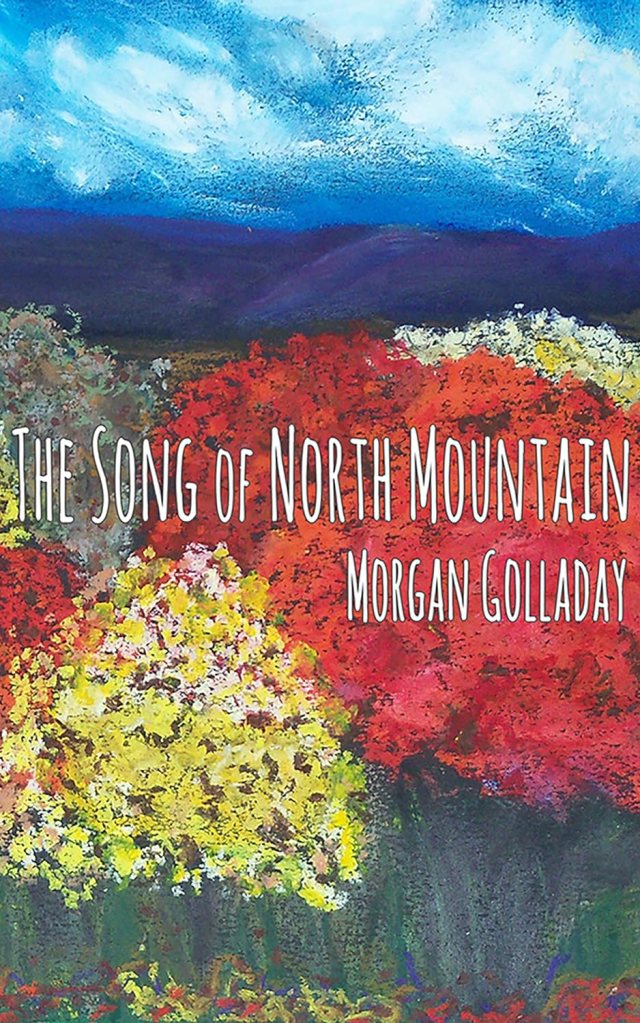
I worked as Virginia’s editor for this book, and I can tell you that you will find this book captivating. It will transport you to another time and place, and I bet you’ll want to read it straight through in one sitting because the stories are so engrossing.
Congratulations Virginia! Fingers crossed that you win it all!
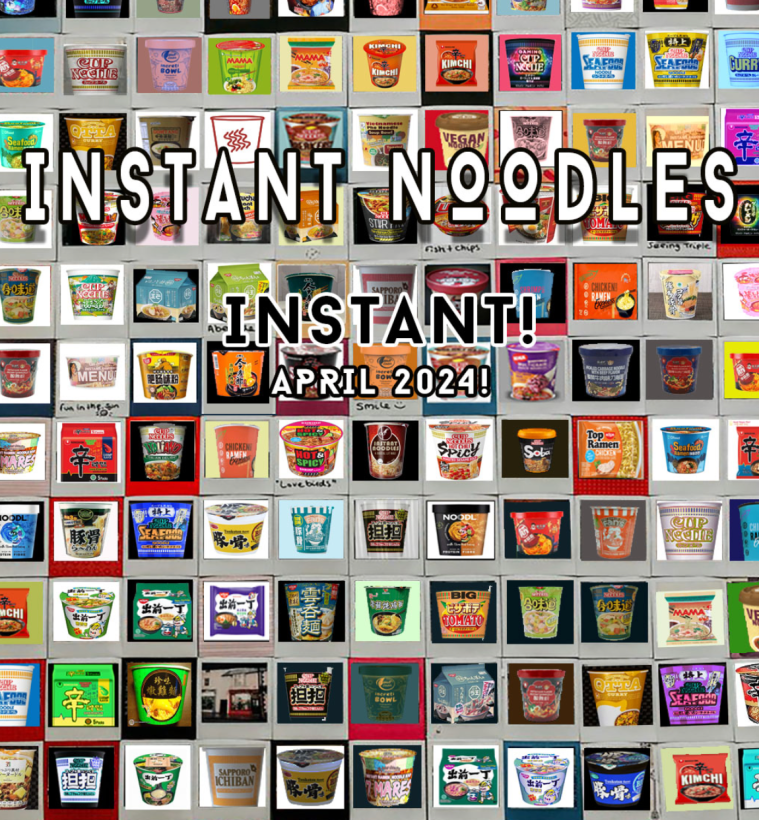
Check out the wonderful writing and art: curated by Old Scratch Press! Lot’s of poetry for National Poetry Month plus other literary delights await you!
Just like a great lunch you can get it in an instant!
He had driven half the night From far down San Joaquin Through Mariposa, up the Dangerous Mountain roads, And pulled in at eight a.m. With his big truckload of hay behind the barn. With winch and ropes and hooks We stacked the bales up clean To splintery redwood rafters High in the dark, flecks of alfalfa Whirling through shingle-cracks of light, Itch of haydust in the sweaty shirt and shoes. At lunchtime under Black oak Out in the hot corral, —The old mare nosing lunchpails, Grasshoppers crackling in the weeds— “I’m sixty-eight” he said, “I first bucked hay when I was seventeen. I thought, that day I started, I sure would hate to do this all my life. And dammit, that’s just what I’ve gone and done.”
I like to think of this poem periodically, to make sure I am doing what I want to do with my life.
It’s tax season. That’s a time I also always wonder if I am doing something worthwhile, or at least not onerous, for my daily bread.
Are you a writer or artisit who’s been bucking hay for 51 years instead of making?
A photo I took, and then photoshopped a bit, of black radishes. I haven’t tried them yet. They’re as large as beets. Have you tried them?
As a human perhaps the toughest task I face is what the heck to feed me, and the spouse and child, each day for dinner. Breakfast everyone is on their own. Daughter, who has a light appetite, has a protein shake. Spouse, who has a sweet tooth, has some sort of flaky thing and coffee. I have several coffeeeeeees, and, well, I never know. Could be beans on toast. Coudl be leftover takeout. Could be tomatoes and olives in a bowl. Could be yogurt. Might be soup. Seldom is eggs.
Lunch… do people eat lunch? I don’t always. The meals seem to run into each other, and usually lunch is the loser for me, because there is not time to have breakfast, do all the morning things, then do the work things, and fit in lunch too, before it’s time for dinner. But I love lunch. I love lentils and tuna, salads of any kind, rice and tofu, possibly more yogurt. Daughter eats the same meal every day, packed in a lunch bag, Annie’s Organic Star Pasta. We put it in a thermos, and, for about four years now, she eats it…. every. single. day. Dedication. Spouse eats, most likely, more sweet and flaky things. But me, I am most apt to have more coffee, and maybe chomp on some lettuce as I am adding some to the guinea pig cage.
Dinner. Dinner ie exasperating. You know it is! There are, if your life is anything like mine, too many people (and we are only three) who like too disparate things, and have crazy schedules, and it can be downright tough to get everything ready on time for everyone’s schedule, but the toughest of all is thinking WHAT?? what to feed everyone.
Enter poetry, short memoir, short short stories, and art, to save the day, as usual!
As you may know, if you have read this blog before. I started a lit mag, Instant Noodles (gee, named after food. Obsessed? Maybe…..), and now Old Scratch Press is running it. Up until this year I was the only one choosing the pieces, and, often I was moved to choose pieces about food. And I have to say, on a side note, getting to read so many wonderful entries has been nothing but a pleasure. I love Instant Noodles, and I have really enjoyed all the pieces, and all the art too. But, yes, it may be possible to make the assumption that I am slightly food… centric? Motivated? Obsessed? And I have often been charmed by pieces that relate to food in some way, even if it is only in my mind.
And so, in this post, I want to direct you to take a look at a few of them.
The first is the memory piece by John Johnson, “Moss Soup and Manicotti,” where he remembers his grandmother’s cooking, “For love in this family was measured by the number of courses served and the temperature in the kitchen….”
I have long loved, “This Is Just to Say,” by William Carlos Williams, the famous short piece about plums. I also love “Stolen Plums,” by Benjiman B. White:
“Shit! I forgot to buy the fucking fresh tomatoes. But we have sun-dried. I’ll work around it.”
Of course she will, as she did two days prior when she forgot the dough needed 24 hours to rise and recovered by scrubbing the pizza for pasta primavera or five days earlier when she left her cherished butter lettuce at the grocery and could atone for the evil deed only with a luscious chopped salad or two weeks ago when she entered her realm crowing about the terrific tuna casserole we were going to enjoy only to realize she had bought sardines and would have to settle for a salad Niçoise (that of course was not chopped liver).
So, for dinner tonight, I fell back on a childhood meal that both my mother and my father used to make from time-to-time when magic and inspiration failed them: leftover meat in gravy ladled over extra cripsy toast. I like to eat mine with hot cherry peppers, and each bite will have, if I’m lucky, meat, bread, gravy, a smidgeon of some sort of potato (I made scalloped), a little scrap of veg., and a small bit of hot cherry pepper, to cut through all that thick buttery gravy and make the moutful pop.
It’s pouring down cold buckets of icy rain where I am.
Wherever you are, may you be full of something nice and warm.
We were linked long before we met. We have been down the same wrong path at different times with the same rancid rogues. When we met, I was coming out the wrong side; you were still there floundering hopelessly. At first, I didn’t pay you much notice at all. The death of a dear mutual friend brought us together at the freshly dug gravesite. We are good, now, together, walking that tightrope of ‘fall off the wagon at any time’ good that depends so much on breathing love’s balance.
Gerry’s poem, about all the ways that love connects us, adds wholeness to our lives, even as we get past the frenzy of youth.
My son found the dragon’s tooth amongst some rocks and fine white sand. He washed it clean in a tidal pool. A Hermit crab stole it, scraping the tip then sucking the remnant root. The boy threw some sand and stole it back. He climbed up on the rocks with me to sit. We examined the hard fire, inner blackened. Easily sold to tourists later, paying us much more to guarantee their safe return passage .
Colin’s poem I always took to be about parental love: how our children absolutely make us filled and absorbed and imaginative and plain old grateful to be in their magical world.
UNDER KEEL ON LITTLE DOE LAKE ~ Robert Fleming
moon over wooden hull us under birch wood left hand forward 4 ur bow thwarted by ur stern pry stroke back stroke 2 ur gunnel seeking ur back sweep stroke u j-stroke away non-swimming clothes on prefer clothes off cross draw stroke 2 ur dock u eskimo roll out ur knee on deck solo under skin draw stroke my wood
Robert, a member of Old Scratch Press, may correct me, but I always took this to be a poem at the beginning, heady stage of love, and so much about the abandonment that I always feel in the time of transition from spring to early summer.
Betahany’s poem always seemed like lust to me, which is beefy and delicious, in my view, like biting into a huge strawberry covered in dark, dark chocolate, and certainly an important part of romantic love.
Lastly, on this hopefully gentle day that comes to you with a hug, or, perhaps a kiss, another from Greg Hill, possibly my favorite poem submitted to Instant Noodles to date. Happy Valentine’s Day. May you find love, or love find you!
Anthony Doyle’s narrative has been nominated for the SPILLWORDS story of the year!
unfolds a poignant tale of father and son, delving into the essence of masculinity and the relentless quest for validation.
For those familiar with my blog, you’ll recall that Anthony penned the novel HIBERNACULUM, a personal favorite of mine. The decision to publish it was driven by the sheer brilliance of his storytelling, which continues to captivate me.
Anthony is a dedicated independent writer striving to carve his niche, and recognition like this makes a significant impact. Therefore, I urge you, to cast a vote in support of Anthony!
I also nominated him as a write-in candidate for SPILLWORDS Author of the Year. Your backing would mean a great deal to him.
So please, if you have a moment, give Anthony a vote!
Bewilderness Writing is the brainchild of Old Scratch member Ellis Elliot. Ellis offers so many things for writers on her website. I look forward to the newsletter too, for all its tips and tricks. Check out her site. You’re going to love it!
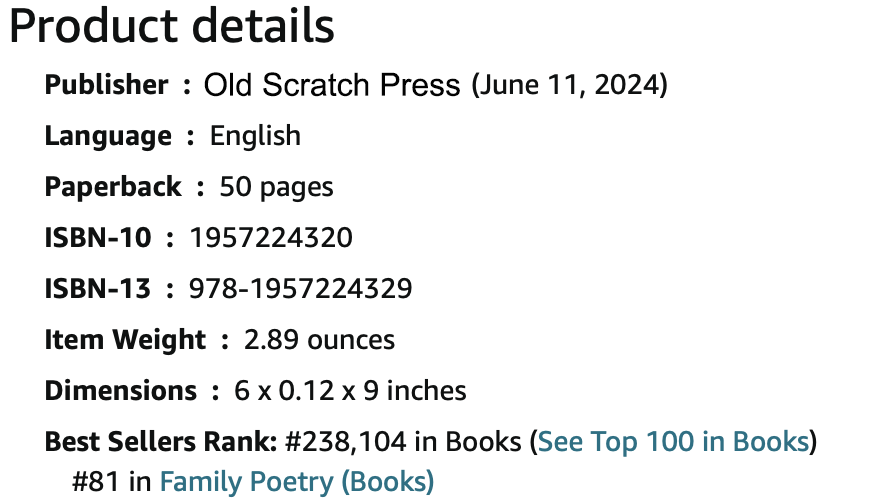
Old Scratch Press (OSP) was formed as a way to help poets get their poetry out there. It is our hope that someday we will offer many opportunities for poets. Our first mission, though, was to see if we could publish the books of the group members, as a way to see if we could support each other, function well as a cohesive group, etc., before we took on other people and their poetry or short-form dreams.
And so the first OSP book has been released: Break in the Field by Ellis Elliott. Why is Ellis’ book first? She won the coin-toss, or, in our virtual case, the random-#-generator-toss.
However, that luck of the draw does not lesson the beauty of the book. It’s a beautiful book, and the poetry is accessible and so relatable. I have a daughter with a disability, and I found this, really, meditation on mothering and parenting, so moving and important. I also worked for years in group homes and etc. for people with disabilities, and the book really speaks to me because it humanizes people with disabilities, and, too often, their disabilities make them so unable to make good contact with those of us of average capabilities, that we never stop to imagine their needs or feelings or think that they even have desires. Ellis’ book tackles that notion of supplying the concept of being human from the outside in, to a person who can seem like an object more than a person. I struggled, in my years as a staff trainer, to help the staff I trained to come around to that more full view of the people we took care of, but it was a tough sell, sadly, to some of the staff. Ellis’ makes it something we don’t learn, but we feel and know in our bones. I love this book for that.
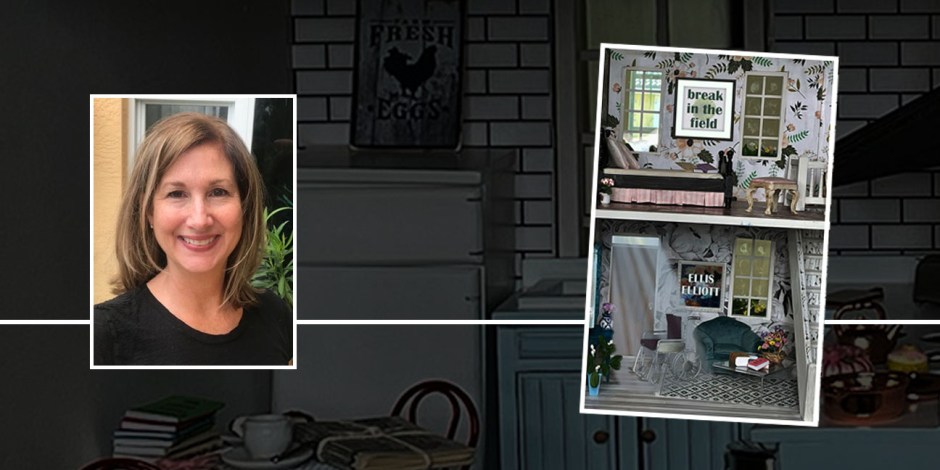
The cover is a photo of one of the dollhouses Ellis rehabs as one of her artistic outlets. On her blog she has a very lovely post explaining how she came to want to have that as her cover, and I think you’d enjoy that too. Ellis is also in process on a cozy mystery series, and I highly suggest you follow her on her very interesting blog, especially if you are an author, or an aspiring author, as she offers lots of writing tips.
I earned my MFA as a poet, something I never expected to get into when I decided to further study writing, and I’ve always really loved poetry (my own included…. lol) and I am so very happy that we can publish poetry. The book was put together by the Devil’s Party Press crew of two, but also proofread and dusted and cleaned by volunteers from the collective. There is no way at all, though, that I, or Dave and I, could have done it without all of the OSP members: Nadja, Ellis, Anthony, David, Ginny, Gabby, Janet, Alan, Morgan, and stalwart meeting leader, Robert, may the poetry gods bless him for always remembering to hit record, among other things. These folks are volunteering their time to show up to Saturday morning meetings, to take minutes (the ultimate sacrifice) at these meetings, to edit each others’ books, and working to promote each others’ books, and that is what every author needs, a team of supporters. Poets are not TikTok influencers, racking up 10,000 likes, but poetry is more important. I think that poetry makes the unexplainable able to be shared; that’s how I would sum it up. I’m not sure which of the members volunteered to do an edit and proofread for Ellis, but all of the members are helping OSP in general, to grow.
Back in 1989 when I was putting a poem and two dollar bills in an envelope with an SASE and sending it off in the mail, I almost never even found out if the poem had reached its destination, but when it did make it, I always received a request back, in my SASE, to please subscribe to the Zine. I never did, because I made about 60/week, and most of that went on bus fare, and, frankly, I didn’t care about other people’s poetry. I cared about mine. But, that was wrong. I mean, I couldn’t help the financial situation back then, and, though that hasn’t much changed now (lol), when I have a friend put out a poetry collection, or a poet I don’t know but admire puts out a new collection, I buy it. I usually buy two, actually, and give one as a gift. Without people doing that, poetry will fade from view, and we’ll lose something that is all magic. Magic is rare. Poetry is one way to hold magic.
The collective is going to curate the holiday/end-of-year issue of Instant Noodles, and choose the theme for next year’s issues, and we are in talks to see what other opportunities we can provide for poetry readers and writers, so follow us, and see what we bring to the world of poetry and short-form writing, and, if we make it. We could end up as a fabulous poetry cooperative, or as the modern, poetic version of the Donner Party, or anything in between. This is still an experiment. So far, I think we can feel quite proud, all of us in the group, of our first book.
And I am really excited for the next book too: White Noir, by Robert Fleming. It’s very different from Break in the Field, and I like the diversity of movement from one book to the next, and that our group has such variety of style. It is very exciting. White Noir should be up for pre-order in the coming months…. hopefully sooner than later, but there hasn’t been an author, from a single story or poem, to a whole book, who hasn’t had to be patient waiting for DPP to get caught up. 🙂 We appreciate the patience, and we hope you’ll follow along on the great experiment of OSP.
Thank you for supporting these wonderful authors, and independent publishing, and authors over 40, and late bloomers, and poetry, art, words as art…. It means so much to me.
Congratulations, Old Scratch Press, on a book successfully and collaboratively done.
Congratulation Ellis, on your wonderful book of poetry.
Philip Levine, courtesy of the National Poetry Foundation
When Nadja Maril, who manages the posts of OSP, asked us each to write about our favorite poem, this was the one that came to my mind, immediately, as it so often does whenever I want to teach anyone about poetry, or whenever I think of a poem that I love.
What’s Your Favorite Poem?
Philip Levine is a very famous and celebrated poet, and he was also Jewish, which is why it matters, in this poem that the speaker’s brother is using his talent as an opera singer to sing operas by Wagner, who was loved by Hitler.
And so Levine uses this poem to tease out the thorniness of family connections.
And though I have spent the majority of my adult life college-educated and in jobs that would be called white collar, they have almost universally been shitty jobs, which means the pay was low, the hours long, the expectations high: over-supervised, under-appreciated, crap work. And my non-degree-requiring jobs were pretty shitty too: the restaurant owner was a drunk when I was a waitress, the lamp store owner liked to see me crawling on the floor, picking staples out of the thickly-woven carpet to save the upright vacuum cleaner, and the mall store manager wouldn’t let us leave until every item on his list was checked, even though it meant I missed the last trolly, and had to walk the tracks home alone and late at night. Crap jobs abound in my history.
The men who people Levine’s poem also do crap jobs. The brother, at least, is trying to wring some joy from his life, but he does it through singing Wagner, which confounds and hurts his brother.
What I like about this is how it is a pretty good example of the “what” of poetry. What is poetry trying to do?
Levine could simply write it out: I love my brother but his choice of loves, recreation, music, confounds me and upsets me.
We’d all say, “I hear you man,” and we’d all go on with our lives, having heard him, but not “felt” him, or understood.
Better to put us in the rain, shifting foot to foot, to understand that the brother loves singing opera so much that he will slog through the shitty job for it, the humiliation of being told there is no work, the dependence, the lack of agency, all to be able to sing.
The speaker is standing in the rain, getting flooded, and feeling hopeless, and then he is flooded by the love he feels for his brother, a love which he feels from, perhaps, at last understanding how much singing means to his bother, and how much his brother, and the happiness of his brother, means to him: enough that he will do what it takes to love a brother who loves:
Wagner, the opera you hate most,
the worst music ever invented.
And how long has it been since he held his brother and told him he loved him? And how infinite do we all think life is?
My brother died suddenly and unexpectedly during lockdown, and I was not able to see him for all of the eight or so hours I knew he was dying, and I don’t know that I’ll ever get over it. Our time together is not infinite; my love for my brother was, but he tried that bond many times and in many ways, and don’t we all do that to our siblings?
Levine writes in free verse, and uses enjambment frequently, and so do I. I like the closeness and intimacy of free verse, and I like the way enjambment will not let you walk away: it pulls you to the next line. I like how simple Levine is too: this is a poem almost everyone can understand and be moved by. That is Democracy in action right there. That is inclusiveness. We can all get in on this poem. We can all find a little hand-hold.
And mostly I like how this poem, long before my brother was even ill, always flooded me with love for him, and my sister, every time I read it, and made me consider the ways in which we are like cacti for hugging with our family, when we may be like cashmere with everyone else. And if you don’t know this, and you haven’t done the work to hug the cacti anyway,