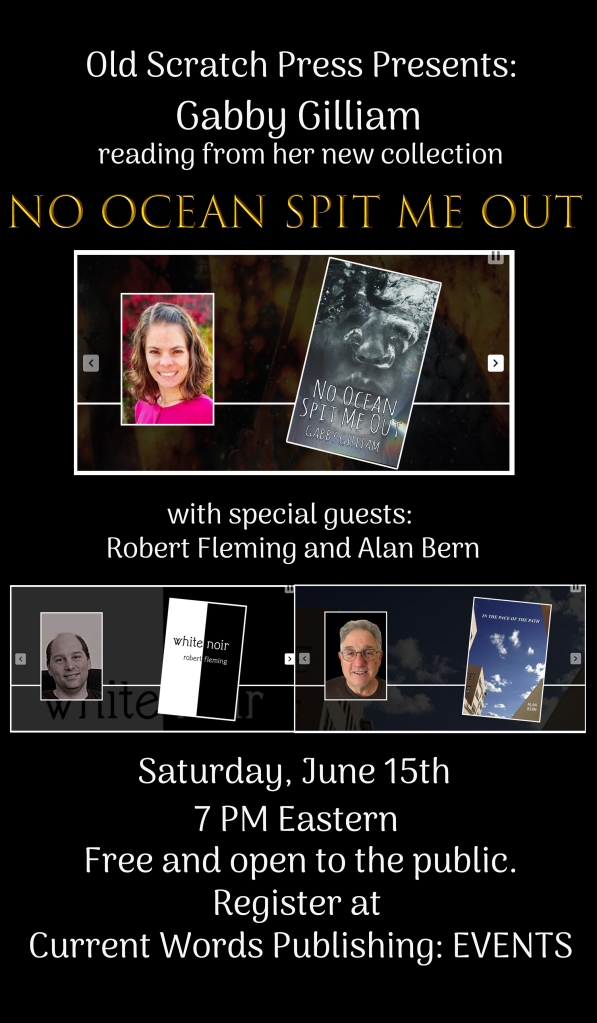
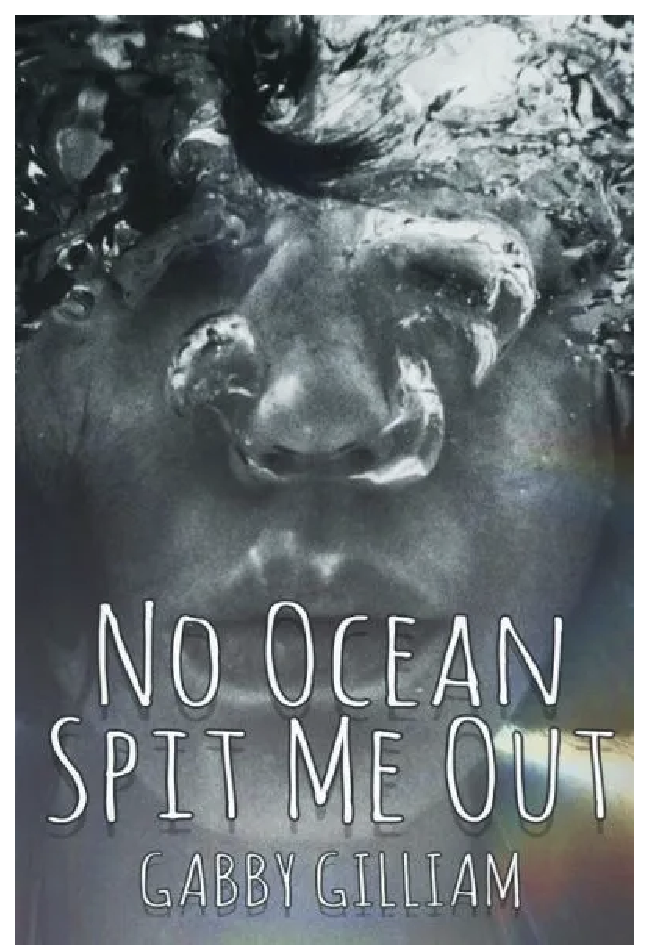
Today we celebrated the launch of Gabby Gilliam’s book: NO OCEAN SPIT ME OUT with a reading on Zoom by Gabby and Robert and Alan.
I am going to guess that many of the guests were friends/family of the authors, and I am so grateful for their kindness as we navigated our first live event since 2020, in a different house, on different equipment, and on the opposite coast. I’m not going to say we were a well-oiled machine, but our hearts were in the right place. 😉
Within the coming week we will create a nice video of the event and post it here, as well as send it to the participants.
If you attended, or if you missed, please consider coming to future events. It meant so much to me to hear the authors read the books live that Dave and I often work on alone, in silence. I tend to read the books we publish a few times, but this is a whole different and rich experience.
So, if you were able to attend, I thank you for doing so, and being such a gracious guest.
If you were unable to attend, not to worry, as we will be posting the event here ASAP.
And don’t forget to visit the catalogue page and see what OSP books are available! The OSP authors keep 100% of their royalties, so help them earn a little coin at this writing game.
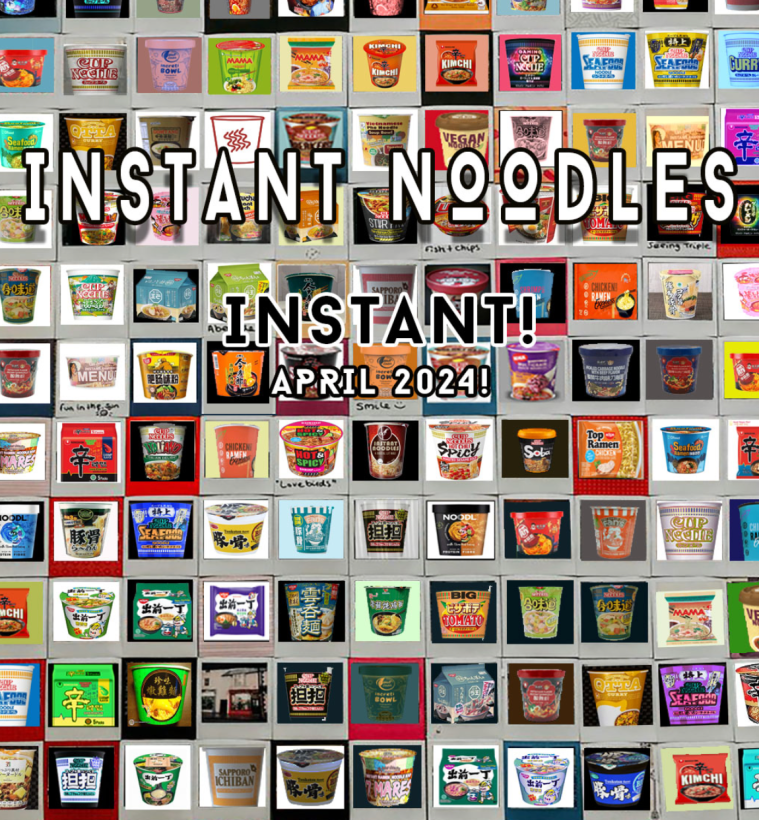
Also, next week, if you’re feeling game and supportive, join us again for the live reading of INSTANT NOODLES… VOLUME 4 (has it been 4 years???) ISSUE 1.
The writing for this issue, chosen by Gabby Gilliam, Anthony Doyle, Nadja Maril, and with visuals chosen by Robert Fleming and Alan Bern, is not to be missed!
Two OSP Founding Members, Morgan Golladay and yours truly Robert Fleming, won awards at the Delaware Press Association professional communications contest 5/1/2024 in Newark, DE. Escorting Morgan through the entrance, she answered my dress question: “my Old Scratch Press T-shirt is not fancy enough for a banquet, best black only.” I wore a tight shirt to accentuate my pecs, in-case there was anyone looking for a date. At a banquet, you must send the right signals.
Here is the low-down on who won which awards:
Morgan Galladay won first and second place in short stories: single story for “Under the Rhodendrons” published in Halloween Party ’23: Halloween Party ’23: Keeten, Jeffrey, Heron, Robert Lewis, Goodridge, James, Golladay, Morgan, DeCicco, Kim, Dickerson, Marc, Howd, Eric Machan, Machan, Katharyn Howd, Paige, Michael, Cantu, Juan: 9781957224503: Amazon.com: Books
“Second Christmas” published in Solstice, volume 3: Solstice: A Winter Anthology (The Solstice Winter Anthology Series): Pearce, Dianne, Doyle, Anthony, Golladay, Morgan, Watts, Virginia, Johnson, John, Fitzgerald, Christian, Aakaash, Buffy, Fulcher, R. David, Crandell, William F., Pearce, Dianne: 9781957224039: Amazon.com: Books and honorable mention in creative verse: single poem for “March Wind” published in Instant Noodles: MARCH WIND – Morgan Golladay – INSTANT NOODLES (instantnoodleslitmag.com)
What’s next for Morgan: At the banquet Robert spilled ranch dressing on Morgan’s black skirt. Morgan screamed she will immediately send her suit to the dry cleaner. Robert agreed to pay for his stain. While Morgan is waiting to pick up her dry cleaning, she is promoting her upcoming book Song of North Mountain, published by Old Scratch Press: DPP CATALOG – Devil’s Party Press, LLC (devilspartypress.com)
Robert Fleming won third place in creative verse: single poem for “Cheese Sonnet #263” published in Four Feathers Press: rhythms of Southern California
Honorable mention in Graphics and Design for “Timothy Gager is with Ellis Elliott at Boston Harbor with the Dire Literary Series.”
Robert Fleming won third place in creative verse: single poem for “Cheese Sonnet #263” published in Four Feathers Press: rhythms of Southern California
honorable mention in Graphics and Design for “Timothy Gager is with Ellis Elliott at Boston Harbor with the Dire Literary Series.”
At my club house gym yesterday, a neighbor approached me to purchase my book White Noir:
After showering, I delivered my book to my neighbor who invited me inside and paid me, after I signed my book. That was the end of the neighborly encounter because the neighbor’s husband, watching tv on the couch, sneered at me. I promptly departed my neighbor’s house, as the husband rose and walked toward his pistol.
Unwounded, I created three graphic images for Four Feather’s Press upcoming publication: Landmarks of Southern California. Learn more about the author here: https://www.youtube.com/watch?v=FOAb33t1NFc
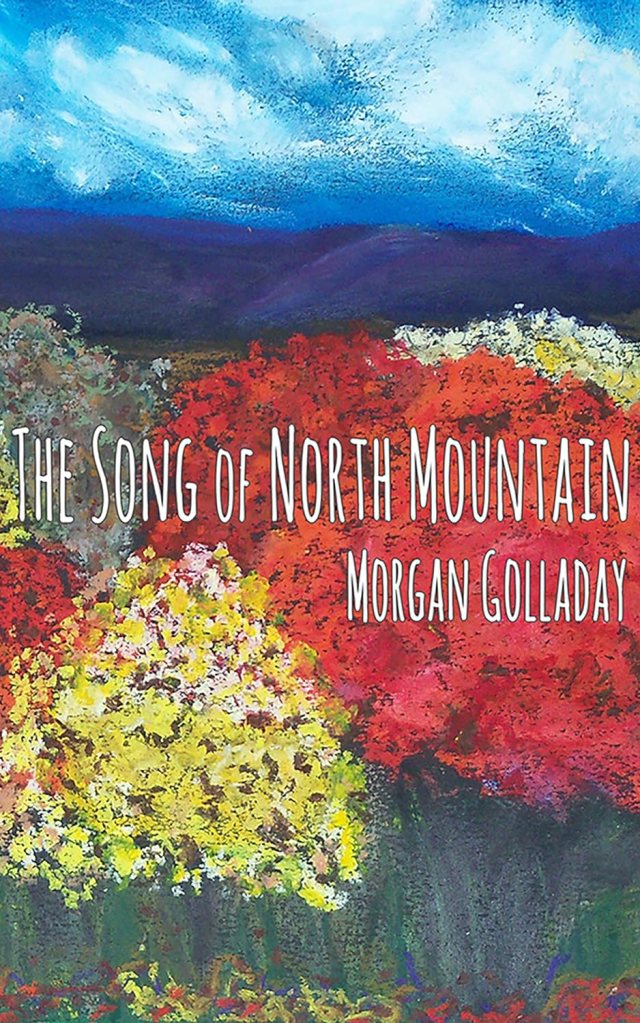
Old Scratch Press is pleased to announce the upcoming release of The Song of North Mountain, by Morgan Golladay. Slated for May release, the book includes original artwork by the author to accompany her poems. The collection is now available for pre-order.
Founded in 2023, Old Scratch Press is a cooperative of poets and short-form authors who have come together to promote the publication and appreciation of poetry and short-form writing. The Song of North Mountain will be the third chapbook, published by the small independent press.
Break in the Field by Ellis Elliot was their first book, nominated for the National Book Award, followed by avante-garde wordsmith and artist Robert Fleming’s poetry collection, White Noir.
The Song of North Mountain, says Morgan, “is about my relationship with this Earth, focusing on one small mountain in one small chain, in one small part of this vast world.
This book is about a connection – my personal experience sitting in stillness on this mountain, as well as many other mountains. North Mountain is, for me, a symbol of my relationship with this Earth. The permanence of the land, regardless of how it changes; the cycles of life, the quiet continuation of change. It has been a long time since I personally was able to sit quietly and listen to the tree branches and leaves speak to each other. I cannot scale the trails as I once did. But the magic of place is still in my memory, whether it’s the rocks in the rivers, the trails on the mountain tops, or the joy of sharing ripe wild berries.
“…my personal experience sitting in stillness on this mountain, as well as many other mountains. North Mountain is, for me, a symbol of my relationship with this Earth.”
Morgan Golladay
The cover design, an original painting, and the 10 black and white interior illustrations were created specifically for the book. Pre-order availability on Amazon and on the Old Scratch catalogue page will be coming soon.
To keep up with the latest news, please follow our blog here for free and also follow us on Facebook. Later this year look for more chapbooks penned by Gabby Gilliam, Alan Bern, and Nadja Maril. Thank you for reading. Special note: the deadline for Instant Noodles LIterary Magazine submissions has been extended to the end of the month.
Looking for recommendations for what to read to your toddler? Poet, writer and former Children’s Librarian Alan Bern has a favorite:
“The Owl and the Pussycat” by Edward Lear, illustrated by James Marshall ; afterword by Maurice Sendak.
By Alan Bern
Edward Lear’s “classic love ballad, “The Owl and the Pussycat,” was voted the most popular British childhood poem in 2014, and has been set to music by everyone from Stravinsky to Laurie Anderson.” (”The Sense Beneath Edward Lear’s Nonsense” by Adam Gopnik, The New Yorker, April 16, 2018) If not as popular in the United States, “The Owl and the Pussycat” has spawned a number of illustrated picture books here. Of the many illustrated picture books of this absolutely brilliant poem for very young listeners and readers by Edward Lear, “The Owl and the Pussycat,” my top choice is the version by James Marshall. Next to Lear’s own illustrations for his poem, James Marshall’s illustrations, although he died before fully finishing them, are my favorites. Marshall creates wonderful characters that match so perfectly the sounds and voices of Lear’s poem. It is a nonsense poem, but it’s always made perfect sense to me and to so many. Young children will love the poem and the book; so will elementary school kids when they need to feel just a bit regressed. Heck, adults will love it, too. As I do.
Nonsense Suggesting Sense
As Gopnik explains later in his essay: “This gift for creating pathos without sacrificing absurdity is what makes “The Owl and the Pussycat” one of the greatest poems in the language… In “The Owl and the Pussycat,” meanings rush in:
They dined on mince, and slices of quince,
Which they ate with a runcible spoon…
Not even Humpty Dumpty could explain what a runcible spoon is. We know it by its verbal vibration, by its presence, by its sheer runcibleness… This gift for making something felt without having first to make it familiar is one that we later admire in Beckett. Nonsense suggesting sense is a familiar pattern. Nonsense suggesting the numinous is not.”
Artist/illustrator James Marshall
Personal Connections
And here’s a personal story to go with the poem. As a children’s librarian for many years, I was honored to serve on the American Library Association’s Caldecott Committee in 1992, and I suggested Marshall’s illustrations for this book as a finalist. It was not chosen, most probably because Marshall never quite finished the illustrations. I continued to love the book anyway, and I always wondered why the poem always spoke to me… when I read it or when I listened to another read it. Shortly after my Mom died, I found out why. One day while going through some letters, from my Mom to my Aunt, letters that my Aunt had kept from the early 1950s. My parents were on sabbatical leave (my Dad was a young professor) in Cambridge, England, and I was almost two. In one letter, my Mom wrote: ‘It’s wonderful to be here, Howard and I are having such a good time, and we love having our little boy with us; however, he does drive us crazy and asks over and over and over that we read “The Owl and the Pussycat” to him.’ That brought such a wide smile to my face: of course, I don’t remember it, but it now explains, in part, my continuing love for the poem. Thanks, Mom and Dad, and thank you very kindly, Mr. Edward Lear! And now I shall reach for my runcible spoon.
If you haven’t done so already, please follow our blog here for free and also follow us on Facebook.And coming soon is our newest chapbook release, The Song of North Mountain, by Morgan Golladay followed by chapbooks penned by Gabby Gilliam, Alan Bern, and Nadja Maril.
Writing poetry is a personal, introspective experience, a way to communicate our innermost feelings as art.
Enter politics. Around the United States, around the globe humans are in conflict. It doesn’t matter which side you agree with, we all have our opinions, even if our opinion is to try and ignore the chatter.
Poetry, for centuries, has been a way for artists to convey their opinions. Attend a political rally and you’ll hear speeches, chants, songs. A number of poems have become beloved “classics” and they just might inspire you to write a few of your own.
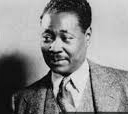
Claude McKay
If We Must Die
By Claude McKay
Claude McKay, 1889-1948 was born in Jamaica who later moved to the U.S. and lived abroad for a number of years., was a key figure in the Harlem Renaissance, a prominent literary movement of the 1920s. His published work included poetry, essays, a short story collection and several novels.
If we must die, let it not be like hogs
Hunted and penned in an inglorious spot,
While round us bark the mad and hungry dogs,
Making their mock at our accursèd lot.
If we must die, O let us nobly die,
So that our precious blood may not be shed
In vain; then even the monsters we defy
Shall be constrained to honor us though dead!
O kinsmen! we must meet the common foe!
Though far outnumbered let us show us brave,
And for their thousand blows deal one death-blow!
What though before us lies the open grave?
Like men we’ll face the murderous, cowardly pack,
Pressed to the wall, dying, but fighting back!
*
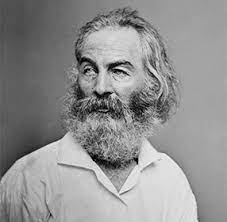
Beat! Beat! Drums!
By Walt Whitman
Walt Whitman,1819-1892, is regarded as one of America’s important 19th century poets. During the Civil War, while working as a desk clerk in Washington D.C., he visited wounded soldiers in his spare time.
Beat! beat! drums!—blow! bugles! blow!
Through the windows—through doors—burst like a ruthless force,
Into the solemn church, and scatter the congregation,
Into the school where the scholar is studying,
Leave not the bridegroom quiet—no happiness must he have now with his bride,
Nor the peaceful farmer any peace, ploughing his field or gathering his grain,
So fierce you whirr and pound you drums—so shrill you bugles blow.
*
Beat! beat! drums!—blow! bugles! blow!
Over the traffic of cities—over the rumble of wheels in the streets;
Are beds prepared for sleepers at night in the houses? no sleepers must sleep in those beds,
No bargainers’ bargains by day—no brokers or speculators—would they continue?
Would the talkers be talking? would the singer attempt to sing?
Would the lawyer rise in the court to state his case before the judge?
Then rattle quicker, heavier drums—you bugles wilder blow.
*
Beat! beat! drums!—blow! bugles! blow!
Make no parley—stop for no expostulation,
Mind not the timid—mind not the weeper or prayer,
Mind not the old man beseeching the young man,
Let not the child’s voice be heard, nor the mother’s entreaties,
Make even the trestles to shake the dead where they lie awaiting the hearses,
So strong you thump O terrible drums—so loud you bugles blow.
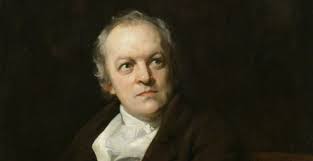
London
By William Blake
William Blake, 1792-1827, was an English visionary painter, engraver and poet of modest means who lived in London. In June 1780, Blake found himself in the midst of a riot calling for an end to the war on the American colonies. Often in his work, he questioned the status quo of the traditional order of society.
I wander thro’ each charter’d street,
Near where the charter’d Thames does flow.
And mark in every face I meet
Marks of weakness, marks of woe.
*
In every cry of every Man,
In every Infants cry of fear,
In every voice: in every ban,
The mind-forg’d manacles I hear
*
How the Chimney-sweepers cry
Every blackning Church appalls,
And the hapless Soldiers sigh
Runs in blood down Palace walls
*
But most thro’ midnight streets I hear
How the youthful Harlots curse
Blasts the new-born Infants tear
And blights with plagues the Marriage hearse
If one of your resolutions for 2024 was to write more poetry, there’s never a better time than now.
Maybe wake up a little earlier, take a mid-day break, any time of the day will do, but just write a first draft without censoring your thoughts. For tips on revisions and the submission process, click here.
And to get you a little more hyped, here are a few places that are open for submissions this month, January 2024.
When people hear that I try to write some poetry, I can tell they are thinking, formulating the common question. I stiffen and get ready for it. “Who is your favorite poet?” I used to respond with the complete truth, that I have many favorites. Sometimes I’d tick off a list of names they didn’t ask for and wouldn’t remember.
Now, I tell them first that a favorite poet is someone a reader returns to when they need them most. Your favorite poet is a companion, a friend’s voice in the dark. Poetry gives us laughter when we need it. Poetry comforts us when we are afraid, sad, lost. I tell people this because I hope they will search for a favorite poet of their own. I know once they find one, they’ll understand.
My favorite poet is Ted Kooser, a former United States Poet Laureate and winner of the Pulitzer Prize in 2005. He has published numerous books of poetry as well as children’s books and works of nonfiction. Kooser’s poems are drawn from midwestern landscape and everyday rural life. I read poetry often, as much as I can, but Kooser’s poems are the ones I return to like home’s fire to sit with again.
IT DOESN’T TAKE MUCH
BY TED KOOSER
Maybe an hour before sunrise, driving alone on the way to reach somewhere, seeing, set back from the highway, the dark shape of a farmhouse up against deeper darkness, a light in one window. Or farther along
into a gray, watery dawn, passing a McDonald’s, lighted bright as a city, and seeing one man, in ball cap, alone in a booth, not looking down at his table but ahead, over the empty booths. Or
maybe an hour farther, in full daylight, at a place where a bus stops, seeing a woman somewhere in her forties, dressed for cold, wearing white ear muffs, a red and white team jacket, blue jeans
and Muk Luks, one knit mitten holding a slack empty mitten, her bare hand extended, pinching a lit cigarette, dry leaves—the whole deck of a new day— fanned out face-down in the gutter, but
she’s not stooping to turn over a card, but instead watching a long ash grow even longer at the ends of her fingers. Just that much might be enough for one morning to make you feel part of it all.
Poetry contests are a great way to achieve recognition and several have deadlines coming up soon. Submitting your work, is the first step, so what are you waiting for?
The competition is open to original poems in the English language of 40 lines or fewer that have never been publicly broadcast or published. The poem can be on any subject, in any style, by a writer of any nationality, living anywhere in the world.
• Accepts – Poetry • Fee: €7 or €30 for 5 • Prize: €2,000
They are looking to uplift an up-and-coming poet, with no more than one full-length collection forthcoming or published at the time of submission. “We award $3,000 for the winning poem, selected by our guest judge. Our second- and third-place winners receive $300 and $200, respectively. All three winners will be published”
We are honored to host the annual Joy Bale Boone Poetry Prize whose winners and finalists will appear in the following Spring issue of The Heartland Review.
• Accepts – Poetry • Fee: $10
Prize: $500 GRAND PRIZE GIFT CARD, $140 SECOND PLACE GIFT CARD, $100 THIRD PLACE GIFT CARD.
Read contest rules carefully. Most contests require your name be removed from all work and many have specific requirements for formatting. Do not wait until the last minute and check your work over carefully before sending. Good Luck! May Your Words Resonate With the Judges! Please sign up to follow the Old Scratch Press blog so you never miss submission opportunities.
Halloween. The weather turns cool. Leaves on the trees change colors, fall to the ground, and orange pumpkins are set out on porches. As a child it was a big deal to decide, what sort of costume I’d find and wear, for Trick or Treating and parties. But first, it was important to get into the mood and one poem, in my favorite book of poems would always do the trick. In the original spelling, the author wrote orphant not orphan. So I knew the poem as Little Orphan Annie. The illustration showed a young woman in front of a kitchen hearth with small children gathered around her. I loved reading this poem, Little Orphan Annie, which was both fun and scary.
Here’s the original version written by James Whitcomb Riley (1849-1916) an American poet who hailed from Indiana, who was also a journalist. Folksinger Anne Hill has done a lovely job in the country bluegrass style, setting this poem to music and you can listen to her sing it here.
Little Orphant Annie
by James Whitcomb Riley
Little Orphant Annie’s come to our house to stay, An’ wash the cups an’ saucers up, an’ brush the crumbs away, An’ shoo the chickens off the porch, an’ dust the hearth, an’ sweep, An’ make the fire, an’ bake the bread, an’ earn her board-an’-keep; An’ all us other childern, when the supper things is done, We set around the kitchen fire an’ has the mostest fun A-list’nin’ to the witch-tales ‘at Annie tells about, An’ the Gobble-uns ‘at gits you Ef you Don’t Watch Out!
Onc’t they was a little boy wouldn’t say his prayers,— So when he went to bed at night, away up stairs, His Mammy heerd him holler, an’ his Daddy heerd him bawl, An’ when they turn’t the kivvers down, he wasn’t there at all! An’ they seeked him in the rafter-room, an’ cubby-hole, an’ press, An’ seeked him up the chimbly-flue, an’ ever’wheres, I guess; But all they ever found was thist his pants an’ roundabout– An’ the Gobble-uns’ll git you Ef you Don’t Watch Out!
An’ one time a little girl ‘ud allus laugh an’ grin, An’ make fun of ever’one, an’ all her blood an’ kin; An’ onc’t, when they was “company,” an’ ole folks was there, She mocked ‘em an’ shocked ‘em, an’ said she didn’t care! An’ thist as she kicked her heels, an’ turn’t to run an’ hide, They was two great big Black Things a-standin’ by her side, An’ they snatched her through the ceilin’ ‘fore she knowed what she’s about! An’ the Gobble-uns’ll git you Ef you Don’t Watch Out!
An’ little Orphant Annie says when the blaze is blue, An’ the lamp-wick sputters, an’ the wind goes woo-oo! An’ you hear the crickets quit, an’ the moon is gray, An’ the lightnin’-bugs in dew is all squenched away,– You better mind yer parents, an’ yer teachers fond an’ dear, An’ churish them ‘at loves you, an’ dry the orphant’s tear, An’ he’p the pore an’ needy ones ‘at clusters all about, Er the Gobble-uns’ll git you Ef you Don’t Watch Out!
American poet Carl Sandburg (1878-1967) takes a different approach with this beautiful poem that captures the magic of nature while igniting the element of the unknown.
Theme in Yellow
by Carl Sandburg
I spot the hills
With yellow balls in autumn.
I light the prairie cornfields
Orange and tawny gold clusters
And I am called pumpkins.
On the last of October
When dusk is fallen
Children join hands
And circle round me
Singing ghost songs
And love to the harvest moon;
I am a jack-o’-lantern
With terrible teeth
And the children know
I am fooling.
Fun and intimate, is how I’d characterize this third poem by American poet Sarah Teasdale (1884-1933). Which leads to the question of what kind of poem you’d write, if tasked with writing a “Halloween Poem.”
Dusk in Autumn
By Sarah Teasdale
The moon is like a scimitar,
A little silver scimitar,
A-drifting down the sky.
And near beside it is a star,
A timid twinkling golden star,
That watches likes an eye.
And thro’ the nursery window-pane
The witches have a fire again,
Just like the ones we make,—
And now I know they’re having tea,
I wish they’d give a cup to me,
With witches’ currant cake.
Decorate the outside of your house with scary poems. Instead of fortune cookies give out treats with poetry inside. Halloween is a time for bonfires and storytelling. What a great time to recite poetry. Don’t forget to follow us on Facebook and follow this blog. Today is October 9th which means there’s less than one week left to submit your Cooold Turkey themed Holiday/End of the Year start of a New Year Winter Poems (2), or very short fiction or fact to Instant Noodles Literary Magazine. Members of the Old Scratch Press Collective are guest editors for this upcoming issue.Submission Link here
Hello fellow literary enthusiasts, We are thrilled to bring you the fall edition of the Instant Noodles Lit Mag! Get ready to dive into a world of literary delights: https://instantnoodleslitmag.com And for this issue celebrate the circle of life, the circle of the seasons as authors and artists interpret the theme: It Should Always Be Fall in the Cemetery.
✨ Original Short Stories: Discover captivating tales from emerging and established authors that will transport you to different worlds and leave you craving more.🖋️ Poetry: Immerse yourself in the evocative and thought-provoking verses of poets who paint with words.🗞️ Engaging creative non-fiction that resonates deeply.
🌟 Art and Illustrations: Telling wordless stories as a way to hit the theme… perfect!
And many of the authors read their pieces for you! For example: LIPSTICKS THE WITCHES WORE TO THE HALLOWEEN BALL ~ PAMELA BERKMAN 📣 Join Our Community 📣 We invite you to become a part of our literary community:✉️ Subscribe: Don’t miss a single issue of Instant Noodles Lit Mag! Sign up for our newsletter to receive updates, special content, and more directly in your inbox.📝 Submit Your Work: Are you a writer or artist looking for a platform to showcase your talent? We welcome submissions of fiction, poetry, essays, and artwork. Visit our website for submission guidelines. Next deadline in October 15th.🎉 Help Us Spread the Word 🎉 If you’re as excited as we are about Instant Noodles Lit Mag, please help us spread the word. Share our website and newsletter with your fellow bookworms, writers, and artists, and together, let’s create a vibrant literary community.🌐 Follow Us: Thank you for joining us on this literary adventure. We can’t wait to share our love for words and creativity with you. https://instantnoodleslitmag.com/
Attend any writer’s conference or weekend of workshops and invariably a topic raised amongst the attendees, (those aspiring to be published writers), is a discussion on the value of an MFA.
Will an MFA is help me professionally?
Will graduate school provide me with useful introductions to members of the publishing industry?
Will the process of earning a Masters degree serve to teach me useful skills I couldn’t learn independently?
No simple answer exists, because every writer and their aspirations are different. And every MFA program is different.
I found pursuing an MFA to be a rewarding intellectual experience, as an older adult. I received my MFA from the Stonecoast Low Residency Writing Program at in University of Southern Maine in literary fiction in January 2020.
Low residency didn’t start up with the internet or the pandemic. For decades, many scholars have recognized that much of a graduate student’s work consists of independent study and research under the tutelage of a mentor. Low residency programs convene in person each semester for one or two weeks and the remainder of communication is done by email, snail mail and video conferencing. The set-up enables students to continue with another professional career and family responsibilities.
While I wished I ‘d attended grad school in my twenties or thirties, sometimes you appreciate something more when you are forced to wait.
When I asked some of my colleagues at Old Scratch Press if they could share some of their thoughts about MFA’s, Collective member Robert Fleming told me about Mark Fishbein, who he met at the Poetry Academy of the District of Columbia poetry critique workshop. To join contact Mark at mark@poetwithguitar.com
To Mark Fishbein, Robert posed the following questions:
Why did you choose an MFA?:
M.F.: As retired, the purpose at the age of 74 means deciding to buy your container of milk before or after your nap. As a young man I thought to live the life of poet/academician, but got sidetracked and spent my life differently. But as a lifelong poet, I now give lectures in poetry workshops and I would like to teach it. In order to do so I must have, at minimum, an MFA.
Mark began in the Fall, 2023 an in-person MFA in creative writing: poetry at Columbia College in Chicago, IL. This is a traditional residential full-time program.
Why did you chose this specific school? :
M.F.: The program is well received; it’s walking distance from home, the price is more reasonable and the vibe less full of itself as I have experienced. It’s in the heart of downtown. No campus fraternities.








 Hello fellow literary enthusiasts, We are thrilled to bring you the fall edition of the Instant Noodles Lit Mag! Get ready to dive into a world of literary delights:


 OLD SCRATCH PRESS