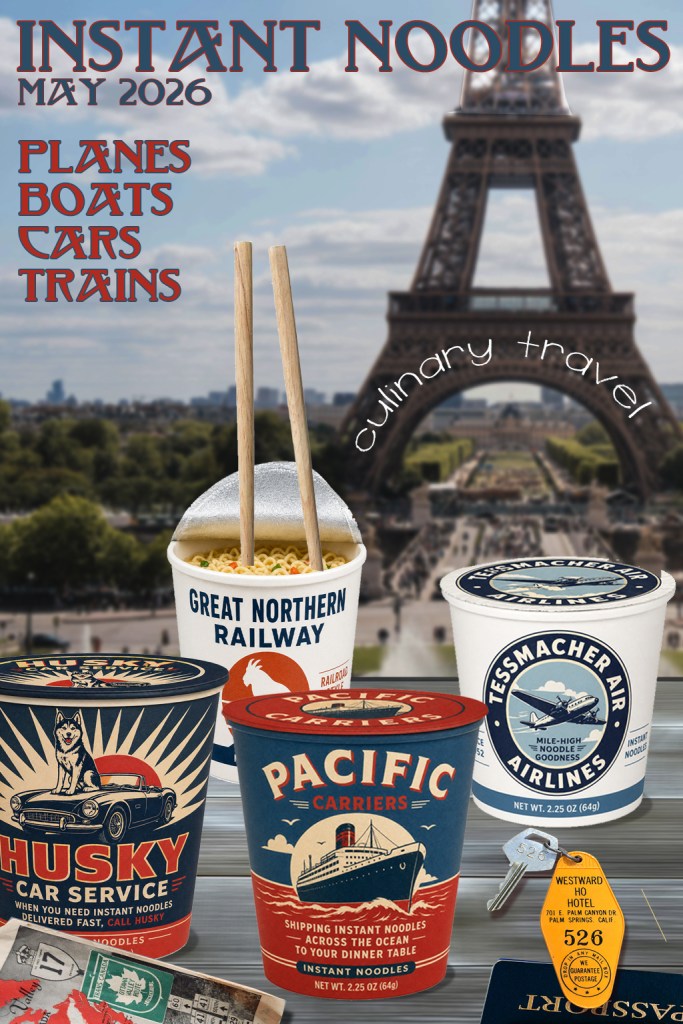
The holiday/end of year issue of INSTANT NOODLES, the issue where we always ask people to try for humor. Do you have what it takes to make us smile?
Submissions for 2025 are open through November 2, 2025.
The Old Scratch Press team asks that all fiction/non-fiction pieces adhere to a word count of 1,000 words or less.
2025 Themes and Topics
GRAVY is our 2025 winter holiday theme. Give us your best holiday gravy fails, mishaps, ridiculous gravy encounters (any December holiday, from Hannukah, to Solstice, to NYE, etc.) or your best wry work about gravy, in general. The point of the end-of-year issue is always to be light-hearted to downright silly. Submissions for GRAVY are open through NOVEMBER 2, 2025; the issue will publish on DECEMBER 1, 2025.Please CLICK HERE to submit. We’re looking for short fiction, non-fiction, poetry, drama, art, and multi-media.
INSTANT NOODLES is always free to submit to, and free to read. We’re about to announce the pieces that were published that we’re submitting to BEST OF THE NET and PUSHCART, so stay tuned to this station!
Thanks for being an INSTANT NOODLES participant and/or fan! We appreciate you giving indie authors a place to get read!
Sitting on a bench sharing a coffee with old friends in a little northern Pennsylvania village, I saw it for myself. How much poetry in public places matters, even there, in remote mountains, where only about a hundred people reside year-round. Dangling from the willing arms of trees, laminated cards with phrases from poems or short poems that captivated both young and old. Children read them to each other aloud. Adults stopped on their morning walk to pause, read, reflect, nod, sigh or smile. Even some hard to please teenagers stopped their bike tires to read. What I didn’t expect to feel is how much it meant to them and to me. Poetry matters, folks. It matters big time. All writing matters. The Arts make all the difference in the world.
This little town is reflecting other larger movements to display poetry in outdoor places from around the world. Many people have heard of the Poetry in Motion initiative launched 1992 by the NYC Metropolitan Transportation Authority and the Poetry Society of America to bring poetry to millions of harried and stressed commuters. Poetry was displayed is subway cars and digital screens in stations. Each poem was accompanied by artwork. By 2002, 150 poems had been shared from all over the world, spanning the centuries. The poems reached out and met people in their own busy lives and enriched them. Readers reported looking forward to a new poem. They would snap pictures and send them to their friends. The world was different, changed and better.
The Poetry in Motion Initiative was relaunched in 2012 under MTA Arts and Design. You can visit their website to read poems and learn of upcoming programs. Over 30 other US cities launched similar initiatives in the wake of Poetry in Motion including Philadelphia, LA, Nashville, San Francisco and Providence. Public poetry has popped up in many other places such as cafes, libraries, playgrounds and picnic tables in seven national parks thanks to Ada Limon our 24th Poet Laureate who championed the idea of transforming picnic tables into public art by including a historic poem with some connection to the park.
There is also a Facebook page “The Poetry in Public Places Project” that encourages everyone, you and me, to display poetry outdoors. You can visit this page to enjoy creative and inspiring ideas. For example, from Hoboken, NJ, a photo of a box of poetry where people are invited to TAKE ONE, yard signs from the Mercer County Library System, a poem painted on a breakwater in Milwaukee.
I wondered what poems went first in the NYC Poetry in Motion. There were four of them. “Crossing Brooklyn Ferry” by Walt Whitman, “When You Are Old” by William Butler Yeats, “Let There Be New Flowering” by Lucille Clinton and one of my favorites. Enjoy this poem and cheers to more poetry in the open air and hope!
—Ginny
“Hope” is the thing with feathers
“Hope” is the thing with feathers – That perches in the soul – And sings the tune without the words – And never stops – at all – And sweetest – in the Gale – is heard – And sore must be the storm – That could abash the little Bird That kept so many warm – I’ve heard it in the chillest land – And on the strangest Sea – Yet – never – in Extremity, It asked a crumb – of me.
Emily Dickinson
If the New York Subway System asked you for a poem, what would you write?
Virginia Watts has been fortunate to have published nearly 100 pieces in literary magazines including CRAFT, The Florida Review, Reed Magazine, Pithead Chapel, Permafrost Magazine, Broadkill Review, Two Thirds North, Hawaii Pacific Review, Sky Island Journal, Eastern Iowa Review, Evening Star Review and Streetlight Magazine. Nominated four times for a Pushcart Prize and four times for Best of the Net, in 2019, Watts won The Florida Review Meek Award in nonfiction.
Virginia’s new book is now available from Old Scratch Press:
For many of us, reading is a means of escaping the clamor of the real world for a brief time. The theme of the current issue of Instant Noodles is “Sanctuary.” If you’re seeking to give your brain a respite from the news feed, head on over to read the latest issue, curated by the members of Old Scratch Press!
Instant Noodles is open for submissions for our Winter issue! If you have a piece that fits our “Gravy” theme and is on the light-hearted side, please check out the submission guidelines here! We try to fill our Winter issue with fun and mayhem, so please remember that HUMOR, not melancholy is our ask for this issue!
Old Scratch Press is also seeking new members to join our collective! If you write short form pieces (like flash fiction, poetry, or flash memoir), and you’re interested in working with our collective to publish your collection of work, check out our submission guidelines at Duotrope to see if we might be a good fit! The submission window closes on August 31!
By Nadja Maril, a founding member of the Old Scratch Short Form and Poetry Collective.
Summer and reading go hand in hand. You go on vacation and take along a stack of all those books you’ve been meaning to read.
Sometimes, for me I have to confess I’m actually listening instead of turning pages.( Did you know that most of the books published by Old Scratch Press are available as audio books as well as ebooks?) Half of the books I enjoy these days are recorded books because I can listen and do various chores at the same time.
I can also eat lunch and be entertained by a book without smearing avocado or salad dressing on its pages.
And then if I really love the book, or just want to see it laid out on the page, I get a physical copy from the library and enjoy it again.
I try really hard not to read books by the same authors, so I can introduce myself to new voices. However, I couldn’t resist downloading Ann Patchett’s latest novel, Tom Lake, because I was curious about what it had to do with cherry orchards. The audio version is narrated by Meryl Streep. What a treat.
I’m a Meryl Streep fan and the narrator and protagonist of Tom Lake, the novel is a former actress. True, she is a different kind of actress, “a natural”, as she reveals in her story telling, unlike Streep who has portrayed a wide range of characters, but the protagonist has performed on stage and screen nevertheless. Streep does an impeccable job
What I truly want to recommend about the novel is its construction. So, writers, and aspiring writers pay attention. Not only does Patchett incorporate unpredictable twists and turns into the storyline, but she skillfully interweaves past and present.
The present setting is a farm near Traverse City Michigan during the Covid Pandemic. The past setting, that jumps back and forth into the storyline, is a summer stock theater also in Northern Michigan called Tom Lake. Part of the fun of this story is the gradual reveal of how present and past fit together.
I highly dislike predictable plotlines. Thus, I shout the praises for a novel that continued to surprise me to the very last page.
If you are a writer, continuing. on the journey of further refining your craft, you may be interested in the upcoming opportunity to join the Old Scratch Press Writing Collective or the opportunity to become published in Instant Noodles Literary Review.The Collective applications are available here and the deadline is closing soon.
The next theme subject for the Holiday/Winter Issue of Instant Noodles is Gravy.Write a true story, a poem or a piece of fiction related to Gravy. Keep it short. We prefer prose that is less than 500 words in length.
Back to my thoughts on the novel Tom Lake and not wanting to give any spoilers, I’m going to provide a WRITING PROMPT instead:
IMAGINE your very first boyfriend or girlfriend, remember what they were like to be with and then write about what attracted you to them, what you admired. Now, write about their flaws.
Take a break. Maybe wait an hour or a day. Then imagine yourself with that person and what your life would be like. The third part to this writing assignment is to first think about what you would tell that person, if you had the opportunity, write them something—a letter, an essay, a poem—whatever genre form you choose. Do you have things you’d like to apologize about, or explain, or share?
Maybe this exercise will give you an idea for a story. Maybe not, but I guarantee you’ll learn something about yourself.
THANK YOU for reading. If you haven’t already signed up (it’s free!), please follow me on WordPress. Medium or Substack and visit my website Nadjamaril.com to read more of my work.
Nadja Maril is an award winning writer and poet who has been published in dozens of online and print literary journals and anthologies including: Lunch Ticket, Spry Literary Journal, Invisible City Literary Review, Instant Noodles and The Journal of Compressed Creative Arts. She is the author of Recipes From My Garden, published by Old Scratch Press (September 2024), a Midwest Review California Book Watch Reviewer’s Choice. An Anne Arundel County Arts Council Literary Arts Award winner, her work has been nominated for the Pushcart Prize and The Best of the Net. She has an MFA in creative writing from Stonecoast at USM.
I love words and sentences, writing them. I also love reading something really good. So, part of my day circles around writing and revising. Another part is reserved for reading.
If your desire is that each piece of writing you create is superior to its predecessor, then it’s a good idea to read other writer’s creations. We learn what we like and what we don’t like by reading the work of others. Experiencing through someone else’s words can give us the opportunity to learn new ways of approaching an essay, poem, or story.
Those five little earrings could represent the various framents of the essay that focuses on what we hear or don’t.
First thing this morning, I clicked on a link provided by the literary magazine, Sweet. A Literary Confection that was titled “In My Head: Tinnitus” by Marcia Aldrich which the editors have nominated for the 2023 “Best of the Net.” I liked the way Aldrich broke the essay into very short sections. This type of CNF essay is called a fragmented essay, specifically in this case, a narrative mosaic because all the sections were directly linked to the topic of Tinnitus, but all approached the word/ the subject/ the experience from different vantage points. Here is the link if you’d like to read it.
Next I read the under 250 word CNF essay from Riverteeth’s weekly newsletter Beautiful Things titled “Sugar in the Evening” by Jennifer Anderson. Deceptively simple. it resonates. I don’t necessarily like every weekly Beautiful Things selection, but this one is truly a gem. To read it click here.
Finally, to round out the morning, before I started revising a story of my own, I clicked to read some poems in Sunlight Press capturing a sense of nostalgia and the delight of movement by Alfred Fournier. You can click to read them here.
Evenings and Sunday afternoons are for “hard copy.” I love a book that pulls me in and keeps me guessing. I never want to be able to confidently predict where the plot is heading. So I’d like to recommend The Great Circle, published in 2021 by Maggie Shipstead, a Booker Prize finalist.
A very long novel (655 pages) I was lucky enough to pick up in one of the several Little Free Libraries in my neighborhood, it is both entertaining and instructive to fellow novelists in approach and structure. I try very hard not to read multiple books by the same author in an effort to “meet on the page” more writers and I’d already read Seating Arrangements, but I am so happy I did make an exception and grab that almost new paperback. This novel is far superior to Shipstead’s previous work in that it adds multiple layers of time, place and setting to a compelling storyline.
Comprised of two narrative arcs, The Great Circle tells the story of a pioneering female aviator, Marian Graves, born in 1914, who wants to be the first to circumnavigate the globe by flying over both the North and South Poles. The second storyline focuses on actress Hadley Baxter who is chosen to play the role of Marian in a Hollywood movie produced in 2014.
The 20th century narrative is told in third person, and while it primarily focuses on Marian’s life it also tells the story of her twin brother Jamie, and the role women aviators played in World War II. The 2lst century narrative is told in the first-person voice of Hadley.
As to what happens, I’ll leave it to you the reader to discover first-hand. Enjoy and keep reading, whether it is long or short, on paper or on your phone. And yes, I listen to stories as well. My most recent listen was Companion Piece by Ali Smith, a melding of reality and splendid storytelling.
Many writers, including myself, write both prose and poetry. For me, it just depends on the subject matter as to which form I choose. Many writers begin with one form of writing and evolve to another. There are some writers who begin in one genre and stay there. In the end of the day, our paths are different, but we are all writers, and all writers want to tell a story. We want readers to feel something, experience something, remember something. We want them to leave us changed in some small way. Even if you don’t want to learn about the craft of poetry in a formal way, as in attending workshops, just reading a few poems a day will improve your prose writing in ways that will surprise you.
Poetry as a form succeeds on bold, visual imagery, exact information from all the senses. This is how the reader enters the poem and lives inside it for a brief time. By reading lines of poetry, prose writers will also experience and come to understand why rhythm matters. There is great impact when rhythm is found in sentences and phrases.
One of the defining benefits of studying and writing poetry for me as a prose writer has been that in poetry more than any other genre, each and every word must do work, and I mean each and every word. Poets take time and great care choosing words and prose writers, if you want to be your best, you should be doing that as well, but it takes practice. Read Hemingway again to see why this matters.
Poetry has the same elements as prose writing, such as characterization and narrative arc, but it contains more unexpected phrases, surprises and turns that send readers in directions they didn’t expect. This is often missing from prose writing, and it shouldn’t be. Additionally, poetry teaches us about pace. How long lines with no punctuation slow the reader down. How a short line placed just right can then really pack a punch.
Prose writers can also use traditional poetry techniques to enhance their narratives such as assonance, linking words with similar vowel sounds. Using words in this way can produce a desired effect on the reader such as a calming effect as if listening to music.
My greatest lesson and take away as a prose writer who reads poetry every single day is that endings are so incredibly important. When you read enough good poems, you’ll see what I mean. And stories, like poems, deserve the best endings possible. This is something to strive for.
So, you want to be a good prose writer? Then read poetry. Simple as that. Poetry teaches us all how to use our language. Poetry teaches how to describe. Poetry demonstrates mood, voice, momentum in unexpected ways. We all want the same thing. To tell the story we want to tell in the best way we can. Reading poetry will help us learn to do that.
There are many good online literary journals where you can read poems: Narrative Magazine, Agni, Carve, Rattle, 32 Poems, A Public Space, Apple Valley Review, Evergreen Review, The Cortland Review, Waxwing, Pigeon Pages, Cleaver Magazine, Able Muse.
You can also sign up to receive daily poems from: Rattle, Your Daily Poem, Poem-a-Day, Poetry Daily, Poem of the Day. All these are free as is the wonderful podcast written and hosted by one of my favorite poets Padraig O Tuama: Poetry Unbound. I would also highly recommend Padraig’s wonderful book: 50 Poems to Open Your World.
Happy Reading!
~Ginny
Virginia Watts has been fortunate to have published nearly 100 pieces in literary magazines including CRAFT, The Florida Review, Reed Magazine, Pithead Chapel, Permafrost Magazine, Broadkill Review, Two Thirds North, Hawaii Pacific Review, Sky Island Journal, Eastern Iowa Review, Evening Star Review and Streetlight Magazine. Nominated four times for a Pushcart Prize and four times for Best of the Net, in 2019, Watts won The Florida Review Meek Award in nonfiction.
Sometimes words are hard to find. Like now, for me, when the words and feelings are so big they look like a giant ball of yarn; overwhelming and untangle-able.
That is when I find my words elsewhere. It might be “black-out poetry”, like the one made from my poetry submissions rejection letter collection. Or, it might be from refrigerator word magnets. Or, it might be from headlines in the New York Times. Opportunities abound and are yours for the taking. “Found Poetry”, which I first thought of as just weird, is actually quite fun. So, what is “found poetry”, anyway?
Found poetry is a literary collage, crafted by selecting and rearranging words from other sources to create something fresh and meaningful. Blackout poetry, cento, erasure poetry, and cut-up techniques are all ways to engage with found poetry. Not only is it a great exercise in close reading and creativity, but it can also be a meditative way to reconnect with language when traditional writing feels out of reach.
How to Create Found Poetry
Gather Your Source Material – This could be an old book, a newspaper, a diary entry, or any text that speaks to you.
Highlight Interesting Phrases – Look for unexpected word combinations, evocative imagery, or intriguing snippets of text.
Rearrange and Shape – Remove, rearrange, and add punctuation to shape the poem into something that feels complete.
Experiment with Form – Try blackout poetry (blotting out words with ink), centos (poems composed of lines from other works), or even digital found poetry using search engine results.
Literary Journals That Accept Found Poetry
If you’ve crafted a found poem that feels right, consider submitting it to a literary journal. Here are a few that welcome found poetry:
The Found Poetry Review – Dedicated to publishing only found poetry (currently on hiatus, but their archives are rich with inspiration).
Diode Poetry Journal – Occasionally publishes found poetry alongside traditional forms.
River Teeth: Beautiful Things – Accepts short, poetic nonfiction, including experimental found forms.
The Indianapolis Review – A journal that appreciates erasure poetry and visual found poetry.
Pangyrus – Open to hybrid and experimental poetry forms, including found poetry.
Entropy (Closed, but check for archives) – Previously published a variety of found and hybrid poetic works.
Fence – Open to experimental poetry, including found forms.
If you’re feeling stuck in your writing practice, found poetry offers a playful and rewarding way to engage with language. Whether you keep your found poems private or submit them for publication, the process itself can rekindle your creative spark, or even maybe begin to gently loosen your own giant yarnball.
(Black-Out Poem written from one of my rejection letters)
Have you tried writing found poetry before? Share your favorite sources of inspiration in the comments!
Nadja Maril, author of RECIPES FROM MY GARDEN, is one of the founders of Old Scratch Press
The Editors of Instant Noodles Literary Review, published three times a year, have announced the themes for 2025: Current, Sanctuary and Gravy.
Edited by members of the Old Scratch Short Form Collective who have volunteered their time, submissions are free. The Instant Noodles submission box which you can access through Duotrope is filling up fast.
While artists and writers selected for publication receive no financial renumeration, the publishers and editors do their utmost to promote the work in each issue. Instant Noodles nominates for industry prizes, Best of the Net and the Pushcart Prize. One of the magazine’s promotions is a zoom reading, giving contributors around the world a chance to meet.
Published three times a year, the magazine is posted online for everyone to read. One of the biggest reasons work gets rejected, is that writers don’t follow submission guidelines and familiarize themselves with the publication.
In addition to Visual Art and Multimedia Creations, the magazine publishes Prose & Poetry
Instant Noodles focuses on SHORT pieces. Short work 500 and 750 words in length can be powerful. If you are submitting prose, whether is it hybrid, nonfiction, or fiction, the word limit is 1000 words or less.
All work must be original and must belong to the author. Works that have been previously published will not be considered. Stories must be complete and self-contained (i.e., do not submit chapters of a larger work).
NOTE: Accepted works will be published as submitted without editing; as such, in addition to the originality of the work itself, we are looking for manuscripts that are clean and press ready. Be sure to review your grammar, spelling, tenses, proper punctuation, and other general rules of the written word before hitting “Send.” Work should be submitted through Duotrope as a Microsoft Word file (when it is poetry, drama, NF or fiction) as 12-point New Times Roman, double-spaced (single-spaced for poetry submissions). All other types of work have details as to their file types on the Duotrope page.
Connect to the Theme
The Editors request that submissions should have a connection to one of the themes for which they were submitted: Current, Sanctuary and Gravy—and labelled as such.
They are looking for more submissions in the categories of creative nonfiction, drama, multimedia and visual art.
“When I’m reading poetry submissions for Instant Noodles,” Says contributing Poetry Editor Gabby Gilliam, “I’m looking for poems that concisely fit our theme and resonate. I want lines that linger in my mind long after I’m finished reading.
As a contributing editor, I suggest it is never too early to start contemplating ideas associated with our spring theme, current, as well as the subsequent themes that follow. What ideas does the word current evoke for you? Are you thinking about being hip, cool and up on “current” events or are you traveling on an air “current.” Where does the word take you?
Try writing a story about yourself, something you observed, or something entirely imaginary. Create a video, a picture, combine two mediums.
Work should be publication ready
Do not submit until your piece is ready. Have you read your piece out loud and checked for misspellings and grammar mistakes? Does it fit the theme and are you ready to share it with the world?
The deadline for the spring issue with the theme Current is March 16th. We look forward to reading your work!
By Nadja Maril, a Founding member of Old Scratch Writing Collective
The dog is digging a hole in the sand. After chasing and fetching her ball numerous times, she has decided to bury it. It’s a game of make it disappear and find it again, a game she can play all by herself while I sit and listen to the waves slapping against the shore. I love this sound. It doesn’t matter where I am, if I’m near water coastline I’ll find a beach. The sounds of water soothe me. And I’m not alone in craving water sounds. A babbling brook, the torrent of a waterfall, the crash of ocean waves: are sounds that both inspire and invigorate.
Of the five senses—sight, smell, touch, sound, taste— one of the five will often be more prominently experienced than the other four. And this can change, depending on the situation. I find, when I tap into my memory bank, that sound is most frequently my touchstone. I think of a scene and I hear it. The rise and fall of the voices, crickets chirping, the sputter of an outboard motor, heavy breathing.
WRITING PROMPT
A classic writing exercise is to describe the place you call home. If you are truly honest with yourself, the exercise will force you to select the place you long for, if you’re not already living there. In order to describe it, you’ll be choosing the details that pop out in your mind. The exercise provides a short cut, so to speak, to grasp what you value most.
Flash Fiction writers, you can use this prompt to channel you directly into the characters you create. Where do they feel most secure? It can tell you a lot about a person.
For me, home is the beach. It’s a happy place where I can walk for miles, build sand castles, swim in the waves and float on my back with the sun in my face. During childhood it was the Provincetown beach at the end of Kendall Lane. Today it is Cornhill beach in Truro a few miles away. The first glimpse of water and sand, the sound of the waves pushing into the shore, the smells of salt and seaweed, the wind against my face; I am home. From both beaches, if I look eastward I see the very tip of the Cape Cod peninsula curving around, creating a sheltered harbor. Out across the bay is Long Point Light Station.
When following a writing prompt or exercise, allow your thoughts to freely flow. Do not self-censor while writing. Once, you’re finished you can cut words, sentences or entire paragraphs. But if you analyze every word you select, you won’t get very far.
The subsequent step after spending twenty to thirty minutes writing a description of “home” is to read what you’ve written and look for patterns. Does one sense, such as smell, dominate the prose. Are there duplications of the same idea that cloud the focus? Challenge yourself to deepen the scene by adding action or dialogue.
Whenever I’m “stuck” and looking for a fresh something to write about. I challenge myself by creating a prompt or borrowing a prompt idea from another writer. The ideas are out there, you just need to make the time and have fun with what you create.
THANK YOU for reading. Have fun. And please, if you like my writing, you can support my efforts by buying a copy of my chapbook RECIPES FROM MY GARDEN– Poetry, Flash CNF and Short Essays (Old Scratch Press Sept. 2024) a great gift to yourself and for friends at $8.95. My chapbook is just one of the many fine books published by the imprint Old Scratch Press.