Mastering the Art of Writing: Sage Tips from Chuck Palahniuk and Steven King

By Nadja Maril, a member of the Old Scratch Poetry and Short Form Collective

Note: Everyone who writes has a different approach. This is a repost of a blog I wrote several years ago for my Nadjamaril.com website and since then I’ve gotten a whole lot of stuff published so it could be that some of this works.

I just started listening to Chuck Palahniuk’s Consider This: Moments in My Writing Life After Which Everything Was Different for the second time.  I wanted to remind myself again to put into practice some of many sage tips he gives to writers.  Tips that include: use multiple points of view, active verbs, short sentences, and nonverbal communication to  reduce dialogue.

Being read, being published is the end game, but it’s the act of writing which is for me most important. Before we write we read. It’s my love of reading that drew me to writing. What better charge is there than finding the perfect assemblage of words to create in someone else’s mind— a feeling, a scene, a story.  I’m addicted.

This is why I write. It’s the creative process I become emerged in that has me hooked. It’s an art form that evolves. And I always want to improve my craft. This means I’m always challenging myself to try different approaches and learn from other writers.

Each writer has different visions of what they’re striving to convey, but for me I’m seeking to find new ways to describe a scene and the inner thoughts and motivations of my characters. I listen to books on tape and also like to read words on paper. Helpful are a number of books on my shelf.  About fifteen years ago I picked up Steven King’s bible for writers, On Writing, published in 2000. I bought it on the remainder table for one dollar. I think initially “literary writers” were dubious that the king of pop fiction would have useful advice, but now in 2021 his book is a favorite. Open the book to the section entitled “Toolbox” and you’ll receive sound advice like, “Remember the basic rule of vocabulary is to use the first word that comes to your mind, if it is appropriate and colorful.” In his section entitled “On Writing” King explains that he gets his writing impetus not from imagining What if?. “ A strong enough situation renders the whole question of plot moot, which is fine with me. The most interesting situations can be expressed in the What-if question:

What is vampires invaded a small New England Village? ( Salem’s Lot)

What if a policeman in a remote Nevada town went berserk and started killing everyone in sight. (Desperation)

Both Palahniuk and King emphasize the importance of reading other writer’s work, one of the best books to guide you in this is Francine Prose’s Reading Like a Writer (2006).  The book covers all the craft elements so important for all creative writers: close reading, words, sentences, paragraphs, narration, character, dialogue, details, and gestures. What is most invaluable, in addition to all the books she cites throughout the text, is the reading list at the end. Yes, we may all be readers, but it is important to seek out unfamiliar authors who are masters of their craft. Best sellers come and go. Books fall in and out of favor and an important authors are forgotten. While many of the authors and books on her list I was familiar with, I got introduced to Elizabeth Bowen, Henry Green and Denis Johnson (Yes, Denis Johnson who I selected for my in depth research MFA research project) thanks to Francine Prose.

Try not to repetitively read the same authors you like. Discover old and new talent.

I’ve got a number of books on writing in my library, John Gardner’s The Art of Fiction,  Jon Franklin’s Writing for Story  and The Half-known World on Writing Fiction by Robert Boswell, but it seems that all these books are written by men. As more women and people of color take leadership roles in publishing, perhaps we’ll see books on writing from a more diverse group of authors. Meanwhile I will close with talking about one more favorite book, number four on my list. I’ve read Unless It Moves the Human Heart by Roger Rosenblatt (2011) several times.  Rosenblatt’s book shares the writing process from the teacher’s viewpoint as he interacts with his students at Stony Brook University. He taught classes in poetry, creative nonfiction, and fiction and what ensues is a thoughtful introspective dialogue that stimulates the reader to look at their own work with fresh eyes.

In closing I will repeat again for emphasis, read as well as write. You are never finished learning how to be a better writer. So what are you waiting for?  Have you written, revised, and re-revised some stories today?

Follow Nadja Maril on {“X” at SN Maril or read one of her pieces at Nadjamaril.com. Check out Nadja’s soon to be released chapbook, RECIPES FROM MY GARDEN here. Don’t forget to submit your brief piece or poems on the theme “Holiday Noods” to be considered for publication in the Winter issue of Instant Noodles here.

Would Love To Hear From You

It’s the “dog days of summer.” Where I live we’ve had only brief periods of respite from the extra hot days, and these sweaty days force me inside, where they, ostensibly, give me more time to write.
And so I am thinking about all of that. And I’m wondering, those of you who write, have you ever considered taking classes, or have you taken classes, in writing? It occurs to me that while my daughter can play a few songs on the piano through trial and error, she is much better when she is actively taking lessons. She doesn’t take lessons because she wishes to be the next piano great, or even play professionally. She takes lessons because she enjoys playing the piano, and would like to be able to play it better. I pay for the lessons gladly, without a thought about it.
Do we do that as writers, with writing?

When I went back to school to get my MA it was because I wanted to get better at writing. Yes, I had the hope of publishing, but mostly I just wanted to be better at writing my stories and poems. I signed on for my MFA primarily because the teachers in my MA program, who were not affiliated with the MFA schools, suggested that I had a spark, and could get it even sparkier with more training. And so I did it, the MFA, for me.

When we had our book marketing webinar a week or so ago speaker Jared Kuritz suggested that if someone wants to be a published author that author must go from hobbyist to professional, and that would involve a dedication of time, and some allocation of funds.

I am curious and would love to hear what you think about this. Have you ever done any “professional” training for writing? Something like lessons? Have you spent money on your development? Do you hope to move from hobbyist to pro? Or, perhaps, consider and reply to this by telling me about lessons that you have taken in something else, or paid for in order that a child or someone else in your life is able to take lessons. I would be very curious to hear what you think makes something a skill that you might need training in versus something you come fully equipped for, without training.

I’m laughing to myself now, sitting here, thinking about “the dog days of summer,” and how I once paid for dog training for my prior delightful pup, an out-of-control terrier who I’d adopted when he was still a puppy. I had named him Chad,

and he came after I lost the dog who preceded him, a very fancy little terrier named BeBe who walked beside me like a queen, and never needed a leash or a single command, from the moment I brought her home. Chad, on the other hand, chewed everything: my toes as I crossed the room, my ears as I sat on the sofa or lay in bed, my boyfriend’s brand new Nikes, huge holes in his blanket, and he pooped blue wool for a week after, half a wooden magazine rack while I was at work one day, scads of toilet paper rolls. He peed everywhere. There was a moment where I listened to him cry from behind the baby gate in the kitchen thinking, “One of us is not going to make it out of this relationship.” I found a dog trainer all right. I could not wait for her to get to my house! And I remember her like it was yesterday, though it was more likely 2001, when she arrived, and I let the beast loose on her, and she said to me, “Okay. I can see he has a lot of energy. Let’s start training you to be a better owner.” 
By the end of the session, several hours later, I admit, for I was a slow learner, I was fully trained, and Chad and I lived harmoniously from that moment on, for sixteen and a half years.

And just now, as I prepared to publish this post, I thought to myself, Maybe throw this post in Word and check the spelling, even though I know my writing does not need it! But I did, and I found four spelling errors, due to poor typing skills, which tells me that it seems that I am still, to this day, a stubborn and slow learner. 😉

So what about you? Do you train at writing at all? Are there other things you will use training for? Do you think of writing as something a person can improve at with training? I am curious to see if it is only me.

Hard Learned Lessons Regarding a Writer’s Glamorous Life

By R. David Fulcher

Collective member R. David Fulcher opines about Writing and “the Process”

Reprinted by permission from one of his blog posts available at Davidfulcher.com

When I was young, before I had written a word of fiction, I believed that all writers lived a glamorous life. Ernest Hemingway in particular seemed to embody this image – traveling on safari, sport fishing in the Gulf of Mexico, drinking whiskey as if he were a fish himself – doing almost everything except writing.

The writer Ernest Hemingway in his later years.

Now that I  am older and wiser, I know that Hemingway wrote for hours each day, making him one of the more disciplined writers of his time.  But the larger-than-life Hemingway was a more appealing character to imagine, and therefore the one my younger self gravitated towards.

So, I am writing this post to the new breed of writers out there to let them know some of the disciplines they will find useful in their writing lives, and leaving the catching of Marlins to Salt Water Sportsman Magazine.

Bait the hook and try to catch something big. It’s more difficult than you think.

What Writing is Really Like…Computer Programming

Computer Programming is all about language and syntax, and so is writing.  I know something of this as programming is my day job.  I have often spent hours debugging some code, only to find that a misplaced semi-colon or comma was the culprit.  Writers also will find themselves laboring over the usage and placement of punctuation, understanding that punctuation in the wrong place can change the entire meaning of a sentence.

What Writing is Really Like…Project Management

Project Managers track task and project status, in addition to schedule, budget and other project elements.  As your writing career grows, you will quickly find yourself in need of a spreadsheet, database or other tool to know what you’ve submitted where, when to send a query letter, relevant contact information for publishers and publications, etc.  You will also need to track readings, book fairs, online interviews, etc. on your Outlook or Google calendar.  These demands will intensify as your writing becomes a fulltime occupation, and as you began to spend more time collaborating with others.

What Writing is Really Like…Marketing Executive

While the big publishing houses have marketing resources of their own, new writers trying to make a name for themselves in small independent presses will find themselves on their own to promote their work.  You will be faced with questions like which social media channels reach the biggest (or more importantly, the most relevant) reading audiences, and does it make sense to subscribe to marketing service to promote your books.  Additional considerations involve creating your own author’s website and blog, all of which may require you to acquire new skill sets. Your ability to effectively promote your work becomes even more critical if your work is self-published.

What Writing is Really Like…Accountant

While writing is an art and not a science, sooner or later you will be focused with financial decisionsand issues related to your writing.  These may be simple decisions such as whether to enter a writing contest that charges a fee, or whether to hire an independent designer to design your author’s web site.  Other more complicated issues will involve reporting any book sale royalties on your income taxes or tracking the sales tax to be submitted from cash sales at a book fair.  And when you’re finally ready to take the leap and go fulltime, the big financial question:  how much will I have to make on my writing to make a living? 

What Writing is Really Like…Lawyer

Finally, you will be faced with legal issues during your writing career.  I’ll give you a real-life example.  Unbeknownst to me, a designer at one of the publishing companies used an image on my book cover that was copyrighted.  Several years later, I was contacted by the copyright holder demanding a correction, and I referred him to my publisher.  The publisher finally admitted the mistake, and at their expense, corrected the cover.  Other examples include understanding reprint rights for your previously published stories and interpreting contractual agreements with publishers when you begin to get your first professional sales of your stories and novels.

So, there you have it – instead of being glamorous, the above disciplines can be tedious, if not downright boring.  However, these skills will propel your writing career much further than your ability to bait a hook.

You can read more of David Fulcher’s posts and learn about his books here.

To learn more about the latest Old Scratch Press publications click here. The Song of North Mountain by prizewinning author Morgan Golladay is just one of several exciting new chapbooks! To learn more about Old Scratch Press and our poetry an short form collective follow us on WordPress at Oldscratchpress.comDav

Writer’s Toolkit: 5 Techniques for Handling Emotional Intensity in Writing

By Ellis Elliot

As writers, we often draw from our own lives for inspiration, tapping into our memories and emotions. However, delving into difficult experiences or memories can be challenging. It’s important to use techniques, or “lifelines”, to navigate this process. For example, author Gillian Flynn separates herself from the intense emotions of her writing by enjoying her favorite Broadway show tunes for a few minutes after she finishes writing. Poet Ada Limón ensures she has a way out of the emotional intensity by reminding herself that writing is the outlet for her feelings.

“Memory takes a lot of poetic license. It omits some details; others are exaggerated, according to the emotional value of the articles it touches, for memory is seated predominantly in the heart. The interior is therefore rather dim and poetic.”

                                 -Tennessee Williams

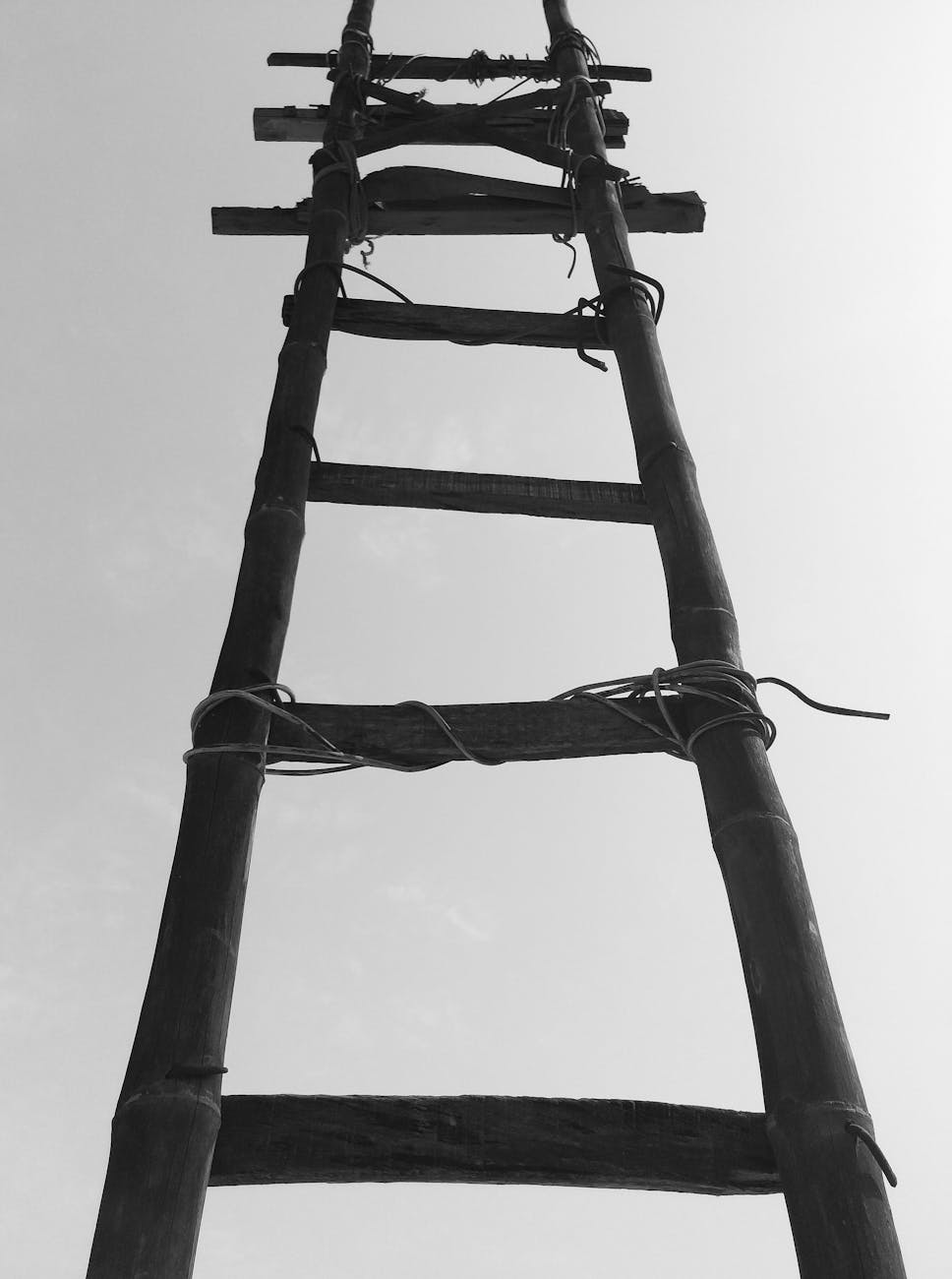
What does the “ladder out” look like? For me, the five techniques below are the rungs I use and find most helpful when the “going gets hard”:

Photo by Khimish Sharma on Pexels.com
  1. Method to Shift from Interior to Exterior- when I feel myself spiraling, I will tell myself to notice: 5 things I can see, 4 things you can hear, 3 things you can touch, 2 things you can smell, and 1 thing you can taste, OR NOTICE 3 things in the shape of a square, 3 things in the shape of a circle, and 3 things in the shape of a rectangle.(I thank my therapist for that one!)
  • Breath Work-Breath connects directly to the nervous system, hence, when our breath quickens with excitement/fear we can consciously slow it down to bring calm. There are a lot of different kinds of breath-work, but the method I use (because I can remember it) when on the high-dive is called “box breathing”. You simply inhale 4 counts, hold 4, exhale 4, hold 4. More info here: https://www.calm.com/blog/breathing-exercises-for-anxiety
  • Form Constraints-Choose a form, any form. Maybe it’s a sonnet, or as simple as making a list. Maybe it’s a haiku, or in the form of dialogue. Having a form helps switch the brain away from emotionally charged subject matter, and over to the more linear, logical side. Like swim-lane ropes, it helps give our work specific direction when it feels like we’re dog-paddling to nowhere.
  • Movement and/or Music-Take a walk. Sit in your chair, reach your arms out and upward as you breathe in, bring them down as you exhale. Roll your shoulders. Try some chair yoga. Turn on the music. Take a dance break. The mind/body connection is a strong and proven one. Get out of your head and into your body. Discharge that pent-up emotional energy with movement. Your writing, and your body, will thank you.
  • Decline the Invitation-“Going there” in your writing is up to you. Trust the wisdom of your body. If something comes up you don’t want to address, you can absolutely say, “no, thank you”, and shut the door behind it.

Maybe think of the above as the hard-hat and knee-pads for certain aspects of the hard work of writing. Find comfort in knowing that many are sharing the journey with you. If you’re lucky enough to have writer friends, talk about it. Many of us circle and circle around our truths, but never get there. Suit up and see where it can take your writing.

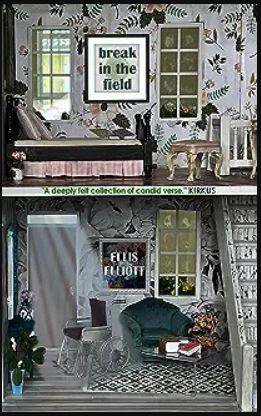
Thank you for reading. For more about the author Ellis Elliot visit. And check out her book.

Break in the Field