Introverts Guide to Writing in Community

As we often hear, and know is true, writing is a solitary endeavor. Since I find long stretches of alone-time nourishing, I love that about it. But that doesn’t mean I want to go full-on-hermit. I need human interaction, even if it’s just Tina at the grocery store telling me about her cats.       

Specifically, since my need for human interaction is limited, I’ve sought to find ways to find or create a writing community that is a balance of the two. Here are a few things I’ve come up with that might seen outwardly mundane, but with an added introverted twist:

·      Online Writing Group: I created Bewilderness Writing, knowing that my role would be as guide, not teacher. Each week I read a poem, offer jump-off lines that folks can choose to use, or not, and then we free write for 10 minutes. Afterwards, each person reads what they’ve written and the group does not offer comment or critique. Sounds ridiculously simple, huh? It is. And what can’t be known beforehand is just how intimate and rich the writing can be within this container. Setting aside all the “writerly benefits”, it fills my need to see and hear others figuring out life using words on the page. There is great comfort there. And the tapestry of styles and voices enriches my own writing life.

https://bewildernesswriting.com/

Want Something Similar?

https://27powers.org/wild-writing-virtual/   Wild Writing, by my mentor Laurie Wagner, is wonderful!

There are many “writing alone, together” online opportunities without prompted writing, as well.

·      In-Person Writing Group: I created “Writers in Coffee Shops” a few years ago using the social networking website Meetup. I set it up with straightforward parameters from the get-go of “writing alone, together”. We would meet at a local coffee shop, spend a few minutes sharing what we were working on, then get to it. At the end of the hour, we could share about how or what we did for the hour. After that time, folks were welcome to share their work and invite comment or critique.

For awhile, especially in the beginning, I had people who did not get the memo and wanted to chat. With gentle reinforcement those folks either got used to our system or didn’t come back. Eventually, I found a small, committed group, and we came to know our coffee shop time as not only a standing-date commitment to our writing, but a place to commiserate on the writing life. We became friends.

Want something similar?

Shut Up and Write: https://www.shutupwrite.com/  While I might prefer my more “demure” group name, this is basically the same format and you can find them, with over 400 chapters all over the place

·      Collaborative Writing: Recently, I had a friend and former Bewilderness group member contact me after taking a poetry class that included “renku,” which is a Japanese collective poetry composition of collaborative linked verse. My friend asked if I wanted to give it a try together. She would send me a few lines and I would send a few back. Since we’re just starting this adventure, I can’t tell you the outcome, but I’m hopeful. It is just the right mix of connection and effort for me. It intrigues me to see what might come out of it. Think of your favorite writing form, enlist your favorite writing friend, combine the two, and see what you might come up with!

These writing groups are for messy, first-draft writing where the intention is to get “your butt in the chair” and ideas on the page. While these groups all lack the comment/critique component, I am a big believer in getting other eyes and trusted opinions on your work, and there are plenty of in-person and online opportunities for that. Whichever one is your preference, there is great benefit to having others along for the ride alongside you, and what that looks like is for you to choose.

Ellis Elliott, Writer and Writing Guide: https://bewildernesswriting.com/

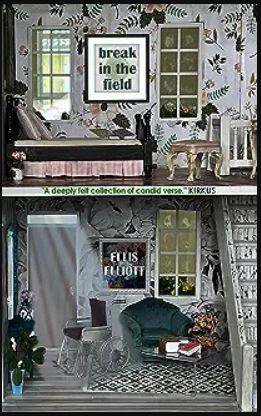
Break in the Field poetry collection: https://www.amazon.com/Break-Field-Ellis-Elliott/dp/1957224126

My first mystery novel, A Fire Circle Mystery: A Witch Awakens, about an amateur sleuth discovering her lineage as an Appalachian Granny Witch, comes out in Spring 2025.
Secrets to a Publisher Relationship

by Robert Fleming

You’ve published three works. You have the acceptance rate of +-3%. Fed up with the time and submission costs of rejections? Resubmit to a magazine editor who published your work before. This may lead to a relationship with a magazine publisher/editor. Why would you want that? Aren’t editors grinches handing out rejection coal? Some editors are coal distributors, but other offer something you may want:

  • They publish books in your genre and may publish your book.
  • They repeat the same writers: either multiple works in the same or different issue. How can you figure this out? If your published work is digital (online), find an author you like, who was published in the magazine you were published in; type their name in “search.” Does the search results list only their current work or multiple works? If only one, try again with at least two different authors you like.
  • Nominates writers for awards (magazine award, Best of the Net, Pushcart)

How do you know if the editor is interested in a relationship with you?

  • They accept your work in three days or less from submission.
  • They locate your work in the first three pages of the issue.
  • They publish more than one of your works.
  • In the issue forward, they mention your name.
  • They ask you to publish previously submitted rejected work from their slush (reject) pile.
  • Nominate you for an award

The benefits of having +-10 magazines with repeat publications are

  • Create 120 works a year = 10 magazines * 4 submissions a year * 3 works per submission
  • Create enough work for a full-length book of +-70 pages
  • Be selected as a featured reader: Robert is a repeat writer for Oddball magazine, I want him to feature for me.
  • Be invited to be an associate first line editor of a magazine

Show appreciation for the editor/publisher:

  • Once your work is published, put a posting on your social media (Facebook, Instagram, TikTok), that announces your publication with links to the publisher’s magazine.
  • When you read work, say it was published by “editor name” in “magazine name” and announce the magazine’s next publication with their links.

Once you are a repeat writer for a magazine, submit quarterly.

Even yours truly, with over seven hundred publications, only has a +-33% acceptance rate with a new magazine. One of my publication strategies was to create and now maintain a relationship with +-10 magazine editors.

Yours Truly is:

Robert Fleming, a contributing editor of Old Scratch Press

OLD SCRATCH PRESS – a poetry/short-form collective | estd. 2023

who published an Amazon best seller visual poetry book: White Noir

white noir: Fleming, Robert: 9781957224183: Amazon.com: Books

an editor of the digital magazine Instant Noodles

About – INSTANT NOODLES

Romance vs Reality in the Writing Life: 9 Tips to Help Tackle Reality

I have a trove of old New Yorker cartoons I’ve saved in a folder since forever. The premise of this one (from the fabulous cartoonist Roz Chast) is the romanticized version of Thoreau’s life vs. the reality. My argument was always “of course he can simplify. He has no kids, no partner, and his mom does his laundry.”

I think we also can hold that same romanticized ideal for writing.

“I WON’T BE COMING IN TODAY.
I’M JUST NOT FEELING IT”

…was the text my friend received, canceling their appointment together 15 minutes before it was to start. What bravado, I thought. What mixture of honesty, courage, chutzpah, and downright rudeness is this?

And how many times have I felt like saying the exact same thing? Especially when it came to staying motivated to finish, organize, edit, submit separate poems, and find a publisher for my poetry collection. Not today. I’m just not feelin’ it.

The option is to feel it. Even when you really, really don’t want to. There are so many other demands on our time, and I am easily overwhelmed if I only look at the long game. I have to break it all down into bite-size “feelable” pieces.

What that looks like for me is:

1.    I can sit here for 10 minutes and freewrite with one of the 500 prompts I find and keep and never do anything with. 

2.    I can spend 10 minutes on the website Duotrope to find 5 more places to submit my poems. 

3.    I can print out all these poems, spread them out on the bed, and figure out how they make sense together. 

4.    I can spend 5 minutes on an email to “make the ask” of a trusted someone to read my work. 

5.    I can take a break from it all and not beat myself up about it.

6.    I can “manage the myth” that my work is valuable and someone, somewhere will love it, until it becomes the truth. 

7.    I can submit the poetry collection to contests of all shapes and sizes.

8.    I can make an effort to forge connections in the writing world. I can join writing groups, create writing groups, take classes and workshops, reach out for help, or join a collective. You never know when you might meet the right person that could lead to your book publication (like I did!). 

9.    I can endure countless rejections, knowing the subjectiveness inherent in the game, and know to never take anything personally. 

10.  Do it again and again. Hang in there, until what’s foreign becomes familiar and the stars align, because you kept at it. And as for the end result, sometimes knowing whatever you have done is enough.

And what a divine feeling that is, indeed.

By Ellis Elliott—Thanks for Reading! Join me at https://bewildernesswriting.com/ Find my poetry collection, Break in the Field, from Old Scratch Press, on Amazon. My new cozy mystery fiction novel, Fire Circle Mysteries: A Witch Awakens will be available in Spring 2025.

Would Love To Hear From You

It’s the “dog days of summer.” Where I live we’ve had only brief periods of respite from the extra hot days, and these sweaty days force me inside, where they, ostensibly, give me more time to write.
And so I am thinking about all of that. And I’m wondering, those of you who write, have you ever considered taking classes, or have you taken classes, in writing? It occurs to me that while my daughter can play a few songs on the piano through trial and error, she is much better when she is actively taking lessons. She doesn’t take lessons because she wishes to be the next piano great, or even play professionally. She takes lessons because she enjoys playing the piano, and would like to be able to play it better. I pay for the lessons gladly, without a thought about it.
Do we do that as writers, with writing?

When I went back to school to get my MA it was because I wanted to get better at writing. Yes, I had the hope of publishing, but mostly I just wanted to be better at writing my stories and poems. I signed on for my MFA primarily because the teachers in my MA program, who were not affiliated with the MFA schools, suggested that I had a spark, and could get it even sparkier with more training. And so I did it, the MFA, for me.

When we had our book marketing webinar a week or so ago speaker Jared Kuritz suggested that if someone wants to be a published author that author must go from hobbyist to professional, and that would involve a dedication of time, and some allocation of funds.

I am curious and would love to hear what you think about this. Have you ever done any “professional” training for writing? Something like lessons? Have you spent money on your development? Do you hope to move from hobbyist to pro? Or, perhaps, consider and reply to this by telling me about lessons that you have taken in something else, or paid for in order that a child or someone else in your life is able to take lessons. I would be very curious to hear what you think makes something a skill that you might need training in versus something you come fully equipped for, without training.

I’m laughing to myself now, sitting here, thinking about “the dog days of summer,” and how I once paid for dog training for my prior delightful pup, an out-of-control terrier who I’d adopted when he was still a puppy. I had named him Chad,

and he came after I lost the dog who preceded him, a very fancy little terrier named BeBe who walked beside me like a queen, and never needed a leash or a single command, from the moment I brought her home. Chad, on the other hand, chewed everything: my toes as I crossed the room, my ears as I sat on the sofa or lay in bed, my boyfriend’s brand new Nikes, huge holes in his blanket, and he pooped blue wool for a week after, half a wooden magazine rack while I was at work one day, scads of toilet paper rolls. He peed everywhere. There was a moment where I listened to him cry from behind the baby gate in the kitchen thinking, “One of us is not going to make it out of this relationship.” I found a dog trainer all right. I could not wait for her to get to my house! And I remember her like it was yesterday, though it was more likely 2001, when she arrived, and I let the beast loose on her, and she said to me, “Okay. I can see he has a lot of energy. Let’s start training you to be a better owner.” 
By the end of the session, several hours later, I admit, for I was a slow learner, I was fully trained, and Chad and I lived harmoniously from that moment on, for sixteen and a half years.

And just now, as I prepared to publish this post, I thought to myself, Maybe throw this post in Word and check the spelling, even though I know my writing does not need it! But I did, and I found four spelling errors, due to poor typing skills, which tells me that it seems that I am still, to this day, a stubborn and slow learner. 😉

So what about you? Do you train at writing at all? Are there other things you will use training for? Do you think of writing as something a person can improve at with training? I am curious to see if it is only me.

Writer’s Toolkit: 5 Techniques for Handling Emotional Intensity in Writing

By Ellis Elliot

As writers, we often draw from our own lives for inspiration, tapping into our memories and emotions. However, delving into difficult experiences or memories can be challenging. It’s important to use techniques, or “lifelines”, to navigate this process. For example, author Gillian Flynn separates herself from the intense emotions of her writing by enjoying her favorite Broadway show tunes for a few minutes after she finishes writing. Poet Ada Limón ensures she has a way out of the emotional intensity by reminding herself that writing is the outlet for her feelings.

“Memory takes a lot of poetic license. It omits some details; others are exaggerated, according to the emotional value of the articles it touches, for memory is seated predominantly in the heart. The interior is therefore rather dim and poetic.”

                                 -Tennessee Williams

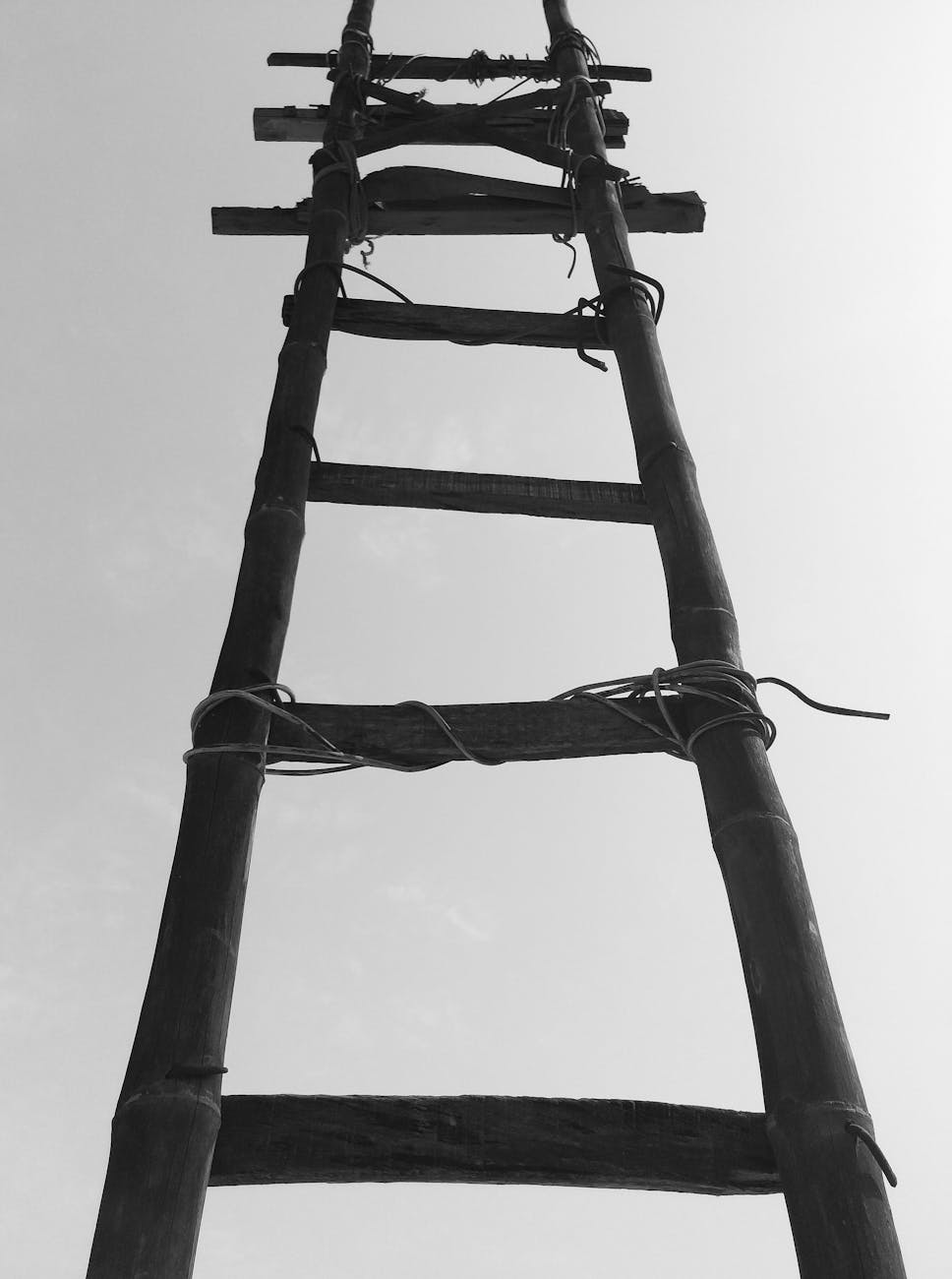
What does the “ladder out” look like? For me, the five techniques below are the rungs I use and find most helpful when the “going gets hard”:

Photo by Khimish Sharma on Pexels.com
  1. Method to Shift from Interior to Exterior- when I feel myself spiraling, I will tell myself to notice: 5 things I can see, 4 things you can hear, 3 things you can touch, 2 things you can smell, and 1 thing you can taste, OR NOTICE 3 things in the shape of a square, 3 things in the shape of a circle, and 3 things in the shape of a rectangle.(I thank my therapist for that one!)
  • Breath Work-Breath connects directly to the nervous system, hence, when our breath quickens with excitement/fear we can consciously slow it down to bring calm. There are a lot of different kinds of breath-work, but the method I use (because I can remember it) when on the high-dive is called “box breathing”. You simply inhale 4 counts, hold 4, exhale 4, hold 4. More info here: https://www.calm.com/blog/breathing-exercises-for-anxiety
  • Form Constraints-Choose a form, any form. Maybe it’s a sonnet, or as simple as making a list. Maybe it’s a haiku, or in the form of dialogue. Having a form helps switch the brain away from emotionally charged subject matter, and over to the more linear, logical side. Like swim-lane ropes, it helps give our work specific direction when it feels like we’re dog-paddling to nowhere.
  • Movement and/or Music-Take a walk. Sit in your chair, reach your arms out and upward as you breathe in, bring them down as you exhale. Roll your shoulders. Try some chair yoga. Turn on the music. Take a dance break. The mind/body connection is a strong and proven one. Get out of your head and into your body. Discharge that pent-up emotional energy with movement. Your writing, and your body, will thank you.
  • Decline the Invitation-“Going there” in your writing is up to you. Trust the wisdom of your body. If something comes up you don’t want to address, you can absolutely say, “no, thank you”, and shut the door behind it.

Maybe think of the above as the hard-hat and knee-pads for certain aspects of the hard work of writing. Find comfort in knowing that many are sharing the journey with you. If you’re lucky enough to have writer friends, talk about it. Many of us circle and circle around our truths, but never get there. Suit up and see where it can take your writing.

Thank you for reading. For more about the author Ellis Elliot visit. And check out her book.

Break in the Field